
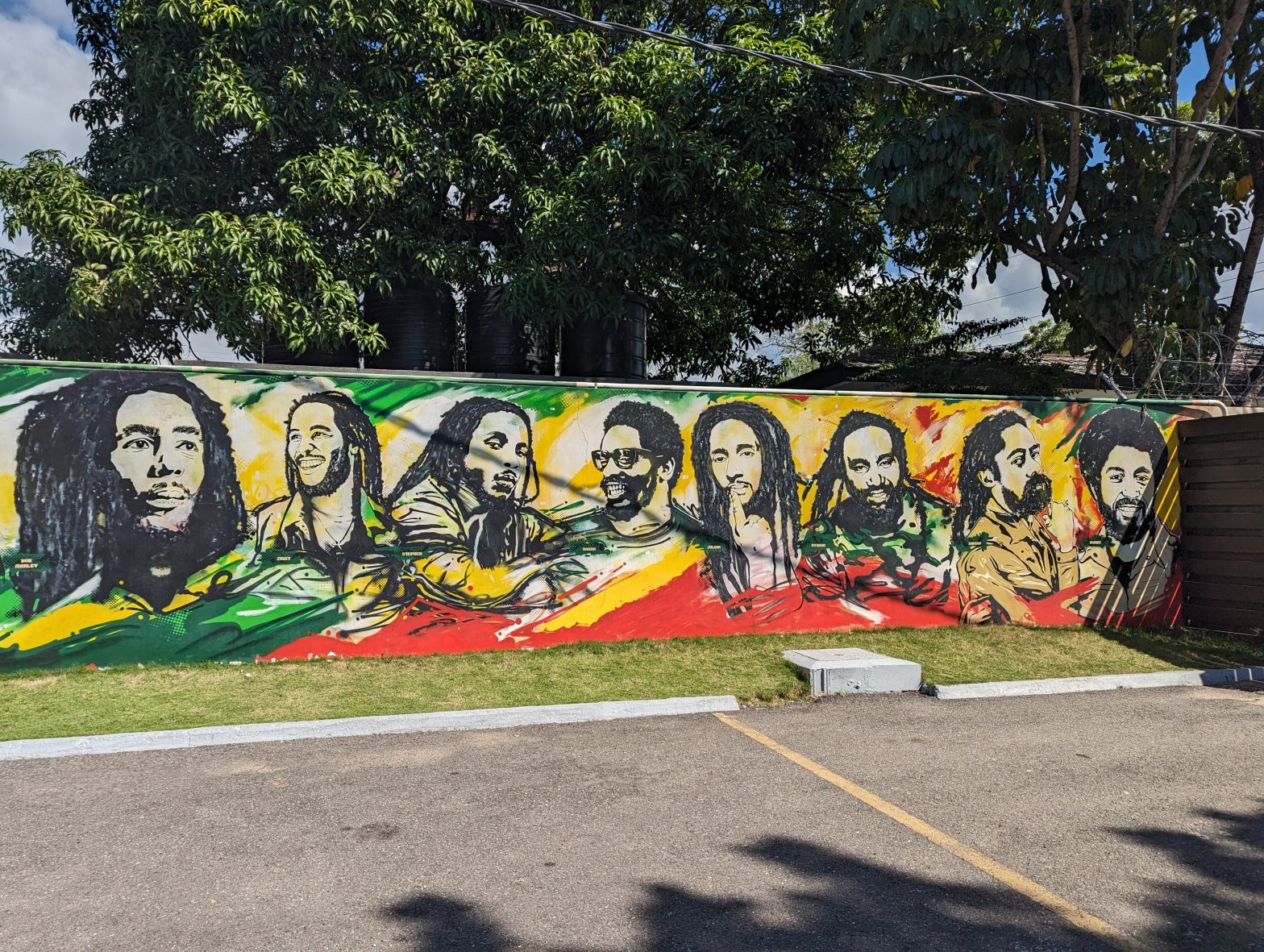
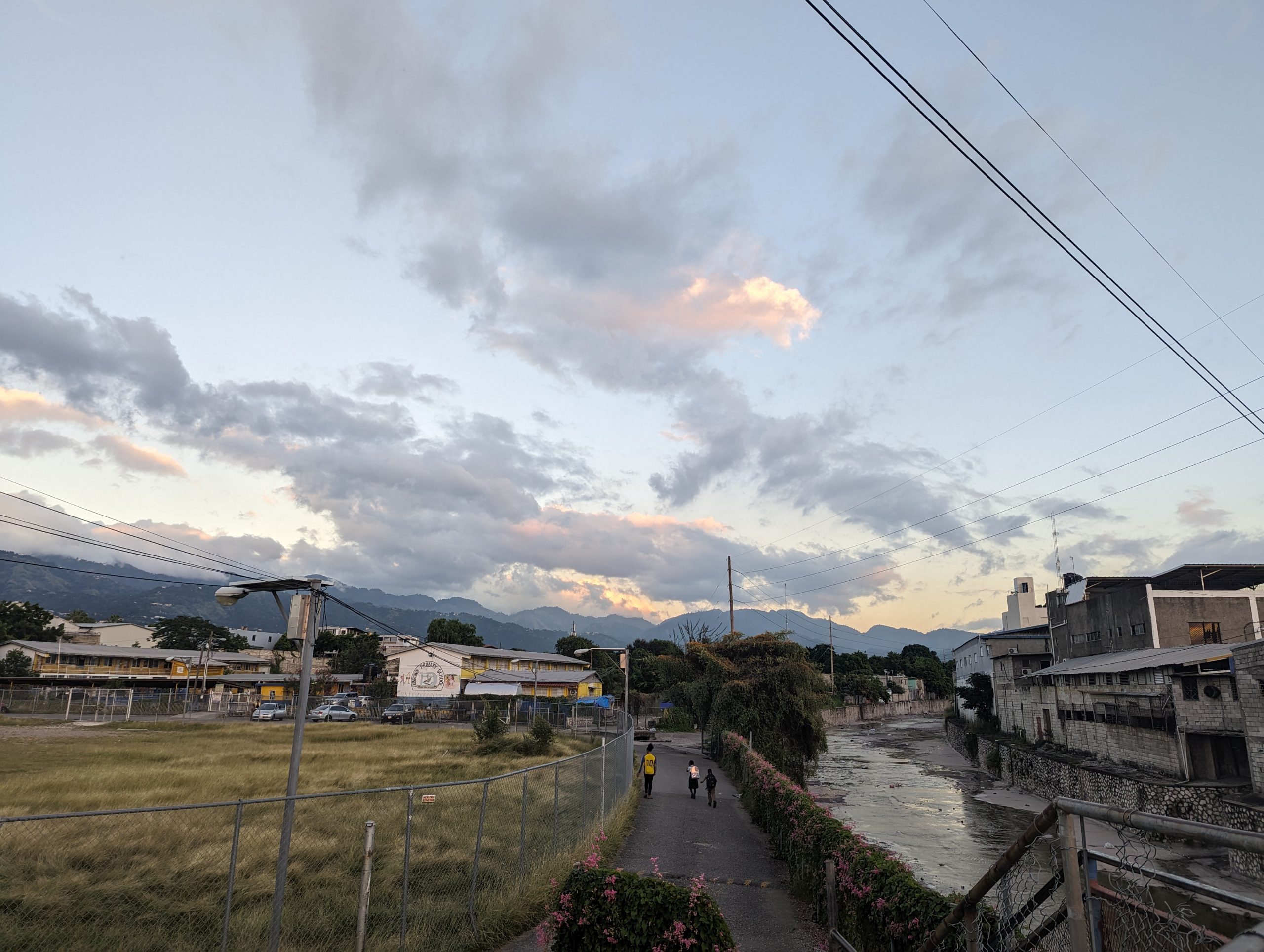
Kingston, the lively and vibrant capital city
of Jamaica.
Tuesday, 5. Dezember 2023
The Dancehall Studios and the ATM
- We fly from St. Martin to Kingston, Jamaica – not to be confused with Kingston in Canada, which was also occupied by the British and where there is a former fort (which we visited with my family a few years ago).
- On the plane, I talk to a passenger, Shave, who is sitting next to me. We start talking because he is blind and therefore asks me to explain to him what is in the meagre snack packs we get on the flight – well at least, there are three packs and not just a small piece of chocolate like on the AuA.
- He tells us that mobility aids and infrastructure for the visually or hearing impaired in Jamaica are still a long way off.
- We also talk about music, because he is very enthusiastic about it and has even studied something in that direction. He tells us about all the different musical styles that characterize Jamaica and have shaped and created the Jamaican music culture: Starting with ska and mento through to reggea, which really does evoke THE association with Jamaica – as does rum, by the way.
- I ask Shave what Jamaicans do for a living today, if not from tourism and music, and he says that Jamaica exports many goods, “Rum, for example”, I say nodding and Shave laughingly agrees.
- Shortly afterwards, I see a large ship being loaded in Kingston harbor and tell Shave about it. He says slowly nodding: “Yes, rum.”
- We take a cab from the airport, which is good because the airport is quite a distance from Kingston. It is located on the road from Kingston to Port Royal that seems to lead through the middle of the sea on a small dam.
- We pass Kingston Downtown and drive a little further to Kingston Uptown, where our hostel, Dancehall Studios, is located.
- It is difficult to find and the person who runs it is hard to reach, which is why we are relieved that our cab driver insists on waiting with us until someone appears. This, by the way, is the first and last time we see our host.
- The studios are located in an area of Kingston that seemingly is mostly inhabited by locals and when we go in search of an ATM a little later, we find one with a huge queue in front of it.
- We have already read: You should definitely only withdraw from ATMs with doors (like in a phone booth). And therefore we find it a bit dubious when a guy comes out, shakes his head and everyone in our queue starts discussing whether the ATM is working properly.
- We dare to try our luck and it turns out that the ATM works perfectly.
- We immediately use a few of our freshly retrieved Jamaican Dollar to buy some delicious sandwiches on the way home.
Wednesday, 6. Dezember
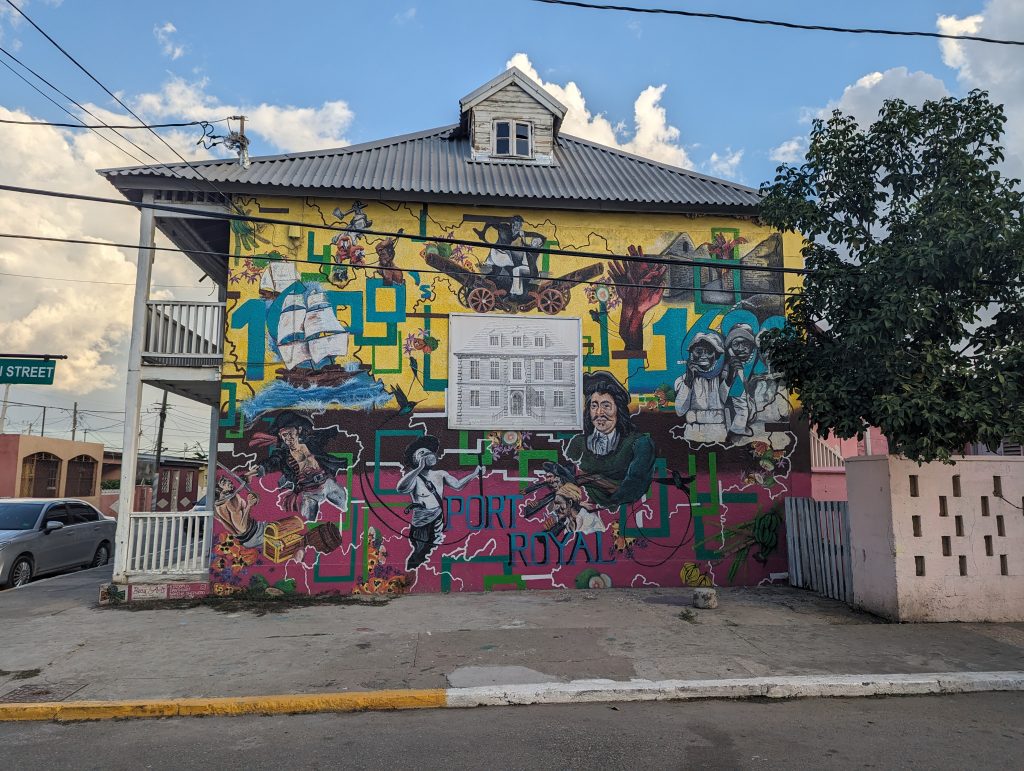
Port Royal – the famous pirate town and the Atlantis of the Caribbean
- We start relatively early in the morning, and head off to the bus station, from where we intend to take a bus to the Bob Marley Museum.
- Just as we’re on our way there, we see the number 30 bus drive past us – the very one we wanted to take. We are not super worried though, since Google Maps claims that the bus runs every half hour.
- Right next to the bus station – strategically located – we find a small stall selling fruit smoothies. Of course, we immediately order one.
- It takes a while, because the guy prepares it really fresh, chops the fruit and then switches on the generator, which sounds like a motorcycle starting up, so that he can mix them all in his blender.
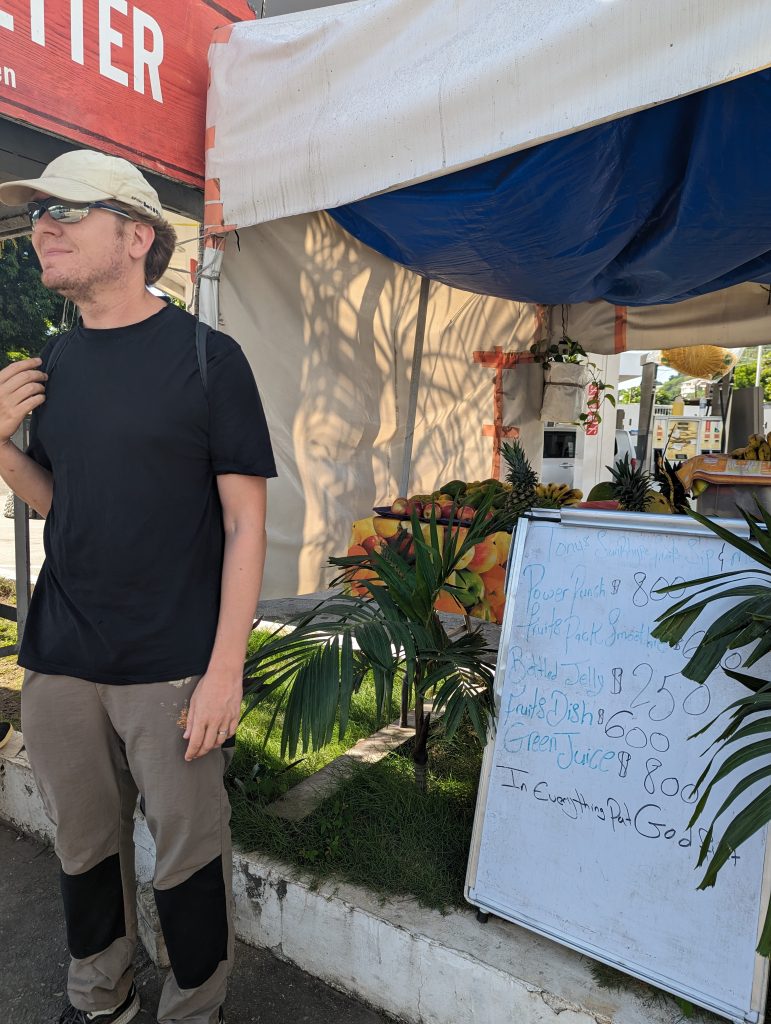
- No problem, because in the half hour it takes, nothing comes by except a few shared cabs.
- Finally, a 31 arrives, but we can’t take it to the Bob Marley Museum as it takes a different route.
- However, when after an hour there is still no sign of the 30 and a second 31 arrives, we give up and decide to get on it, wherever it may take us.
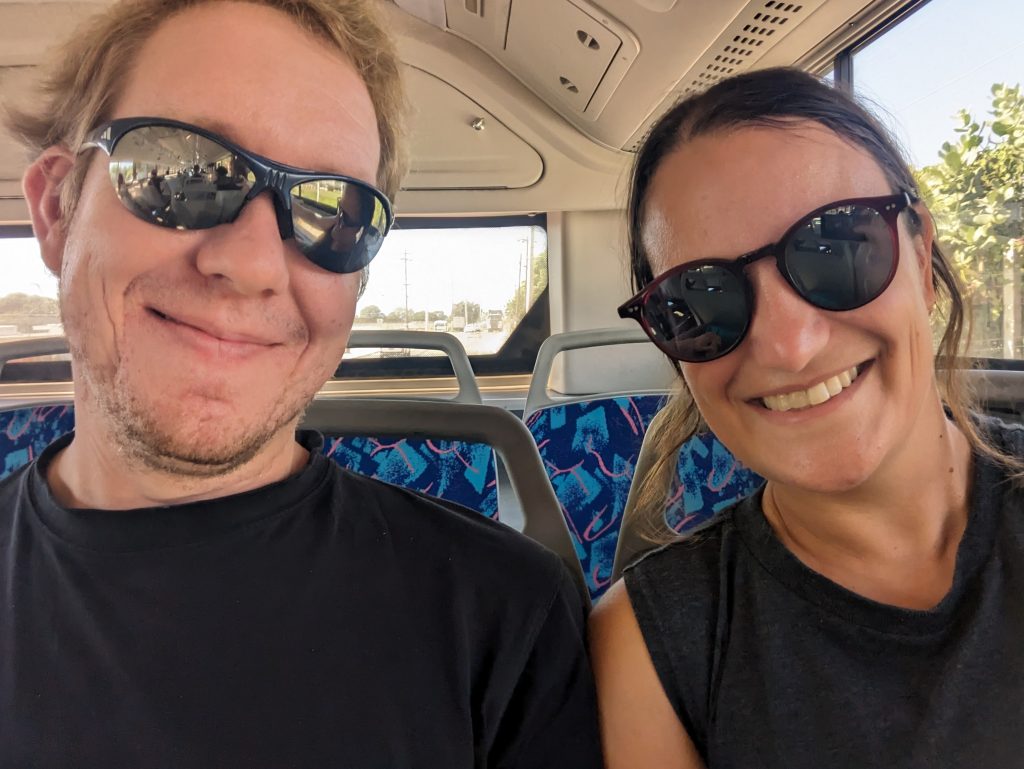
- “Downtown”, the driver says – well, Downtown it is.
- During the journey, we realize from the main square in Downtown, “Parade”, the bus to Port Royal leaves.
- So we arrive at South Parade and walk to North Parade, the other side of the square- although “running as fast as possible across several multi-lane roads” describes what we do better than the term “walking”.
- There we see a bus just leaving and I ominously recognize an “8” behind another number.
- We start sprinting and then see it- it really is the 98 to Port Royal.
- I wave wildly to the bus driver, who proves to be in a generous mood and kindly stops in the middle of the road to give us and two passengers arriving after us a lift – for once we’ve been lucky with the bus!
- And so it’s decided that we’re not going to the Bob Marley Museum today, but to Port Royal.
- On the bus ride, we quickly read up on Port Royal in the guidebook and find out the following:
- Port Royal was the capital of the island before Kingston and was actually the main fortification built by the English after they “conquered” the island from the Spanish in the 17th century.
- Fun fact: The English were actually after the larger island of Hispaniola, on which today’s Dominican Republic and Haiti are located, but the Spanish defended it too well. Therefore the English spontaneously changed their plans and decided to conquer Jamaica, which was much weaker or not defended at all.
- They then built the fort there in the existing town of Port Royal – but it fell victim to a tsunami and earthquake in 1692 and sank into the sea -similar to Atlantis.
- To this day, you can still find sunken ruins of houses in the sea, which you can of course explore on diving expeditions.
- Today, Kingston is the capital and Port Royal has completely lost its importance. The only people visiting are a few tourists who come here to see the fort and a few Kingstonians who come here to enjoy the delicious seafood.
- This is also what people in Kingston ask us when we tell them that we were in Port Royal: “Ah, did you eat seafood?”
- Even though we also eat fish afterwards, of course, we actually belong to the category of “tourists who visit Kingston because of the fort” and so we head from the bus station straight to the fort.
- There is nothing going on there and we almost overlook the little house where you can buy tickets.
- We enter the fort with the tickets we have bought and find our guide and three other tourists waiting for the tour.
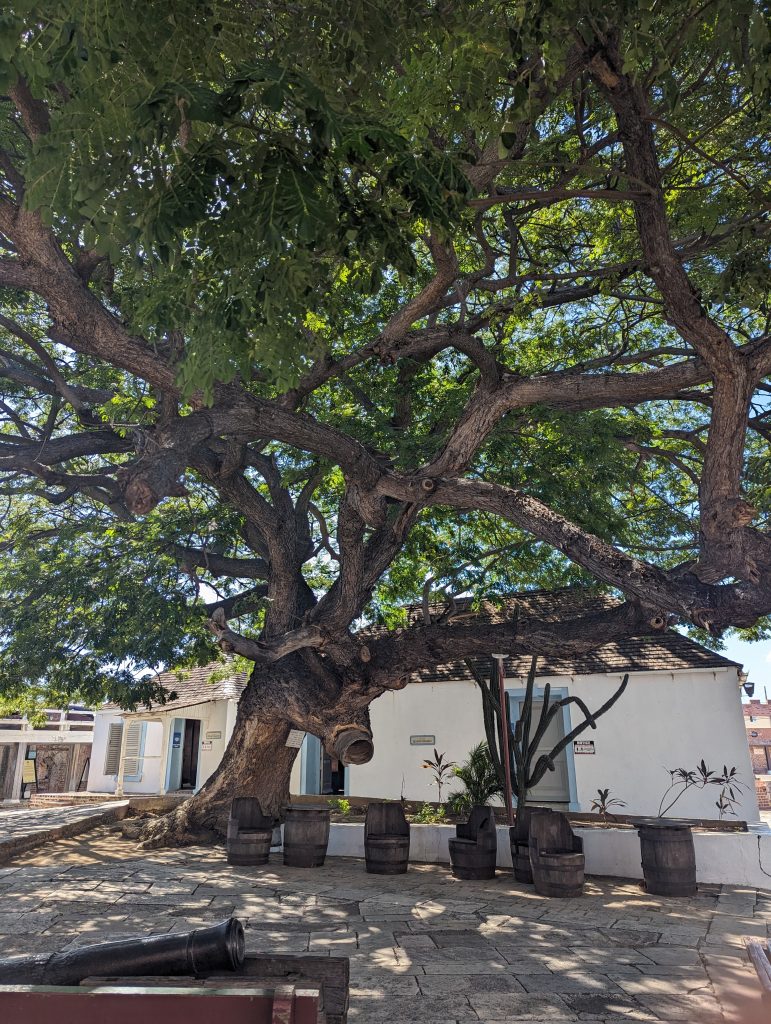
- Thank goodness there’s a large tree under whose dense canopy you can find shade in the open courtyard – which is necessary with the sun burning down.
- The other group of tourists turns out to be only partly tourists, the woman tells us that she is from Jamaica and lives in Kingston. She also asks us if we are visiting the Bob Marley Museum and we tell her about our bus incident. “You are using the bus?” she asks shocked.
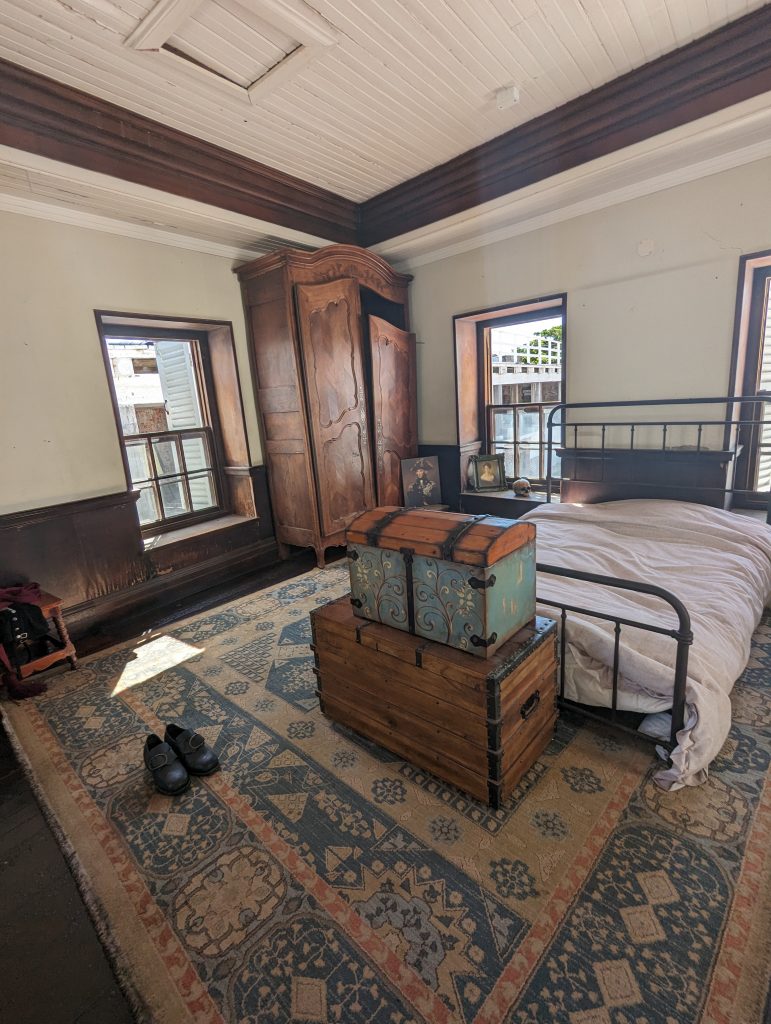
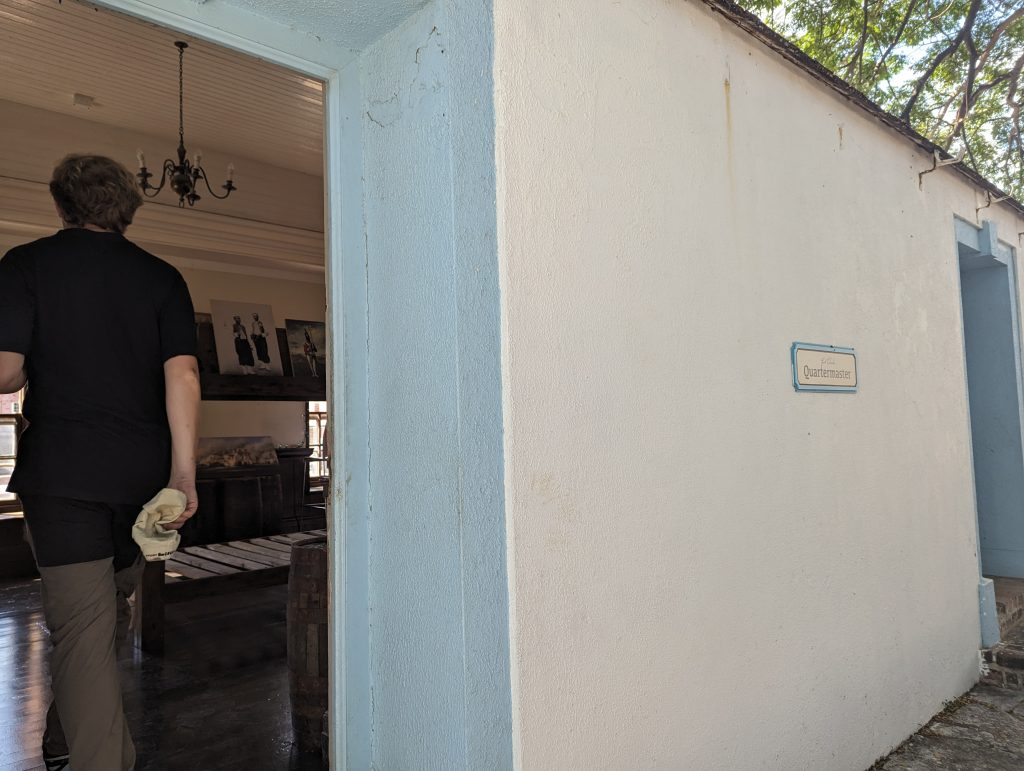
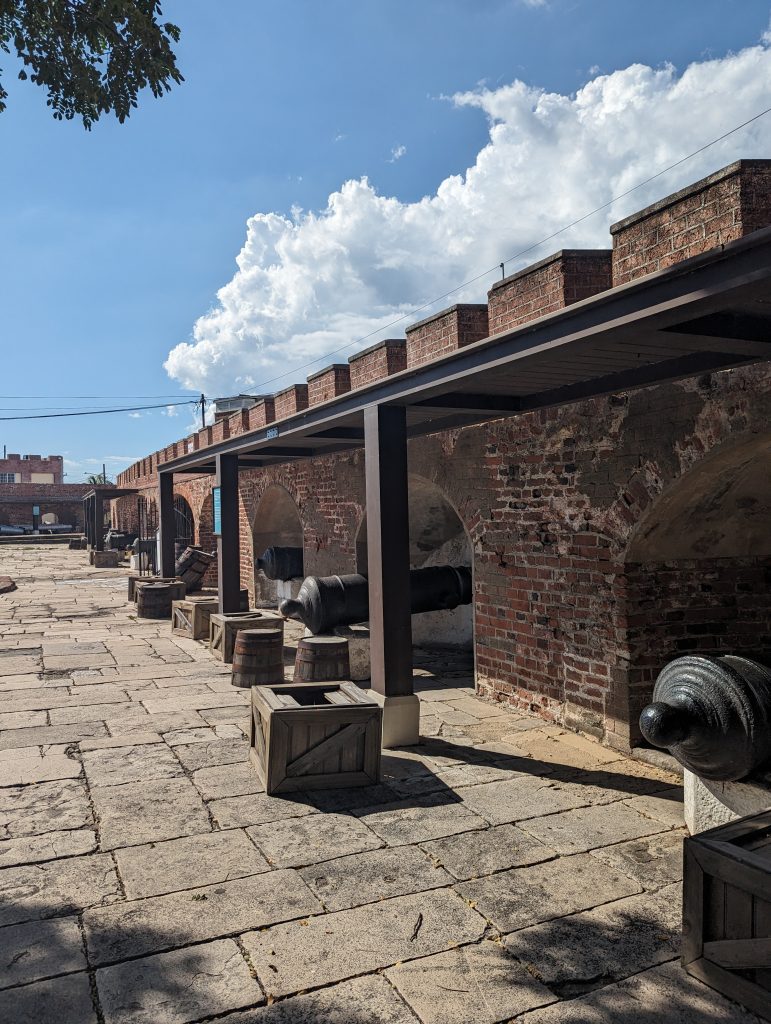
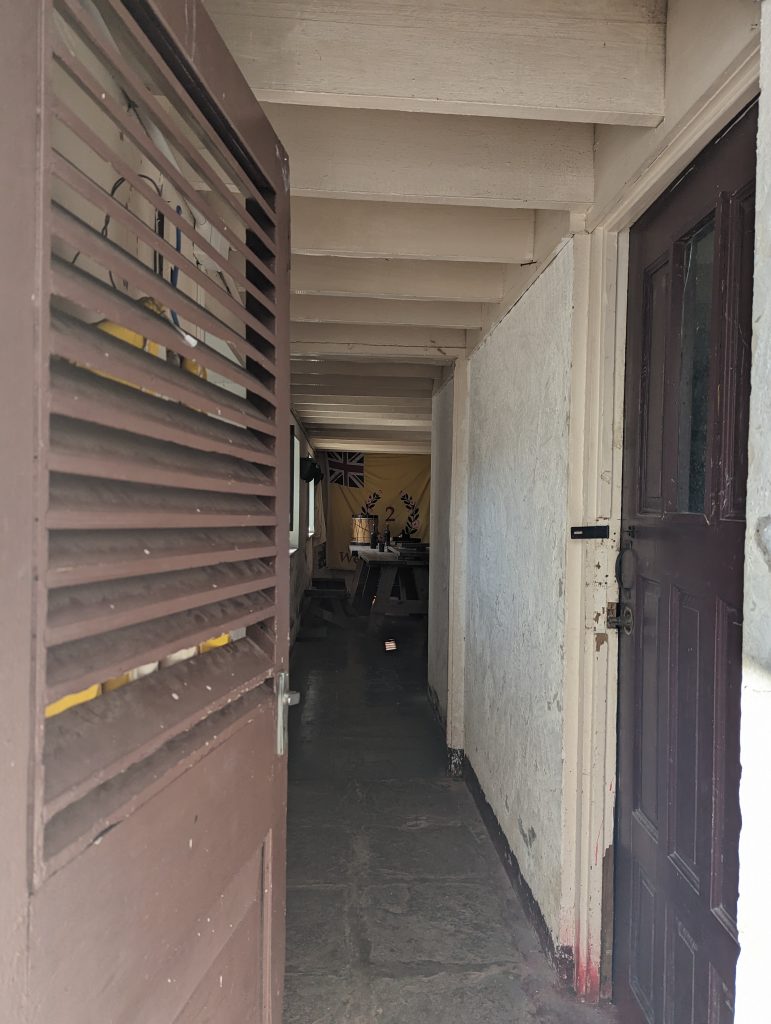
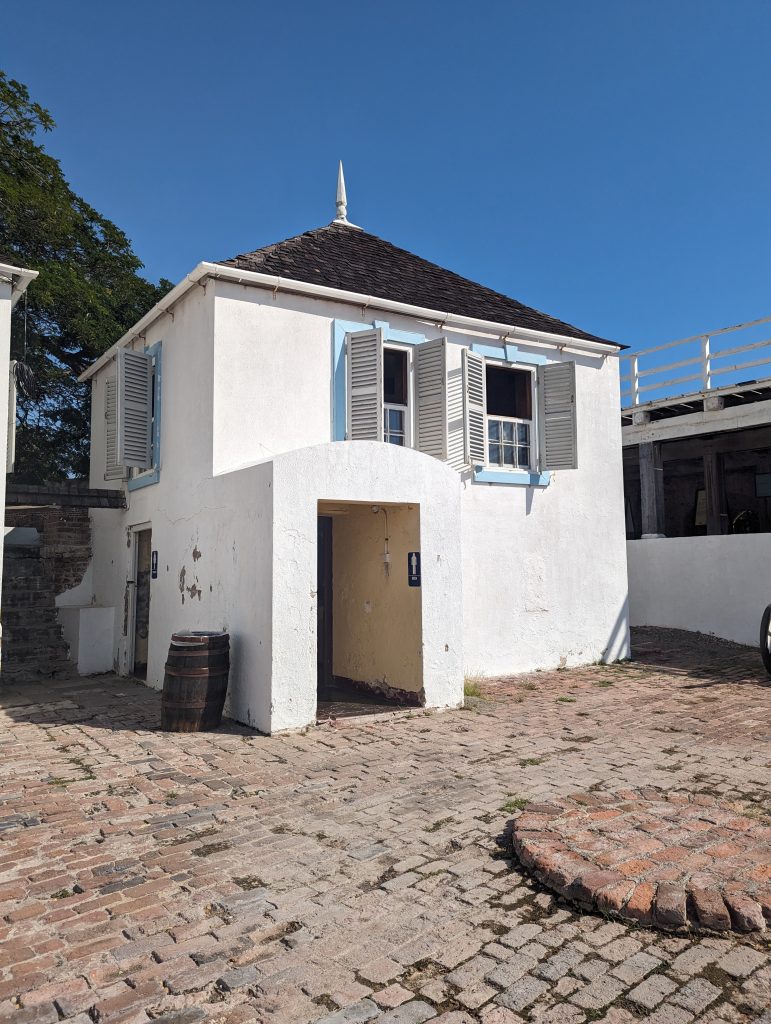
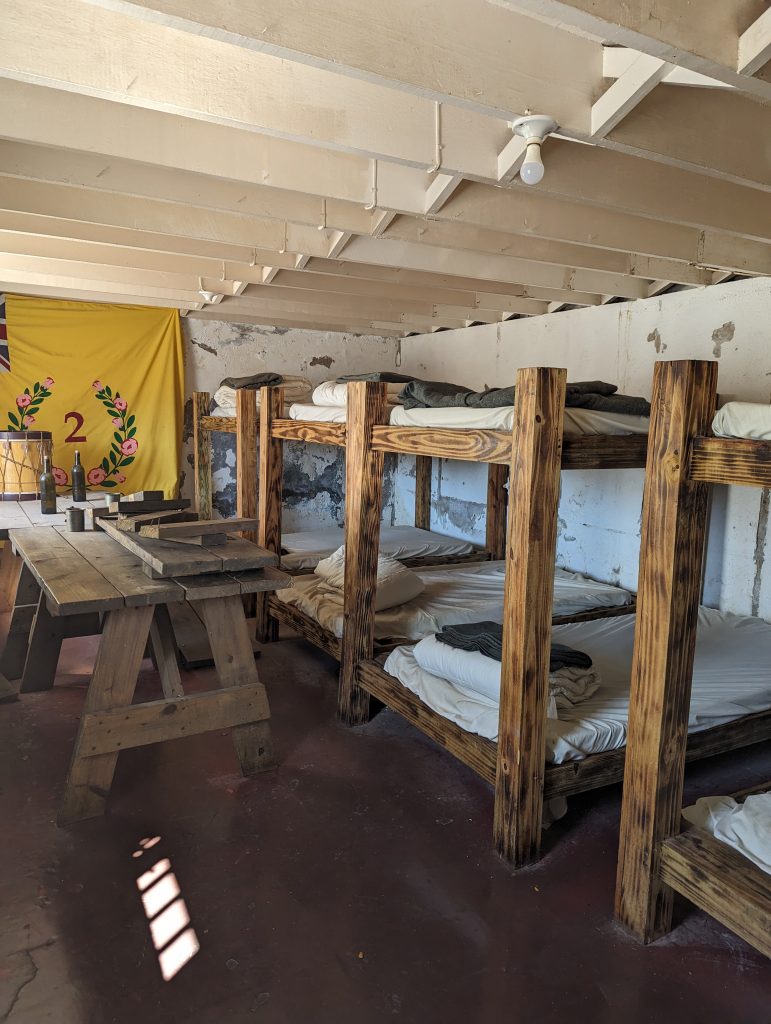
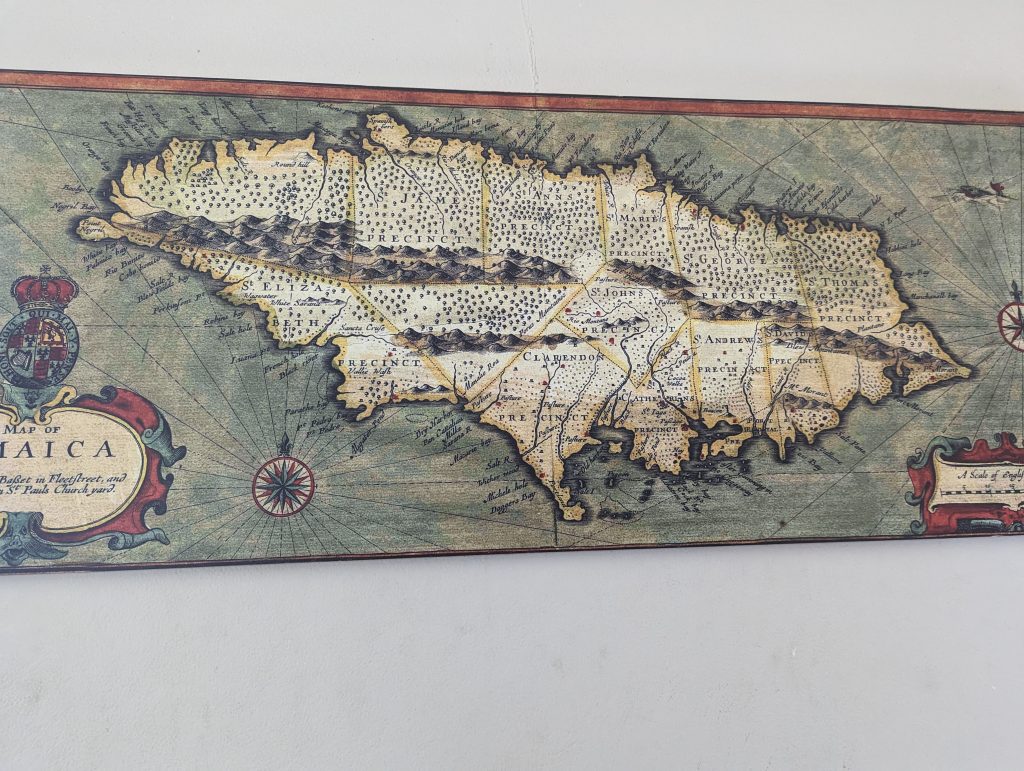
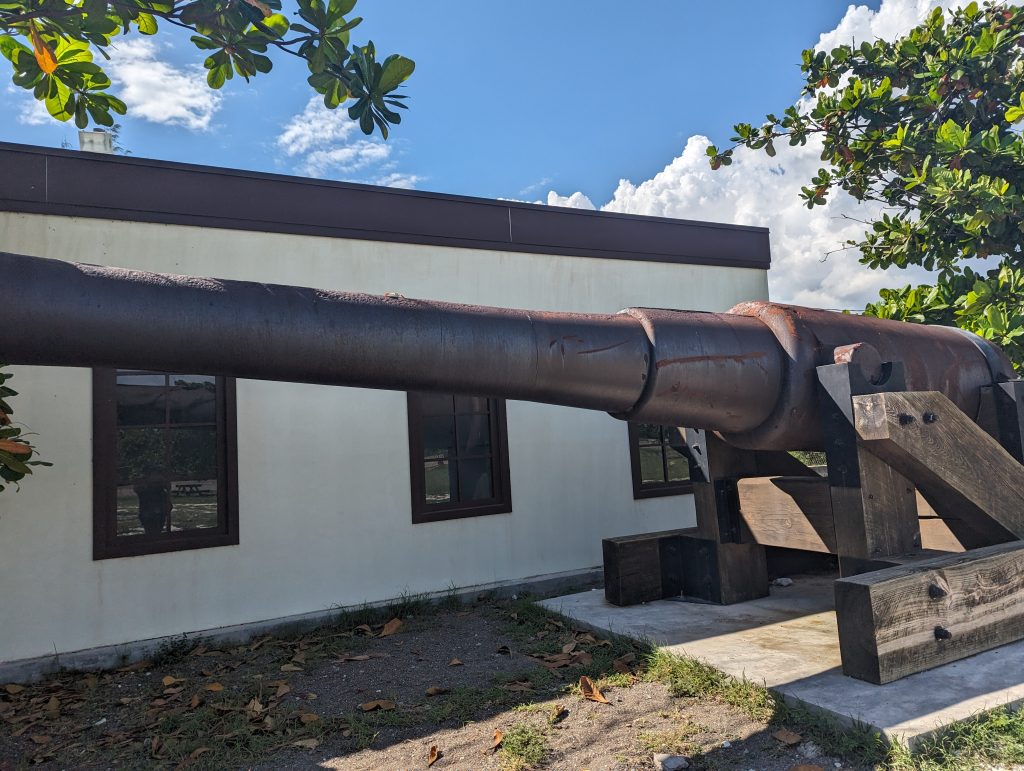
- The guide does a great job and tells us a lot about the fort and the history of the island.
- Jamaica was one of the most notorious pirate refuge islands and Port Royal was a popular port for pirate ships. Apparently the governors of the island tolerated piracy as long as a pirate captured Spanish, French or Dutch ships rather than English ones.
- Henry Morgan, a once famous pirate, later even became governor of the island.
- Our guide also explains that pirate flags were by no means just black with a skull and crossbones on them; on the contrary, every pirate had their own flag, some examples of which are hung in the fort.
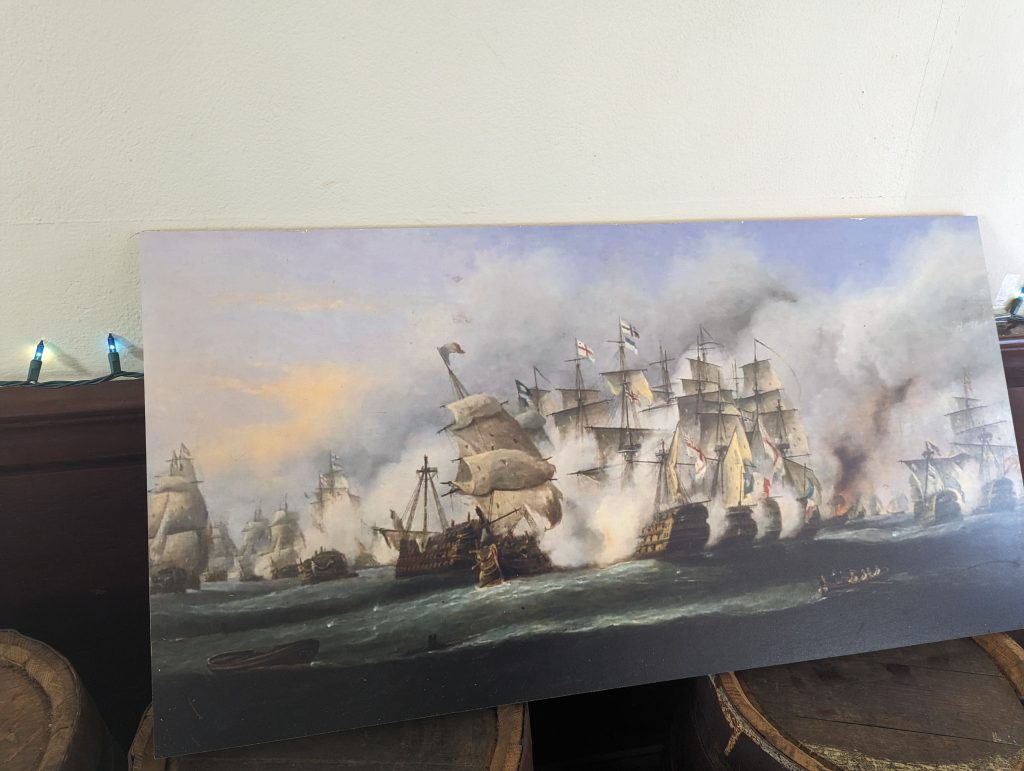
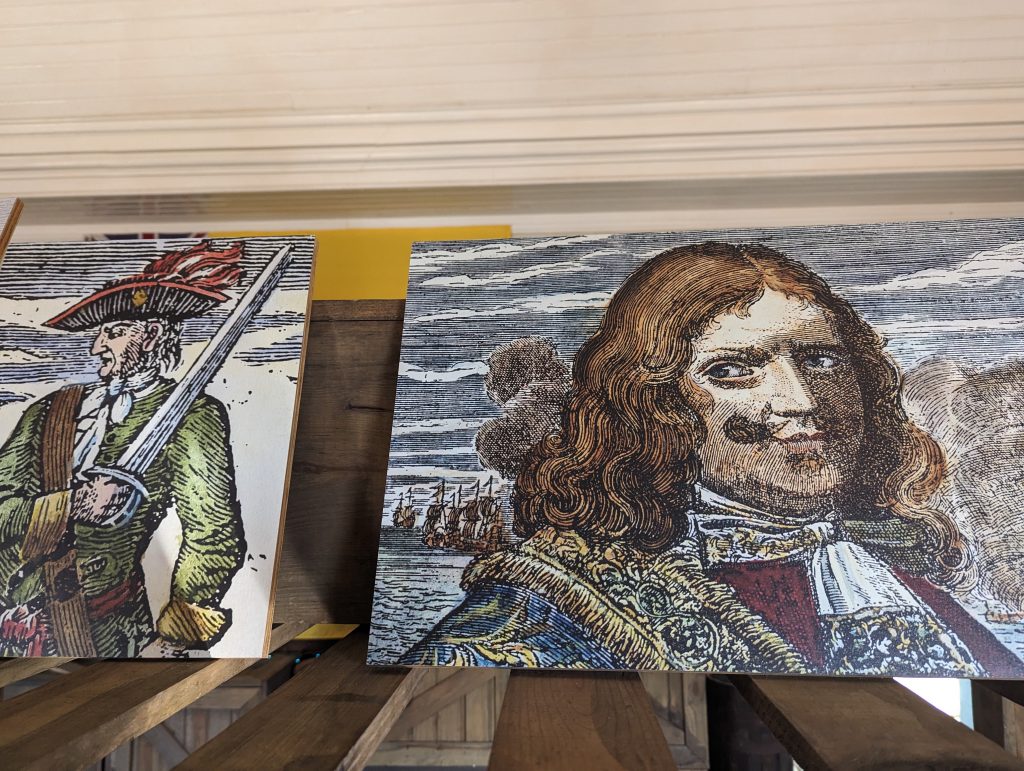
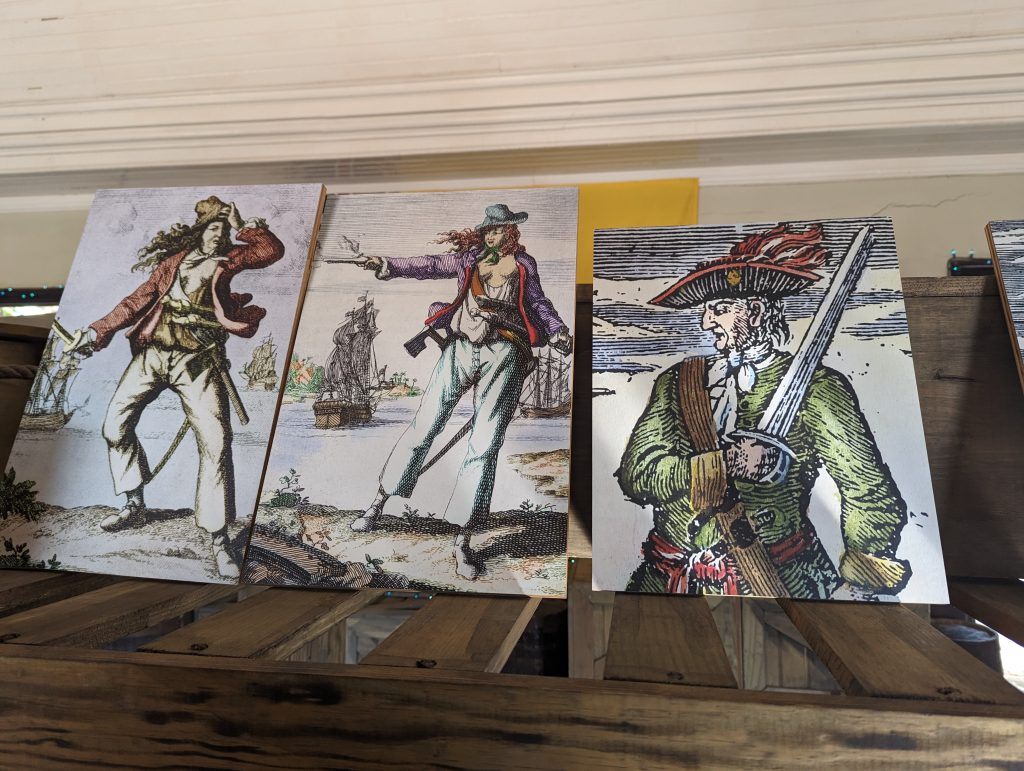
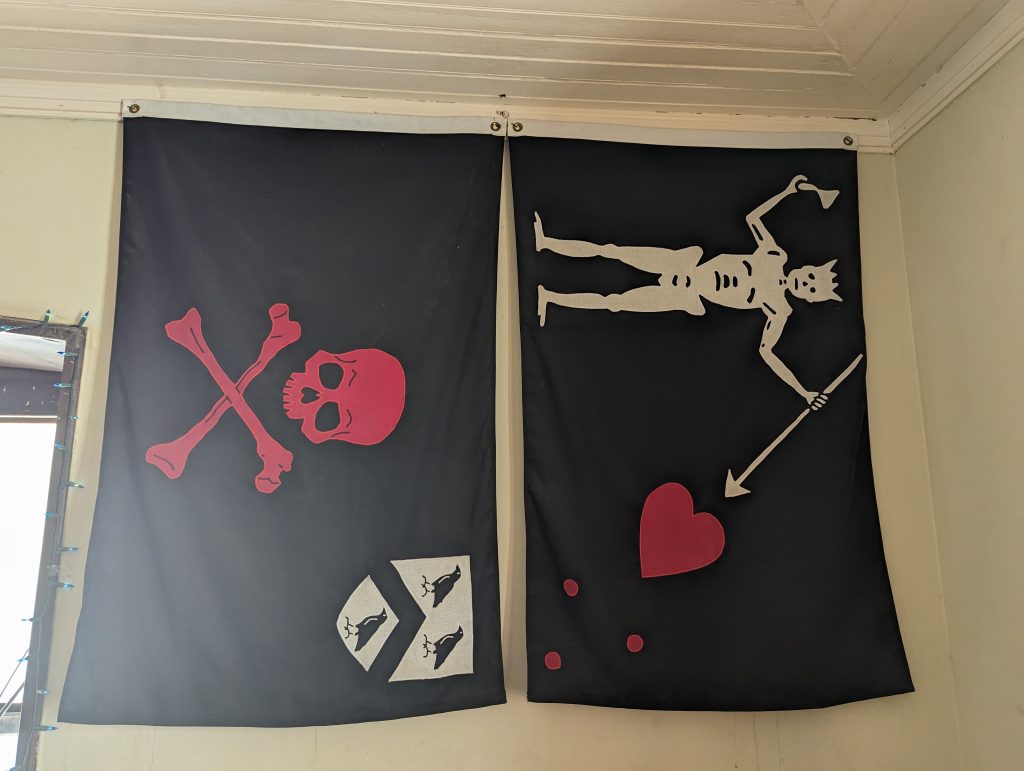
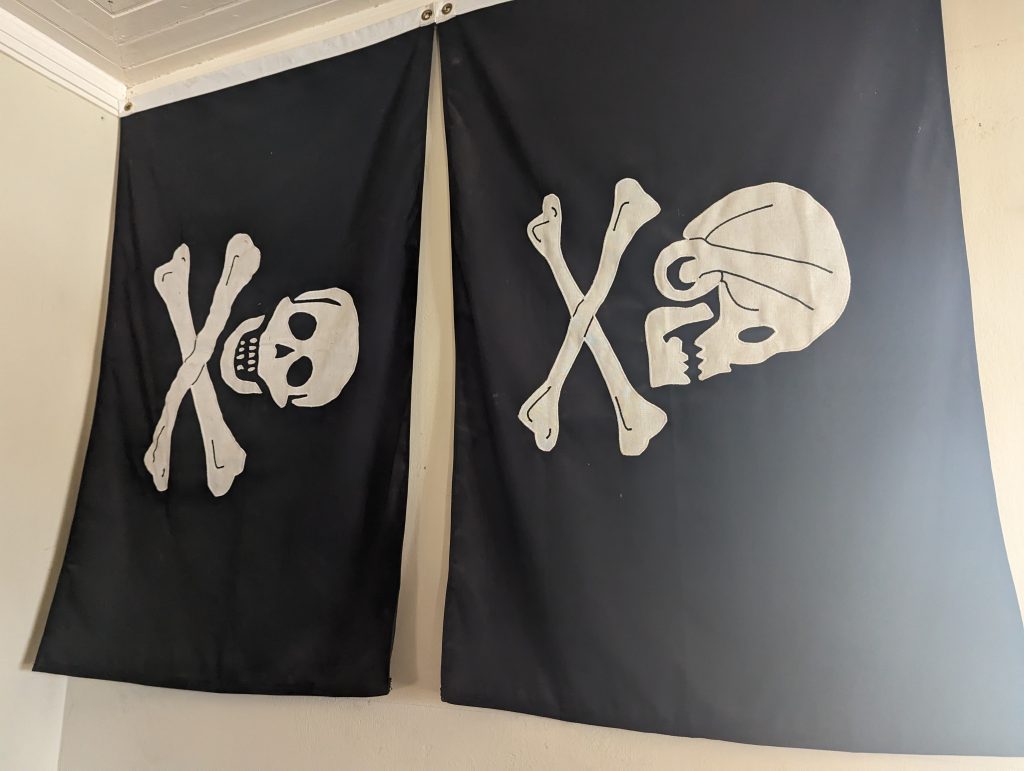
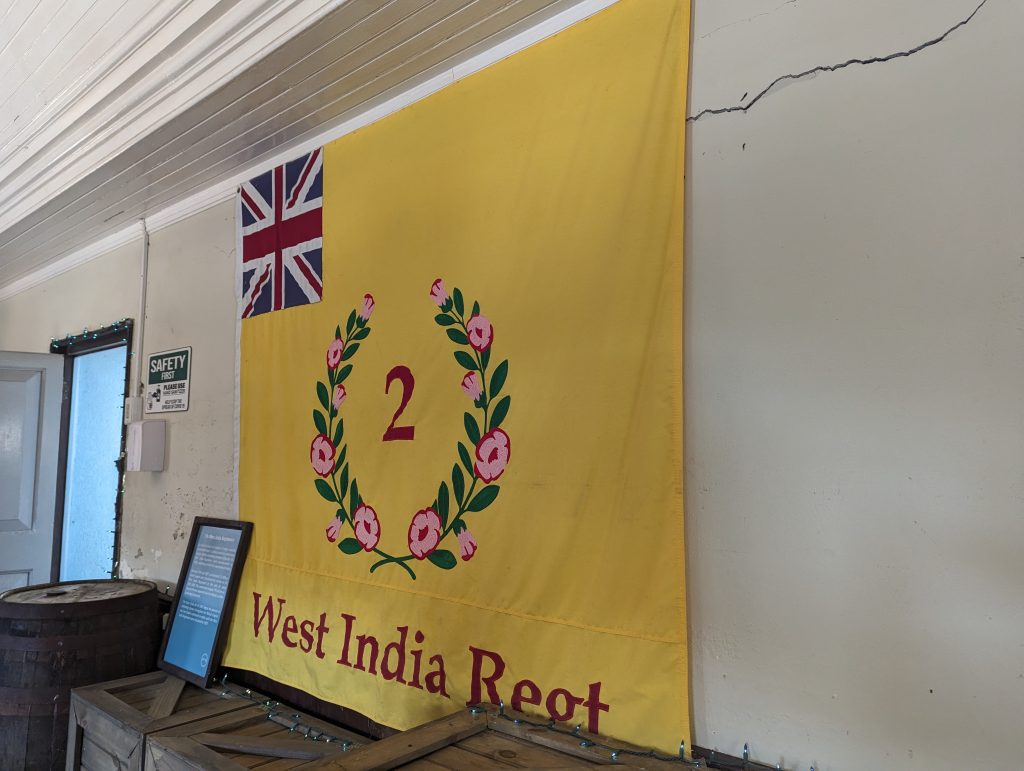
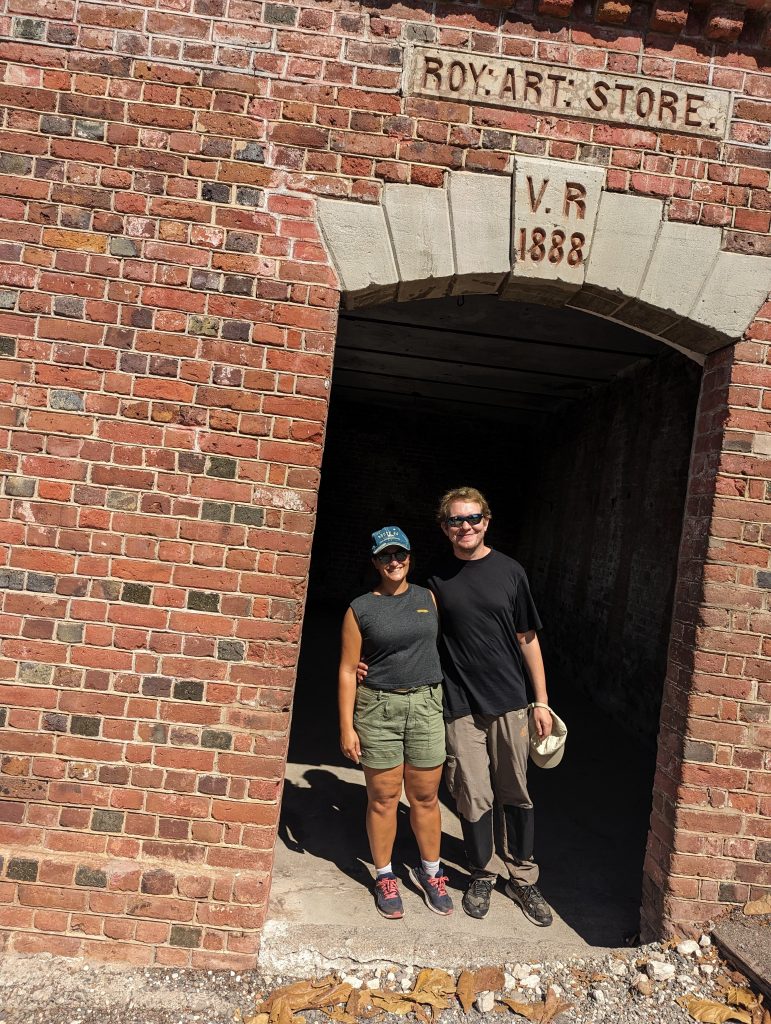
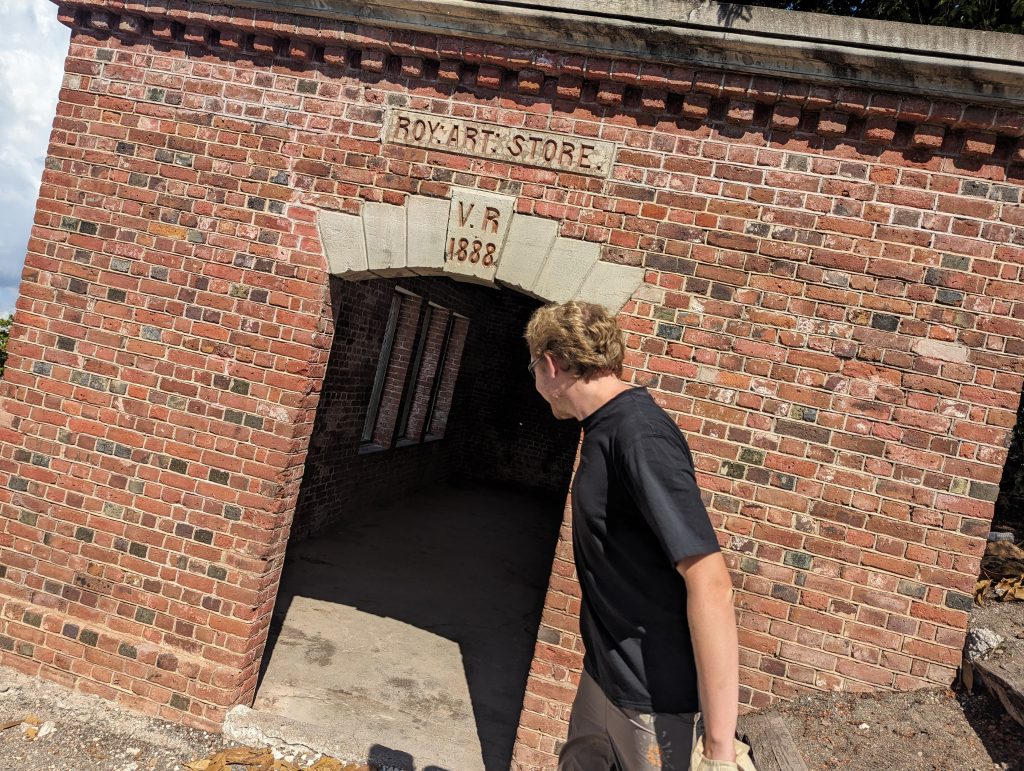
- There are several small houses in the fort itself, including the house where the soldiers lived, a small prison and the magazine where the ammunition was stored.
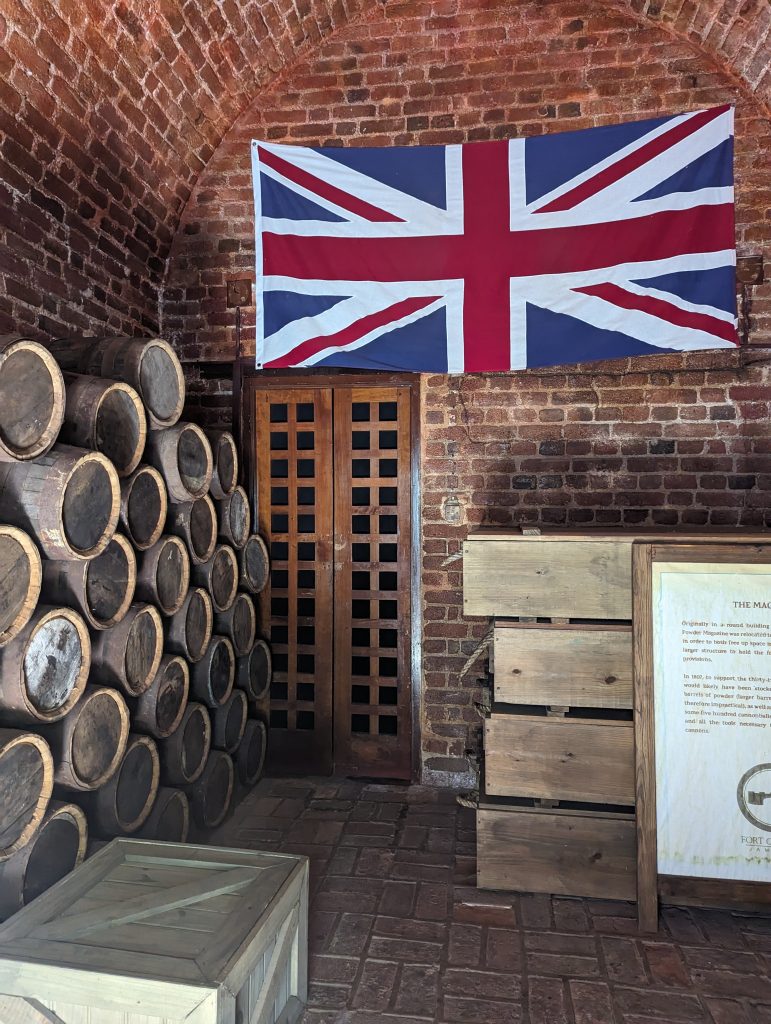
- We also see the latrines, which, like Roman latrines, were perfect for people to have a chat while visiting the latrines.
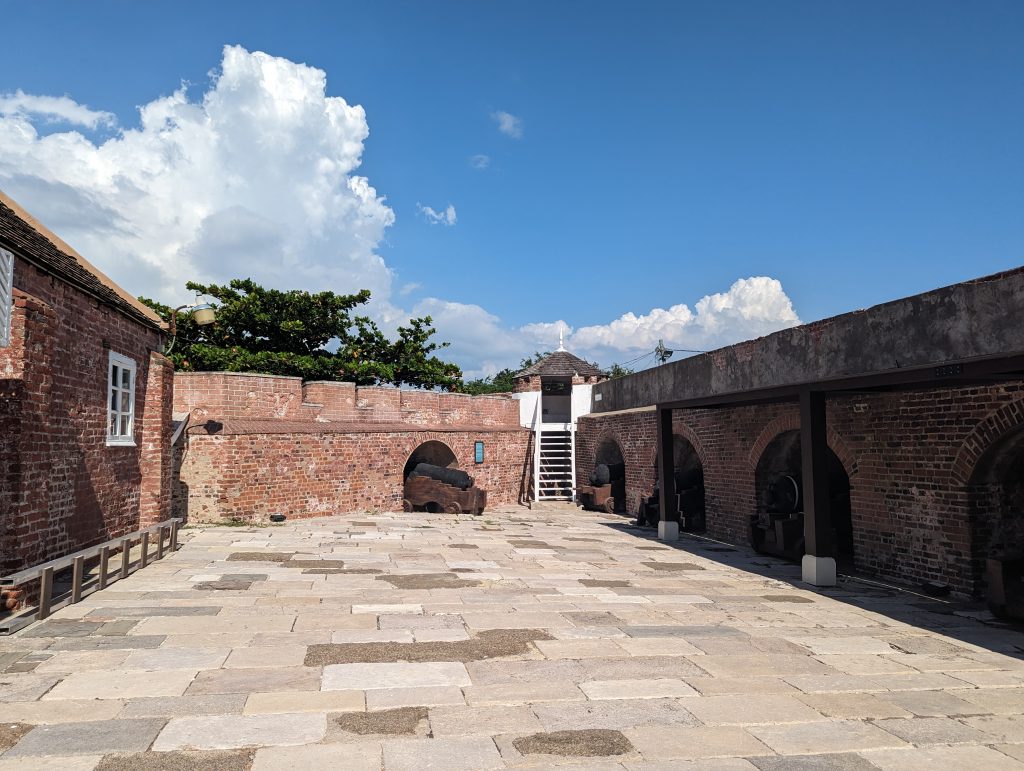
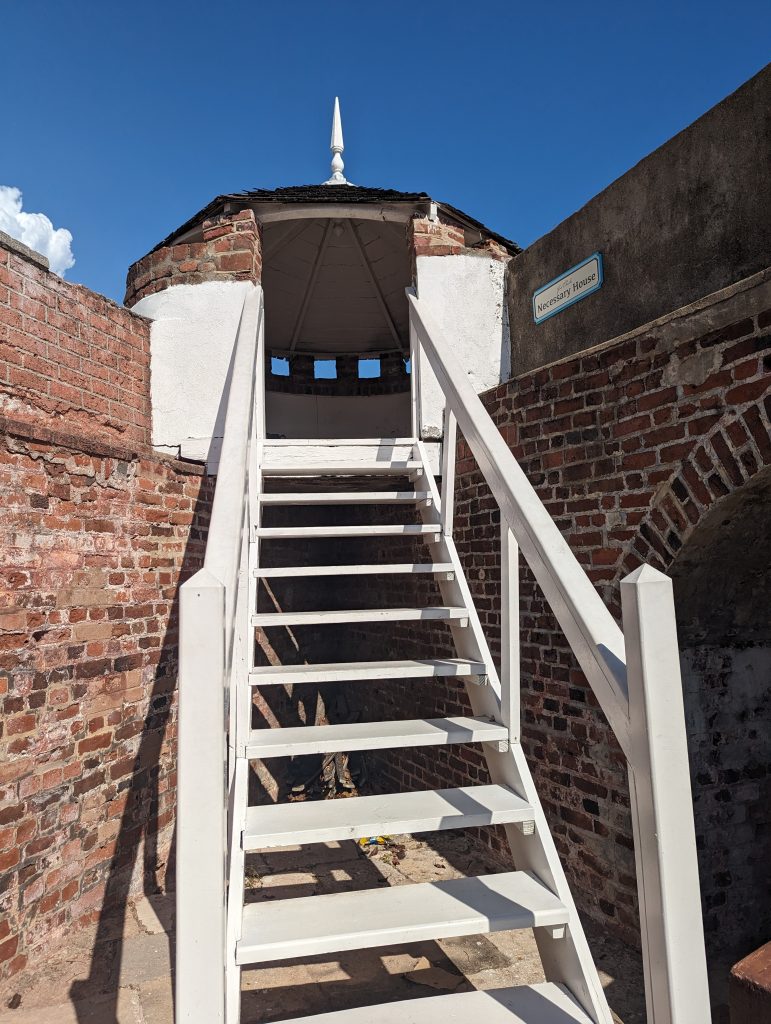
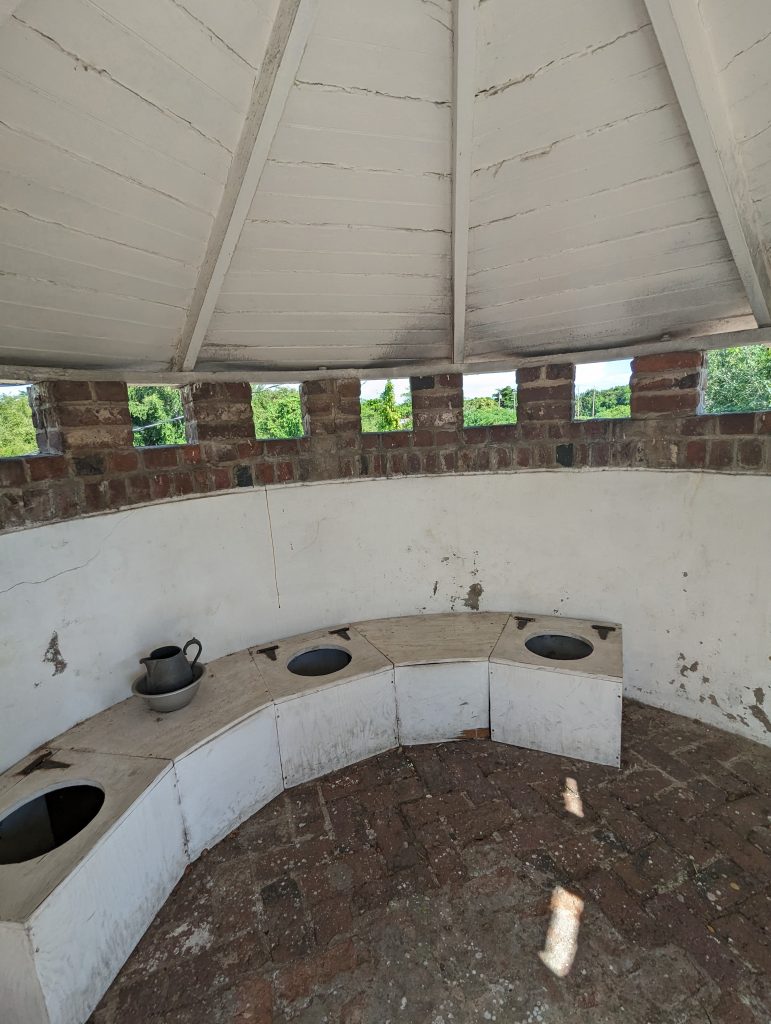
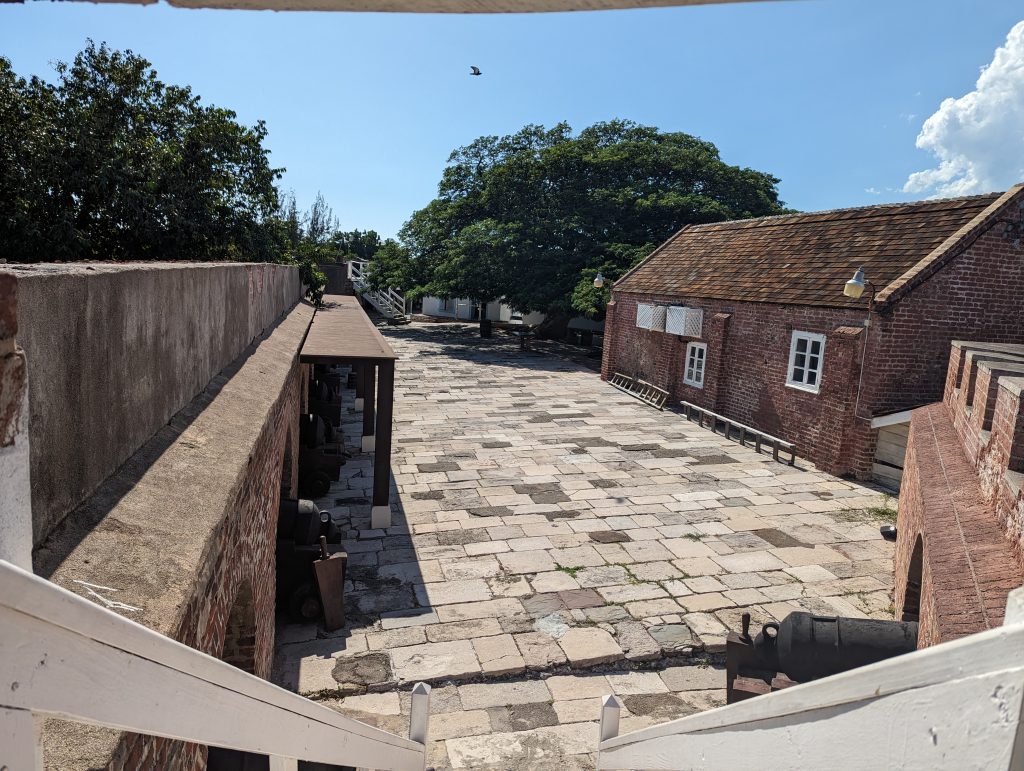
- The highlight is located outside the inner courtyard of the fort in an area in front of it and is the “Giddy House”.
- When the guide mentions it for the first time, the local woman on the tour laughs out loud and says “Oh, yes, I remember it – we visited the fort with school and this was the highlight of the tour!”
- We immediately find out why: the house was so shaken during an earthquake that it is now leaning to the side. It is called “giddy house” because you almost feel drunk when you walk through it.
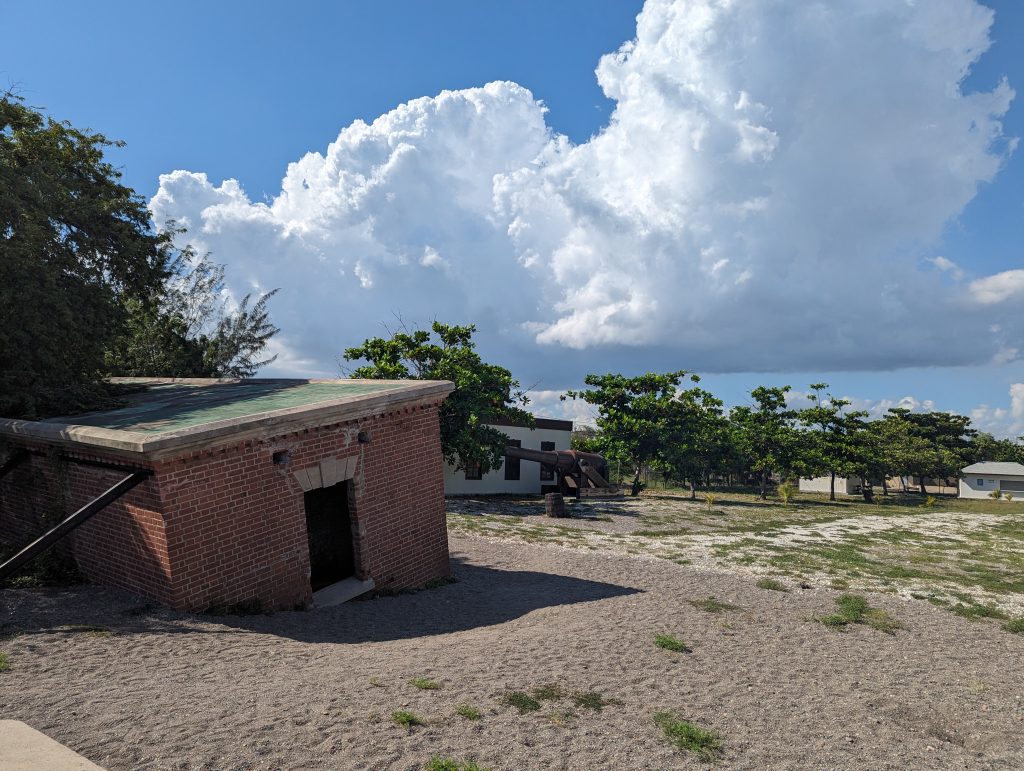
- Of course, we try it out one after the other and have a lot of fun! =)
- Finally, we take a look at the replica of a large cannon, which was so special because it could be lowered into the ground using a mechanism.
- This mechanism has been recreated and there even is a live demonstration of what it might have looked like if it had been in use.
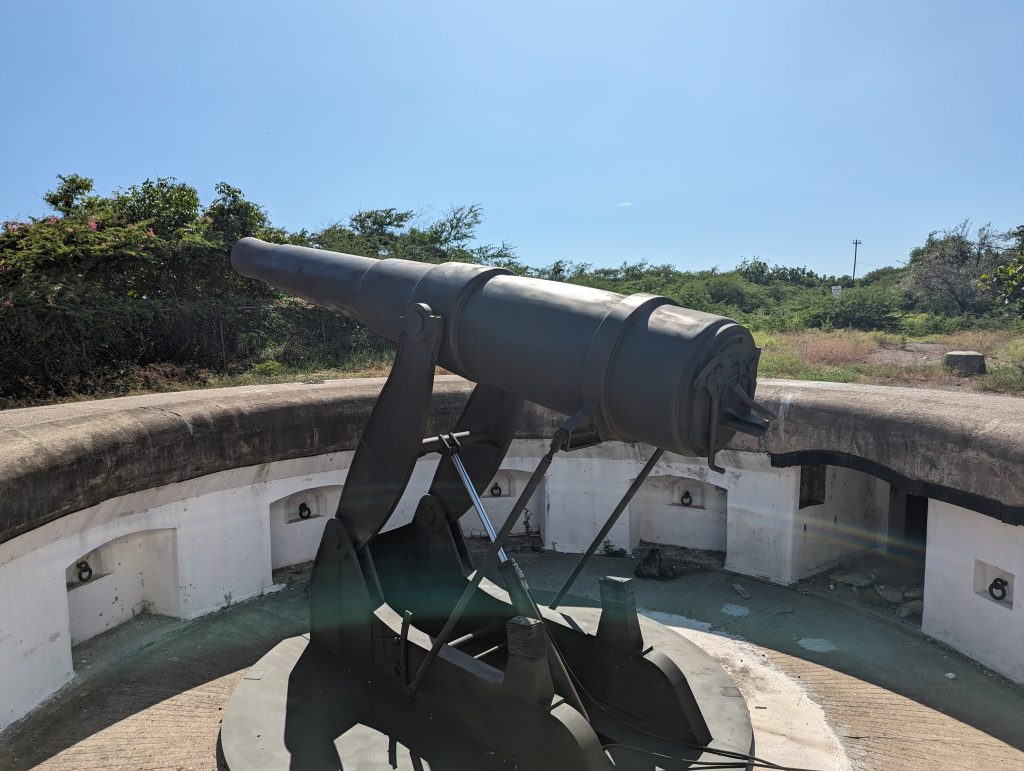
- The demonstration is accompanied by gunshots echoing from the nearby military training area – they couldn’t have managed the sound any better, says our guide.
- That’s the end of the tour and we take a look around Port Royal. It takes us 10-minutes to walk through the entire town, because today the former town is really just a small fishing village. Finally we sit down comfortably in the Gloria fish restaurant.
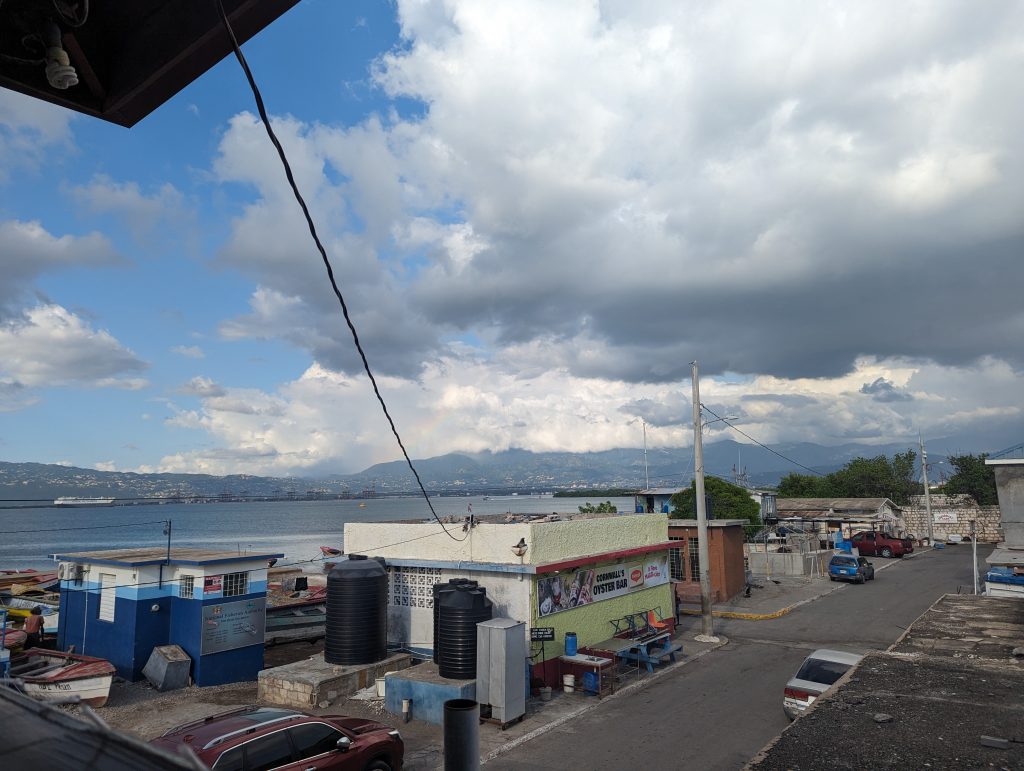
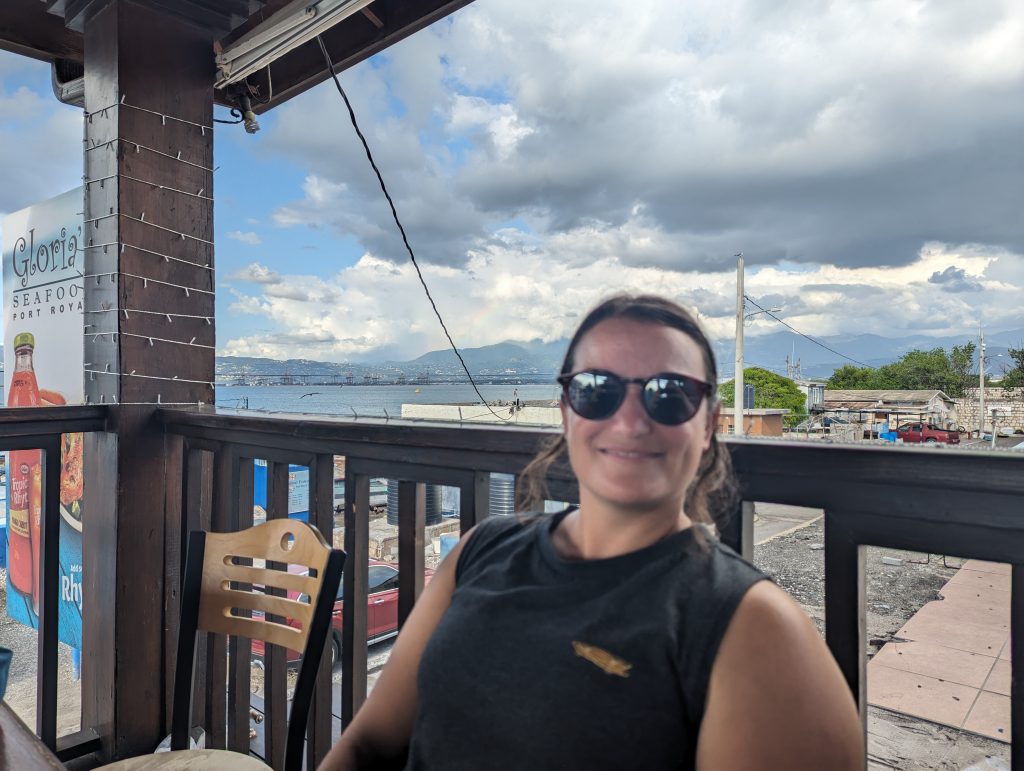
- There we promptly meet up with the group from the tour again, who of course also close their trip to Port Royal with a visit to a fish restaurant – after all, that’s the only reason Kingstonians come here in the first place.
- We’ve already read that the restaurant is known for its very long waiting times (which seems to be normal in Jamaica, as we later discover) and we can confirm this – we waited a very long time for everything.
- It doesn’t matter, because we have time and you sit outside on the roof terrace, which overlooks the harbor of Kingston and a bit of the sea, which makes the wait only half as bad.
- The food is delicious and we understand why Kingstonians come here to eat.
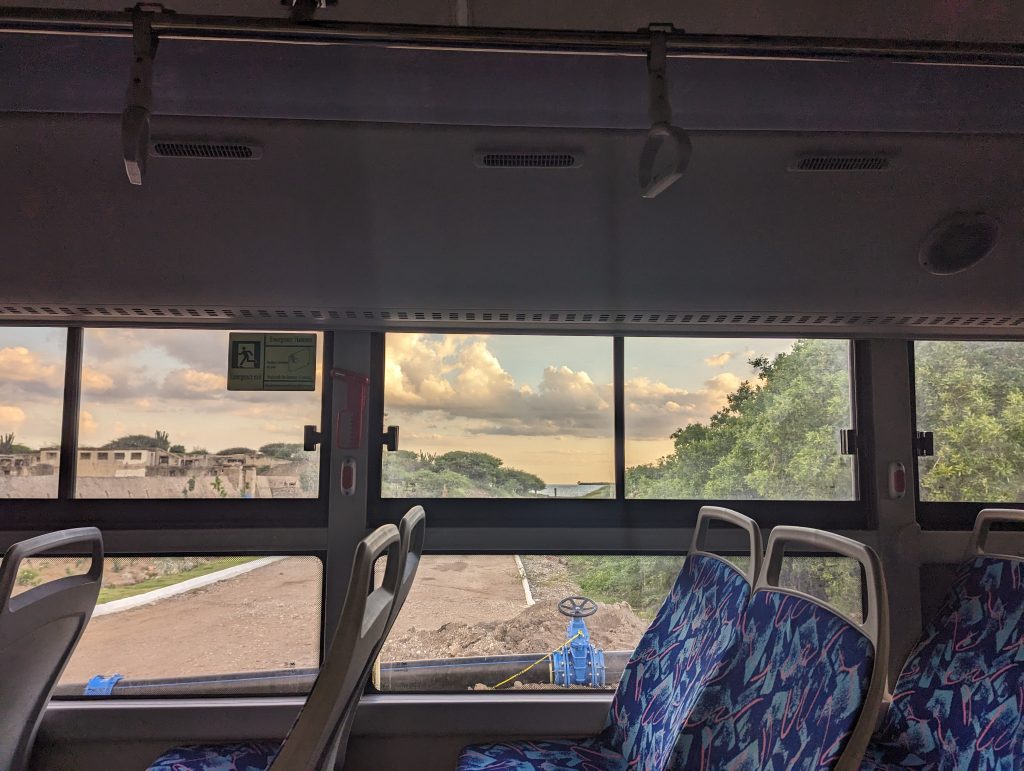
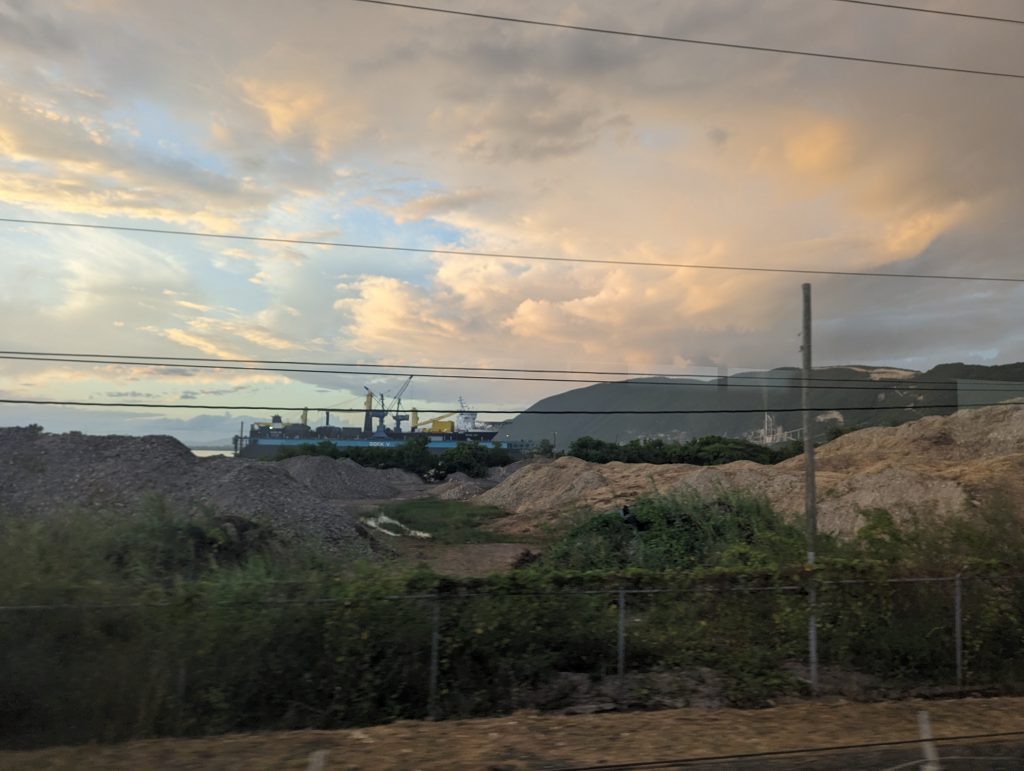
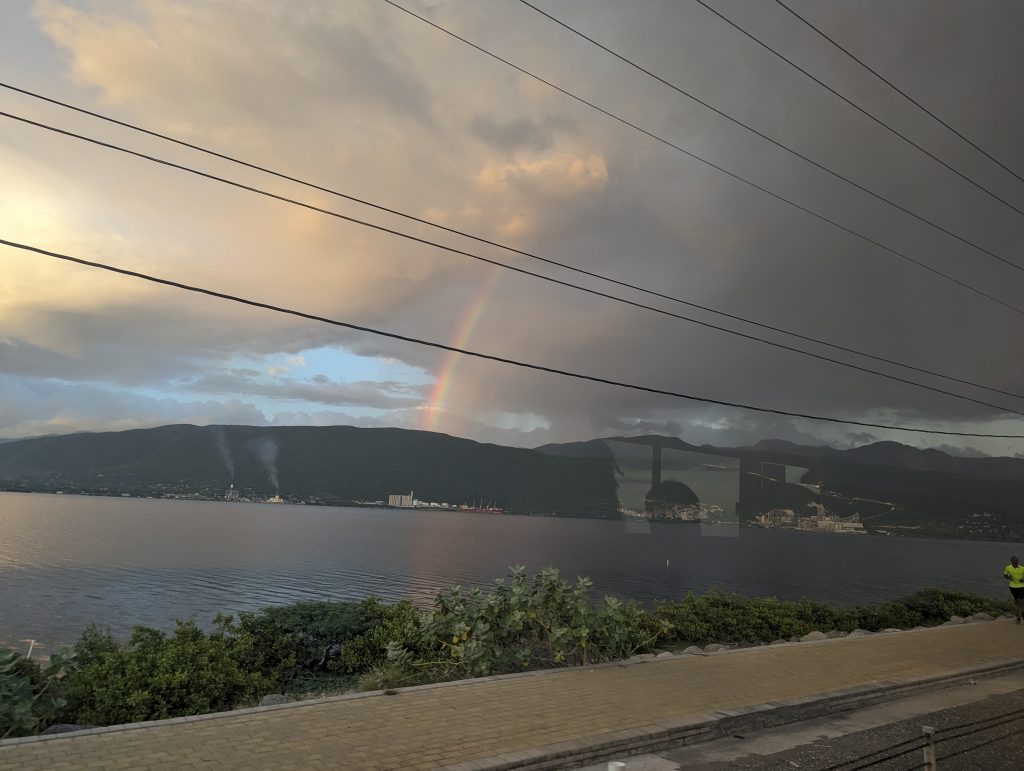
- We then take the bus back to Kingston to the parade, where our 30 bus lets us down once again and does not show up. We are glad when we find an alternative bus (via Google Maps) that takes us to the shopping center close by the hostel.
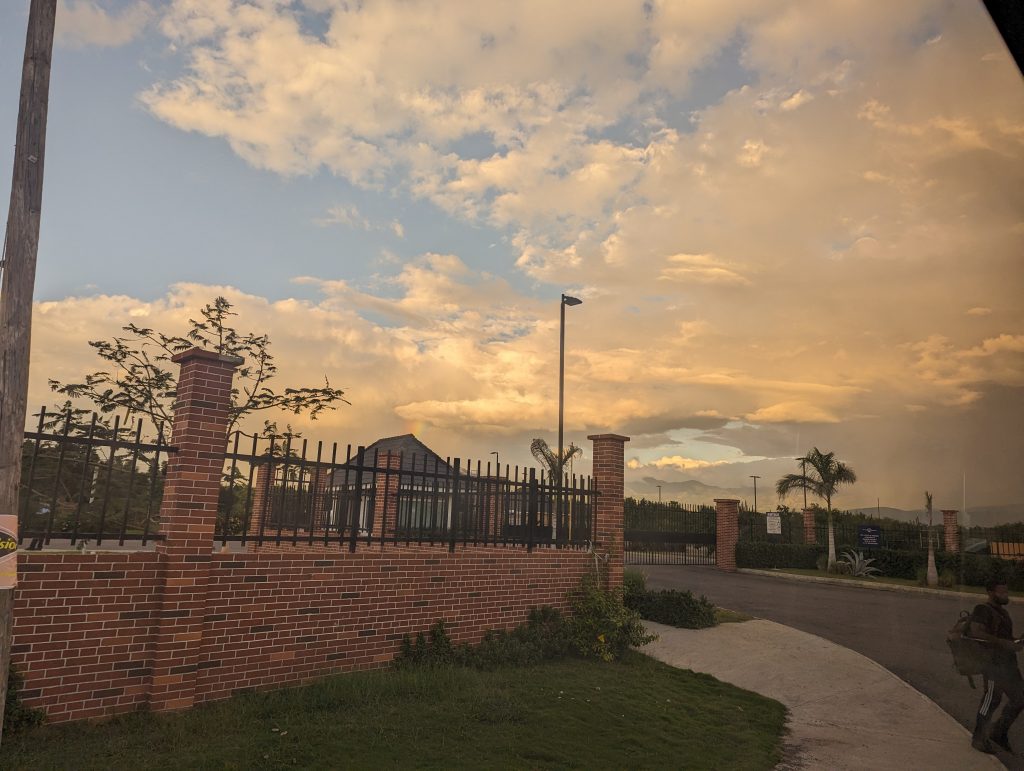
- The queue in front of the ATM is super long again – that seems to be the norm.
Thursday, 7. Dezember
One Love – Bob Marley
- To my delight we sleep in today – yeah!
- Then we decide to try our luck again with the 30 bus.
- At the bus station, I’m feeling daring and order power smoothies from the fruit smoothie stand – the “Dragon” smoothie that a guy recommended to us yesterday.
- As the smoothie is freshly prepared, I’m a little nervous and keep looking at the road to see if the bus is coming yet.
- As soon as we have the finished smoothies and the change in our hands, the bus turns the corner – I can’t believe our luck.
- “Perfect timing” indeed.
- The right bus this time takes us into the city to the station where we are supposed to change to the 75.
- It seems to run at a similarly crazy frequency as the 30, so when one of the shared cabs stops next to us and offers us a lift to Half Way Tree, we gratefully accept.
- Actually I’m pleased that we are trying out this mode of transport – the shared cabs are similar to those in Uganda: they stop wherever you want and take as many people with them until they are full to bursting – “You’d need something like that in LA,” I say to Matthäus, “Where a car with two passengers is seen as a carpool?!” he replies incredulously.
- We haven’t been driving five minutes when my joy turns to confusion, because apparently a huge argument breaks out between some passengers and the driver thanks to us and somehow I get the uneasy feeling that we are a trigger or at least a spark for it, because the driver keeps saying “We have visitors, it is embarassing how you behave.”
- Well, he very kindly shows us where we have to get out and where our next shared cab leaves from. As we run around the area a little confused, a lady immediately helps us, saying “The cab to Papine? It leaves from there!” – All in all, you experience real hospitality here.
- The next shared cab takes us right to the door of the Bob Marley Museum.
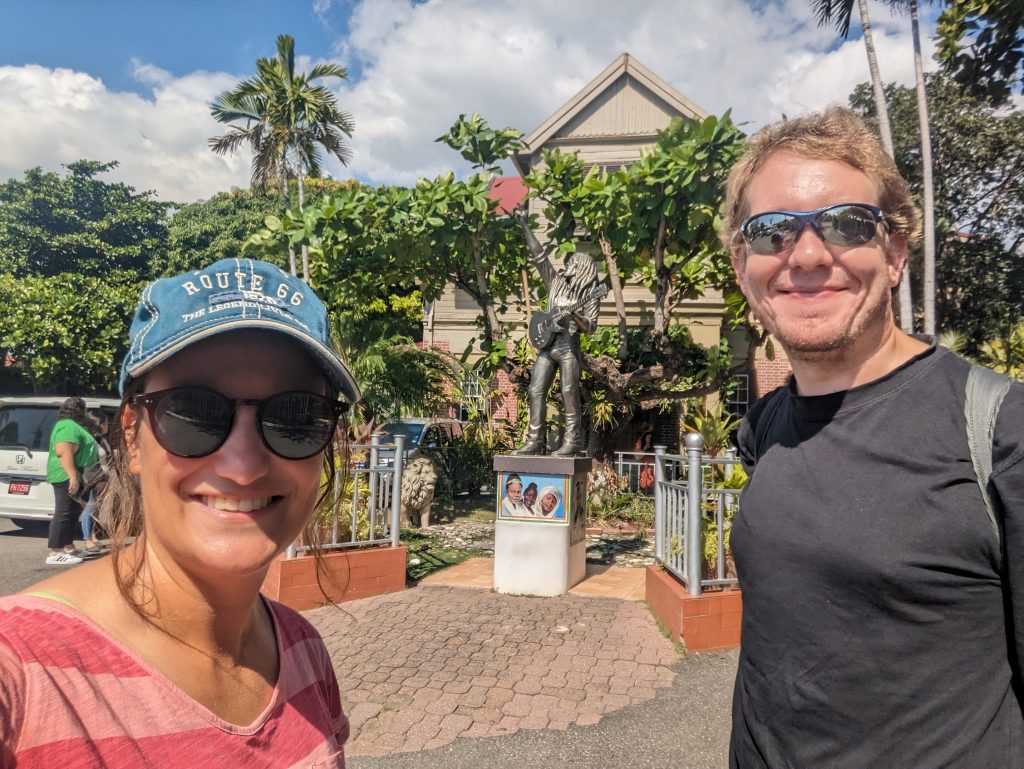
- There we finally see tourists other than the two who have been visiting Fort Charles and, above all – for the first time – white tourists.
- However, they all look as if they have already booked pre-organized tours, as they are all following a guide who organizes tickets for them.
- So we join the guides in the ticket queue and learn that you can only visit the house as part of a guided tour and that we still have a little time before the next tour starts.
- Time for coffee, nice!
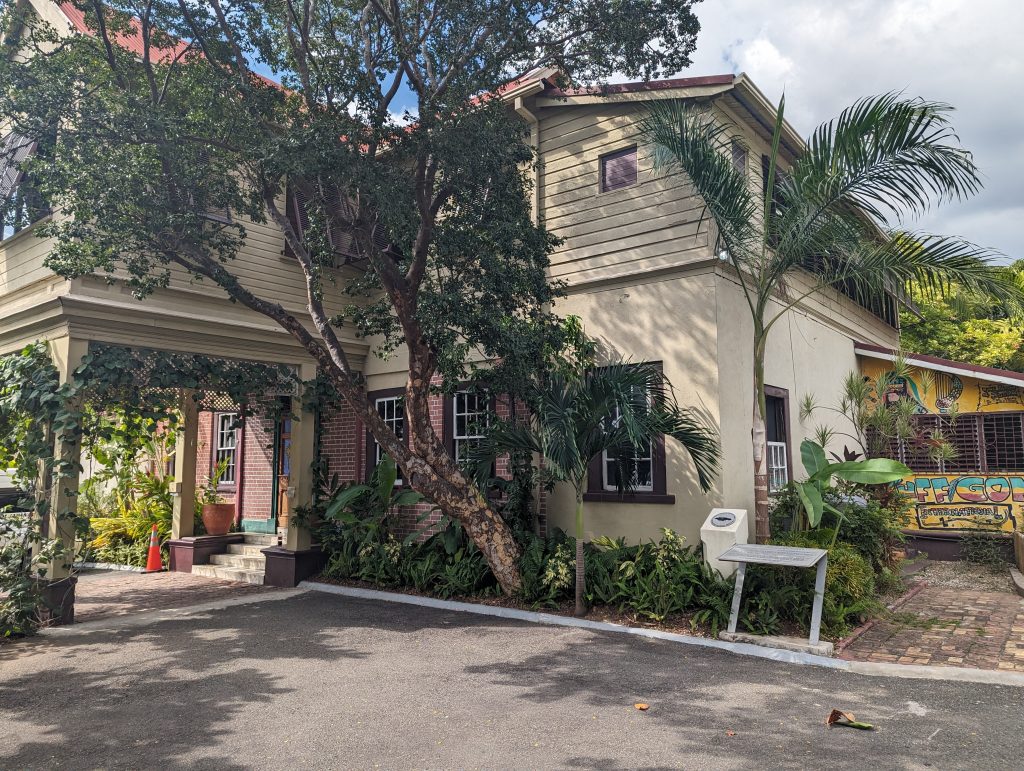
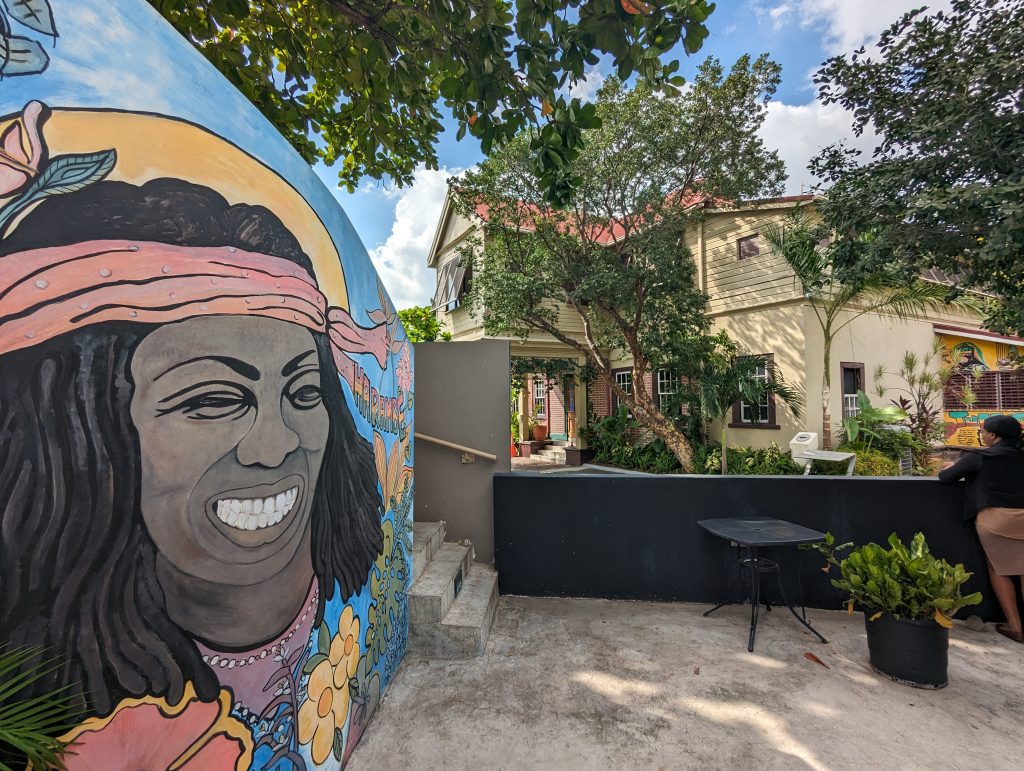
- Our guide, Iris, is totally crazy and freaked out, but also very funny – and our group consists mainly of tourists from the Caribbean who know Bob Marley and especially all his songs well and therefore sing along and interact with Iris.
- We learn that Bob Marley bought this house in the 70s when he was already quite famous. When people asked him – considering the Prime Minister living almost next door here on Hope Road – whether he would fit in, he replied unfazed “I bring the ghetto uptown.”
- Bob Marley set up a recording studio here, which his children then extended and expanded.
- His favorite room in the house was a kind of conservatory from which you can see Blue Mountain Peak and where he could watch the mountains and get inspired in his comfortable hammock.
- He was a follower of the Rastafarian ideology, which stipulates that people should eat healthily and naturally and not drink alcohol. Apparently there are no restrictions about weed (marijuana), quite the opposite – Bob Marley was a big fan of it.
- At the entrance there is a wedding photo of Bob Marley with his wife, Rita, in which Bob Marley still has no rastas and Iris tells us enthusiastically that Obama, when he was visiting here with his family, stopped in front of the picture and exclaimed “Bob Marley looks like me”.
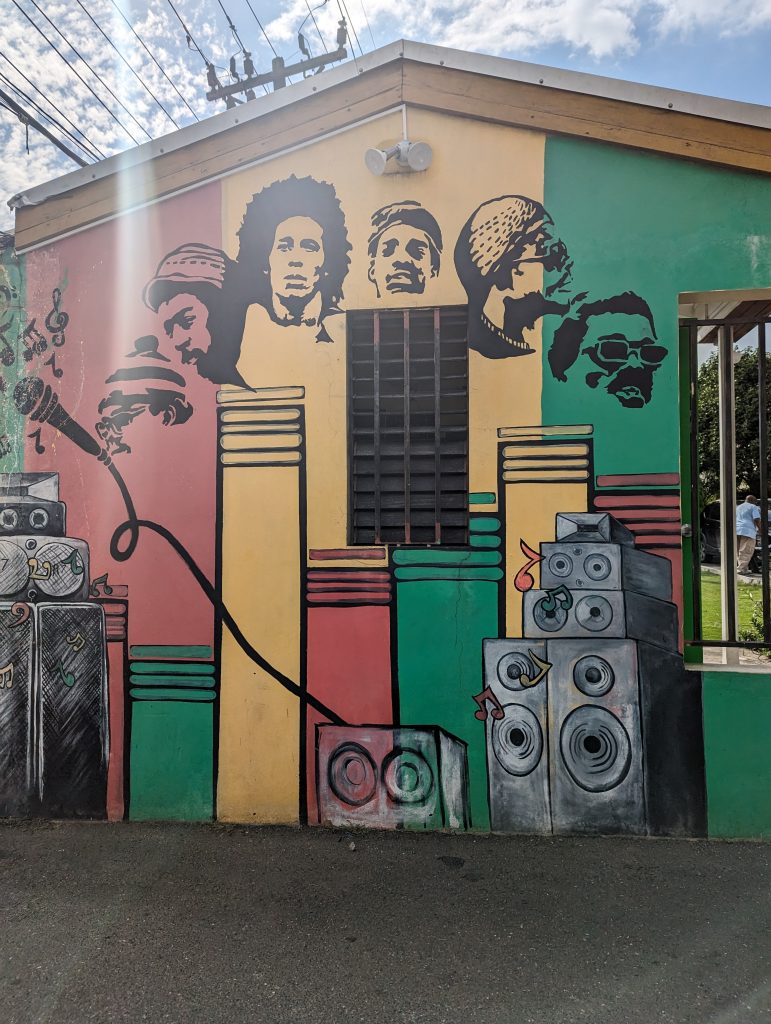
- There was an attempted assassination on Marley in that very house. Up until today one can see the bullet holes – by enormous luck, all the band members and Bob Marley’s mom, who was also in the house at the time, escaped unscathed and only suffered minor injuries, which is why they performed two days later – at the famous “One Love” concert in Jamaica.
- Bob Marley died very young, at the age of 36, because he had cancer – although he had given several concerts in the USA shortly before, his last in Philadelphia in 1980.
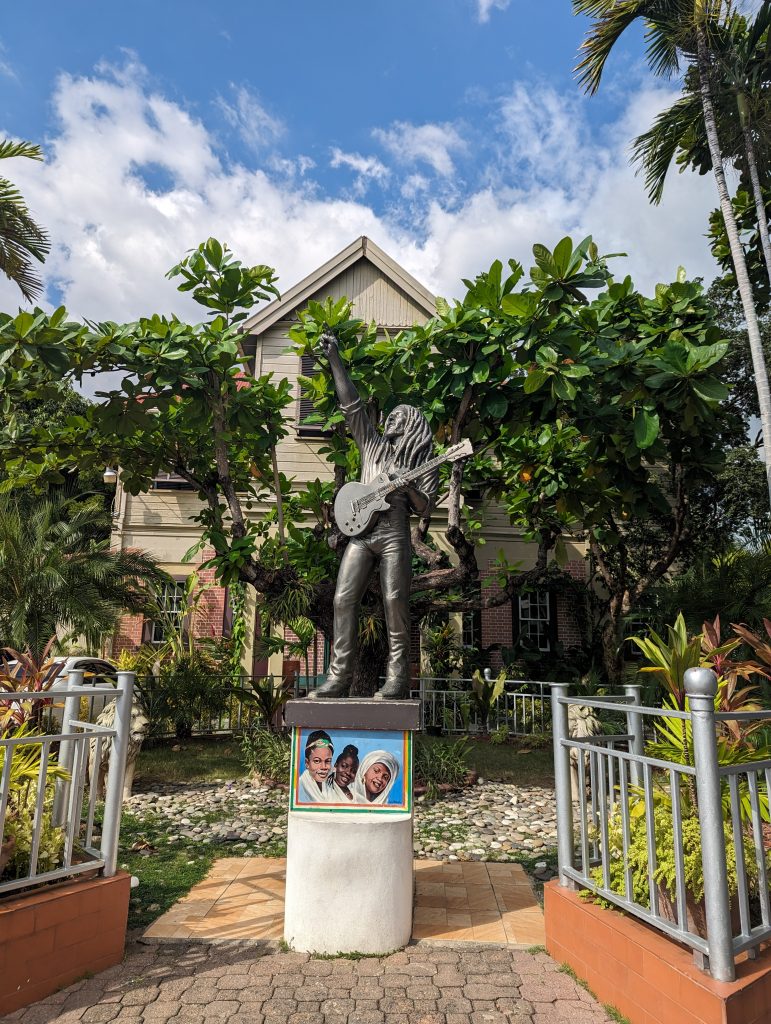
- At the end of the tour, we watch a short film that also features original recordings of Bob Marley.
- Overall, Matthäus later says that the museum was more about personality cult and worship than about Bob Marley the musician.
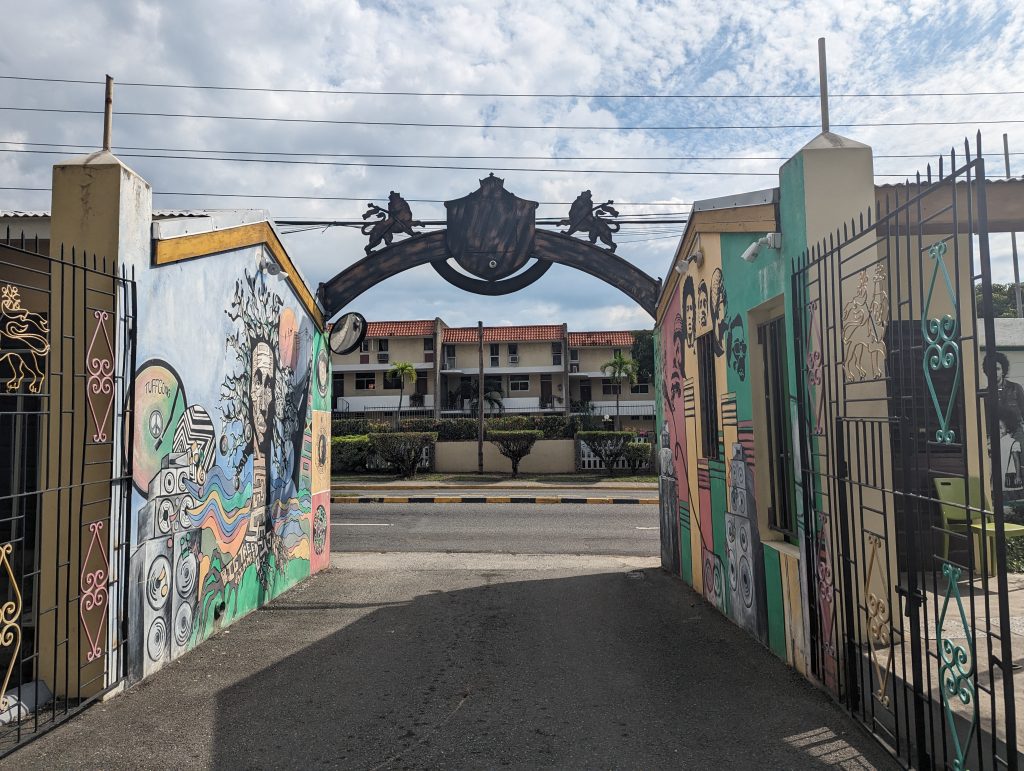
- We set off on foot to nearby Devon House, a 19th century mansion whose garden is now a popular chill-out spot for Kingstonians and whose stables and servants’ quarters are now full of restaurants and small stores – very nice.
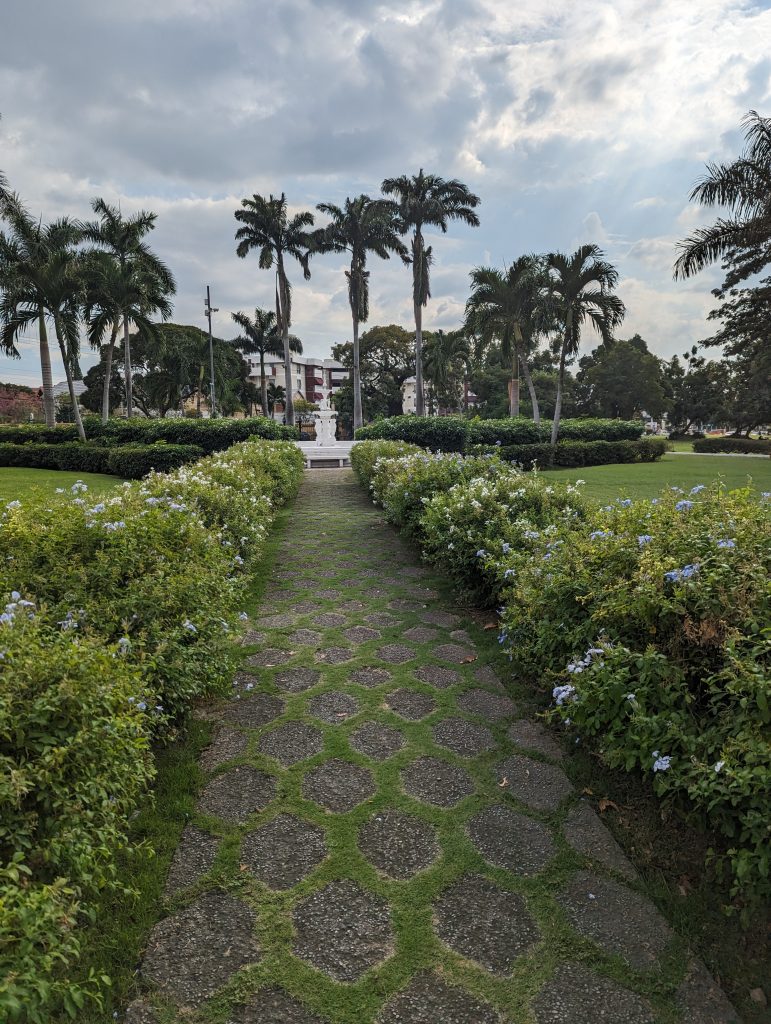
- It takes a while to find the entrance, but as we walk past we can already see the green areas where people are chilling out in the shade of the trees.
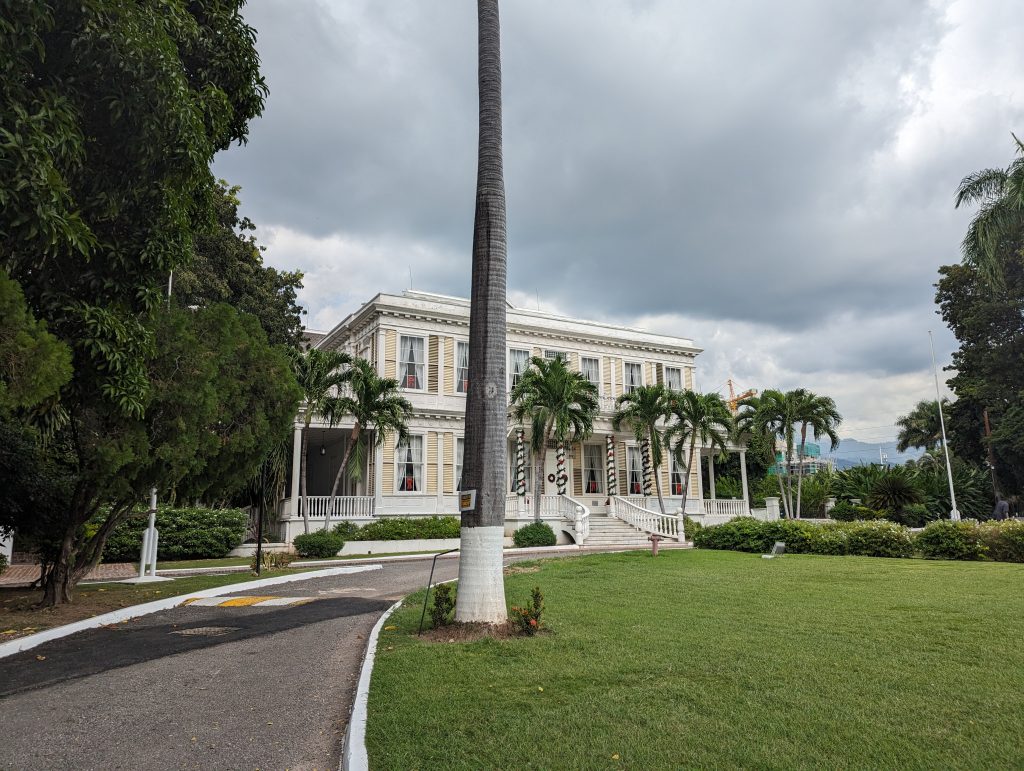
- Eventually we discover the entrance and also some of the people we have already seen at the Bob Marley Museum – although most of them are chilling out in the restaurants surrounding the house itself.
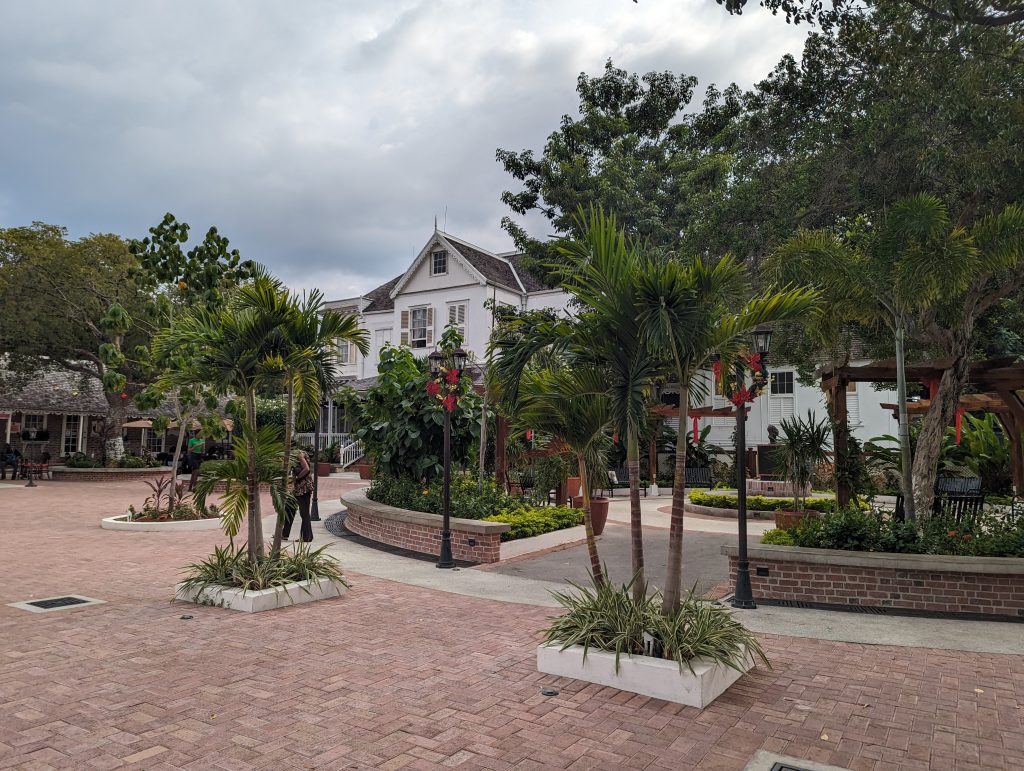
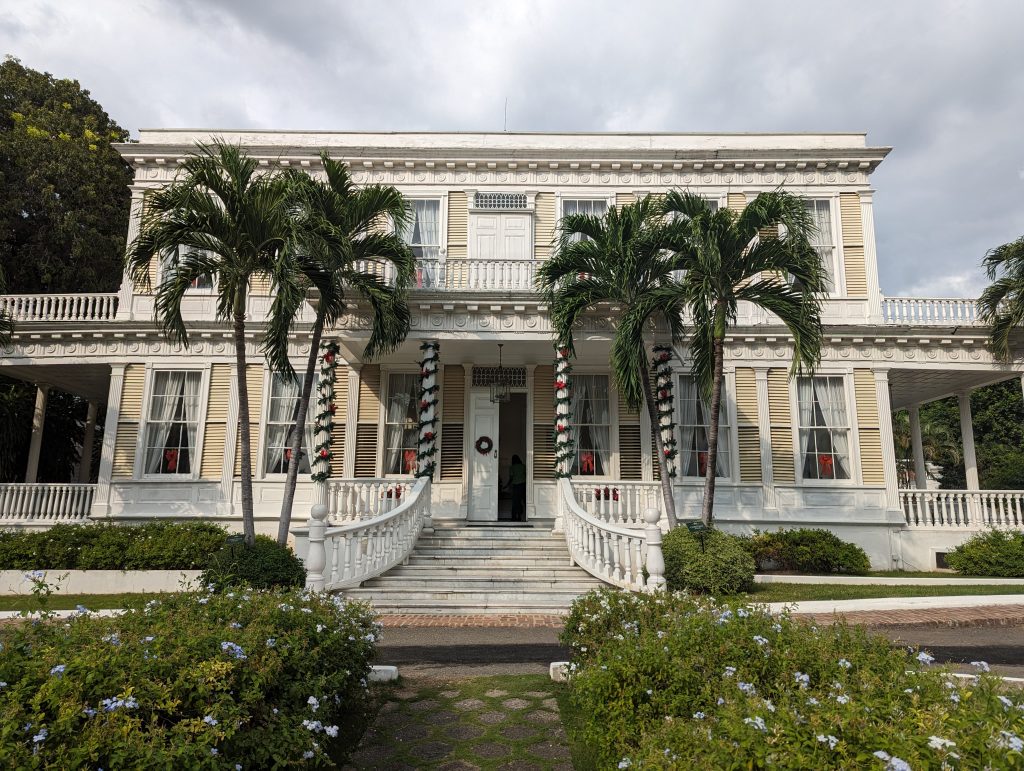
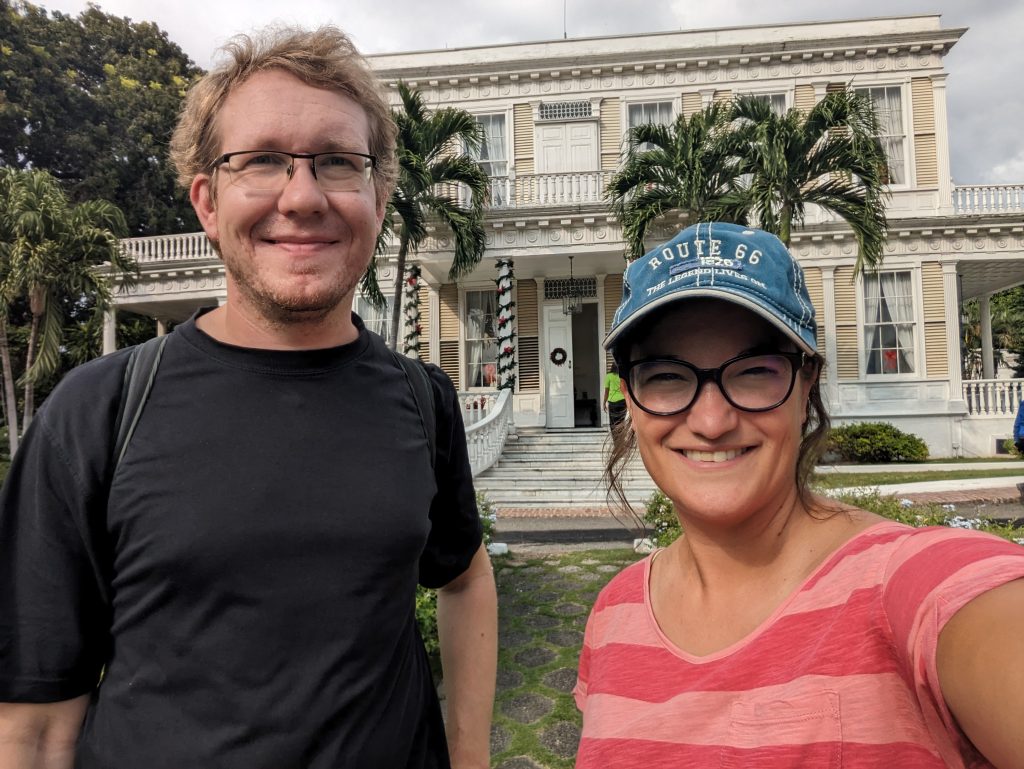
- You can only get into the house on a guided tour, which we sign up for straight away and are quite surprised when there is only one Canadian joining the tour besides us.
- The person giving the tour does her job very well and explains when the house was built, which families lived in it and which room was intended for what.
- It was built by the first black millionaire in Jamaica, who made his fortune with a gold mine in South America and then bought 99 plots of land in Jamaica (100 was not allowed).
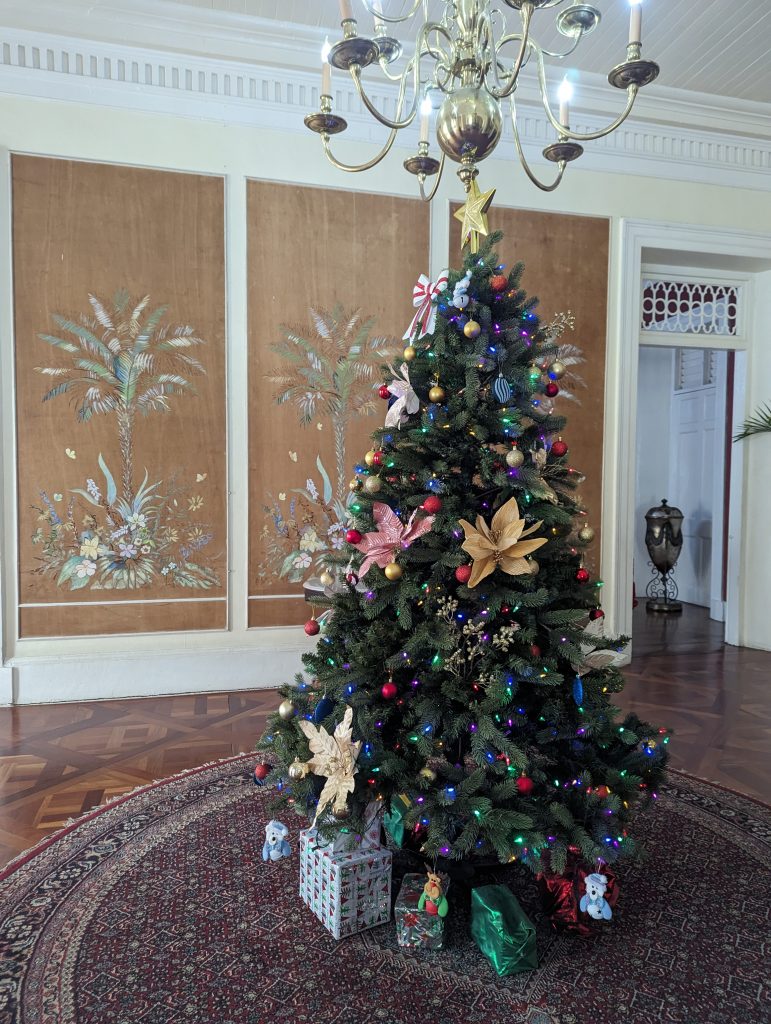
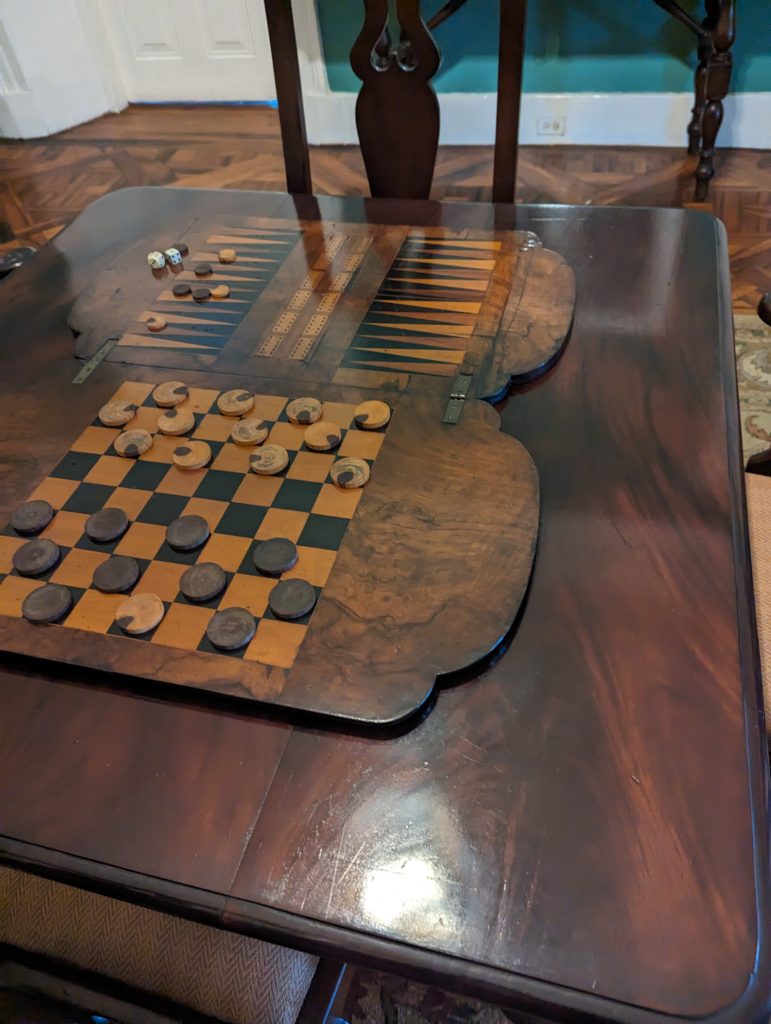
- Through the large entrance hall we reach the games room, where there is a table with backgammon and chess.
- We also see the patio, with a checkerboard tiled floor that looks out beautifully over the garden, the master bedroom, a ladies’ tea room, several bathrooms and a few other rooms, most of which are still originally furnished.
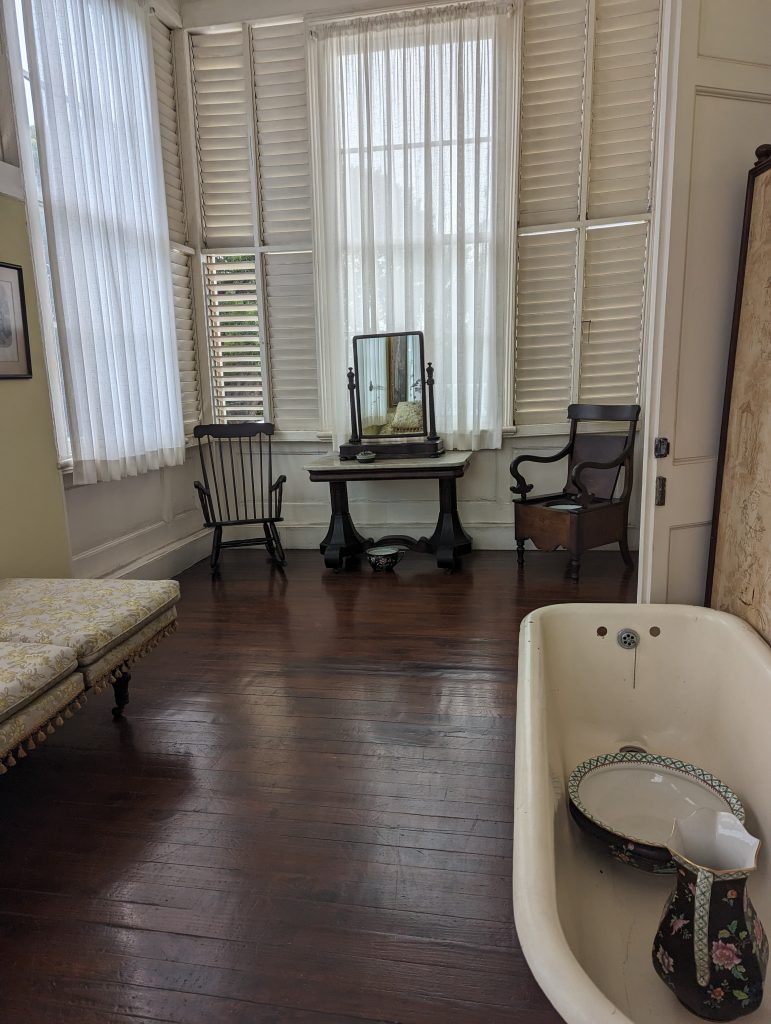
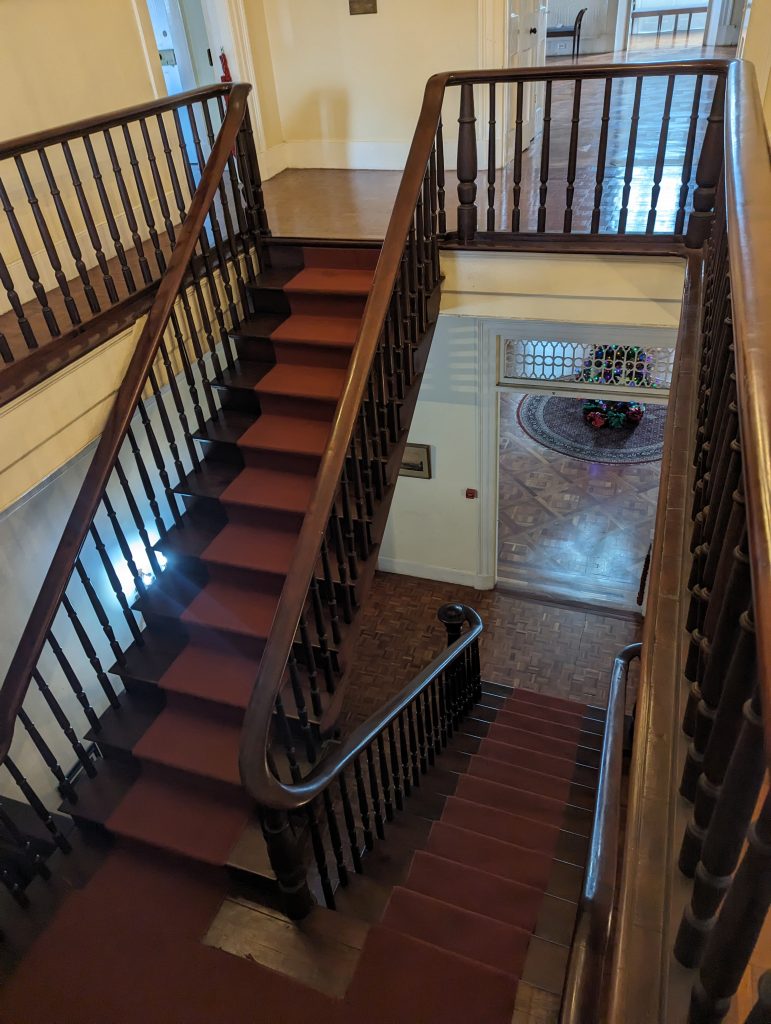
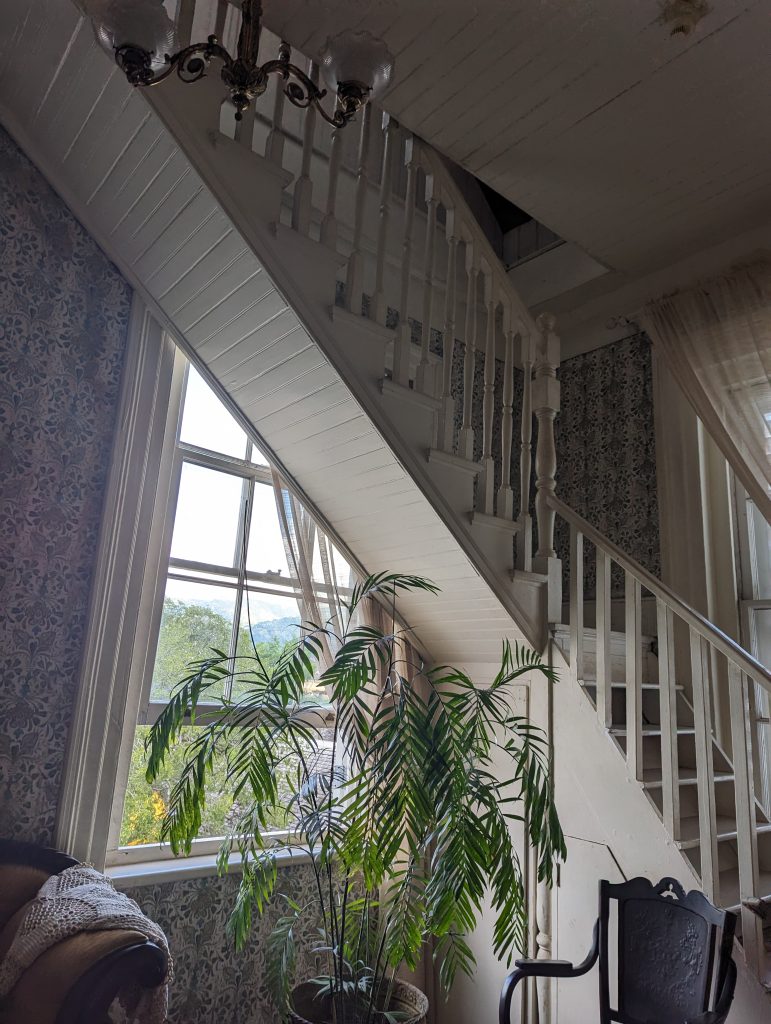
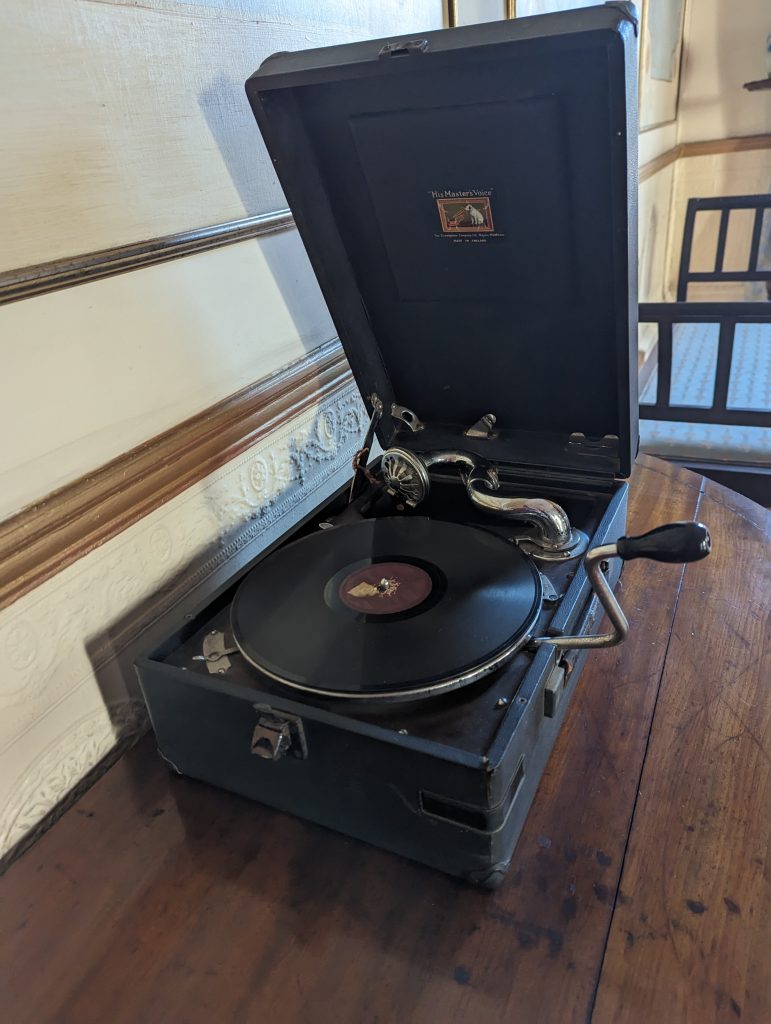
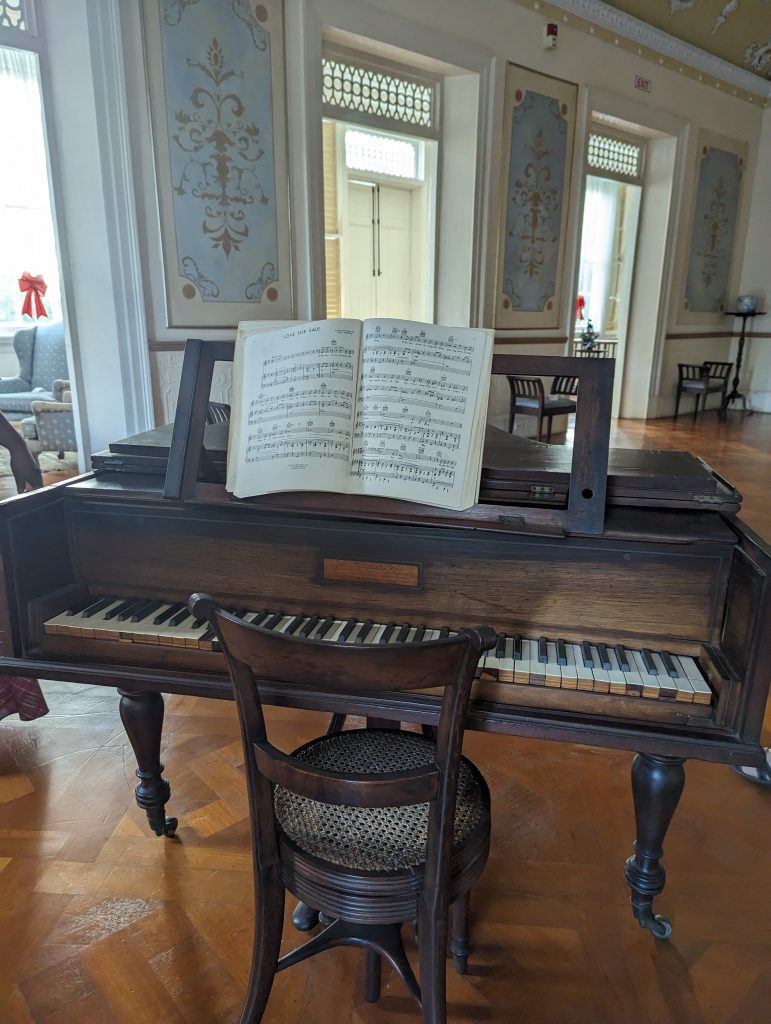
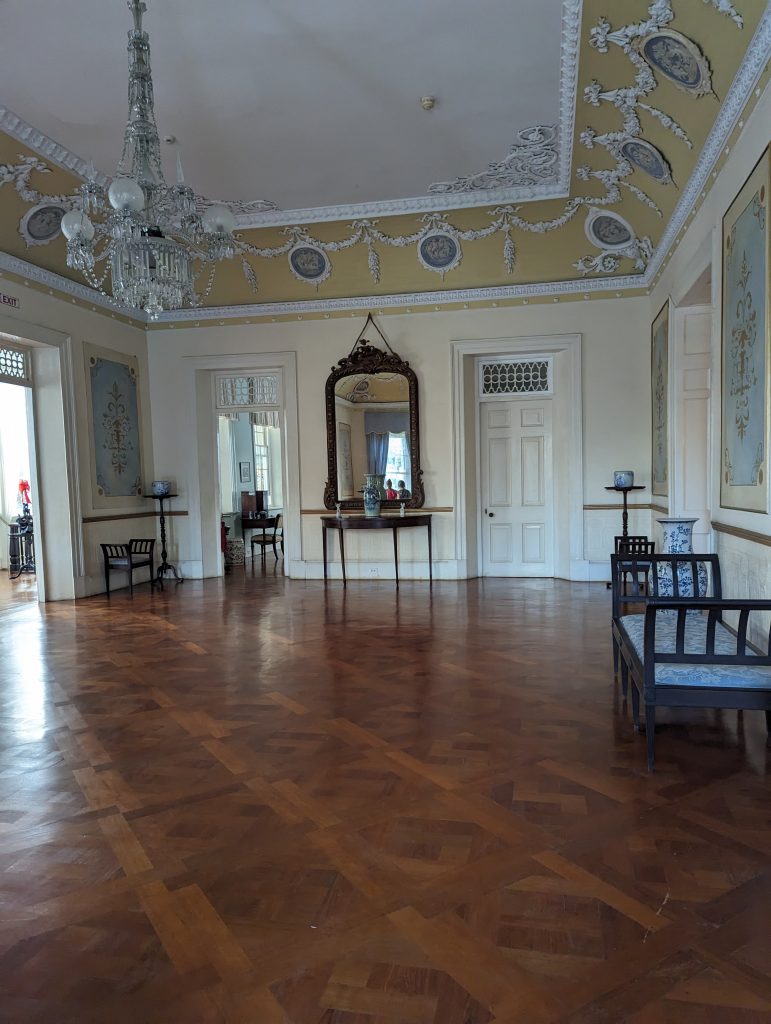
- The tour also includes a free ice cream from the ice cream store located in the collection of small stores outside – the fourth best ice cream store in the world, as our guide explains and as Matthäus has also read somewhere.
- Of course, we don’t miss out on this and it really is very tasty.
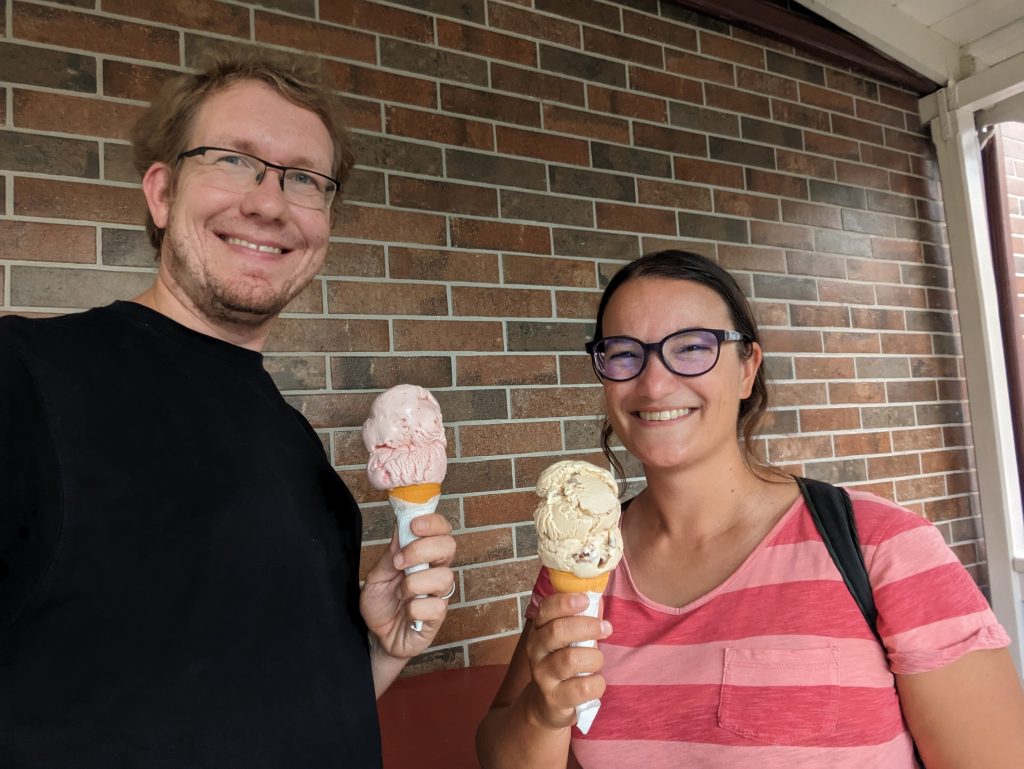
- But before that, we go to eat at the steakhouse, which is located on another veranda of the Devon House.
- It is very, very nice and overlooks the lovely courtyard around which all the stores are grouped in a cozy fashion.
- Fuelled with food and ice cream, we decide to walk back to see some parts of the city that you don’t normally get to see.
- We first pass through the embassy district, with the German and Canadian embassies.
- We then reach a less fancy residential area, which is still fancy enough.
- There are always large shopping centers and petrol stations between the houses. Also our walk takes us along large and busy streets – it is not super idyllic, but interesting nevertheless.
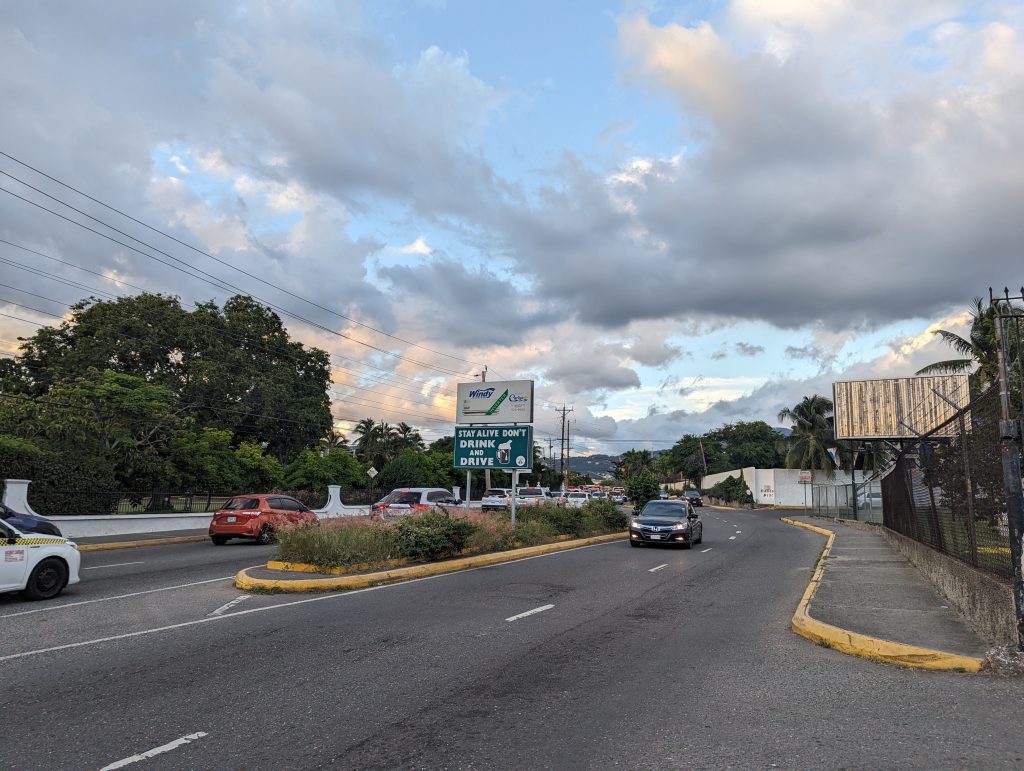
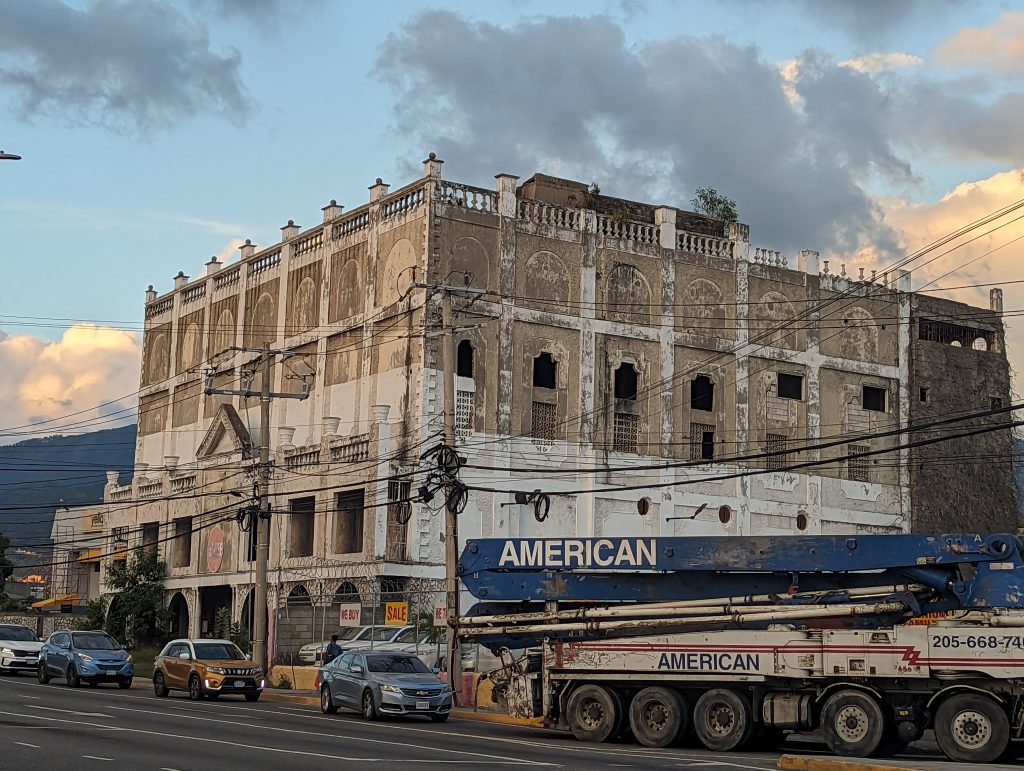
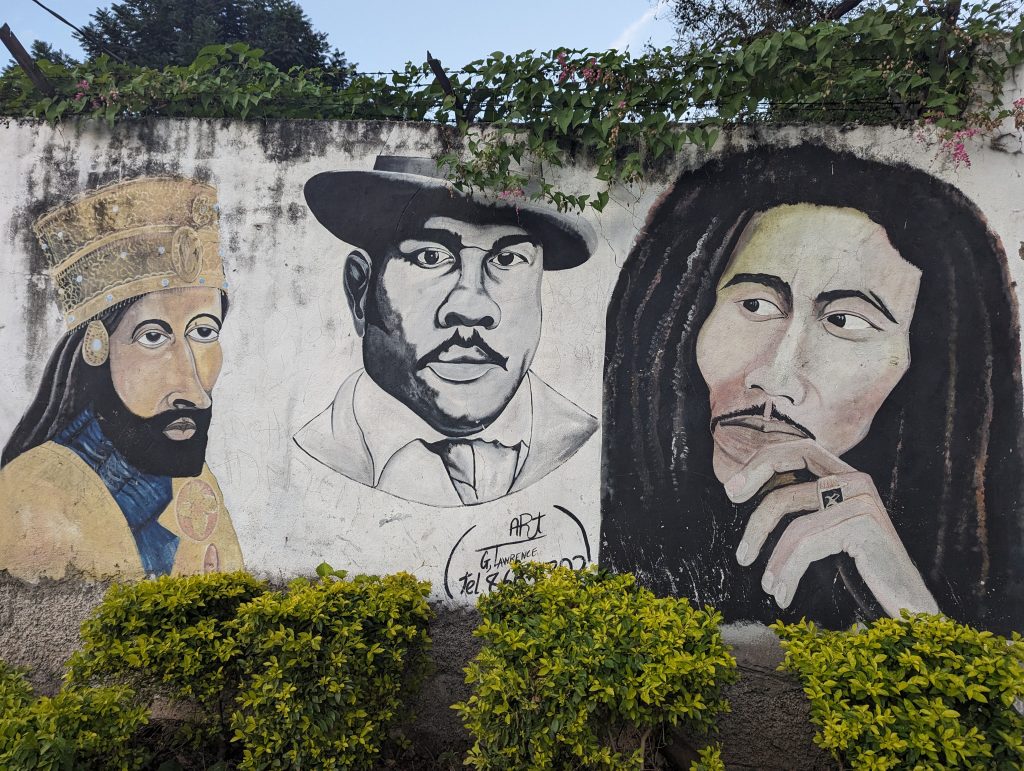
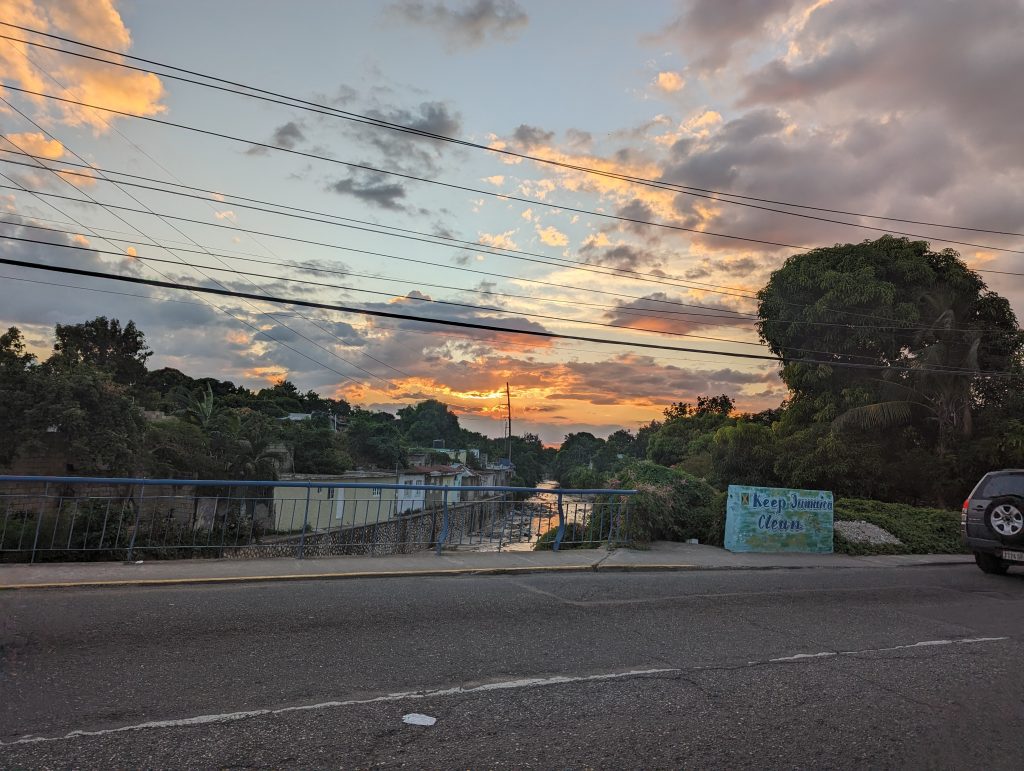
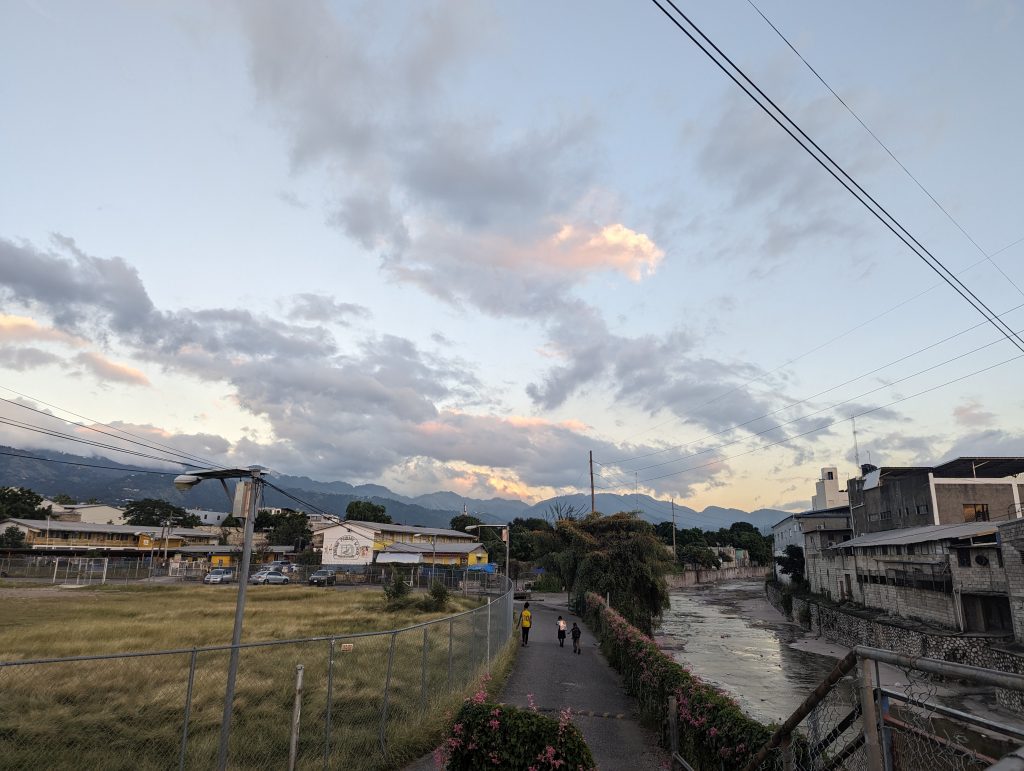
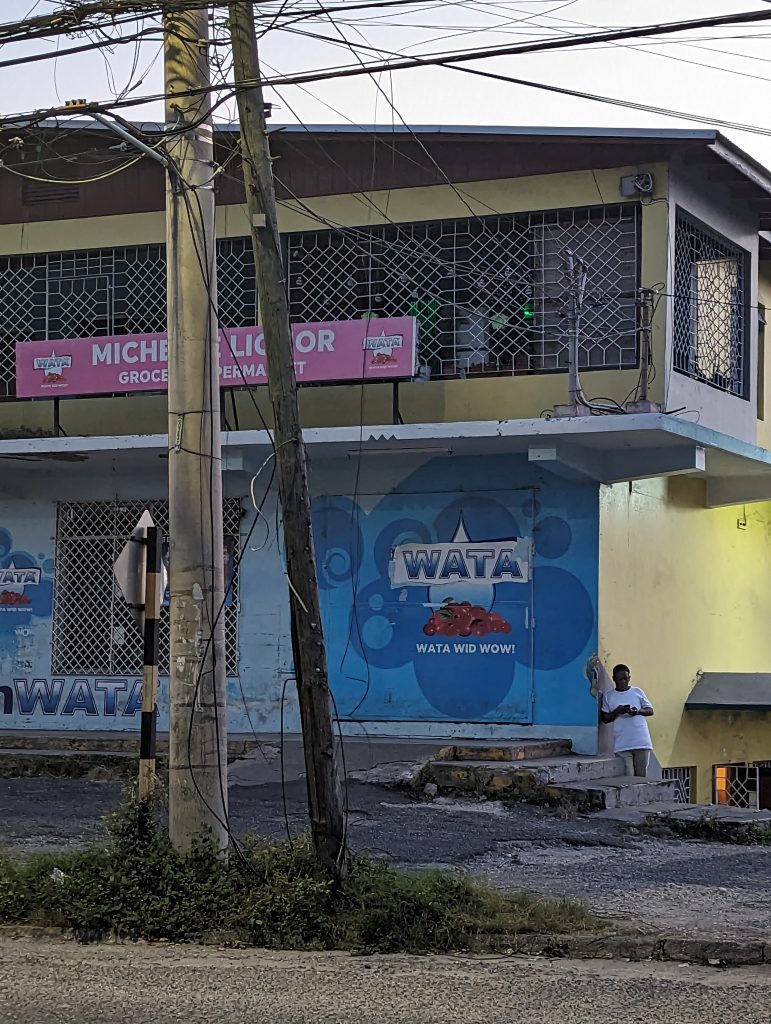
- Also in the sunset everything always looks very romantic and much nicer than in bright daylight.
- At home, we fall into bed tired, watch a movie and read for a while.
Friday, 8. Dezember
Ciao Kingston
- We have ordered a cab at 8 a.m. through our accommodation, but when we wake up, we neither find the cab or anyone belonging to the accommodation.
- So we set off on our own and take an Uber to the bus station, from where our bus leaves for Negril.
- When the Uber arrives, I want to get in at the front right in the old habit, only to realize that the driver’s seat is there – oops – similar to the XKCD comic in the picture below.

- Driving out of the city, we recognize some of the areas we walked through yesterday.