Cultural Center and Rastafari culture in Montego Bay
on Jamaica.
Friday, 15. December 2023
Rastafari Food
- Thanks to the Knutsford Express Bus, we arrive at lunchtime in the city of Montego Bay, affectionately known as “Mo’bay” by the locals.
- We take a cab to our accommodation, Mobay Kotch.
- The accommodation is a hostel, but a very special one, as it is located in an old villa in the heart of the city.
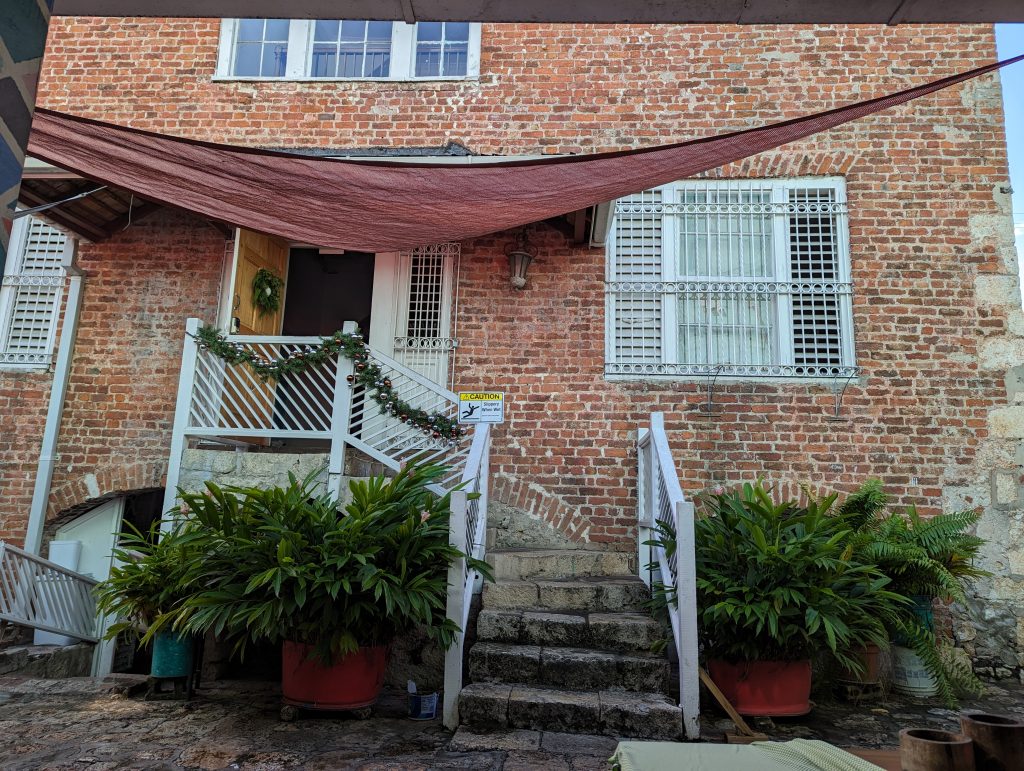
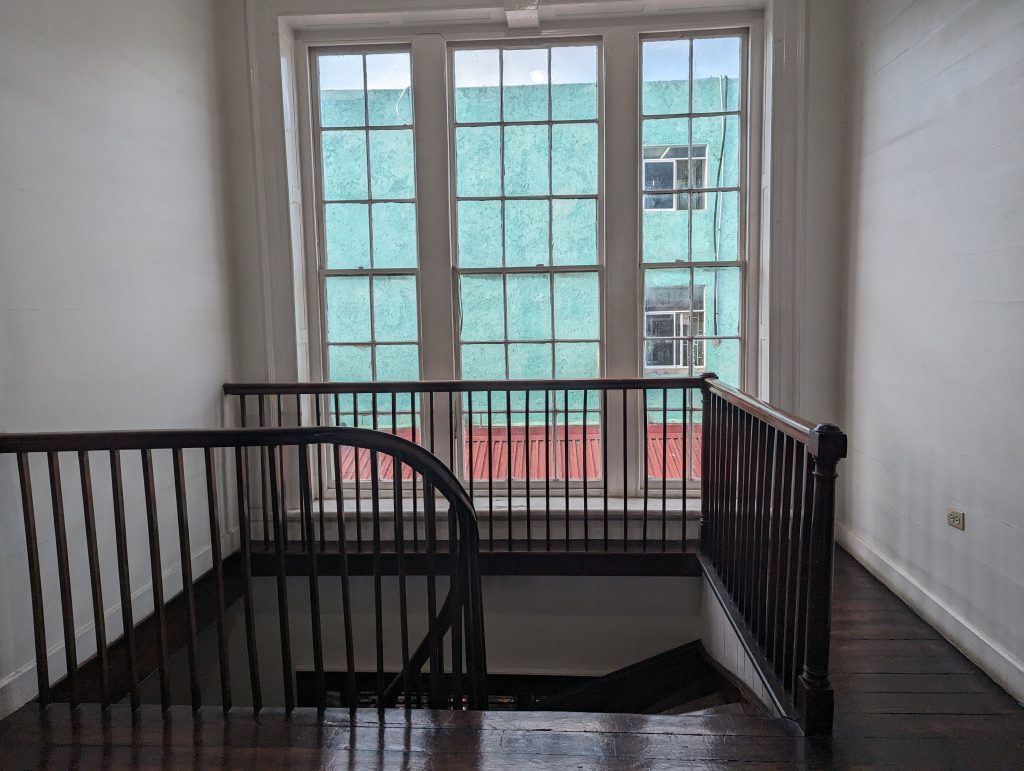
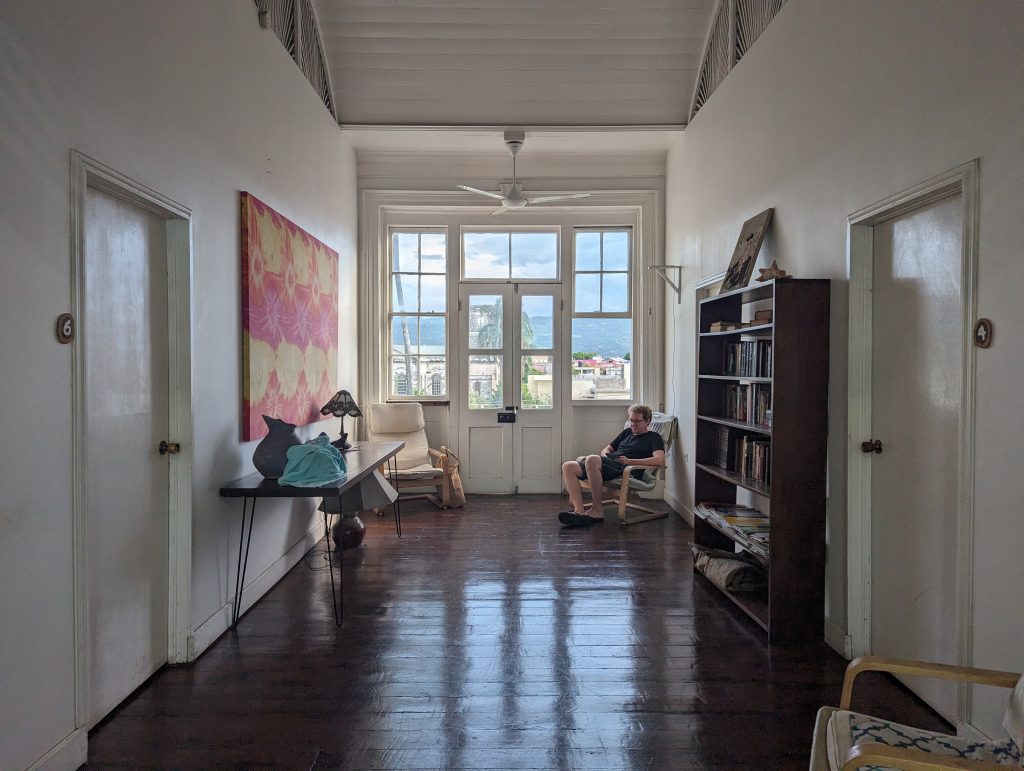
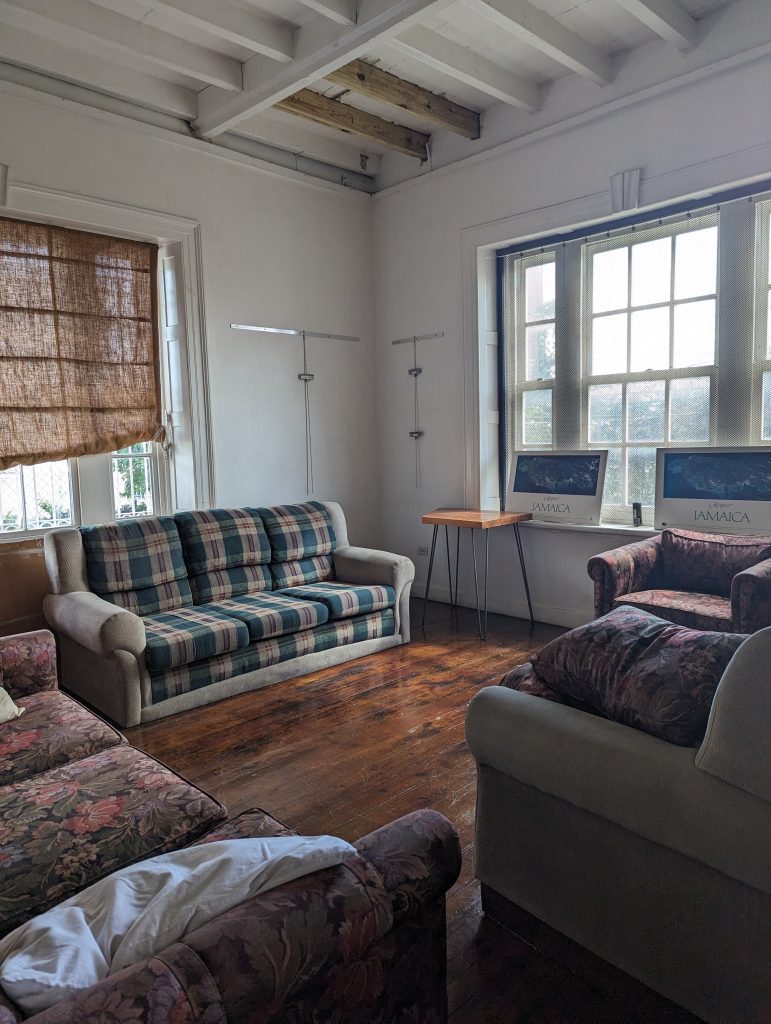
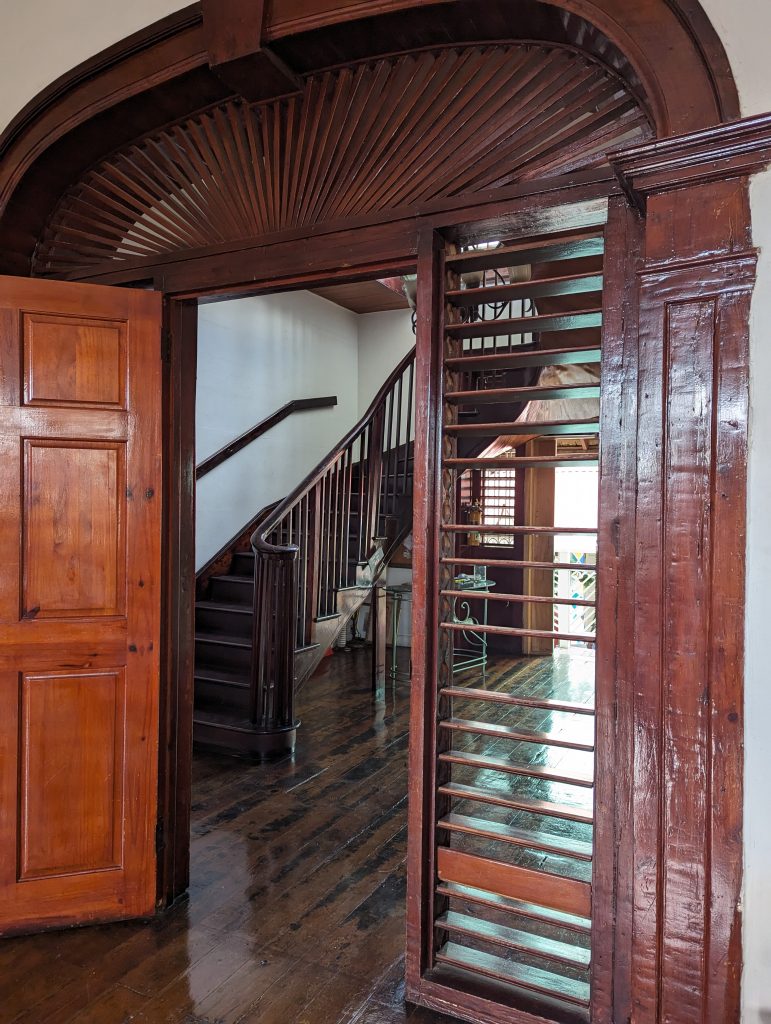
- It really has charm with its curved wooden staircase leading from the high and cozy common room to the second floor, its backyard with an equally cozy sitting area, and its wood-paneled floor that completes the picture.
- The rooms are high, like old Viennese apartments, as are the windows, which gives the whole place a bright, friendly flair.
- First we chill out in our room before heading out into the loud, lively and bustling city.
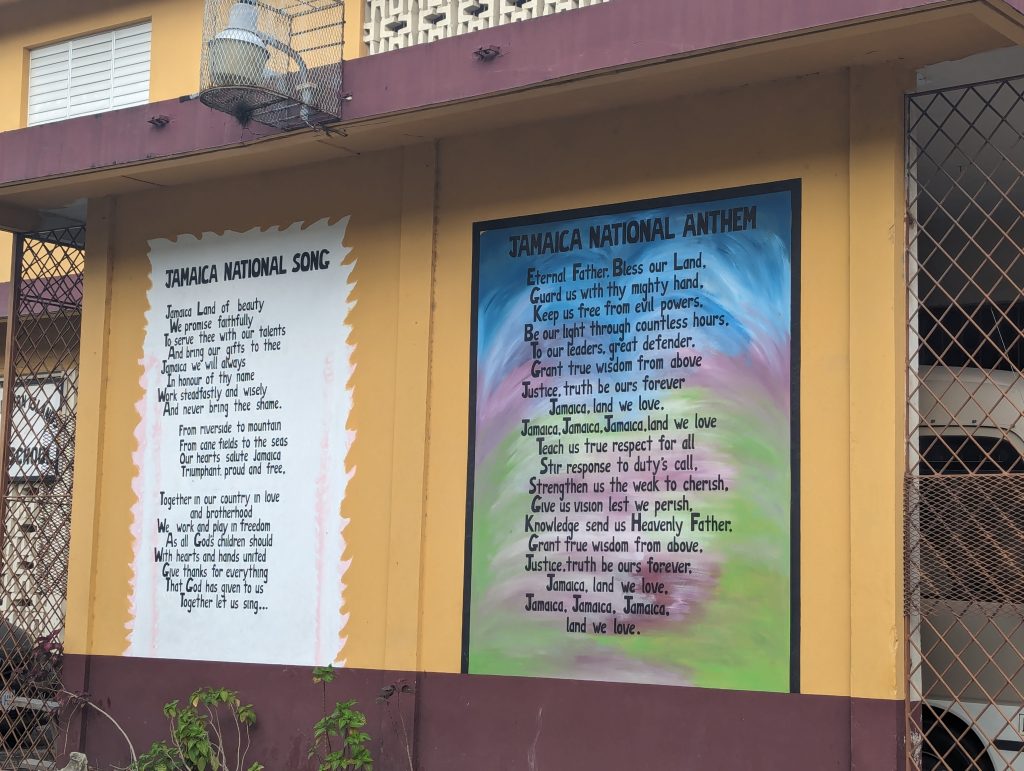
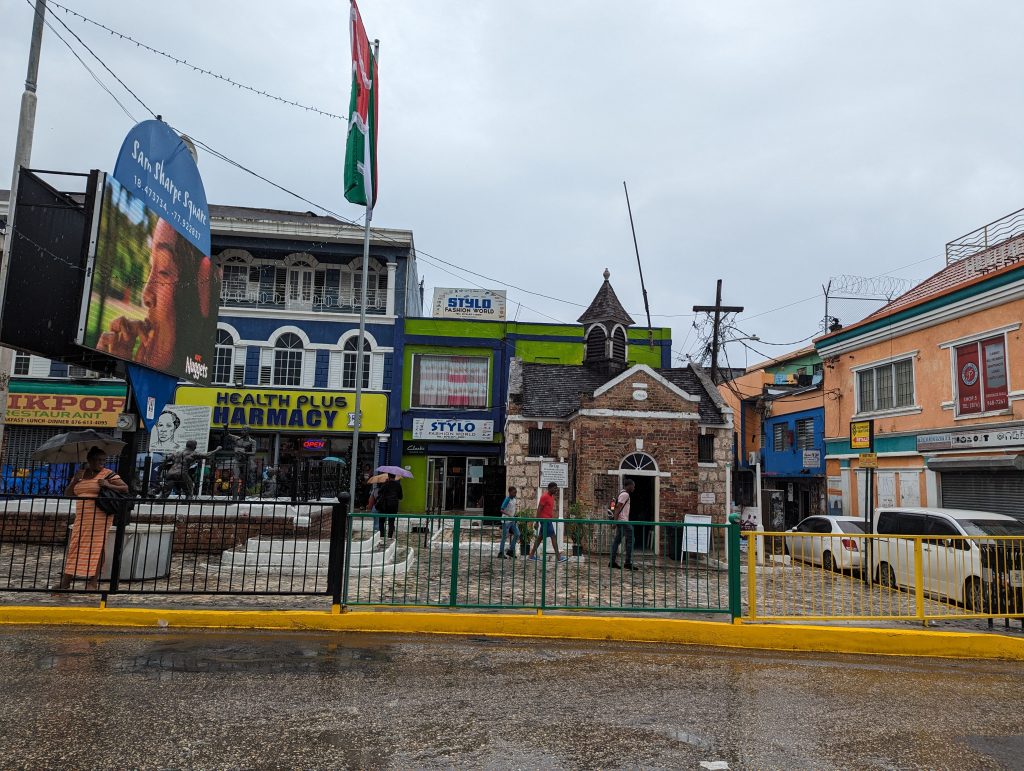
- We really are right in the center, just a stone’s throw away from Mobay Kotch is the main square, Sam Sharpe Square. It is named after Samuel Sharpe, who led the 1831 Christmas Rebellion and therefore went down in history as a national hero.
- If you want to learn more about the 1831 Christmas Rebellion- no worries, keep reading- you’ll soon find out.
- The square is also home to the National Museum, which we spontaneously decide to visit.
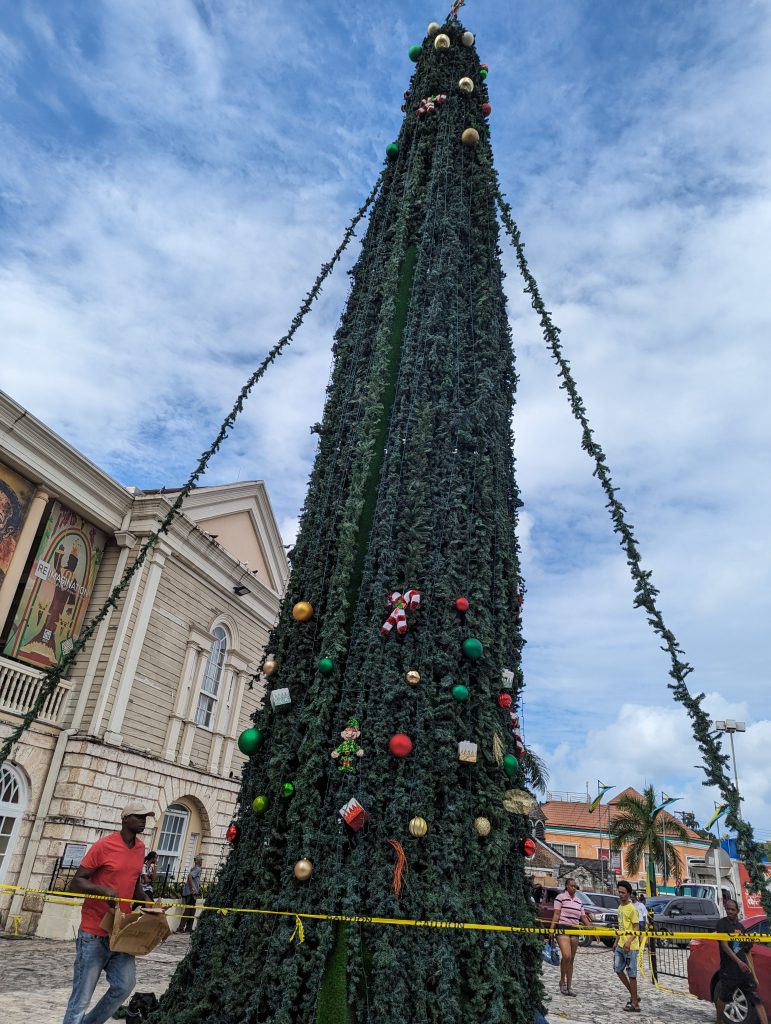
- When we reach the building with the Christmas tree in front of it, we are disappointed, as the museum closes at 3 pm today due to a staff meeting (and it is now half past 2).
- Change of plans: instead, we head to a vegan Rastafarian restaurant nearby, which is supposed to be very good.
- The city is teeming with people pushing their way along the sidewalks, and next to the street, traders are selling their wares and advertising them loudly.
- One store is having Customers Appreciation Day and is organizing a quiz and all sorts of other events that they promote loudly via a microphone connected to a boom box.
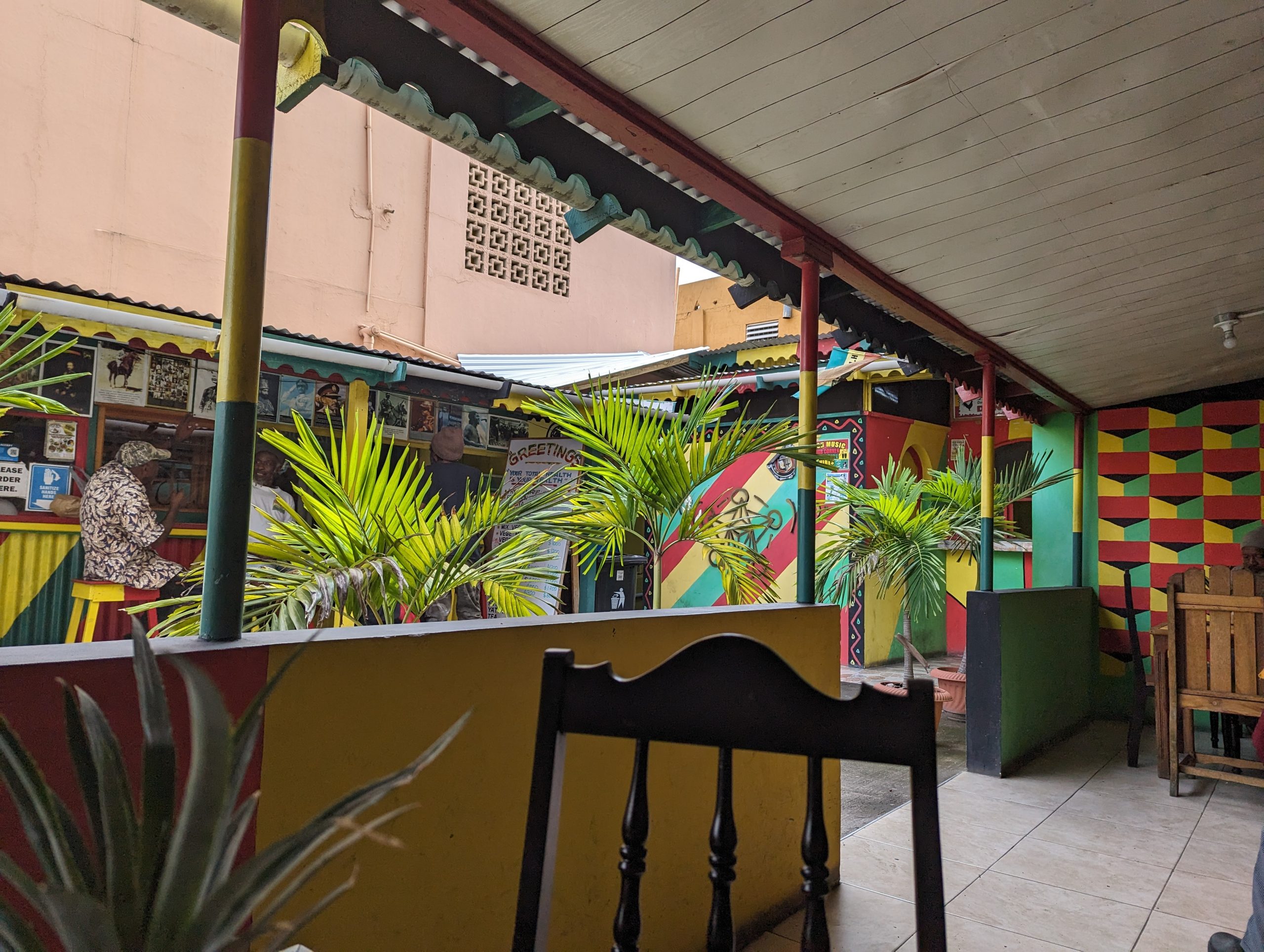
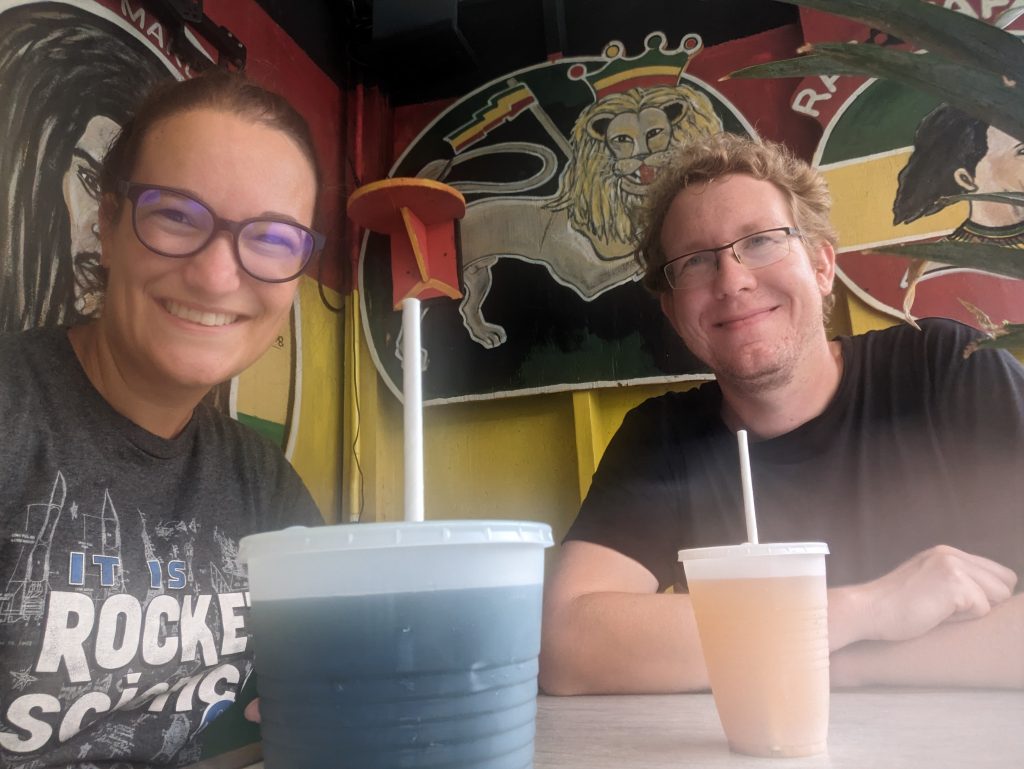
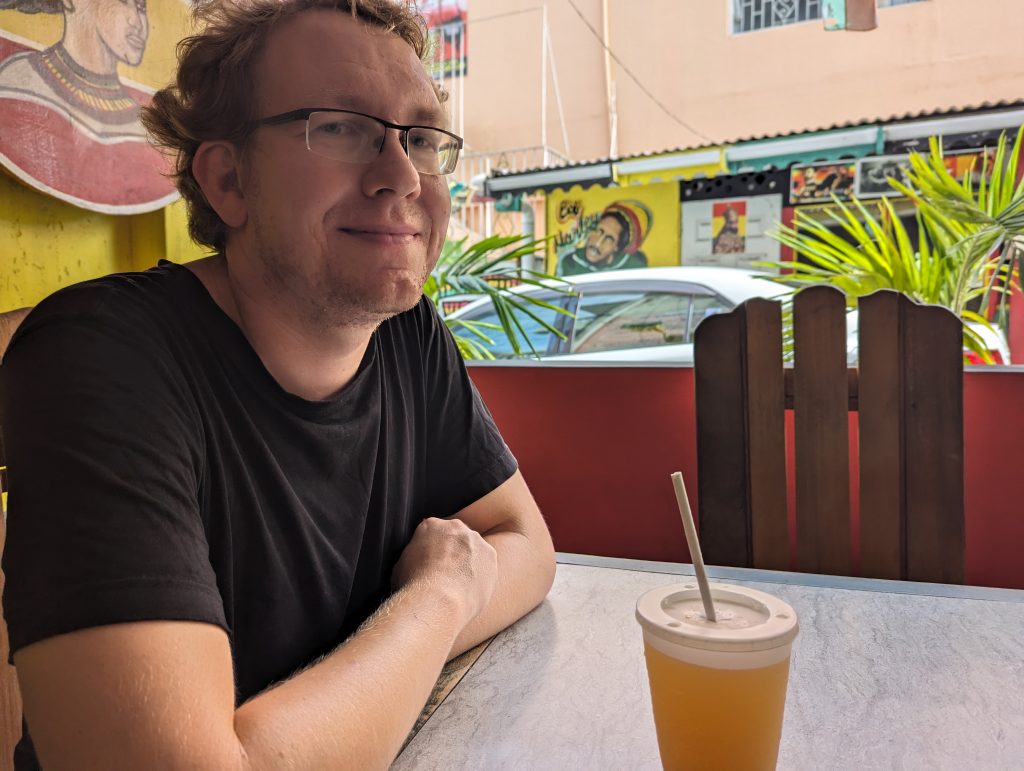
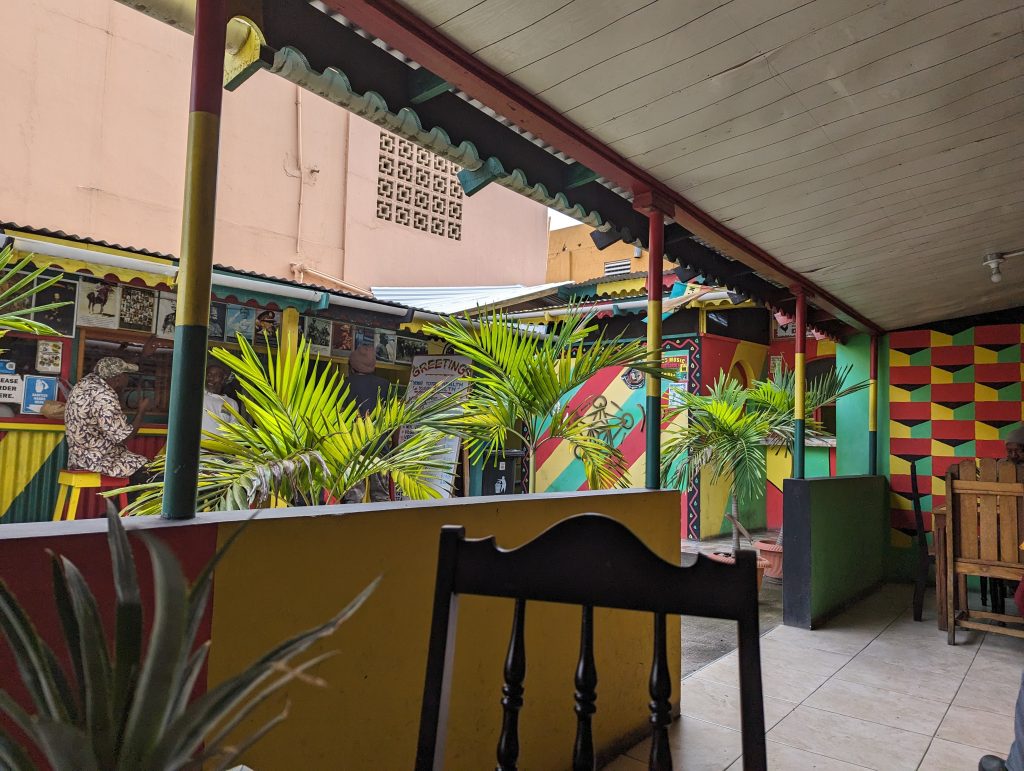
- We reach the restaurant, which is actually more of a food stall – you pay at one stall and then take the bill to another stall where the food is prepared.
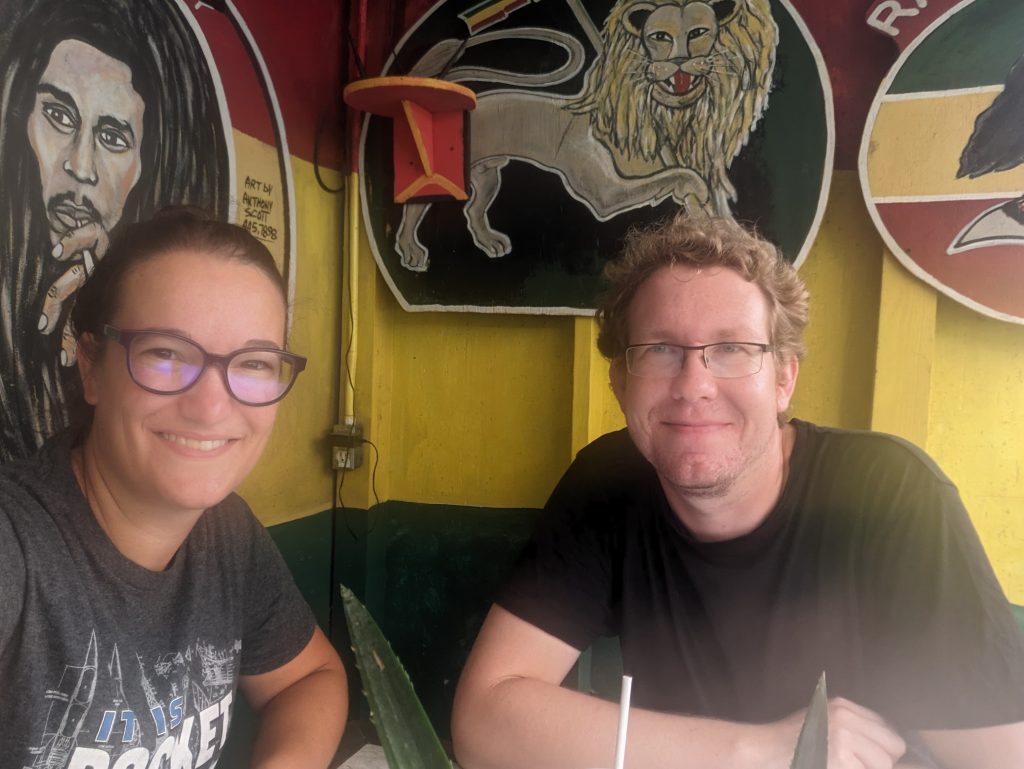
- With the food, we chill out on the cozy tables they have set up and enjoy the very tasty and spicy curry tofu and pea stew, njam!
- The food reminds us a lot of Ugandan food, it is even served with plantain, cassava and a kind of corn porridge.

- We head back to our accommodation and stock up on wraps for dinner at the supermarket, before spending the rest of the afternoon reading, solving cross-word puzzles and simply enjoying the atmosphere in the cozy rooms of the motel.
Saturday, 16. December
Montego Bay Cultural Center and the beach
- After sleeping until around lunch (yeah!), we make our way to the Montego Bay Cultural Center, where there is an exhibition on the history of Jamaica, one on Rastafarian culture and an art gallery.
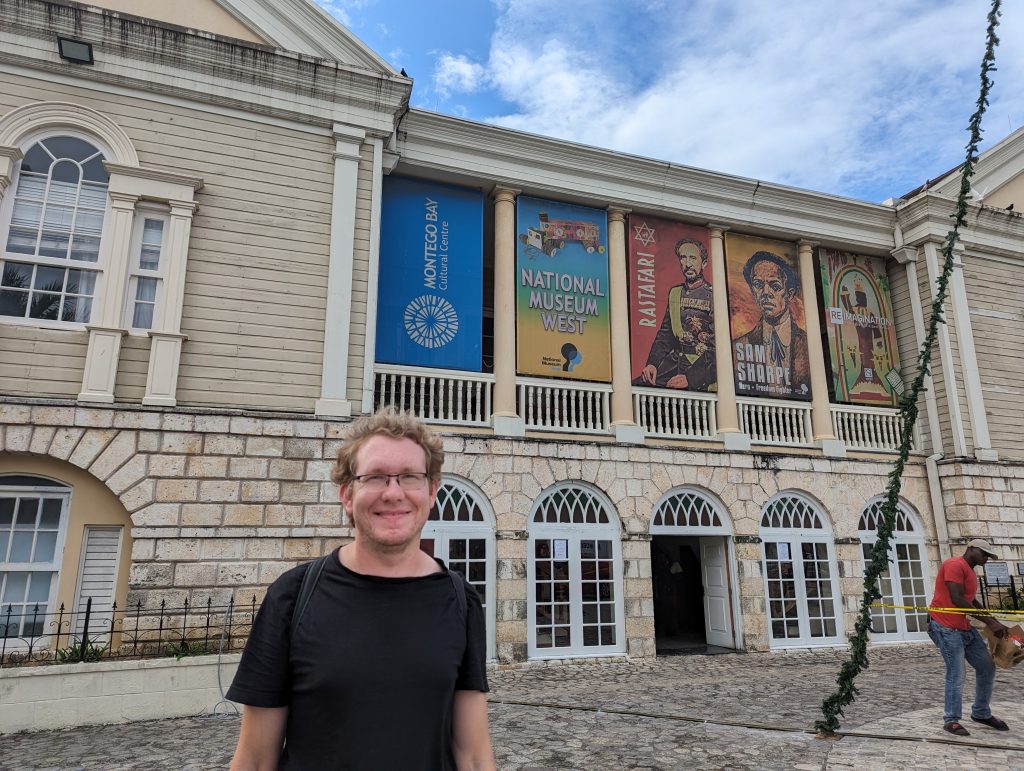
- Rastafari emerged as a political and religious movement in the 1930s, influenced by Marcus Garvey, who had a vision of African unification and the independence of all people of African descent:
For Blacks to overcome their feelings of inferiority and build upon their own unique and evolving culture, and ultimately return to Africa to redeem their homeland and to build a future
- He founded the Universal Negro Improvement Association (UNIA), which campaigned for the social and economic independence of African people and quickly spread to several countries. Cooperative enterprises were founded, schools were opened and a tricolored flag was developed (red, black, green), which was also adopted by some African states in the course of becoming independent.
- In a vision, Marcus Garvey saw how the coronation of a black king in Africa would bring liberation to the African people.
- And when in 1930 a man named Tafari Makonne or Ras Tafari (Ras means “king”) declared himself Emperor of Ethiopia Haile Selassie I, some followers of the Rastafarian movement saw this as the fulfillment of Garvey’s prophecy. The Bible also plays a major role in this and Selassie, who himself claimed to be a direct descendant of King David, also underlined the image of him as a kind of God, or Messiah.
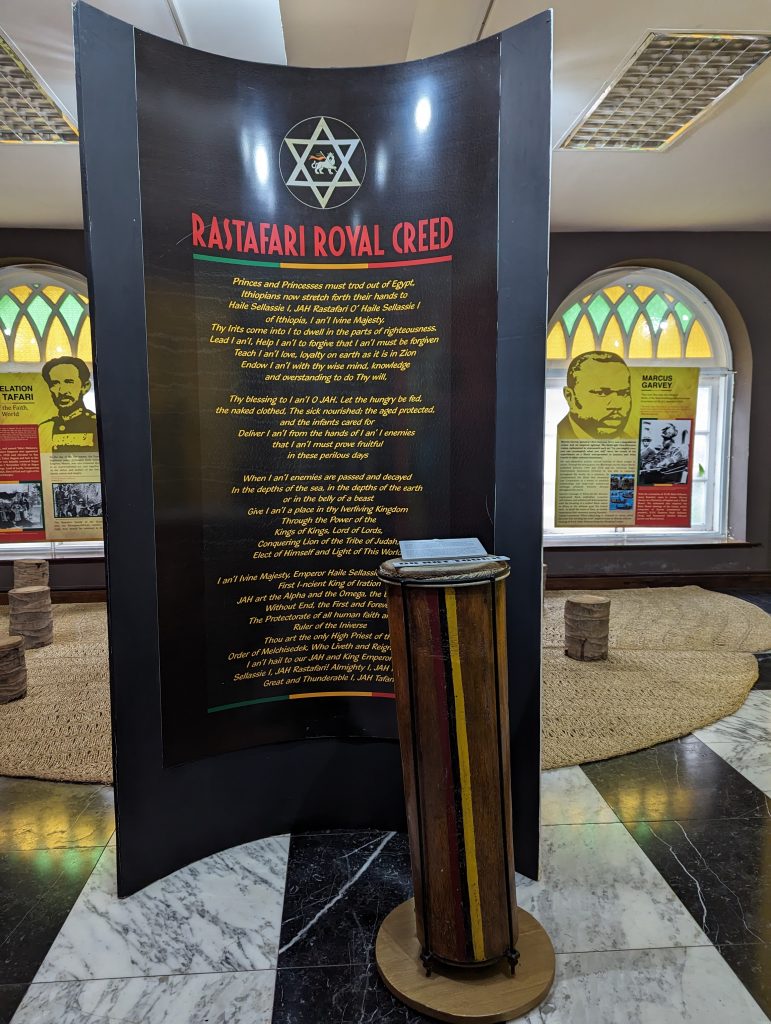
- The Rastafarian culture believes that the principle of a balanced lifestyle, “livity”, is achieved by wearing red, black and green clothing, leaving hair in its most natural state and eating an “I-tal” diet, which is natural and vegetarian. Religious rituals include prayers, smoking marijuana to achieve better meditation and “bingis”, a kind of drumming ritual.
- All in all, it is very interesting and very exciting to see what is behind the movement and how symbolic the wearing of dreadlocks actually is.
- All in all, the museum is superbly prepared and designed and we really learn a lot – also about how Jamaica slowly, step by step, gained its independence at the beginning of the 19th century.
- The Christmas Rebellion, or Baptist War, a slave uprising in Jamaica that lasted eleven days from December 25, 1831 and in which around 60,000 of the 300,000 enslaved people in Jamaica took part, played a major role. The uprising was led by Samuel Sharpe. Although the uprising was put down, it nevertheless played a major role in the abolition of slavery throughout the British Empire.
- Just as we finish reading and looking around, it starts to pour and we decide to wait in the building until the worst of the rain has passed.
- We get talking to a member of staff who has a good sense of humor, so we laugh a lot with her, which is really good in view of the not very nice weather, and she gives us sightseeing and restaurant tips.
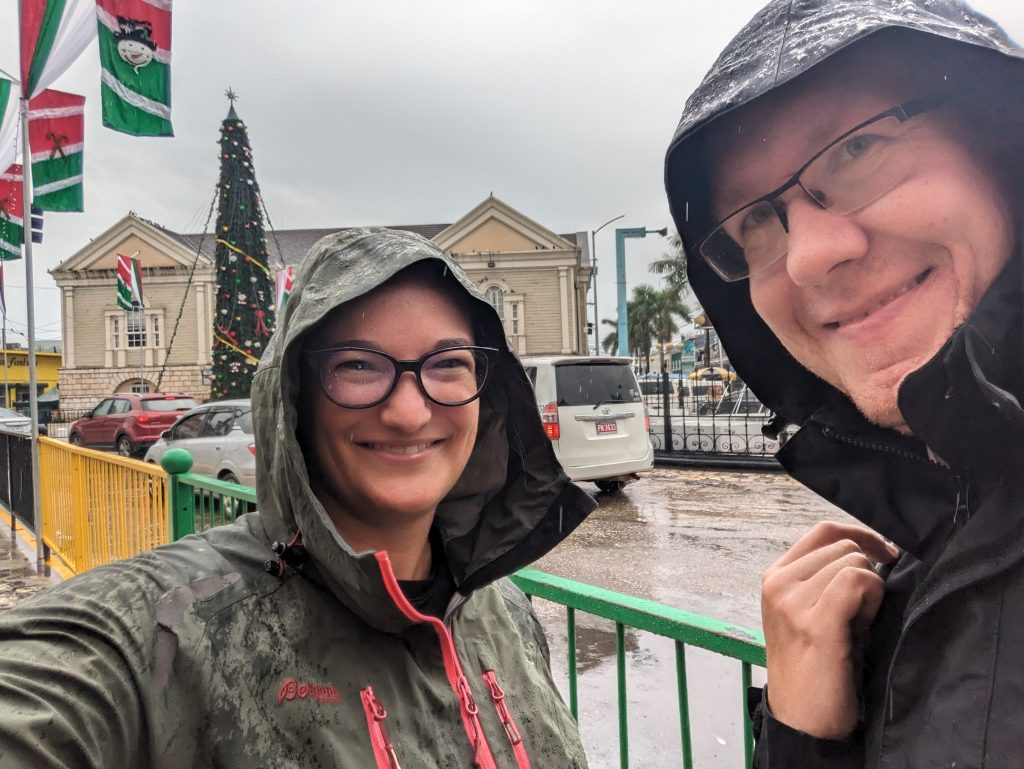
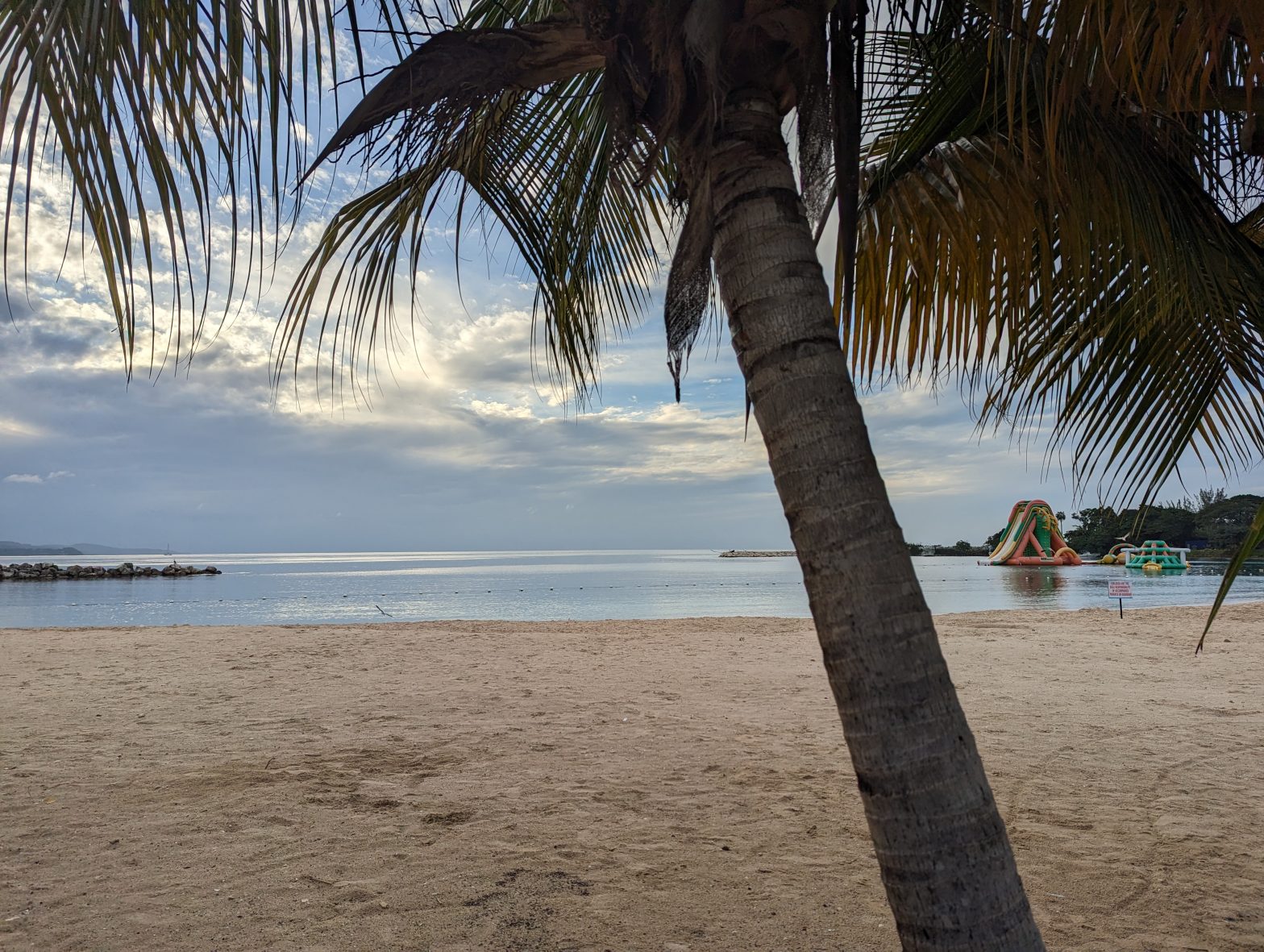
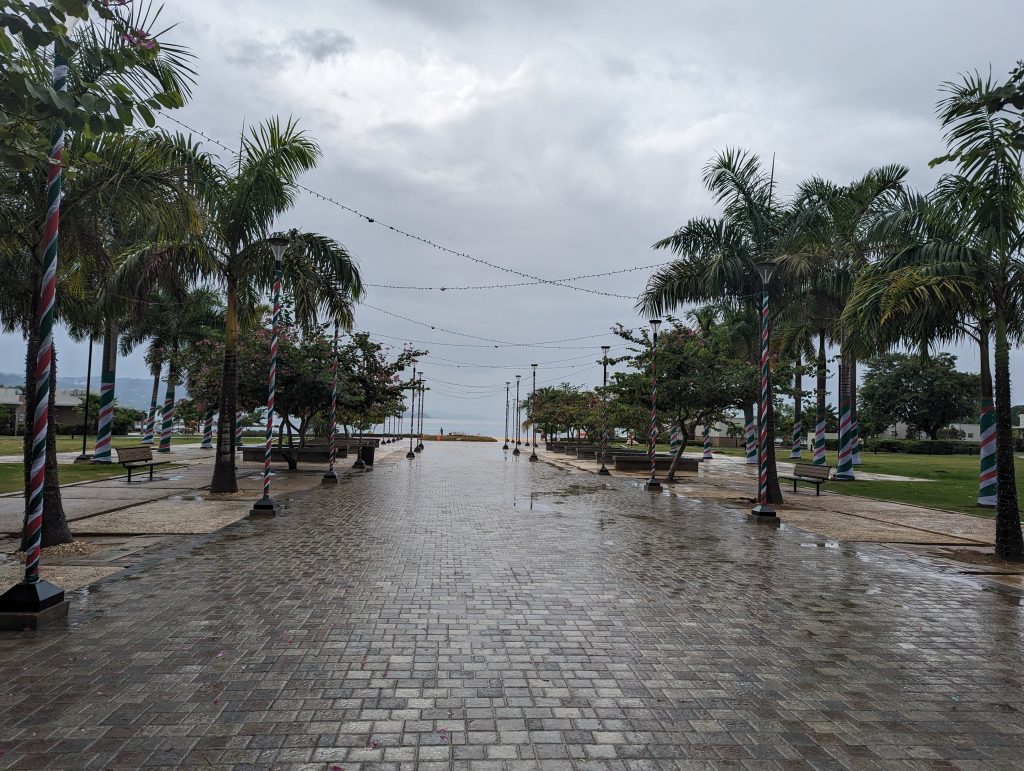
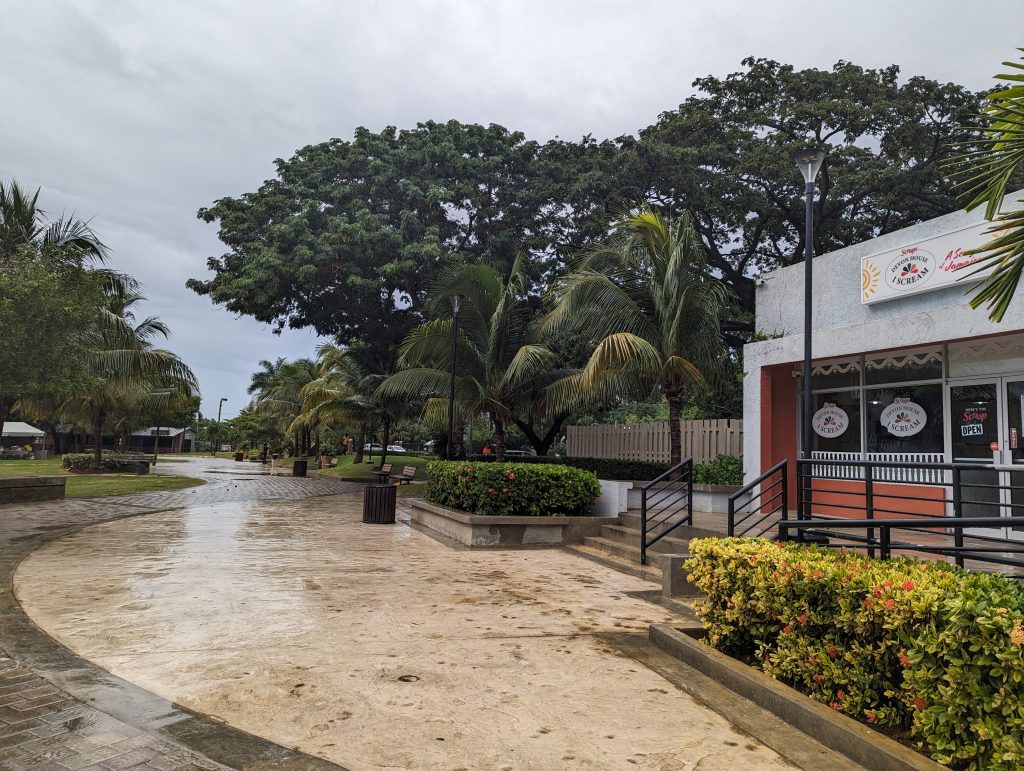
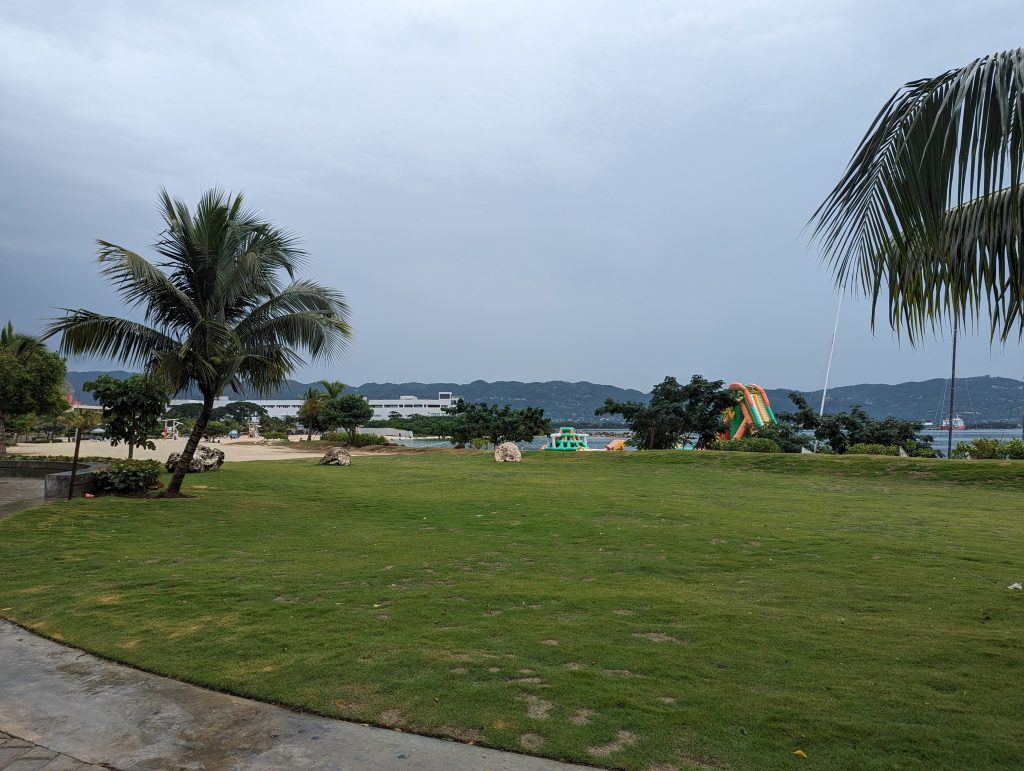
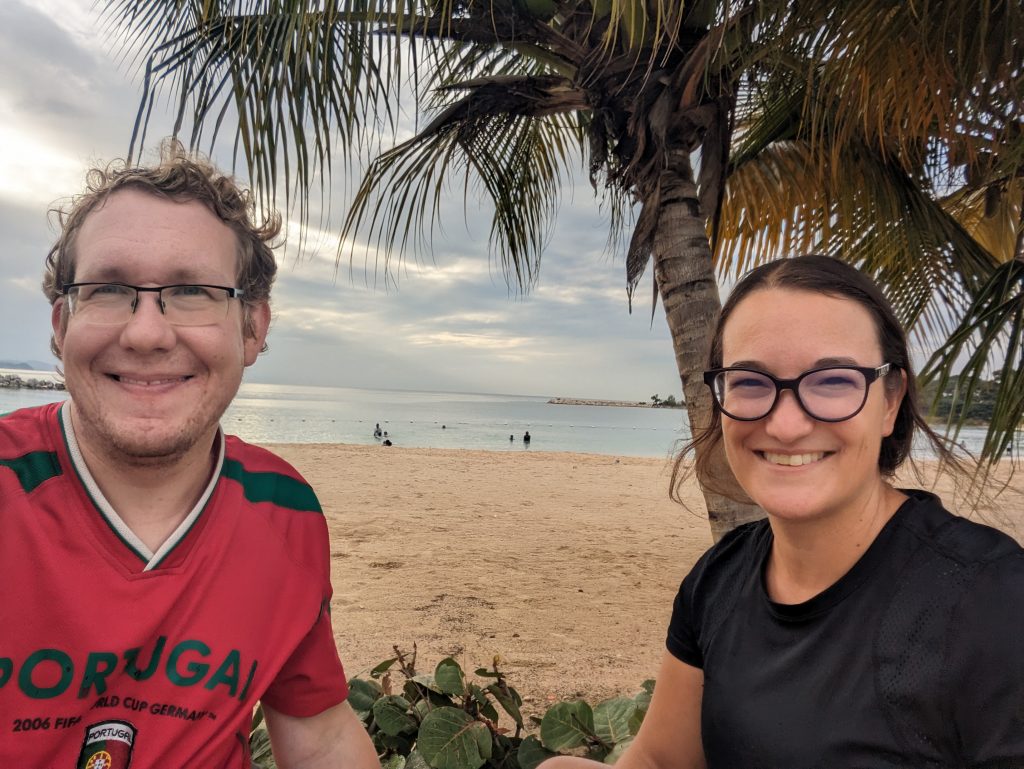
- When the rain has finally turned to drizzle, we set off towards the sea and the beach, where there are beautiful parks and promenades to stroll along.
- I’m totally happy when I spot a stall on the beach where I think I might be able to buy a coffee. So I go there and the whole dialog sounds like this: Marie: “Do you have coffee?” Guy: “No.” Me: “Ok, thanks bye!” and I walk away.- That was unsuccessfull.
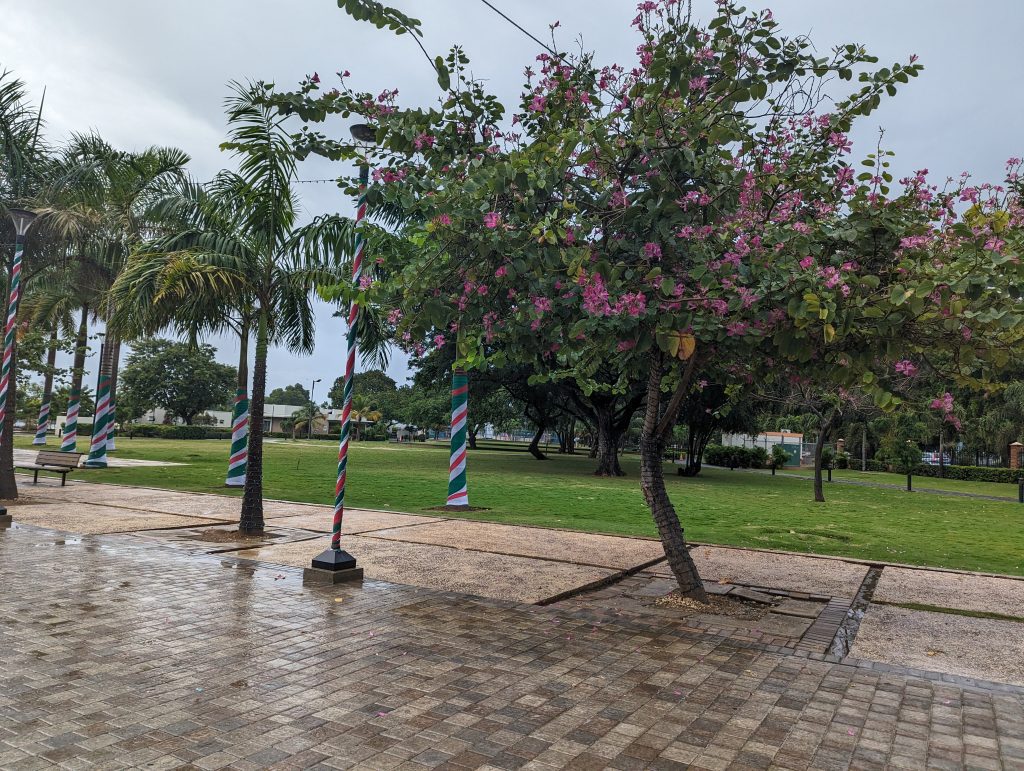
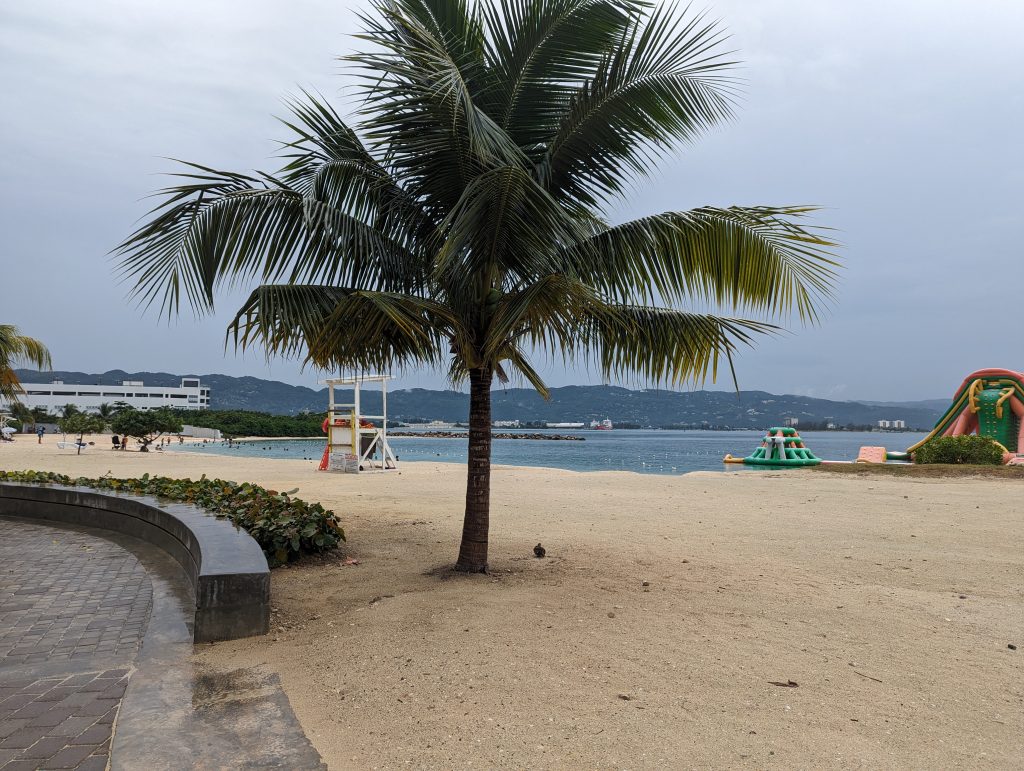
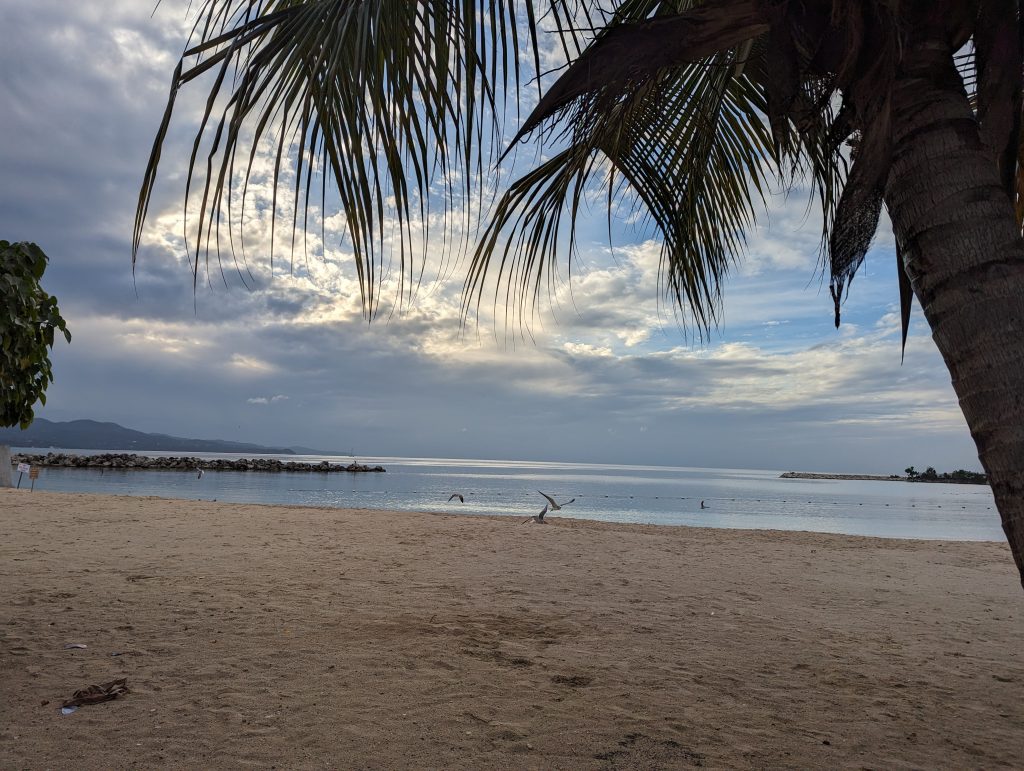
- We continue along the beach for quite a while until we reach a larger street where there are a few restaurants and we sit down in one of them (a very nice one).
- It’s very cozy, the food is delicious and the milkshake is great!
- Then we walk back along the beach and end the evening in the communal area in the courtyard of our accommodation, where we have a nice chat with others – very cozy and relaxed all in all.
- The people staying here are quite the opposite from the people we met on our tour in Negril. The guys we talk to here are travelling individually and definitely ready to plunge into the unknown and adventure.
Sunday, 17. December
Home, sweet home
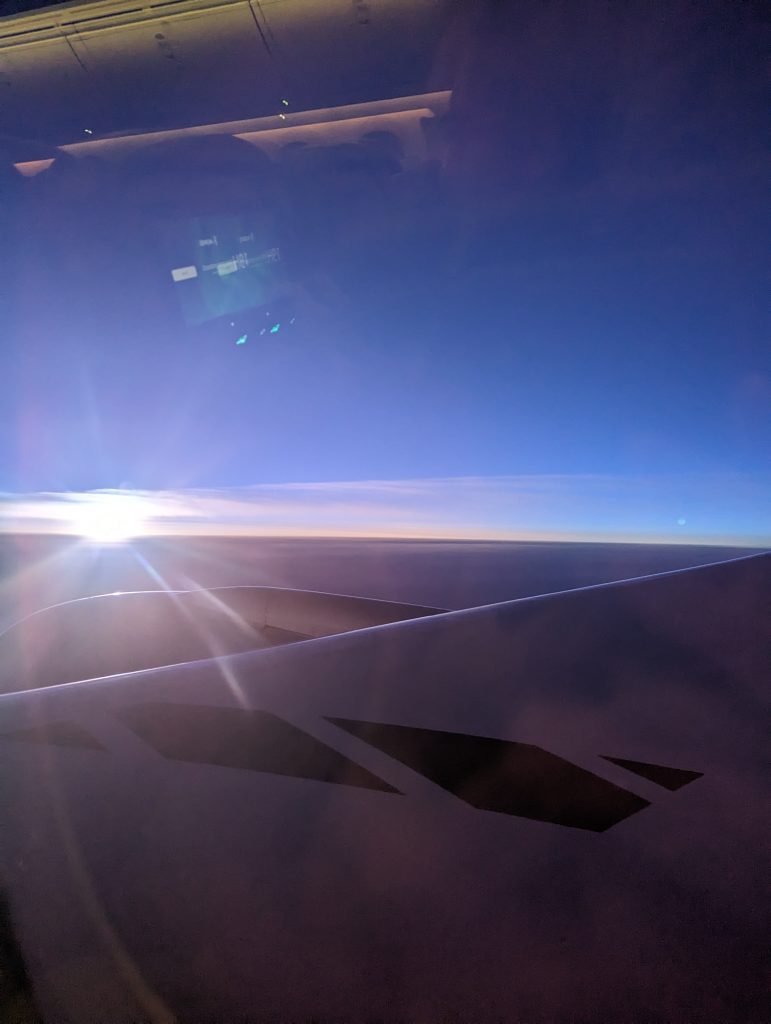
- Today we are heading home – or rather to the Netherlands for my defense.
- So it’s with a heavy heart that we pack up before choosing a special place for our last breakfast, which is right by the sea and is said to have very good food.
- We are briefly startled as it looks as if the restaurant won’t be open on time, but then we meet a waitress, to whom we briefly explain the situation and she kindly lets us sit down and says that if we order right when it opens, it should be fine.

- We manage to get a seat right at the front by the sea with a view of the bay and are really very happy about this last and once again very good meal and the coffee!!! =)
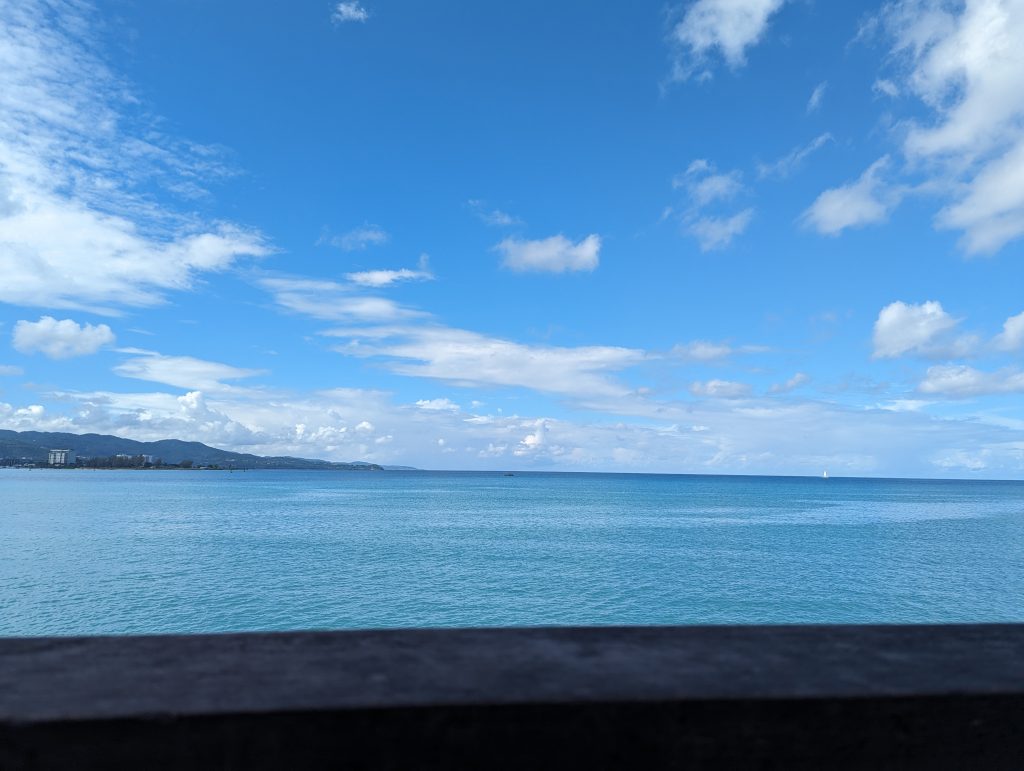
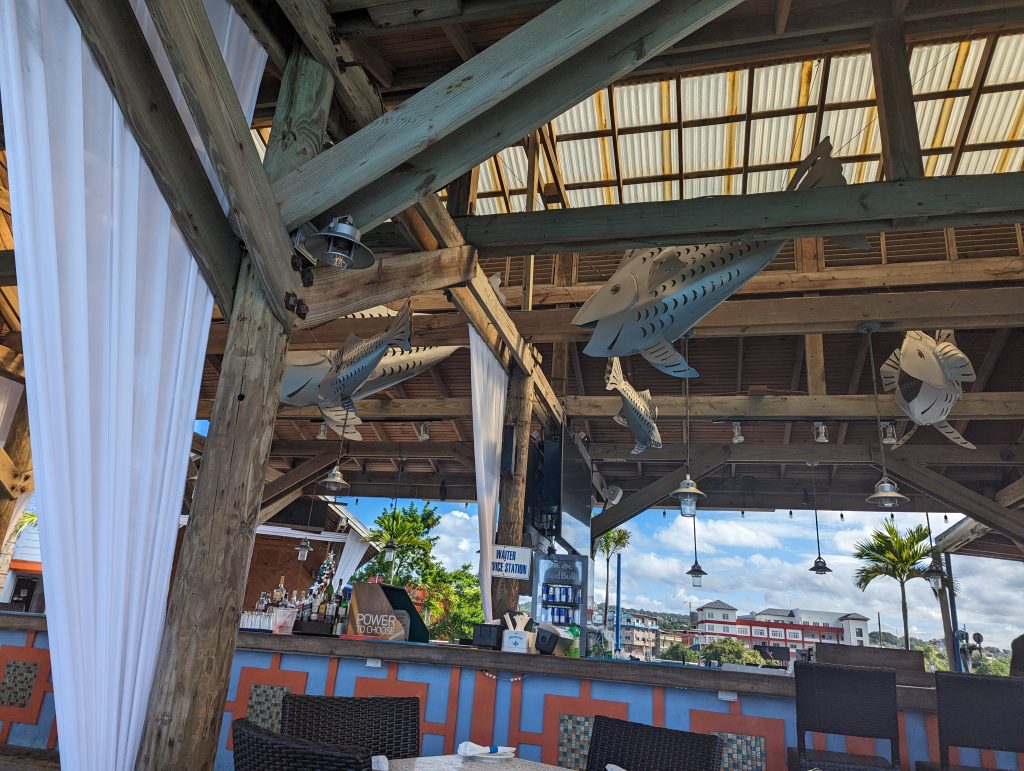
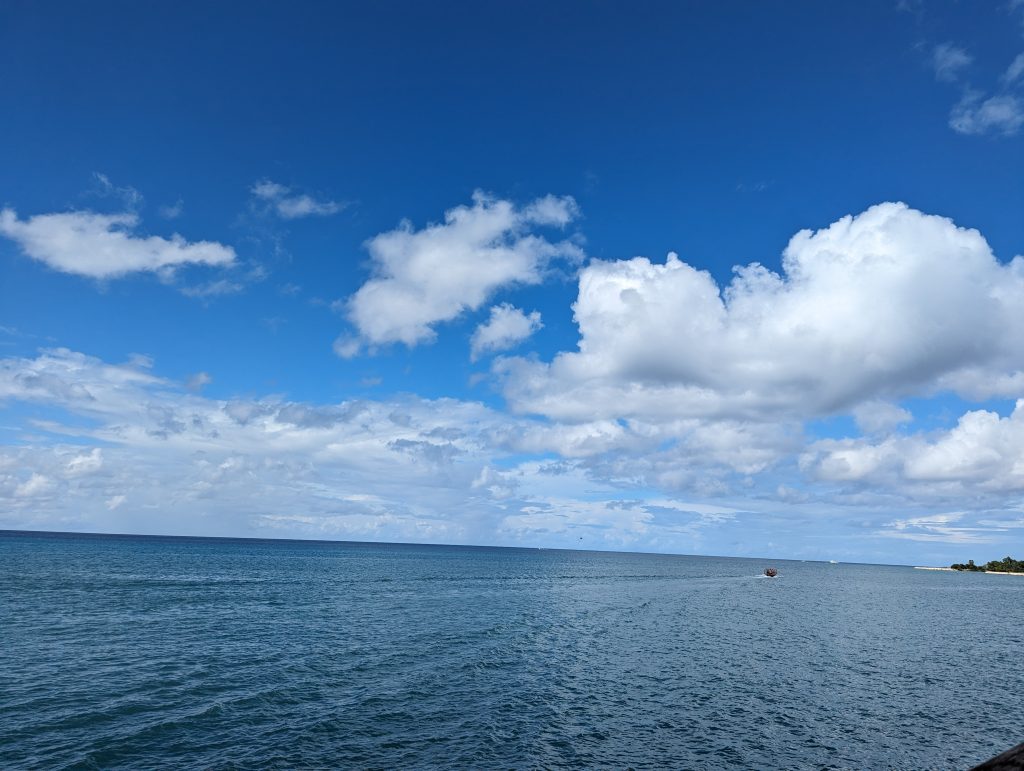
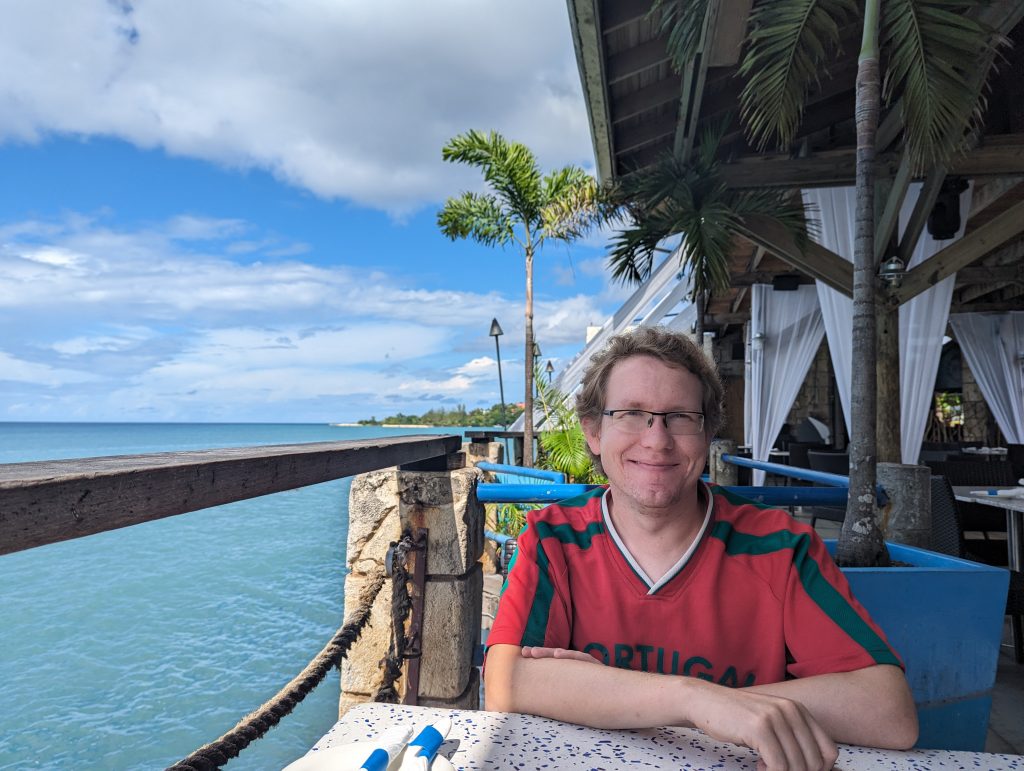
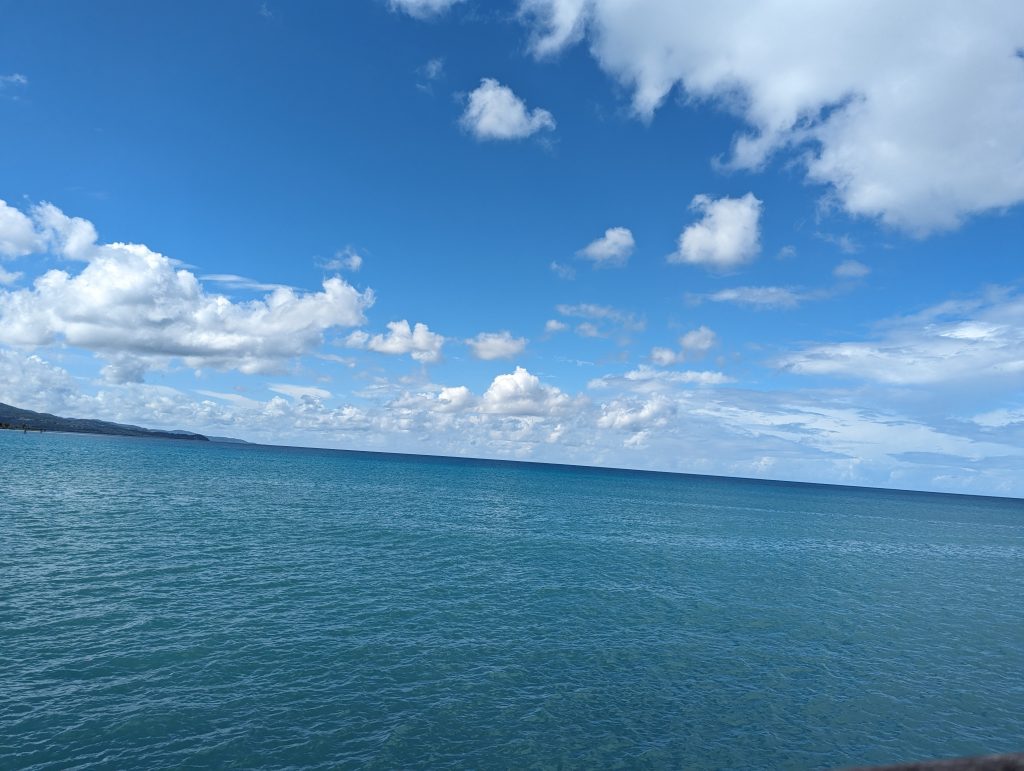
- To round off the rainy days, the sun comes out again today and completes the picture perfectly.
- A guy who is a phenomenon in his own right takes us to the airport.
- He is from the USA and came here a few years ago, actually to go on vacation, but now just lives in Mobay Kotch and drives guests to the airport every now and then.
- The conversation turns to couchsurfing: funnily enough, he asks me with great surprise: “You would do couchsurfing? All by yourself?” I reply unperturbed: “Yes, of course.” And in the next sentence, he tells us that normally, when he goes on vacation, he doesn’t book anything in advance, just arrives, goes to a bar and then looks for someone who has a free bed somewhere in the backyard or somewhere else, where he then spends the night. And he worries about couchsurfing? Scherzkeks.
- We also talk briefly about politics: he says, ah, the government should spend all the money the tourists leave behind on paint, then everything would look much nicer. I’m just saying, well, if you can be sure about one thing, it is that the money is not being spent on paint. He replies: That should change and he would campaign loudly for it, but on the other hand he doesn’t want to spend his time here in prison.
- In any case, it’s super relaxed and fun with him and we arrive at the airport in a good mood, with this last crazy cab ride as the final nice experience during our really beautiful Caribbean trip!