
Our trip to the castles Neuschwanstein
and Hohenschwangau, Germany.
Friday, 19th of January
Neuschwanstein – The Cinderella Castle
- We are finally going on the trip we’ve wanted to take for about 10 years: to visit the famous Neuschwanstein Castle, or as Fritz always calls it “Cinderella Castle”. This is what the children and young people who come here on exchange call it. And that’s probably how it became famous.
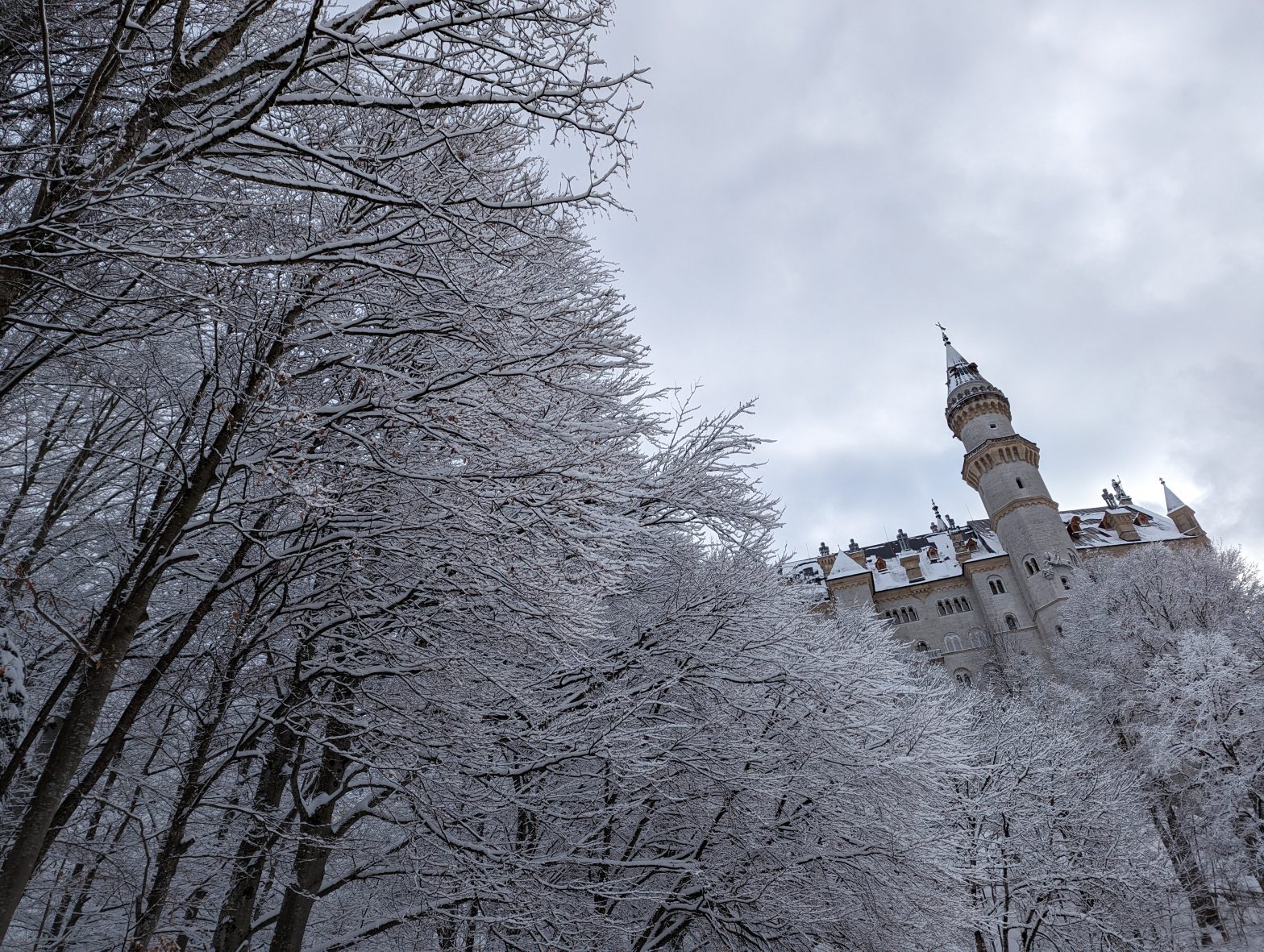
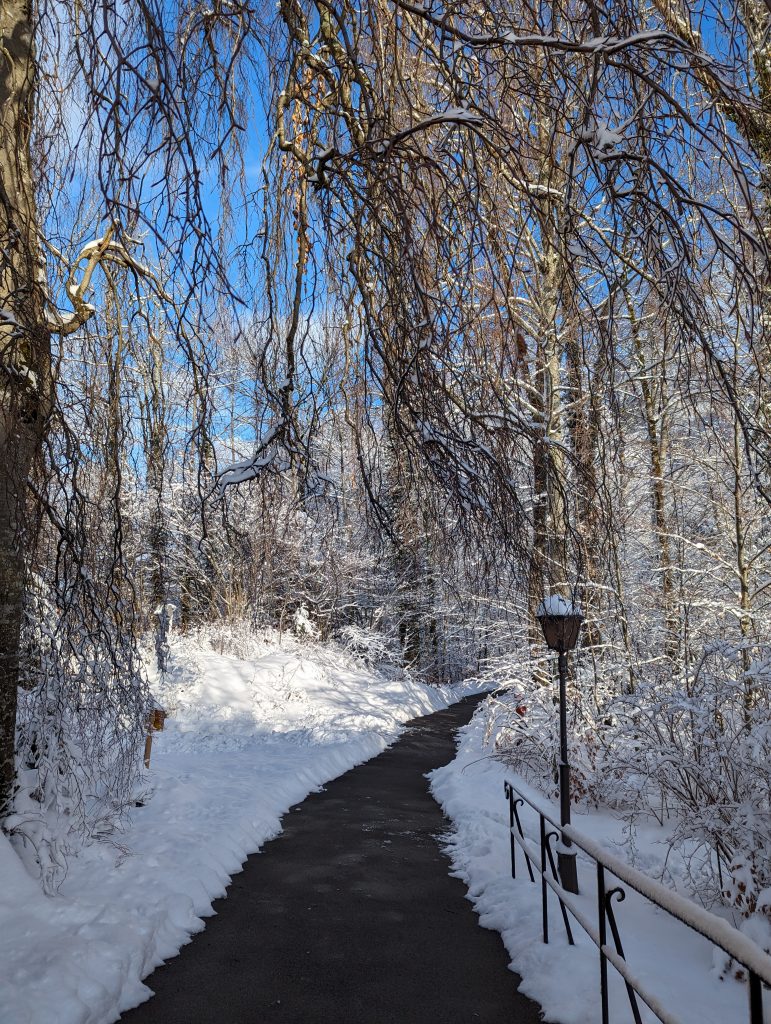
- When we set off from Grafrath in the morning, we are happy because it is snowing and everything looks like a winter wonderland. “Wow, if it looks like this in Neuschwanstein, it’s going to be a really great trip,” I say to Fritz.
- We drive through the village of Landsberg am Lech and cross a river. I ask Matthäus: “Is this river the Iller?” (Think first, then talk….)
- There are signs advertising a “romantic basilica”, I look out of the window, “Ah, I see it!”. On a second look: “Ah, no, not at all – it’s neither romantic nor a basilica.” Shortly afterwards we see a large sign saying “army barracks” – not my brightest day today…
- We reach Hohenschwangau at 10:40 a.m., our ticket is reserved for 11:20 a.m. and the sign for the pedestrian path up says “45 minutes” and there is snow!
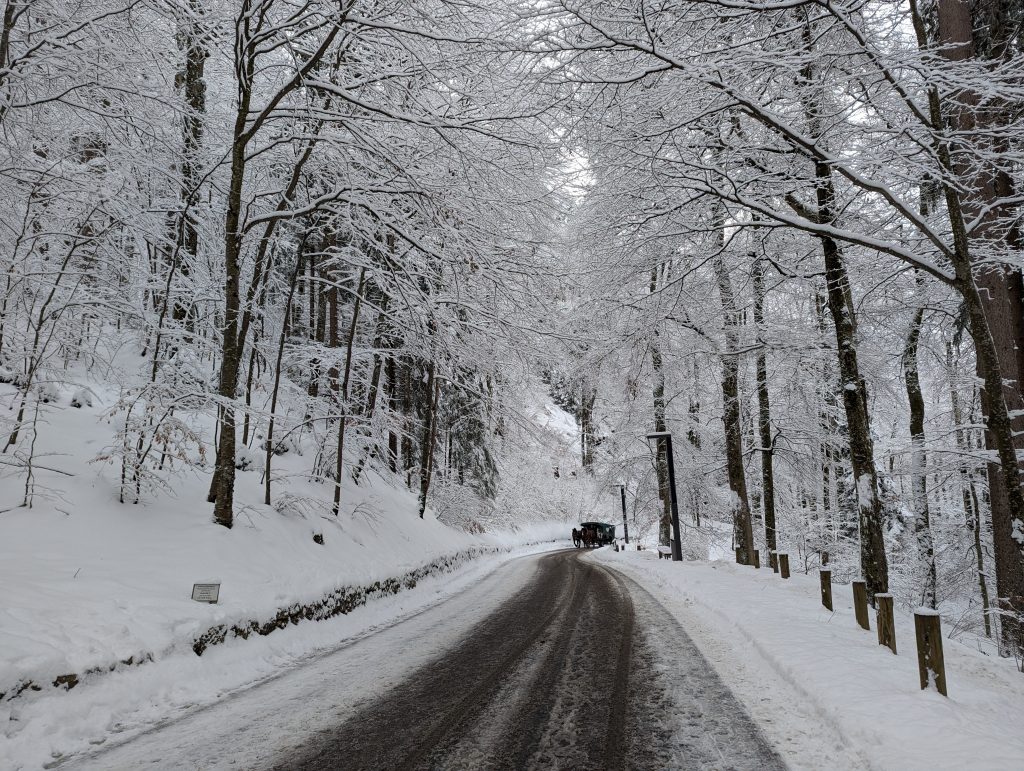
- So we walk up as quickly as possible on the path full of snow slush, overtaking several groups of Asian tourists who are sliding around in their slippery shoes. At least we have good footwear, after all we’re going on to the ski tour afterwards.
- And we manage the route in 20 minutes, which means we arrive unexpectedly early.
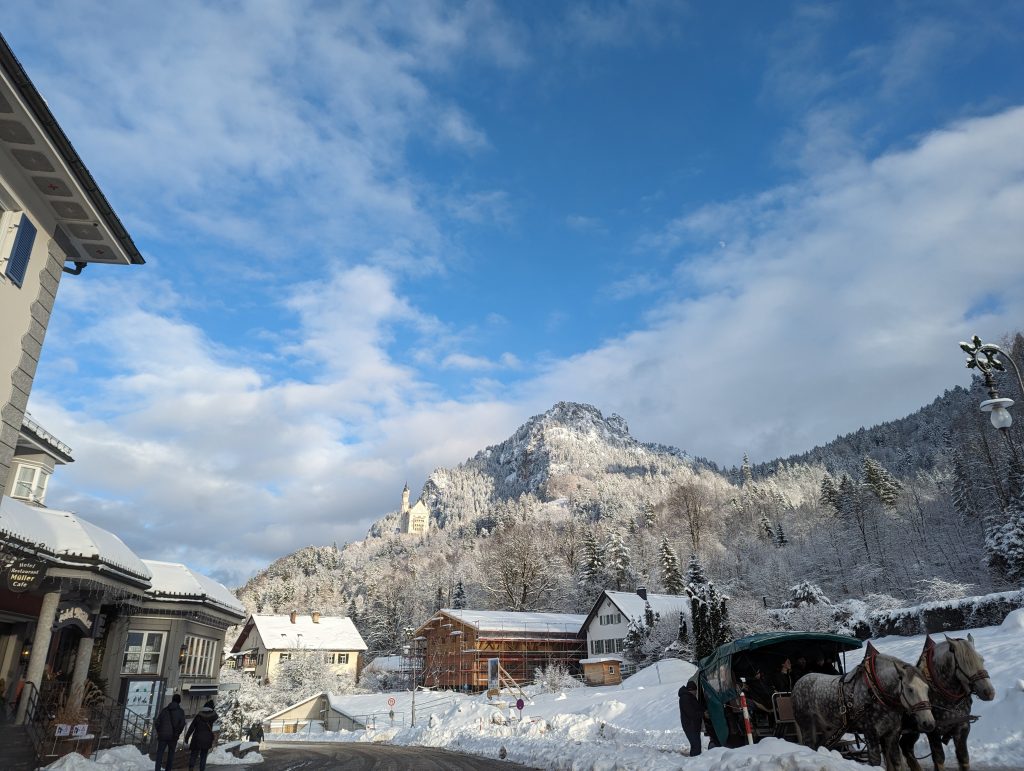
- By the way, there are no buses up here in winter, “only” horse-drawn carriages.
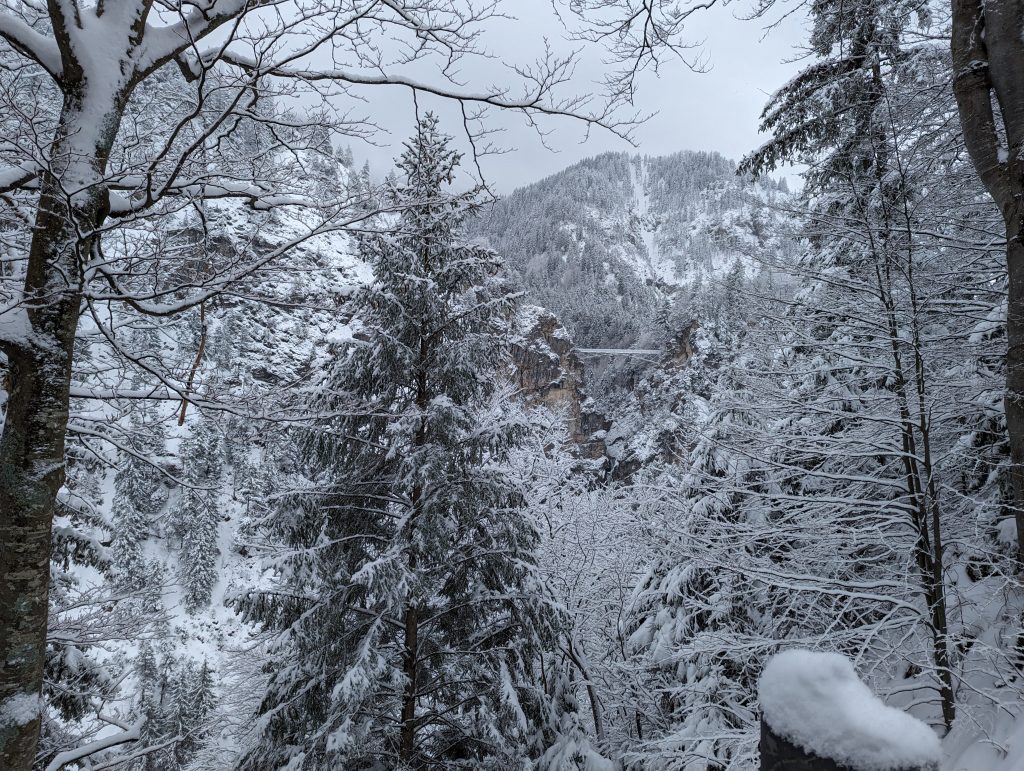
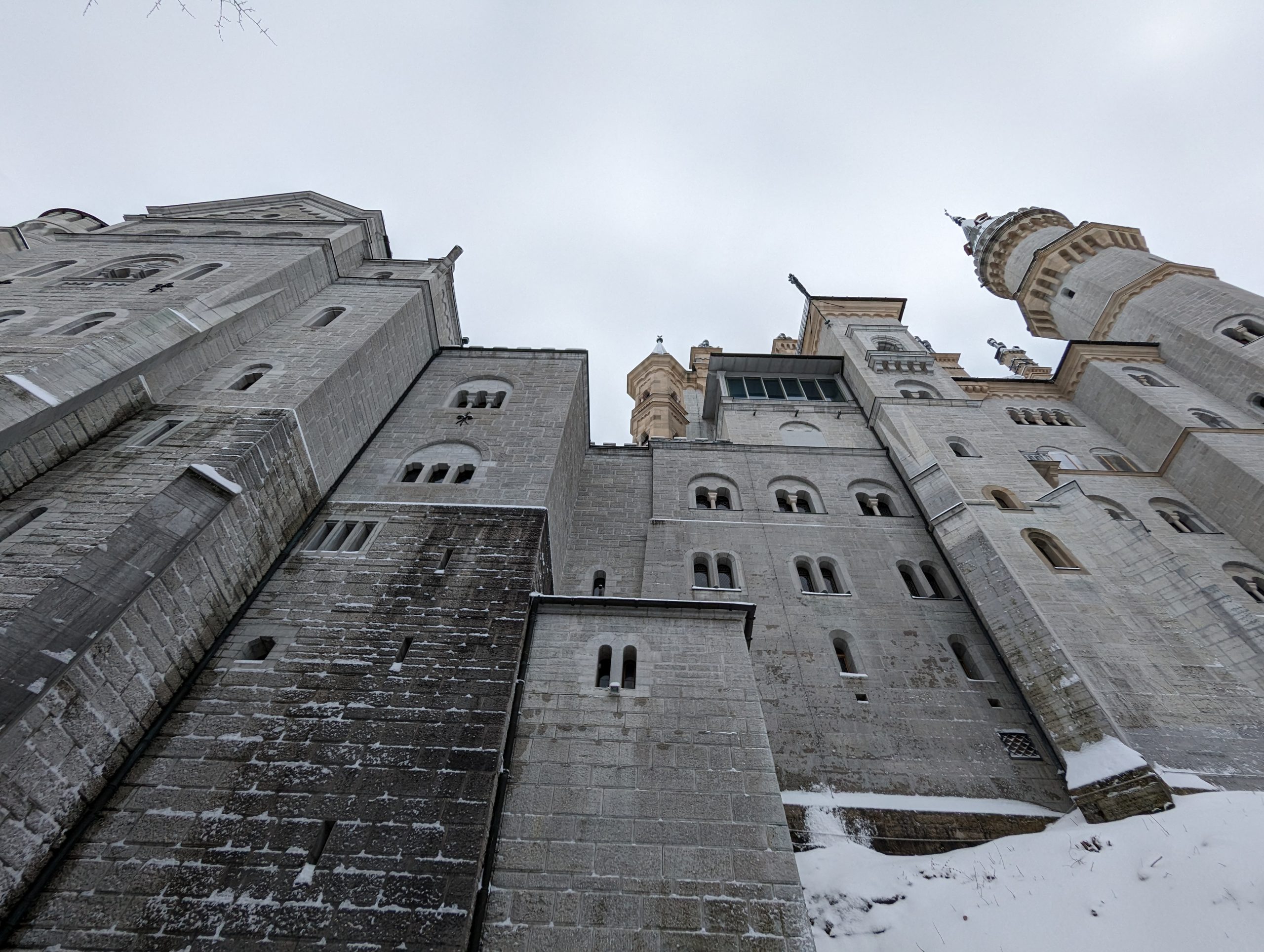
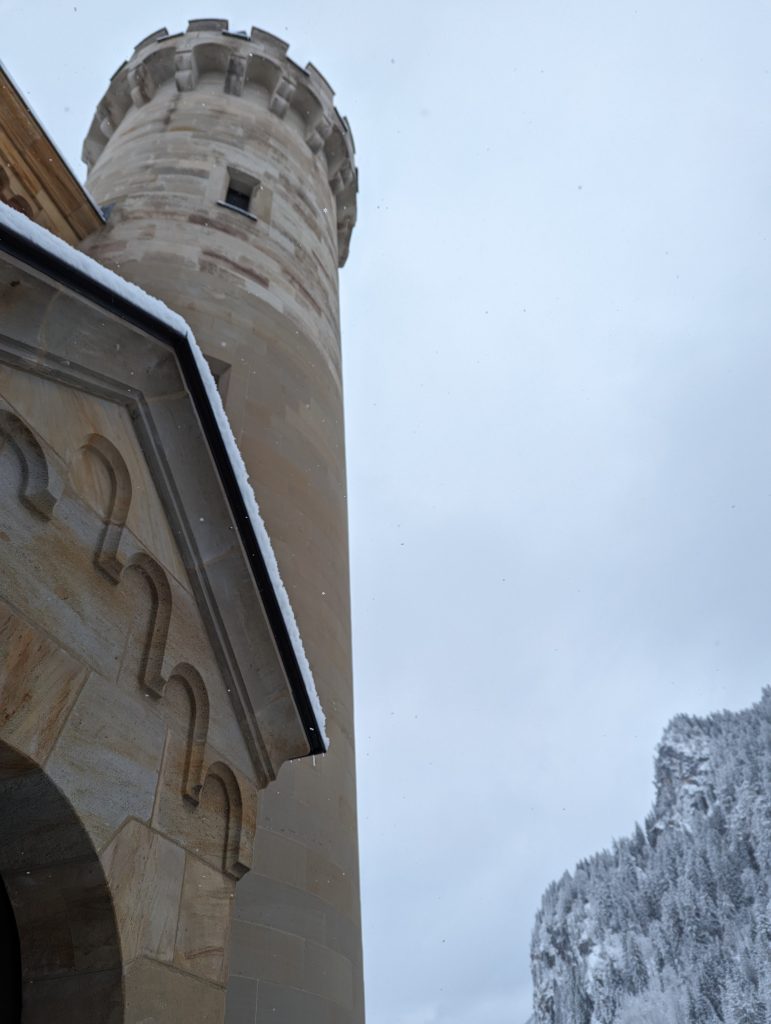
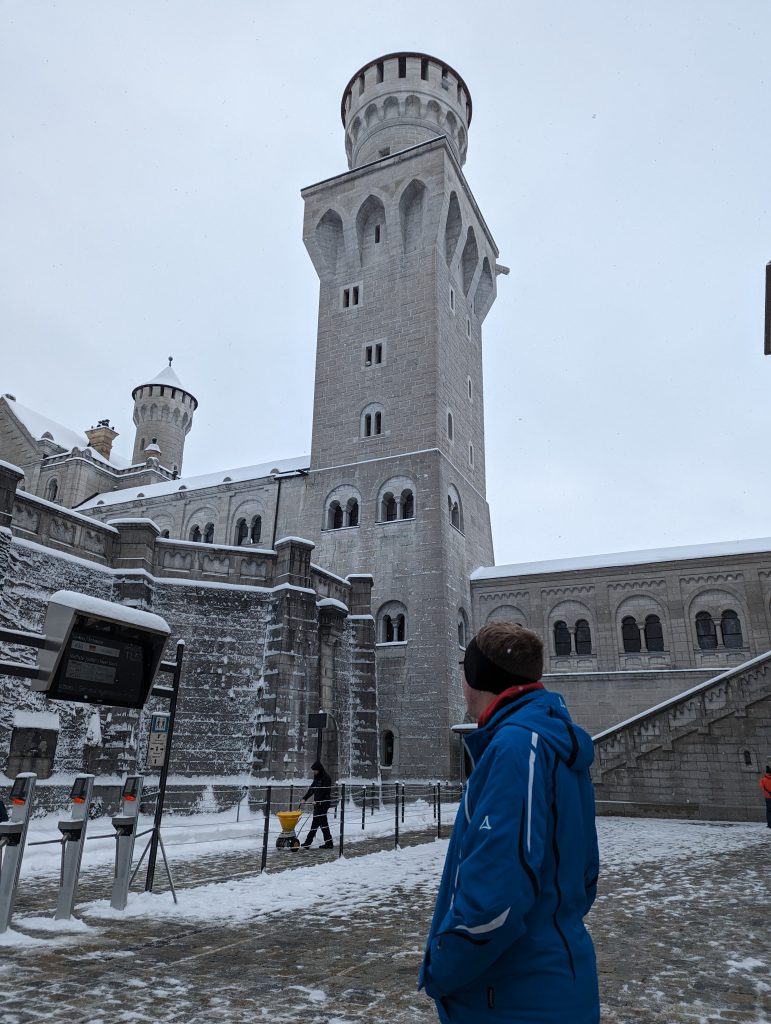
- The castle was built by the Bavarian King Ludwig II in the 19th century, but he died before it was completed, so it was never finished.
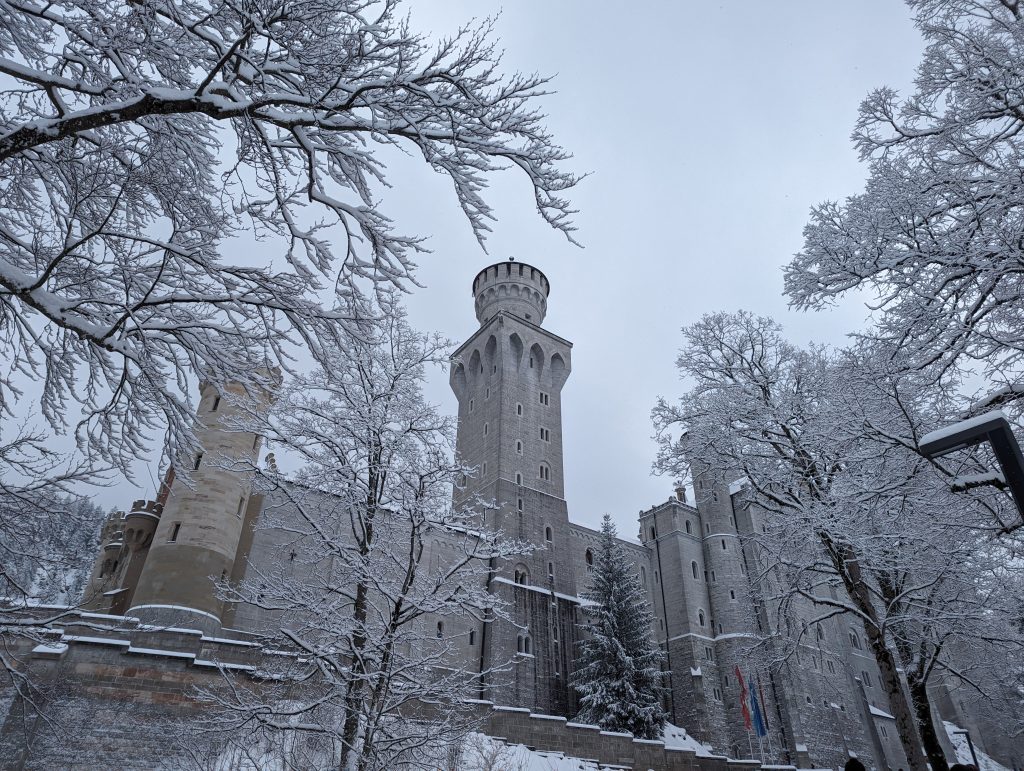
- He wanted to live in the castle exclusively on his own, alright, with a staff of 40 people.
- For him, the palace was a monument to the culture and royalty of the Middle Ages and a kind of escapism project – here he could withdraw completely from everyday life into his very idealistic image of the medieval world. Despite the medieval theme, the building is equipped with the most modern technology of the time – Ludwig II was also quite a technology freak and always wanted to incorporate the latest technology in his buildings.
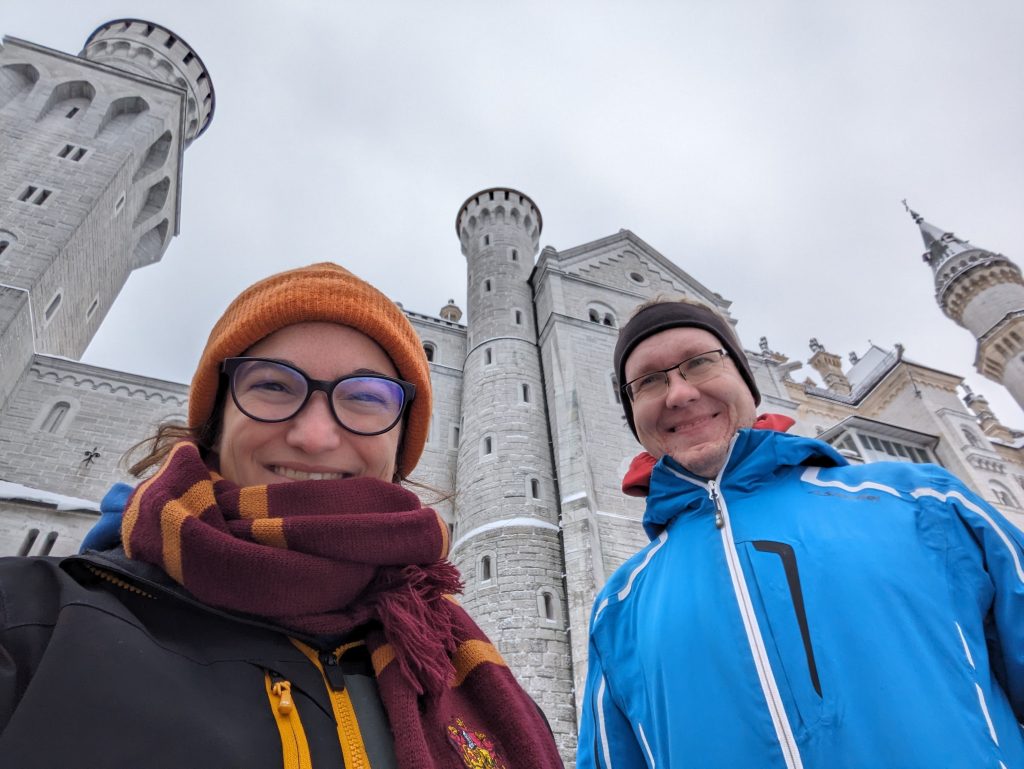
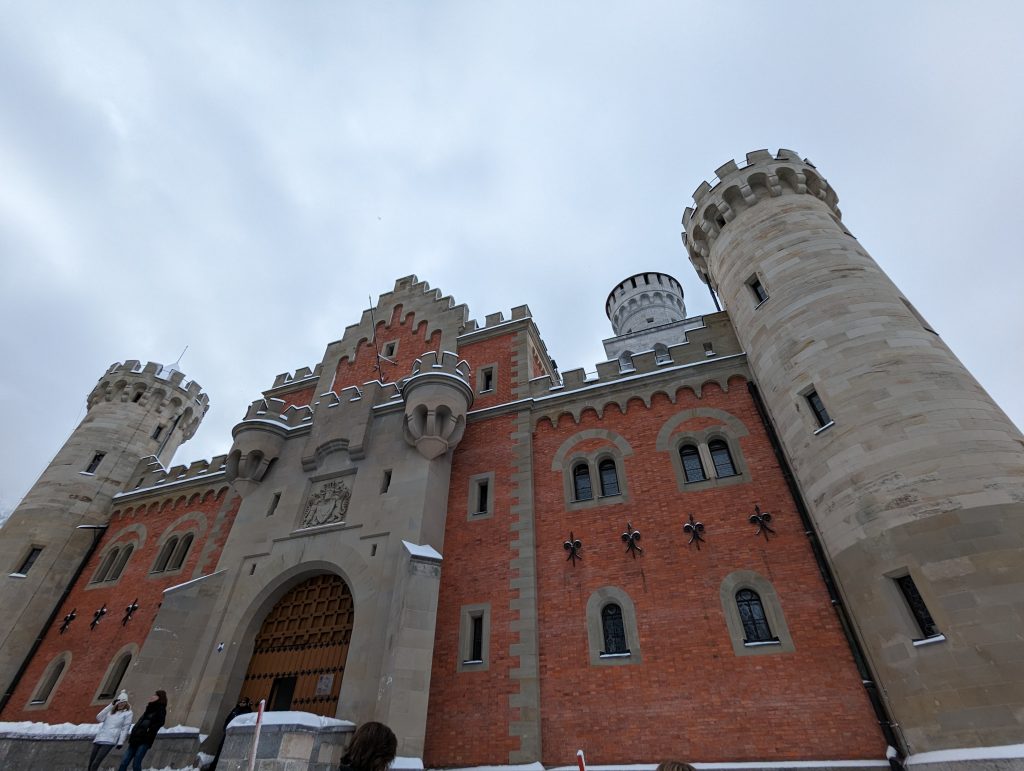
- For example, steel was used for construction. Similar to the construction of skyscrapers, the first of which were built in the USA around this time. That is why it was possible to build such a large and towering castle with such large, sprawling and high rooms. There is a modern living room ventilation system that has kept the temperature of the rooms at a constant 12-13 degrees.
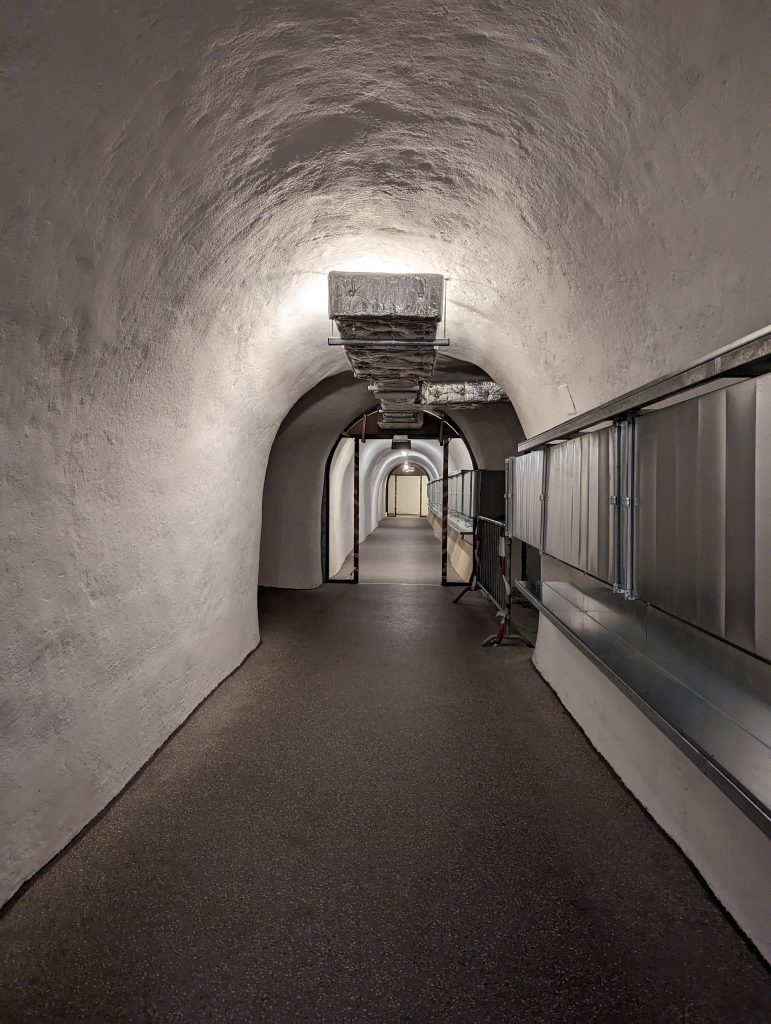
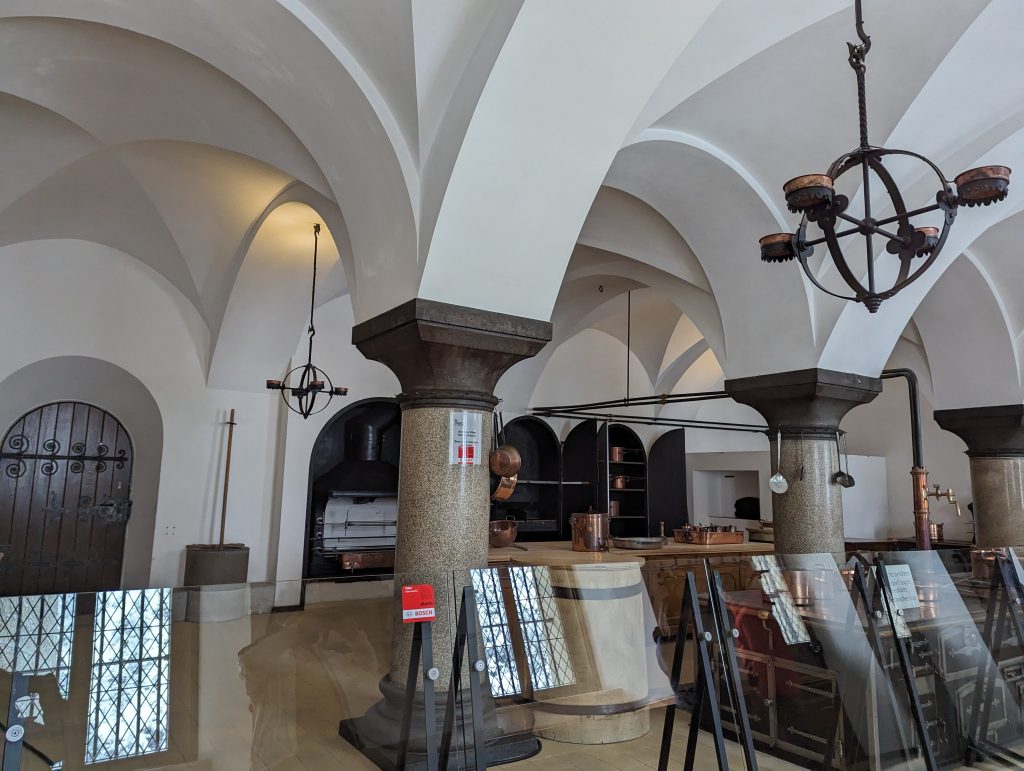
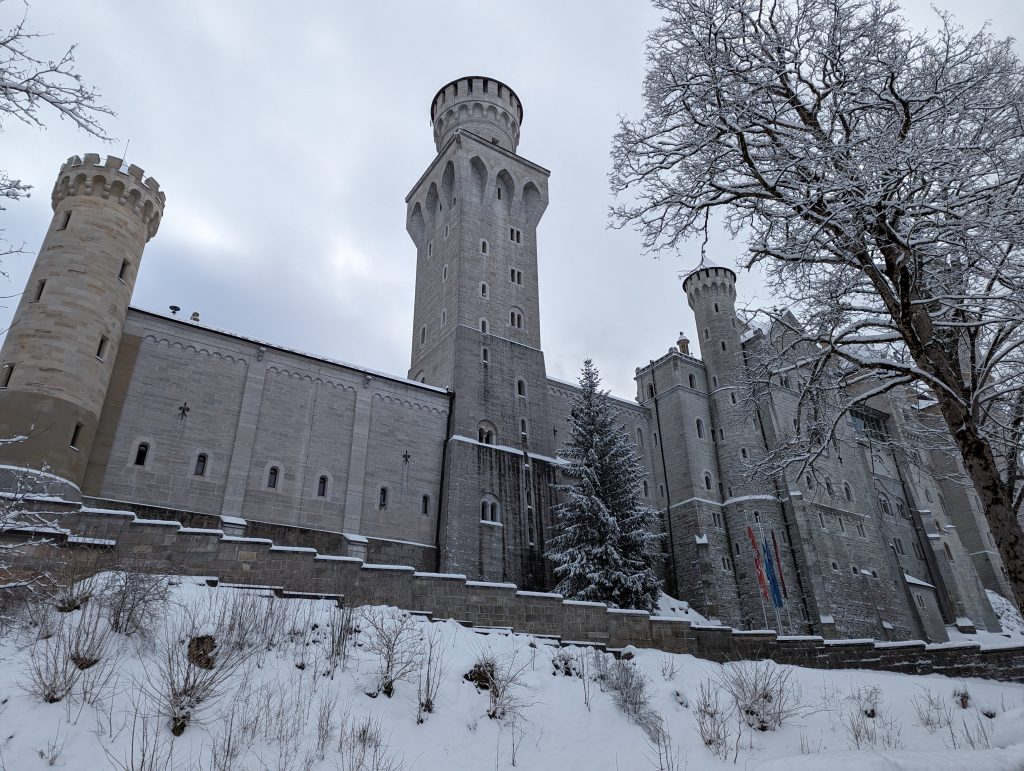
- In a huge throne room there is an ivory throne that looks gilded when the sun falls in at the right angle.
- It reminds me a little of Dumbledore’s golden goblet in Harry Potter. (Listen to the “5 Minute Harry Podcast” for more details).
- Fittingly, there are also Muggle stones, although I have no idea what these are all about anymore.
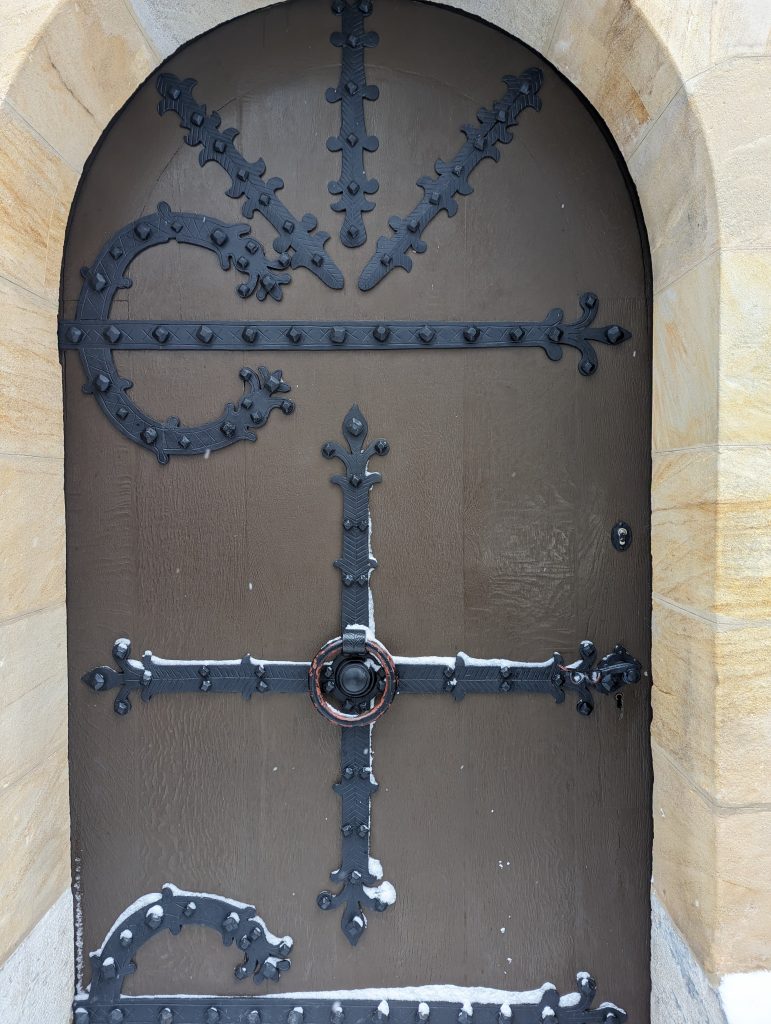
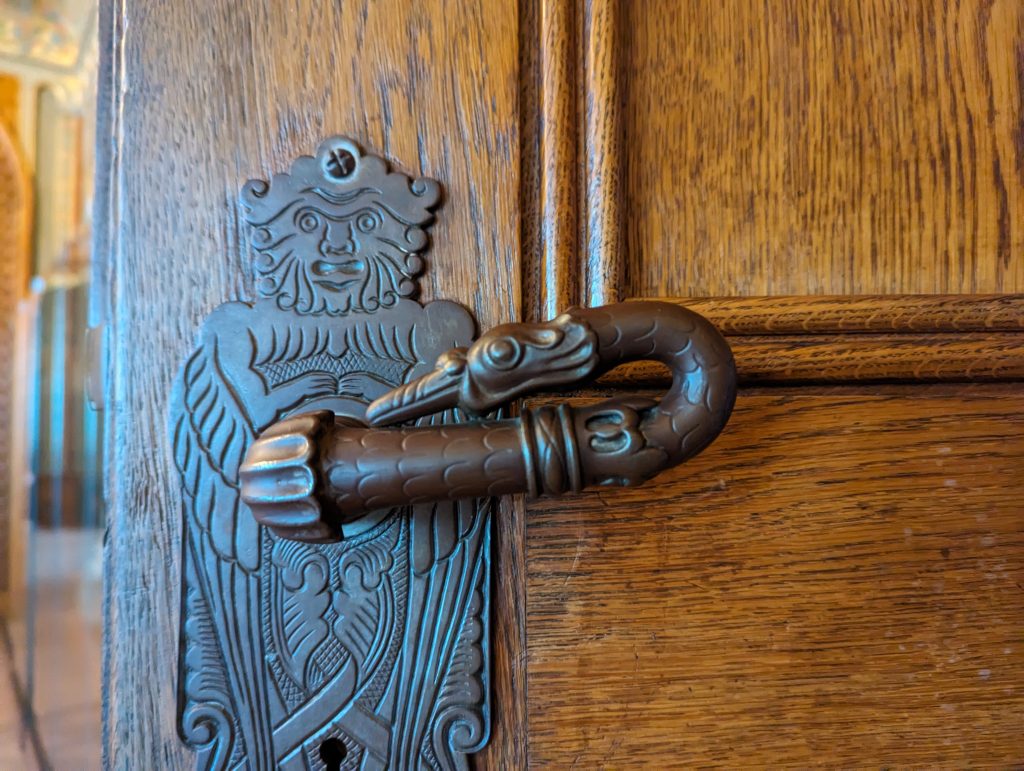
- The symbol of the area was apparently a swan and so you can find swans everywhere, for example there are swan door handles.
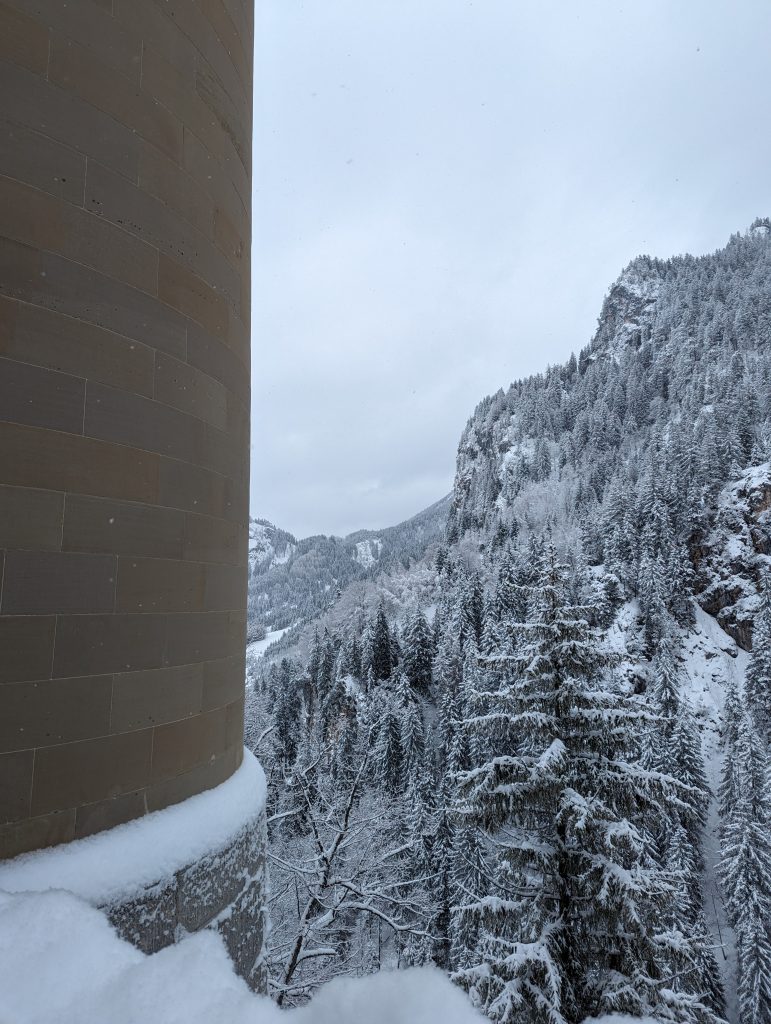
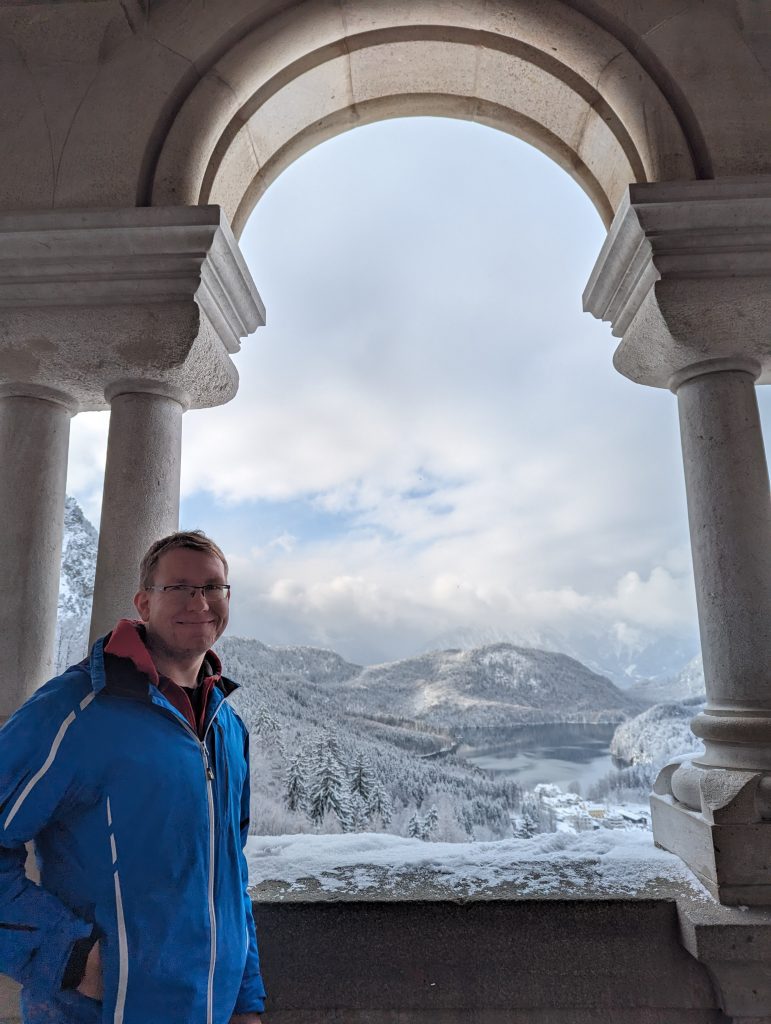
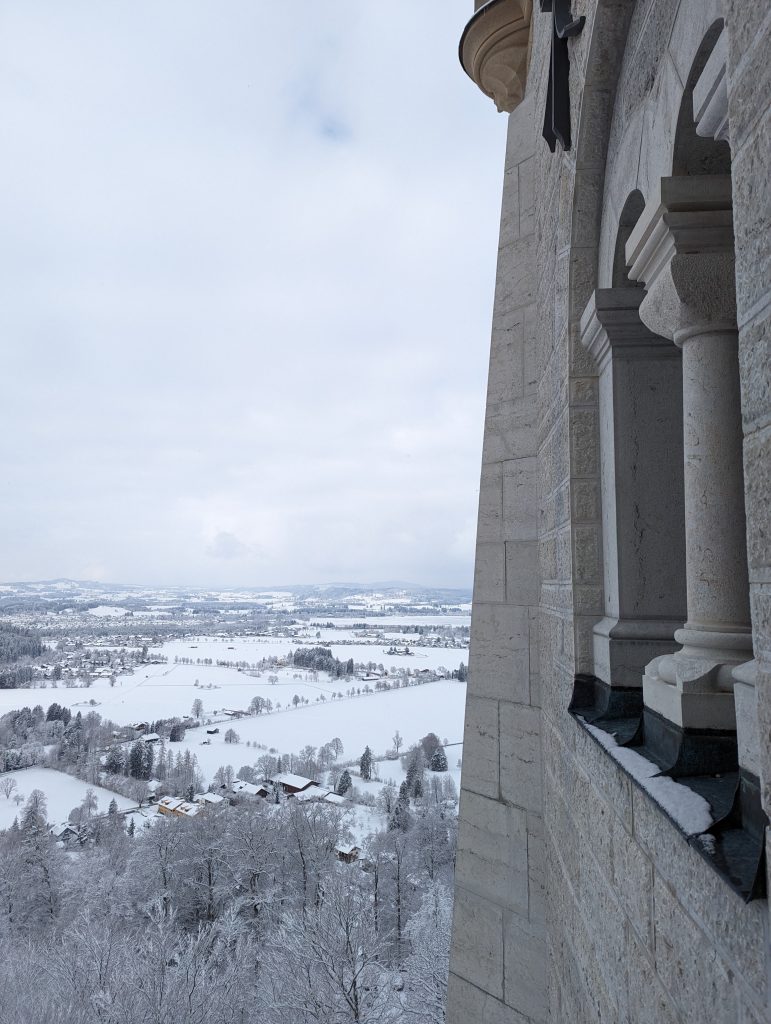
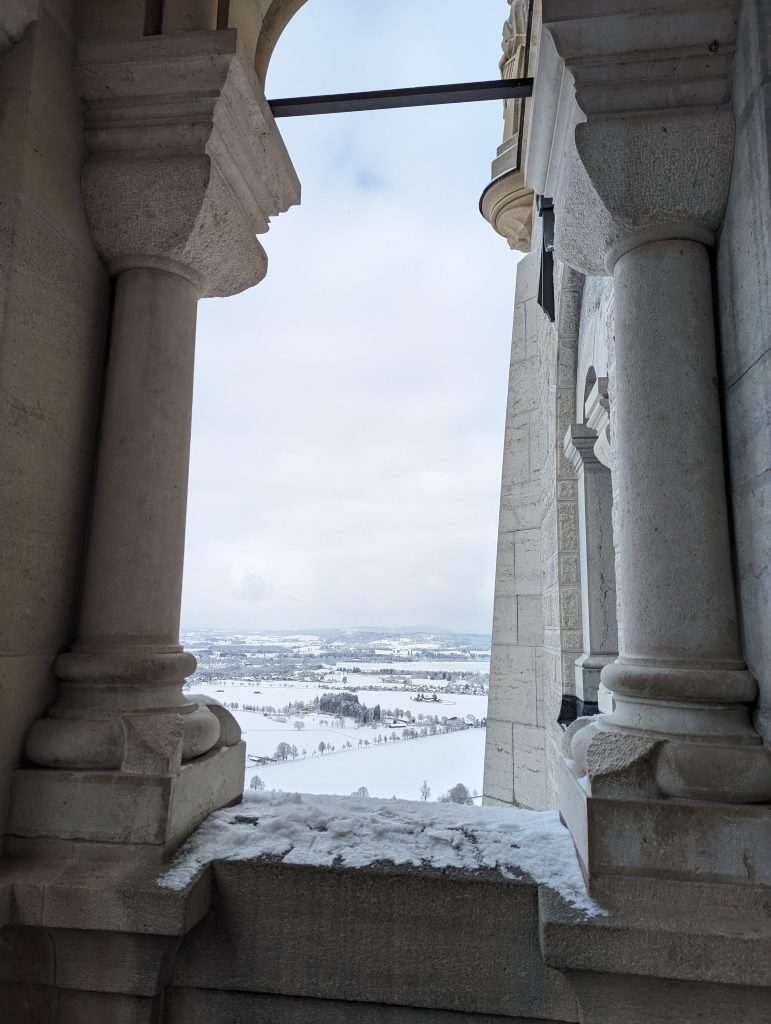
- We enjoy the fantastic view from the castle a little longer. It is situated at the foothills of the Alps. While enjoying the view we treat ourselves to a coffee in the really nicely furnished cafeteria, which is surprisingly quiet.
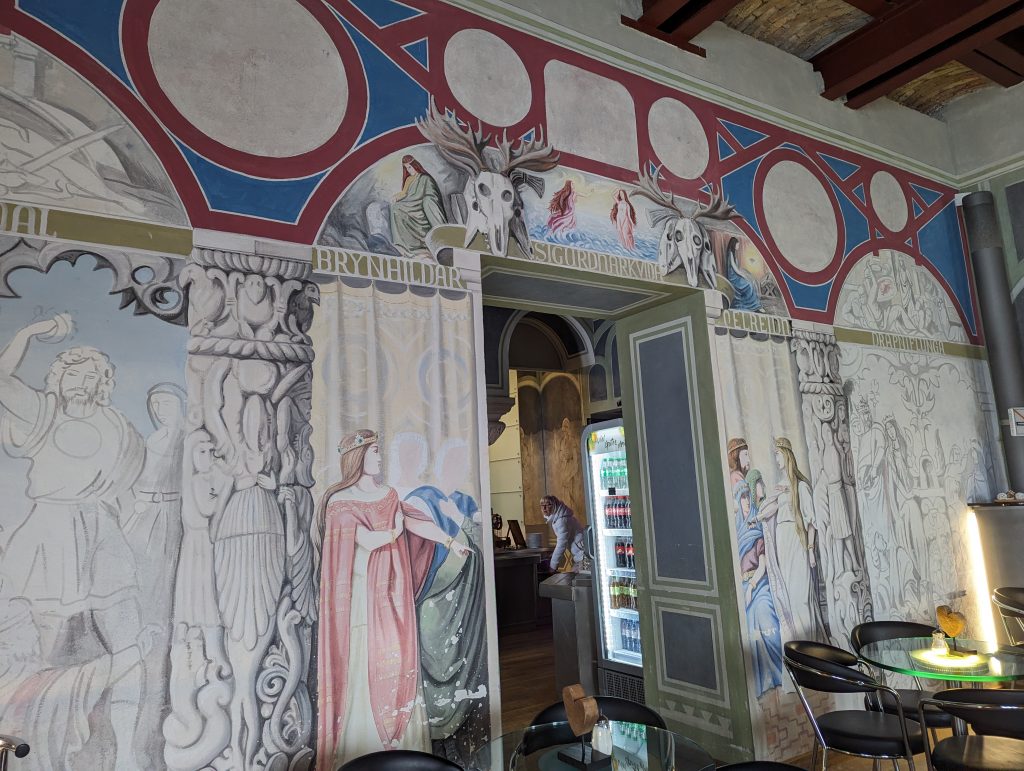
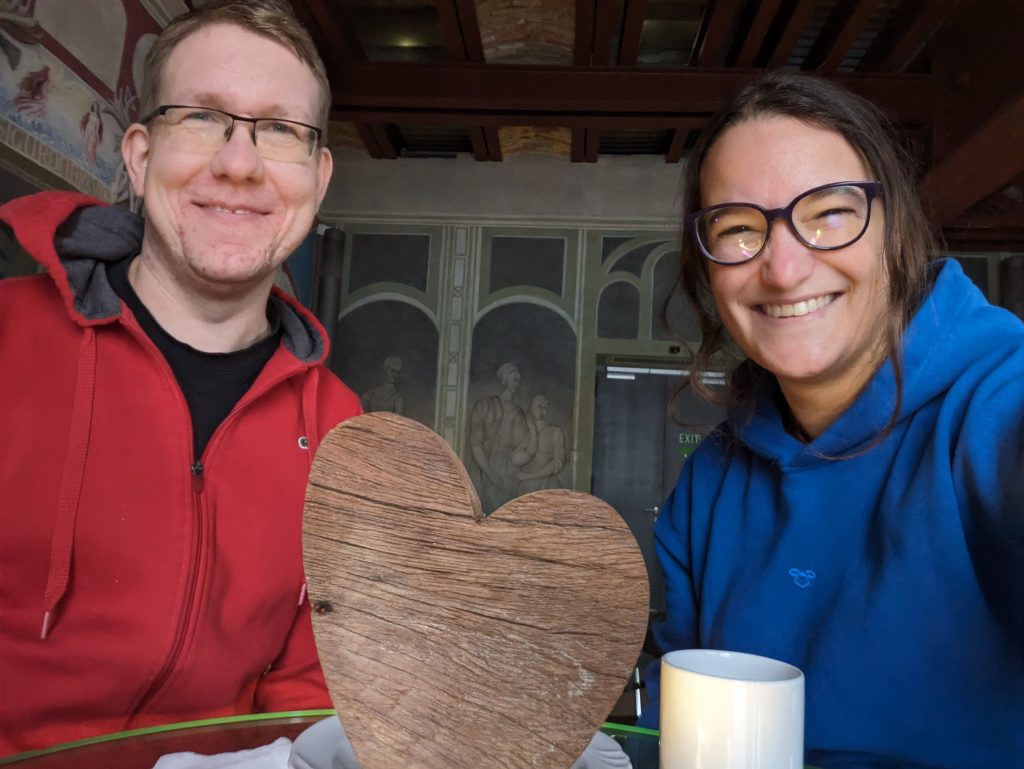
- We have the feeling that most of the tourists who come here travel as a group and that they do have to keep up with their tight schedule. This means that most people you see here, hurry around from one place to another, quickly take a picture and get in the bus again. In comparison, our sprint up the mountain almost seems like a walk in the park.
- As the sun comes out, we decide to spend some more time here and visit Hohenschwangau Castle, which is about 30 minutes’ walk from here.
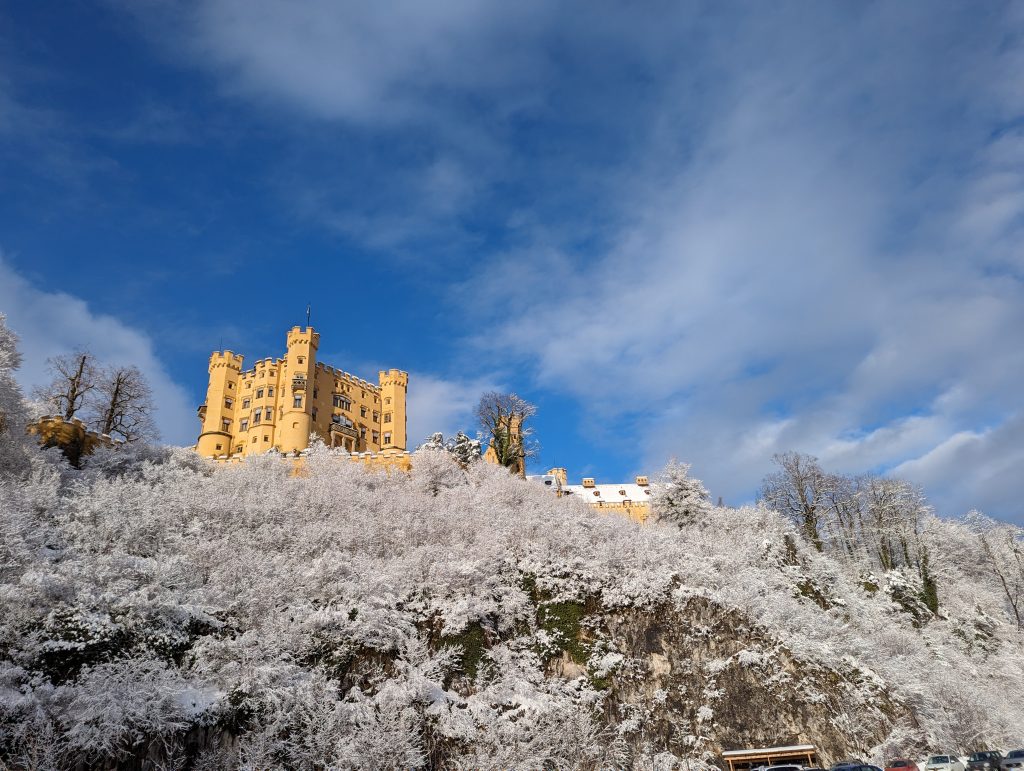
- Ludwig’s father Maximilian had the castle converted into a palace. Apparently Ludwig also spent a few summers here and was then inspired to build Neuschwanstein on a nearby hill.
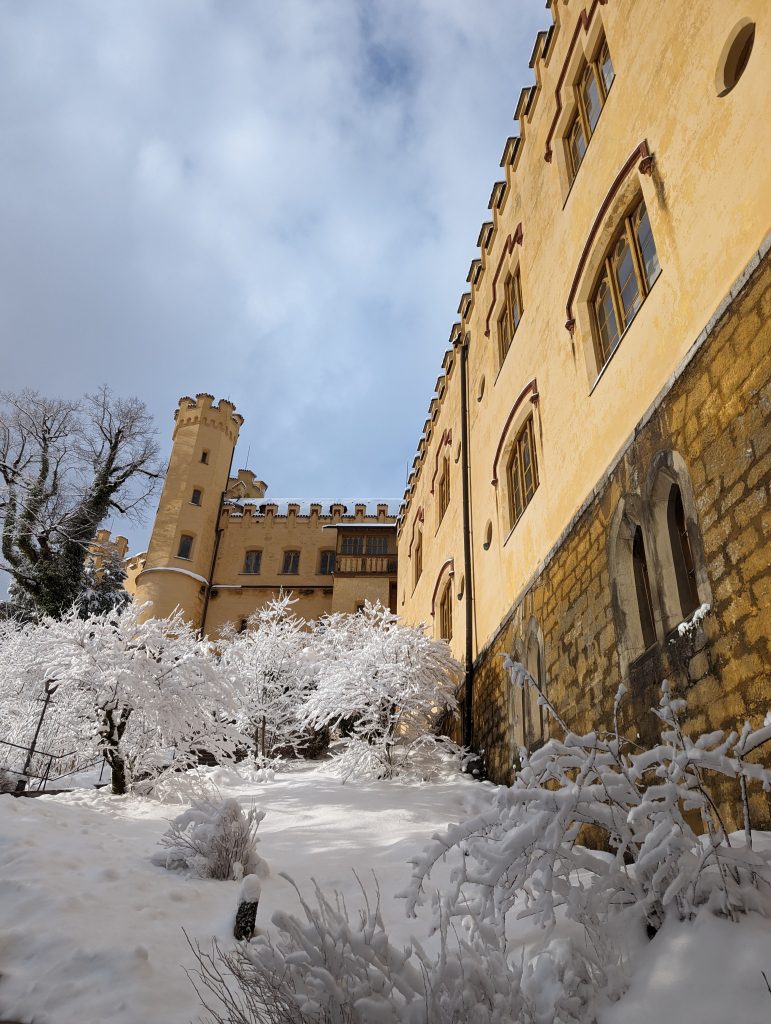
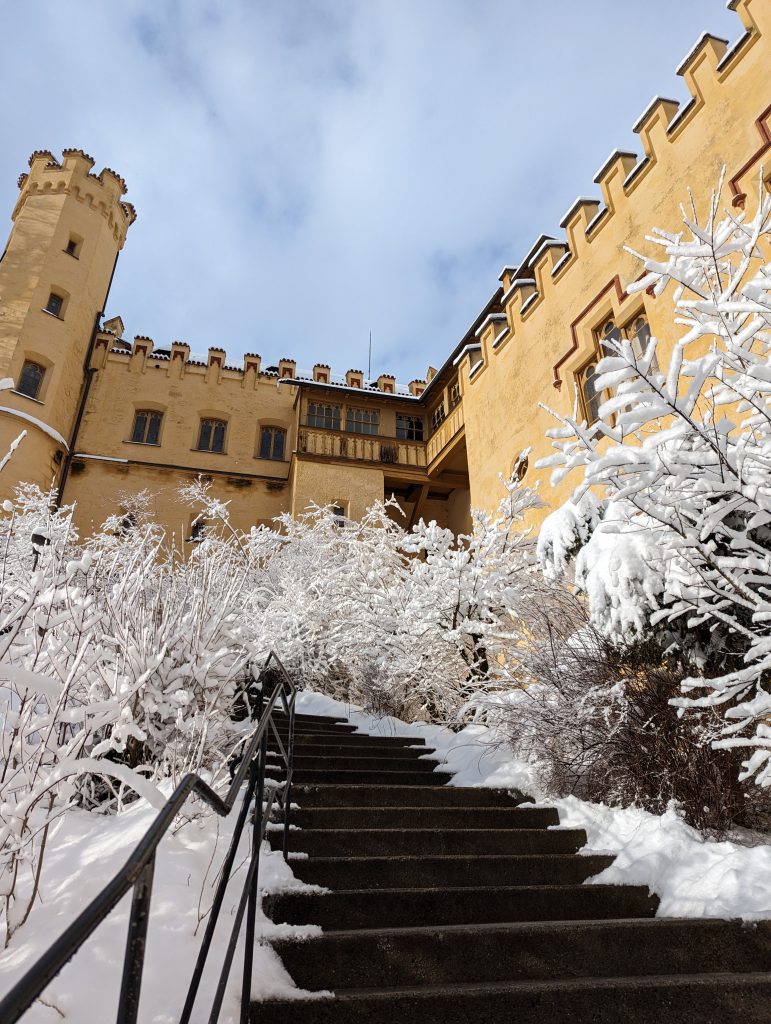
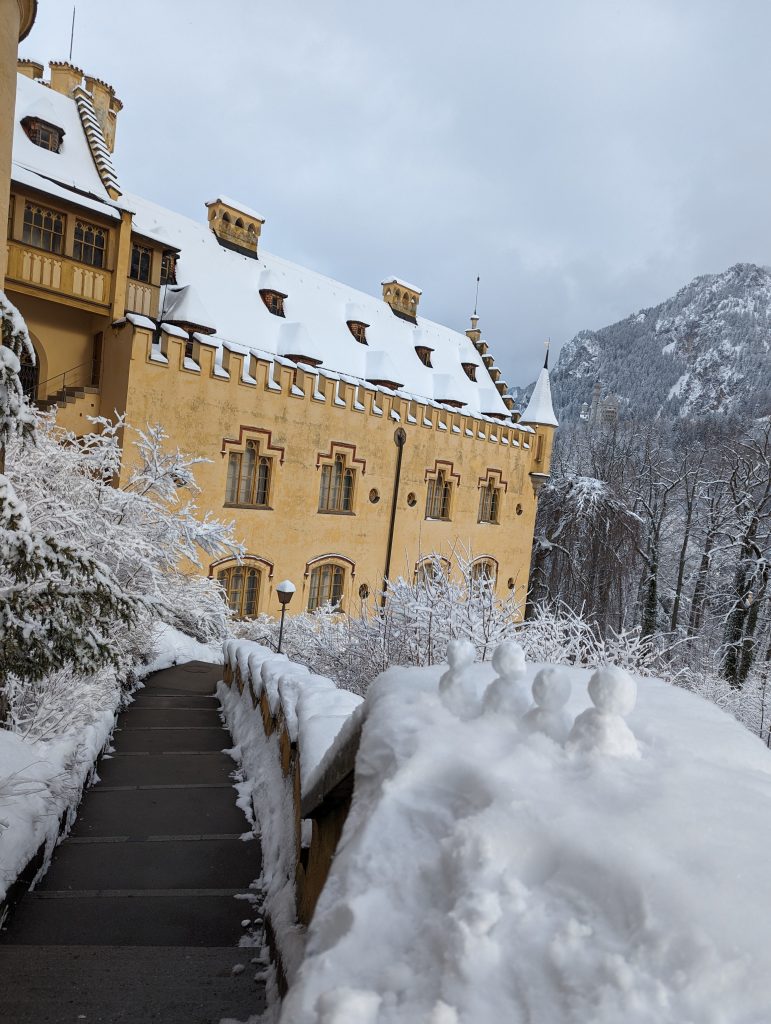
- In the light of the sun and next to the bright white snow, the yellow of the castle looks much more impressive than the gray of Neuschwanstein and I find it almost more beautiful to look at (but maybe I’m biased towards yellow castles because of Schönbrunn – my standard of all castles).
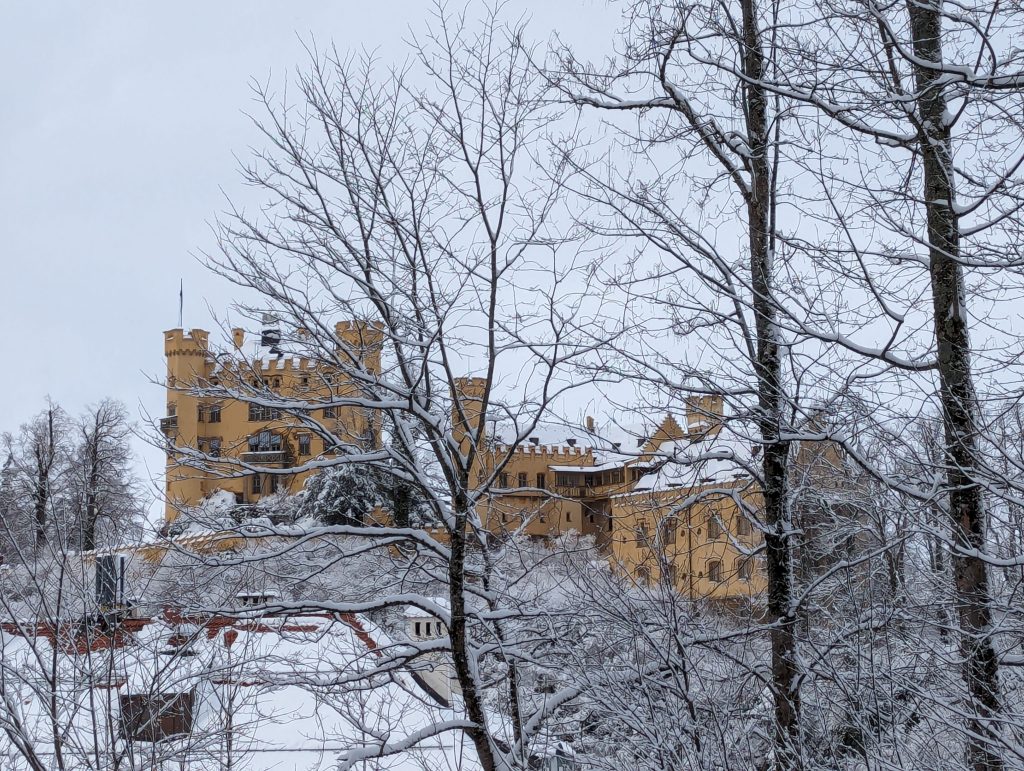
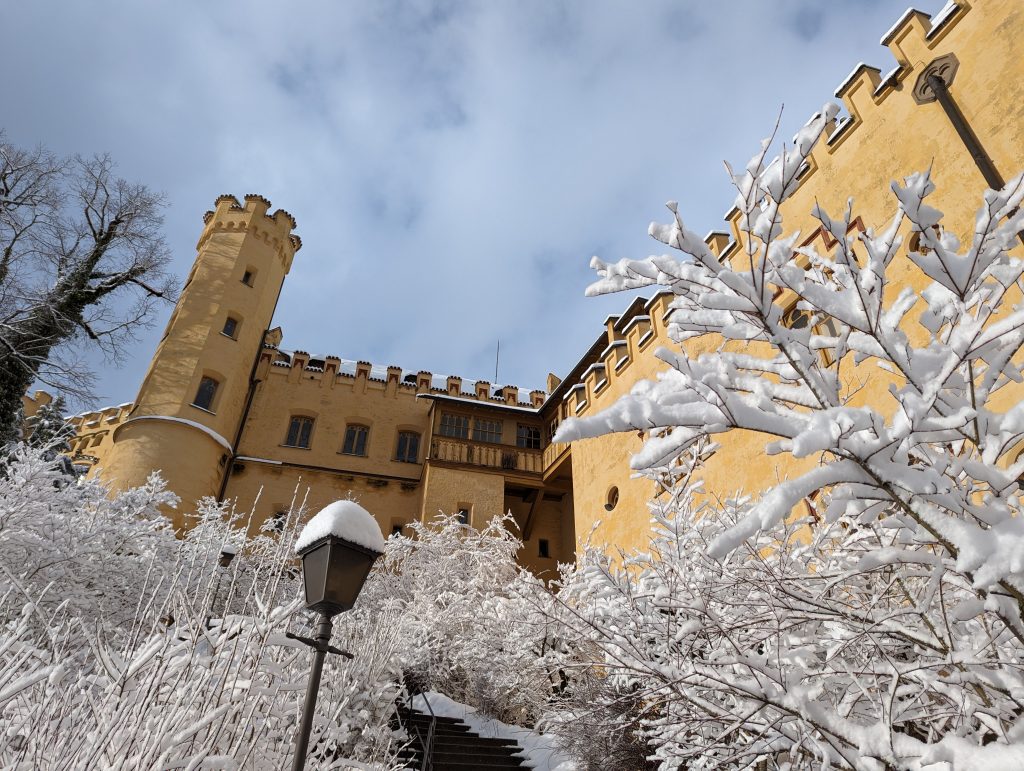
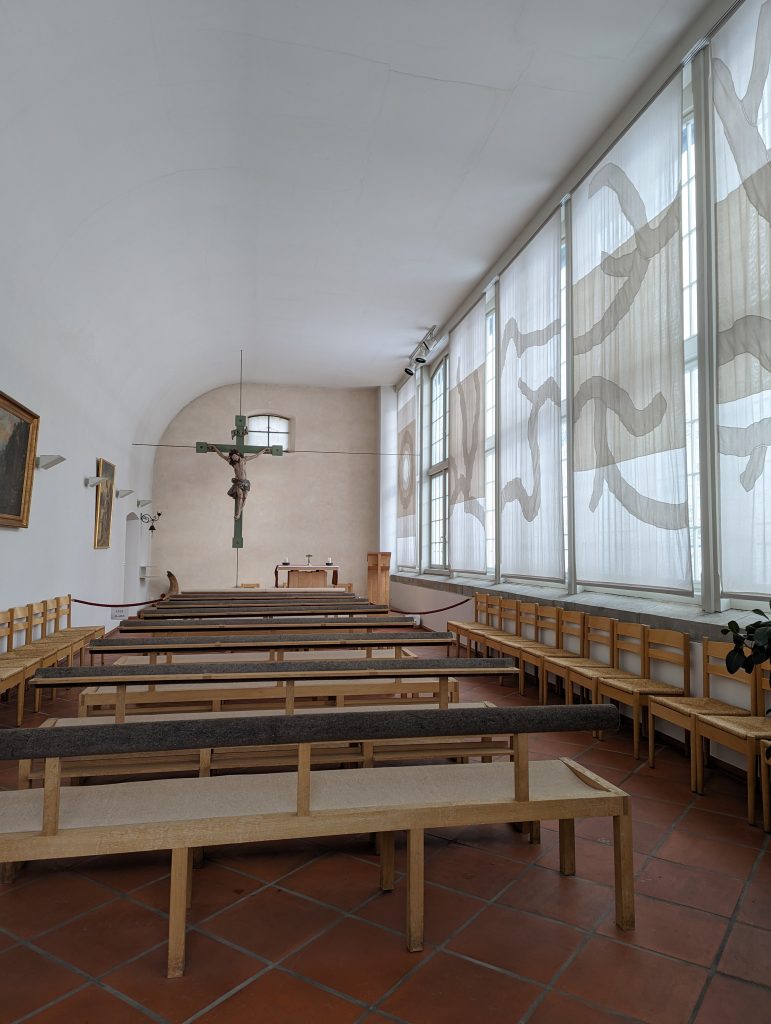
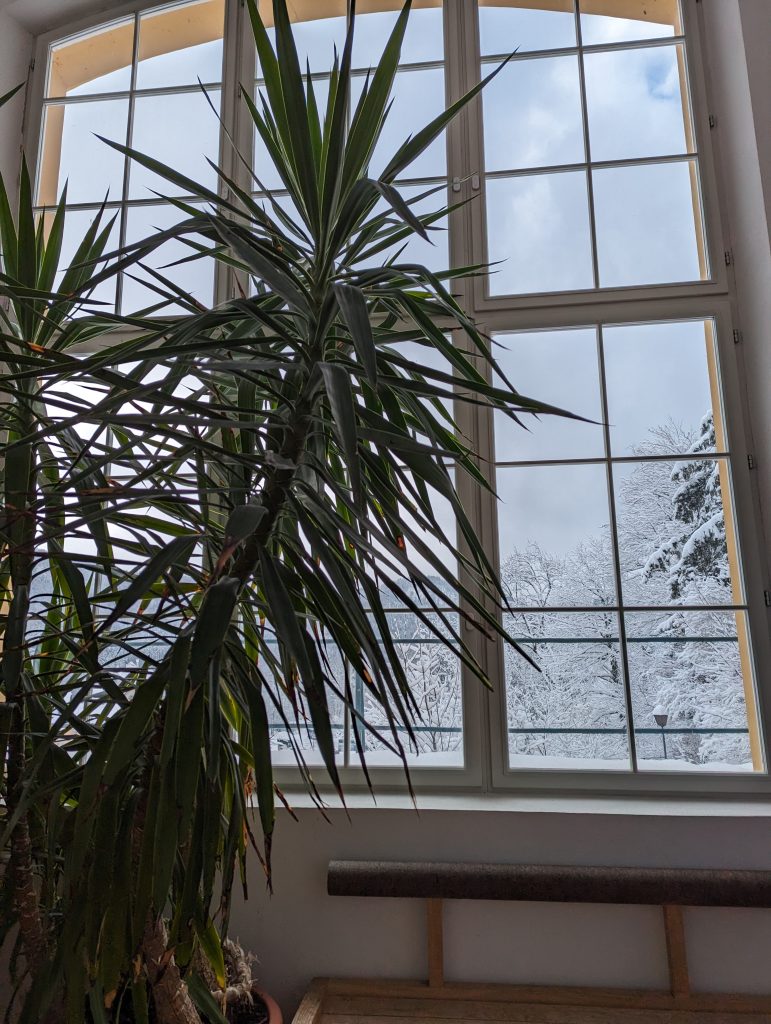
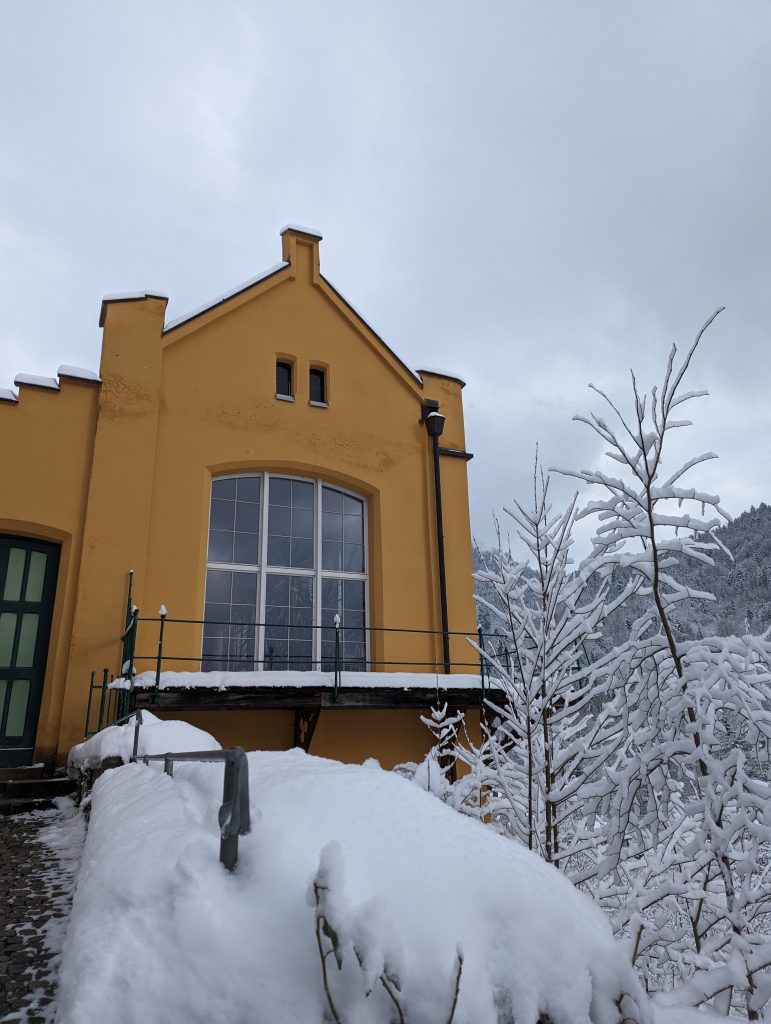
- On the way up, we discover a former orangery that is now used as a church and, to our surprise, is open.
- The tour of the castle is much more relaxed than in Neuschwanstein – of course there are far fewer visitors and we have all the time in the world. That’s why the guide tells us all kinds of stories and fun facts.
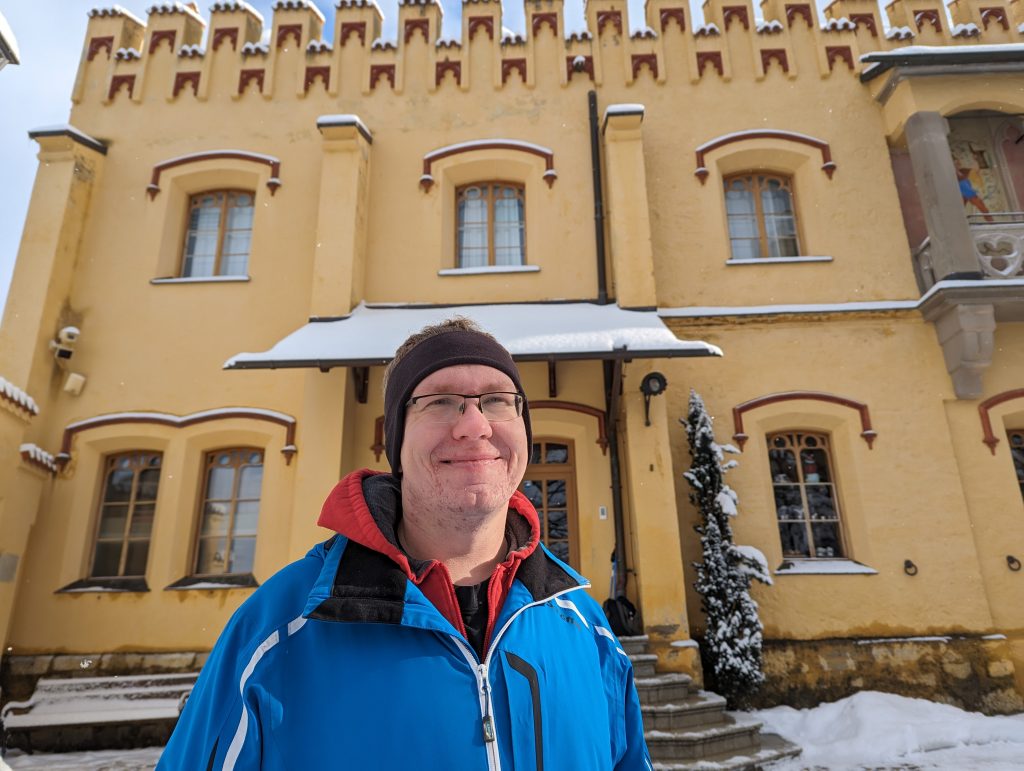
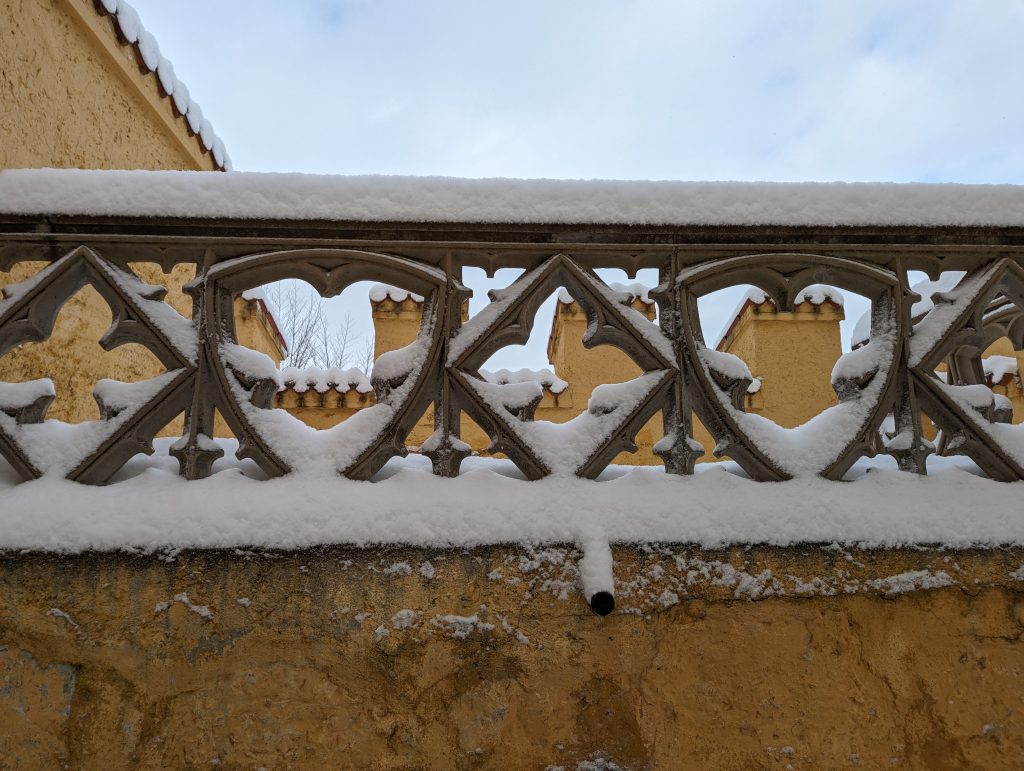
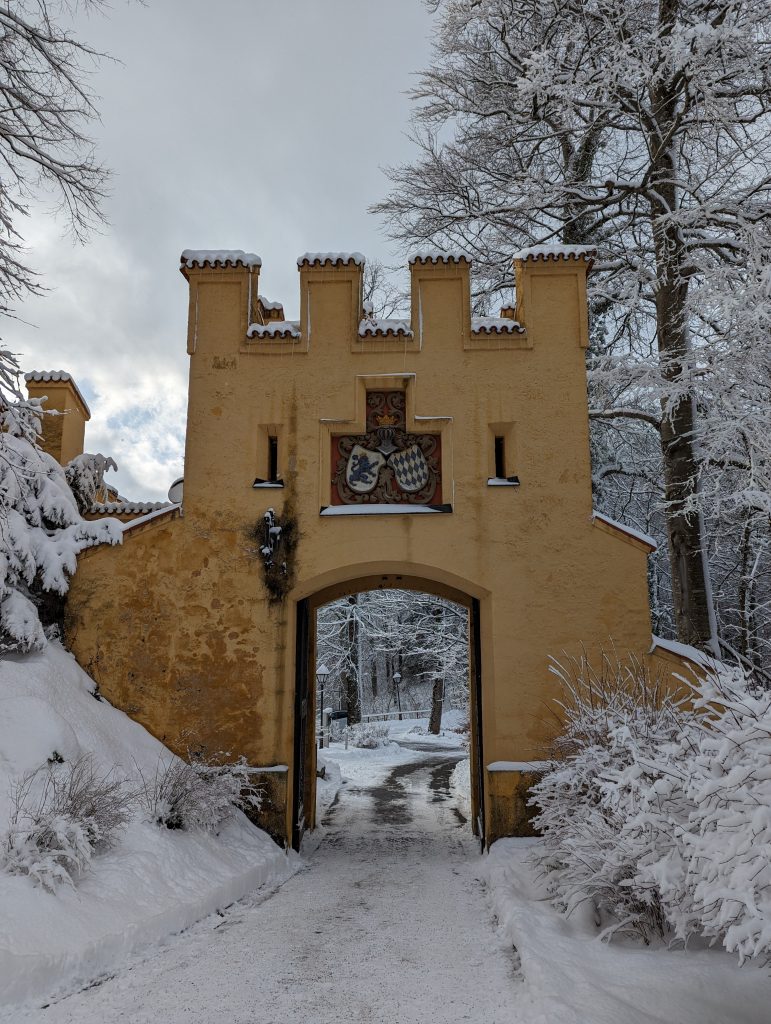
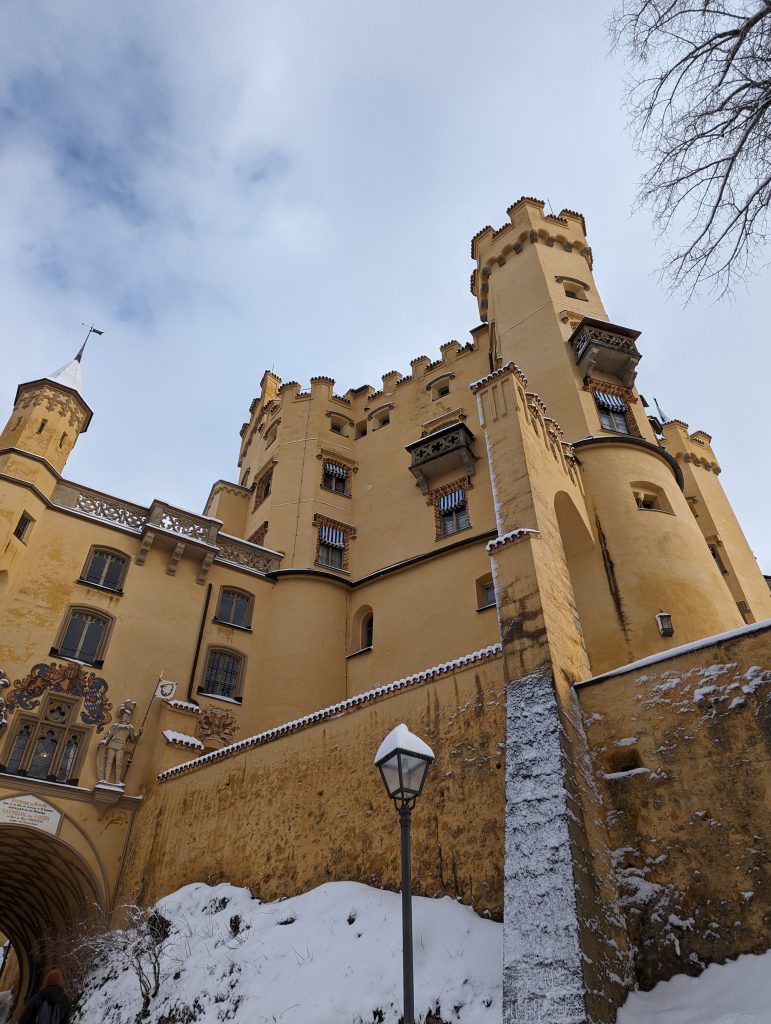
- As in Neuschwanstein, nobody is interested in Maximilian, everyone wants to know everything about Ludwig and for some reason we arrive at the topic of “conspiracy theories about Ludwig’s death”. The discussion goes in abstruse directions until our guide says soberly: “I always say: the good thing is that everyone can stick to their favorite theory.”
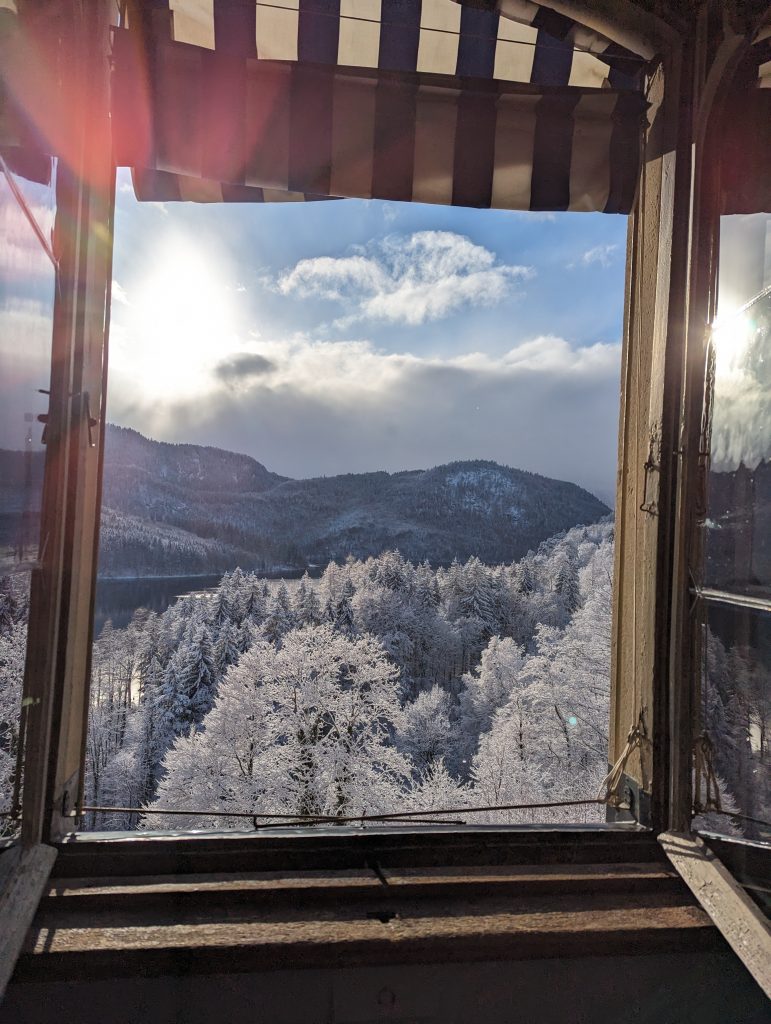
- He shows us a window with a wonderful view of the Alpsee and the mountains behind it. And makes it extra dramatic by pushing open the window sashes prompting everyone to let out a “Wooow, meeega!”. Me meanwhile: “But that’s against the sun!” – Hauptsache gsudert…
- Unfortunately, we cannot fit in a walk around the Alpsee, because we have to head on to get to Margit, Julia and Jayden for the first of our wedding activities!