
From Lochbauer
to Palú im Fersental
Saturday, June 15
Wellnessday with Vivian (and Farzam)
- Leisurely breakfast from 8:00 to 10:00 a.m. with a huge selection – all organic and regional, of course.
- Apart from the jacuzzi, sauna and relaxation, there is nothing else on the agenda today, which is quite nice for a change.
- For dinner, we walk to a nearby alpine hut (what would a day be without hiking?), which seems to be frequented mainly by locals; we strangers immediately stand out.
- Overall, the dining room is very rustic.
- Vivian asks for salad with dandelion or mountain herbs and nettle dumplings, but I could have told her as soon as we walked in the door that the landlord is more familiar with ‘roast pork with dumplings’.
- So we order beer (although Vivian undeterred treats herself to a spritzer of some kind) and enjoy the hearty meal.
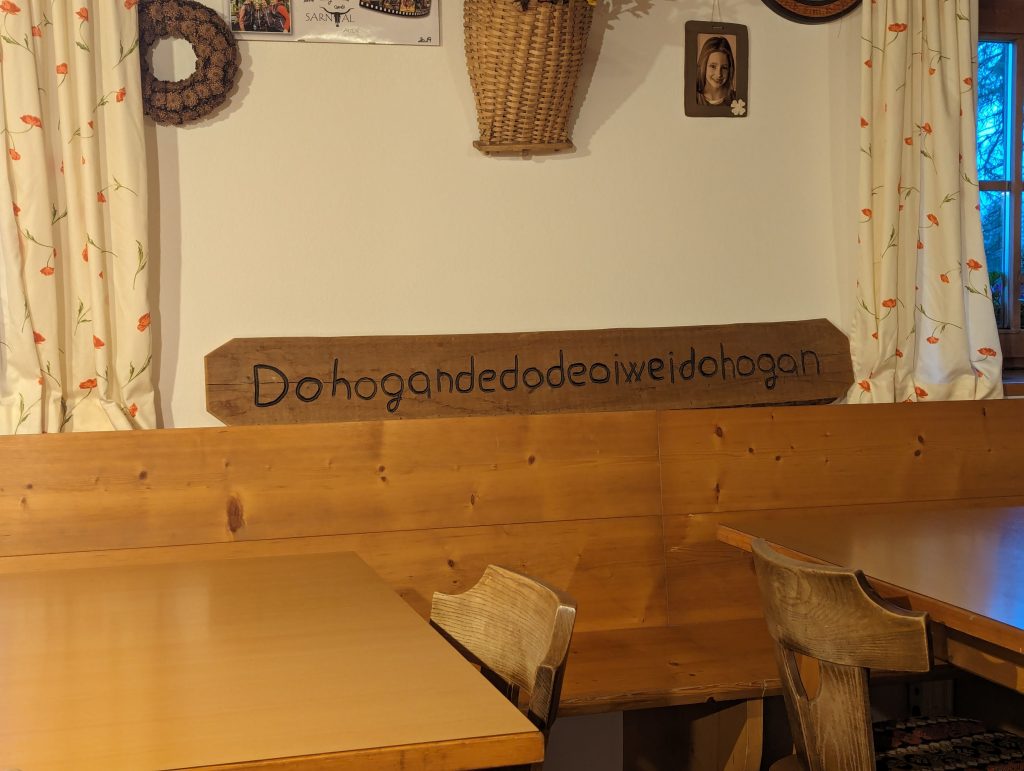
- Of course, there is also a regulars’ table – ‘Dohogandedeoiweidohogan’ – we translate for Vivian: ‘That’s where the ones who always sit there sit’.
Sunday, June 16
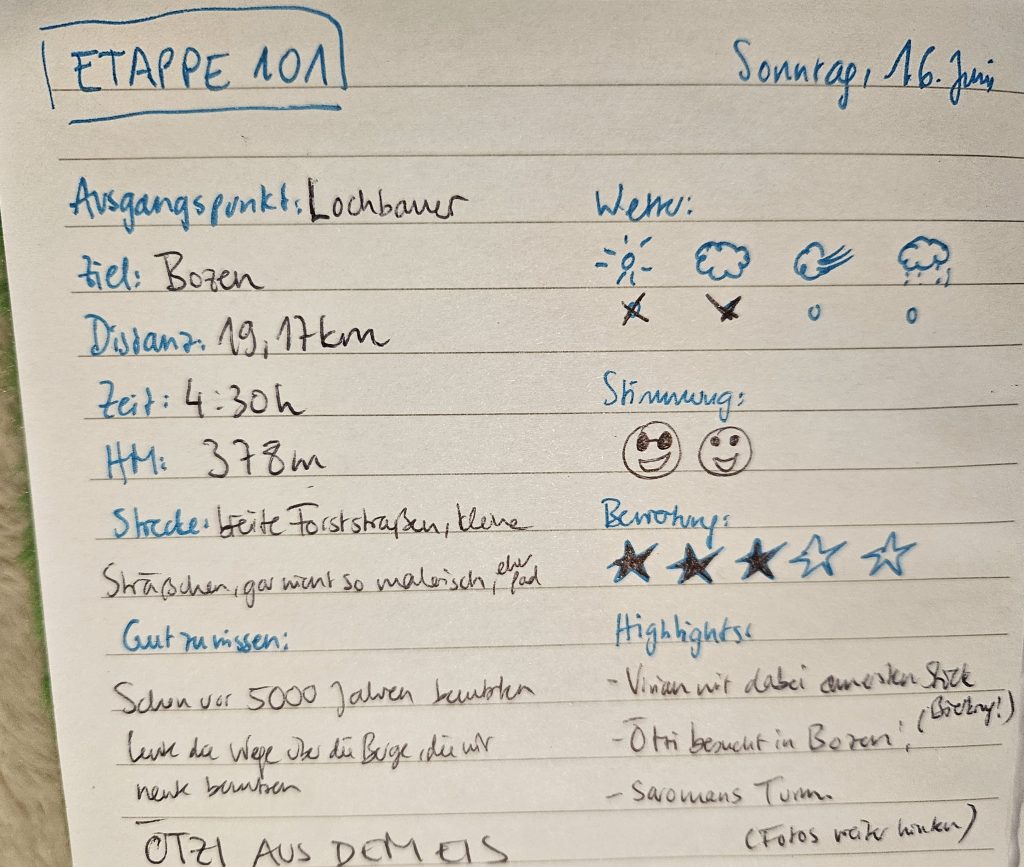
Ötzi from the ice
- A relaxed breakfast, packing up, saying goodbye to Farzam, Astrid and Alexander (our hosts) and then we’re off.
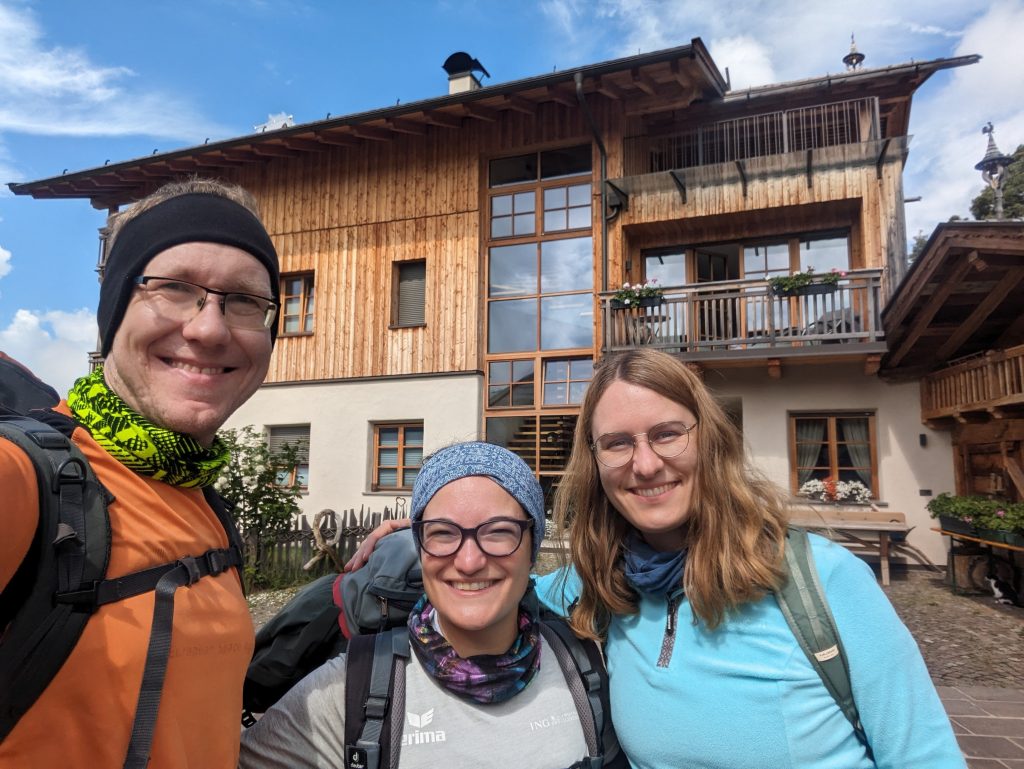
- Vivian joins us for the first part of the stage 🙂
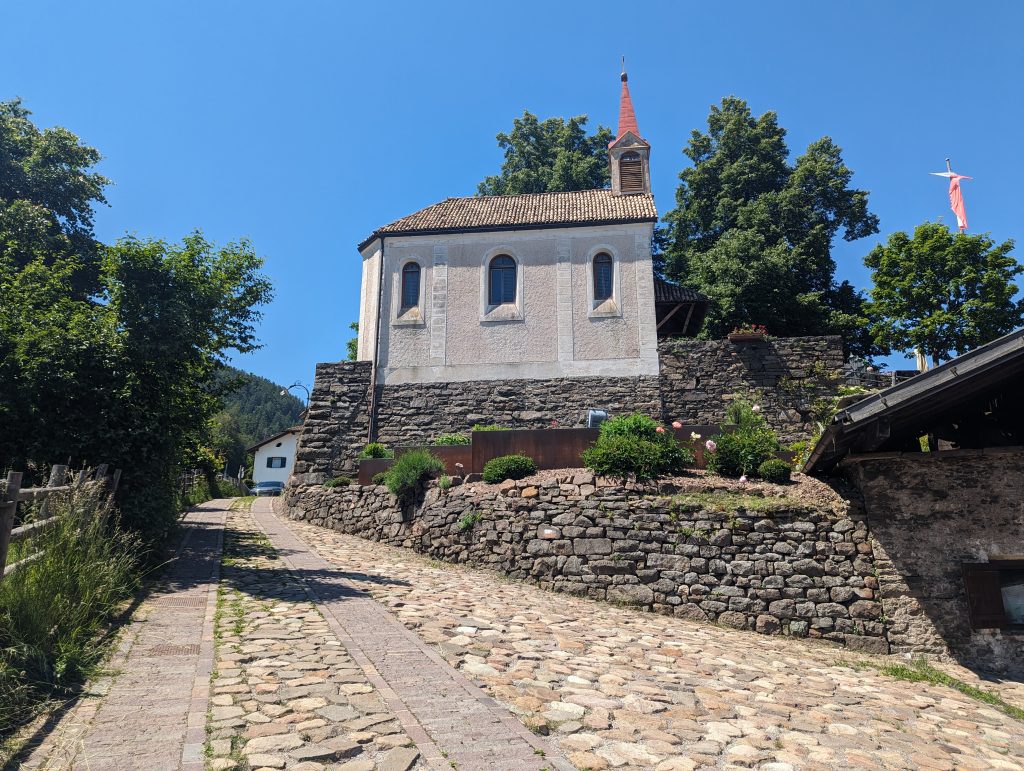
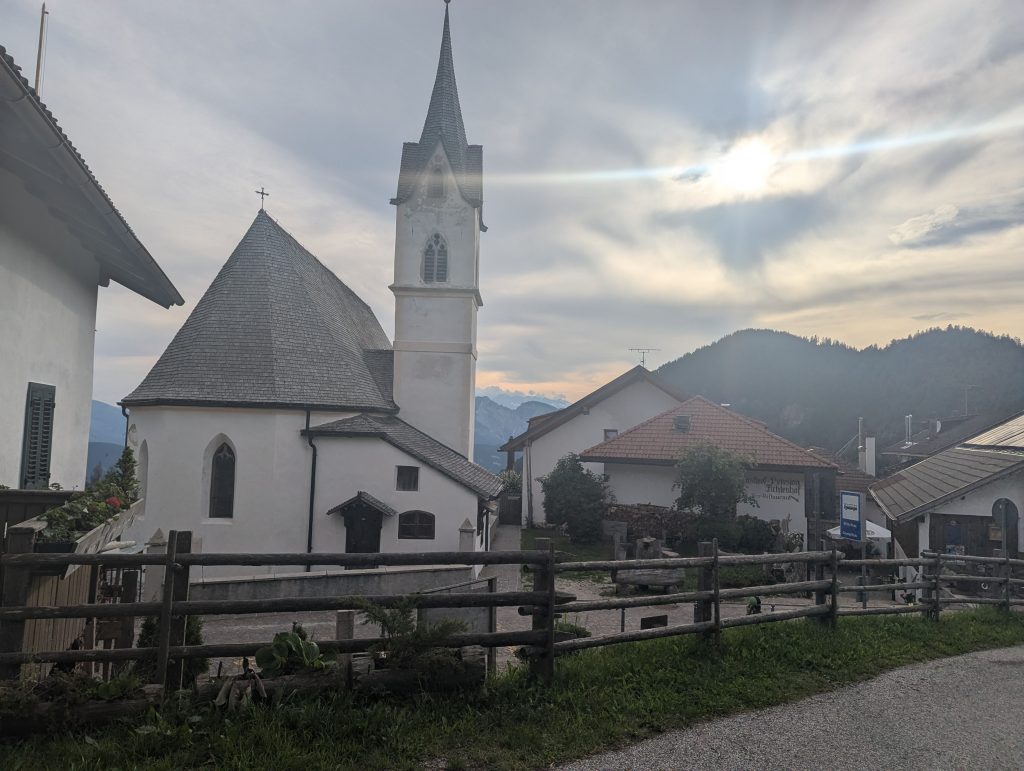
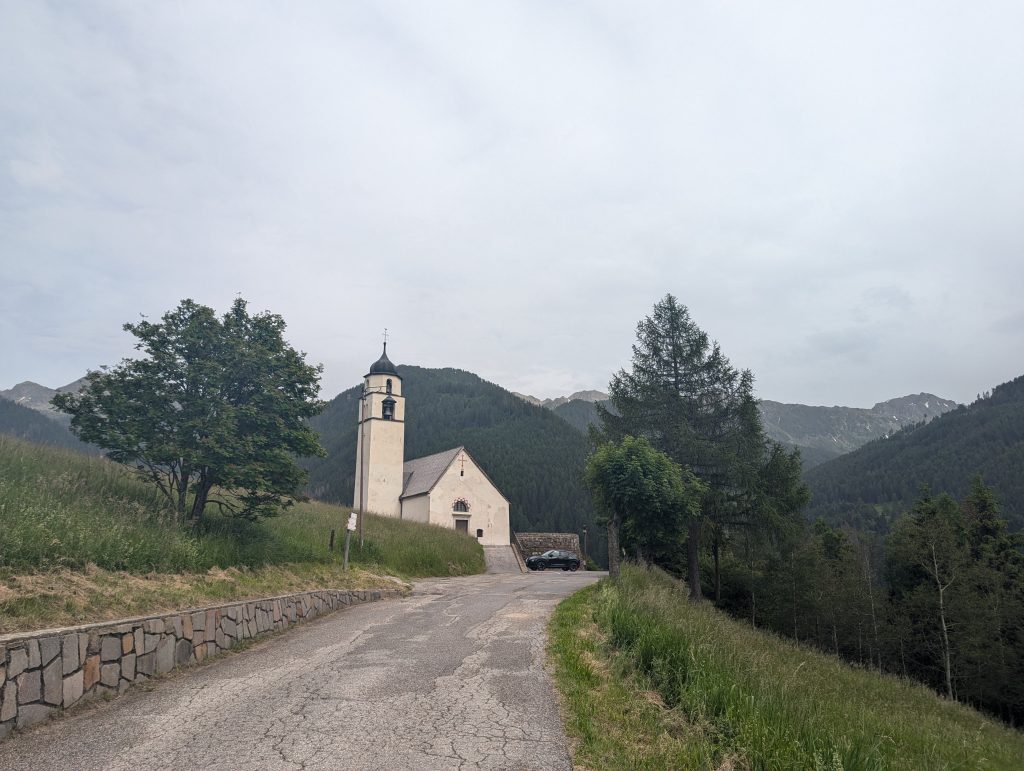
- Across alpine meadows and partly small, flooded paths, we climb up to the village of Langfern, which consists of a church and an inn.
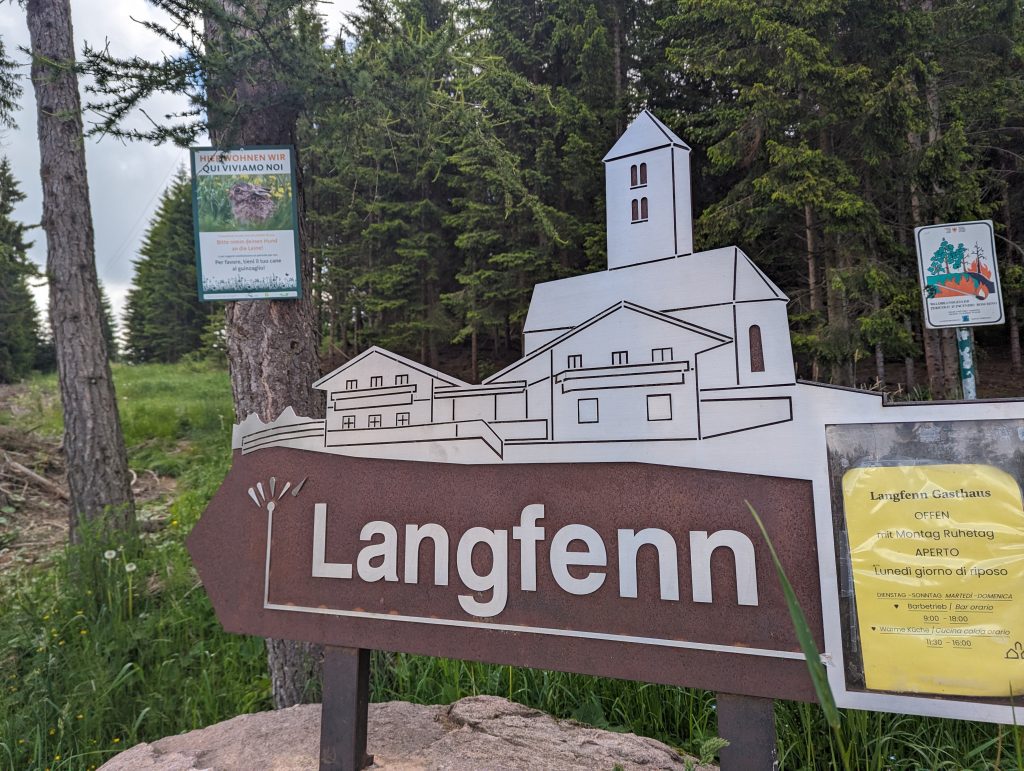
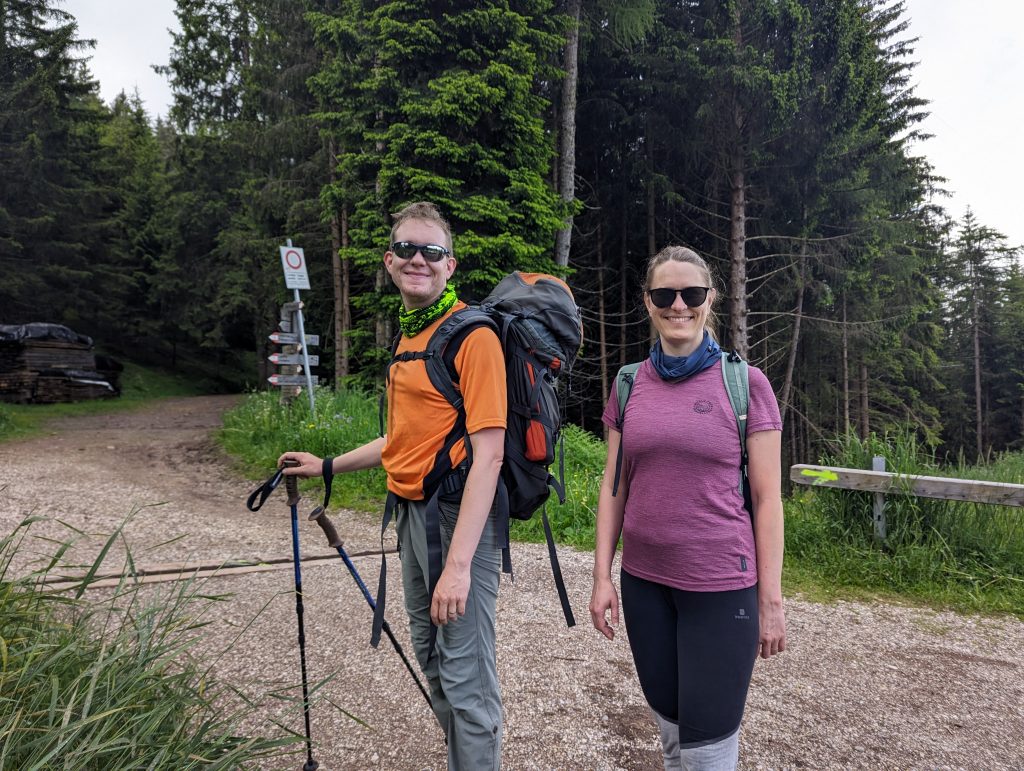
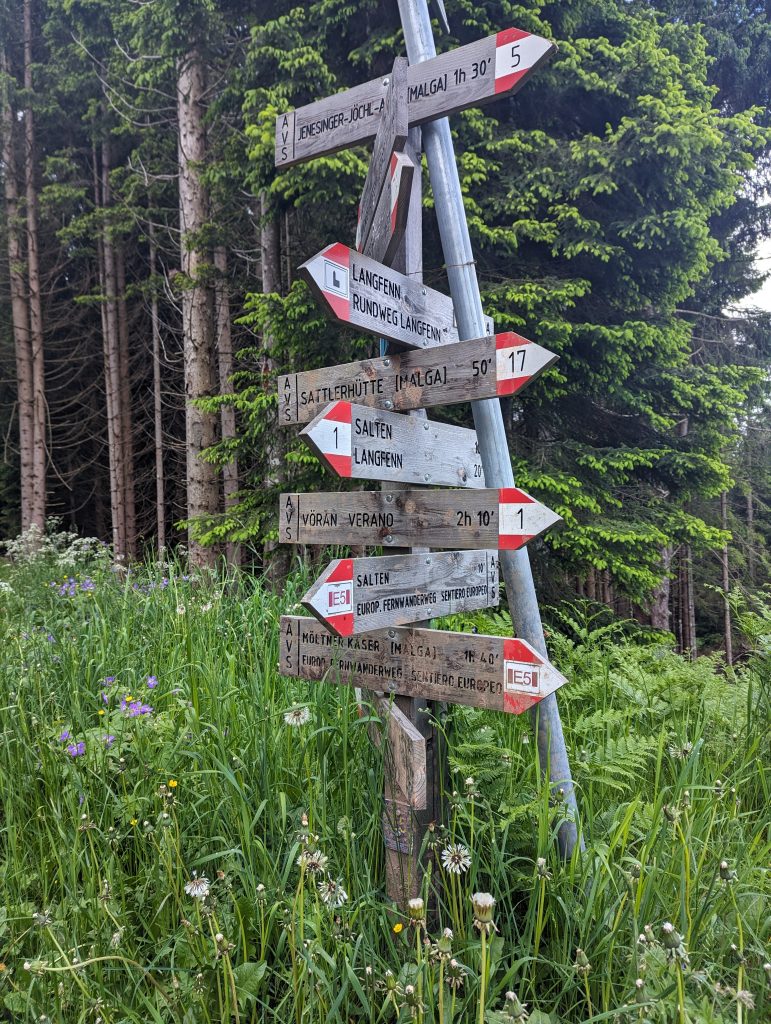
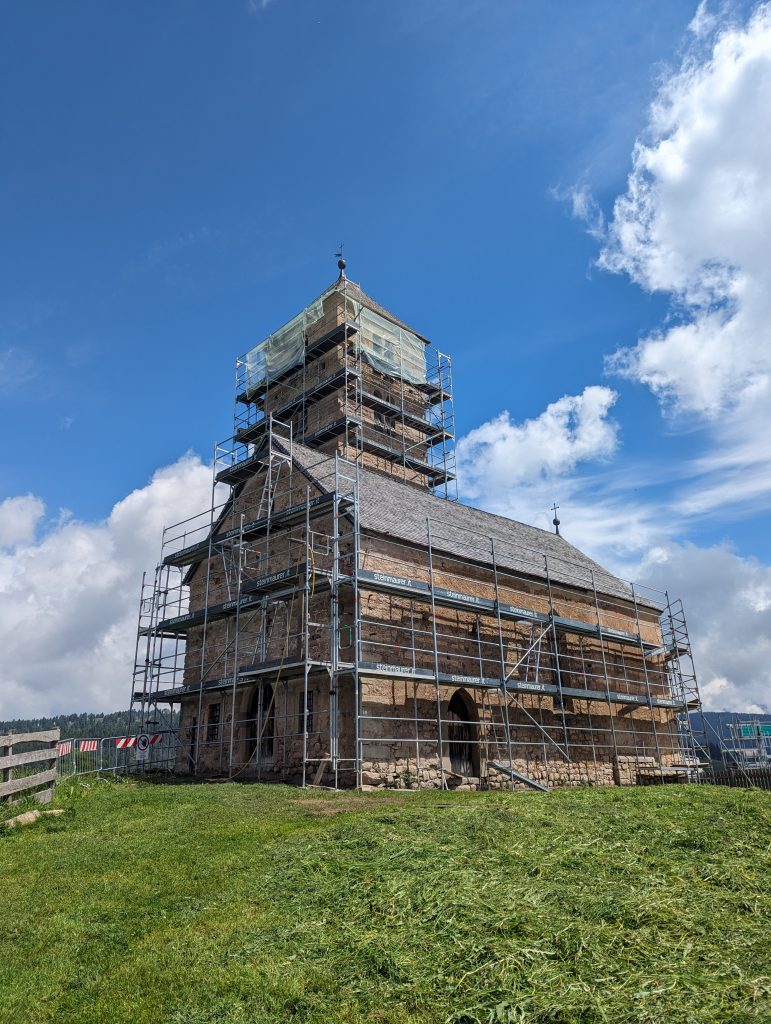
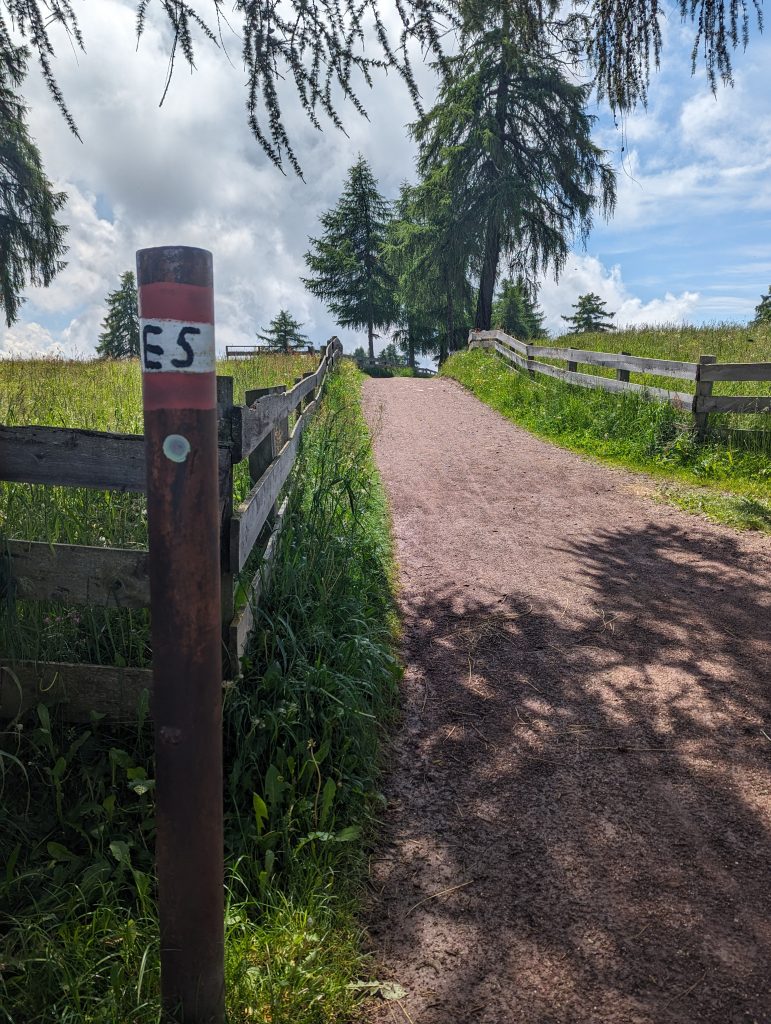
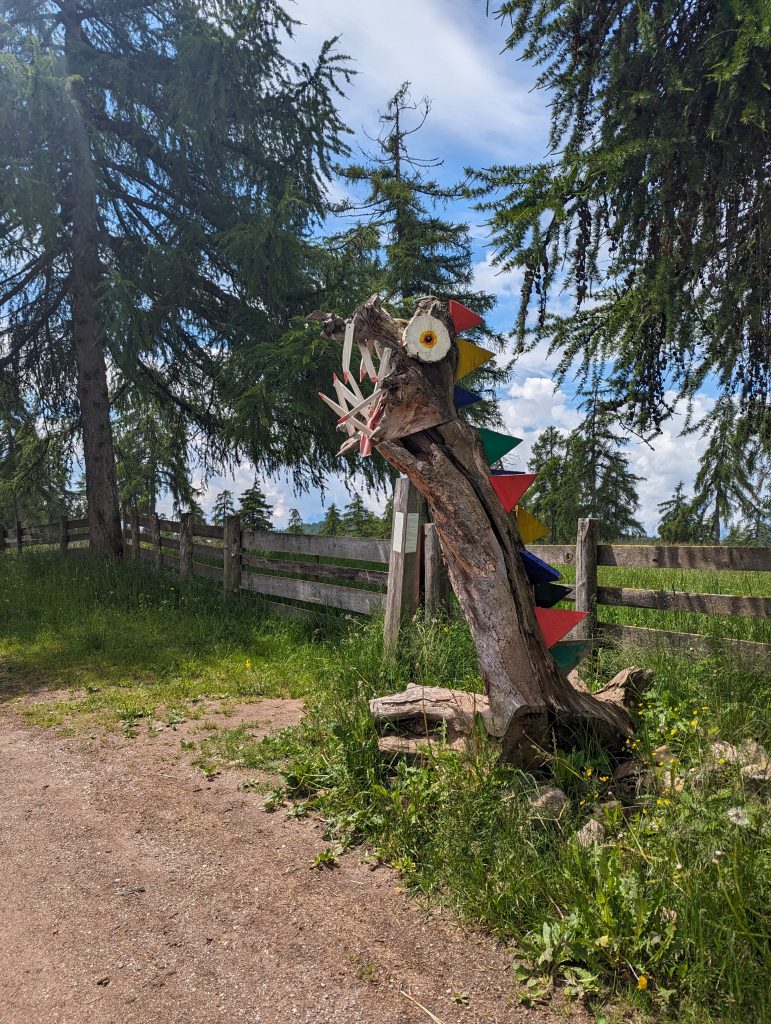
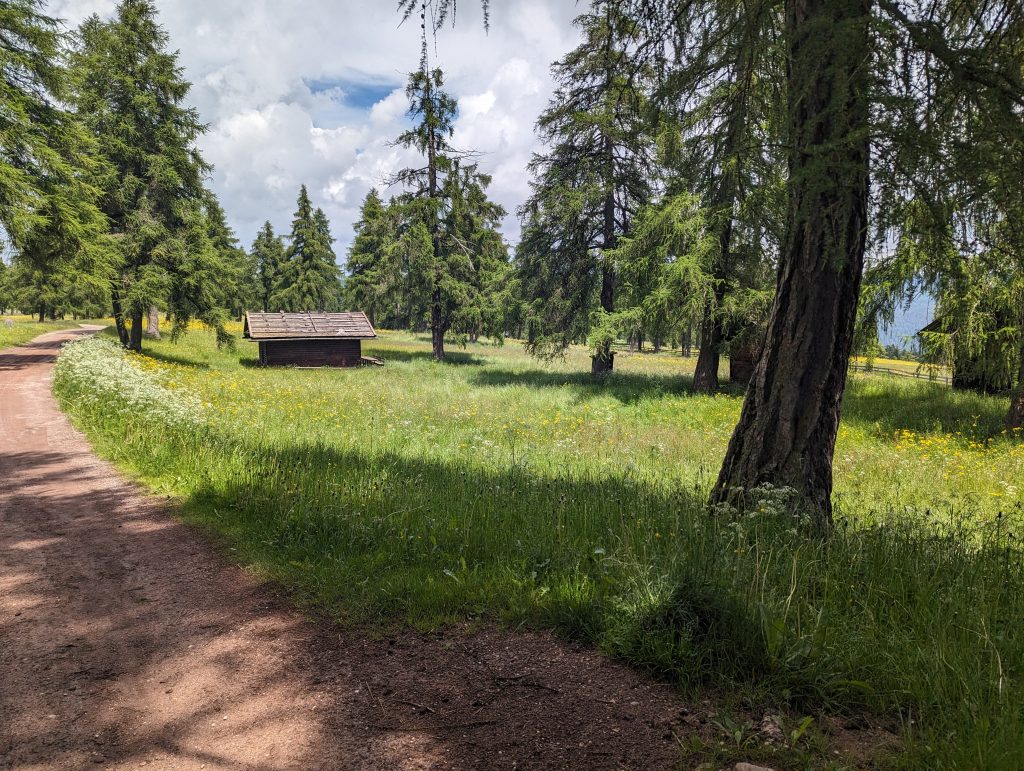
- From here, a network of wide, well-maintained hiking trails leads over the hill.
- Vivian accompanies us a little further along the paths, and slowly the sun begins to break through the thick cloud cover.
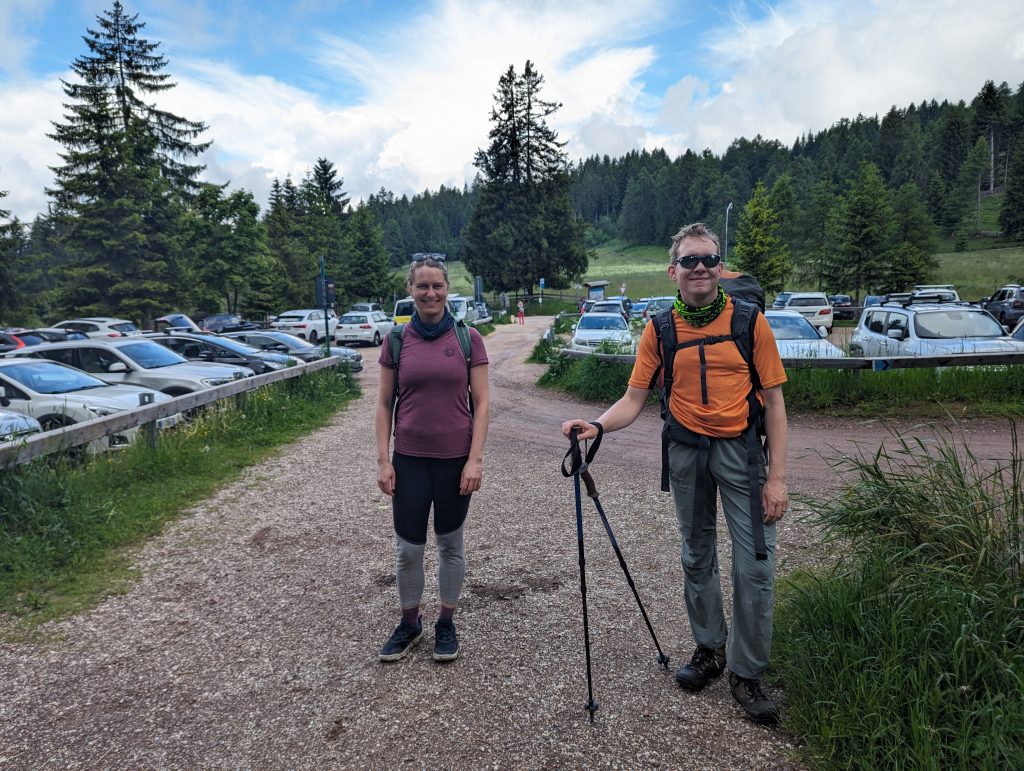
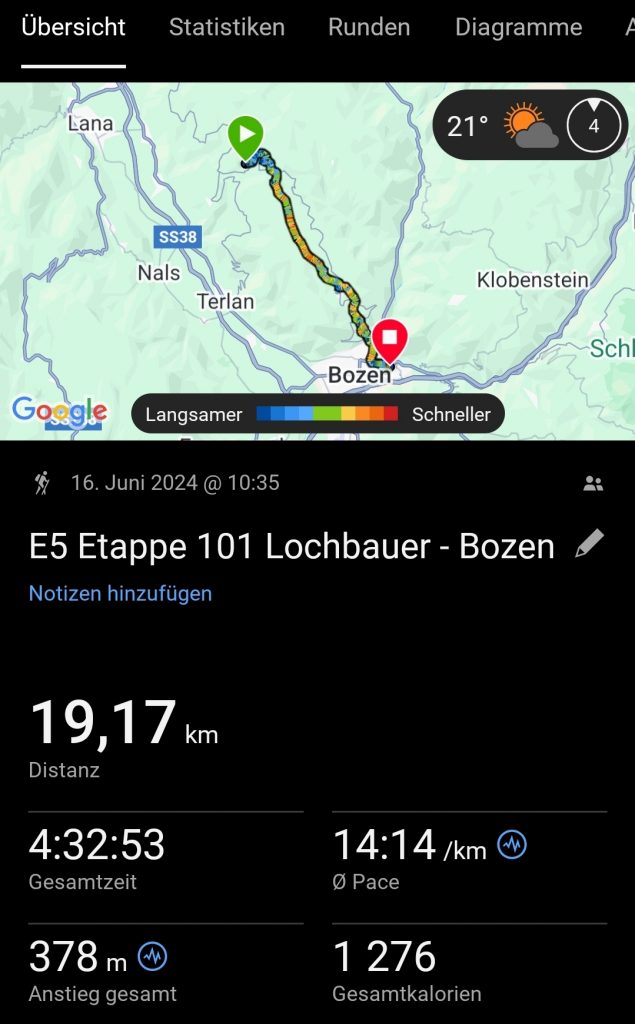
- There are no more places to stop for refreshments until Jenesien, so Vivian decides to turn back and we cover the last stretch to Jenesien and then the descent to Bolzano on our own.
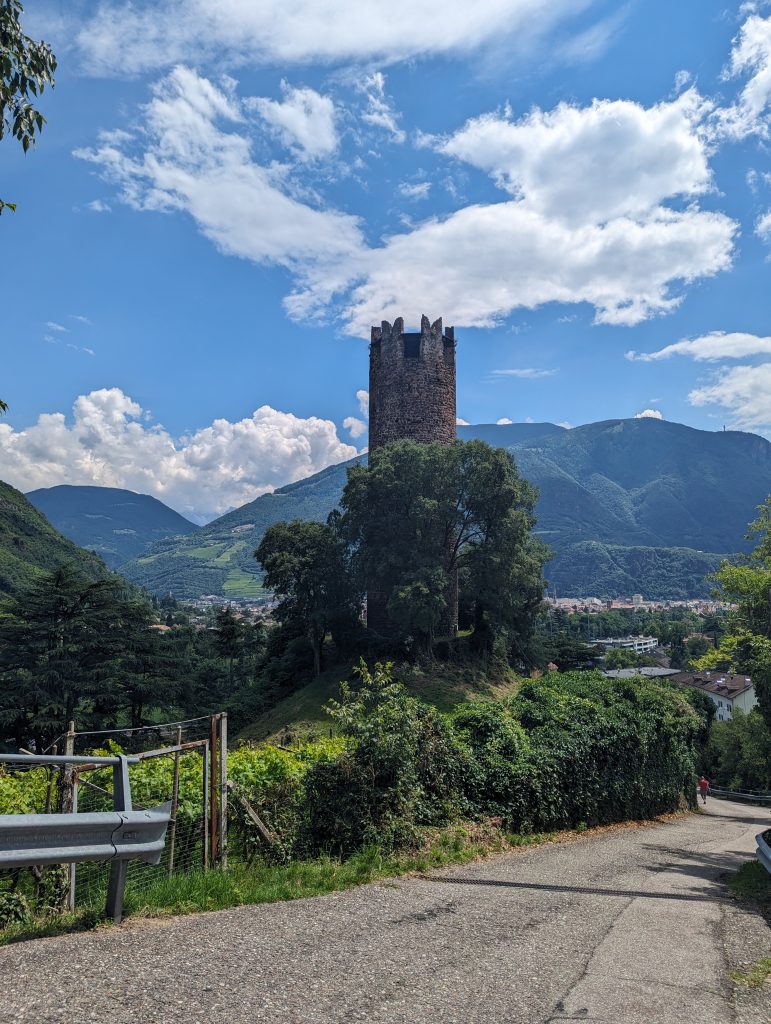
- The path is steep but short, and we get to see ‘Saruman’s Tower’ along the way – very impressive.
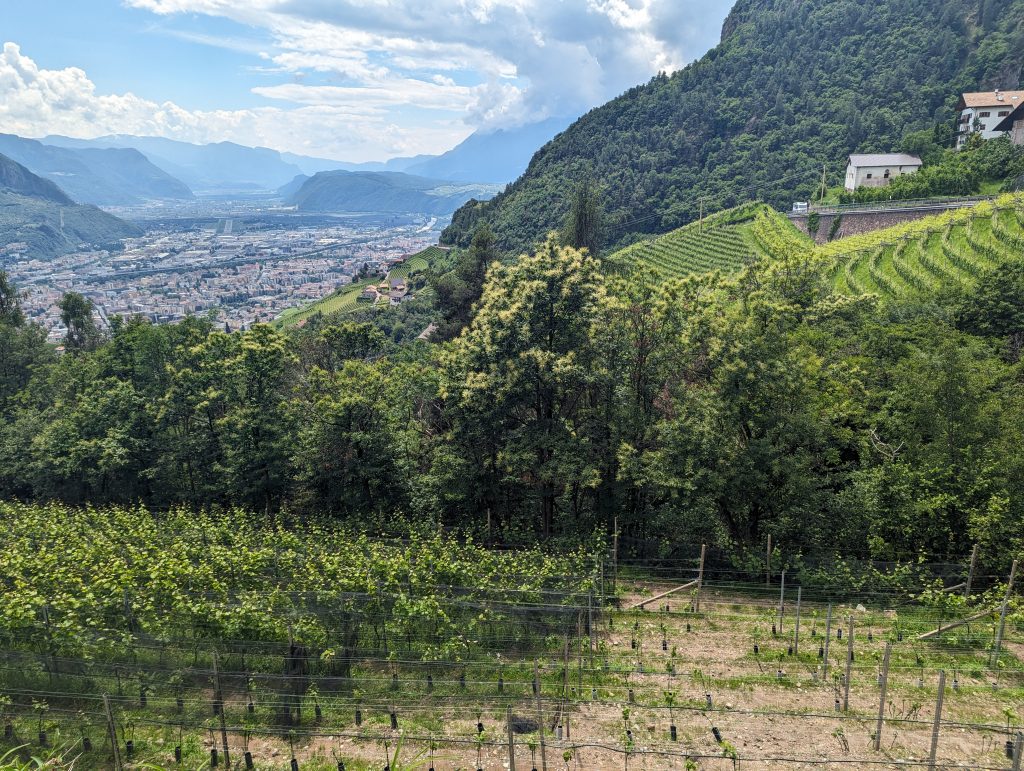
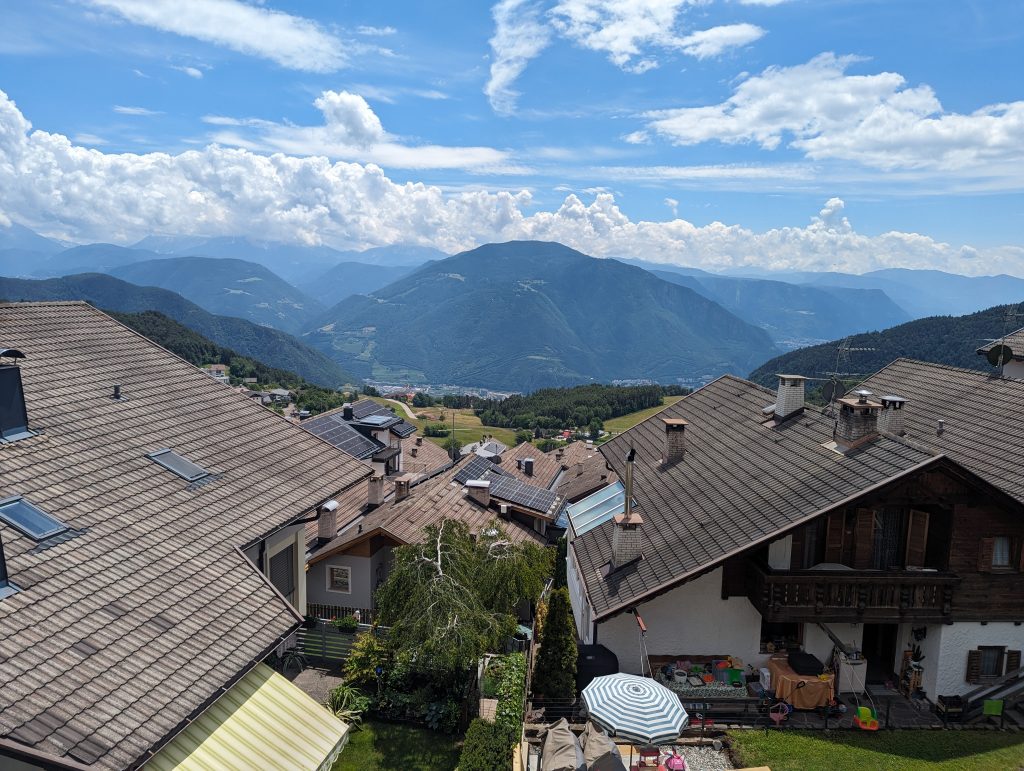
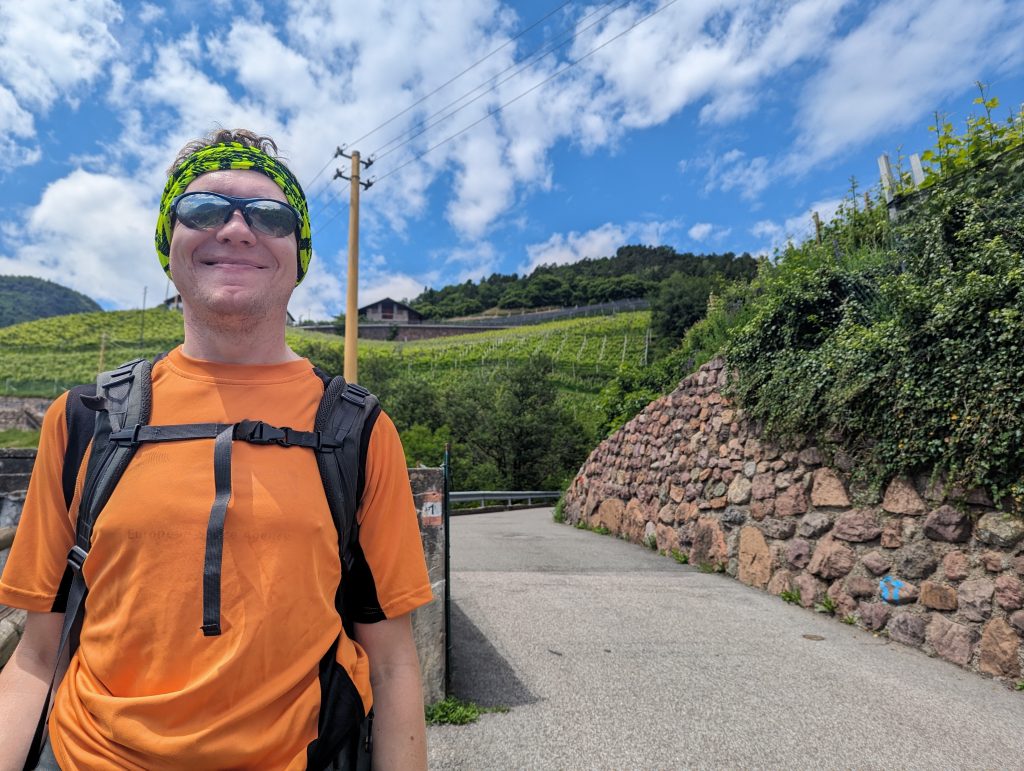
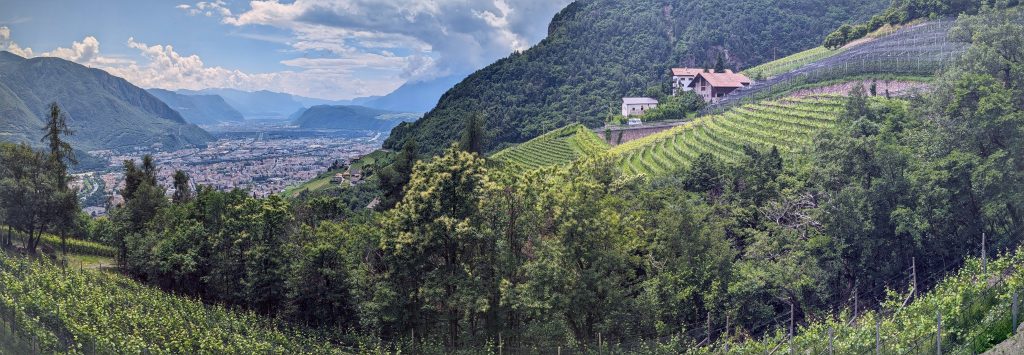
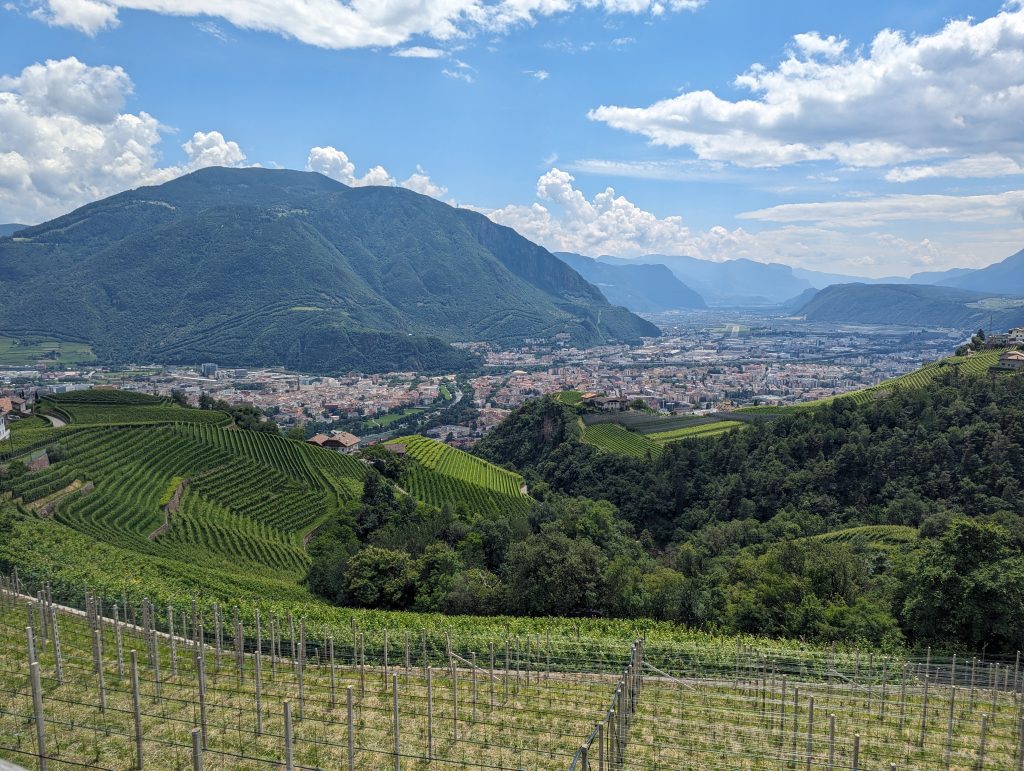
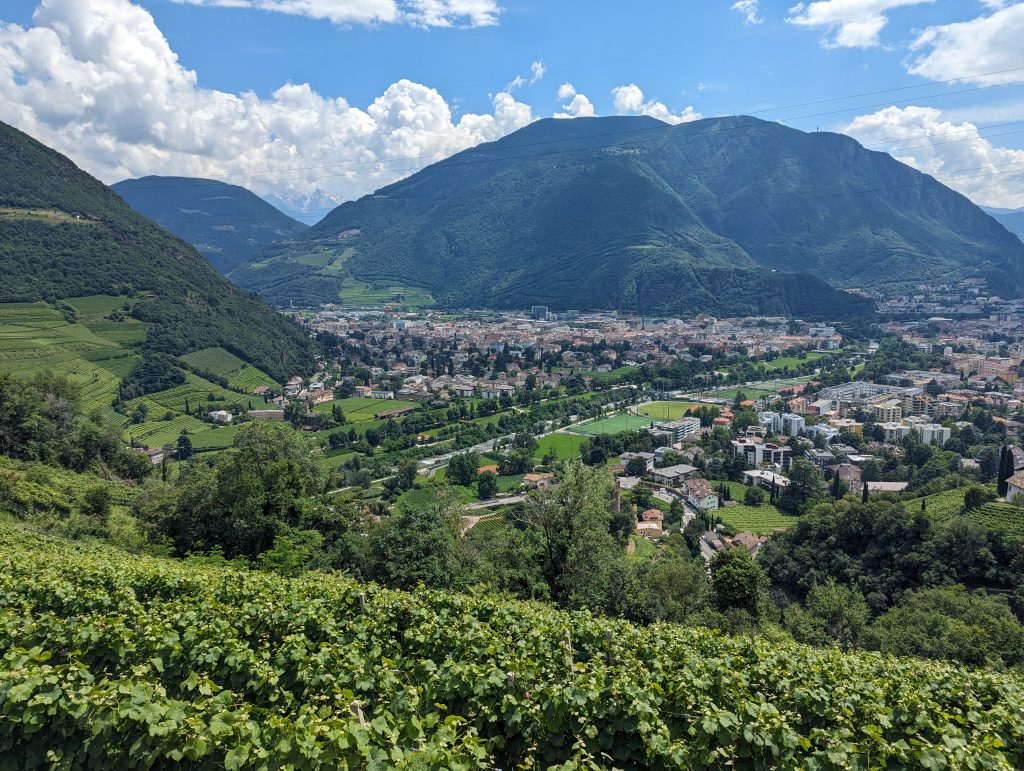
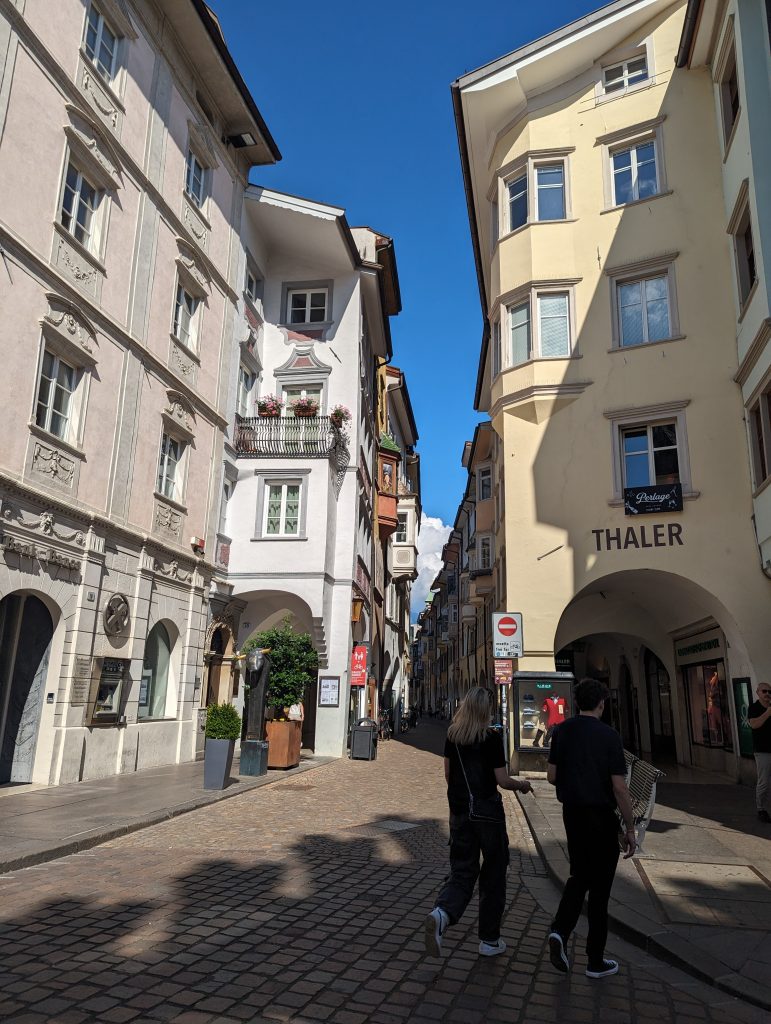
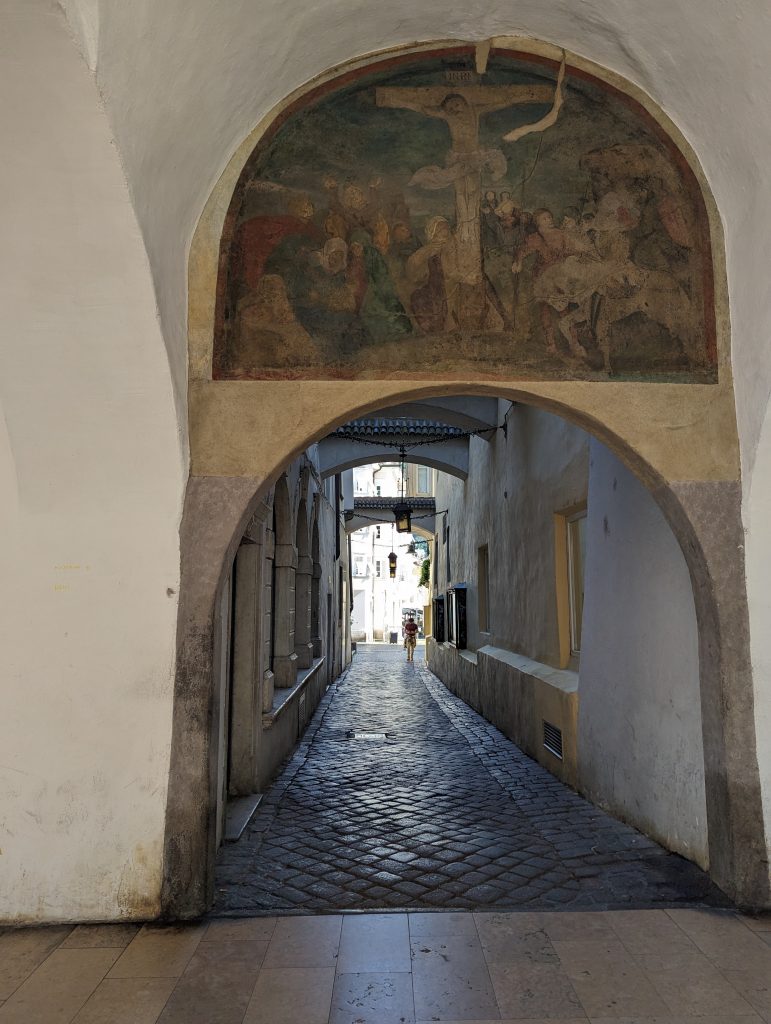
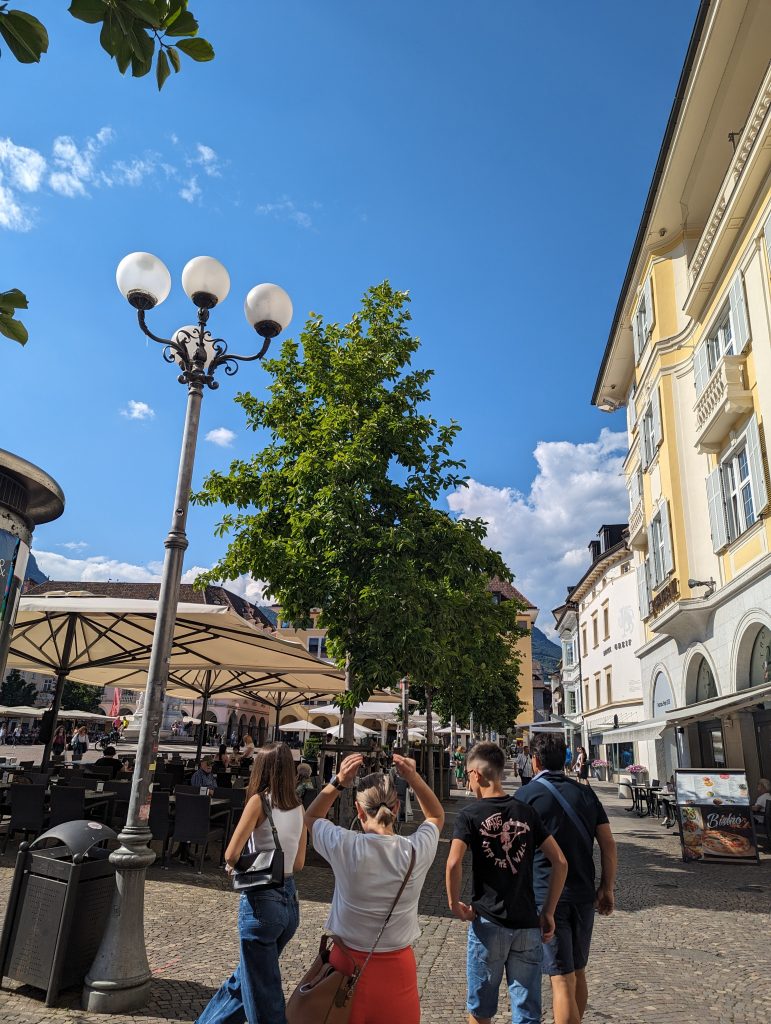
- On this beautiful sunny Sunday afternoon, the streets of Bolzano are bustling with people, and we push our way through the crowds towards the South Tyrol Museum of Archaeology, which – thanks to the weather – is refreshingly empty.
- The museum is extremely well presented, and seeing a 5,000-year-old corpse, including an exciting criminal case and captivating story, cannot fail to impress us – fantastic!
- It is remarkable that you can actually still see the arrowhead stuck in his body and that various bone fractures that Ötzi had are clearly visible.
- There is also a webcam of the site where he was found (at an altitude of approx. 3000 m near the Similaun, but more on that later), and we decide that we want to visit it later when we hike past the site.
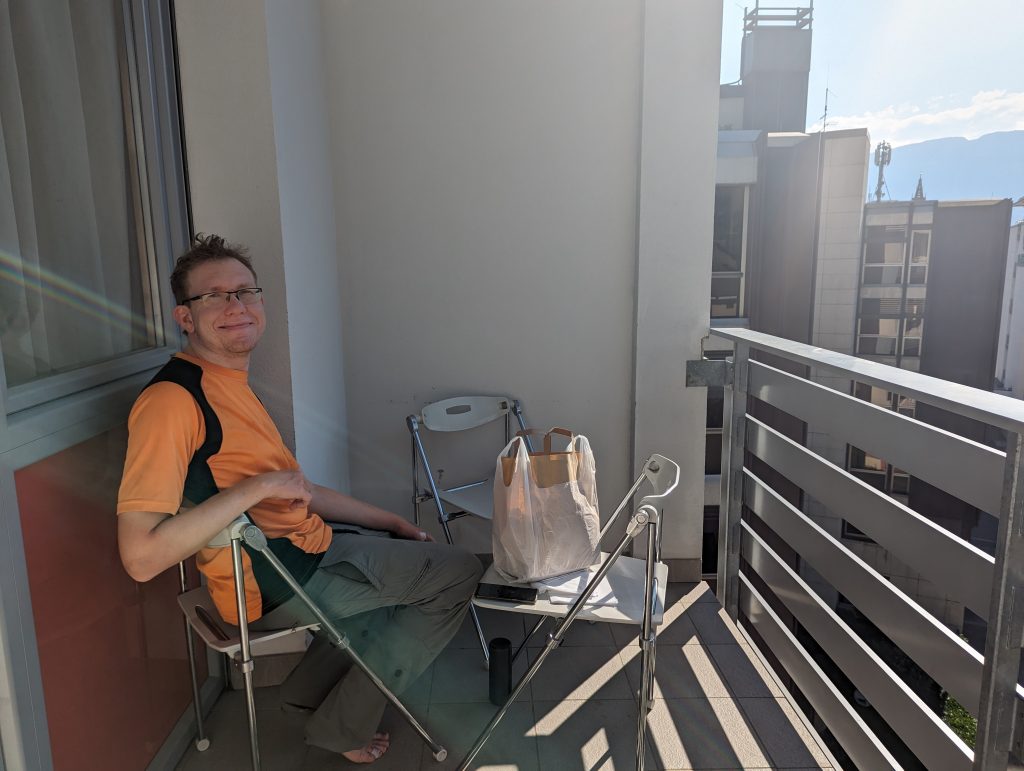
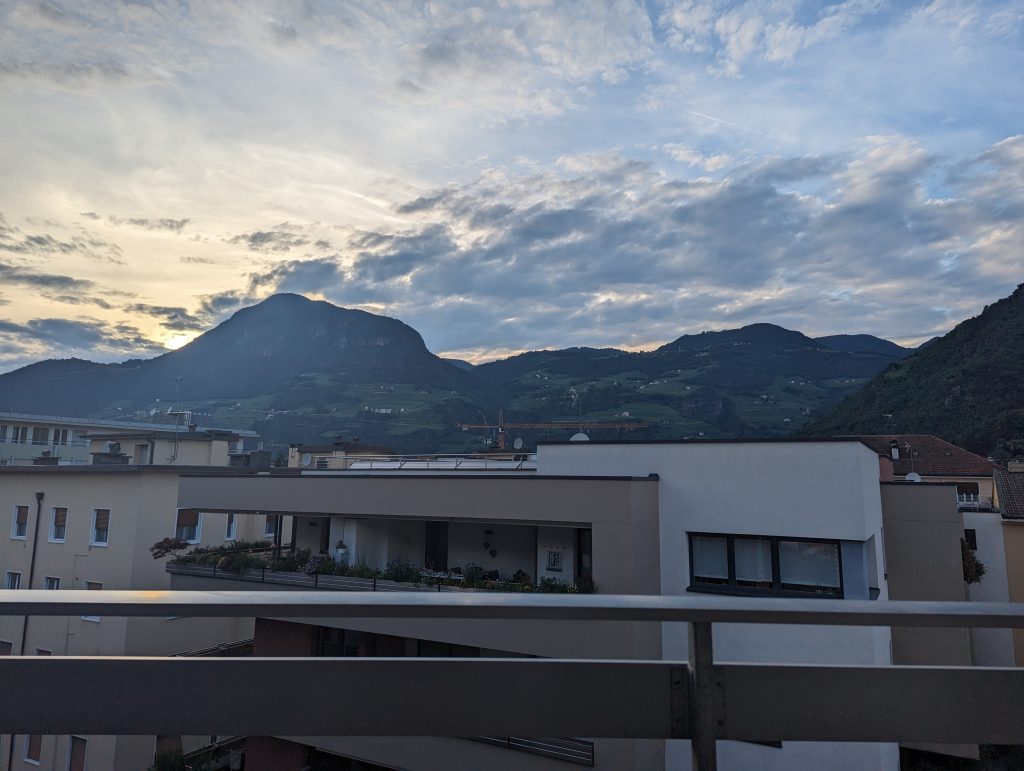
- Off to the youth hostel where we are staying and we enjoy a cosy evening on the balcony in the warm summer night.
Monday, June 17
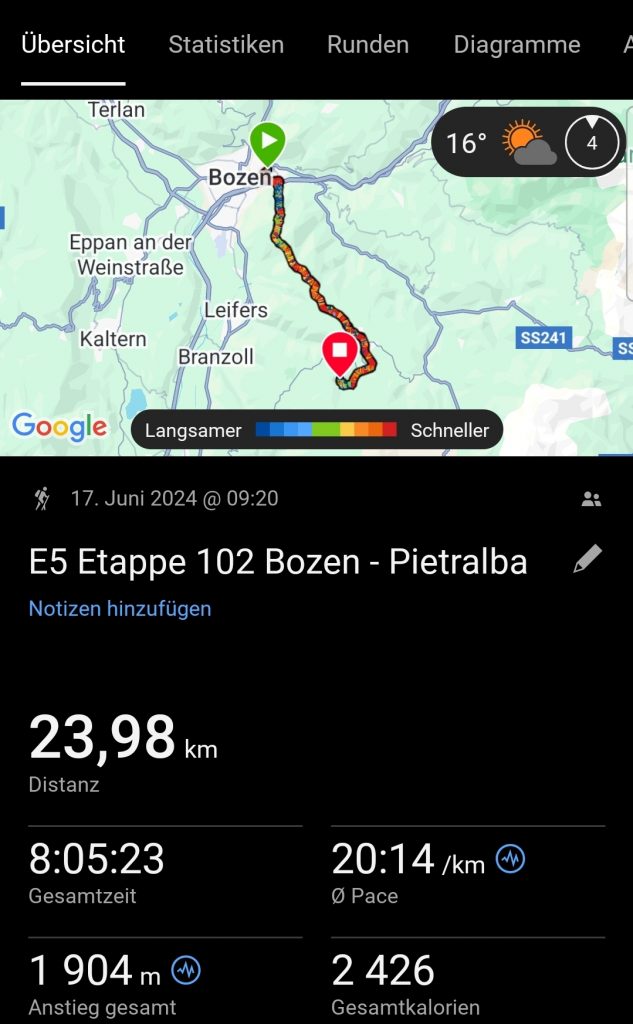
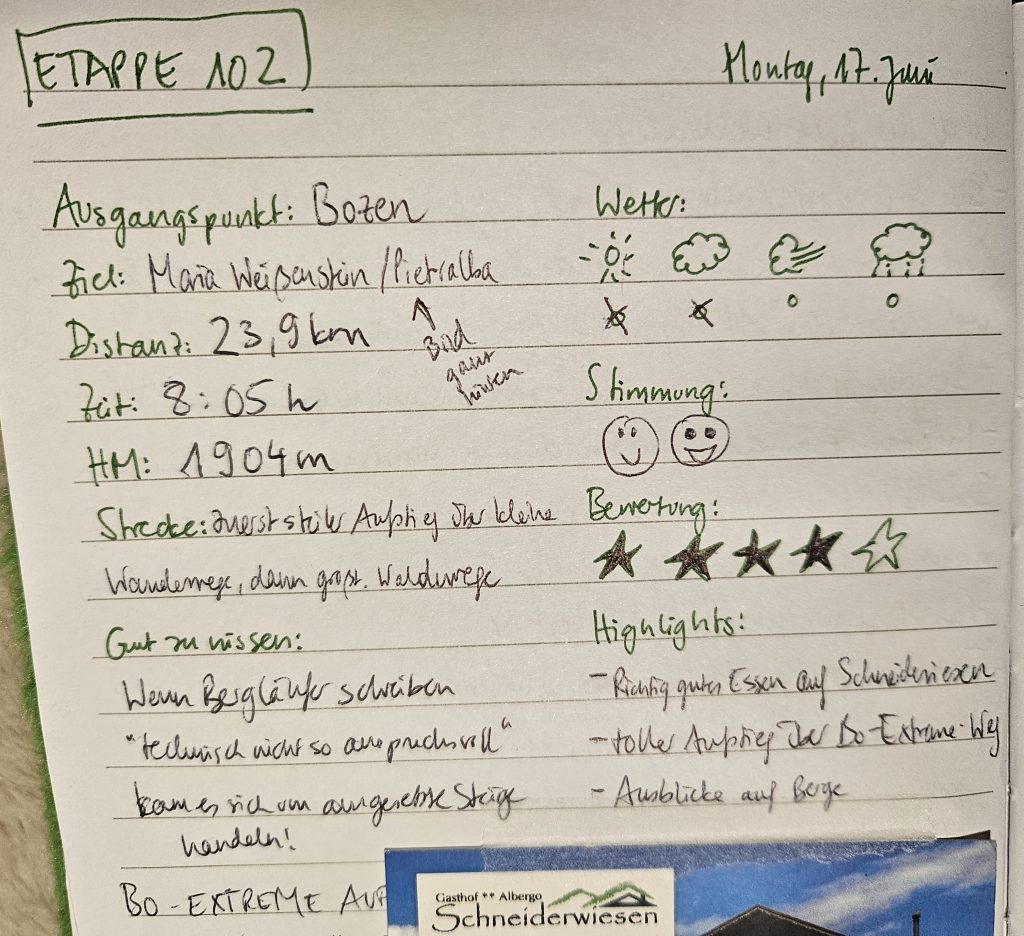
Bo-Extreme run: 800 metres of elevation gain in 2 kilometres (“a moderate mountain run”)
- The day begins with an entertaining breakfast at the Bolzano Youth Hostel, where we observe with amazement the hustle and bustle of a large Asian tour group that appears to be staying here as well. At the other table, we see a group of young people who appear to be suffering from hangovers, eating their breakfast lethargically. There really are a variety of people staying at the youth hostel 🙂
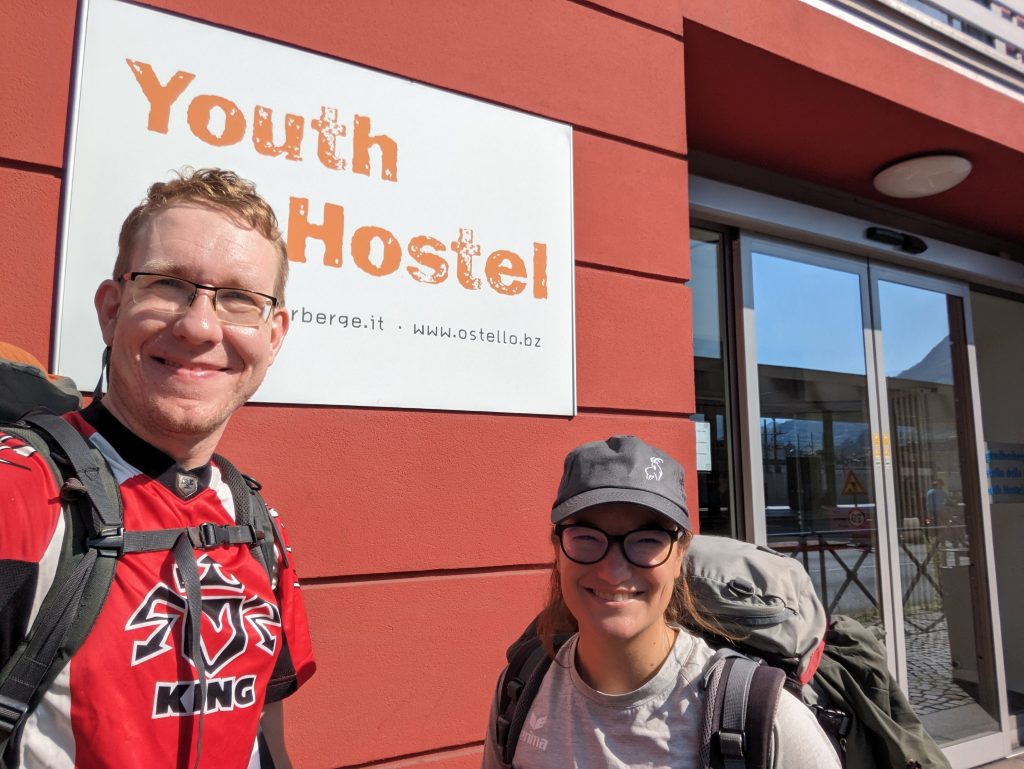
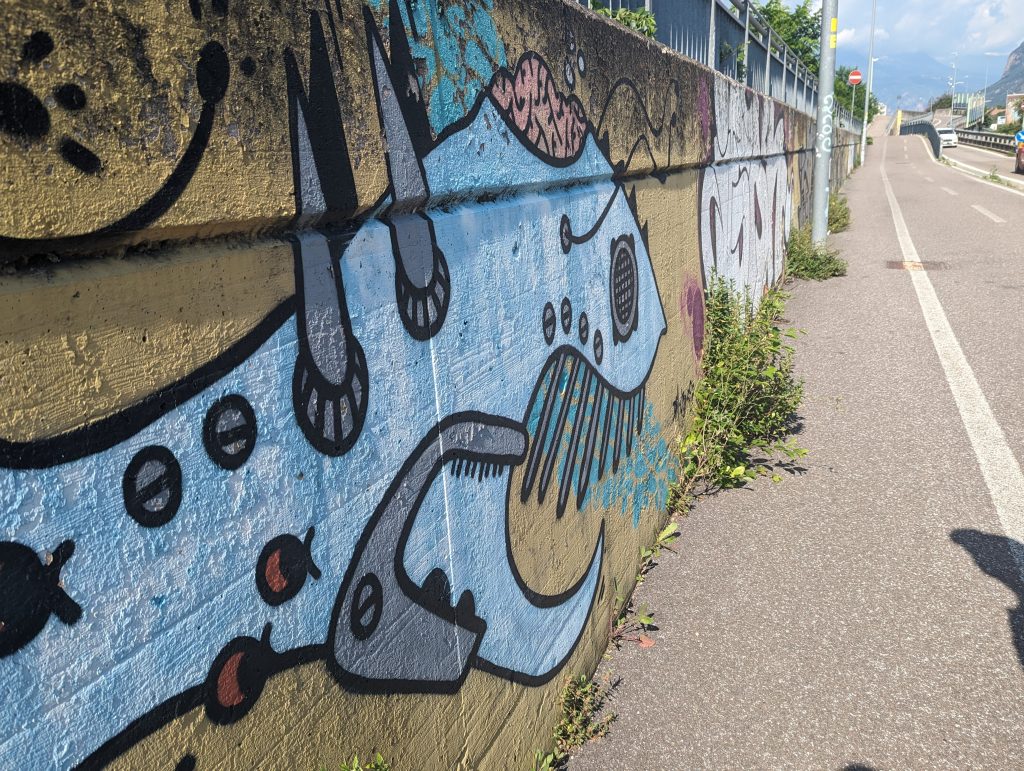
- Today, to our relief, we leave the hot Bolzano basin behind us and climb back up into the mountains – but not before crossing a four-lane road on a bend to get to the hiking trail – hello, Italy!
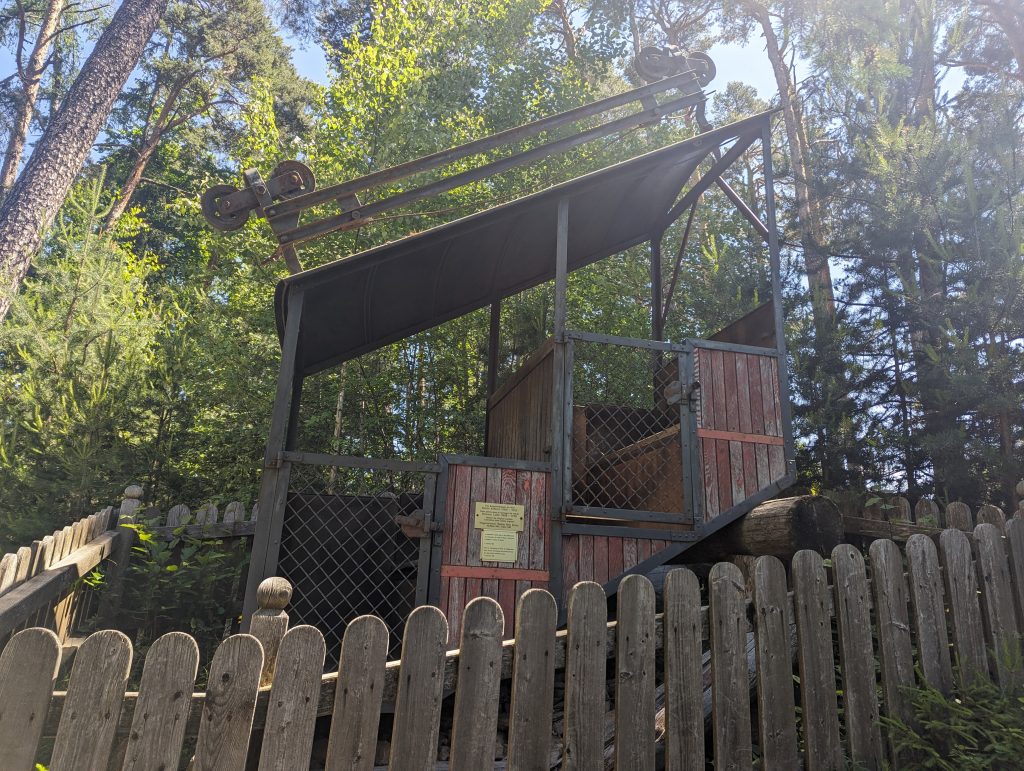
- We reach the valley station of the Kohler cable car, one of the oldest cable cars in the world, which could take us to the summit in 7 minutes today.
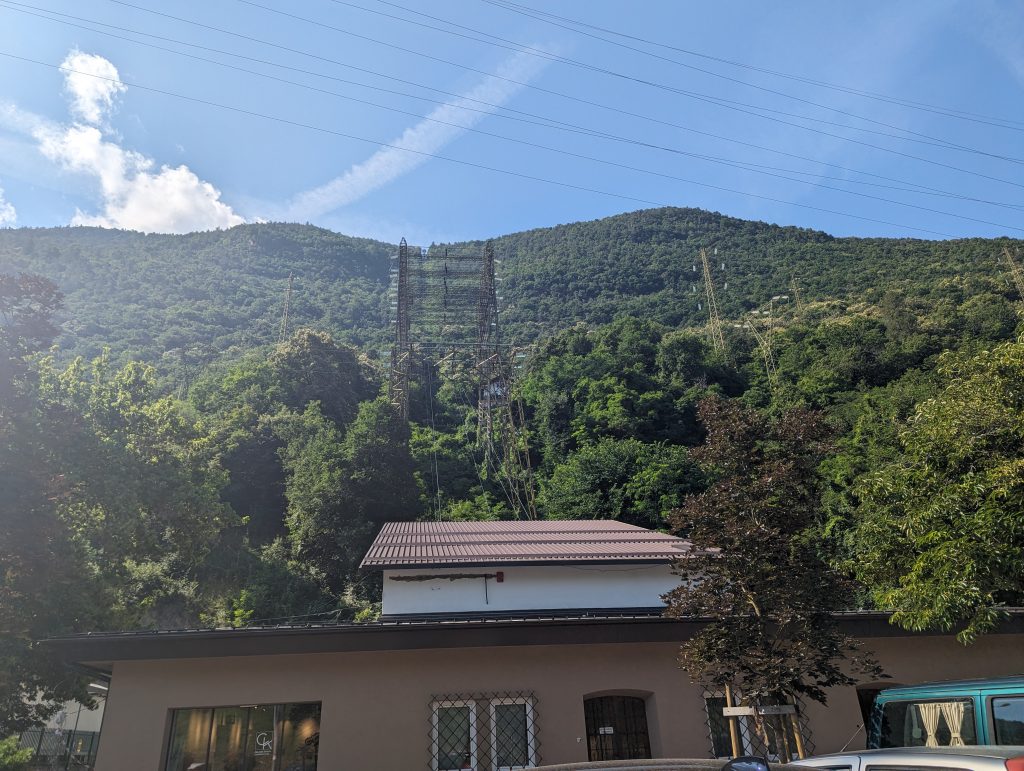
- But of course we leave it behind and instead follow the ‘Bo-Extreme’ mountain running trail, which is supposedly used as a training route by local mountain runners (we don’t see anyone) and leads us 2 km up the mountain over 800 m.
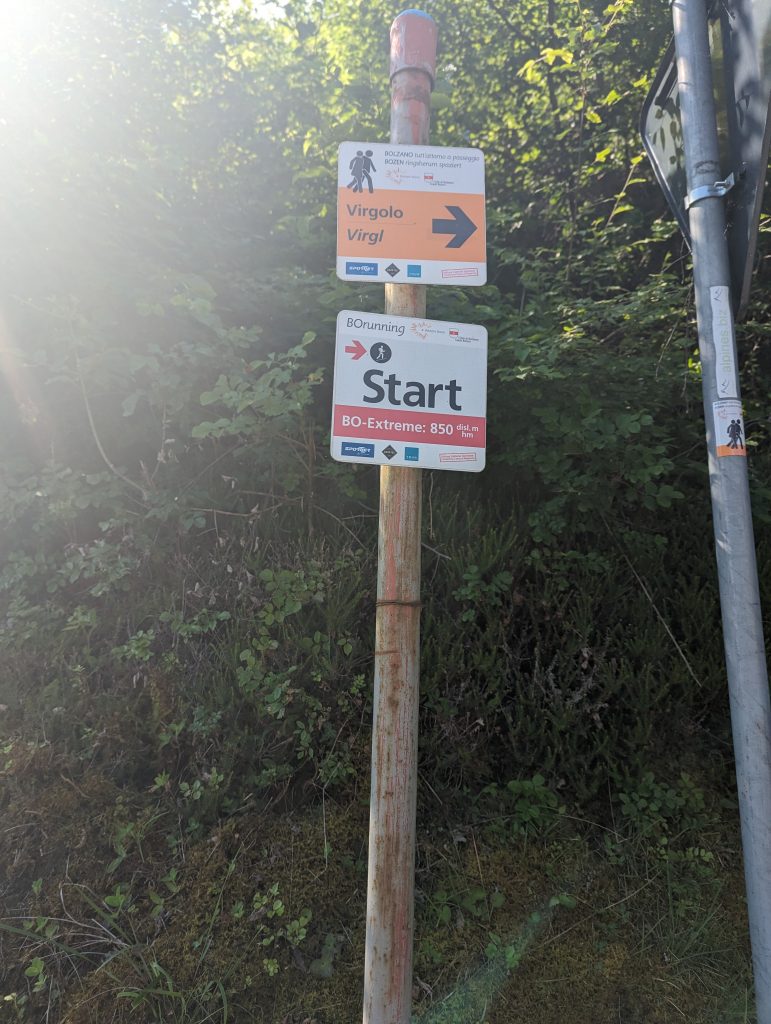
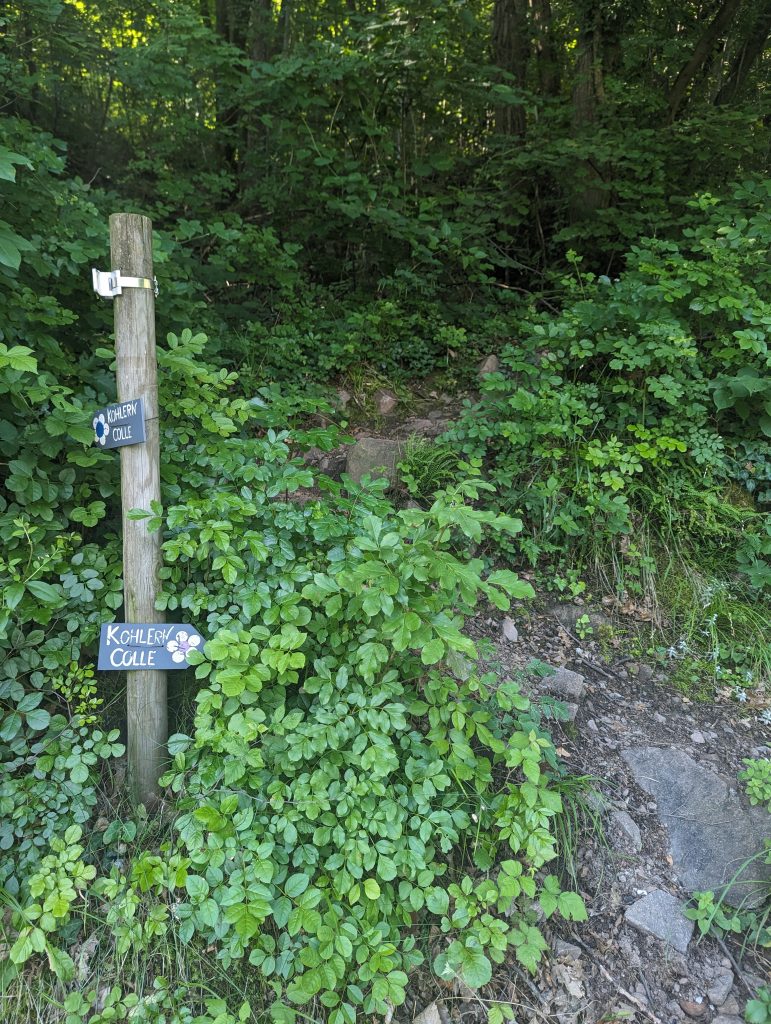
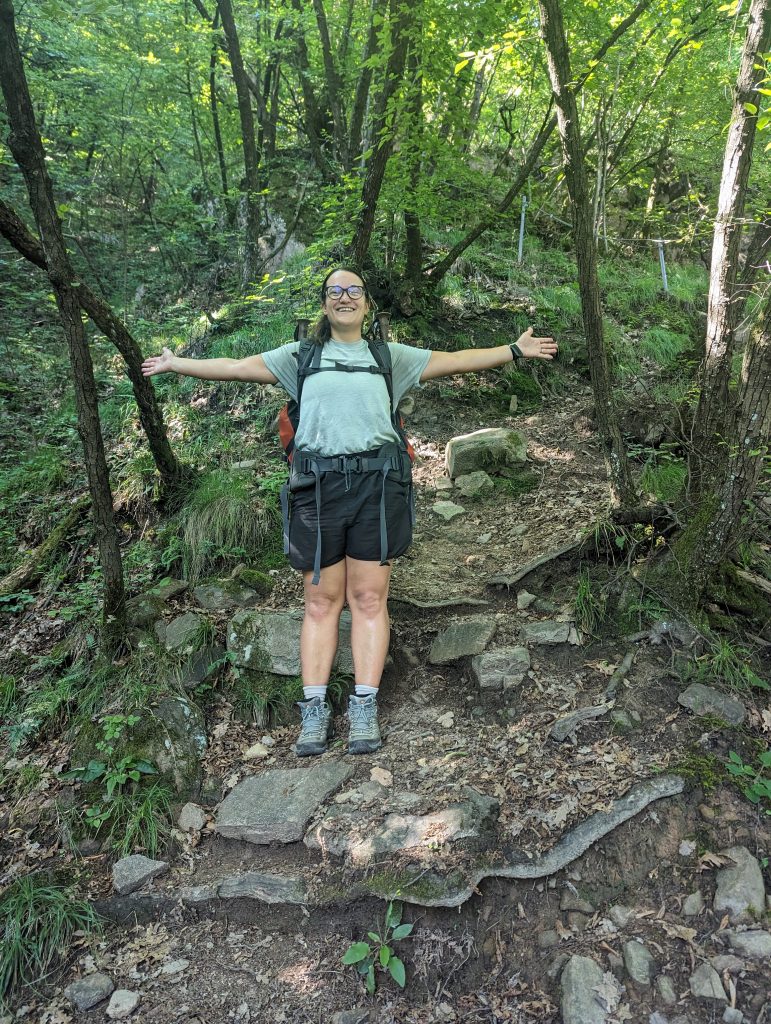
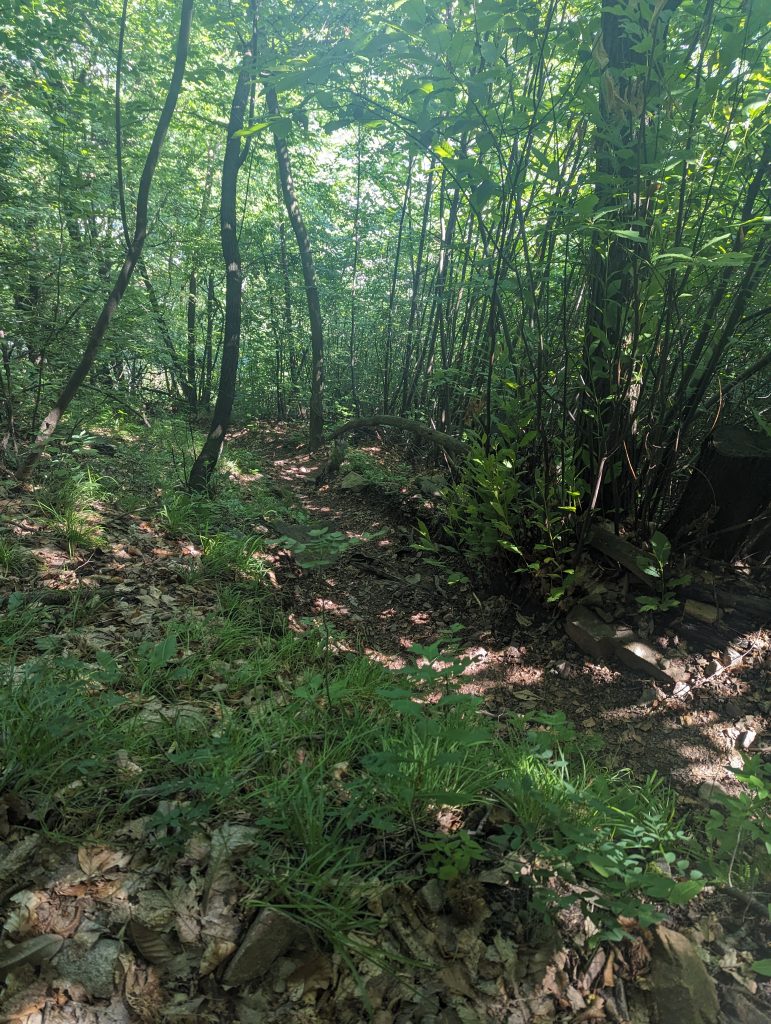
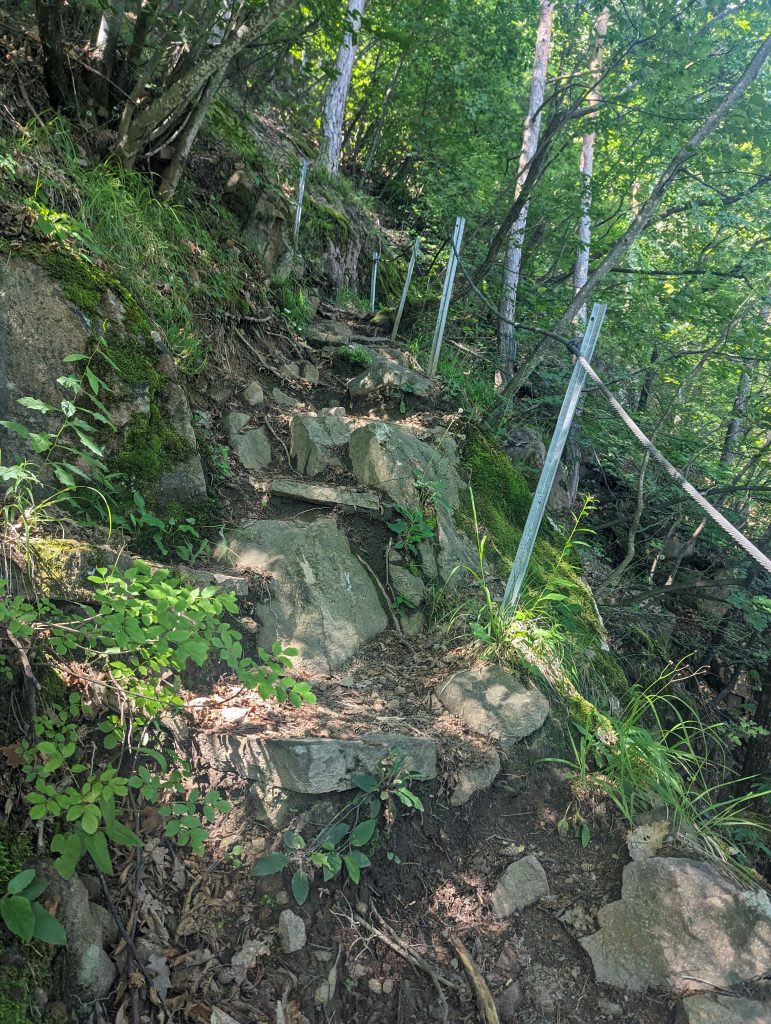
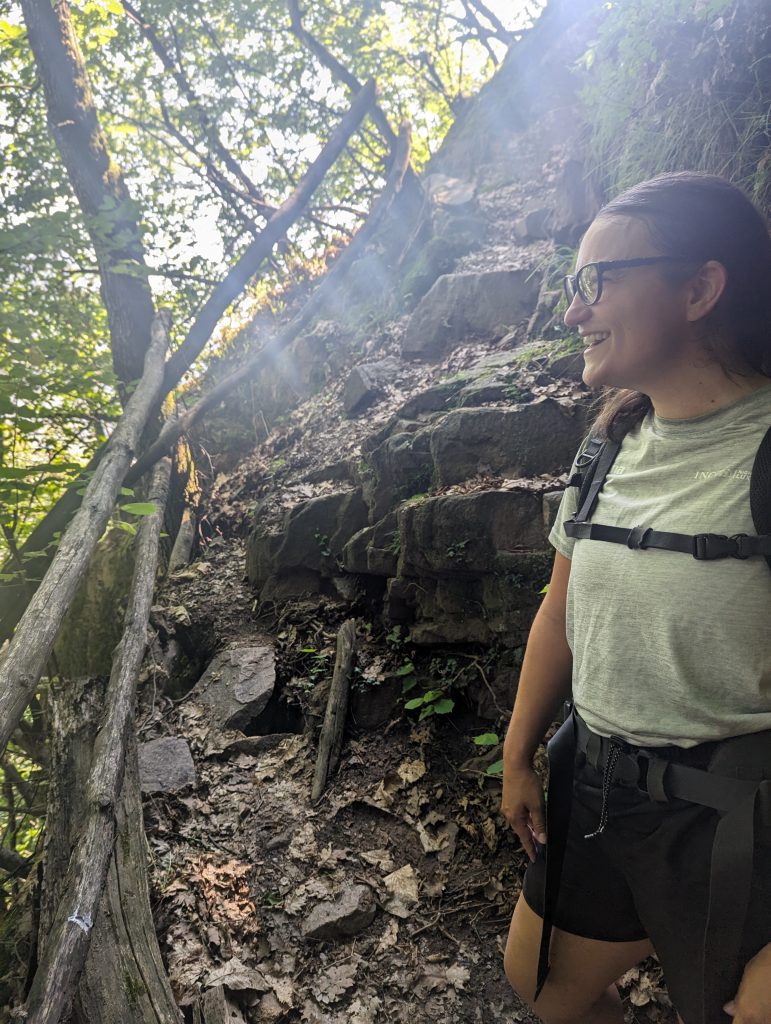
- The path is steep, partly exposed, secured here and there with steel cables, and leads straight up under the cable car – occasionally you have to scramble over rocks with your hands and feet.
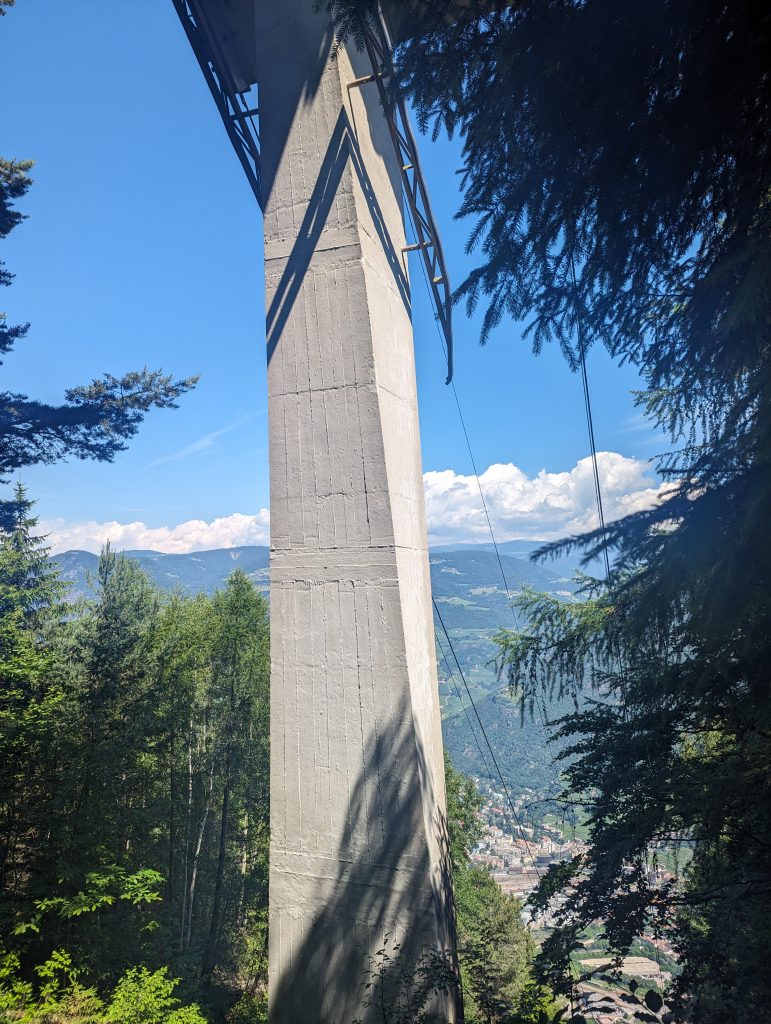
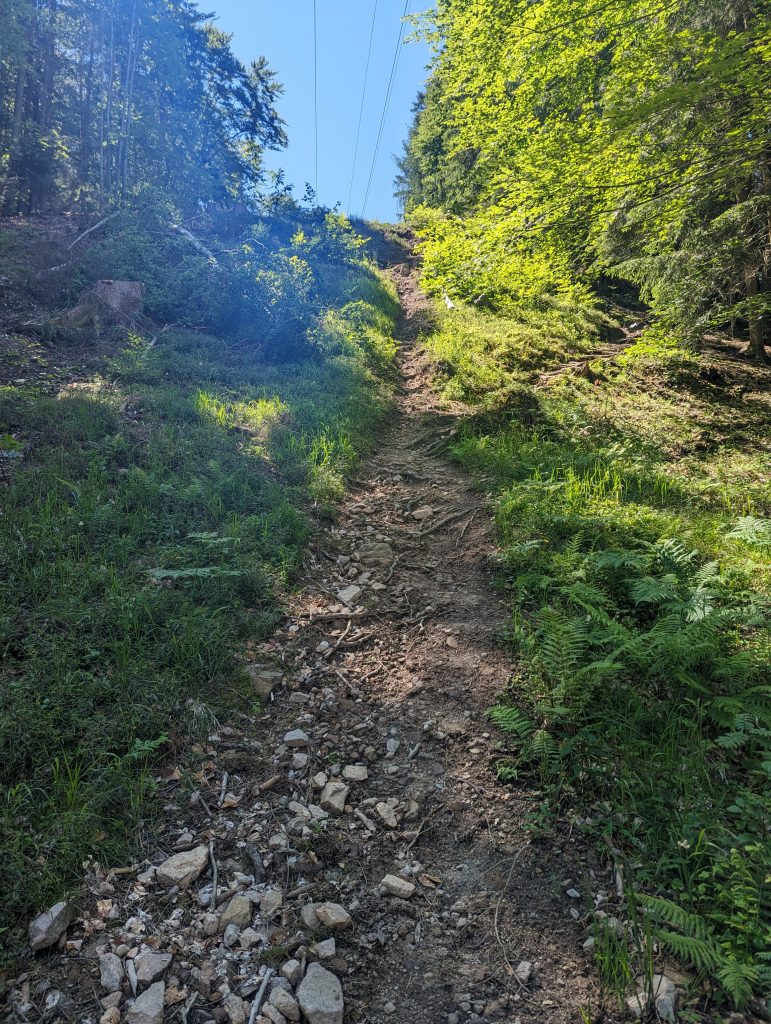
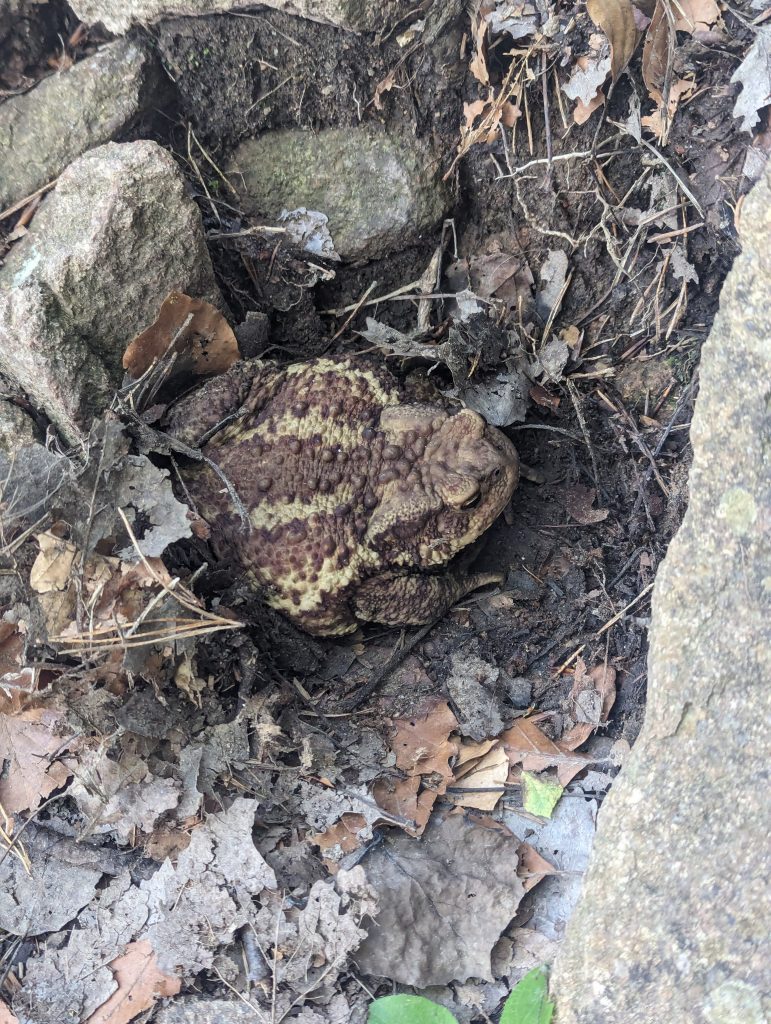
- Nevertheless, we find a blog entry on the Internet about the mountain run by a trail runner who rates the technical difficulty of the trail as 3 out of 5, and we wonder what else he runs – the Cottbus Höhenweg?!
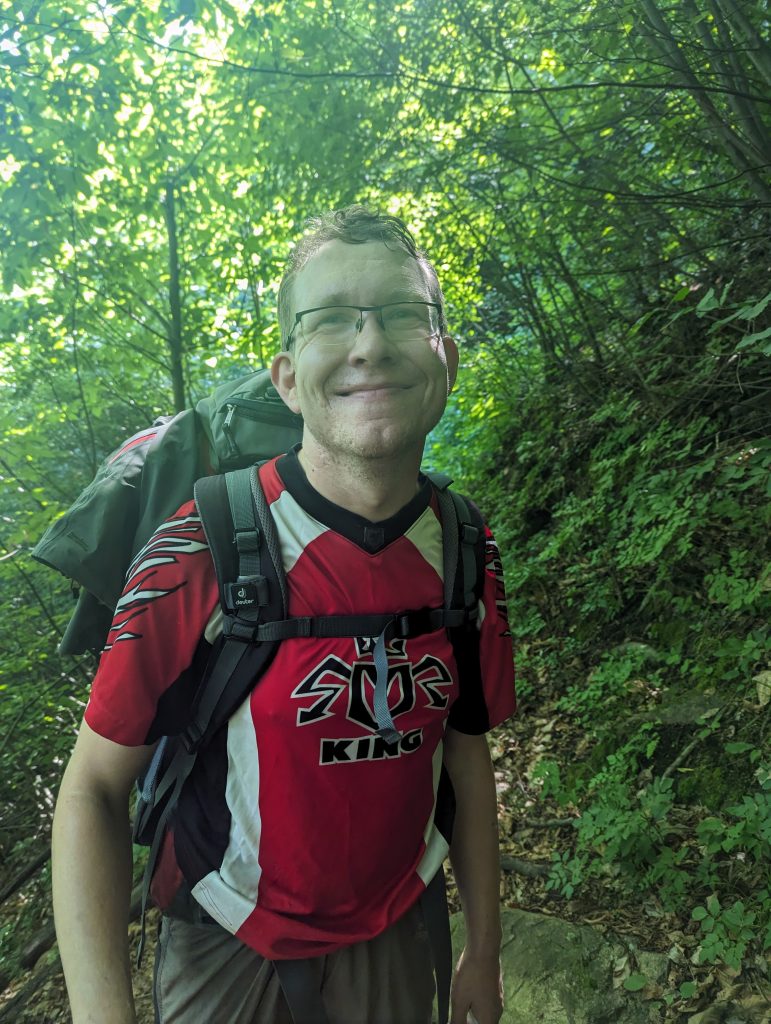
- There is a lot going on at the top thanks to the cable car station, too much for our liking, so we move on to the Schneiderwiesen Alm, where we stop for refreshments.
- The food is REALLY good – some of the best we’ve had in Italy so far – we’re thrilled!
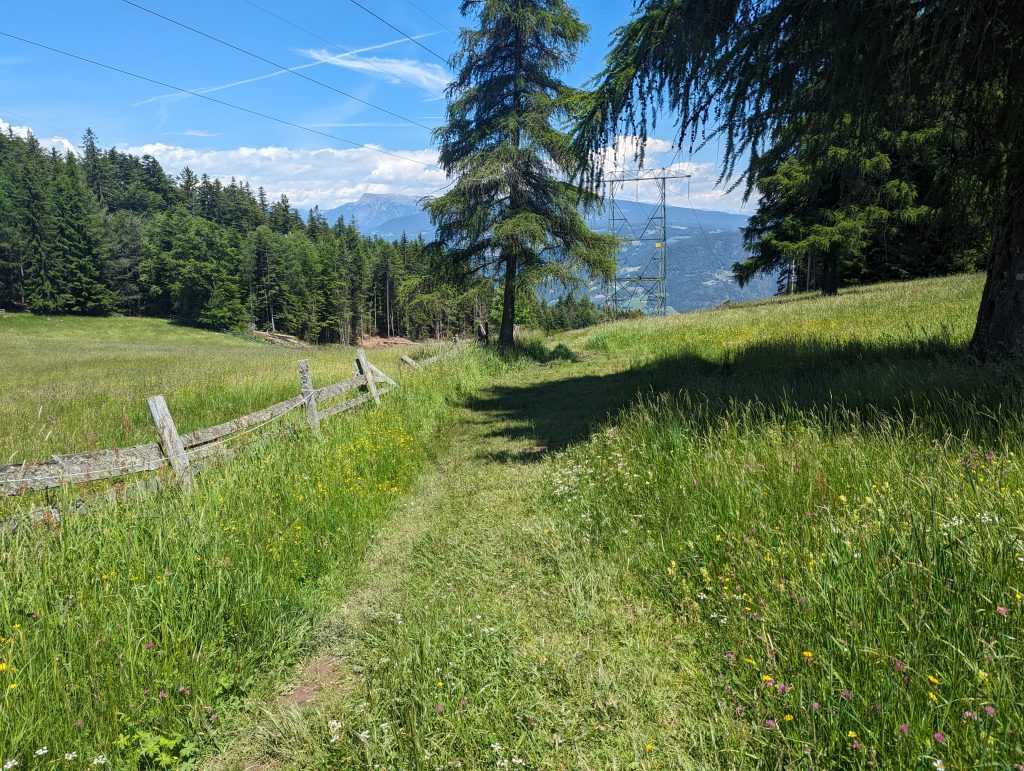
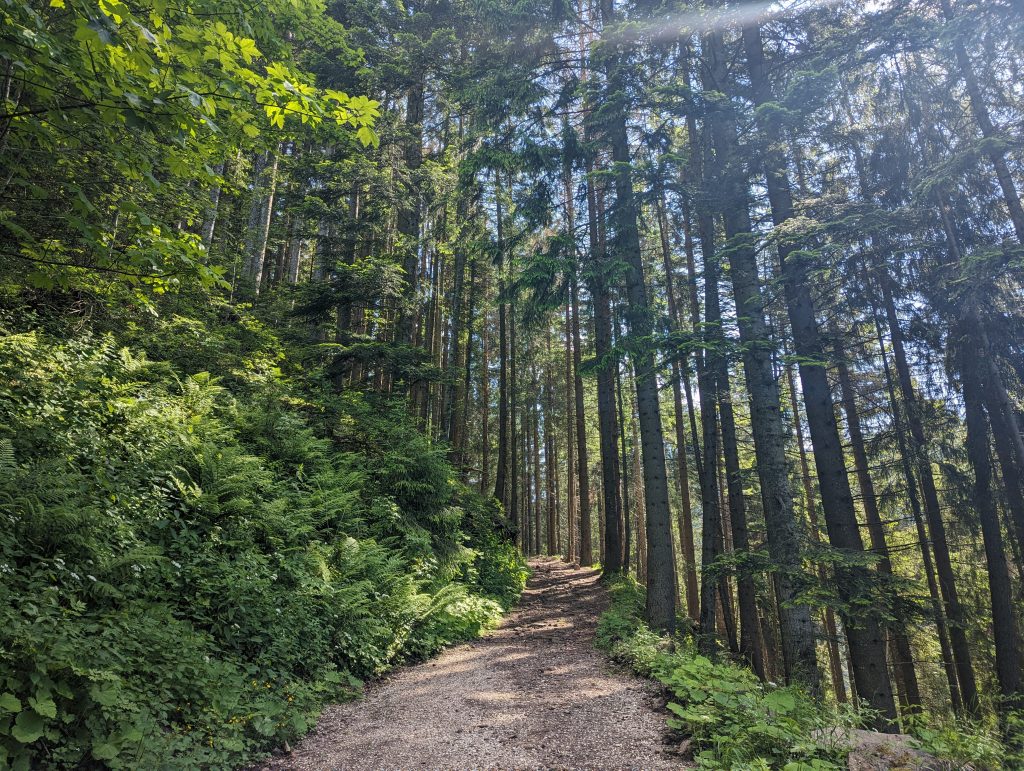
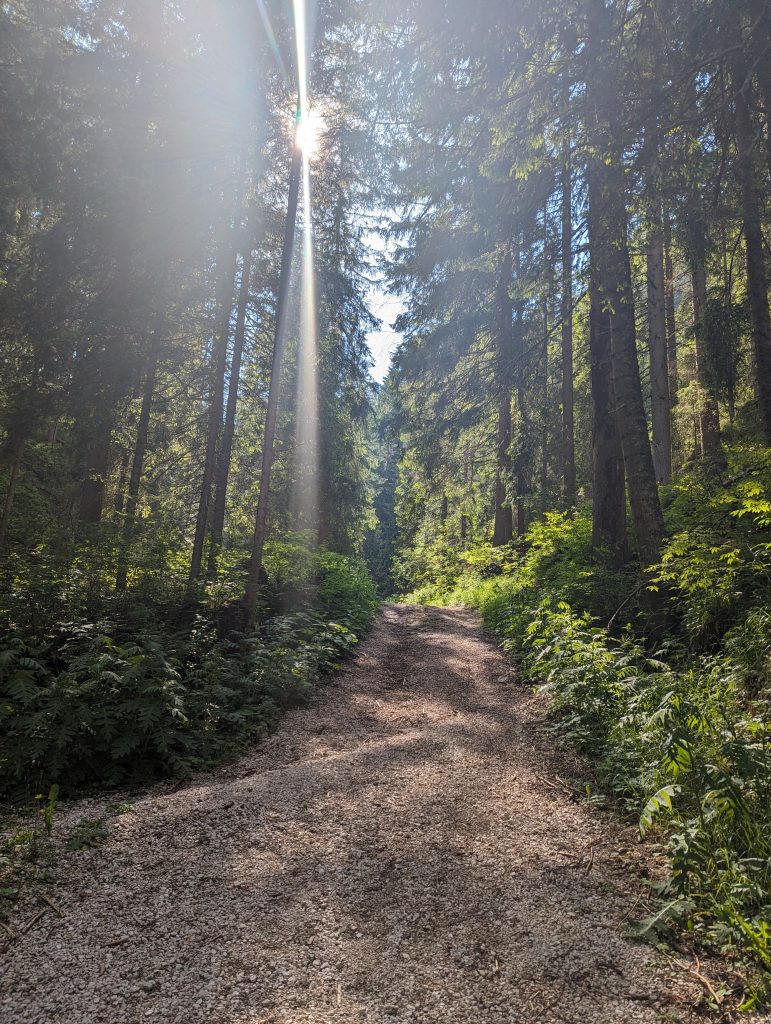
- The views from up here are also magnificent, and the paths wind beautifully through woods and meadows.
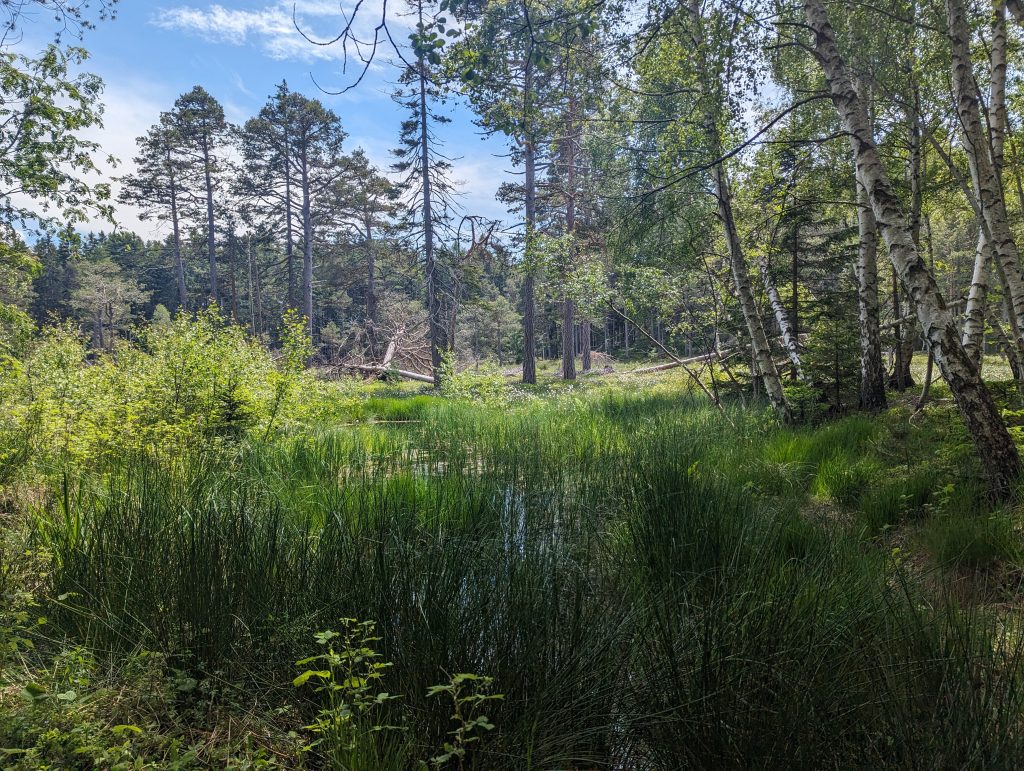
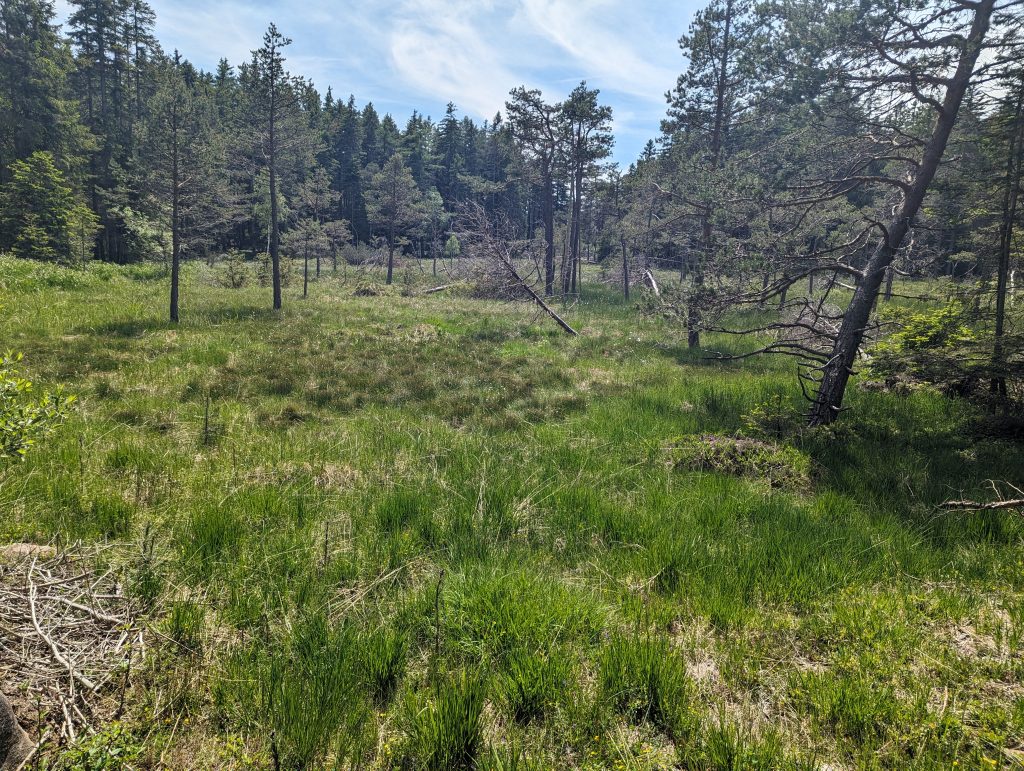
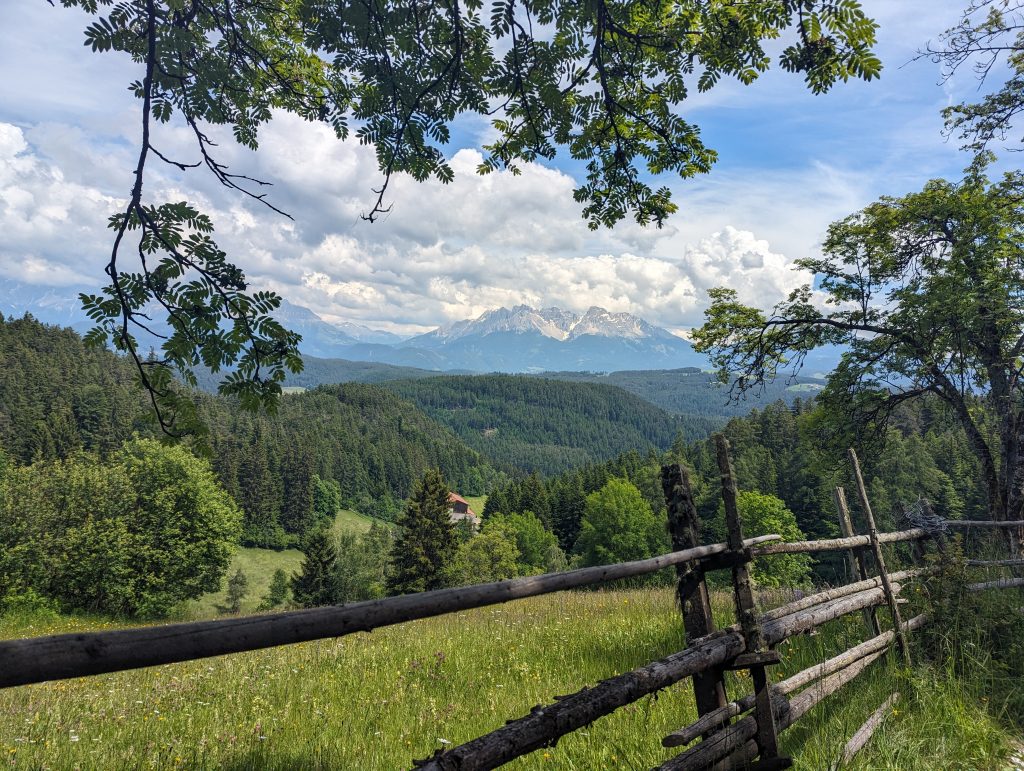
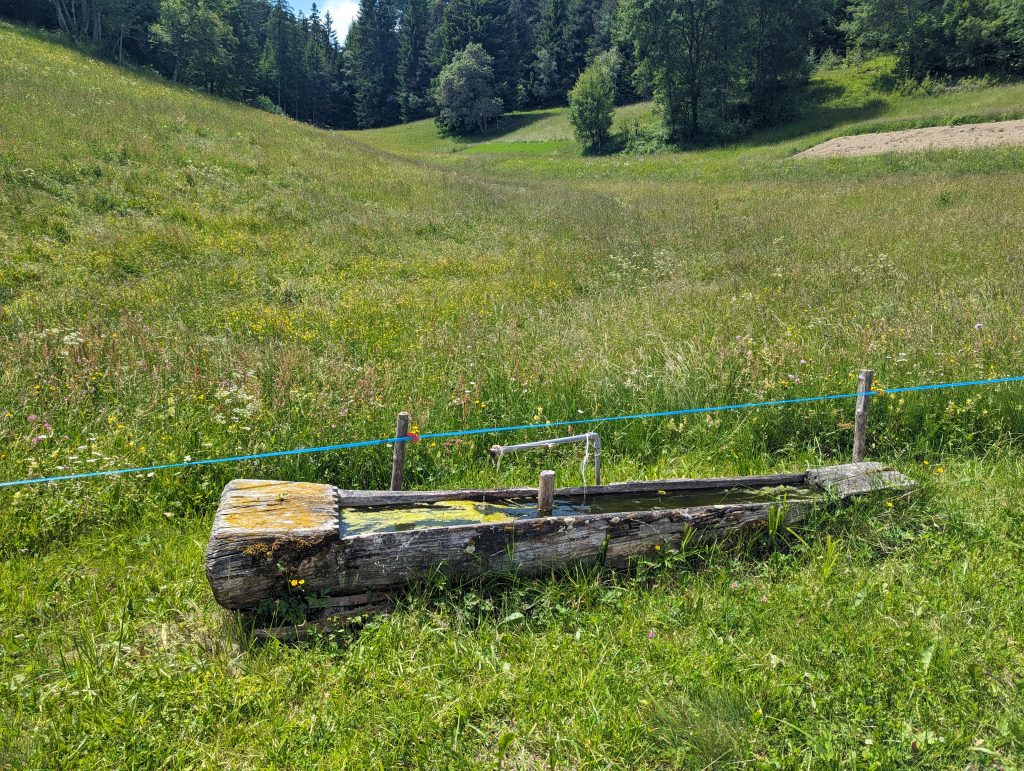
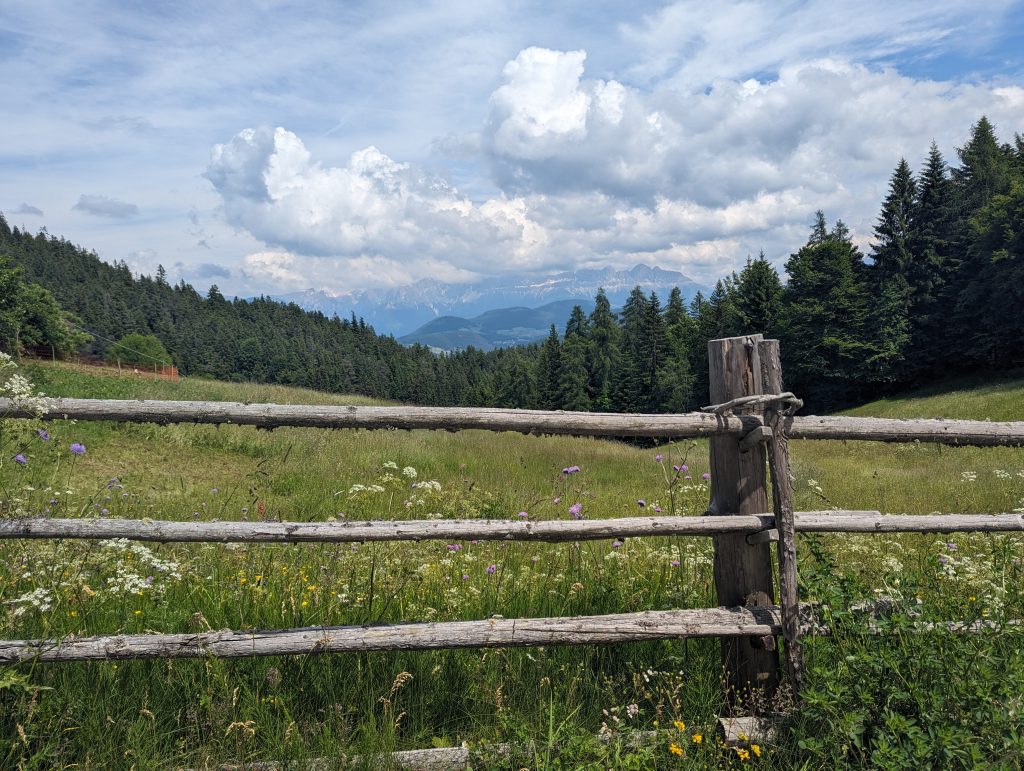
- There is also a raised bog here, where very special plants grow that we haven’t seen anywhere else along the way – very exciting and beautiful to look at.
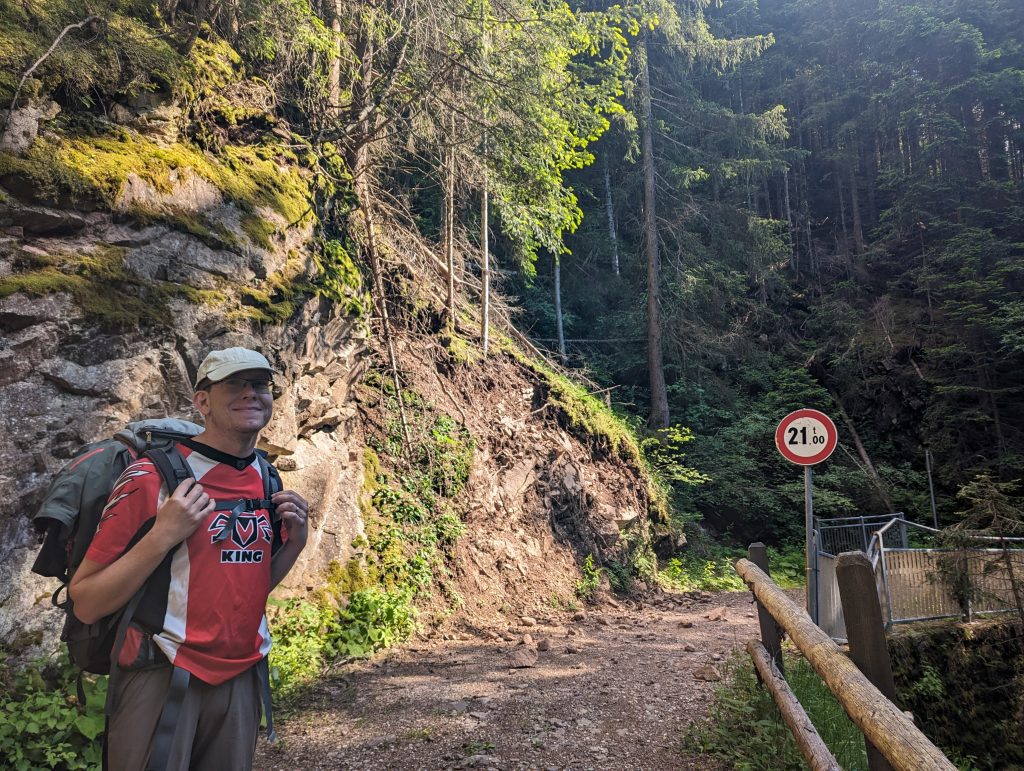
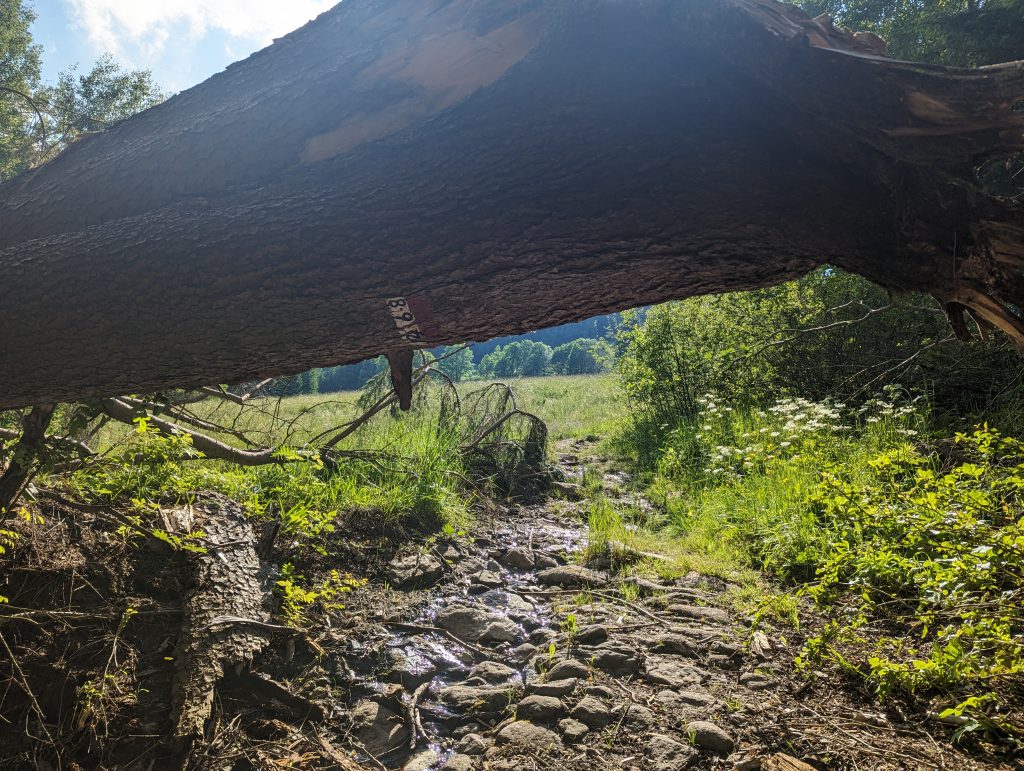
- We reach a blocked path, and I say, ‘No, no, the sign is next to the path, it’s already open!’ Well, the path is full of fallen trees and you can clearly see the storm damage, and at one point we have to scramble past some woodwork that is currently in progress (but luckily the woodworkers are friendly towards us and we get past without any problems – the advantage of being pedestrians).
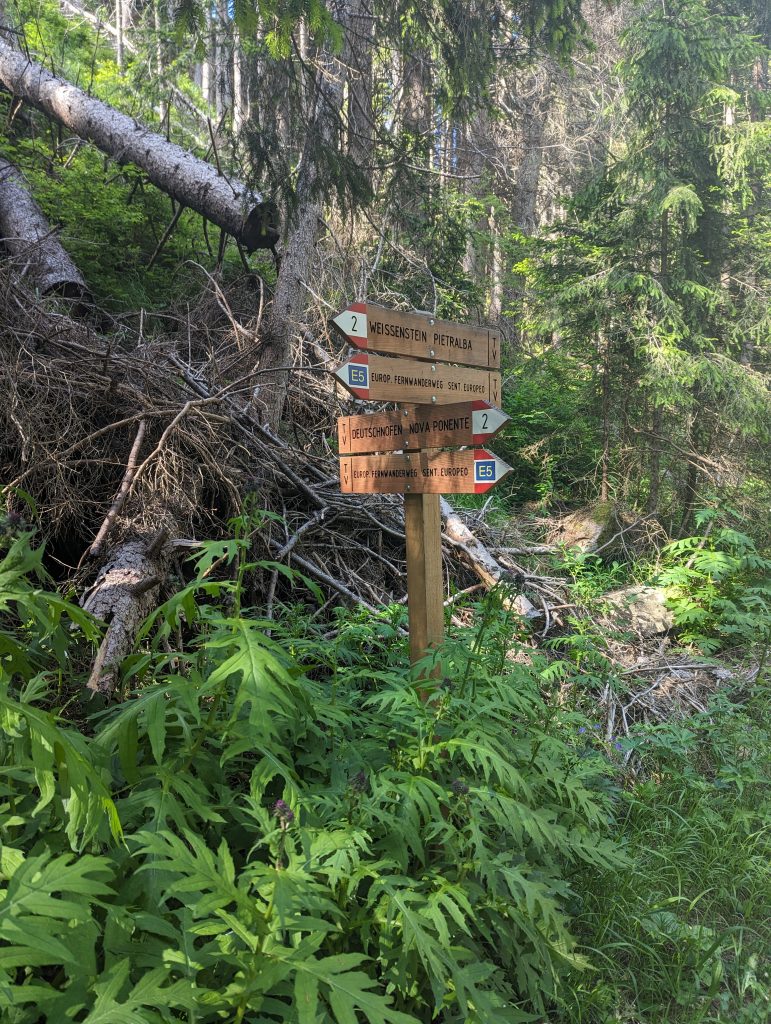
- We arrive in Maria Weißenstein/Pietralba, where we stay in a very fancy hotel that is surprisingly affordable – €70 per person including breakfast and dinner.
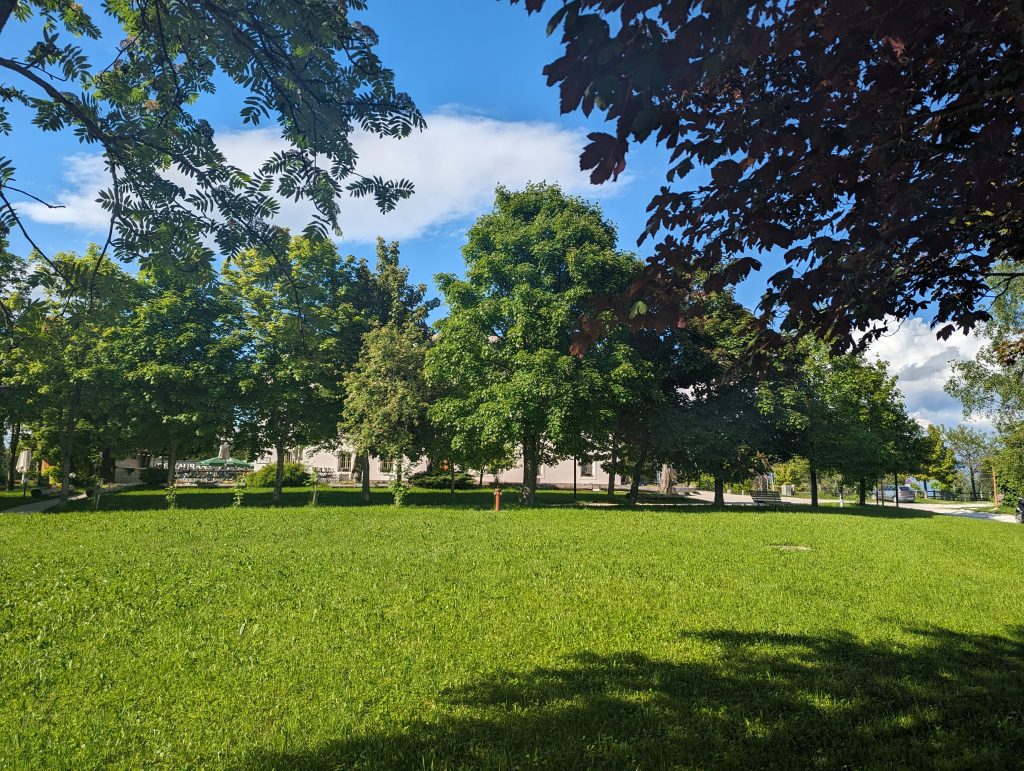
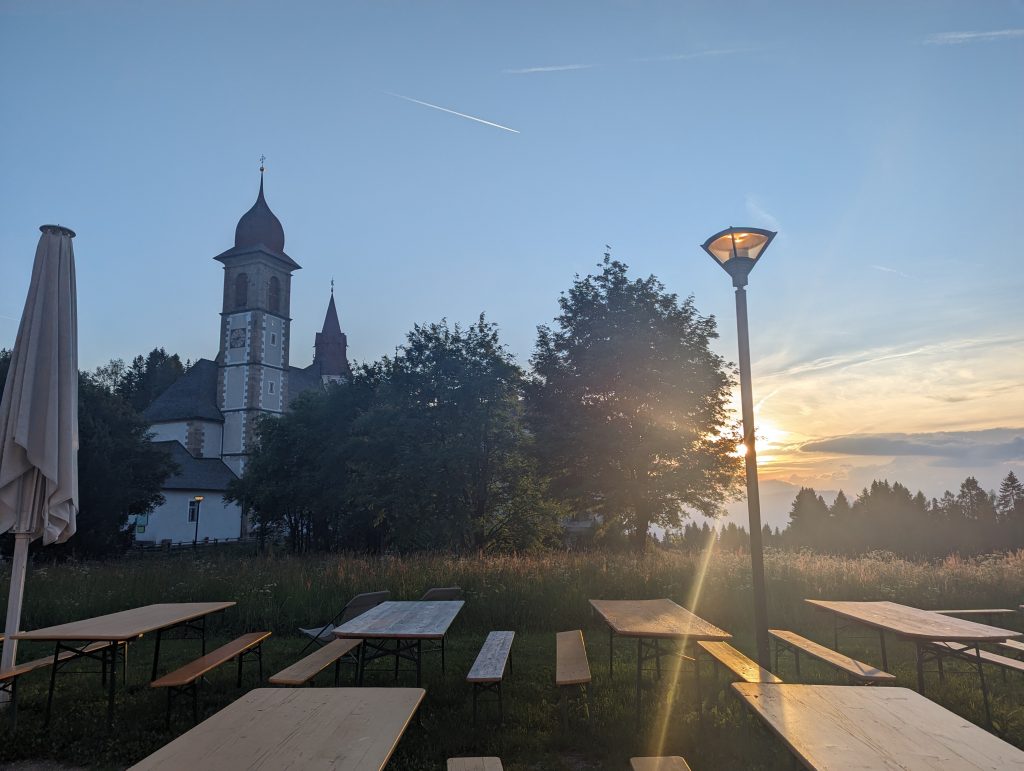
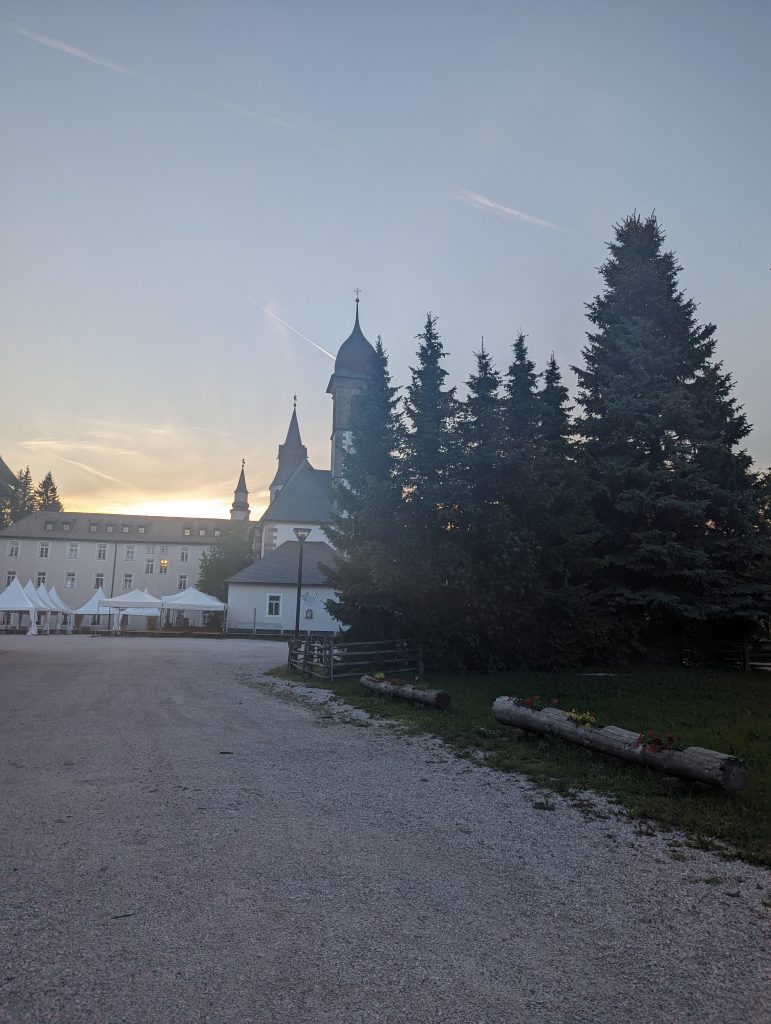
- Dinner, viewing the monastery in the evening light, reading, winding down the evening and good night!
Tuesday, June 18
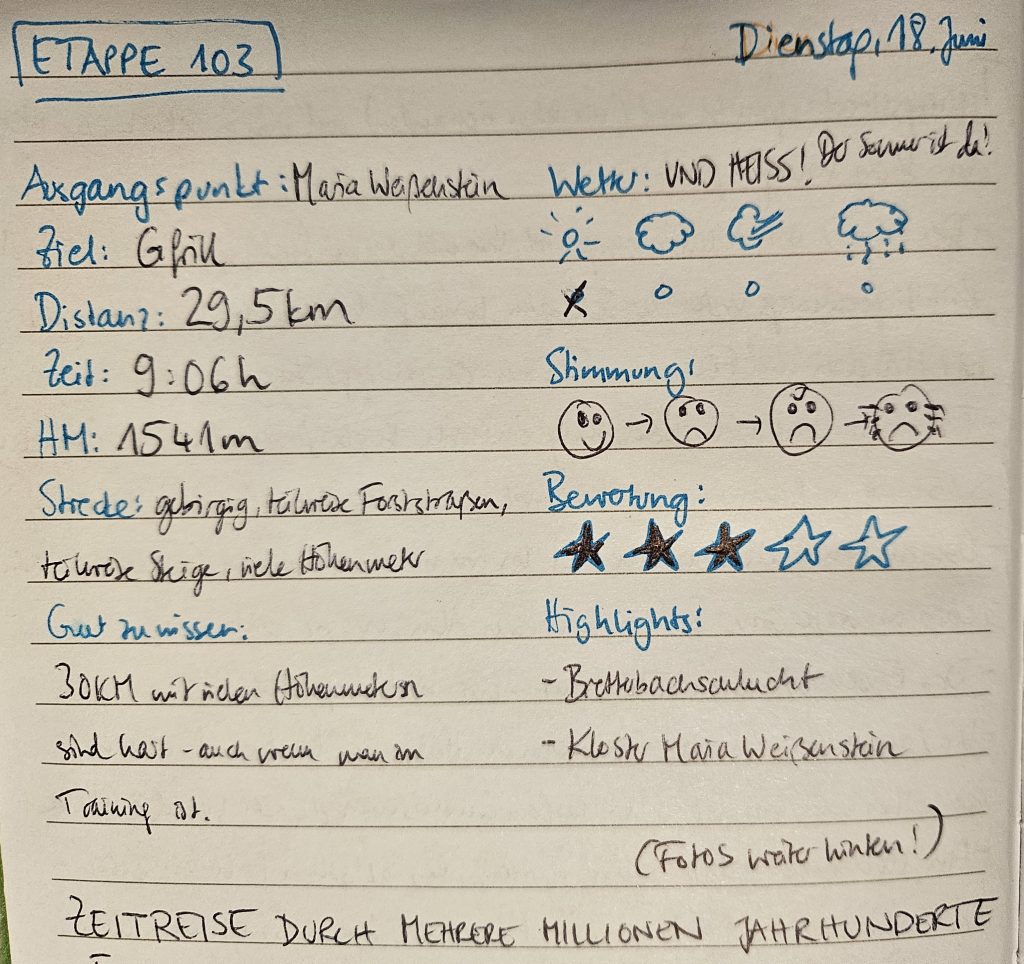
A journey through several million centuries
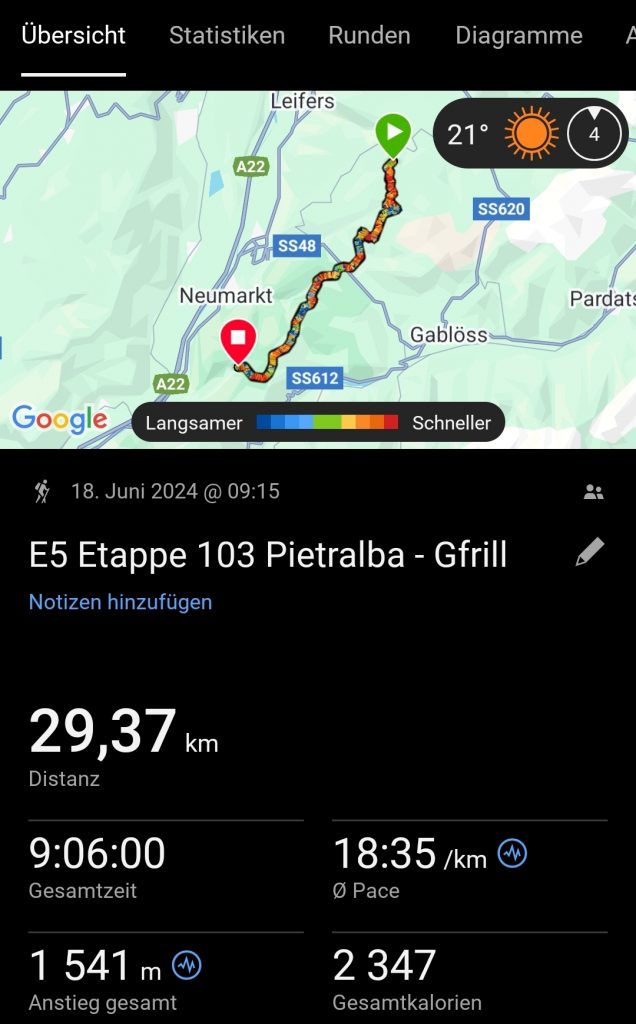
- Breakfast is served at the hotel, which we naturally enjoy to the fullest, and then we set off quite early on our long stage.
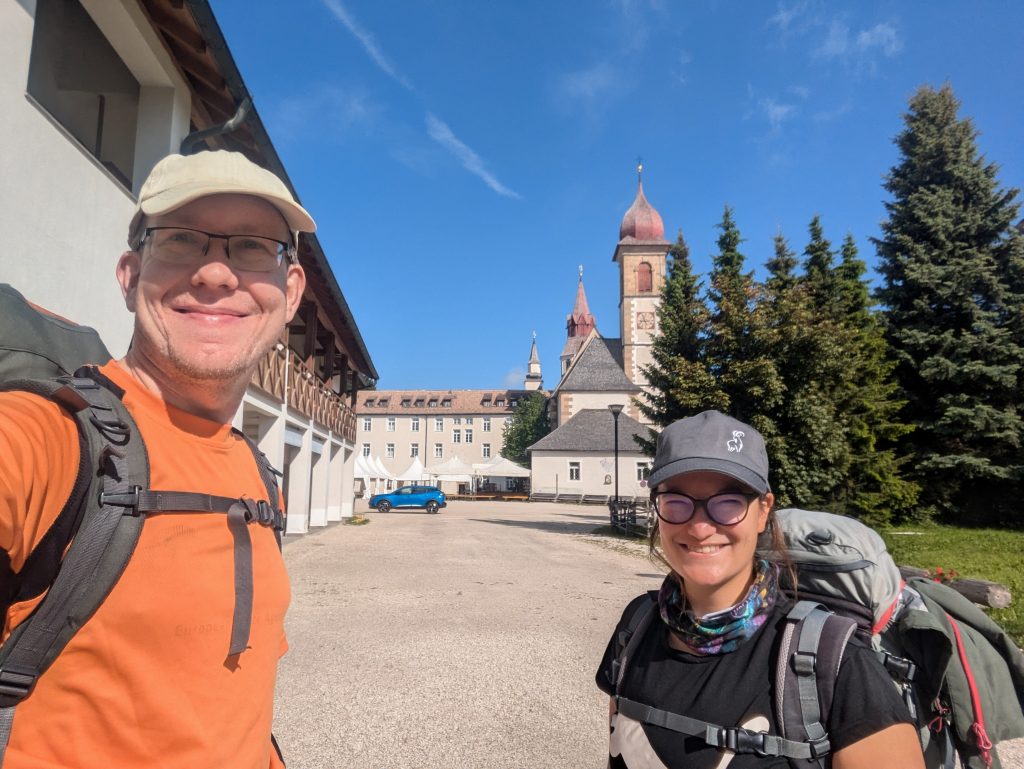
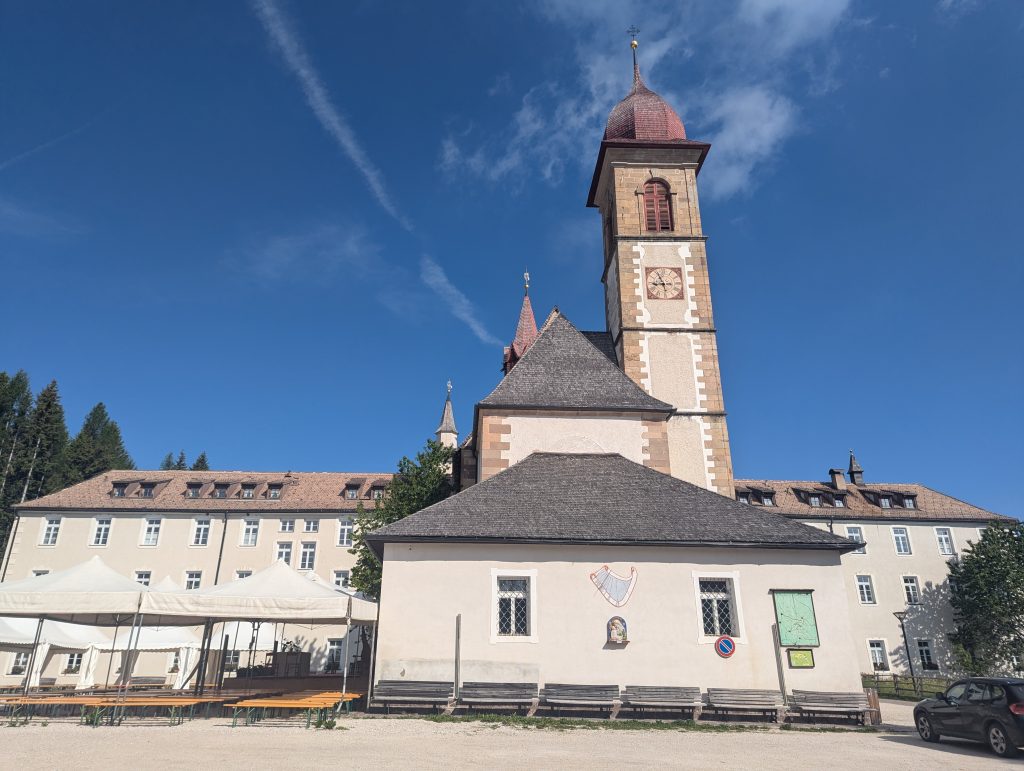
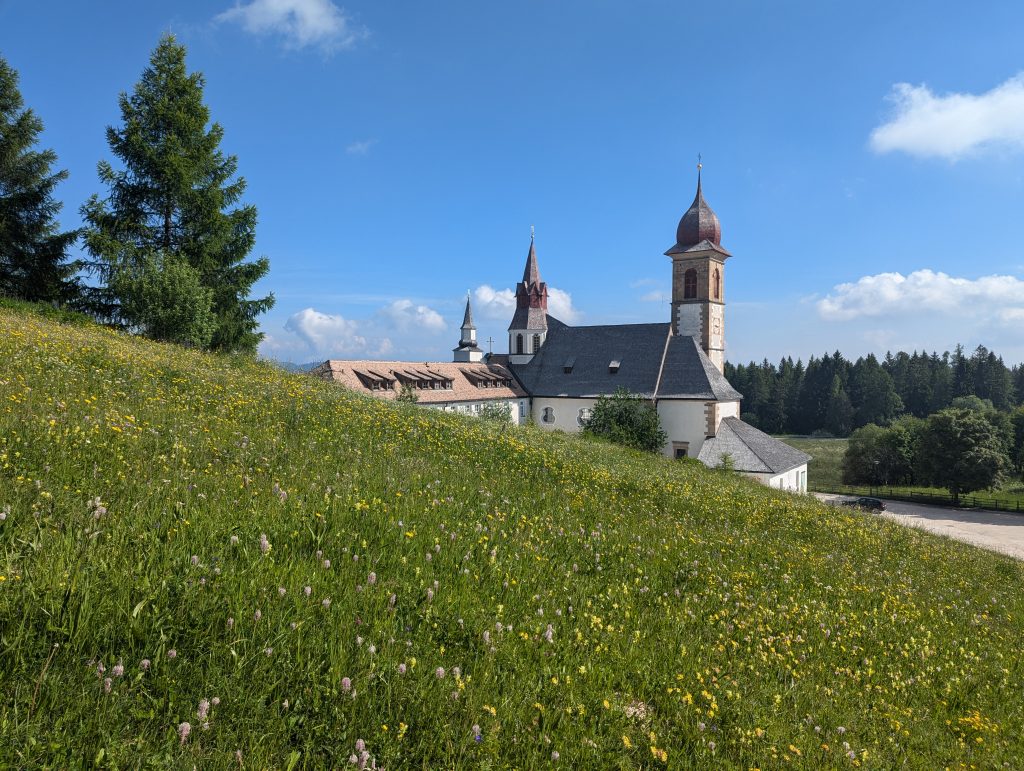
- First, we visit the monastery church, which is very Baroque.
- Then we leave the pleasant coolness of the church behind us and set off in the blazing sun on the plateau at 1,200 metres above sea level – into the palpable heat.
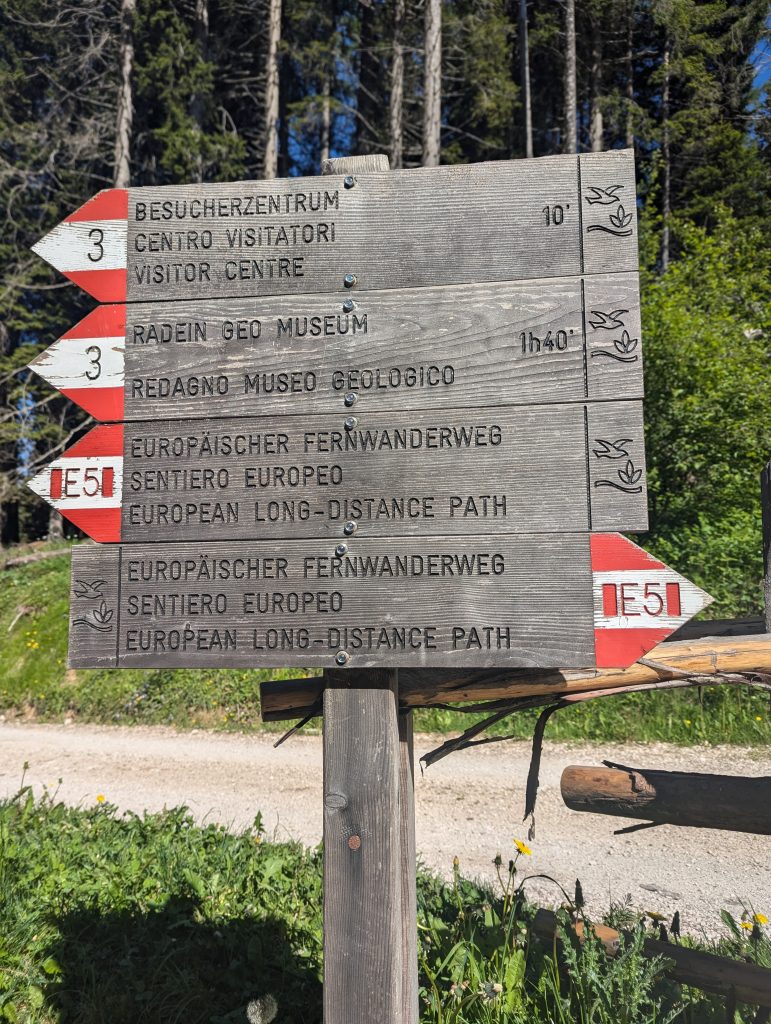
- At the first small incline at the start, we immediately meet other E5 hikers who want to hike to Truden today – nice!
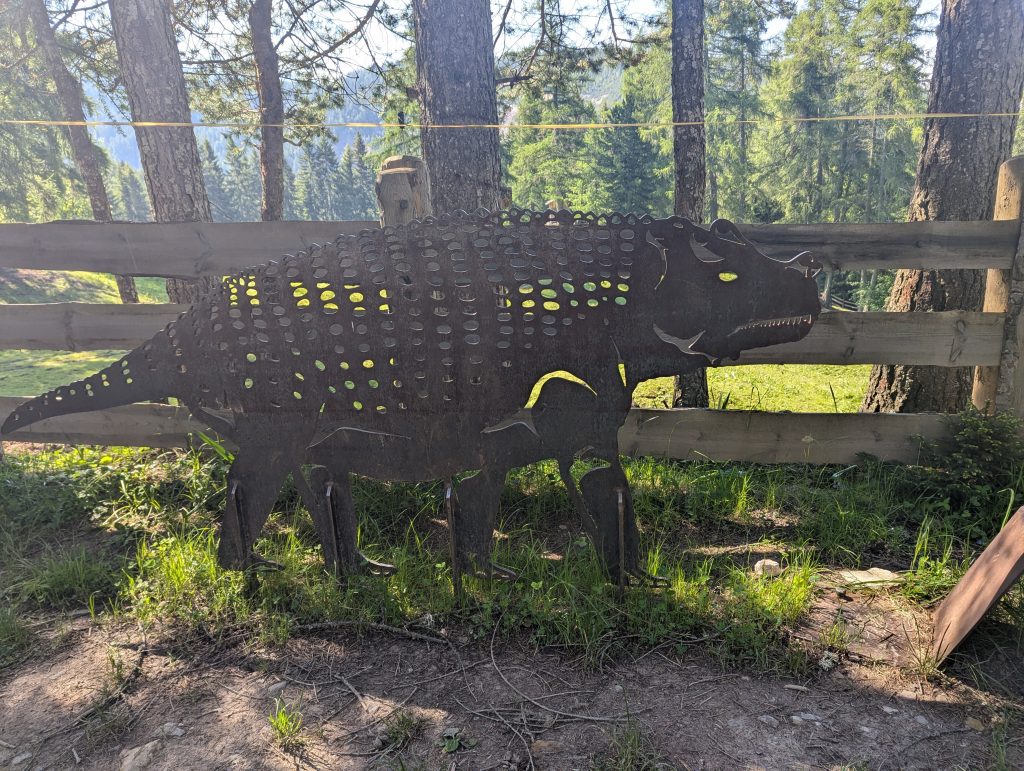
- It doesn’t take long before we reach the Geoparc Bletterbach Centre.
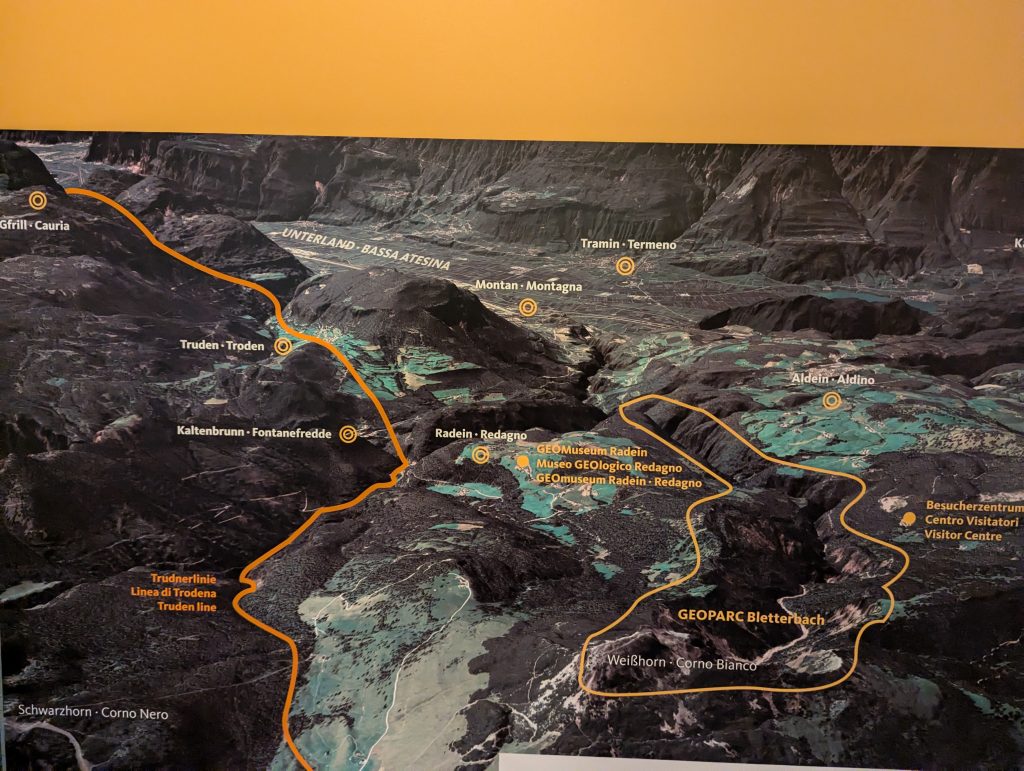
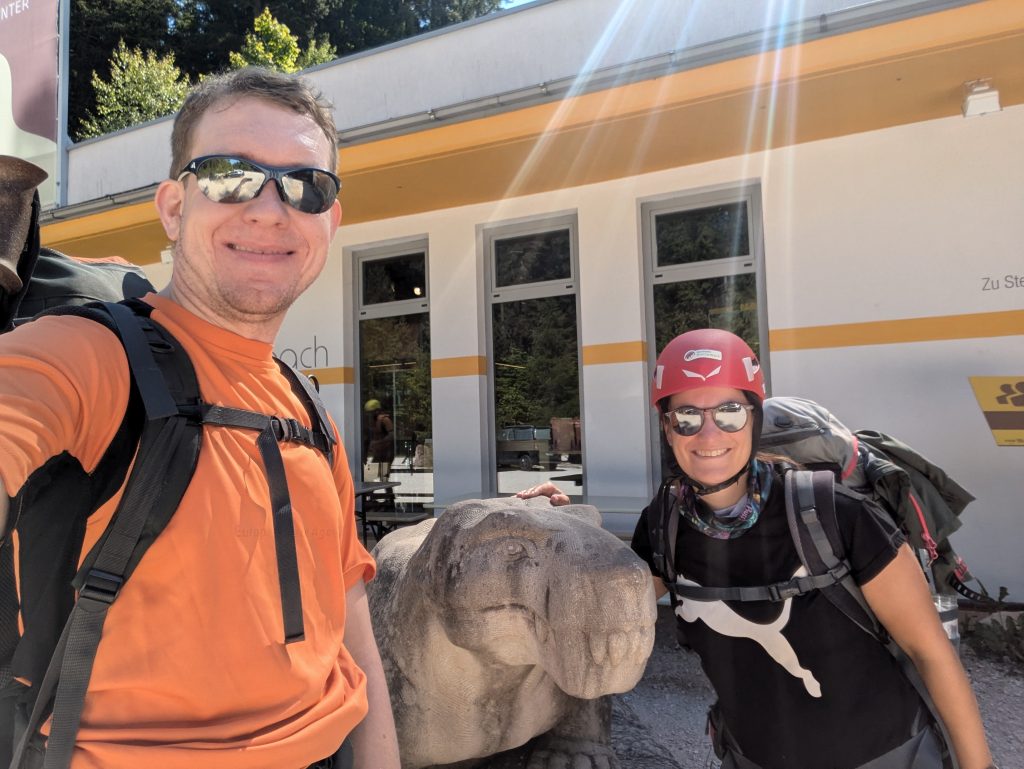
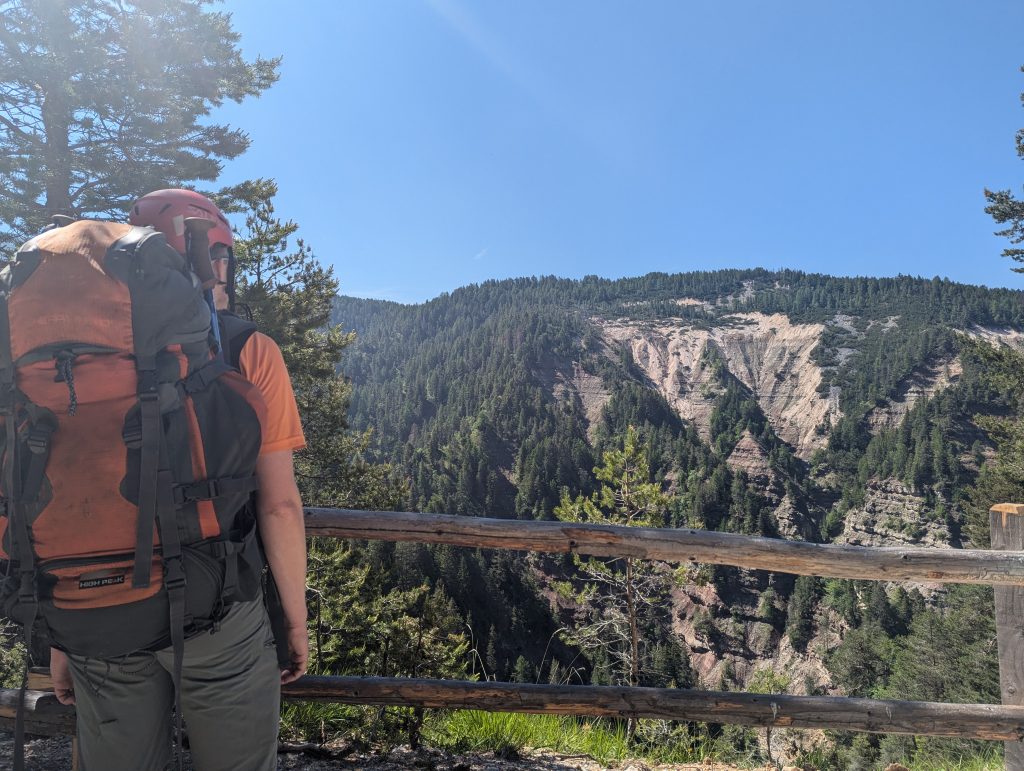
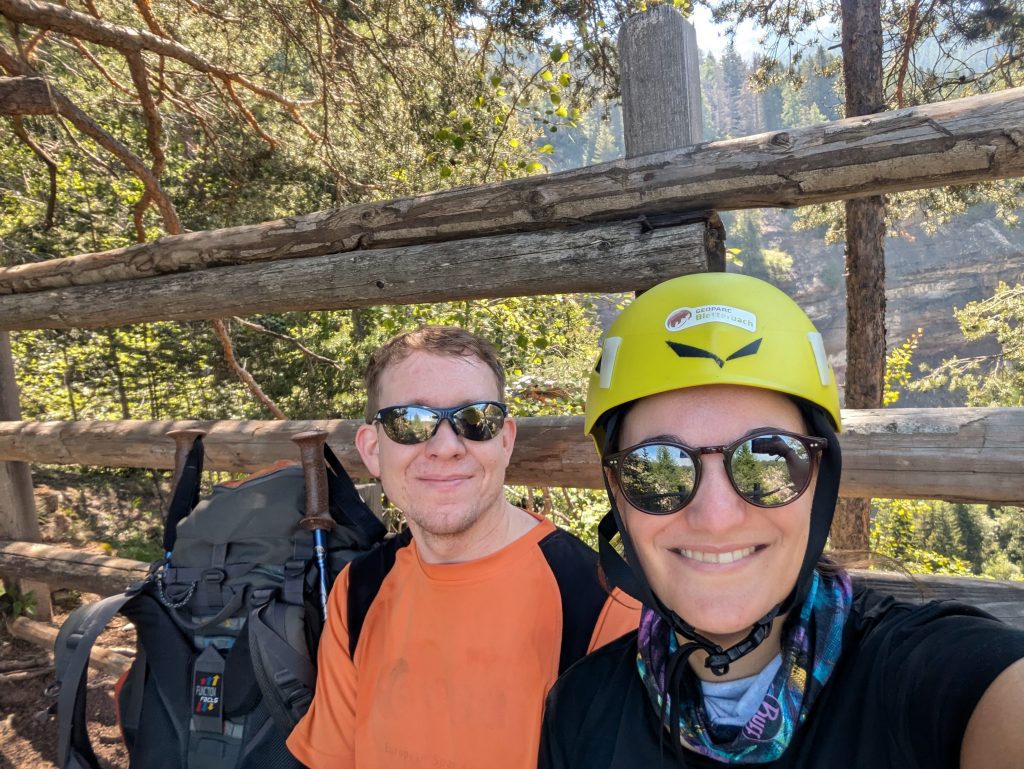
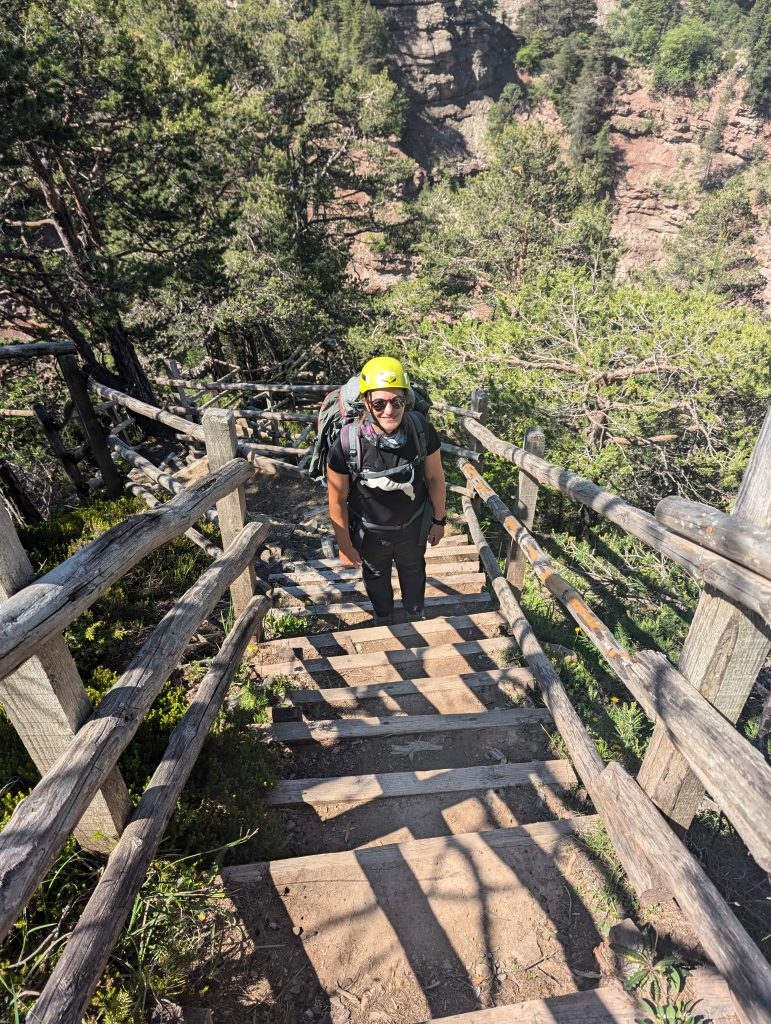
- Here we are given helmets for crossing the Bletterbach Gorge and an explanation of exactly where the path leads, with the guy saying, ‘I recommend you take this one, it only takes an hour longer and you get to see much more.’ ‘Well, since we’re already here,’ I say, and the decision is made.
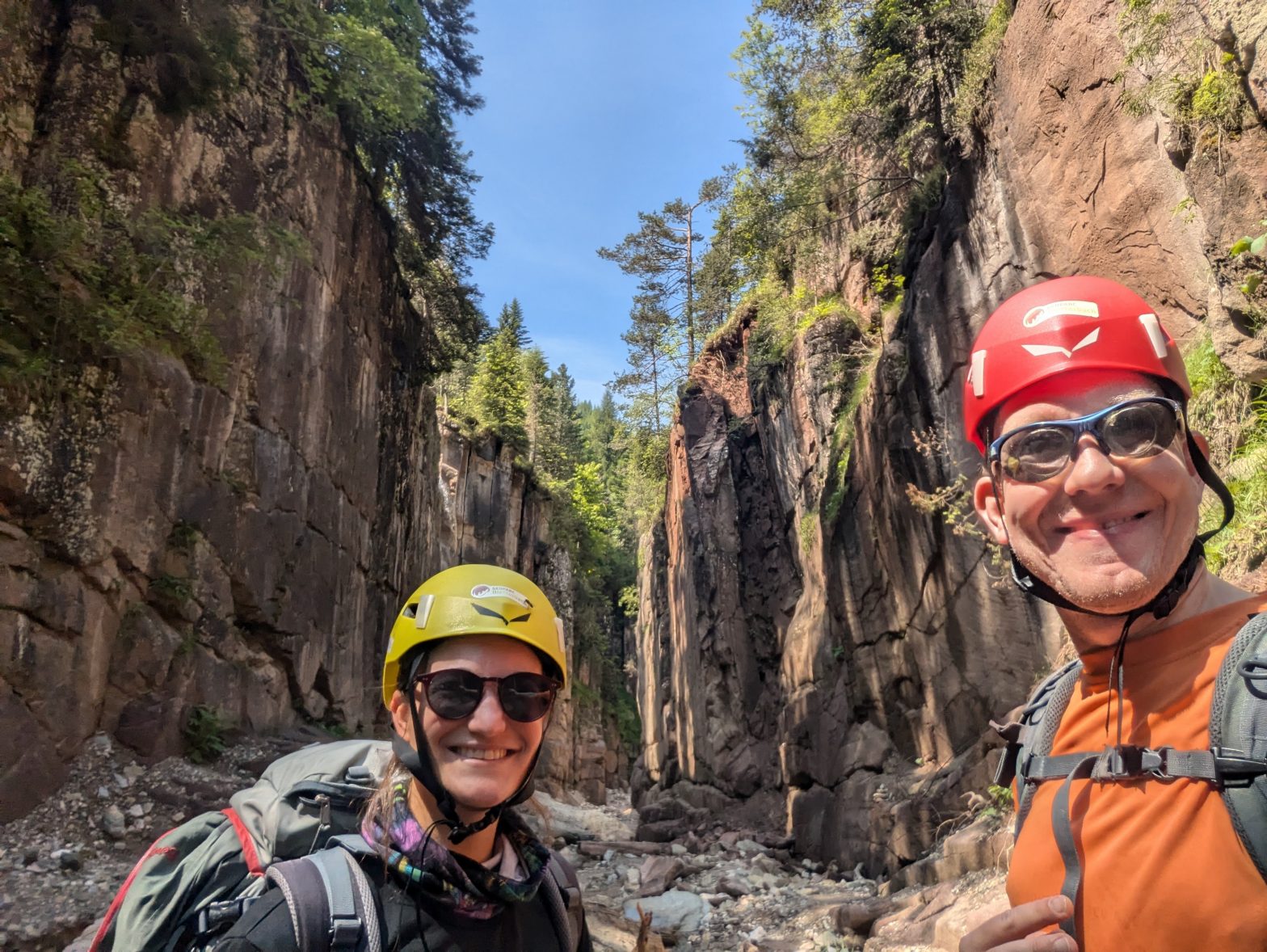
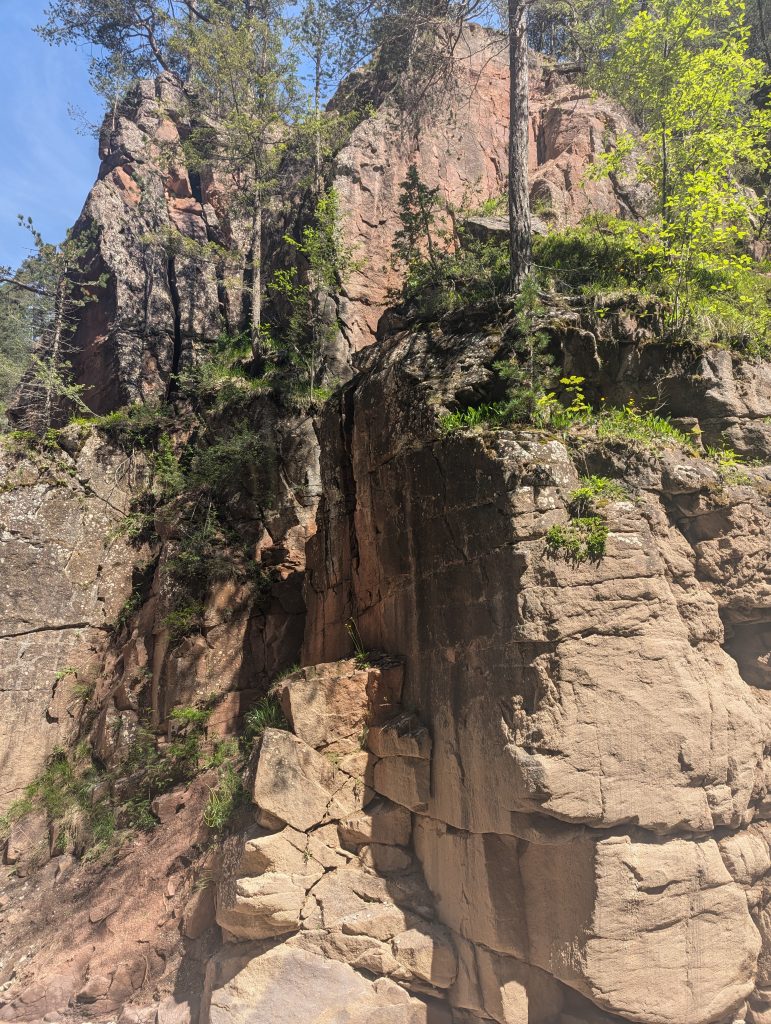
- With beautiful views over the fascinating gorge, through layers of rock that tell the story of over 250 million years, we descend via a fairly steep but well-secured path down into the gorge and to the stream bed full of scree.
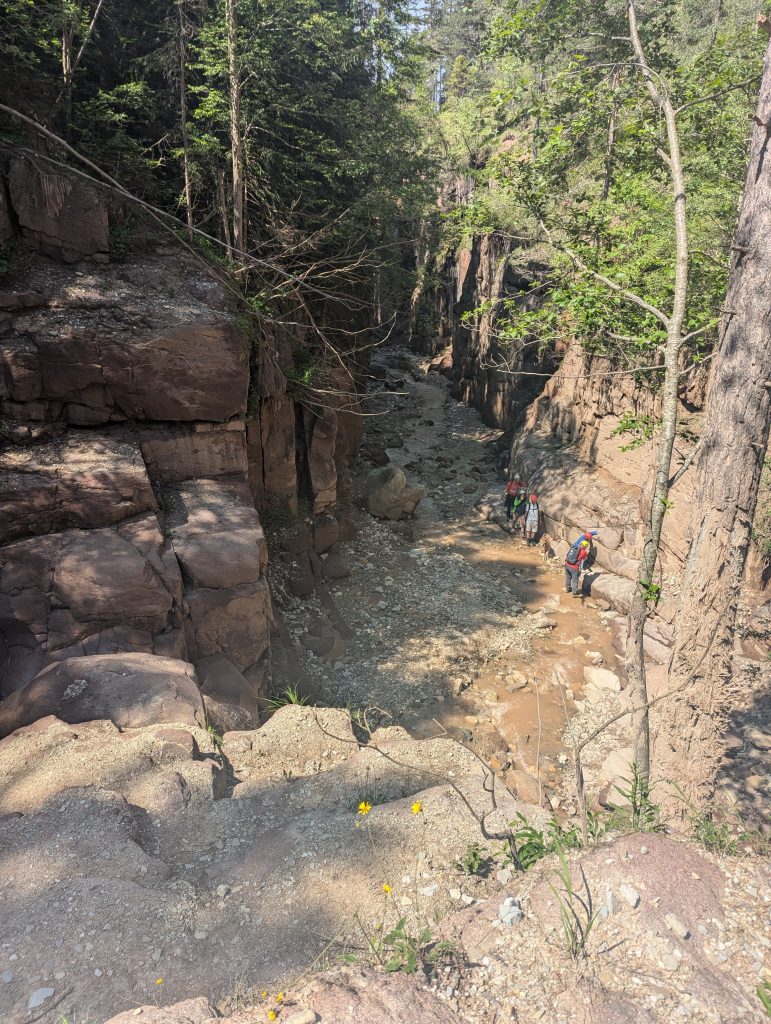
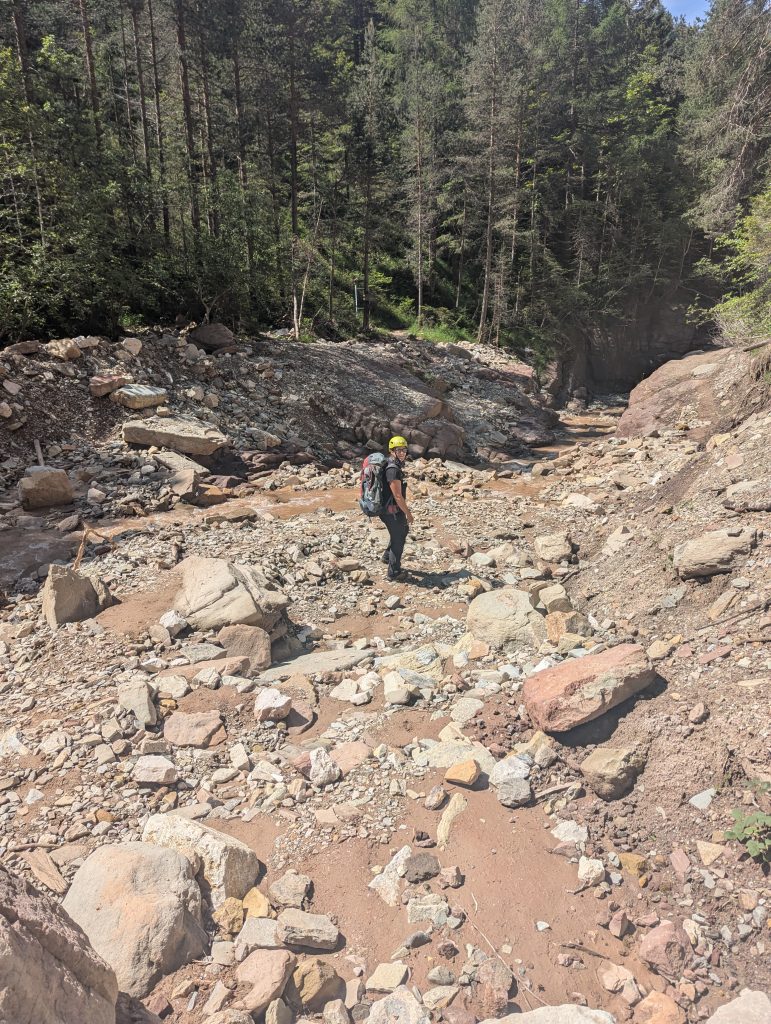
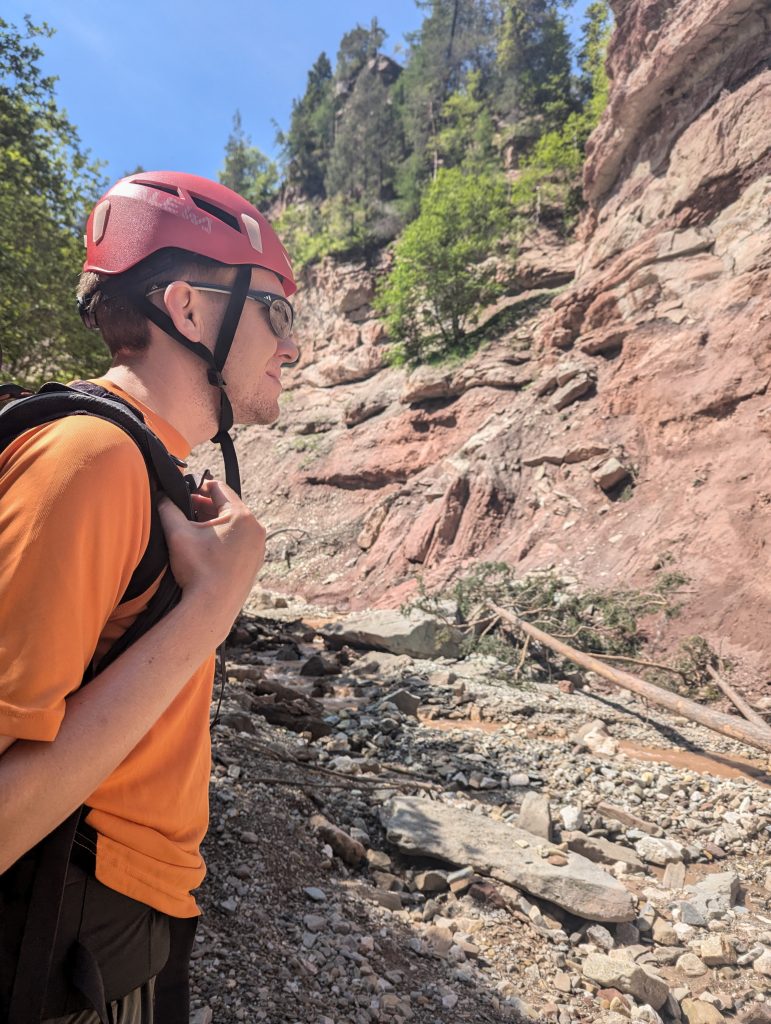
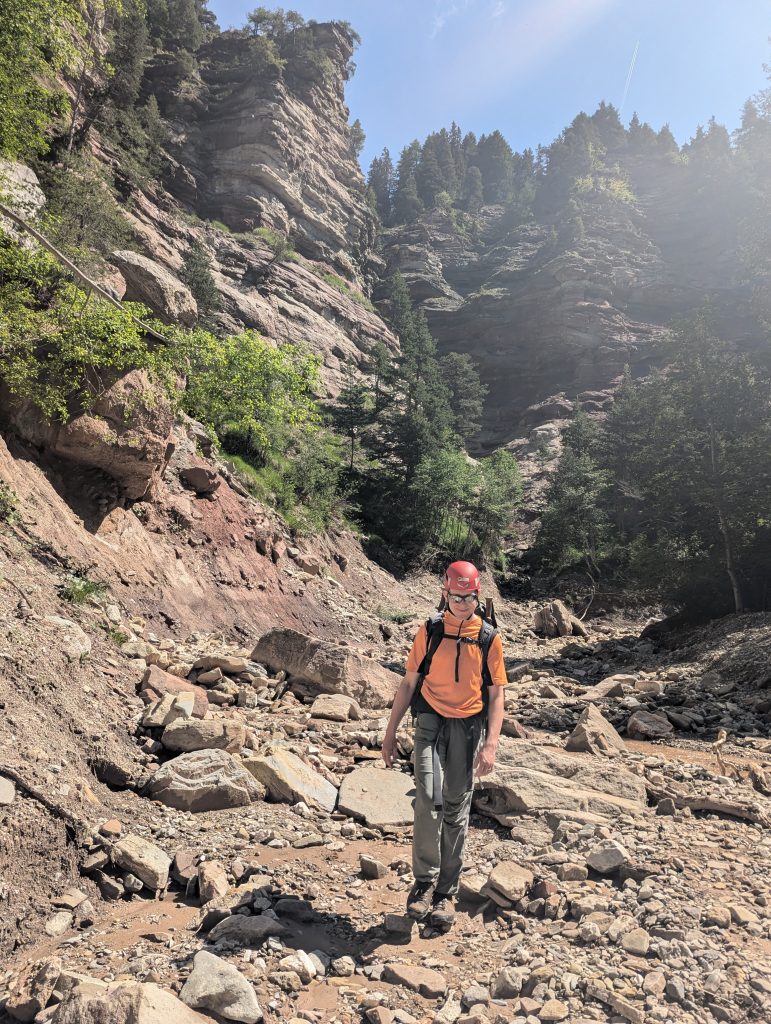
- The guide is right: it’s worth it, and just like in the Grand Canyon, the sheer size of the gorge only really hits us when we’re right at the bottom, surrounded by the high rock faces.
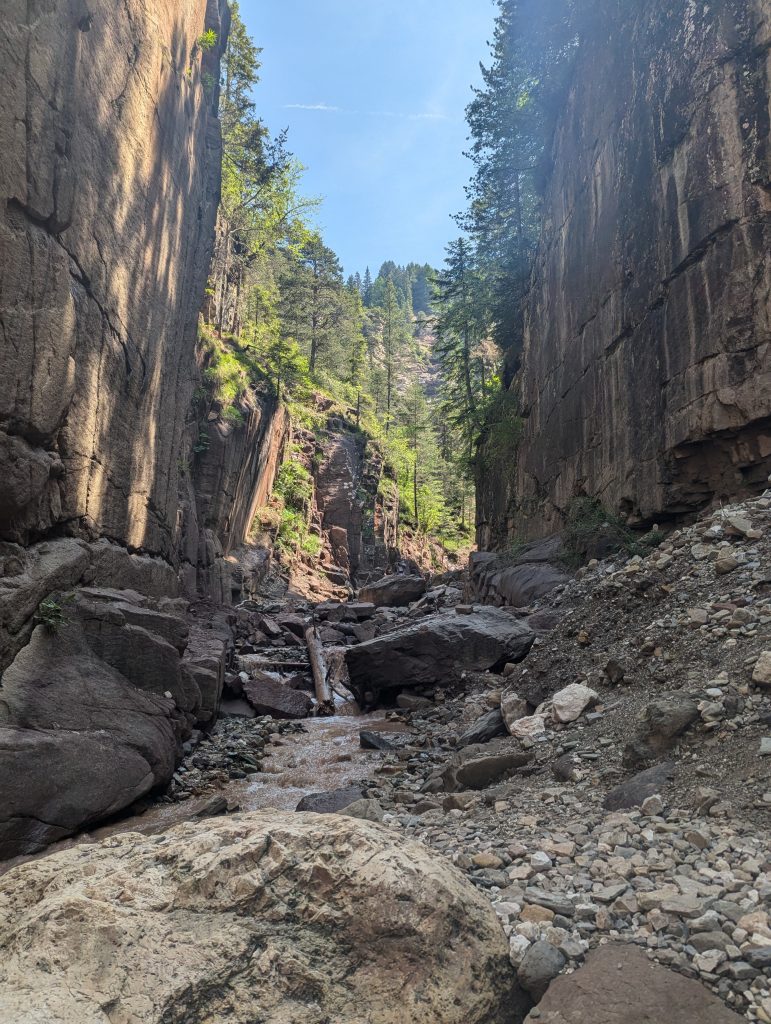
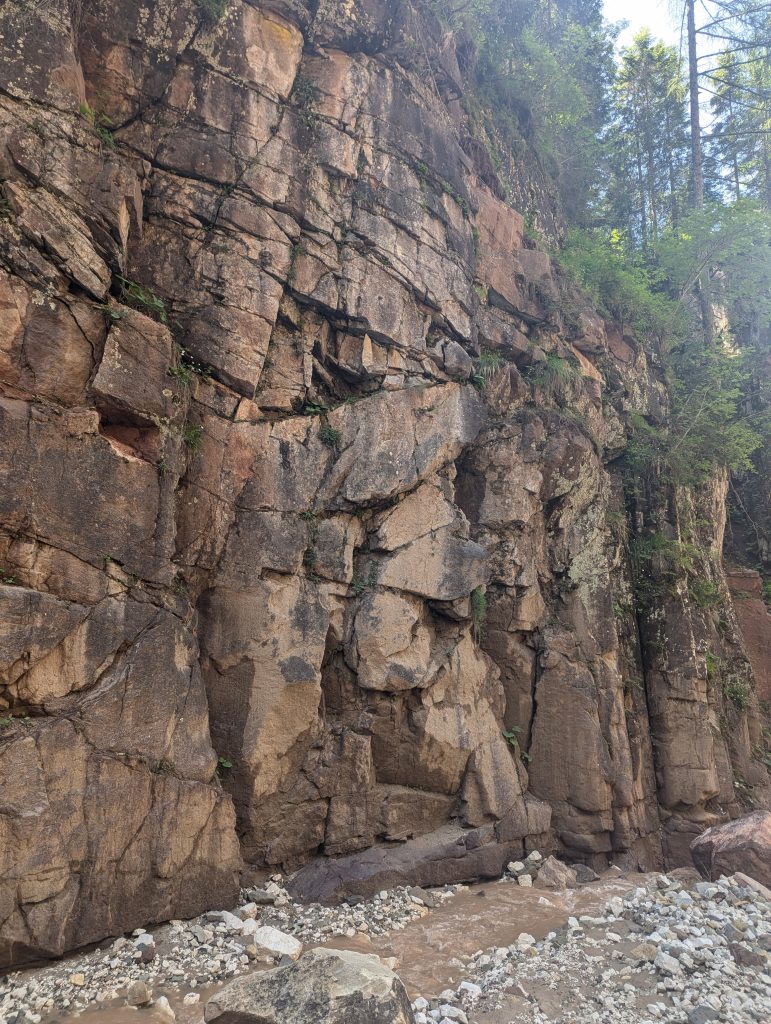
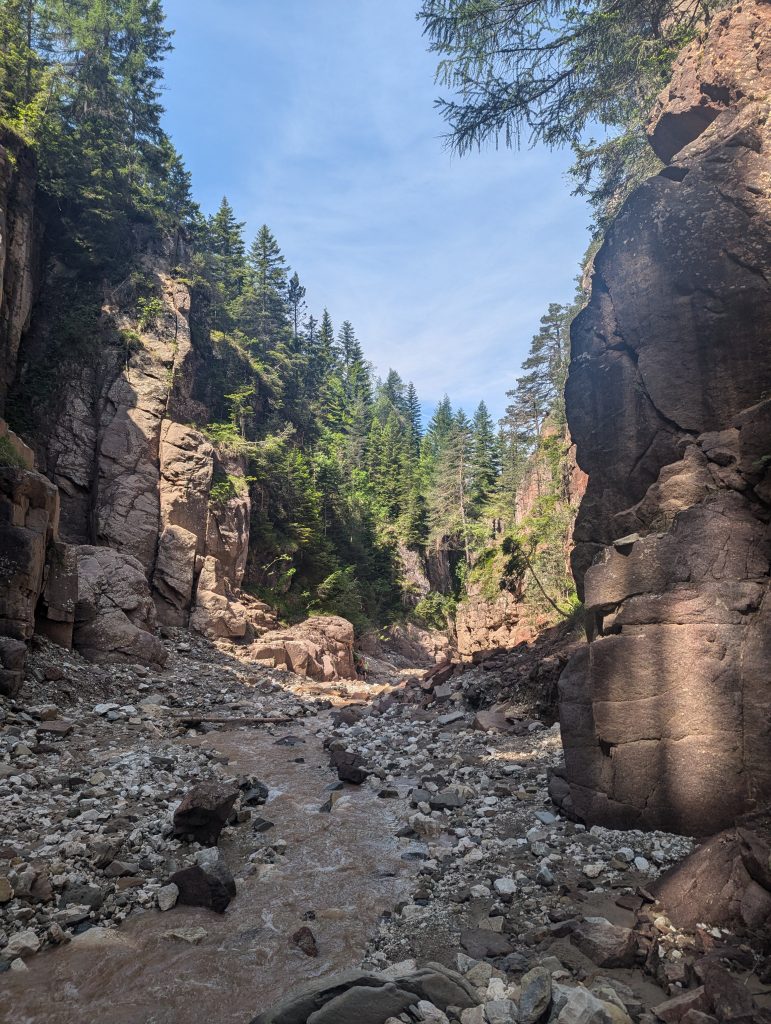
- When we see people balancing (or rather tumbling) over the stones in the stream bed, we understand all the warnings about ‘sure-footedness and sturdy footwear required’.
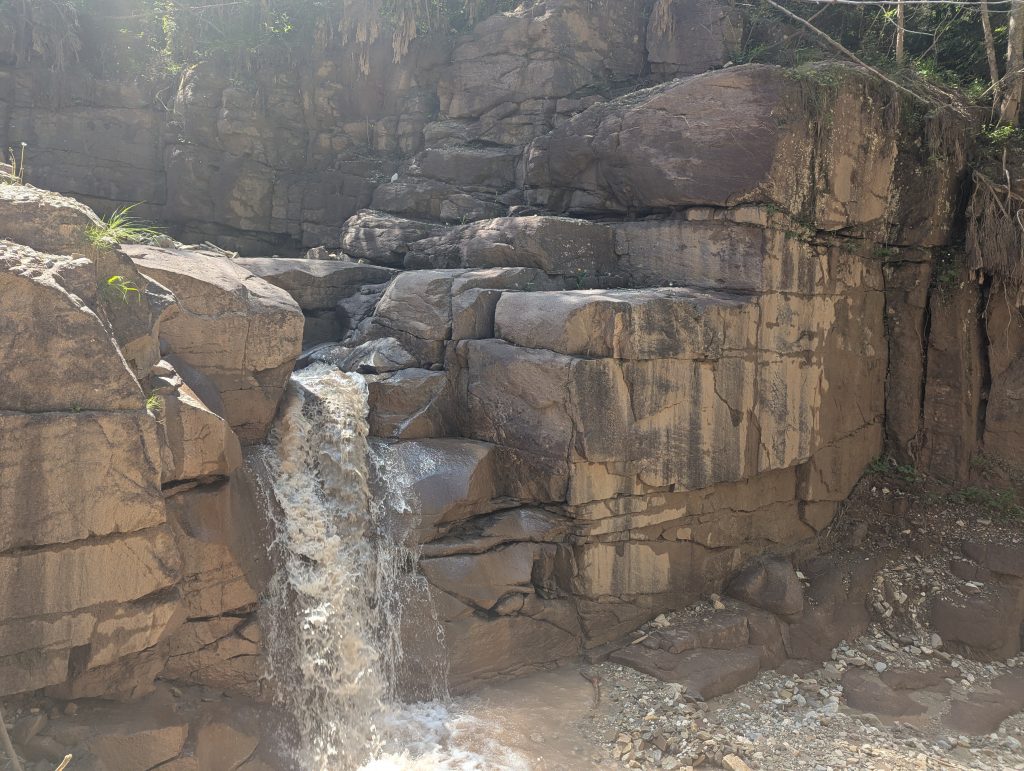
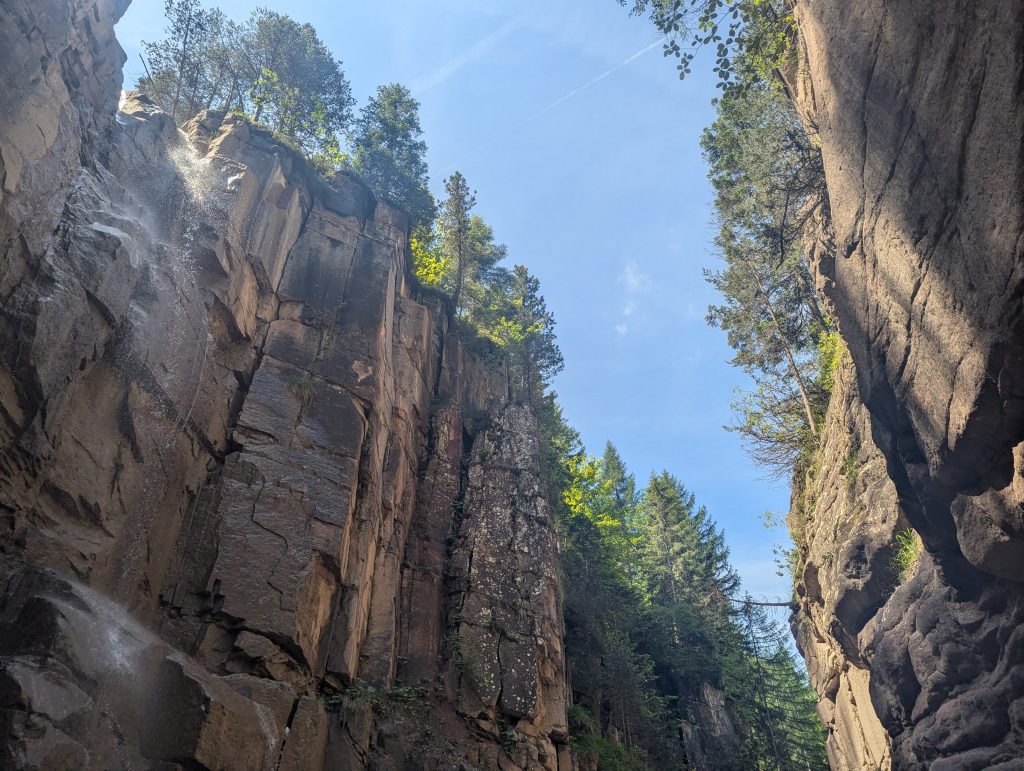
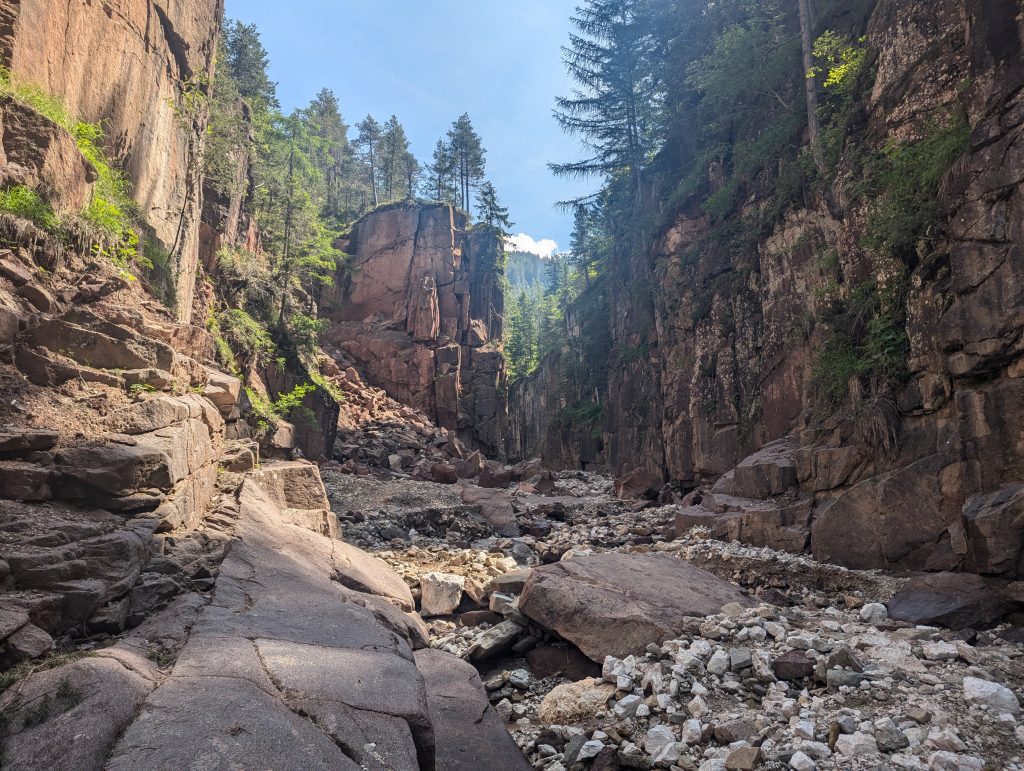
- However, the natural spectacle is beautiful, and all too soon we reach the turn-off to the left, up and out of the gorge – off to the village of Radein, where there is another visitor centre and museum and where we return our helmets.
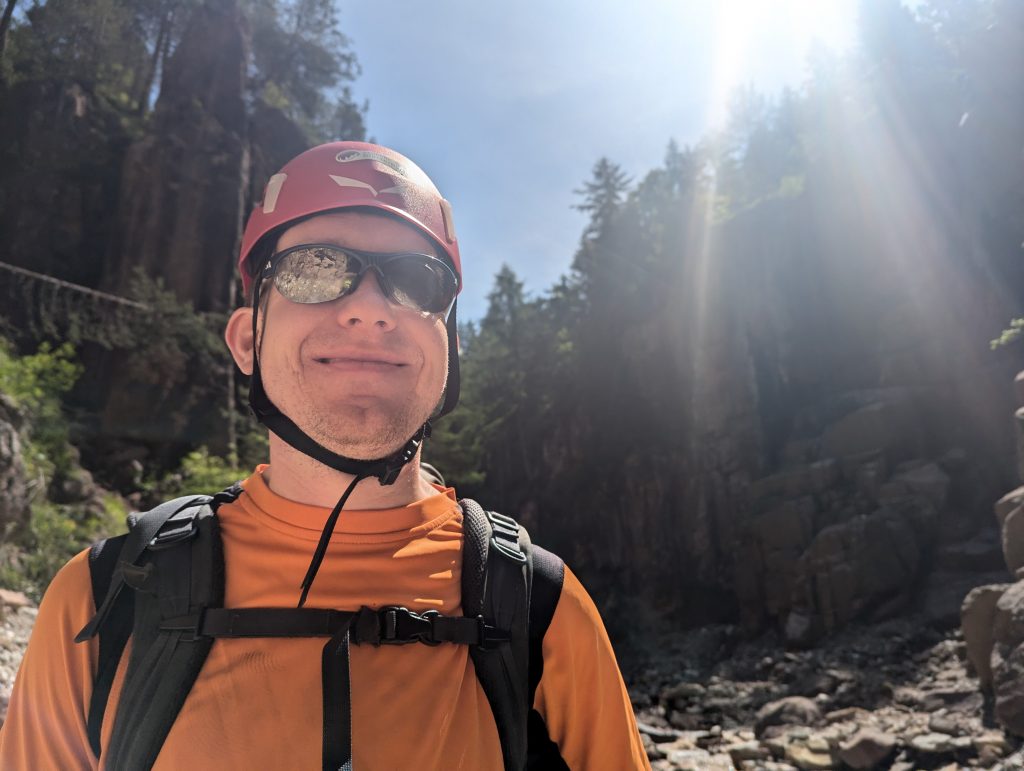
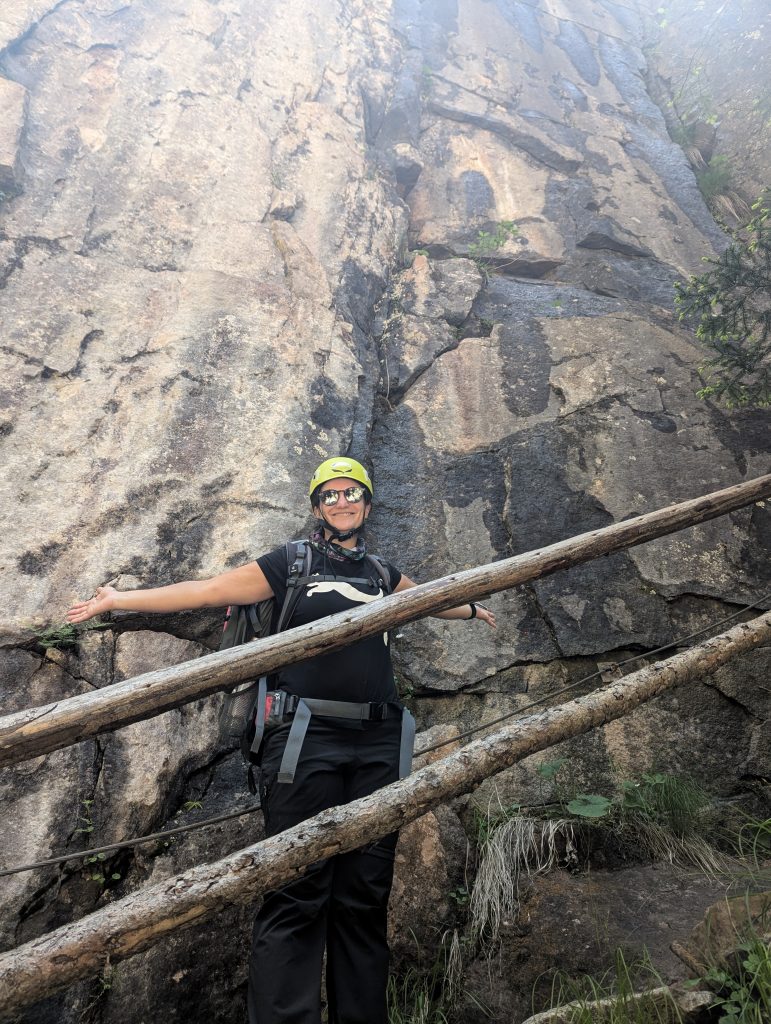
- While we are watching a film in the museum, a group of Swiss people come in and loudly discuss which helmet fits best next to the helmet rental and return point, which is unfortunately located in the cinema room (how can this be so difficult, especially since the helmets, as the guy in the other centre explained to us, are one-size-fits-all models that you can adjust yourself).
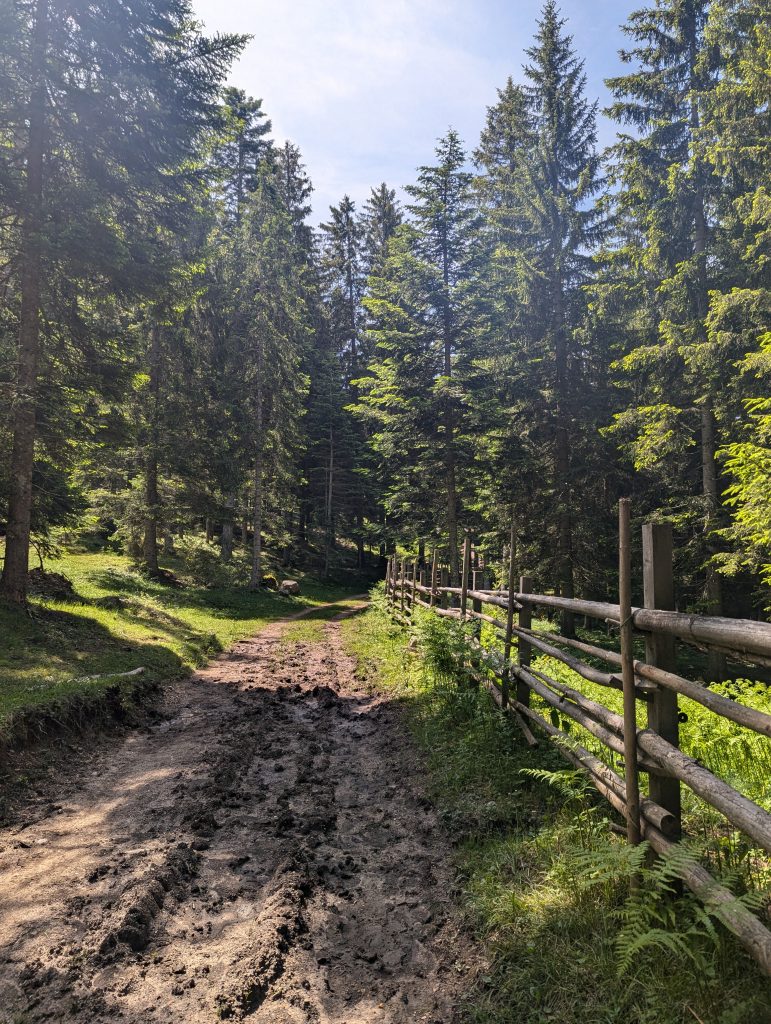
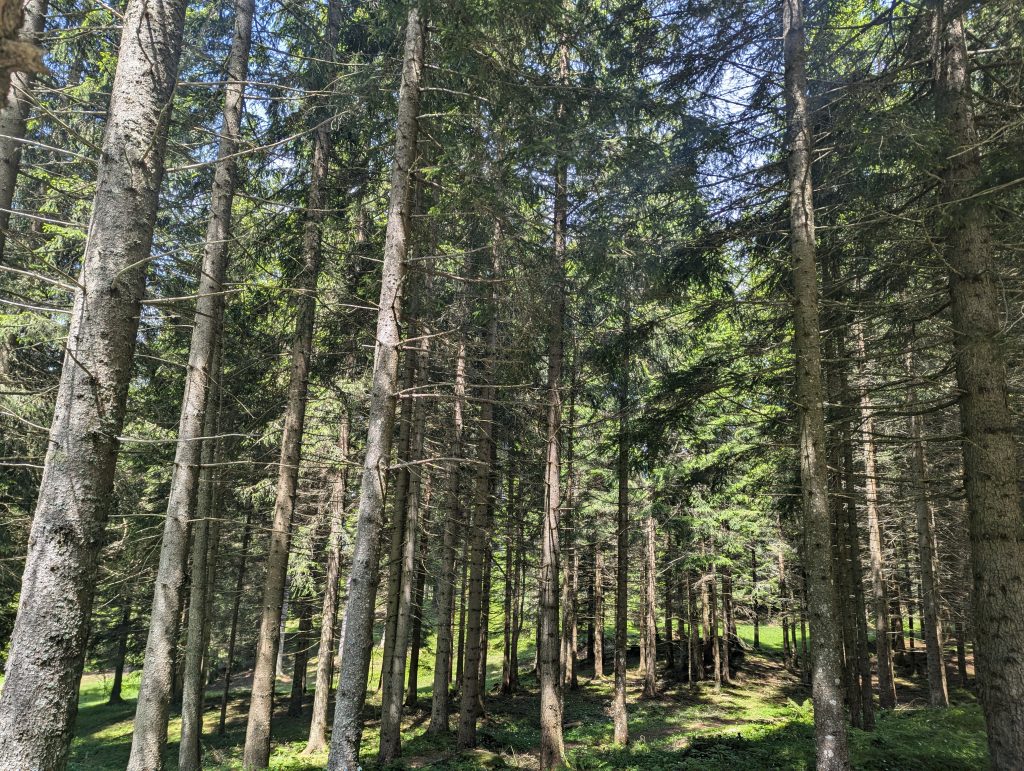
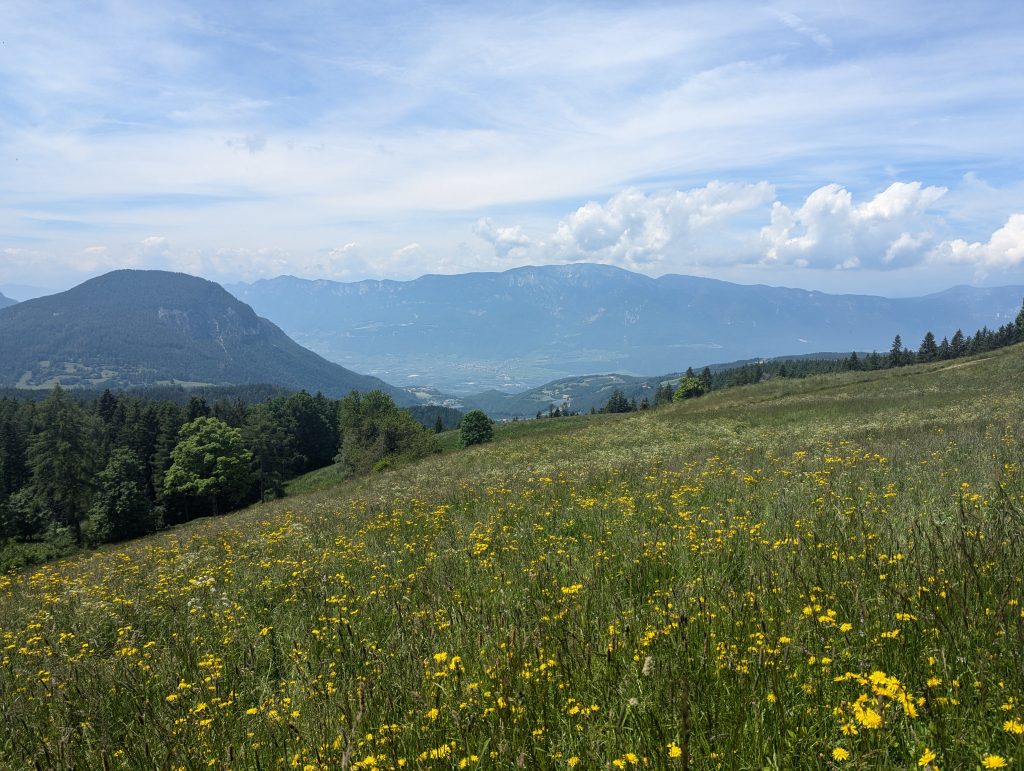
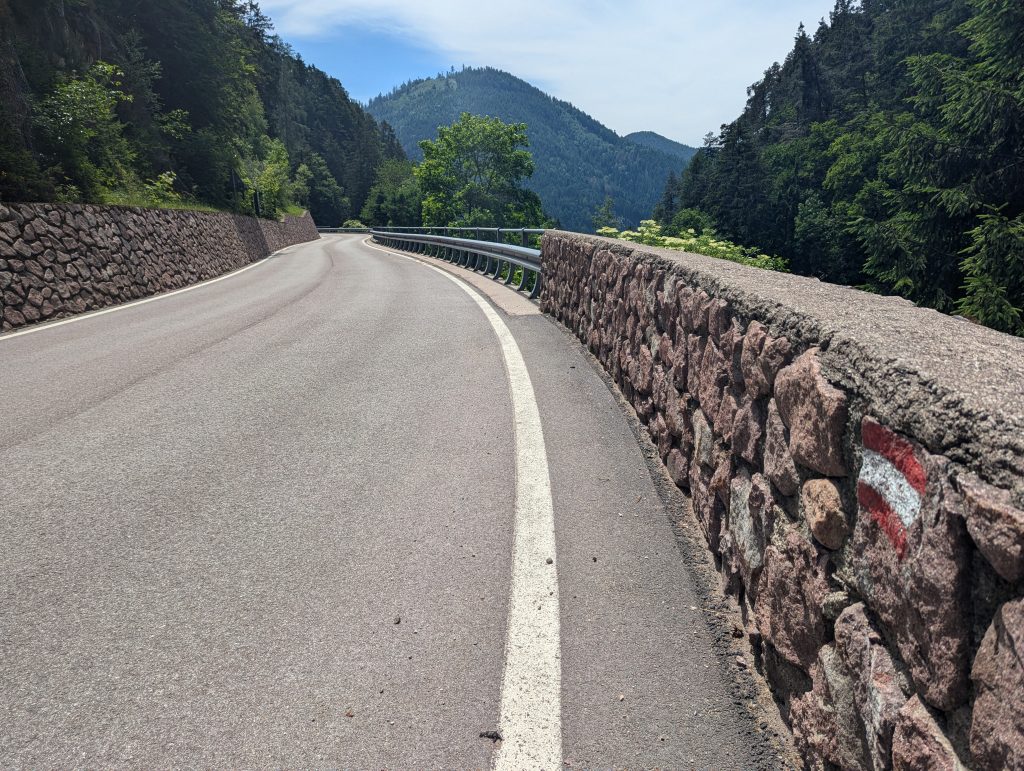
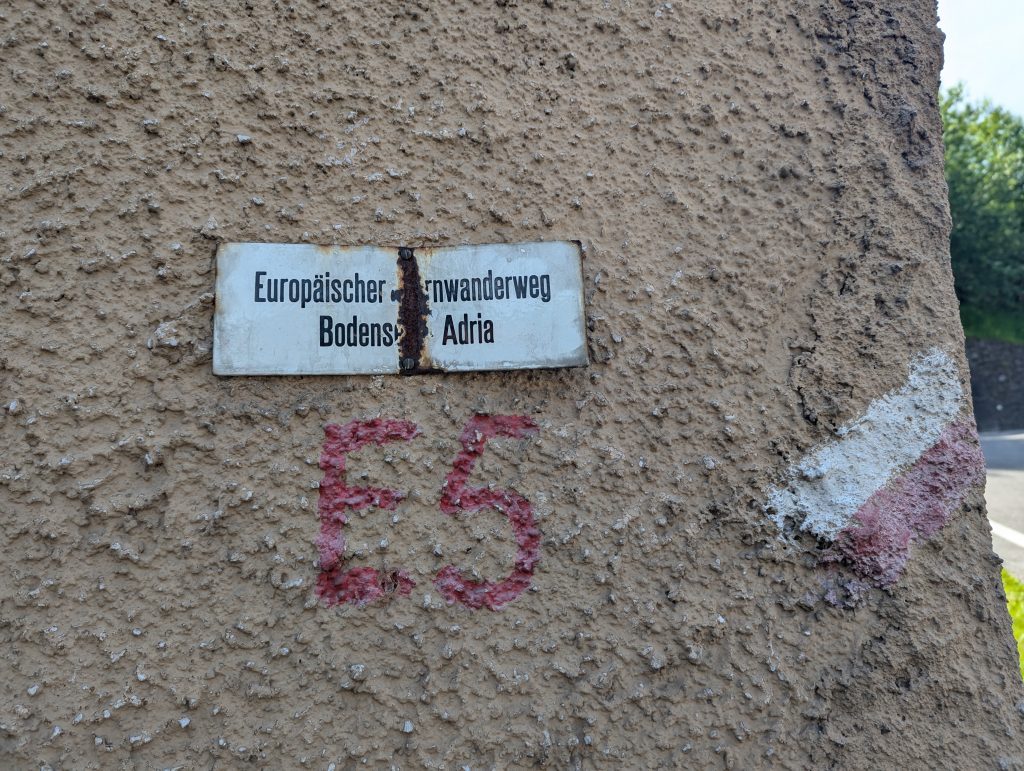
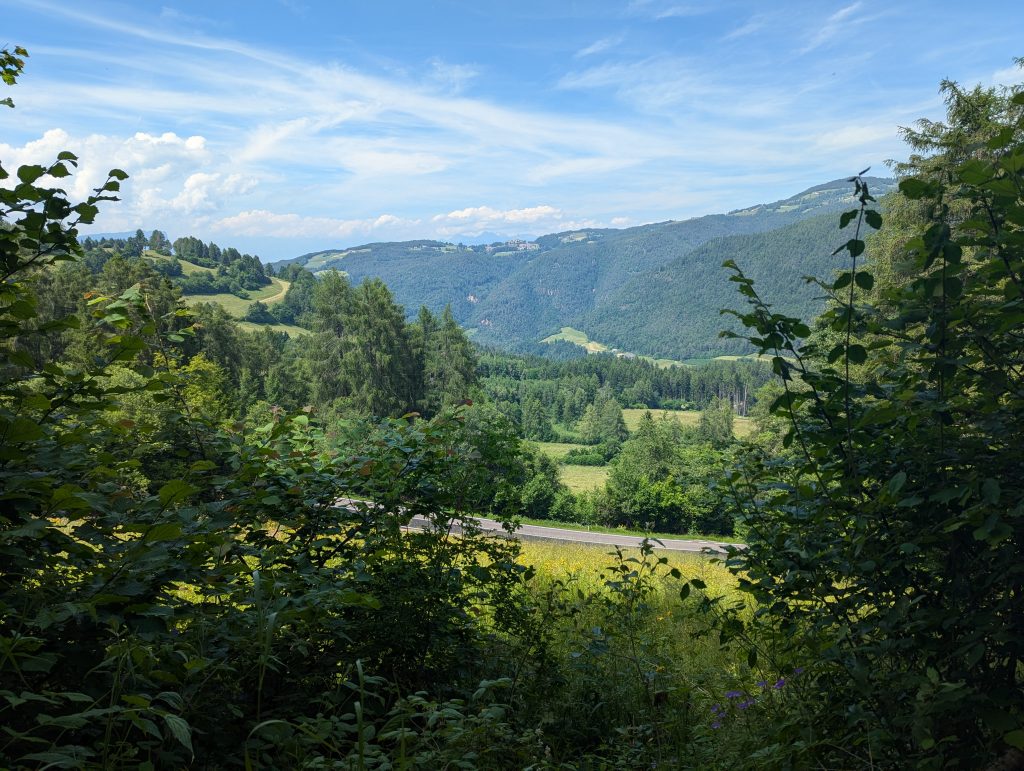
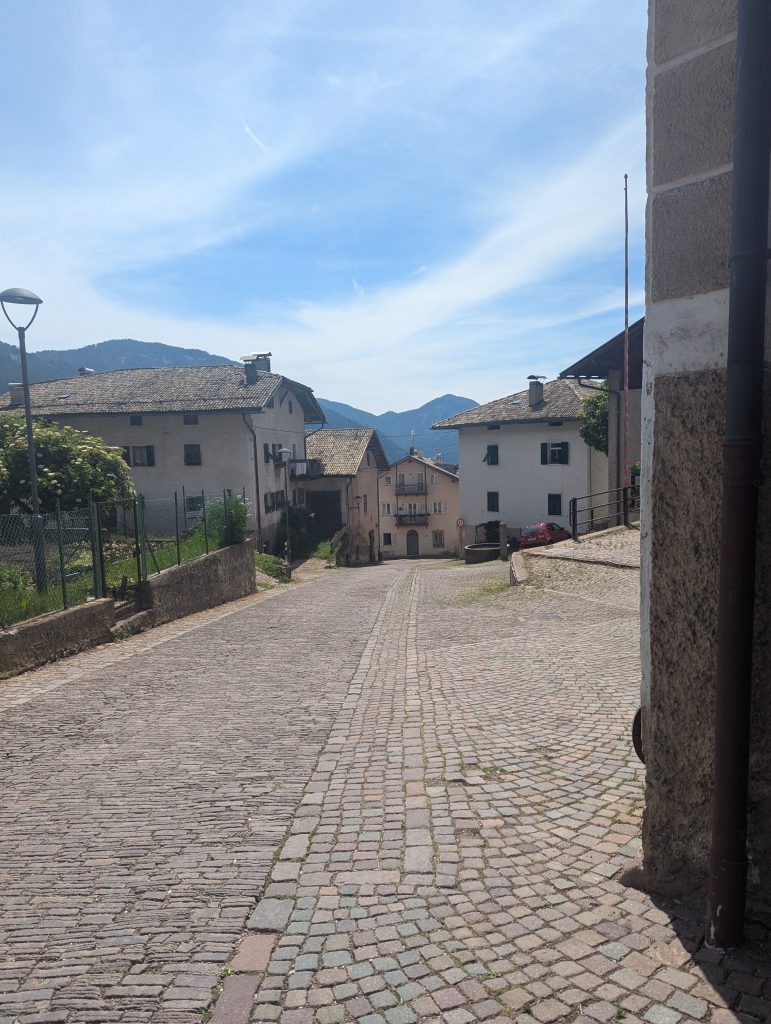
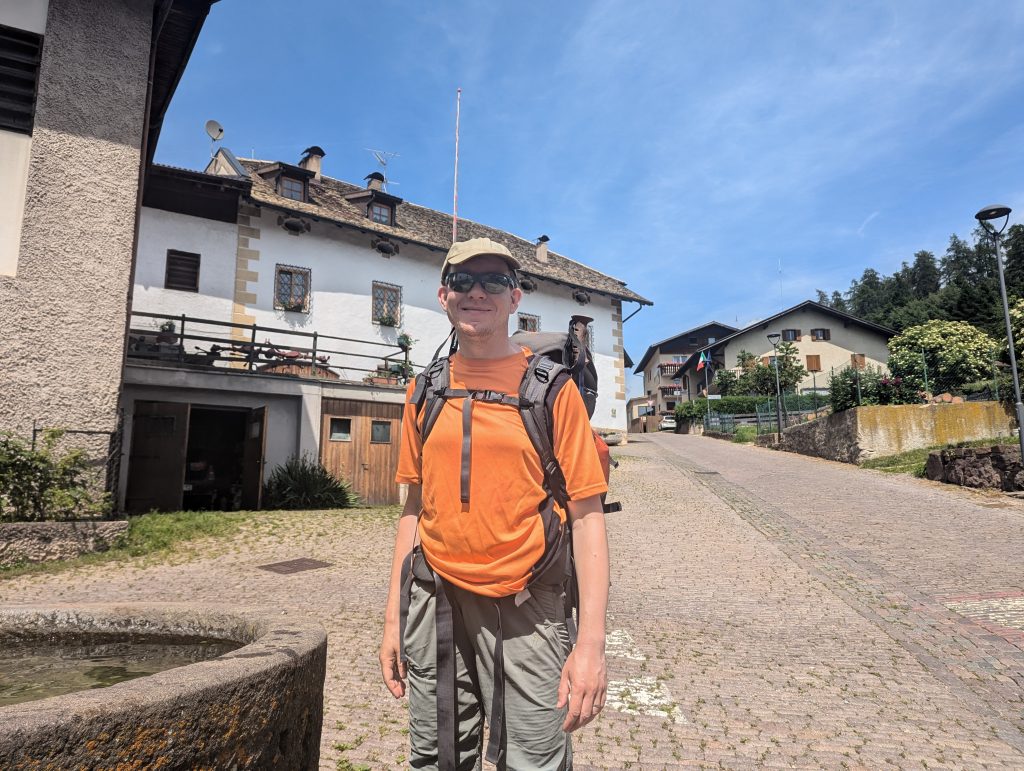
- We descend to Truden, only to climb back up again on the other side, gaining more than 1,000 metres in altitude to reach the Horn Alm, which, to my utter dismay, is closed when we finally arrive at the top.
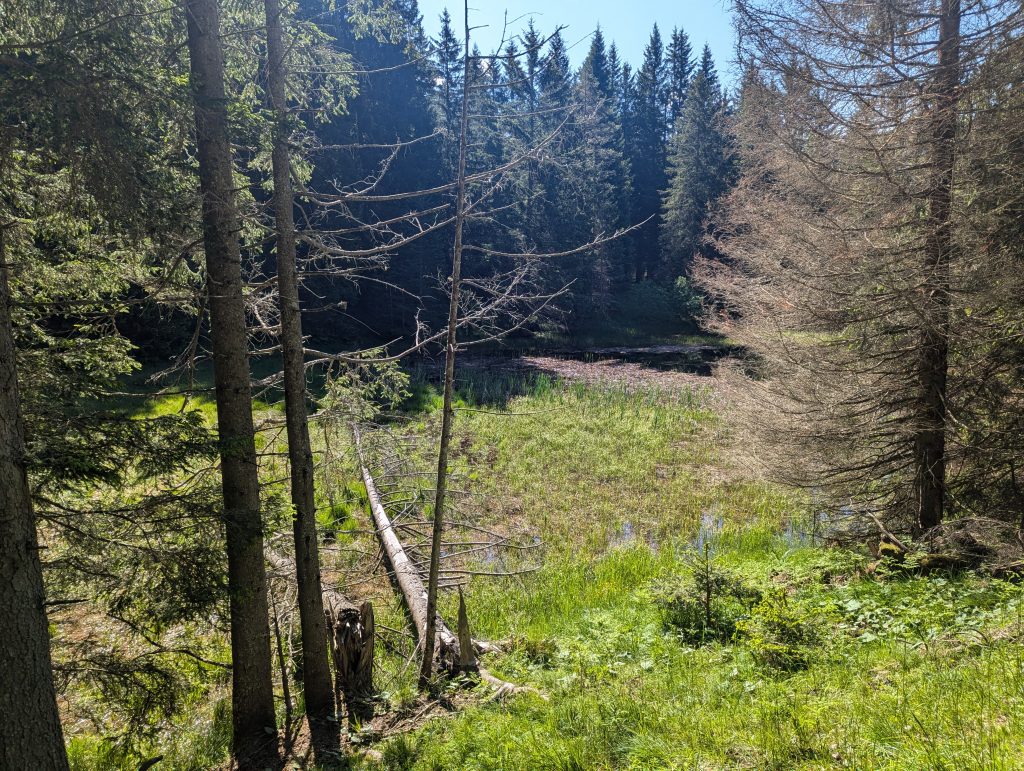
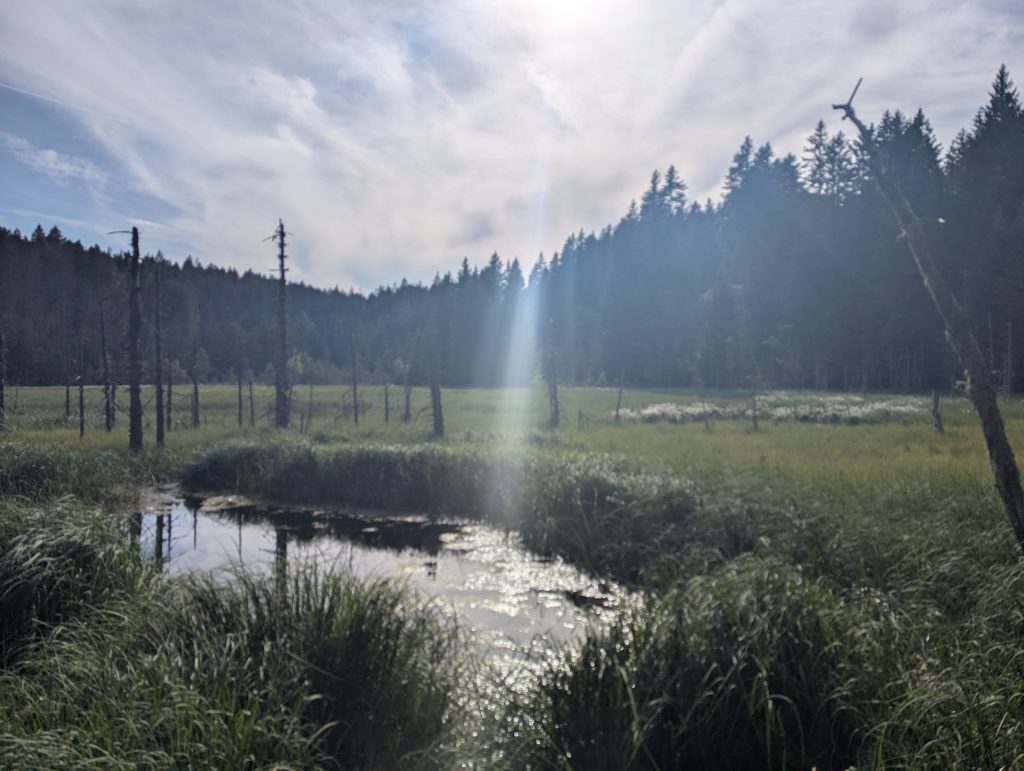
- Passing Lake Weissensee, which is now almost entirely marshland, we descend a little and then climb back up to the plateau from which we started today.
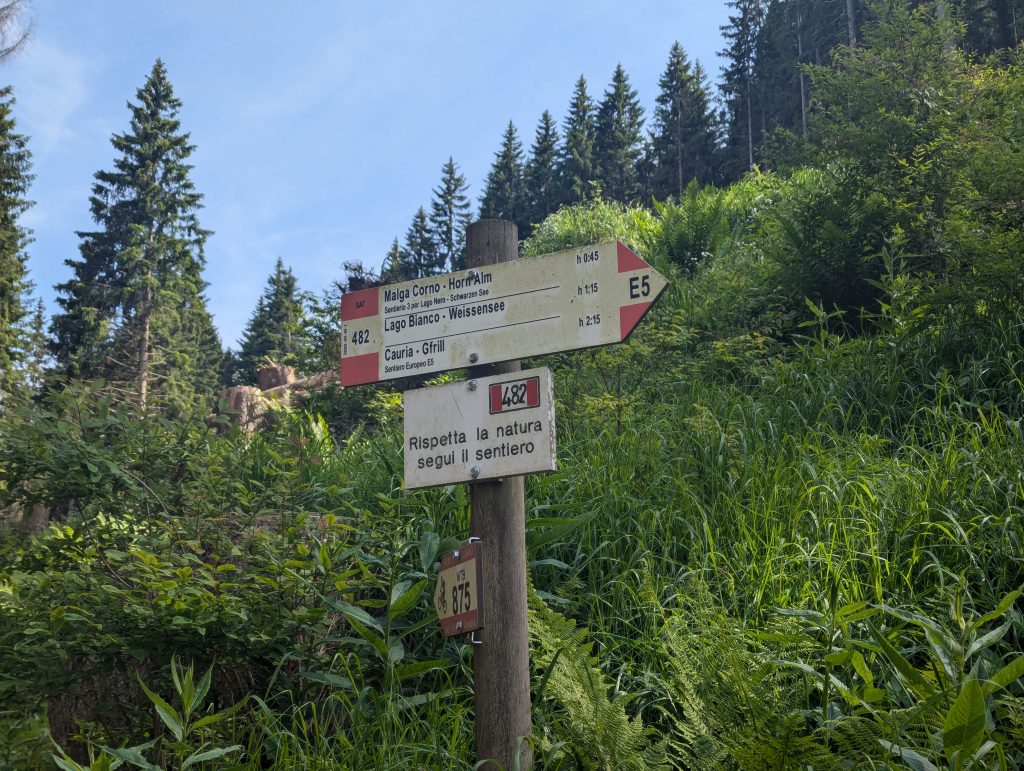
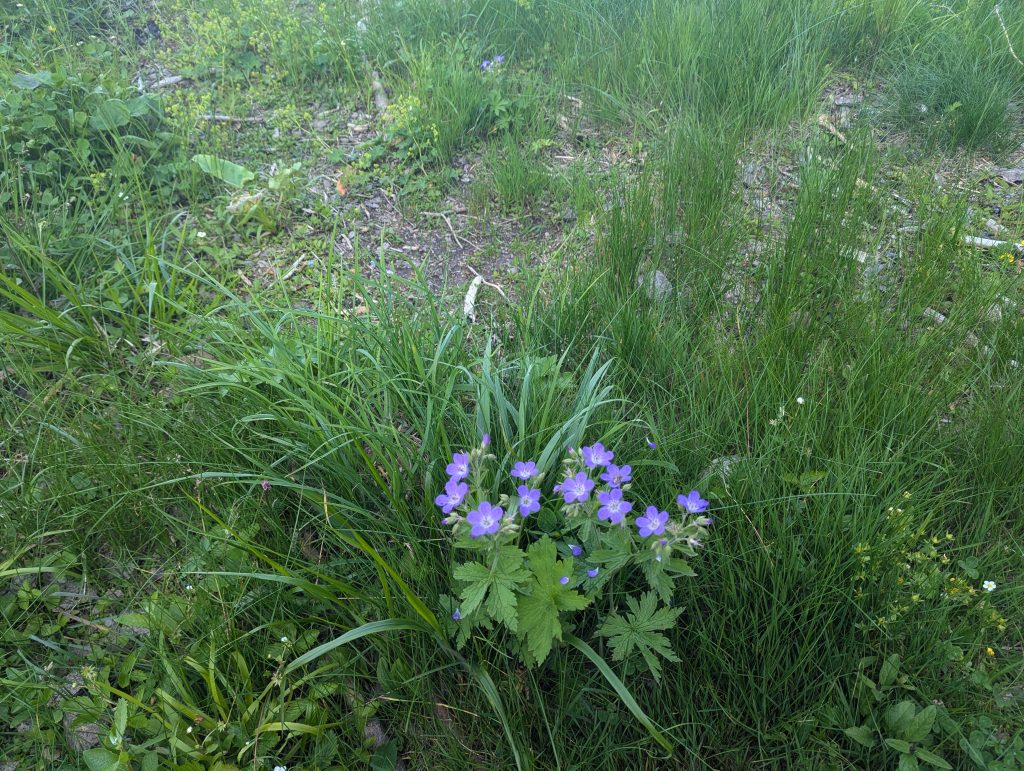
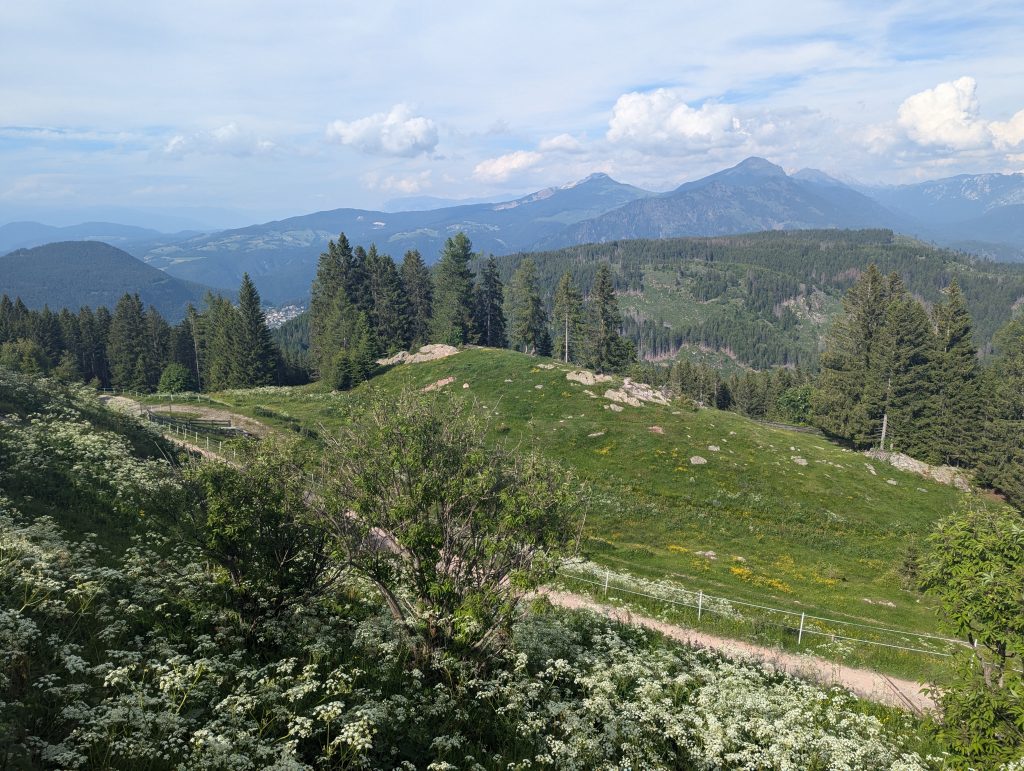
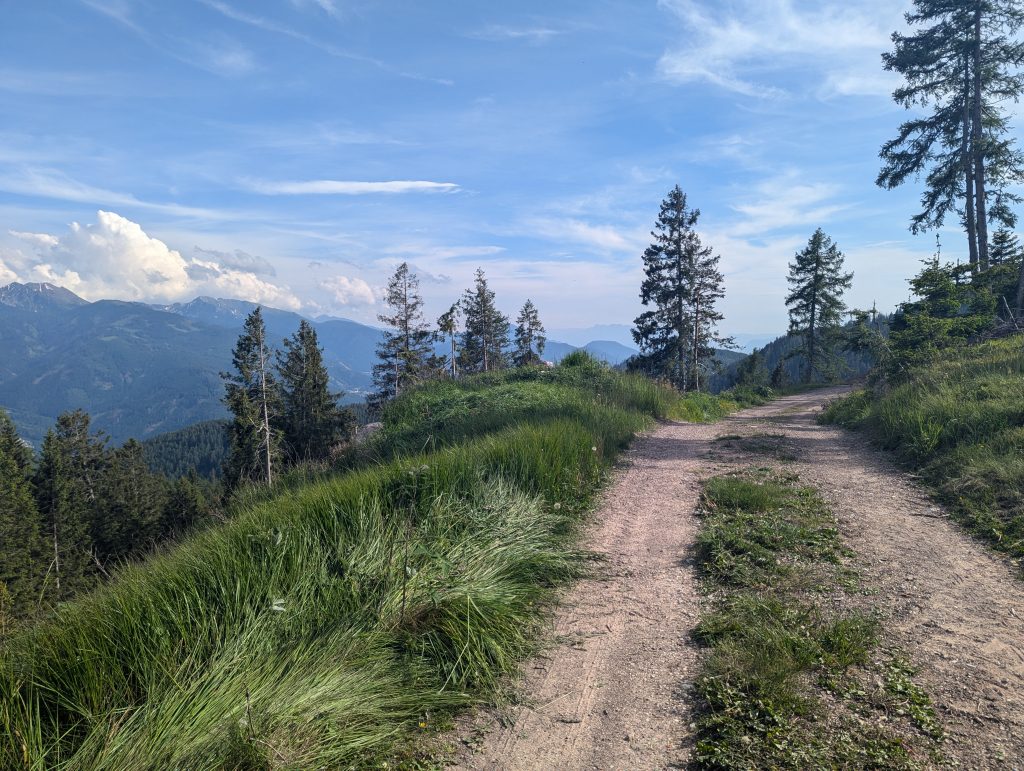
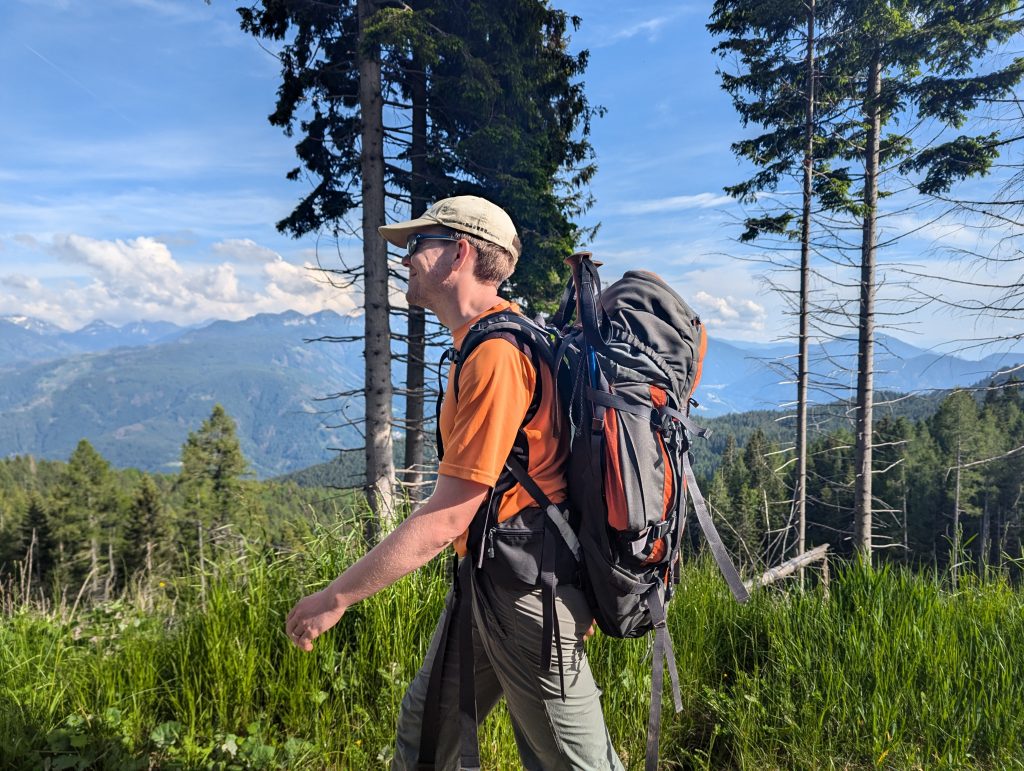
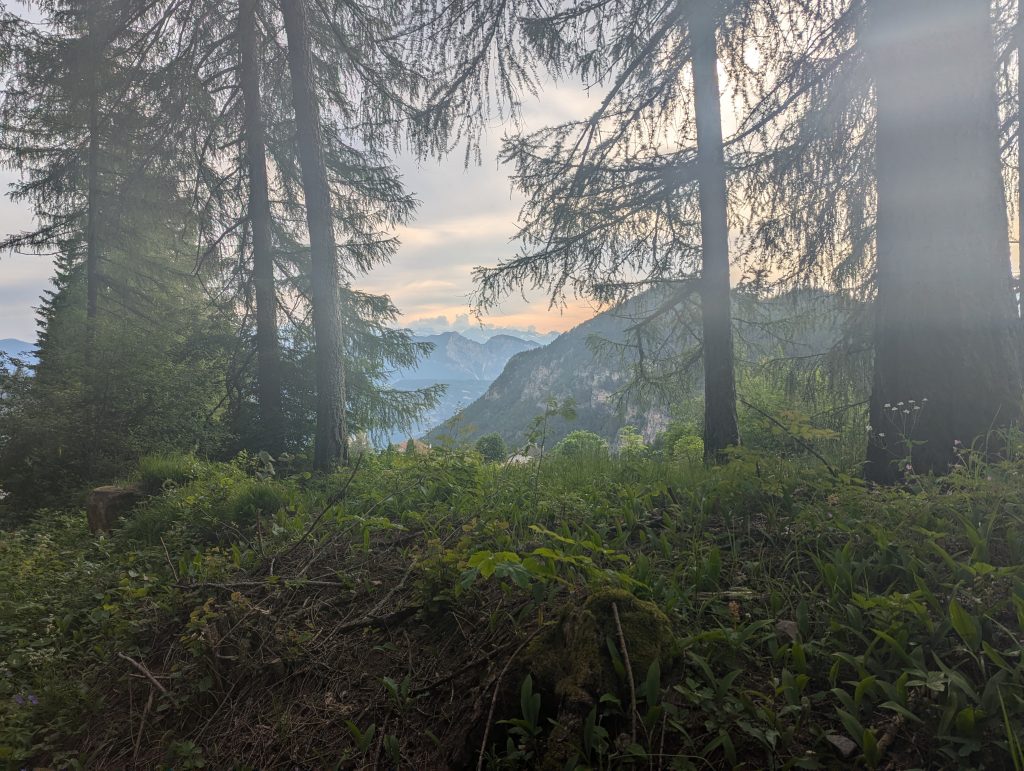
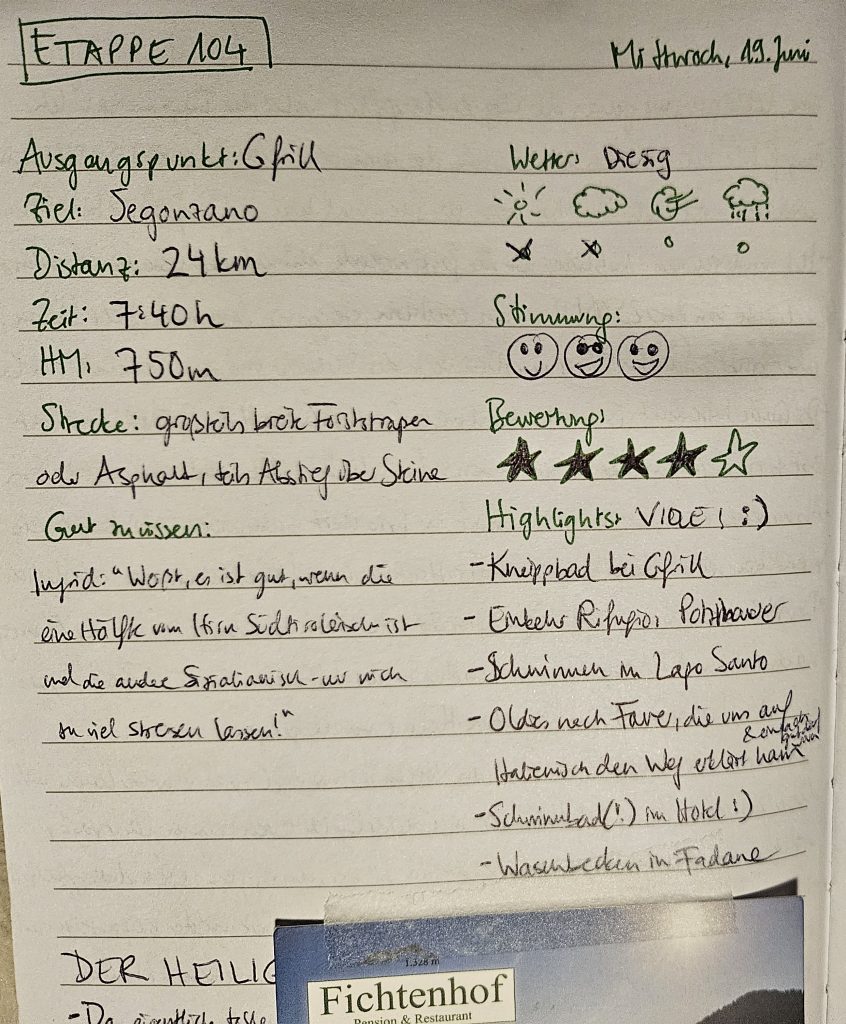
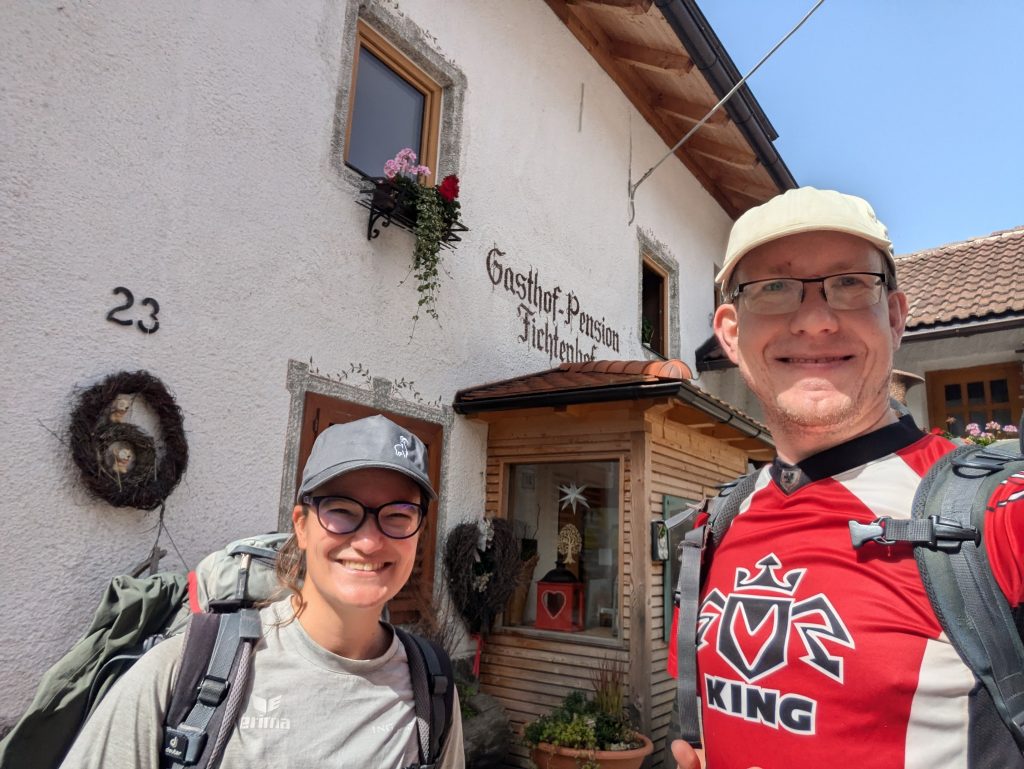
- Check in at Gasthaus Fichtenhof, dinner, and then straight to bed, completely exhausted after the long stage!
Wednesday, June 19
The Sacred Lake
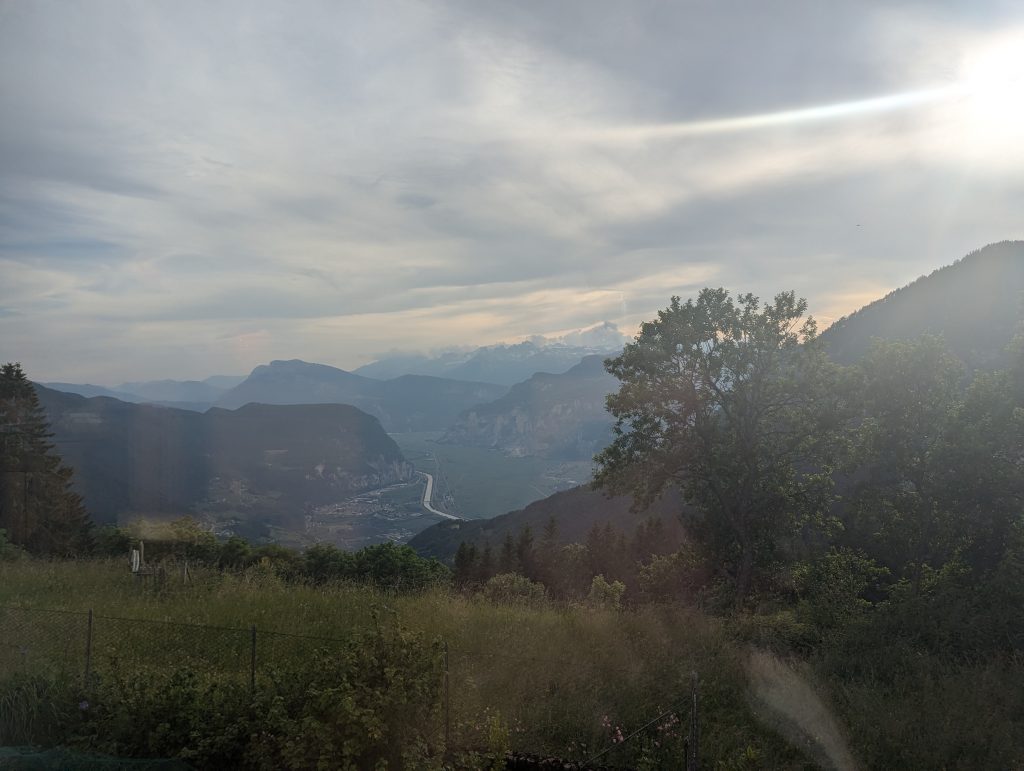
- The actually great breakfast with a magnificent view is somewhat overshadowed by the tirades that our hostess and the breakfast lady alternately unleash about ‘those up there’ (whoever that may be), the fact that they are being fleeced by paying taxes, monoculture (‘In the valley, it’s all monoculture!’), “the animals that are not considered living beings!” (Huh?! we ask ourselves, what does she mean, and a little ambivalent too, as she says this of all things while placing a huge sausage platter on the table for breakfast).
- We are relieved when we say goodbye and move on – only my optimistic world view that all people are basically good has taken a slight dent.
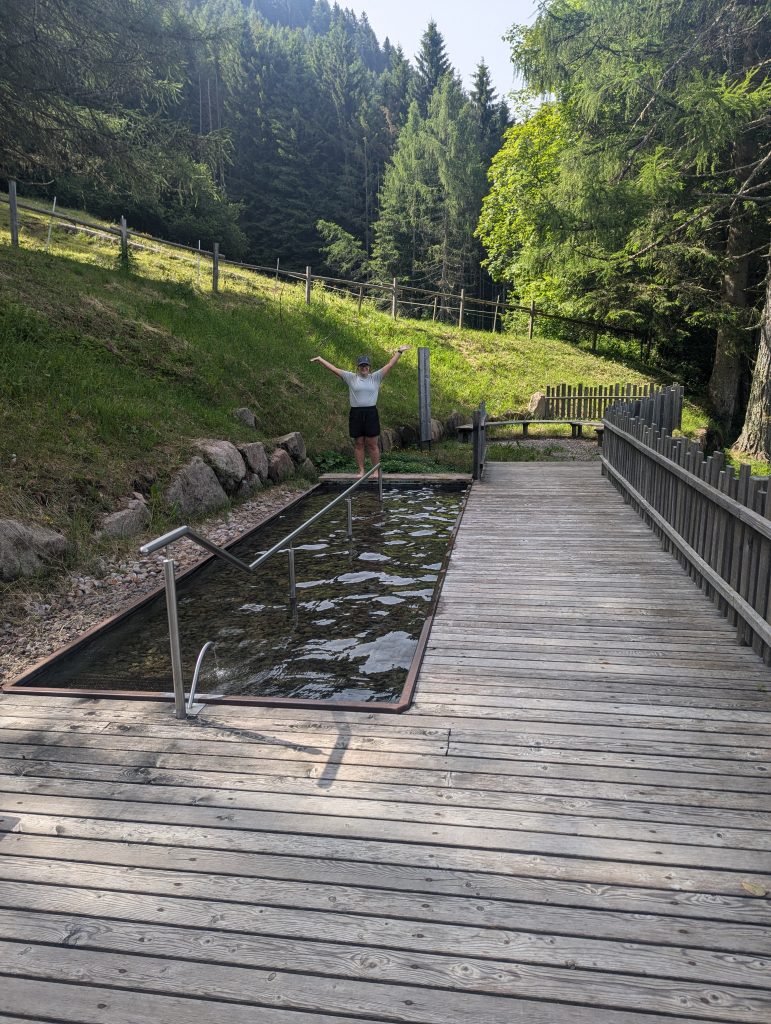
- At least right after Gfrill there is a herb garden and Kneipp bath that you can wade through barefoot, which lifts the mood a little.
- By the time we treat ourselves to a coffee at the really nice Rifugio Potzmauer, our good mood has returned, especially as the hosts are really cool.
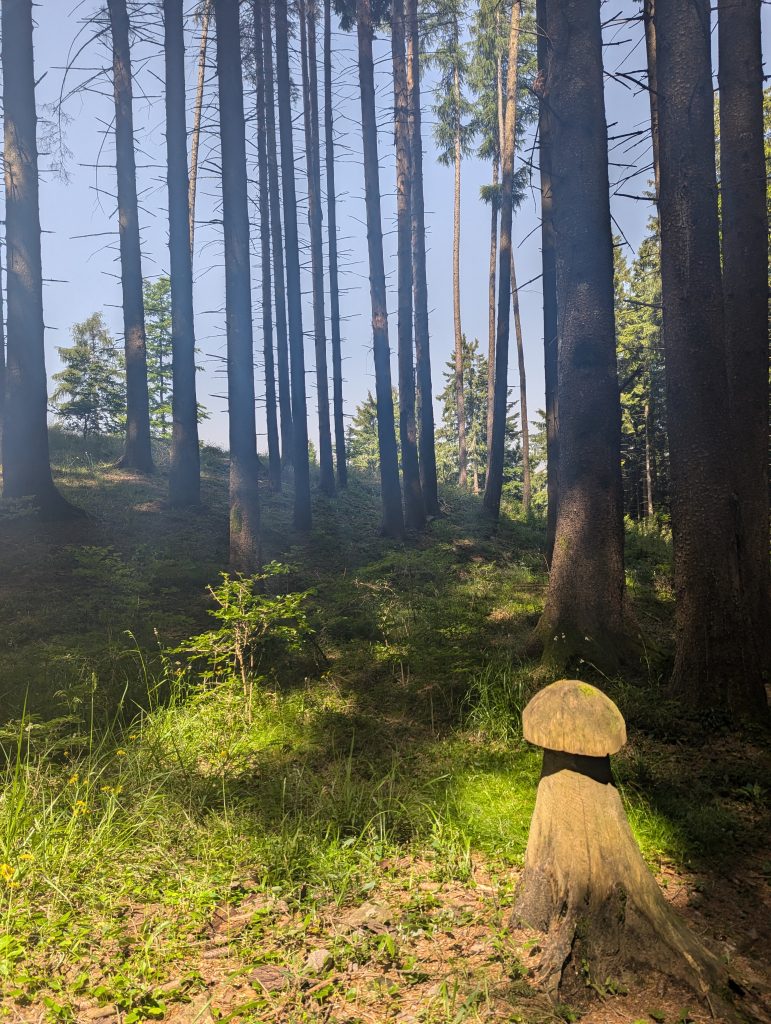
- Halfway there today lies Lago Santo, the Sacred Lake, which is shrouded in all kinds of absurd legends about how it came into being.
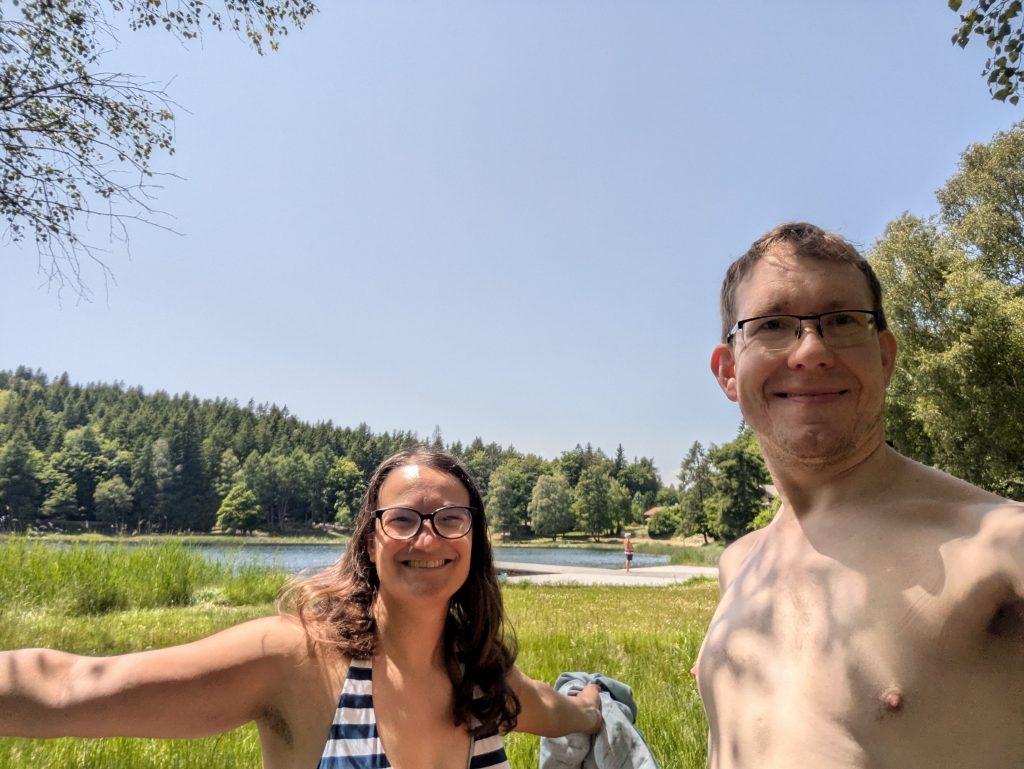
- The fact is: the beautifully situated lake, in the sweltering heat, is just begging us to jump in and take a dip in the cool water, which we do immediately, blissfully relaxing our minds and bodies under the sun.
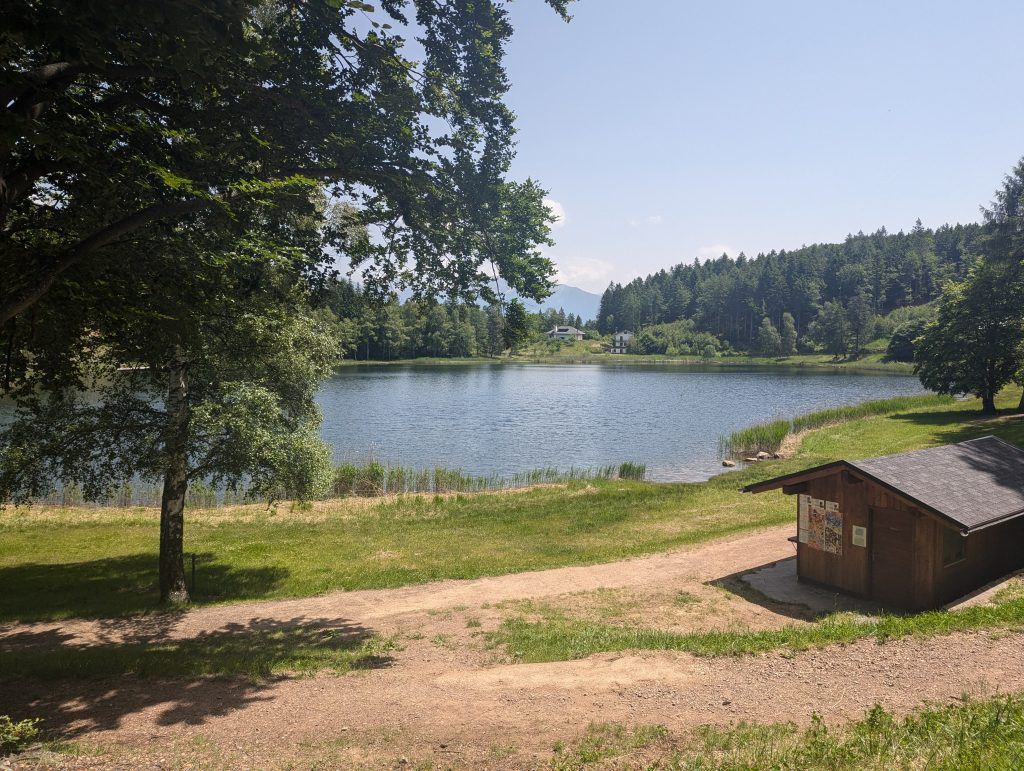
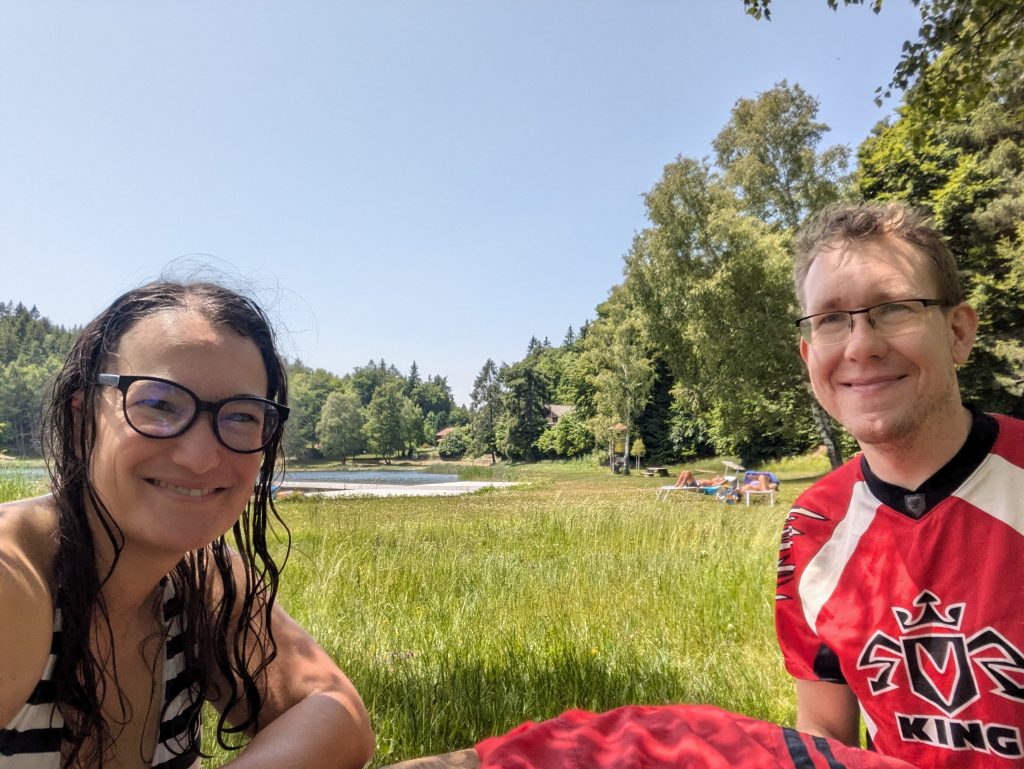
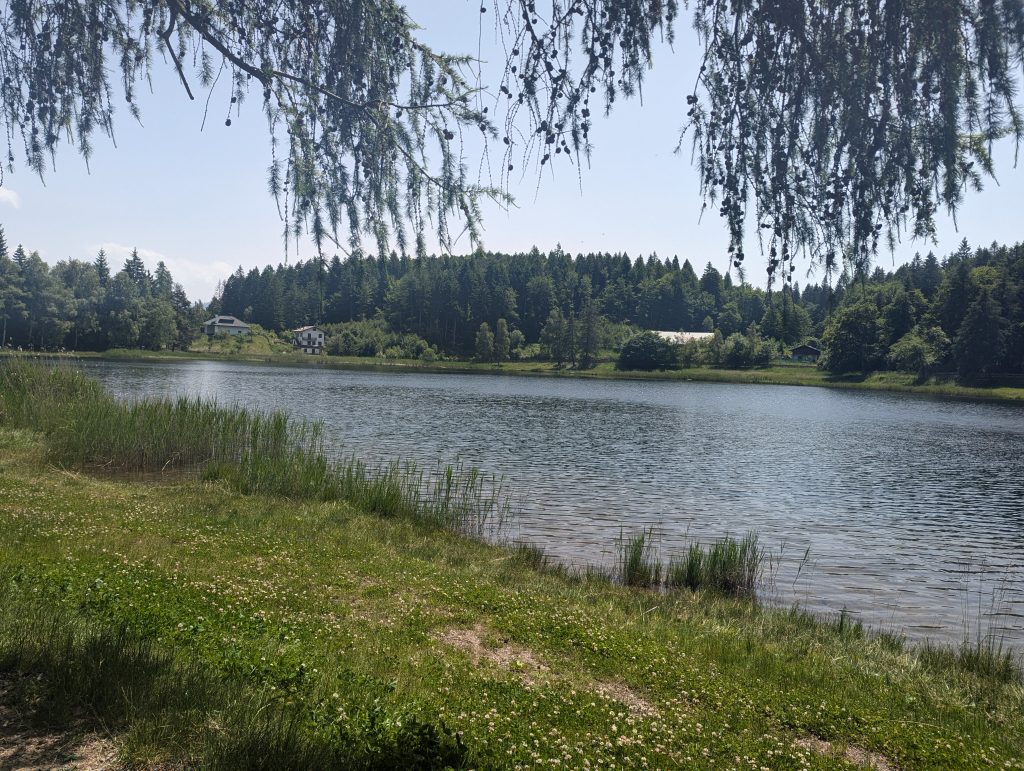
- After a snack of Grissini and salametti, we continue along paths that are sometimes steep and sometimes slippery, overtaking a mountain school/tour group, when we meet a few Italian teenagers (wearing flip-flops) who ask us how long it will take to get to the lake.
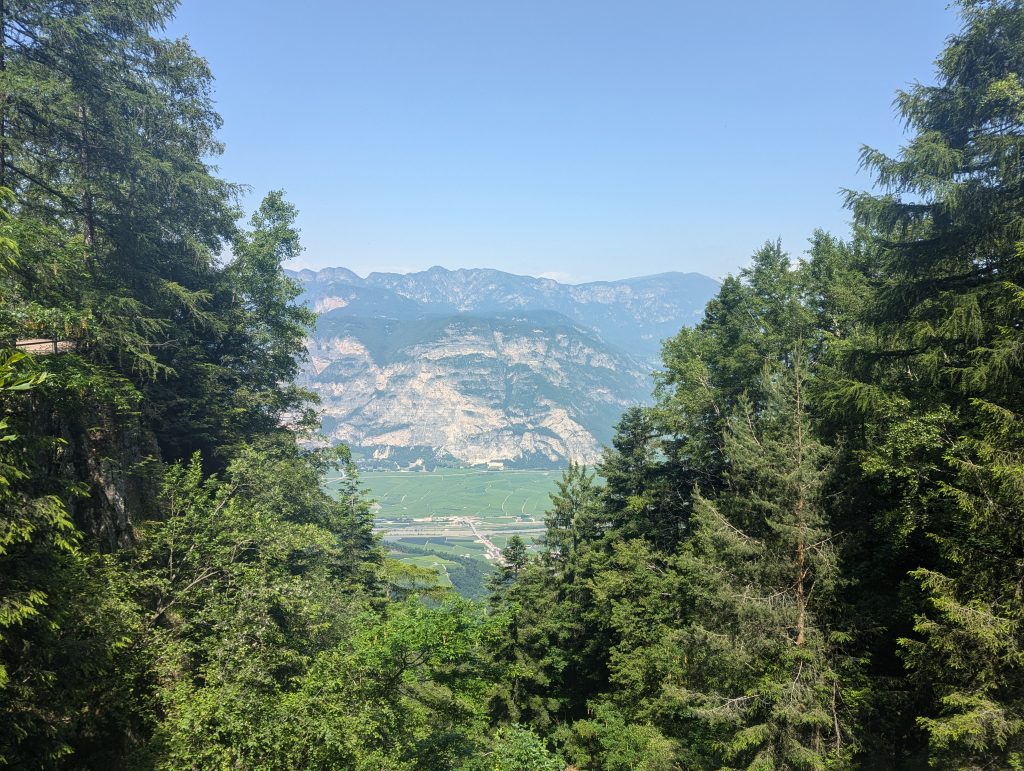
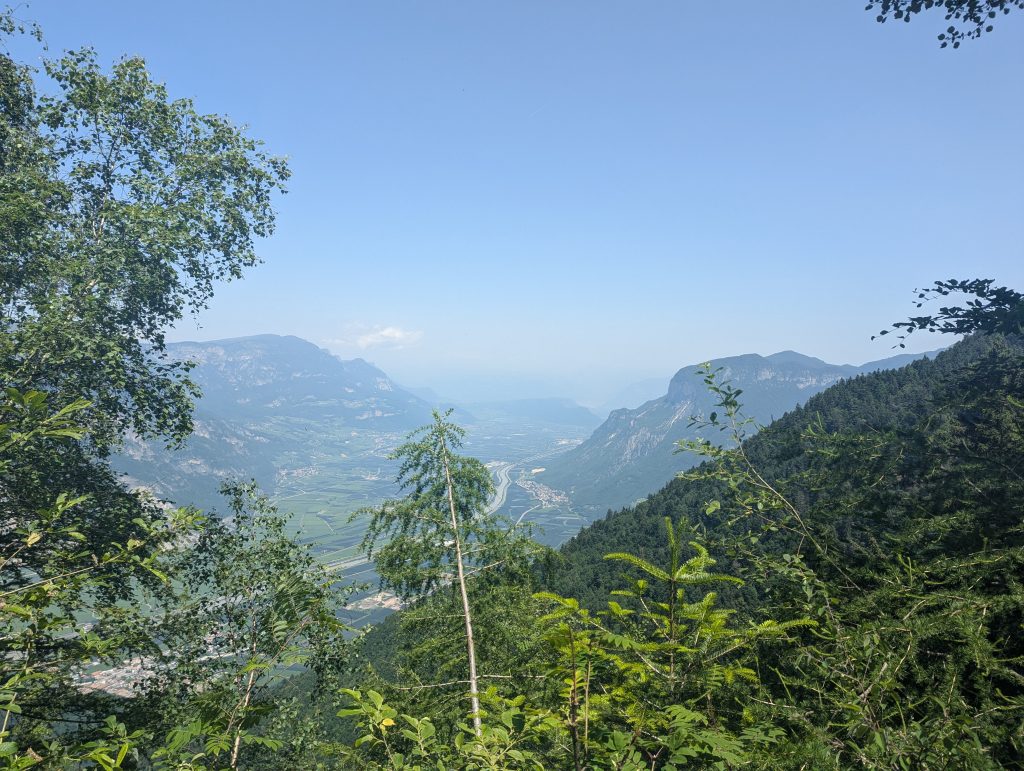
- As we emerge from the cool forest, a wonderful view opens up before us of beautiful villages nestled on hills with characteristic Italian stone churches and vineyards where Müller-Thurgau grapes are grown.
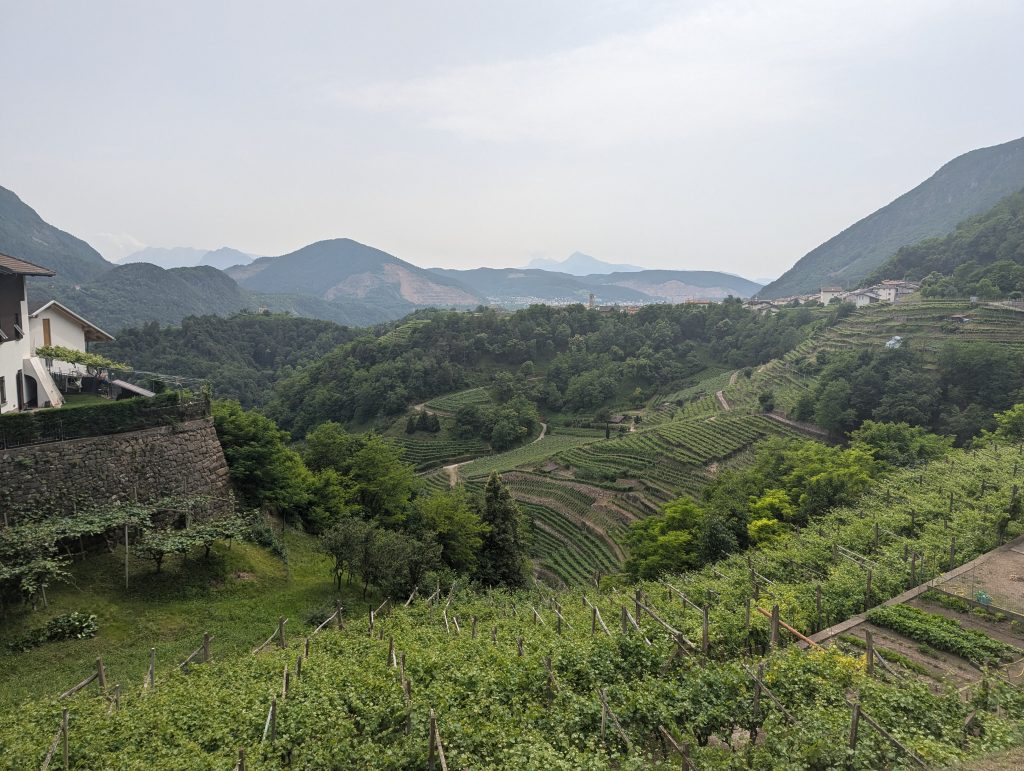
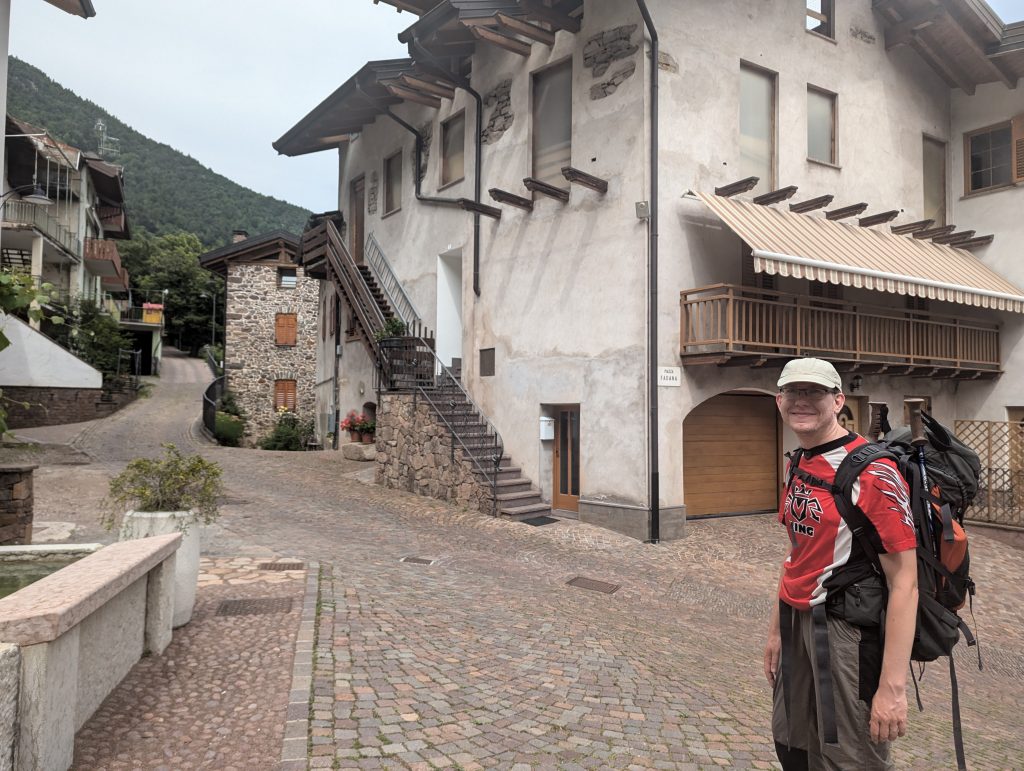
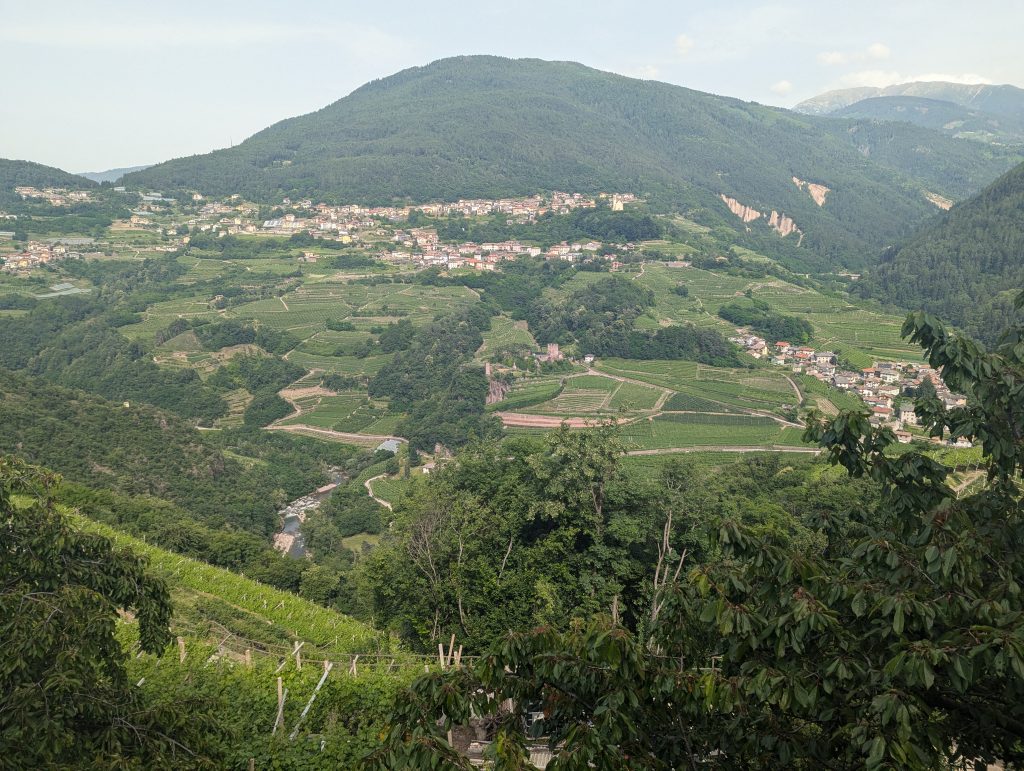
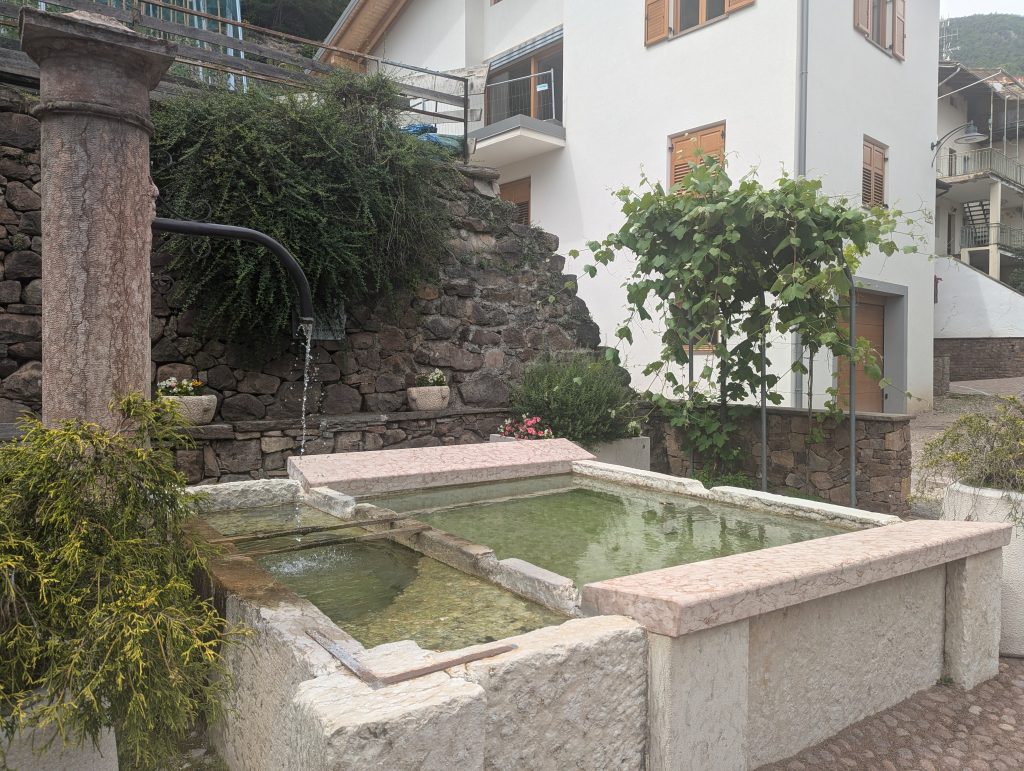
- By the time we reach the village of Fane, we feel as if we have arrived in Italy in one fell swoop – there is no longer any doubt: narrow streets, stone houses with small bridges spanning between them, laundry hanging from windows and across streets, and heat hanging in the air that feels as if you could cut it with a knife.
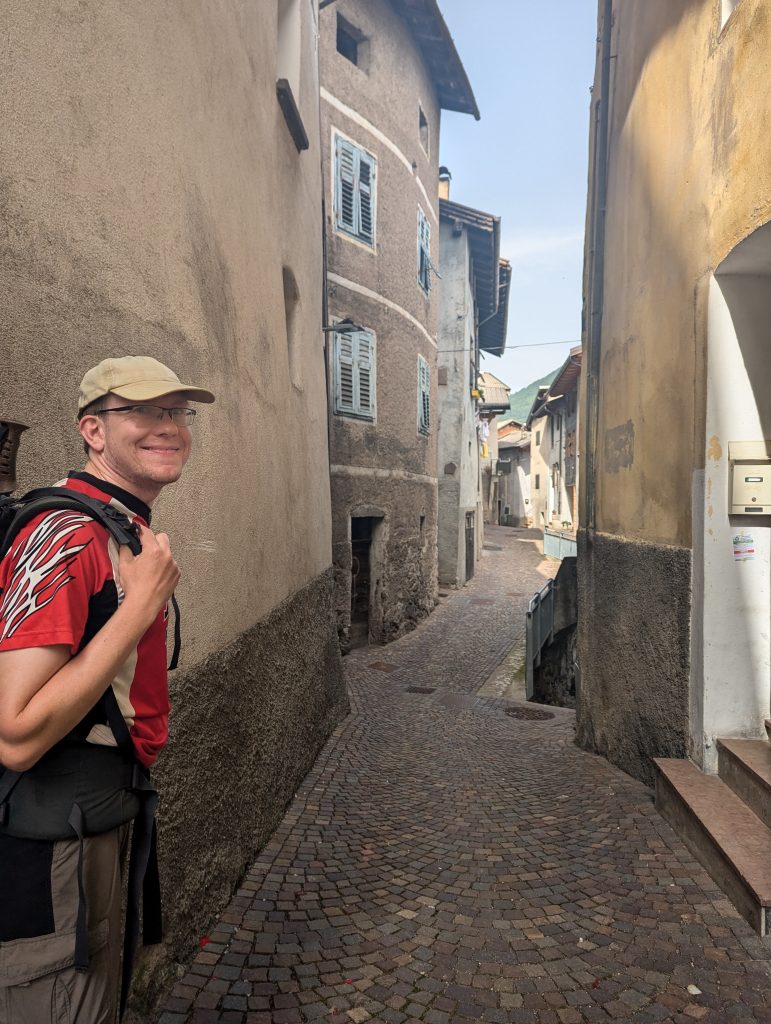
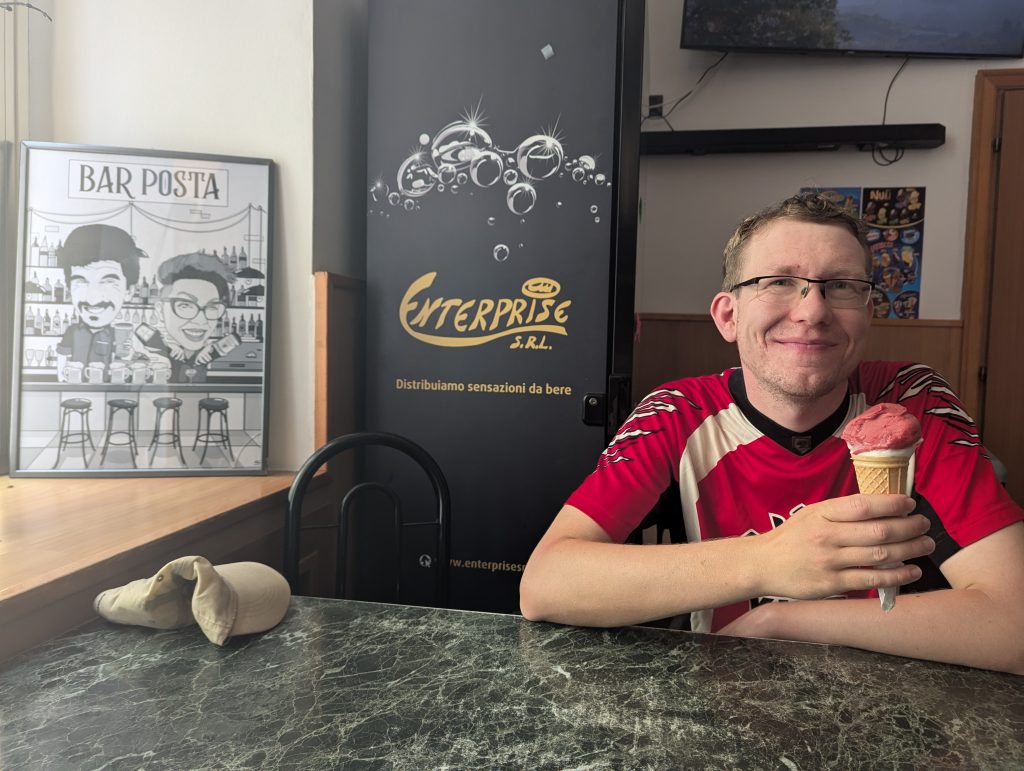
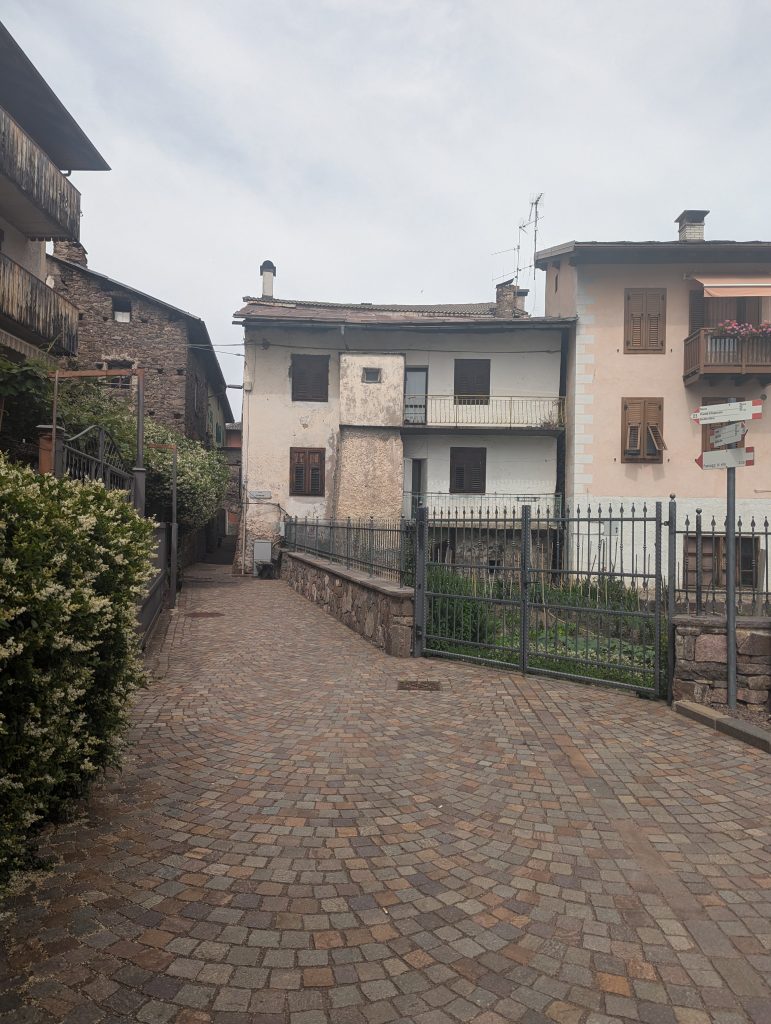
- In Fane, we sit down in a café, treat ourselves to coffee and ice cream, and then continue on our way, refreshed, to meet a group of elderly people in the mountains shortly after Fane.
- They immediately address us enthusiastically and gesticulating wildly in Italian.
- Despite the fact that we don’t speak Italian, they continue to talk to us in Italian, are very excited, interrupt each other as they explain to us, gesticulating and pointing wildly, where the path continues – thanks to their gestures and our Latin lessons, we even understand in broad terms what they are trying to tell us.
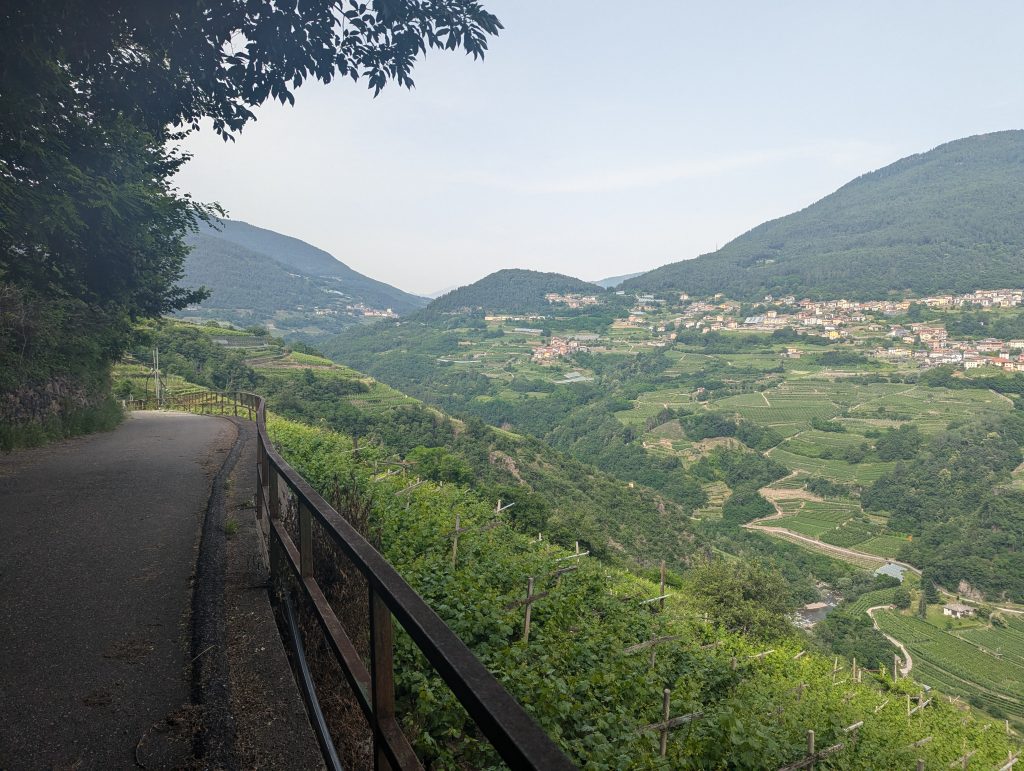
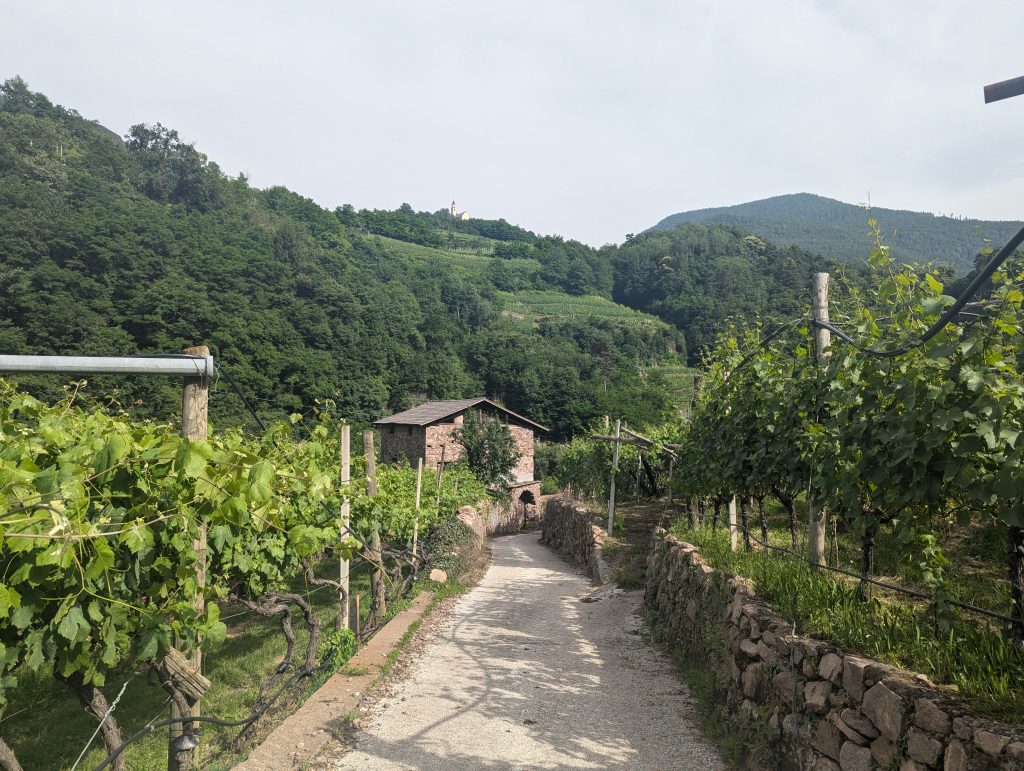
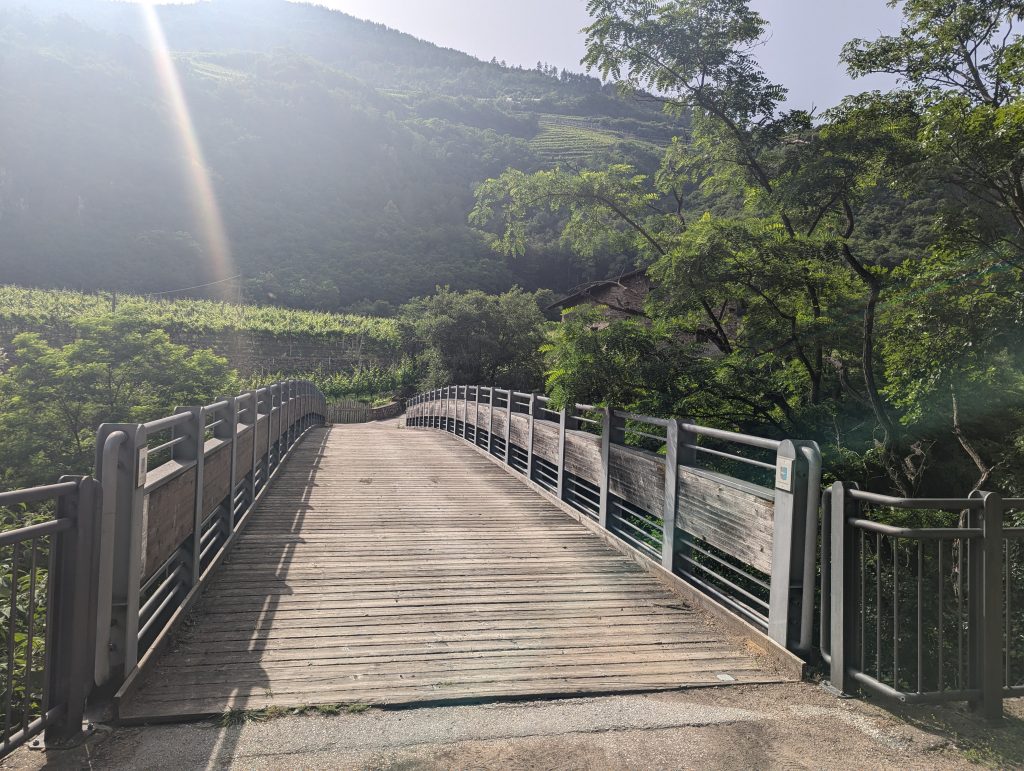
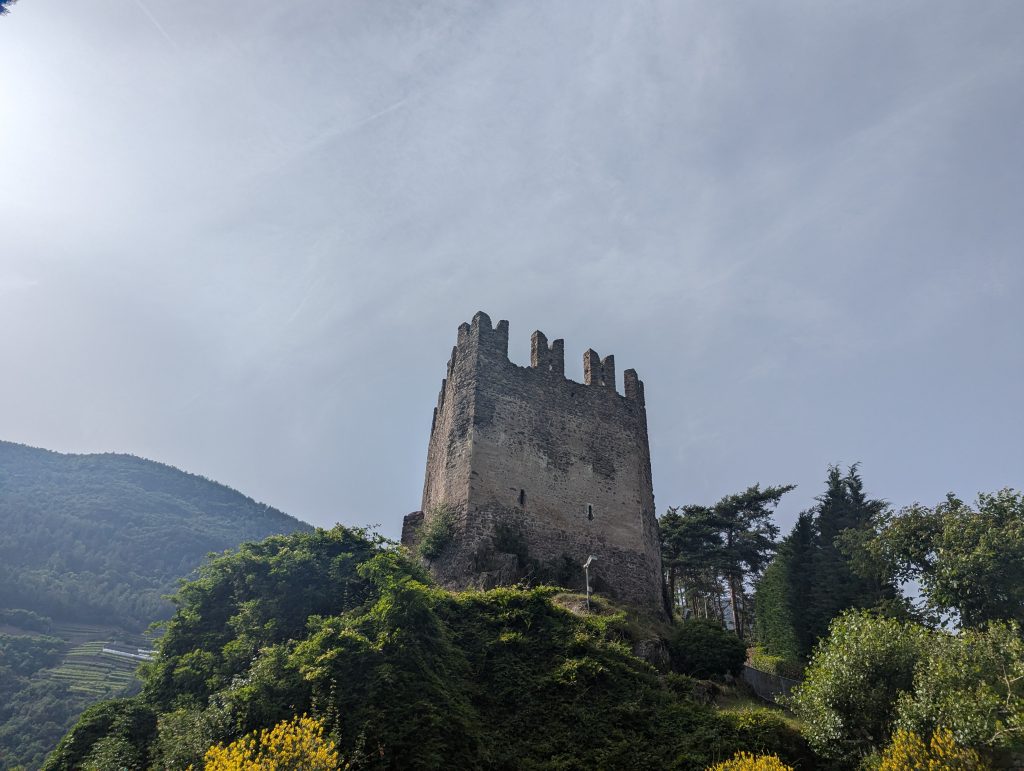
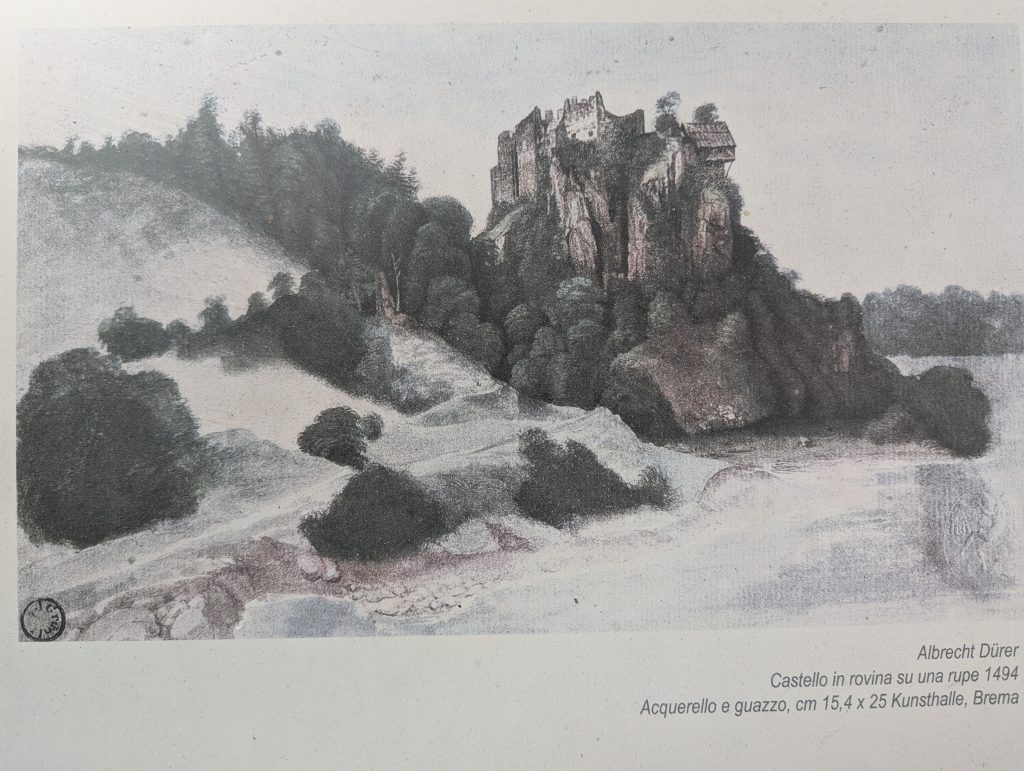
- Following their instructions, we descend to the river, which we cross via a bridge, and turn off towards the castle, of which only ruins remain – but the surrounding vineyards in particular give us an idea of why they fascinated Dürer so much that he captured them in a painting.
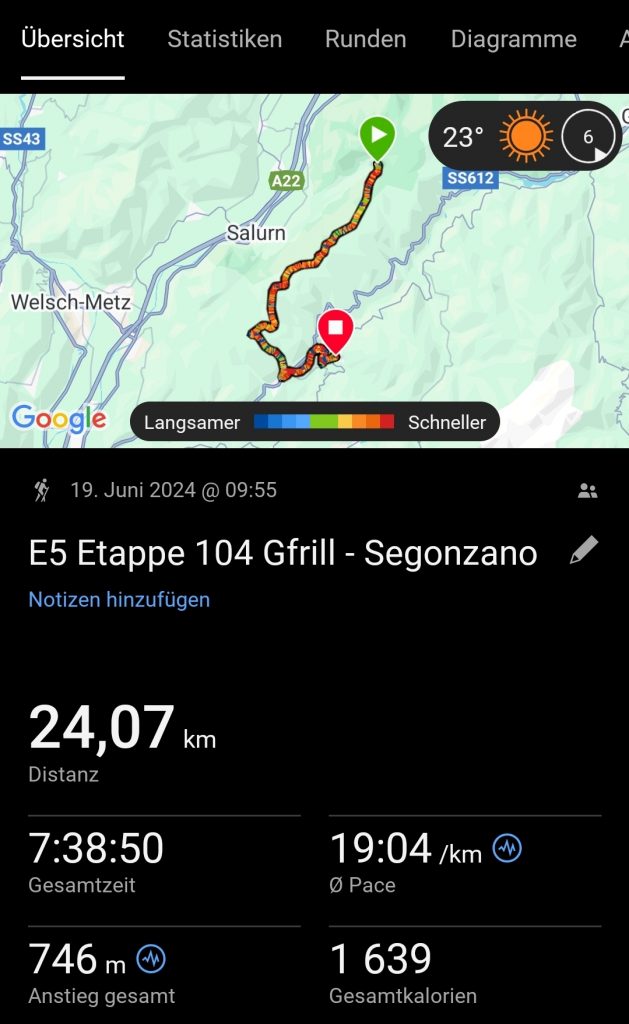
- The final climb to Segonzano is, as usual, very steep, and soon we find the ‘Casa Bianca’, the white house where our hotel is located.
- We don’t find it quite so quickly, even though the Italians on the way have explained to us in detail where it is and how to recognise it: ‘Bianca, bianca!’ Now that we are in Segonzano, I have to laugh about it, because half of the houses in the village are white.
- We check in and are delighted when we discover the pool – nice, a chance to cool off!
- Dinner and good night.
Thursday, June 20
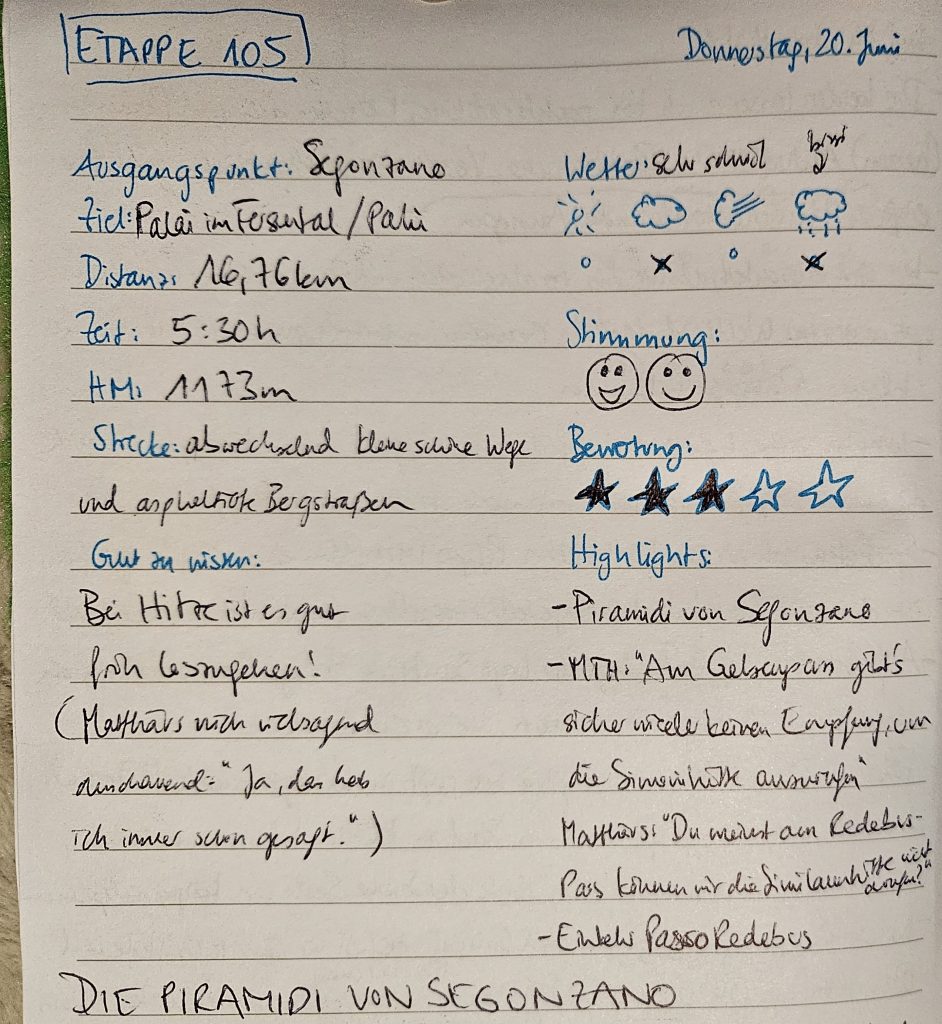
The Piramidi of Segonzano
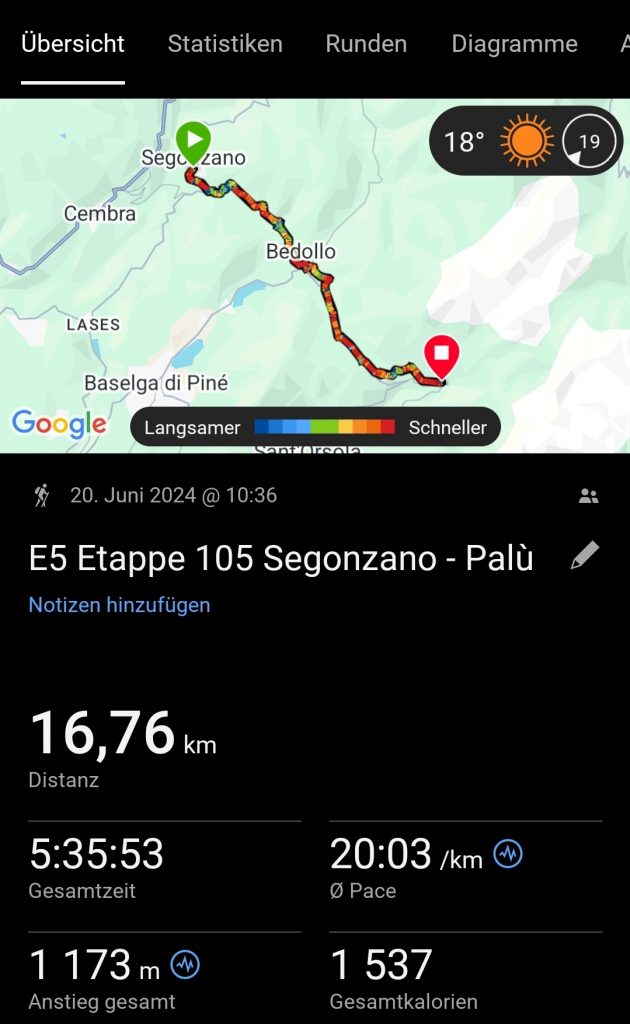
- Today we have a slow day and take our time, as the stage is not so long and the breakfast with fresh fruit is very, very tasty.
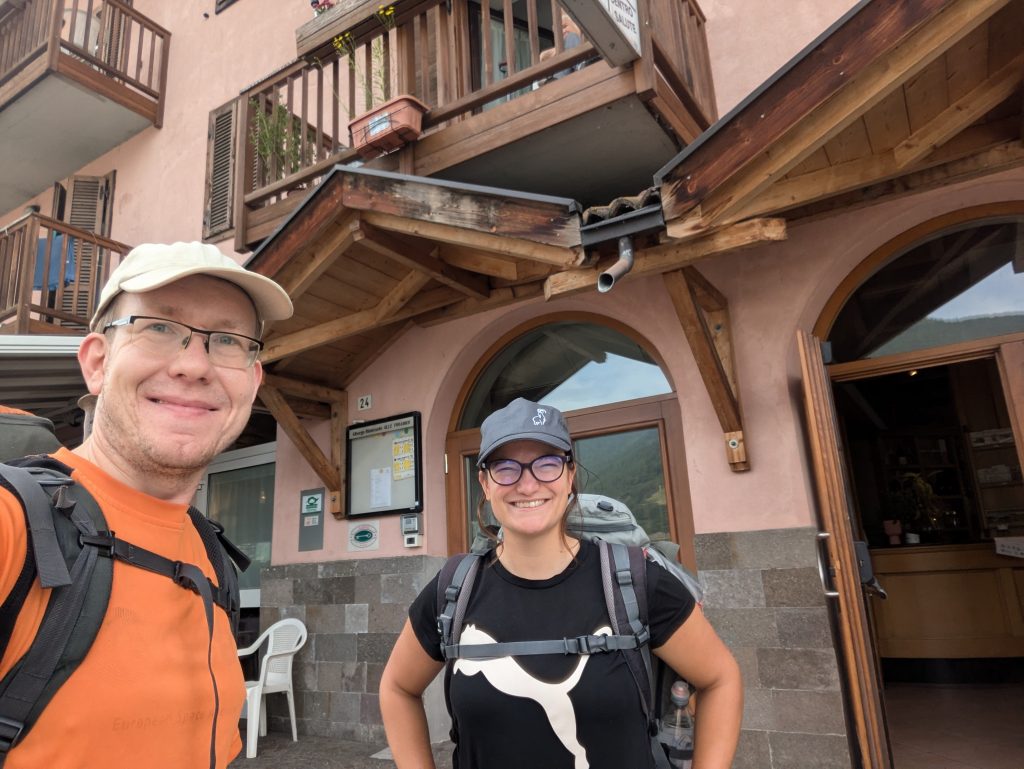
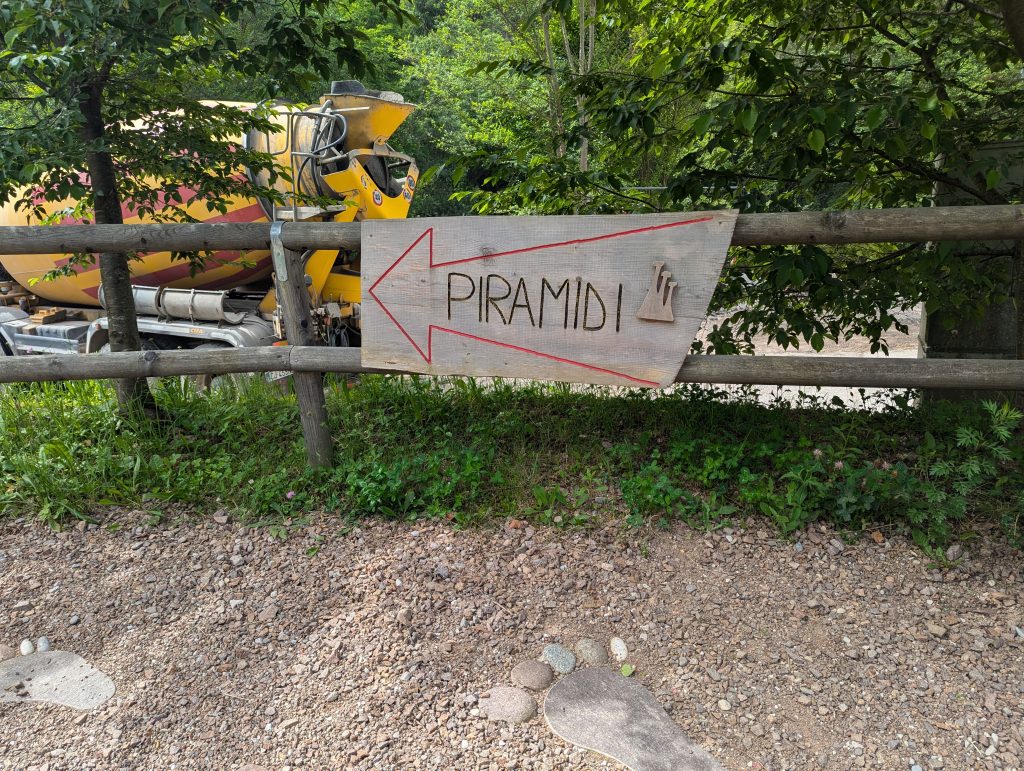
- First, our route takes us through the rock formations of the Piramidi di Segonzano, which we traverse from bottom to top, which is a real experience.
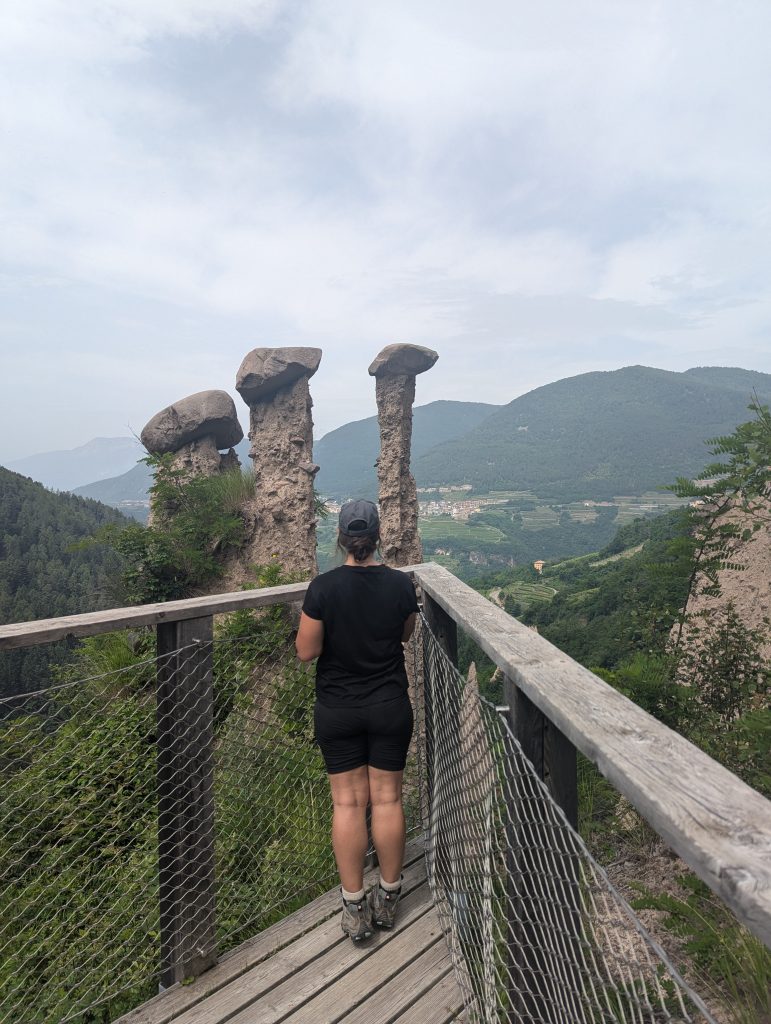
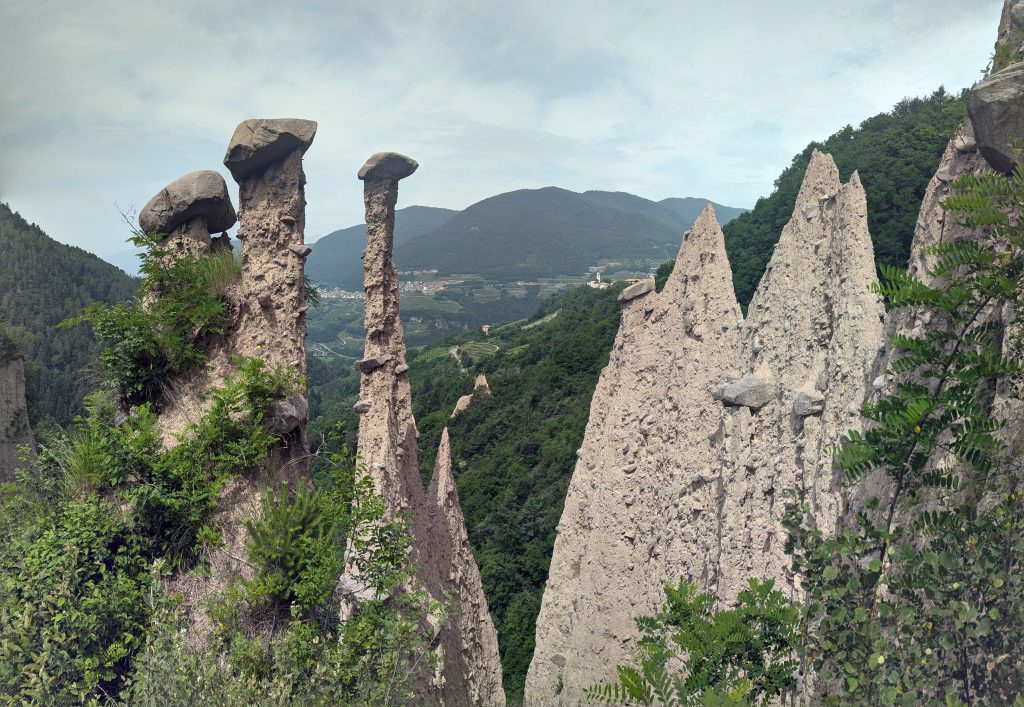
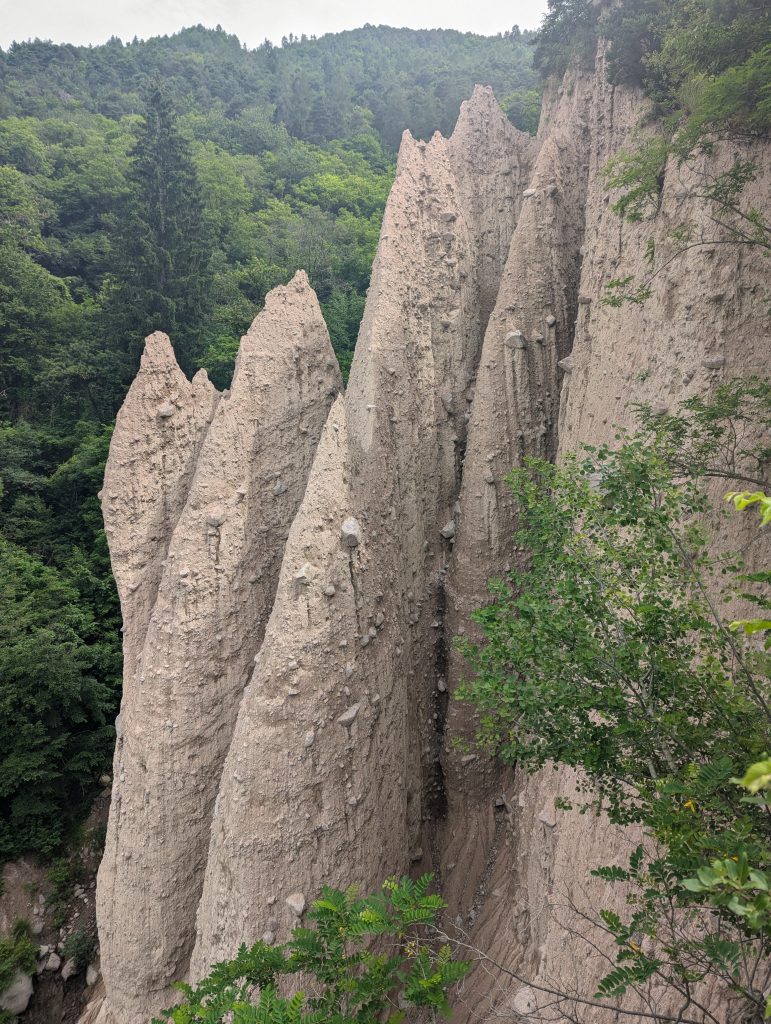
- These impressive stone pyramids were formed naturally and stand tall in the sky in the most amazing shapes.
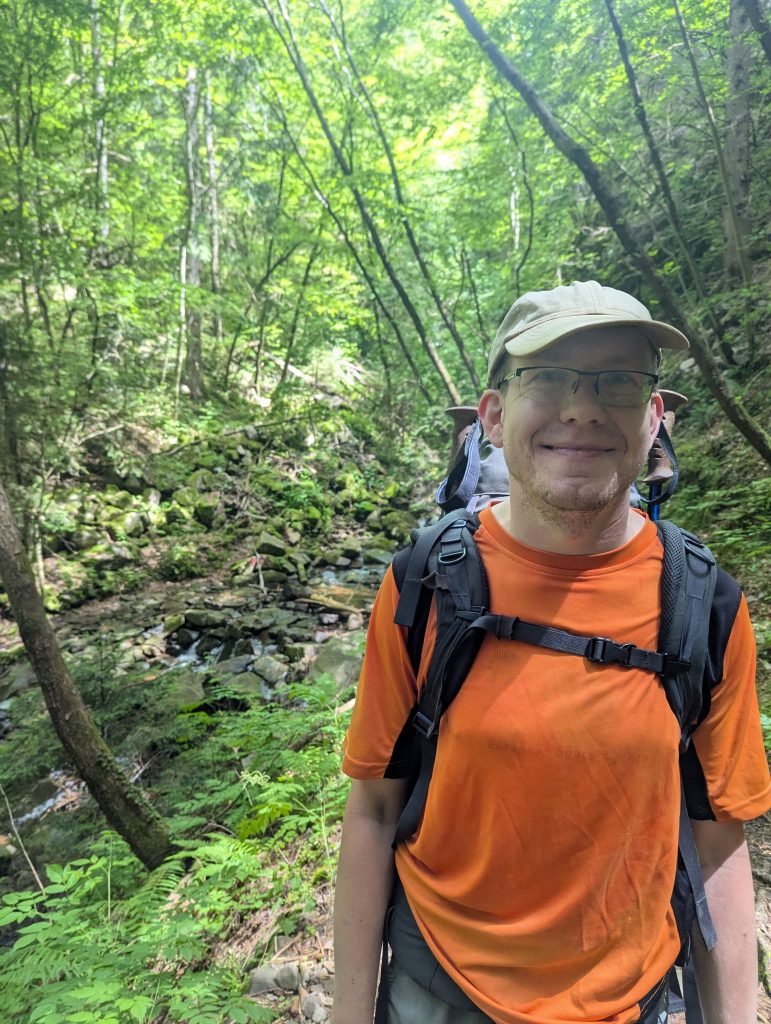
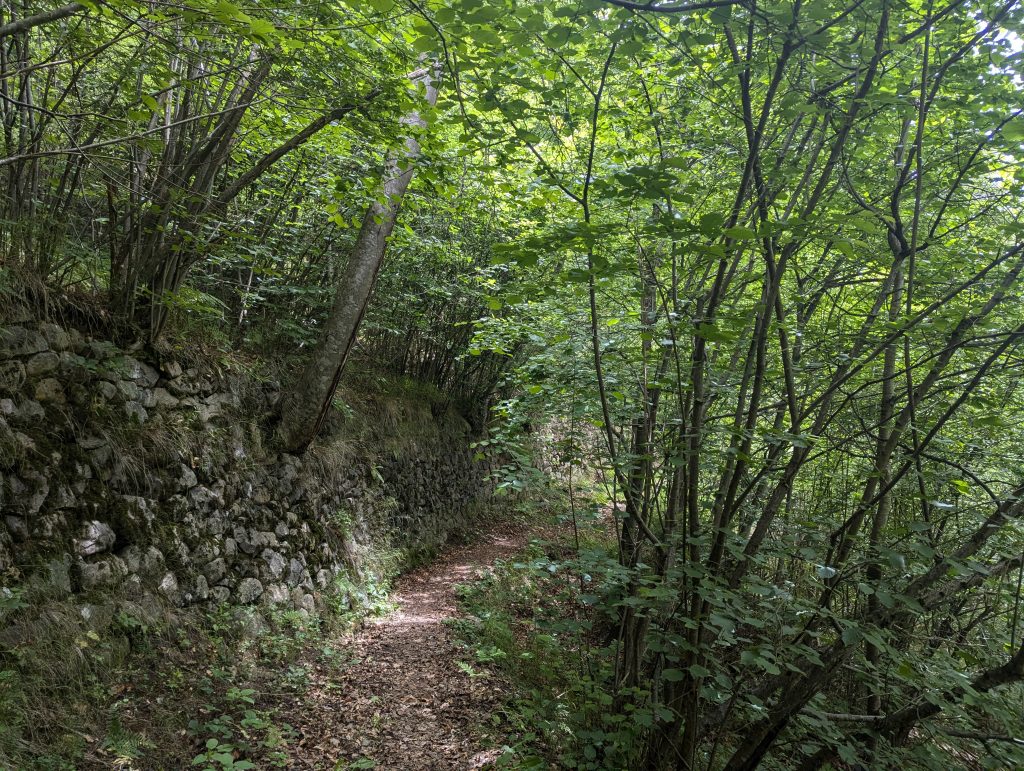
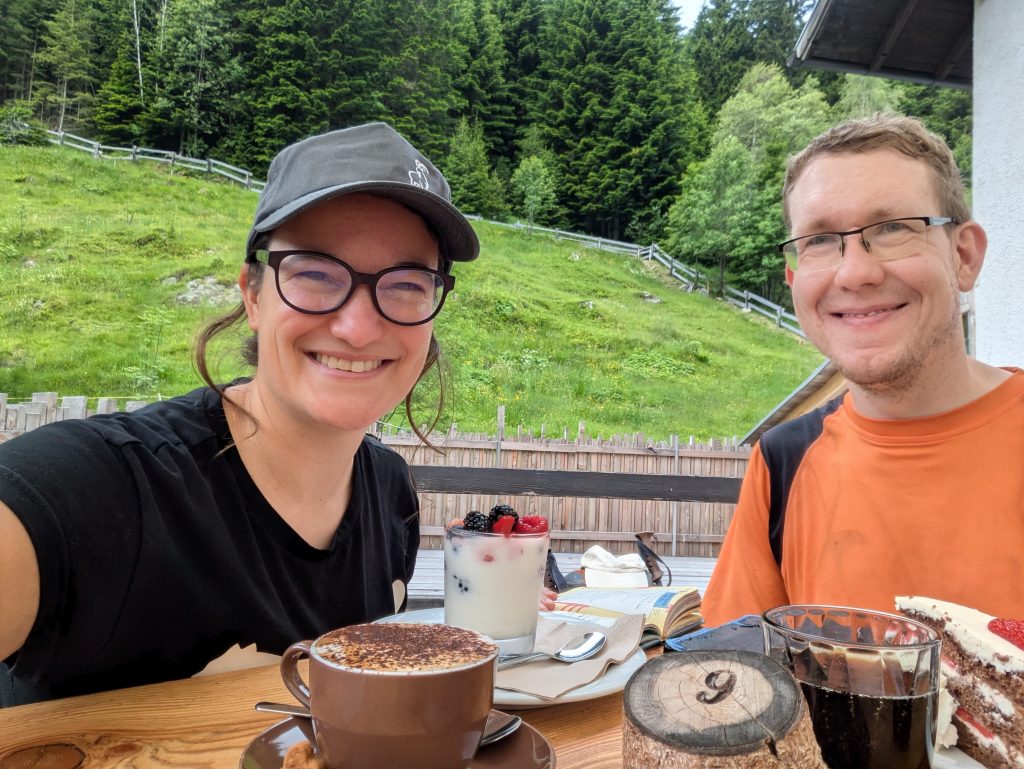
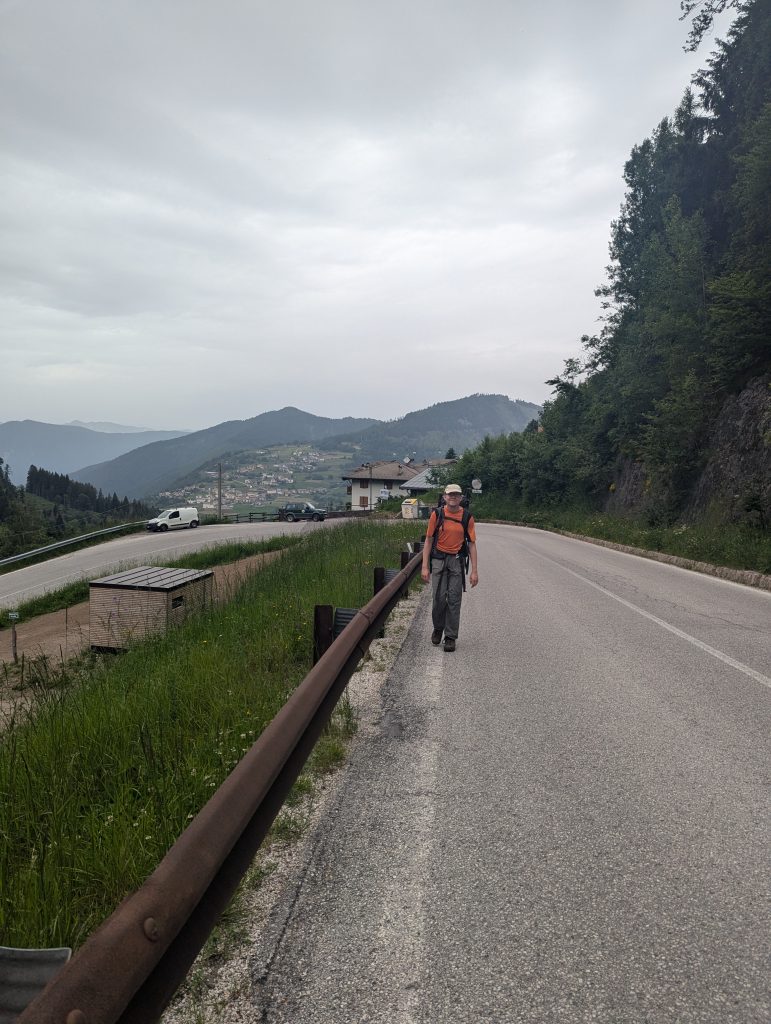
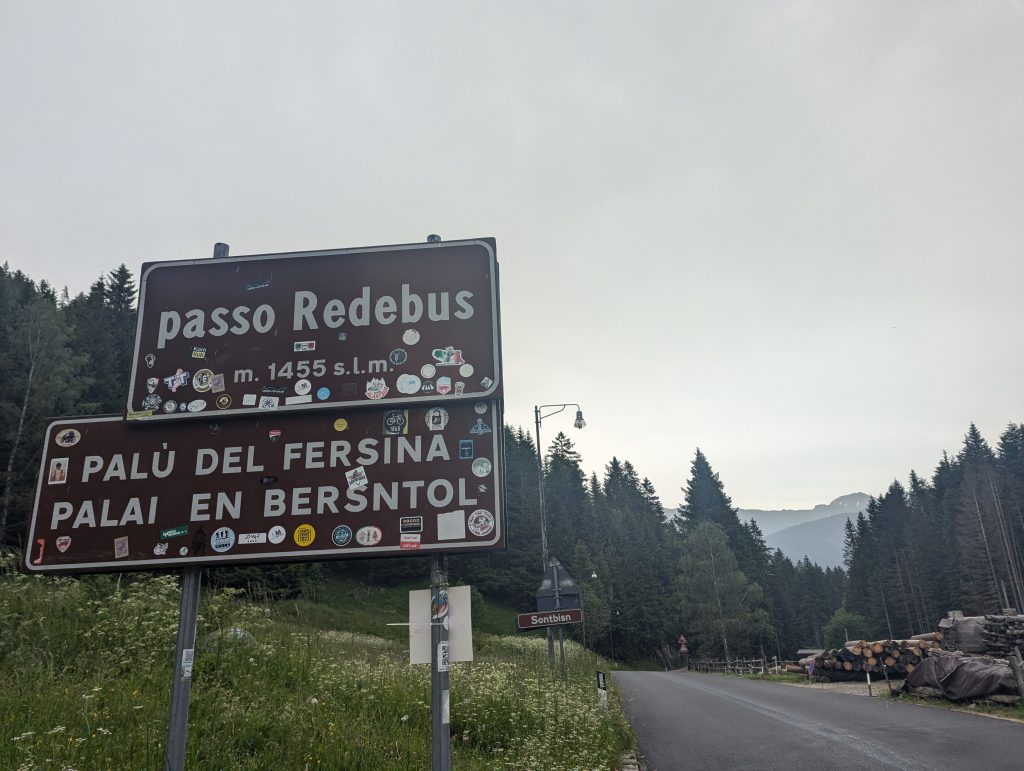
- Alternating between somewhat overgrown paths and country roads, we reach Passo Redebus, where we stop for coffee and cake and watch wild motorcycles racing around the bend.
- It starts to rain, but soon we are back in the sheltered forest and, although the mountains are getting lower, the views are beautiful.
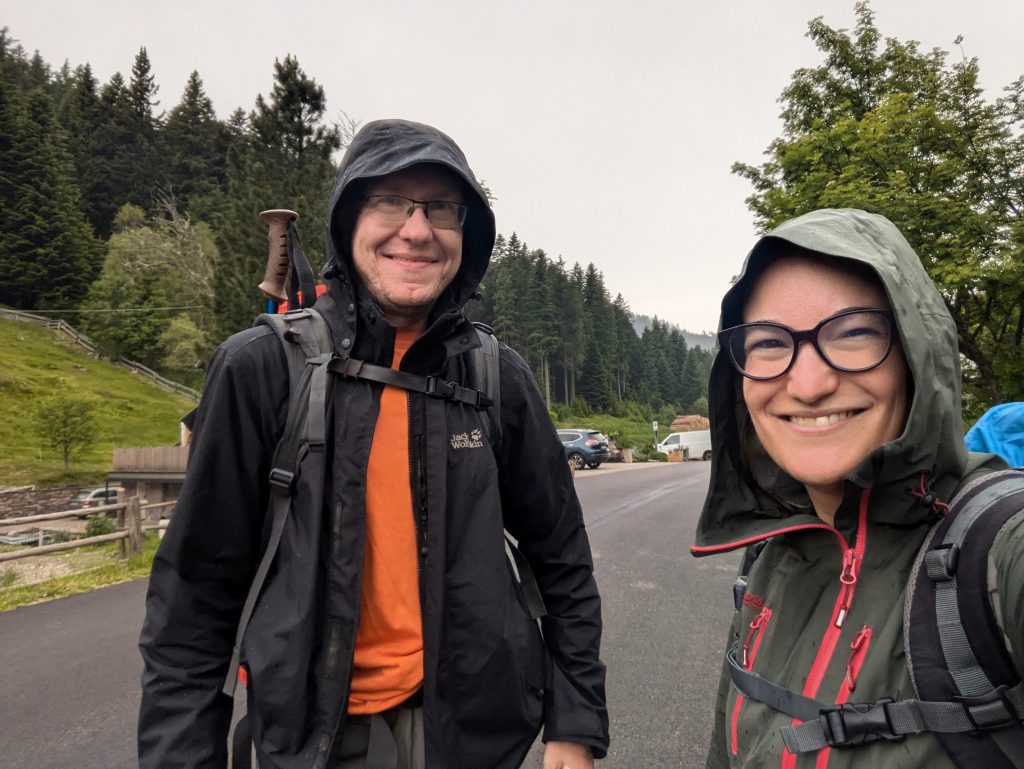
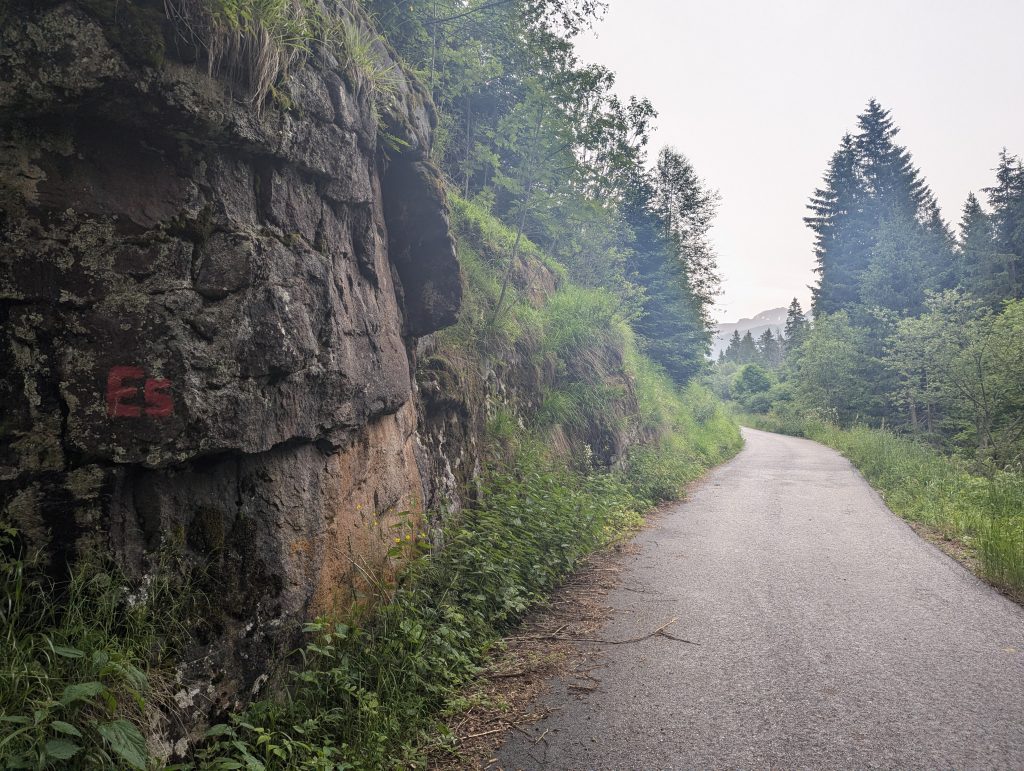
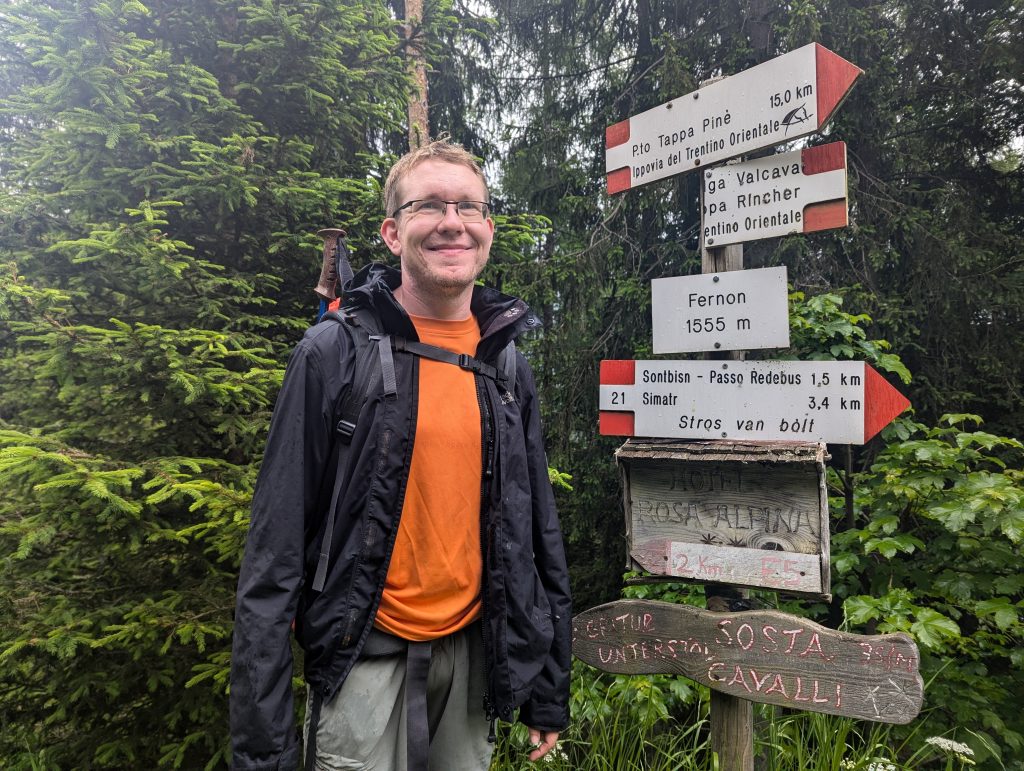
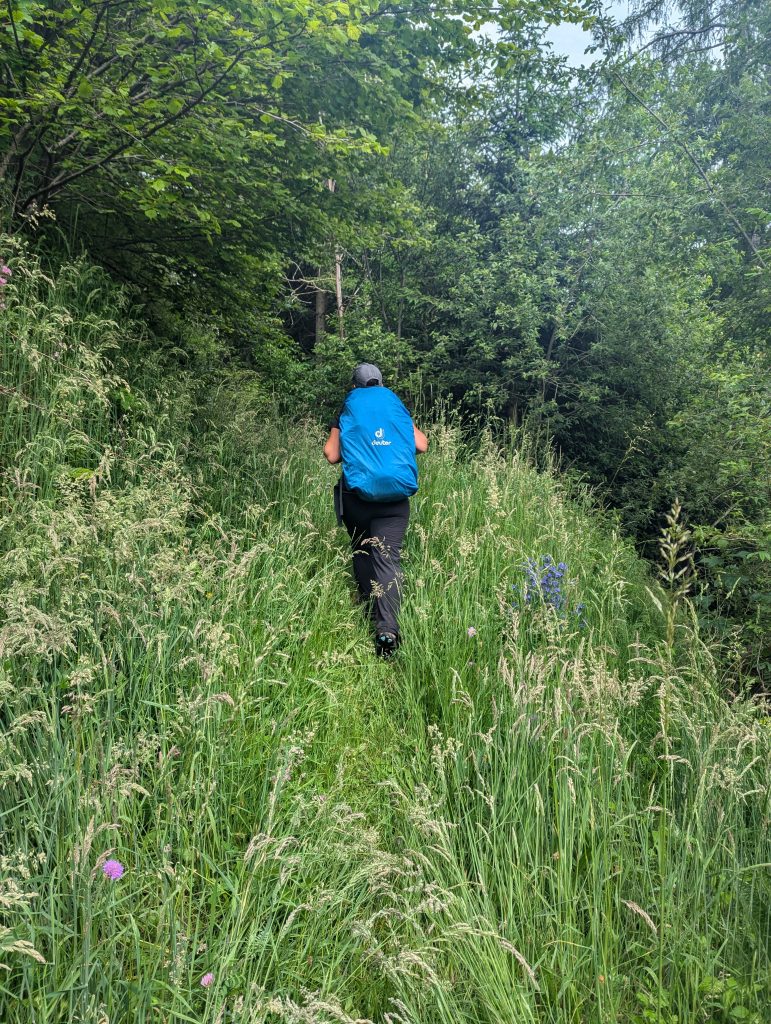
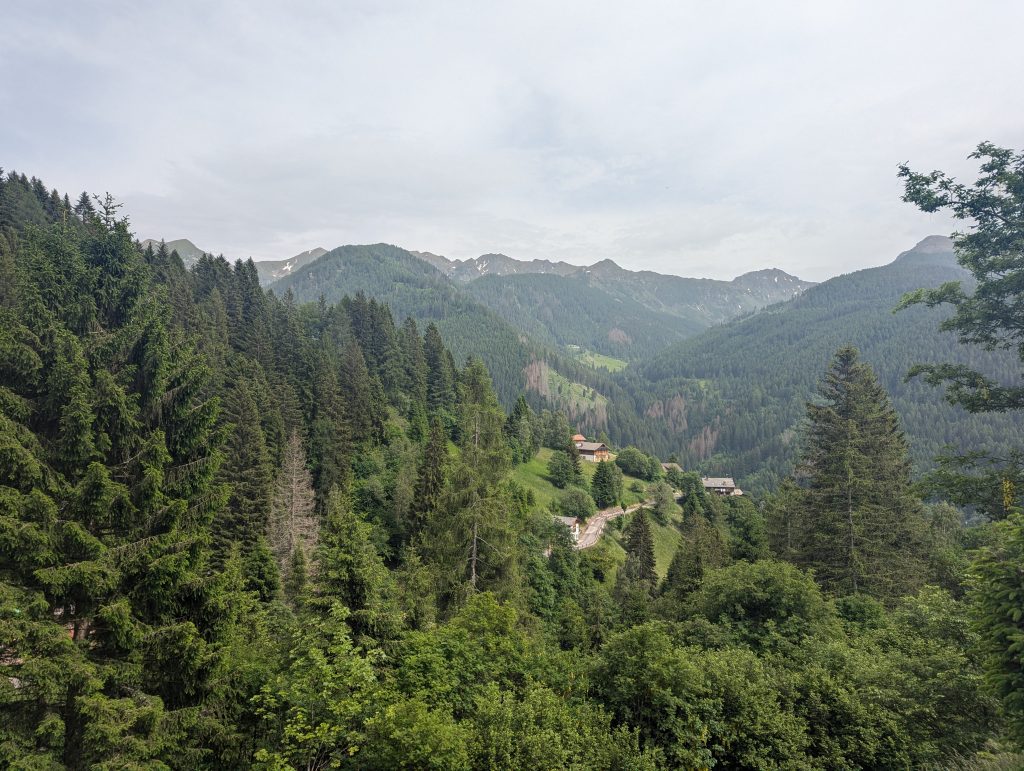
- Finally, we reach Palu, where we meet an E5 hiking group at our accommodation, who are walking six daily stages from here (to ‘Verona’, they all assure us).
- We can best talk to the mountain guide, which makes sense, as he, like us, is thinking about tomorrow’s stage, the weather, the condition of the paths, etc., and has already hiked some sections of the E5 across the Alps himself, which we talk about enthusiastically with him.