Schwimming with Manatees, Bioluminescence,
Rocket launch and visit to the Kennedy Space Center
Tuesday, 7.11.
About Manatees and illuminated plankton
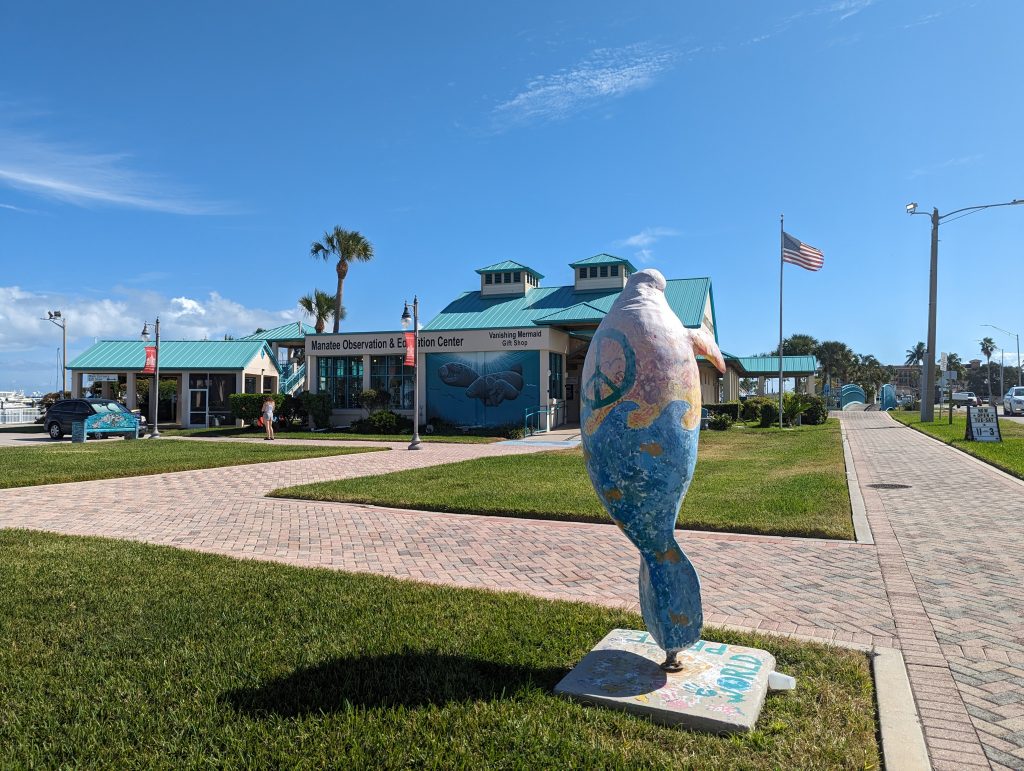
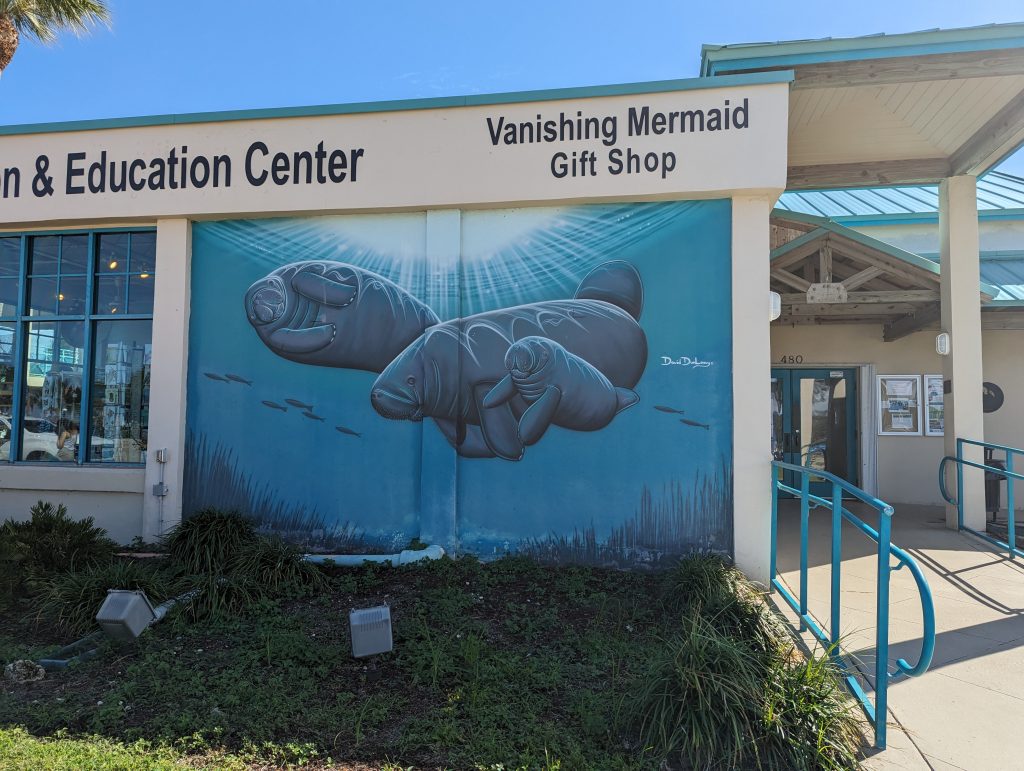
- We reach the Manatee Education and Research Center in Fort Pierce at lunchtime.
- At the entrance we get a sticker “I support Manatees”, which is still stuck on my large rucksack. =)
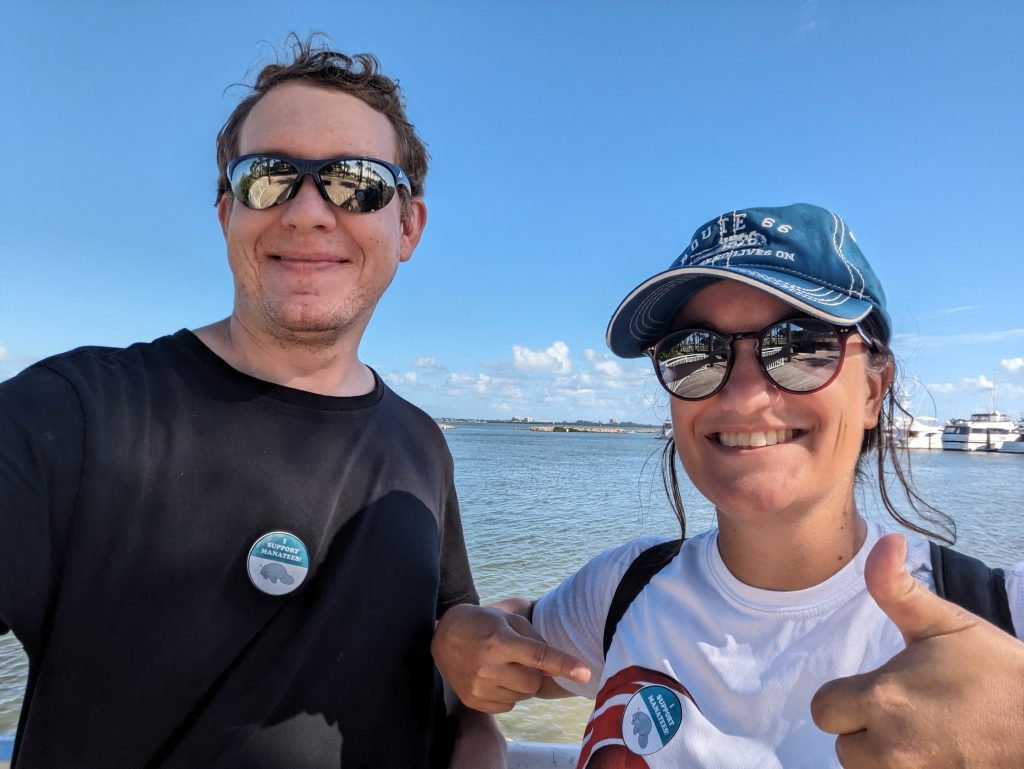
- Unfortunately, we don’t see a manatee, although a big one is said to have been hanging around here in the morning. Still, we do learn a lot about the animals, their habitat and why they are threatened with extinction.
- We see a manatee skeleton – fun fact: manatees have no bone marrow (don’t ask me why).
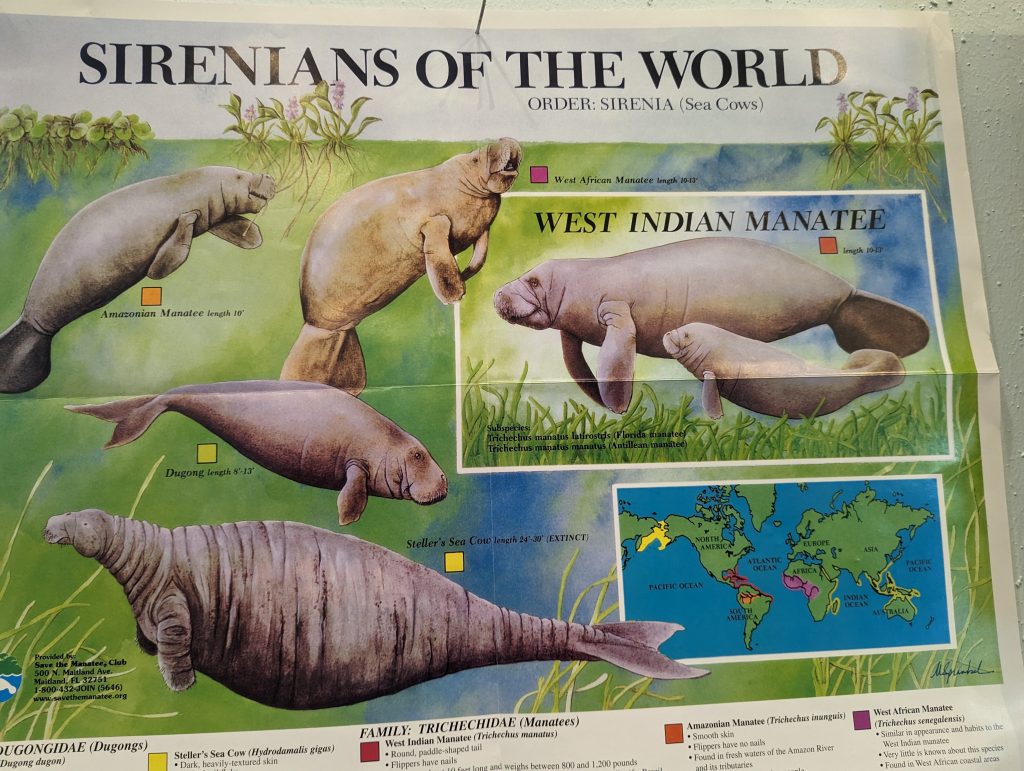
- Manatees are sea cows and closely related to dugongs, which can easily be distinguished from manatees thanks to their split tail fin and are mainly found in Southeast Asia – also, there used to be Steller’s dugongs, which were huge (even bigger than manatees) and were found in Arctic seas, but are now extinct.
- Manatees also have the problem that they can only survive in waters of around 22-24° Celsius, which means that they use fixed migration routes and move north in the summer and then move back to the warmer waters of the south in the winter – manatee babies stay with their mother for about 2-3 years and then get an introduction to the migration routes and where they can make stops.
- In the evening, we have booked a bioluminiscence tour that starts not far from the hotel, which is why we first check in and then – already in the dark -head off to the starting point.
- Sammy, our really great guide, explains that plankton charges itself in the sun during the day and then releases the energy in the form of two chemicals when it senses danger. These two chemicals react with oxygen to produce a glow.
- Each plankton particle only glows once or twice a night, which gives you an idea of the amount of plankton in the water here.
- We paddle in kayaks that are completely transparent, so we can see the plankton very well.
- You can only see it when something (the boat, the paddle or a hand stretched into the water) moves through the water and the plankton reacts to it.
- Then it looks like a shining starry sky under the boat – lots of galaxies, so to speak – it’s really great to see.
- There’s also a great starry sky above our boat, where we keep seeing shooting stars – I don’t even know where to look anymore.
- It’s always so peaceful when you’re gliding across the water in a kayak or canoe – even more so at night.
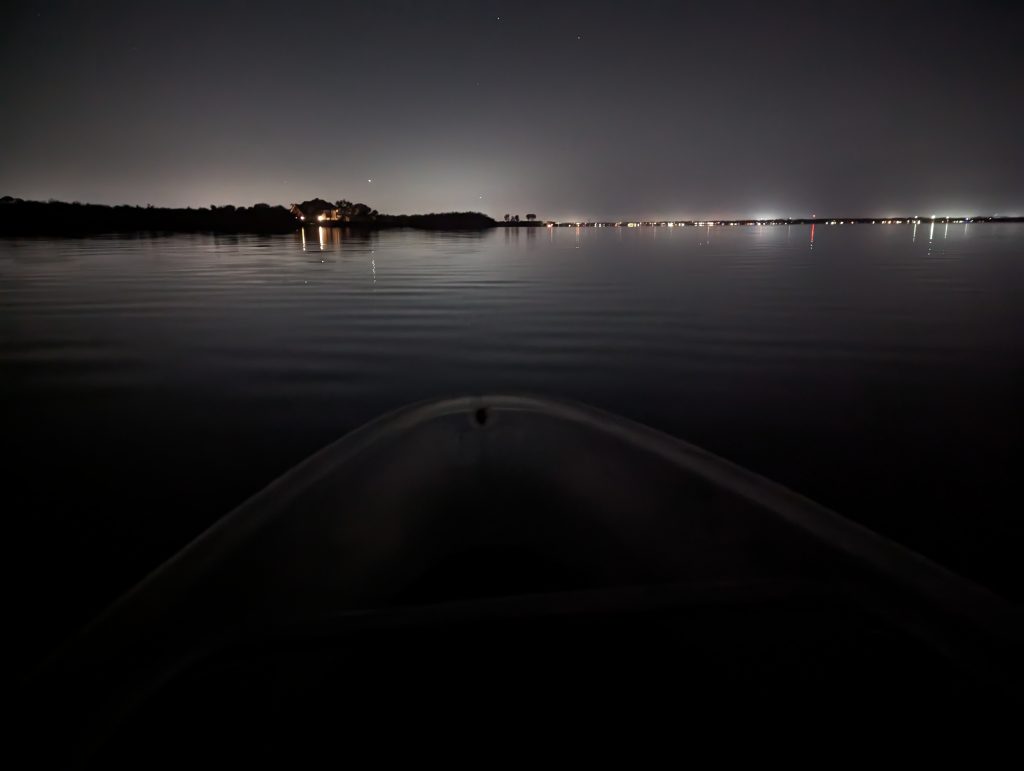
- When the paddles glide through the water, you can see the plankton even better- as a glowing trail through the water.
- One can also make the plankton visible by holding a hand in the water and clenching a fist, or by just dragging a finger through the water, which makes it look a bit like a bright comet.
- I ask Sammy: “Ah, so we can just hold our hand in the water, no alligator will come and bite it off?” and she laughs and says that although there are lots of alligators in the area, they don’t swim out that far.
- When I lift my hand out of the water, I can even see the drops that fall from it glowing.
- We also see mullets in the water, which look like very bright stripes.
- Sammy explains that there can be two unpleasant situations when kayaking here: The first is when a mullet, which are fish that jump, lands in the boat during a jumping maneuver and then, like a fish behaves on land, flaps around wildly – in this case you simply take the fish and throw it back into the water. The second is when a manatee wants to surface to breathe and the boat is above it, then the manatee panics and you end up in a so-called manatee rodeo – in this case you move your hips along with the boat as much as possible, just like in a real rodeo, and wait until the manatee relaxes, or you just swim with manatees…
- At the very end of the tour, Sammy tells us how it once happened to her during a tour that a manatee destroyed a kayak because it panicked and then hit the boat so hard with its tail fin that it leaked.
- No wonder, these animals, which weigh around a ton, are made up of more than 90% muscle!
- Manatees also glow thanks to the small hairs on their backs and their generally not-so-smooth surface. Interestingly, dolphins don’t – their skin is so smooth that the plankton simply glides past it, which they use to their advantage.
- Unfortunately, we don’t see any manatees, although I would really have liked to do a manatee rodeo.
- What we do see, however, are glowing jellyfish – these glow on their own and, like the plankton, they are activated when you touch them and they sense danger. This leads to me paddling like mad with the paddle to activate as many jellyfish as possible (poor guys).
- Sammy manages (no idea how, you can hardly see them) to catch two of the jellyfish to show them to us in a jar.
- She also tells us that you can often see rocket launches from Cape Canaveral from here, looks them up on her app and says, “Ah, there’s one planned today” – meega, of course we install the app straight away and ask her for the best spot to watch the launch.
- So that’s our program for the rest of the evening – the launch is scheduled for midnight and we decide to watch it from nearby Cocoa Beach.
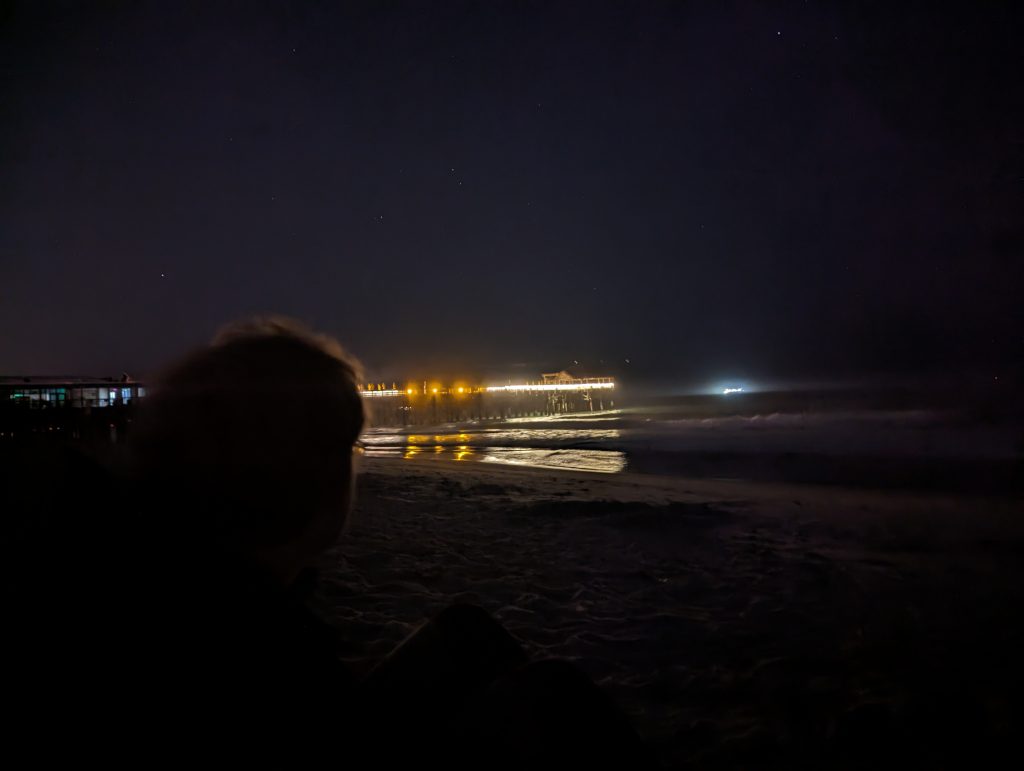
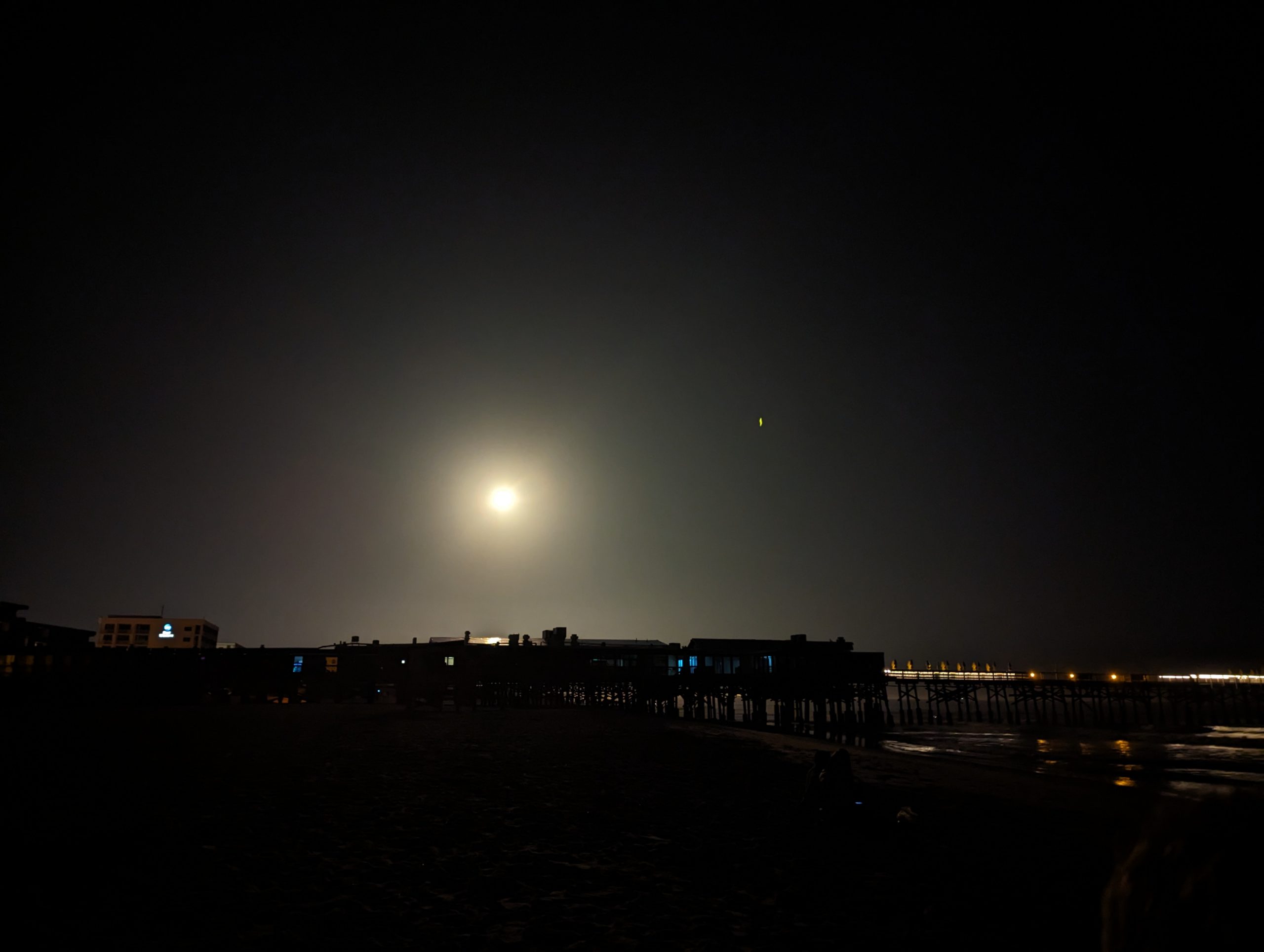
- Once there, we look for a nice spot, chill out in the sand and are just about to unpack our snack when we see the countdown start in the app – aah, when it reaches “0”, I say to Matthäus – cell phone already drawn out in hand – “Ah, look, they’re not even on time”, only to pause with my mouth open, because an increasingly bright light has just appeared on the horizon – the engines have obviously already ignited.
- It really is a sight to behold: We see the light getting brighter and brighter before we see the still “slowly” ascending rocket emerge and long before we even hear the really loud engines (yes, the speed of light and sound).
- Then everything happens super fast, the rocket picks up speed, rises, then moves on its trajectory, heading southeast, diagonally across the sky above us and quickly disappears from our view – in the end, all that remains is a dot that merges with all the stars in the sky.
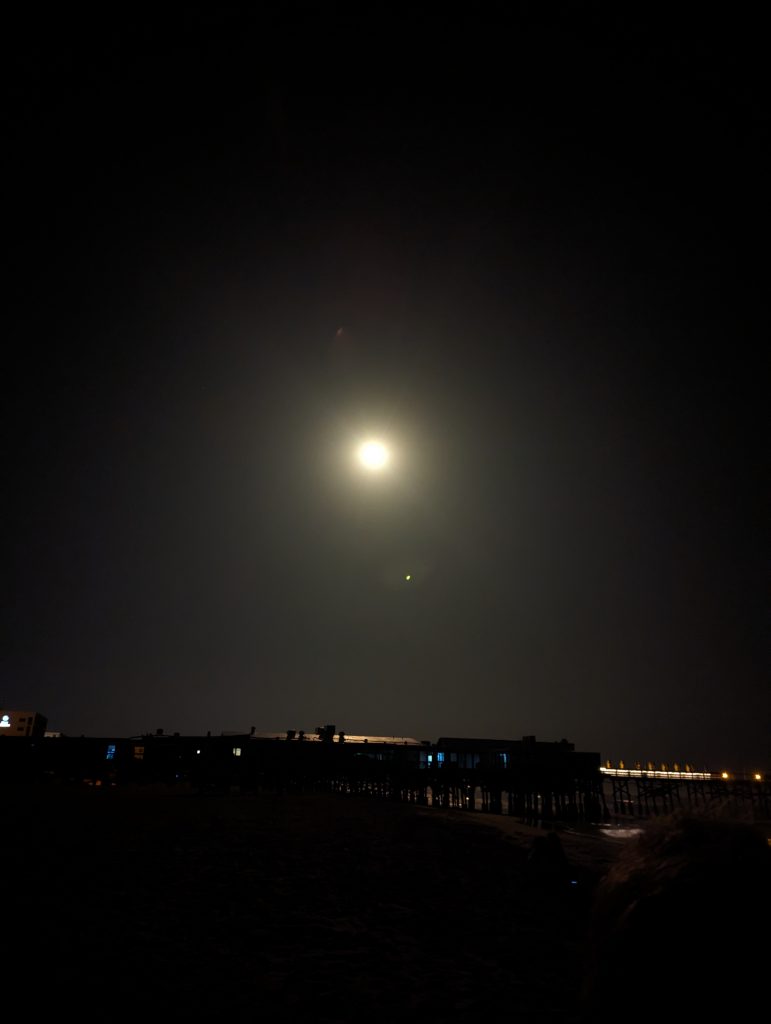
- The rocket is a Falcon 9 from SpaceX, which is launching the Starlink satellites 6-27.
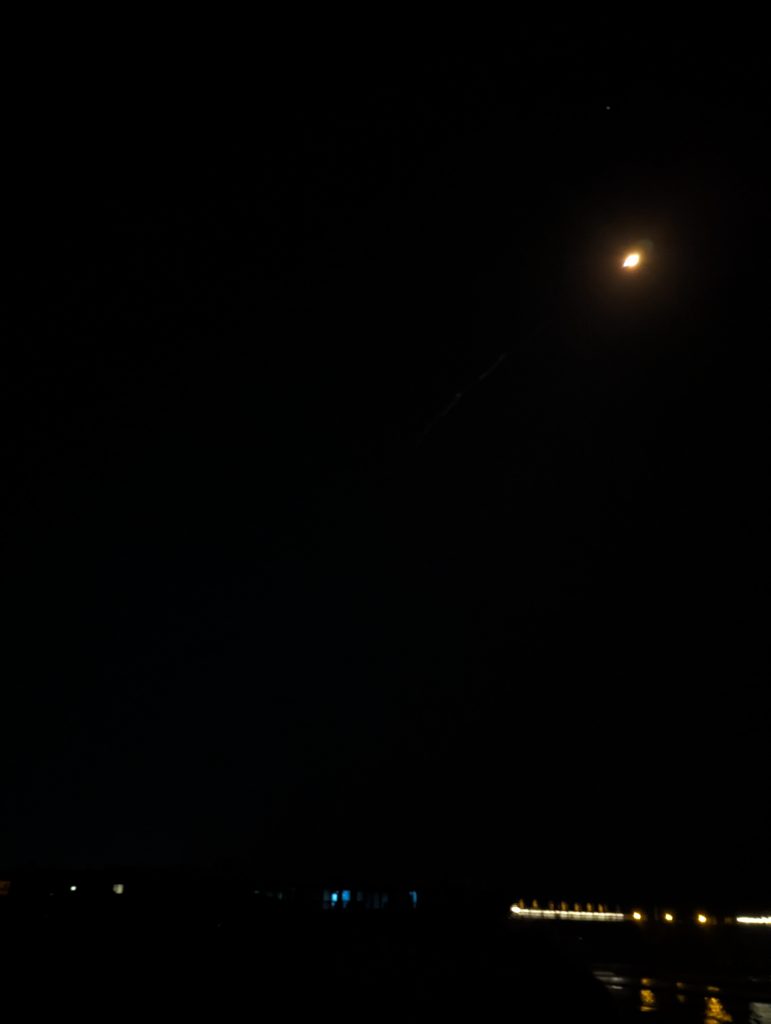
- That’s why we see another bright light appear in the sky shortly afterwards, this time a falling one: The reusable boosters returning and landing on a boat in the Atlantic.
- Wow – what a day!
Wednesday, 8.11.
Apollo and Artemis – not just Greek Mythology, but realised in space!
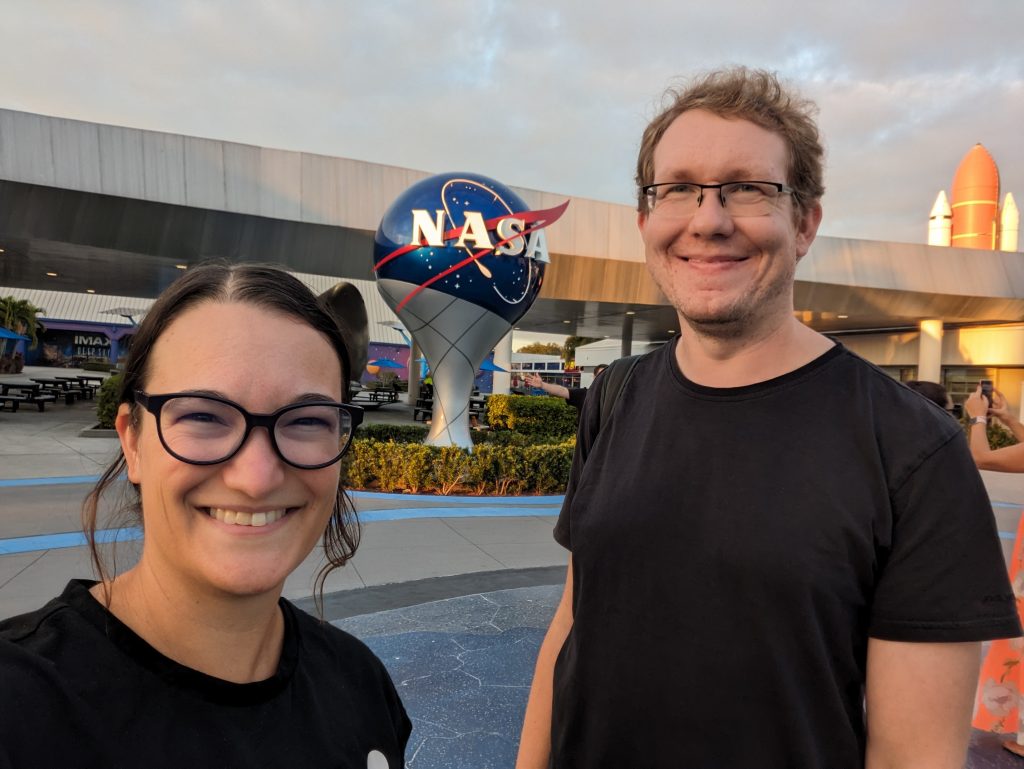
- As if yesterday wasn’t awesome enough, today we’re off to the Kennedy Space Center! Wooow, I’m really looking forward to it!!!
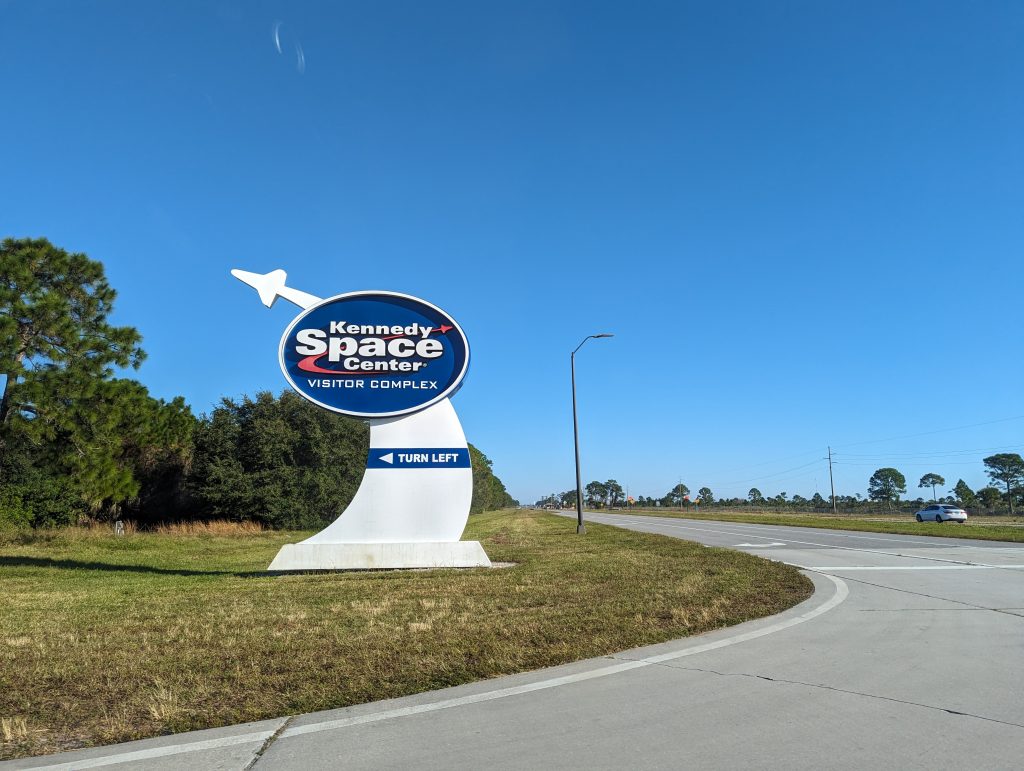
- We arrive at 9 a.m. and are not the only ones – so we start by queuing at the entrance.
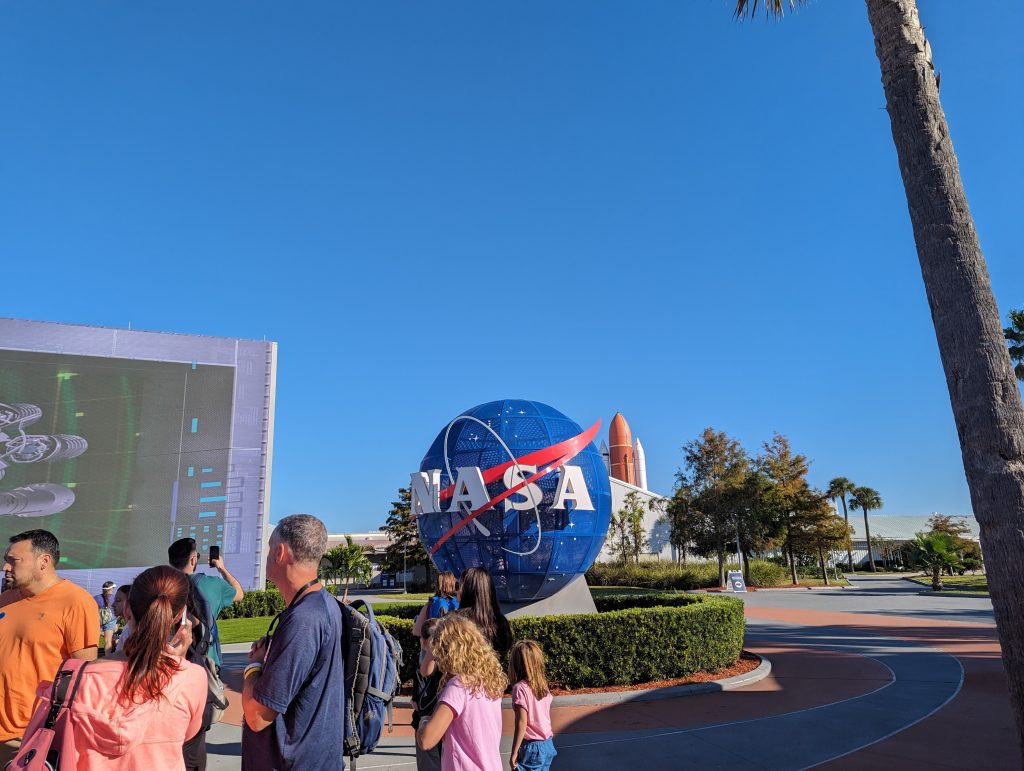
- The first item on our agenda is the huge Gateway Center, where you can get an overview of the history of space travel as well as current and past space projects – all from a NASA perspective, of course, which means that ESA (unlike Roscosmos) is also mentioned here and there in passing. (Yeah!)
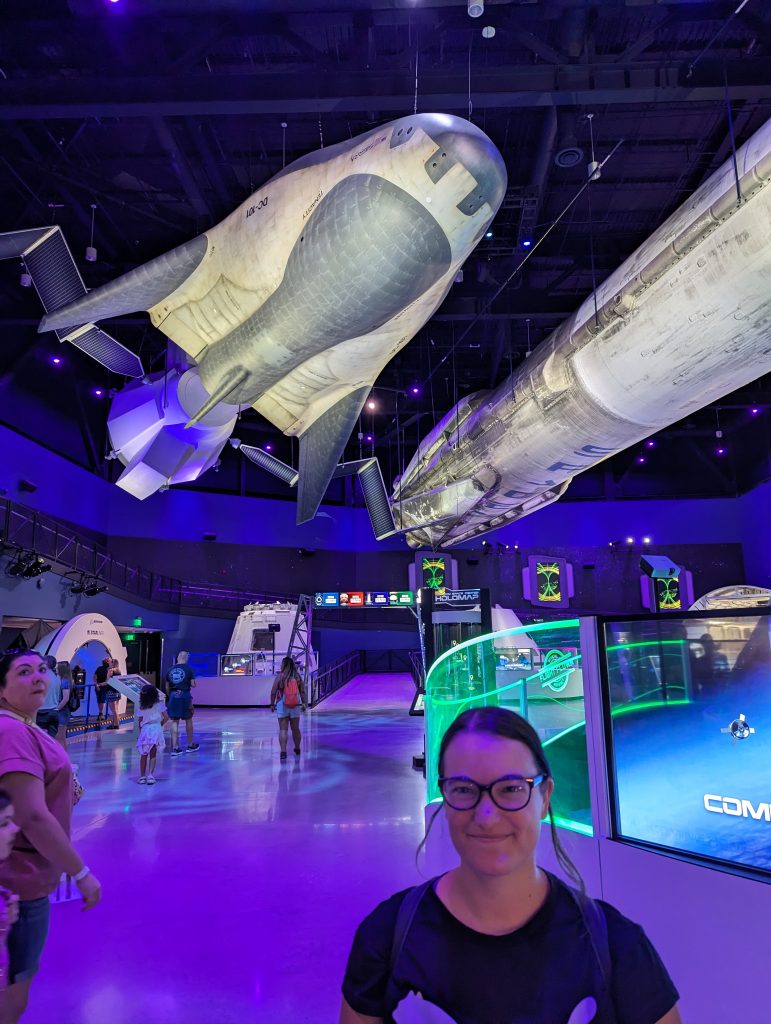
- There is also a “spaceport” where you can have a 3D space experience by sitting in rollercoaster-like seats and then being shaken around a bit and driven forwards and backwards.
- We try it out straight away and take a trip through our solar system, actually just to Saturn and Jupiter and some of their moons – the whole thing is really well done, it reminds me a bit of Cassandra’s Curse, only you don’t get as sick because you’re not moving around quite so wildly.
- When it’s over after about 5 minutes, the employee opens the door a little confused and asks us: “Did you see the whole movie?” Well, how should I know?!
- In any case, we decide we’ve had enough (the experience was quite fun, but not very informative) and prefer to move on to the more informative exhibition area instead.
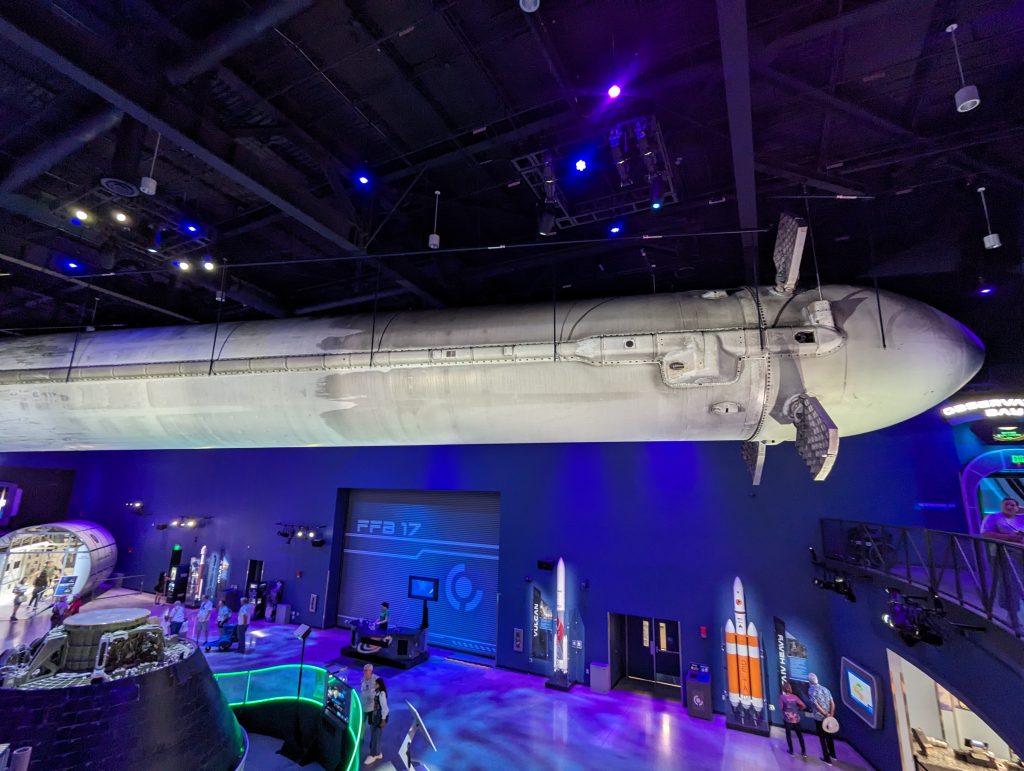
- It is also beautifully designed, with science fiction-style hologram screens on which you can click through explanations of the exhibits.
- We read a lot about the Orion module, the centerpiece of the Artemis mission, which is to be the next mission to the moon.
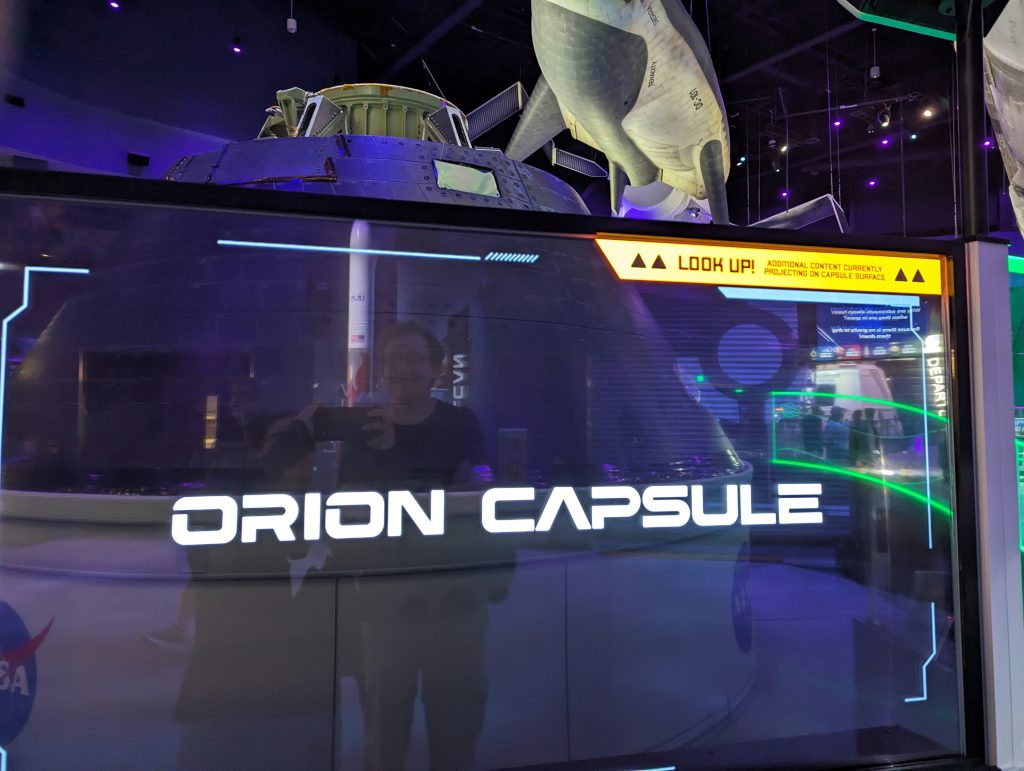
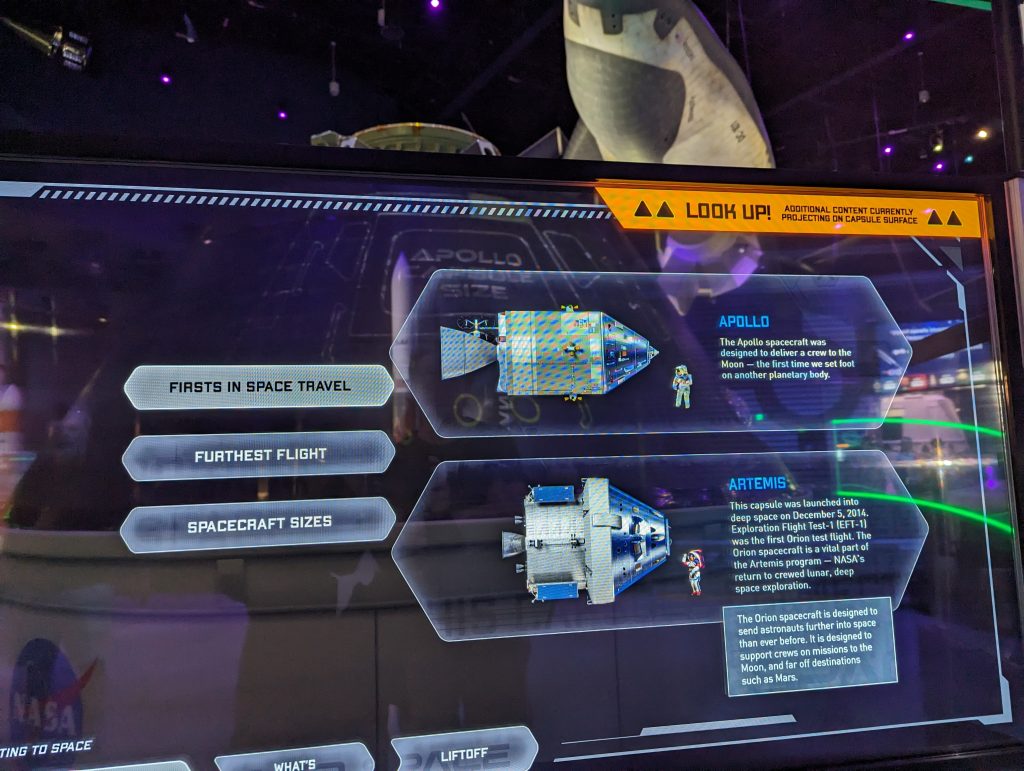
- The name Artemis comes from the fact that Artemis is the twin sister of Apollo in Greek mythology. =)
- This mission is intended to take people to the moon again and in the future a kind of ISS is to be built for the moon – a space station that orbits the moon and from which missions to the moon can be flown.
- We also see the crew capsule (which is currently only used as a supply capsule for the ISS) Starliner.
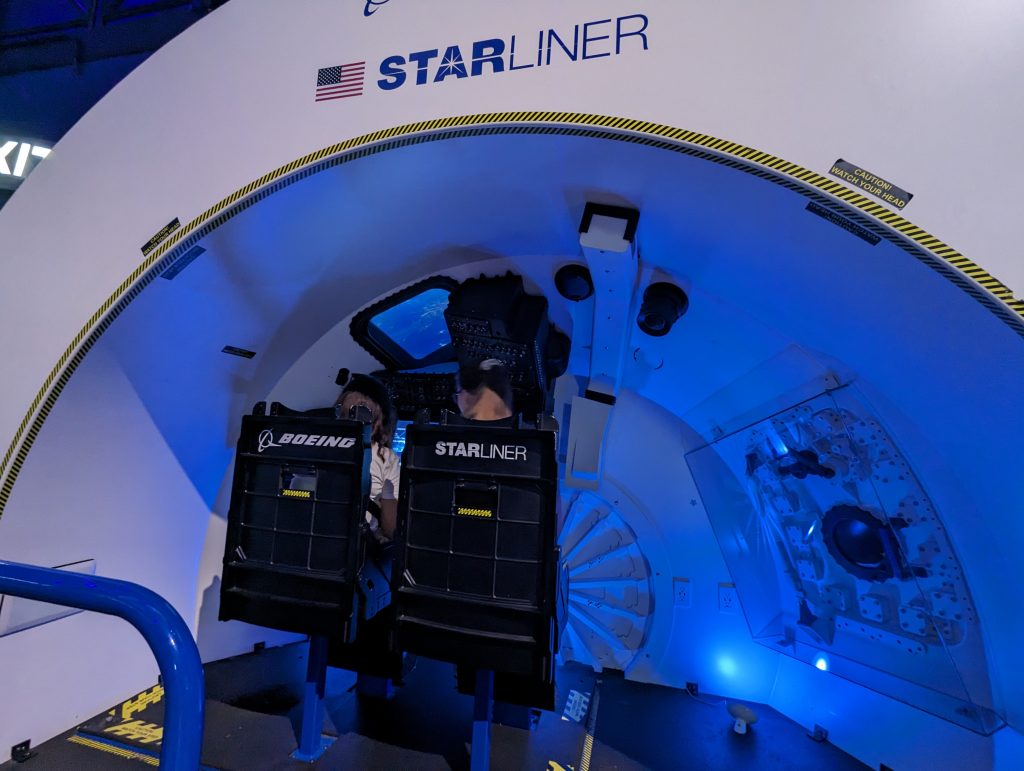
- One of the highlights is a docking simulator where you can find out whether you are able to dock Starliner to the ISS.
- We queue up and, as we watch the people in front of us, we realise that nobody apart from us seems to have read the instructions, because you don’t actually need to use anything except the one joystick for the docking manoeuvre, which runs smoothly and without alerts – although the thousands of switches and buttons all around are of course extremely tempting.
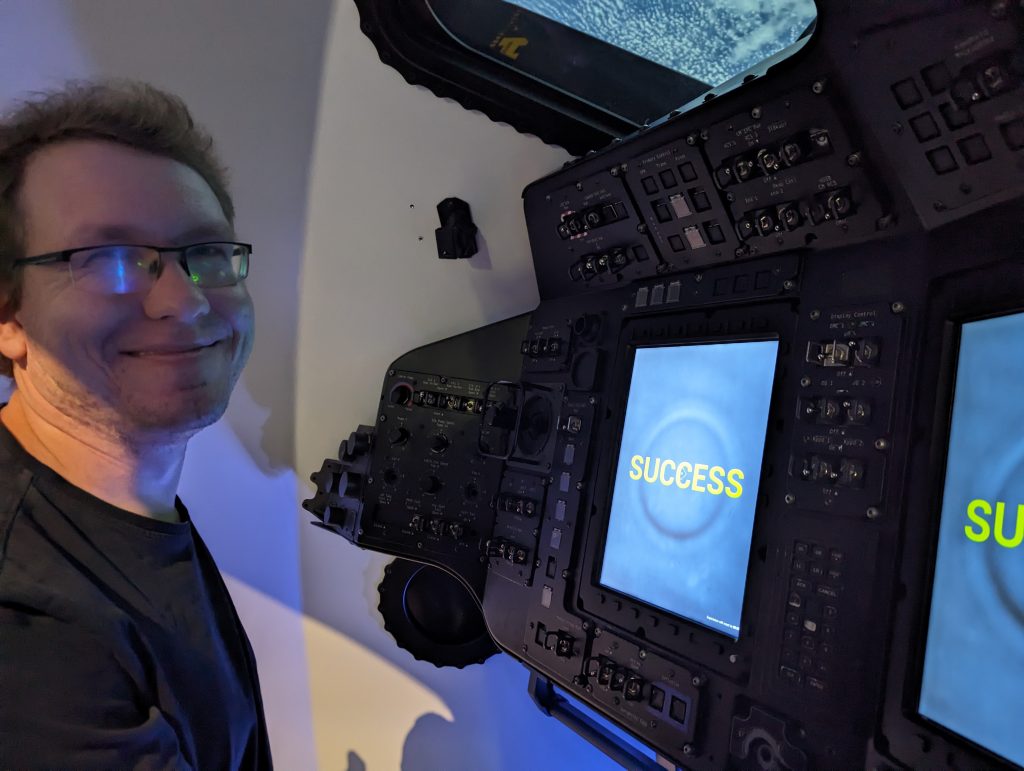
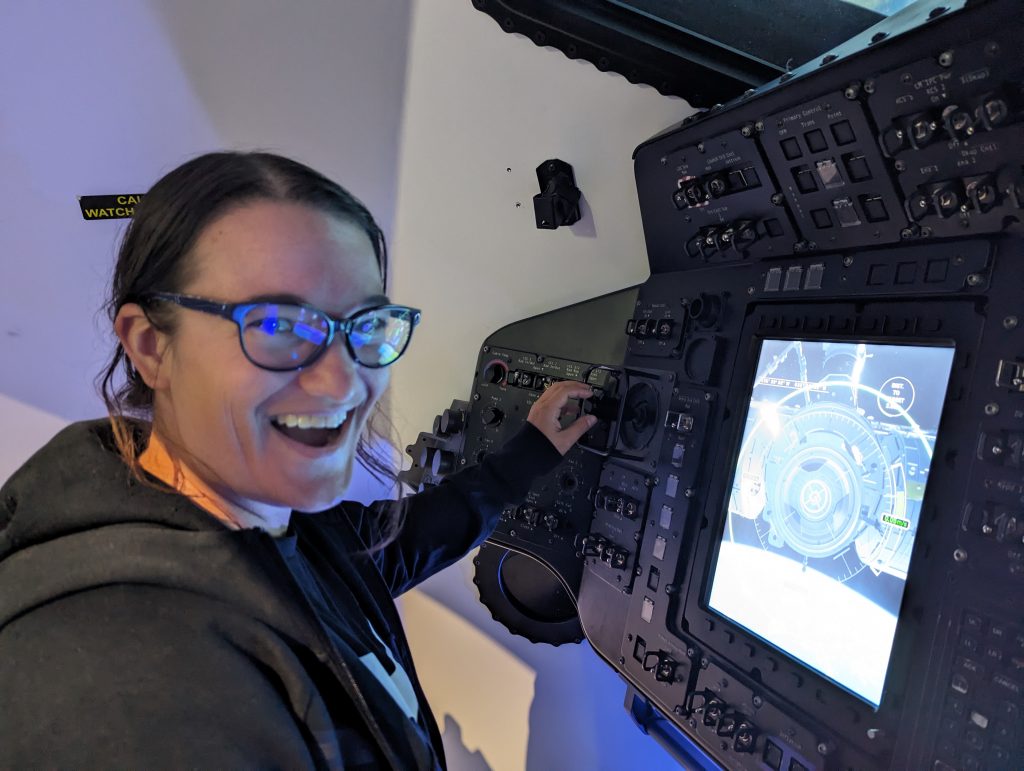
- Matthäus and I both manage to successfully dock the Starline, although I can’t resist the temptation and try flipping a few of the levers above me – that feels pretty cool too, unfortunately there’s no headset to pass procedures to Matthäus or Ground Control.
- A shuttle bus (hehe shuttle) takes us to the Apollo Center, where one can learn all about the Apollo missions and the NASA astronauts who took part – NASA’s great achievement.
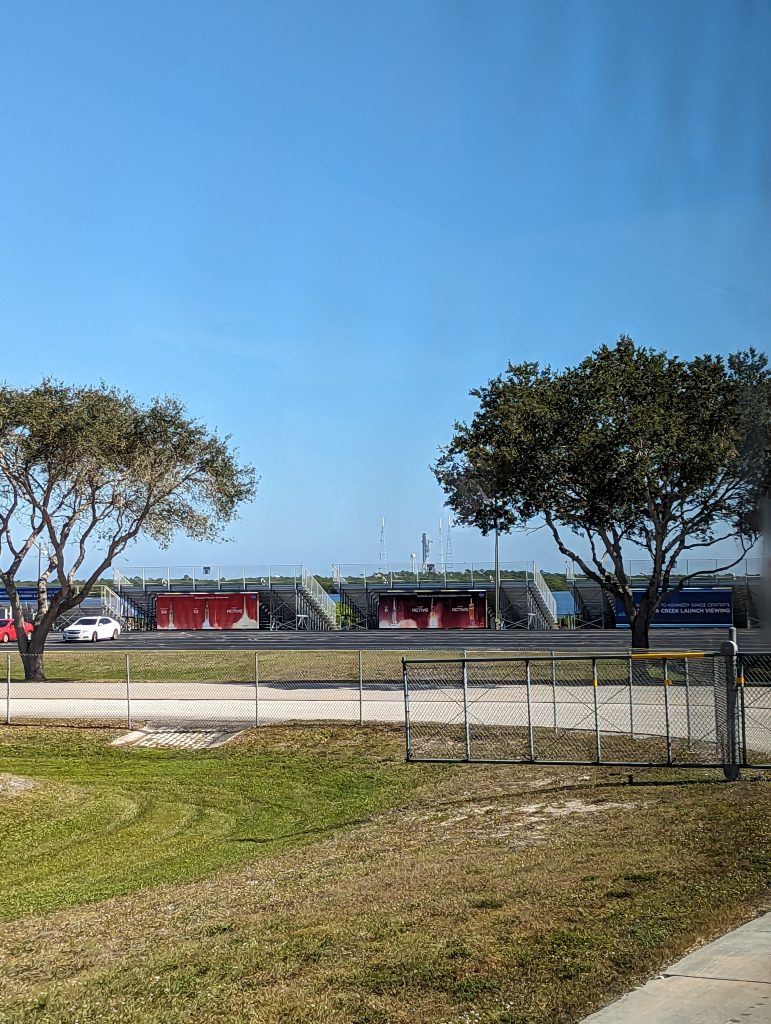
- On the way there, we see (in the distance, of course) the launch pads, which are really hard to miss.
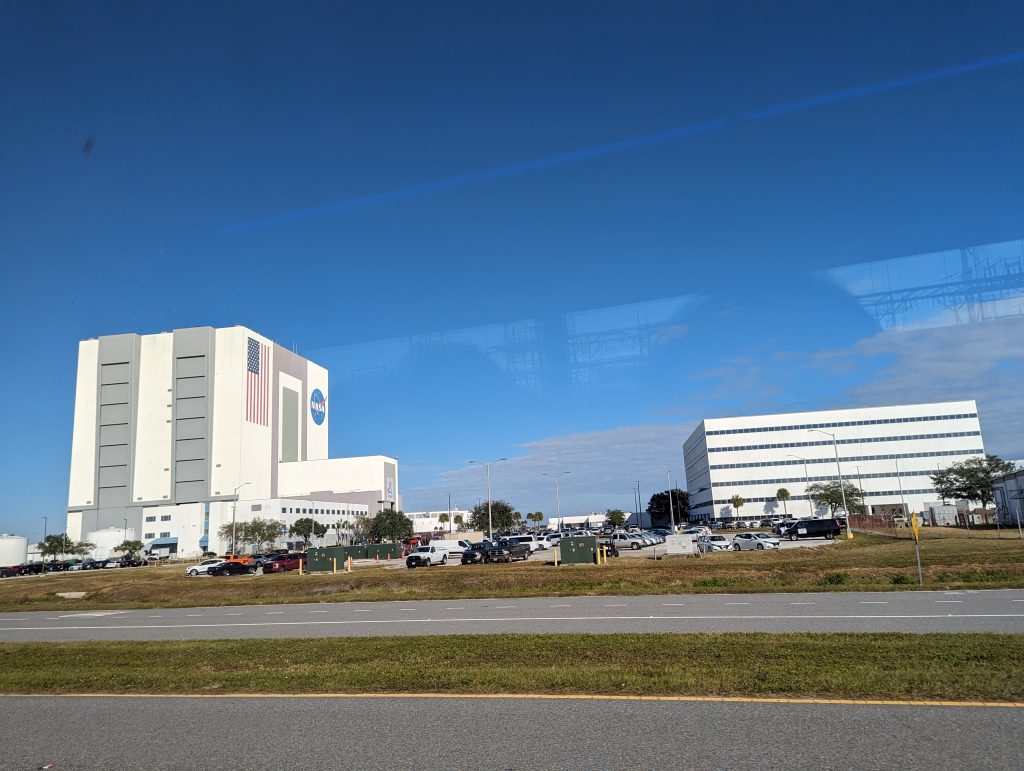
- We also pass the VAB (Vehicle Assembly Building), which was built during the Apollo mission to assemble the Saturn V rocket – so you can probably imagine how big the building is.
- Very impressive, even if we only get to see it from the outside as it is still in use.
- They are somehow also very proud of their crawler transporter, which then drives the fully assembled rockets to the launch pad at a speed of 1 mph – just to give you an idea, it takes the vehicle seven hours to get to the launch pad from where most of the Apollo missions were launched!
- I notice that this rover rolls over the road like a tank with tracks like this – a purpose-built road reinforced with stones – unlike the vehicle ESA uses in Kourou, which runs over tracks. (“Typical”, I say to Matthäus.)
- In the Apollo Center, we are first greeted by several films that tell the story of the Apollo missions and which, I have to admit, are really well done and not at all as patriotic as is often the case in American museums.
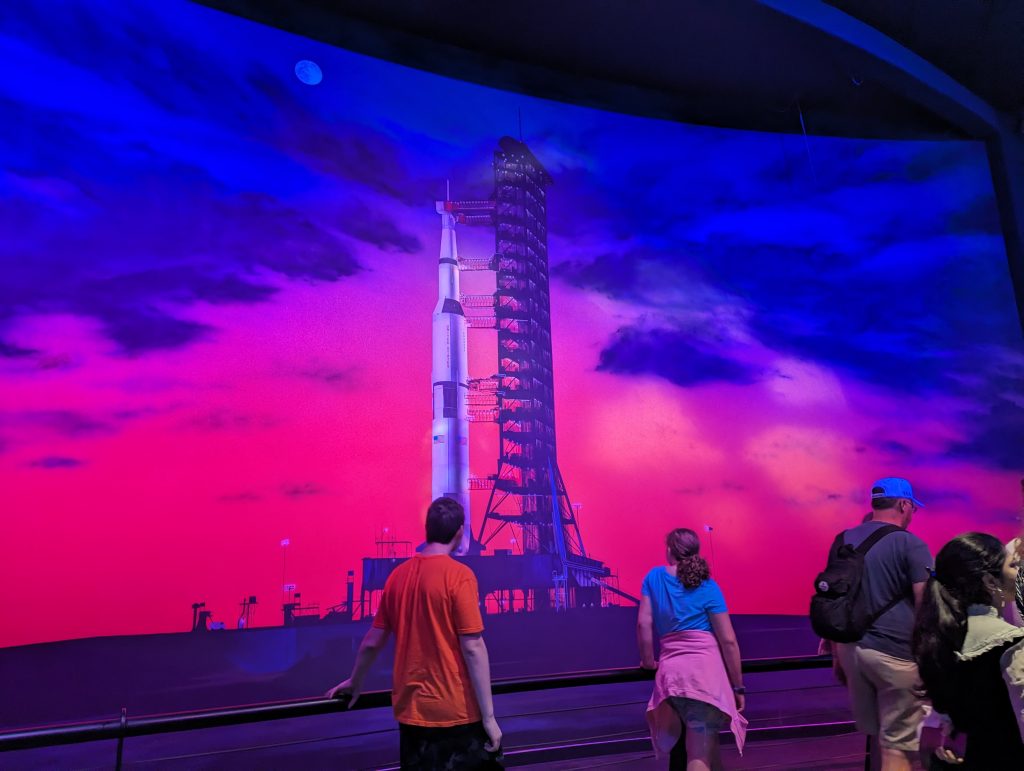
- The only movie that is a bit out of character is the one in which the touchdown of the Eagle – during the Apollo 10 mission (the one with the famous moon landing and Neil Armstrong on the moon). Dramatic music accompanies the events and all in all it is very dramatic and the American flag is waving everywhere.
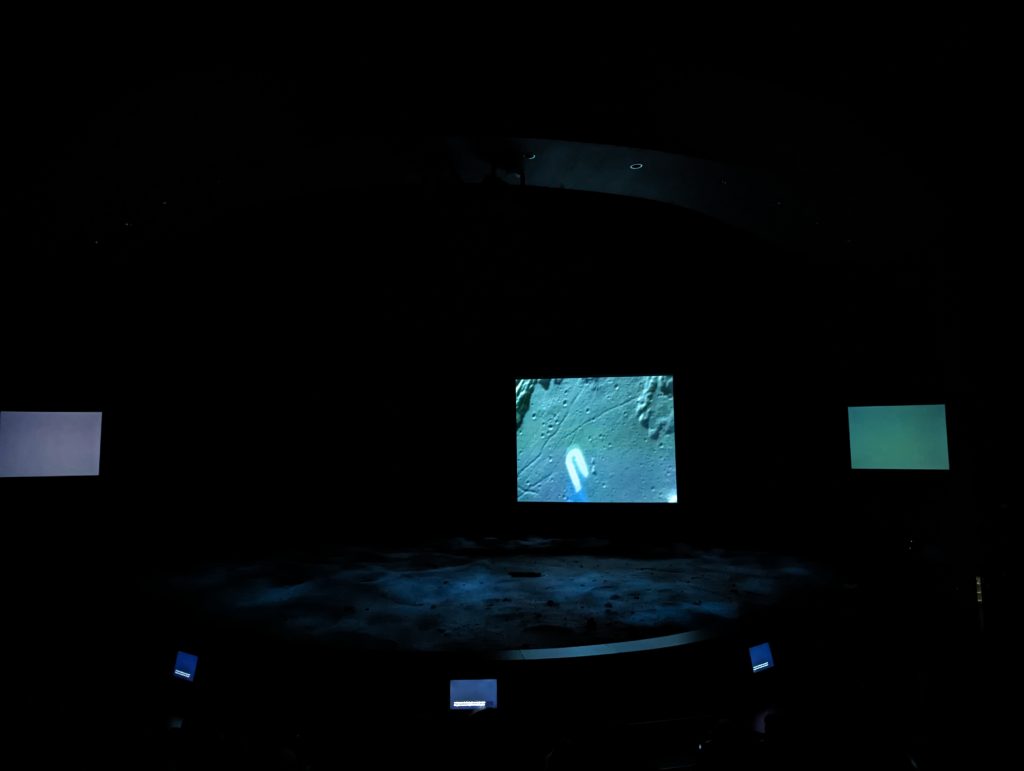
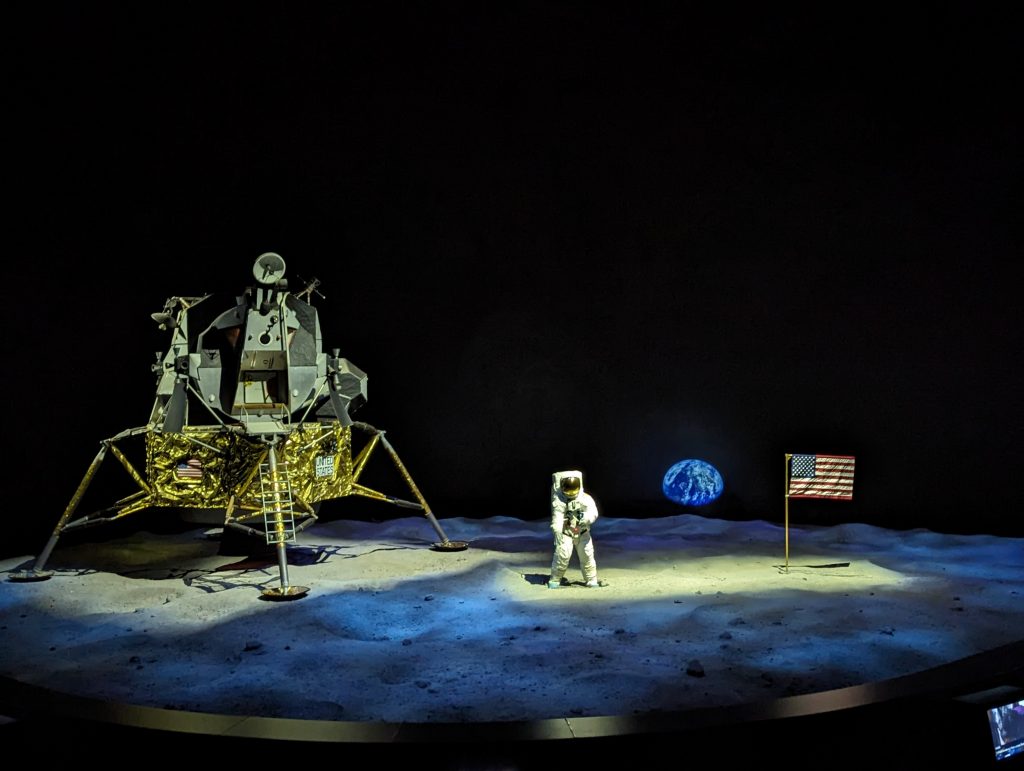
- Apparently, the Eagle’s autopilot sent it into a rocky crater, so Armstrong took over the controls himself and landed a few miles away with 30 seconds of fuel left.
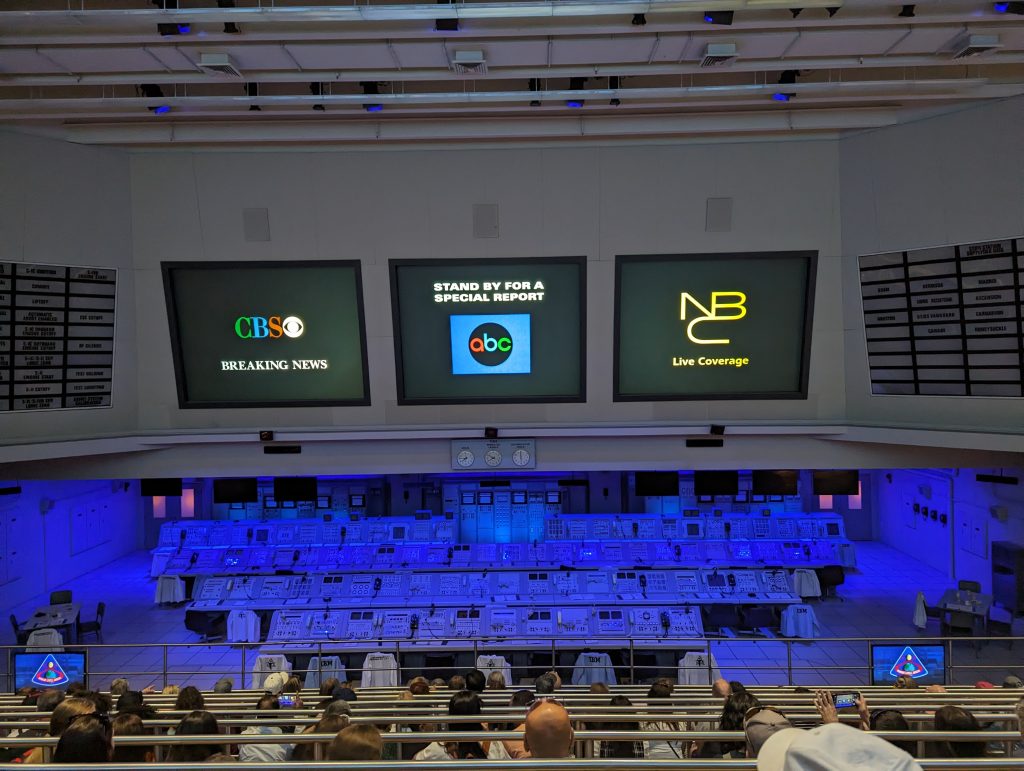
- It’s really cool that the film about the Apollo 10 mission and in particular the Apollo 10 launch is shown in the room of the original Apollo Control Center, which gives the whole thing a great atmosphere and makes the experience really impressive.
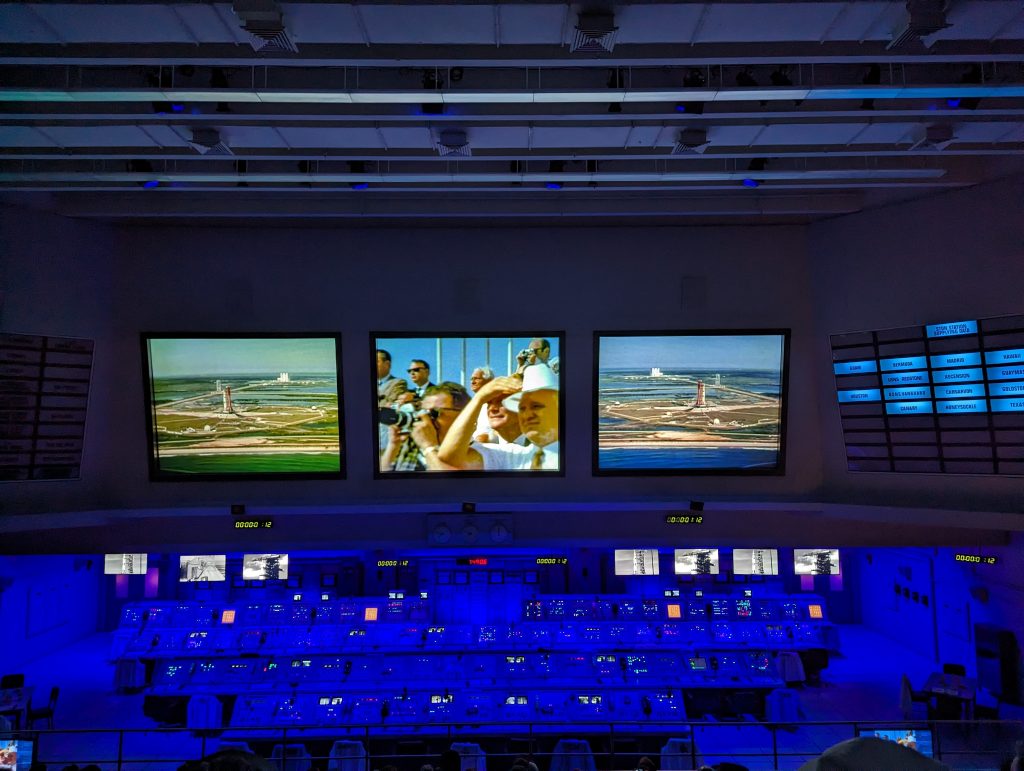
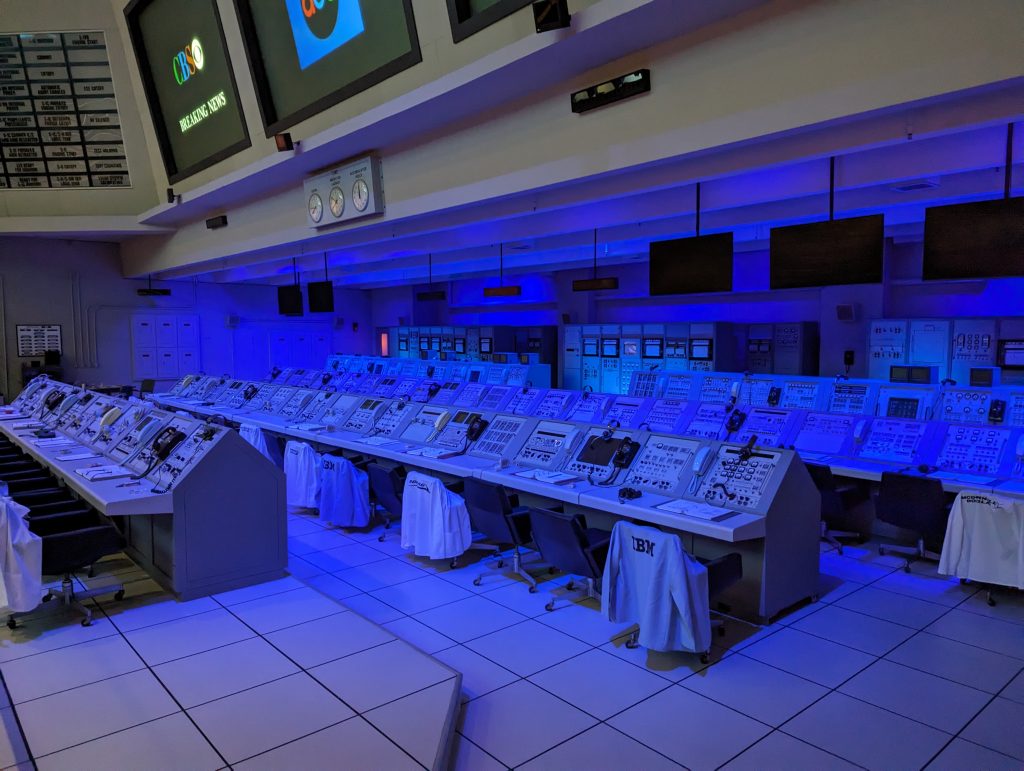
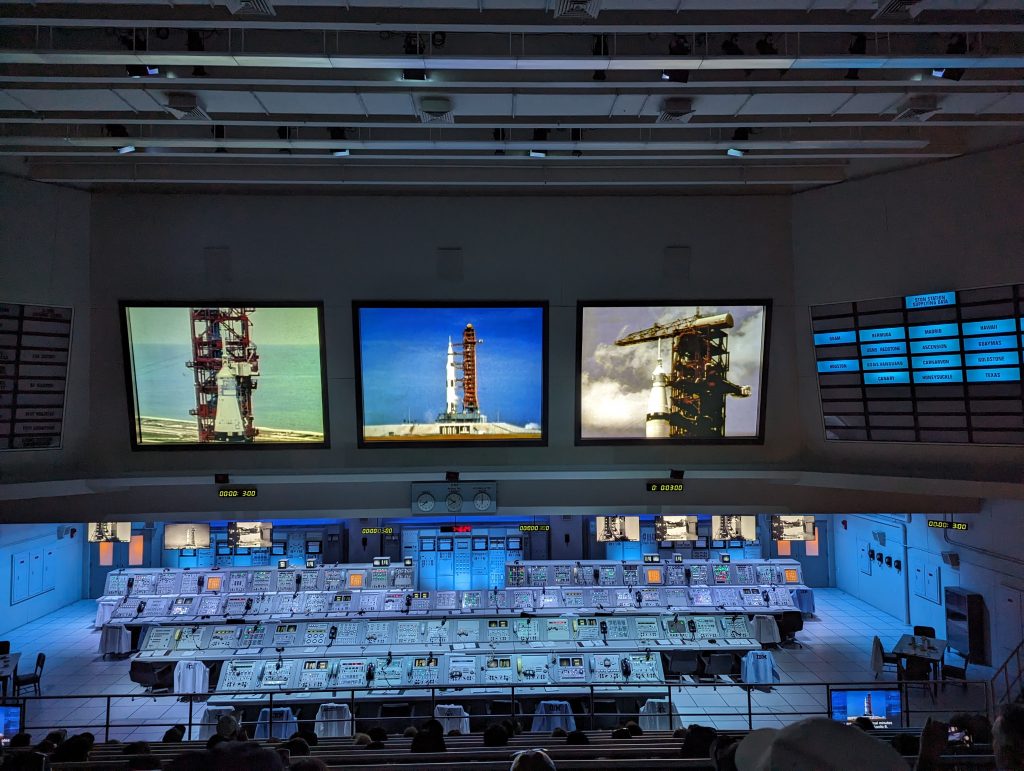
- As soon as you enter the large exhibition room that follows, you are overwhelmed by the sight of the full-size replica of the Saturn V rocket lying on its side – these are dimensions.
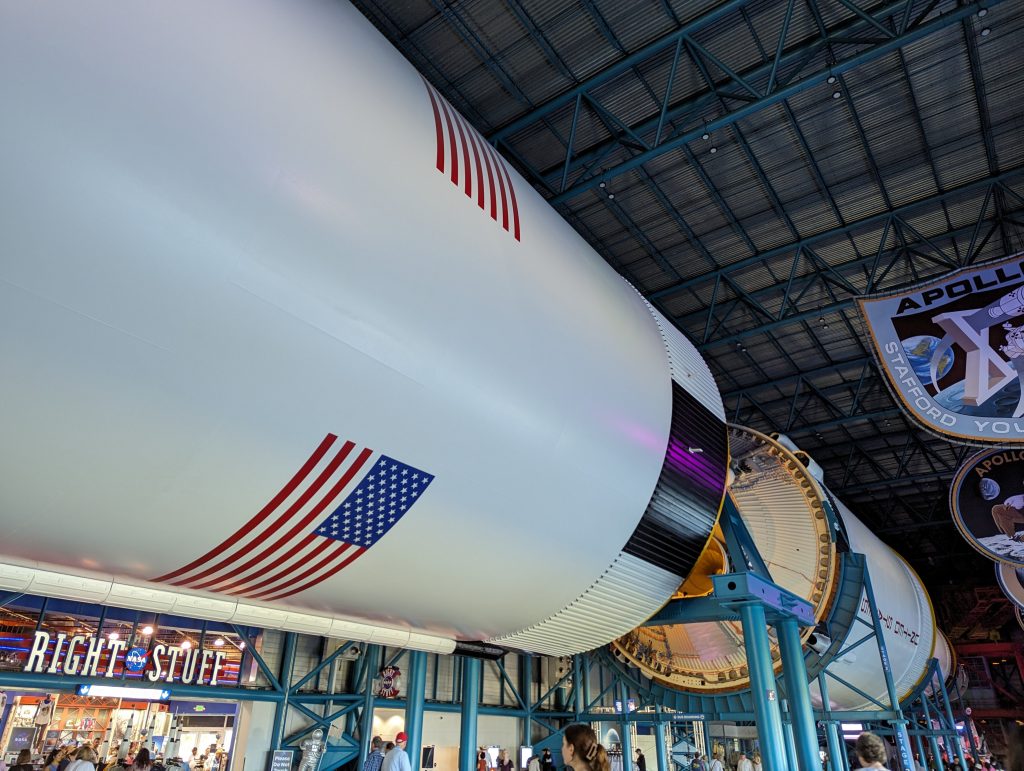
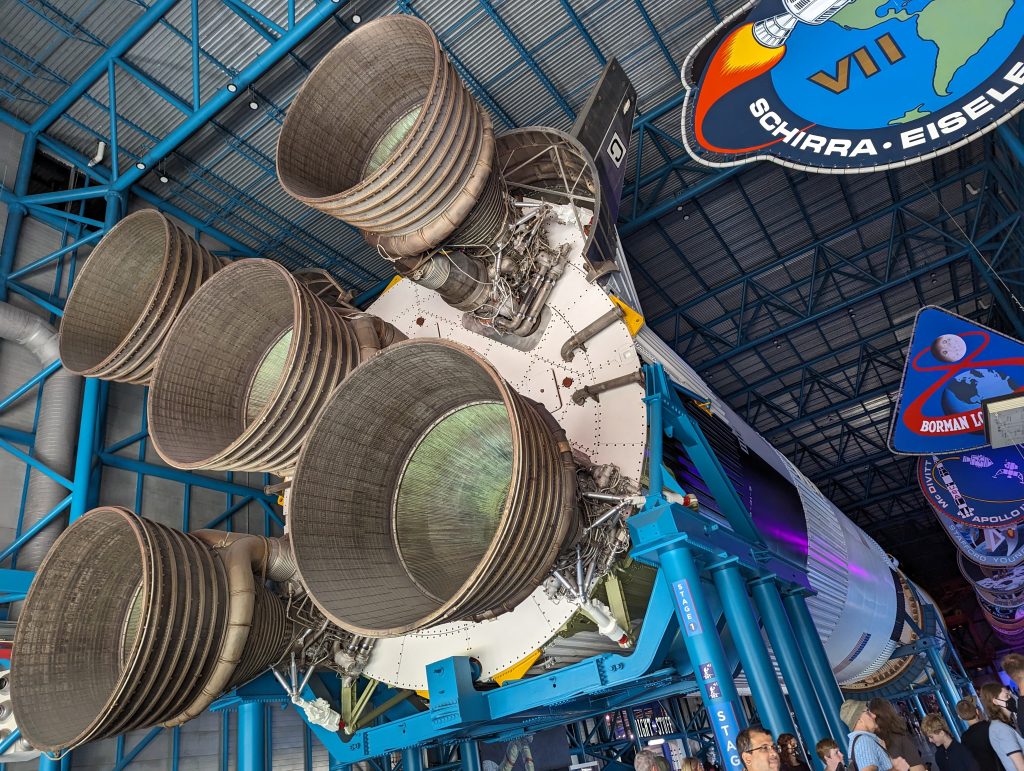
- Here one finds detailed descriptions of the history of the Apollo mission. It begins with the famous words of President John F. Kennedy “We choose to go to the Moon.” and ends with the Apollo 17 mission, the last manned mission to the Moon. It did not start off so well, when the three crew members (Gus Grissom, Ed White and Roger Chaffee) of the Apollo 1 mission died in a fire in the Command Module during a test. Nevertheless in the end it was a success with the landing of the first man on the Moon in the course of the Apollo 10 mission.
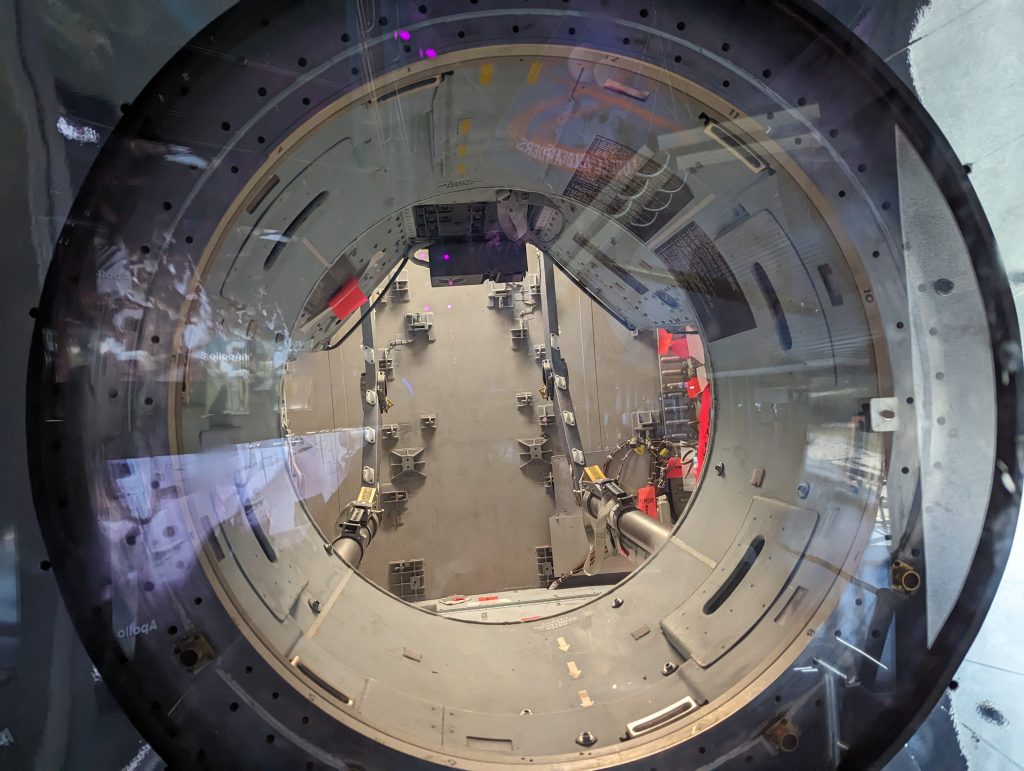
- We also find detailed explanations of how the Saturn V rocket, the Command Module and the Lunar Module were assembled and functioned.
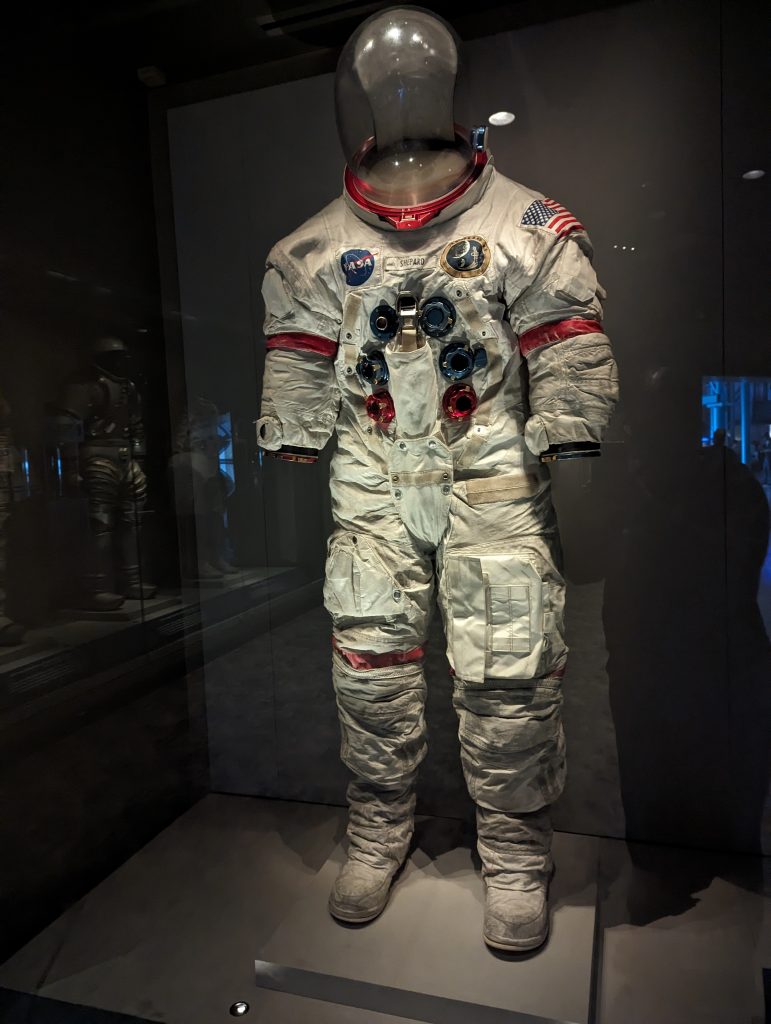
- One room is dedicated to lunar artifacts – here one finds all kinds of sample transport containers to take rock samples from the moon, logbooks and spacesuits that astronauts wore during the missions.
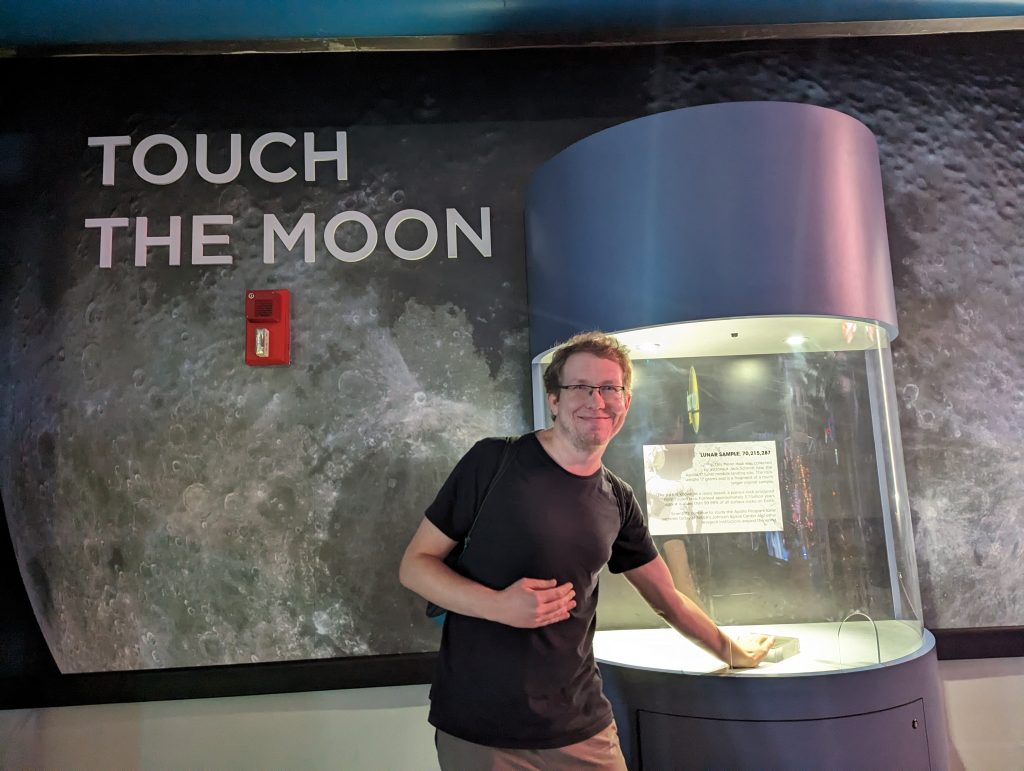
- In front of it there is also a Moon Rock, a stone that is originally from the moon and that you can touch.
- We watch a couple: The guy goes and touches the rock, only to be literally drowned in disinfectant by his girlfriend – 5 minutes later the smell still hangs in the air.
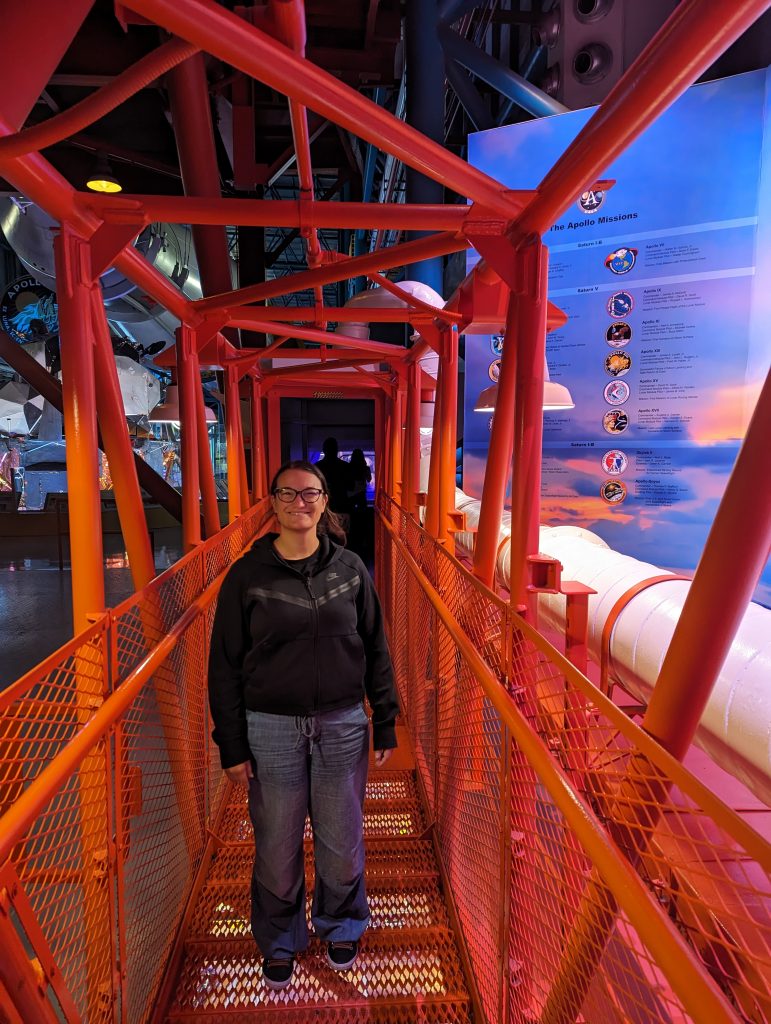
- There is an exhibition in honor of the Apollo 1 crew with a command module, which you can enter via the original landing bridge, which is also quite an experience.
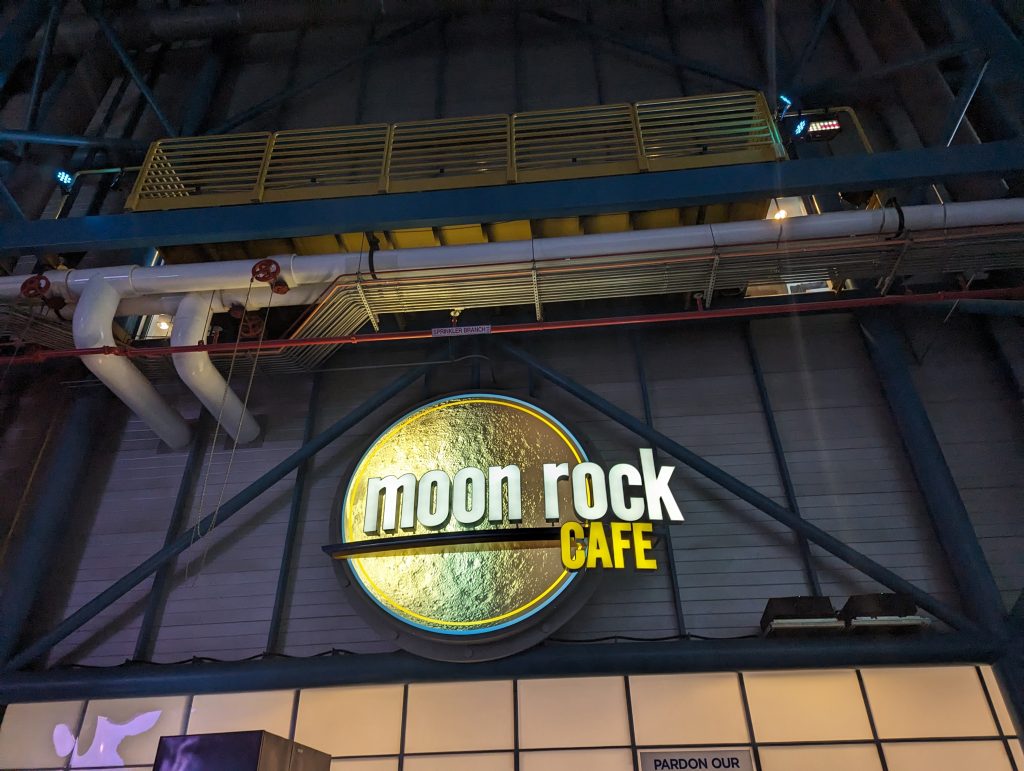
- We take our lunch break here in the café and eat a hot dog and salad with a view of the Launch Pads – not bad.
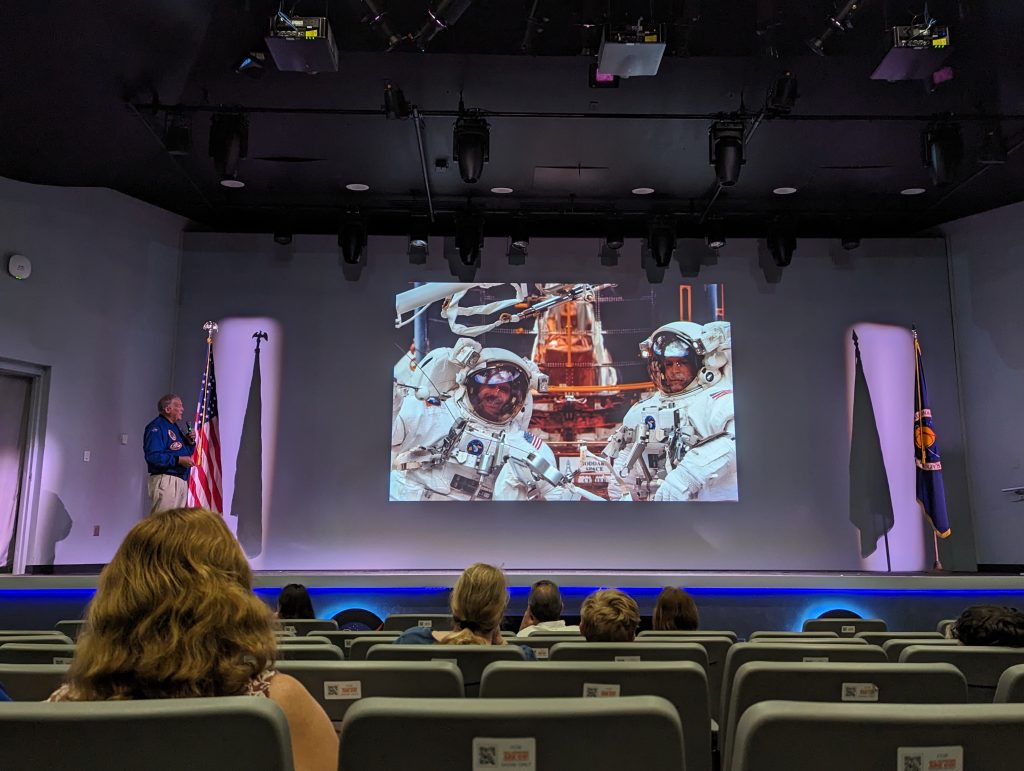
- It’s time for the astronaut talk and today Mark Lee talks about his experience as an astronaut in the shuttle program (he took part in four missions). He’s very good at talking and it’s a great and exciting presentation, until the question round comes and some Heinzi asks him: “What do you think is the purpose of human existance?” (?!) – “You have to expect at least one of those stupid questions,” I say to Matthäus.
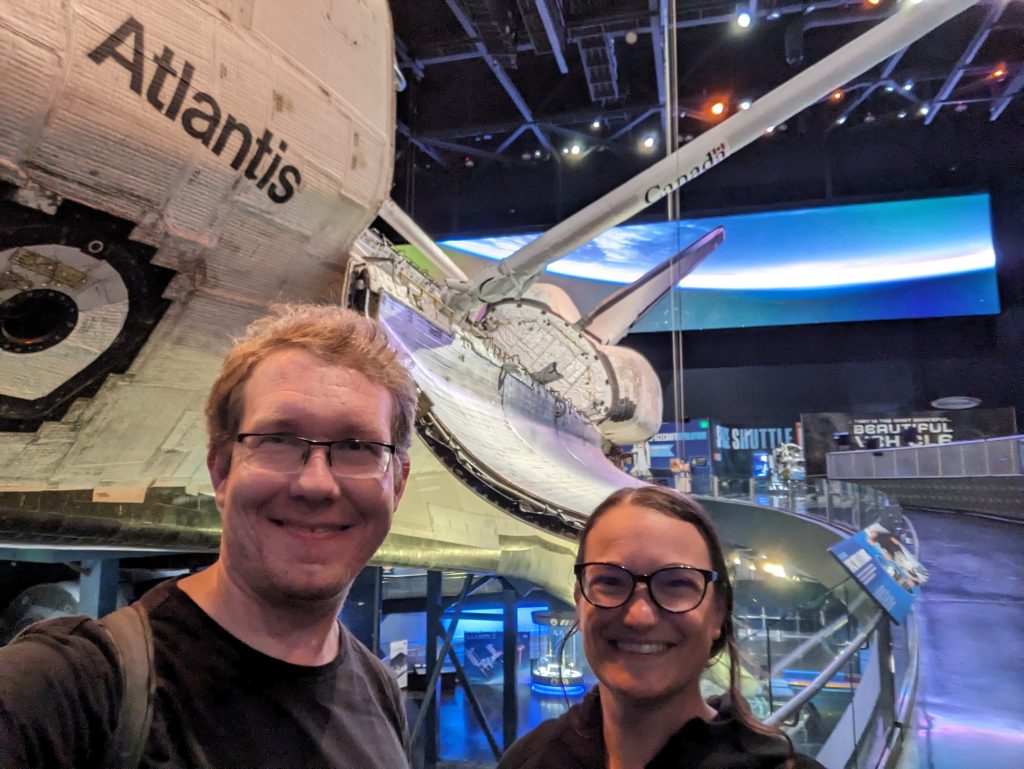
- Last but not least (we are running out of time) we go to the Atlantis Center, where the Space Shuttle Atlantis is on display.
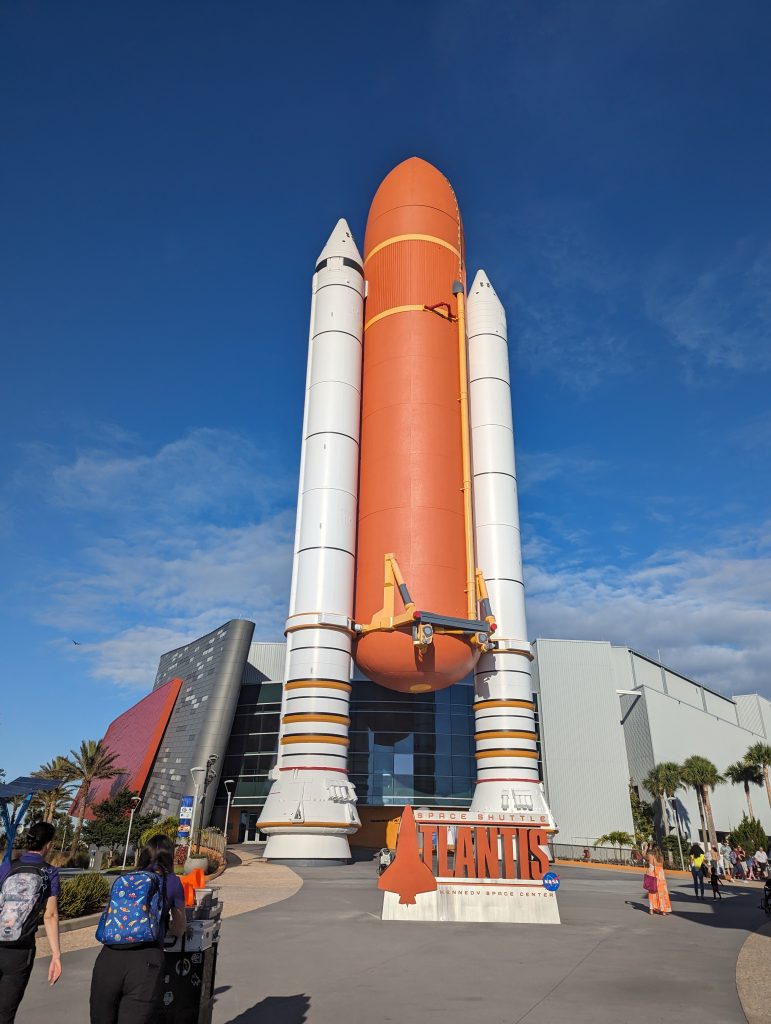
- Once again you are first greeted by a show, this time another rather lacking in content and drama, but I have to admit that the ending, where the screen slowly becomes transparent and you see the shuttle appear behind it (the original!), works very well – it’s a great moment and a worthy presentation of such an exhibit.
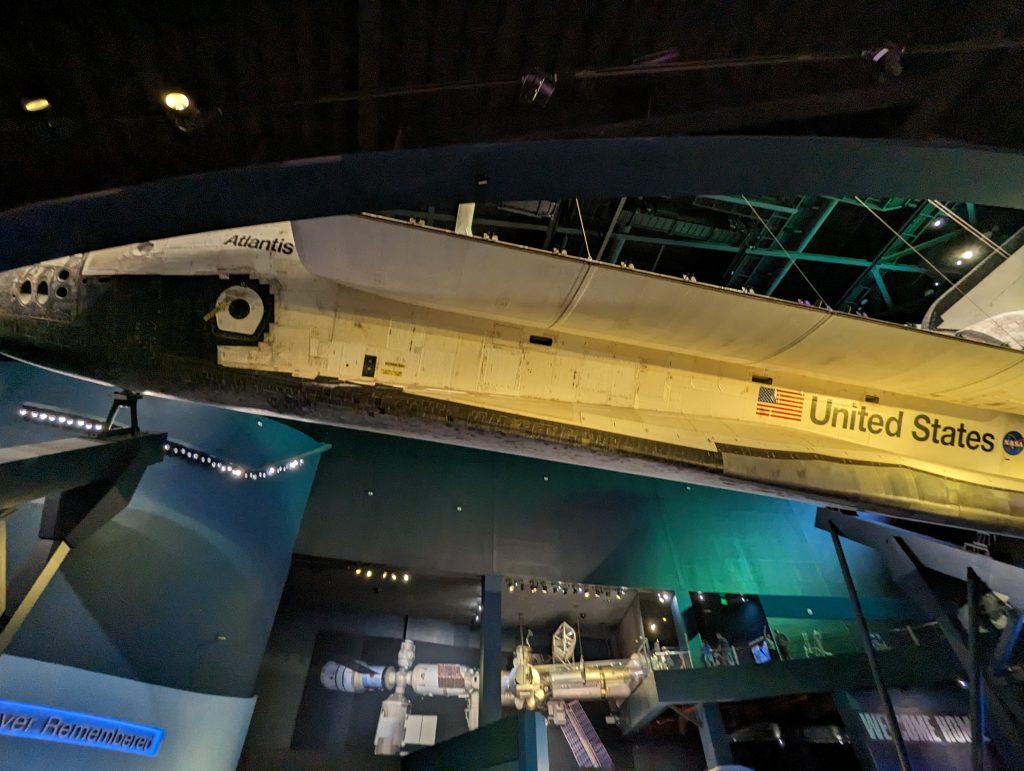
- We take a look at the shuttle from above before racing down the spiral-shaped platform to witness the shuttle launch.
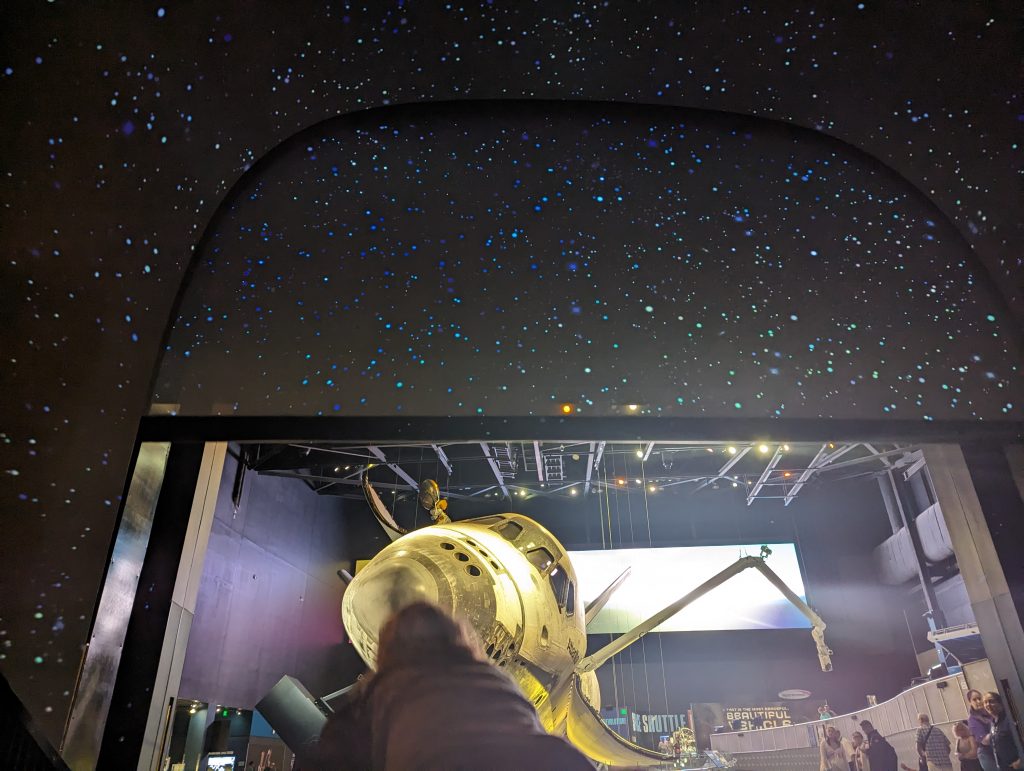
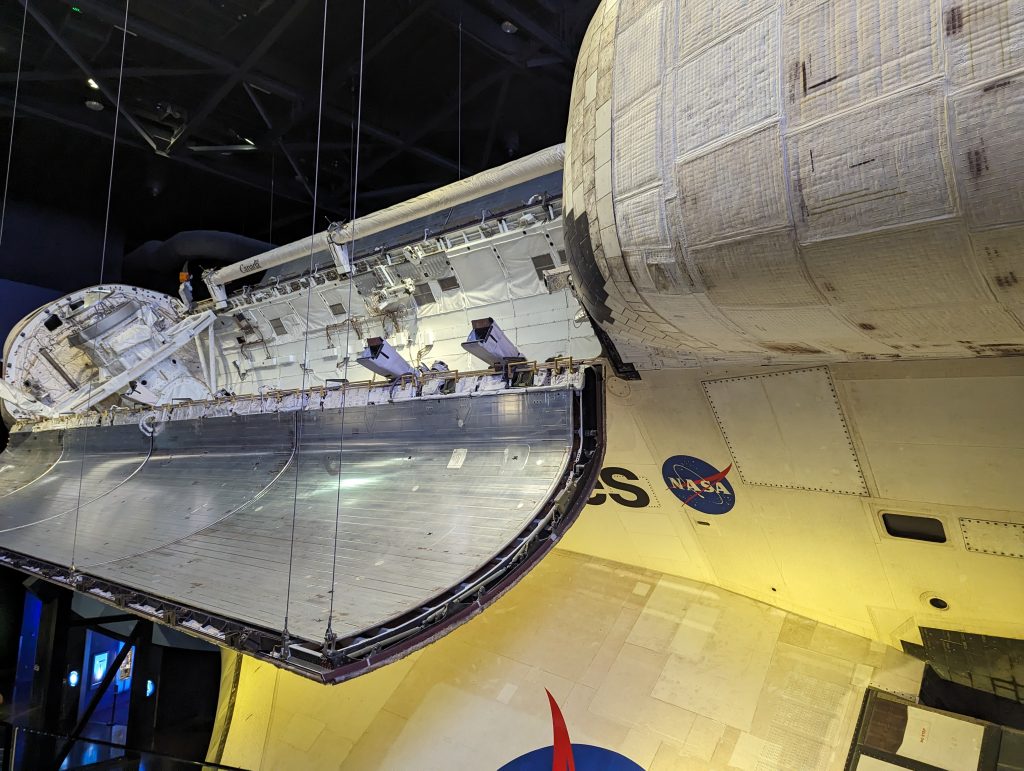
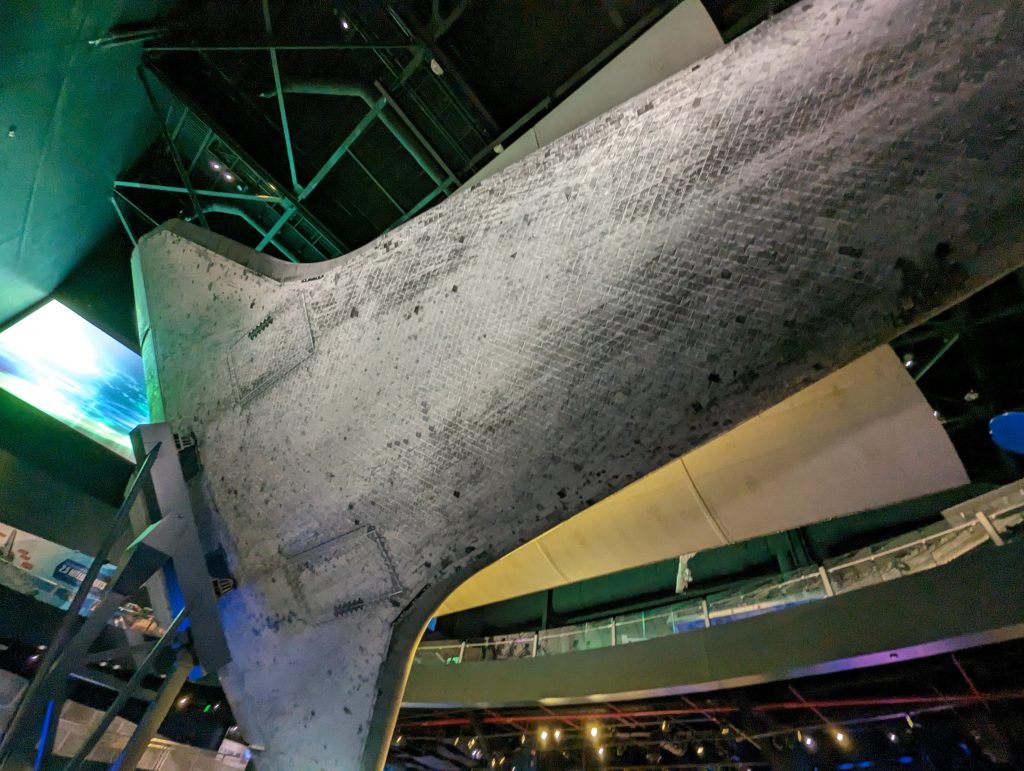
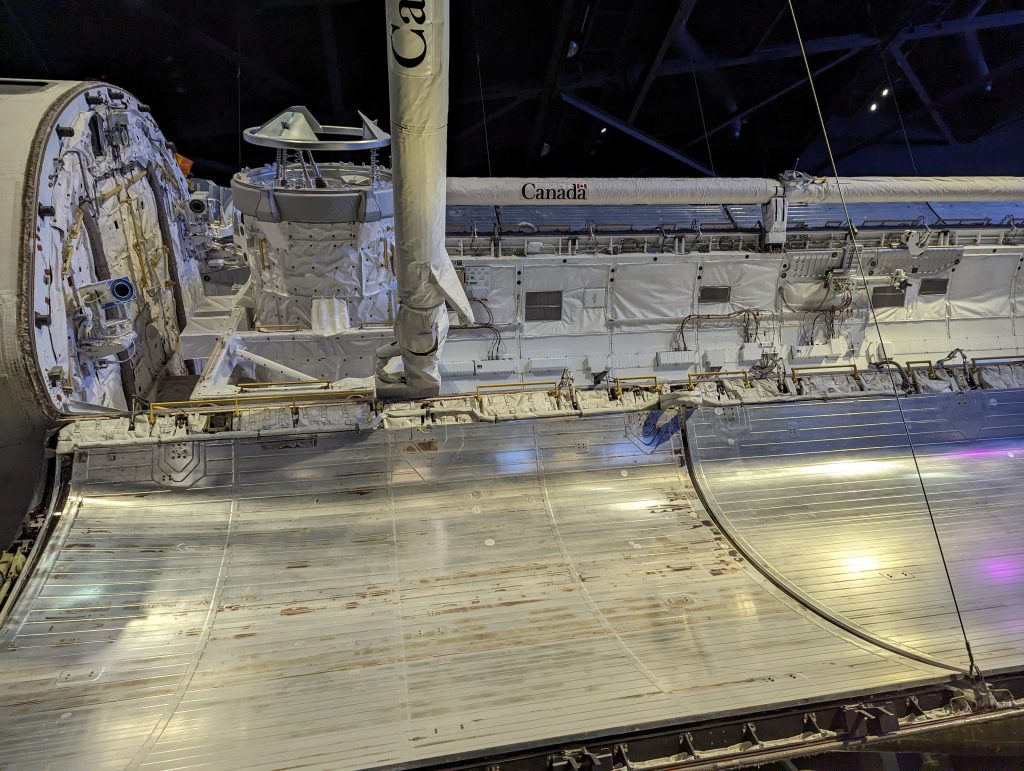
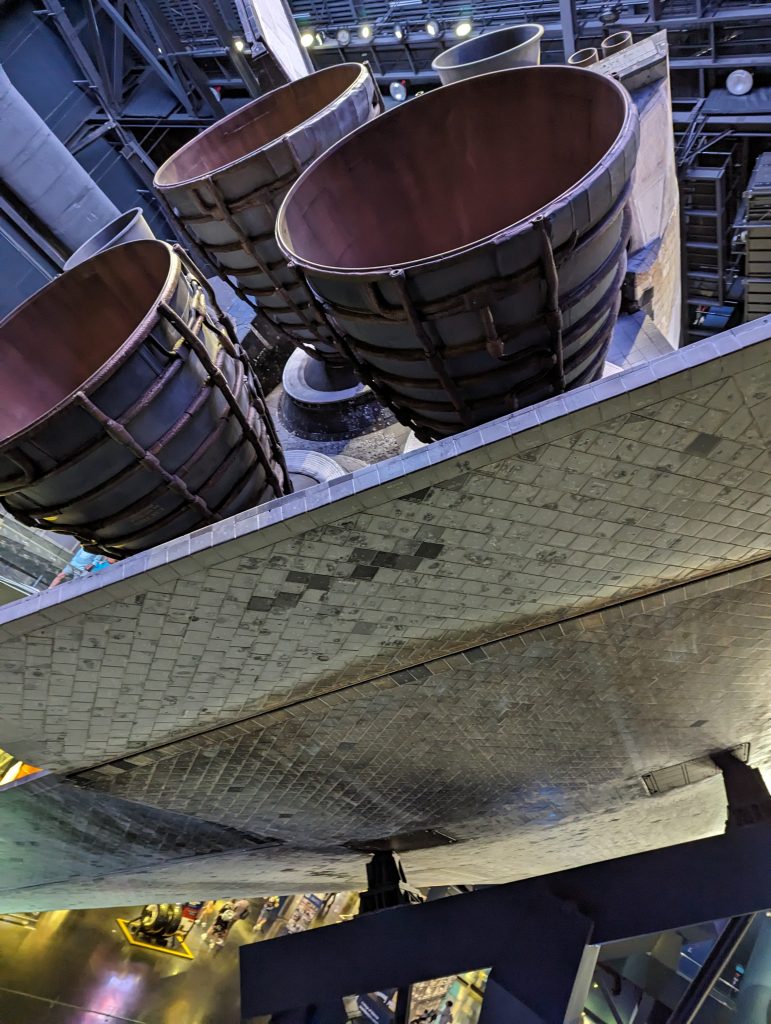
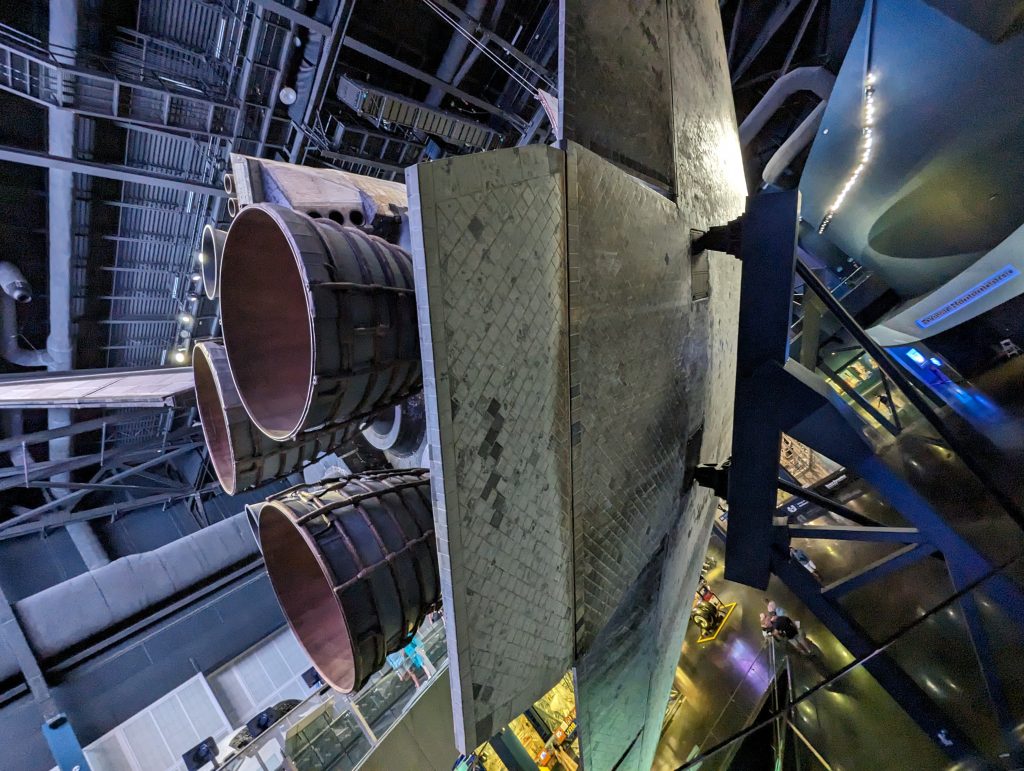
- NASA has set up a simulation room to simulate one and has done a great job of making the experience feel real – we barely make it into the last show and it pays off – it’s really great!
- Now it’s off to the store just before closing time (10 minutes before closing time), where we are sure that they won’t kick us out at 5 pm sharp.
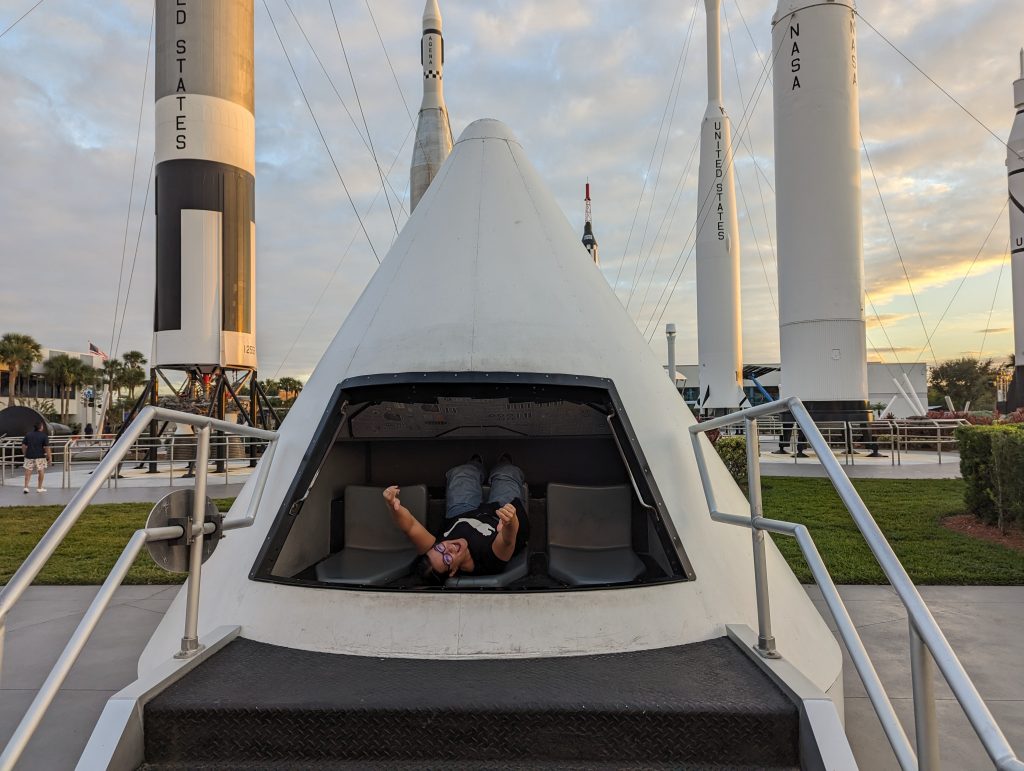
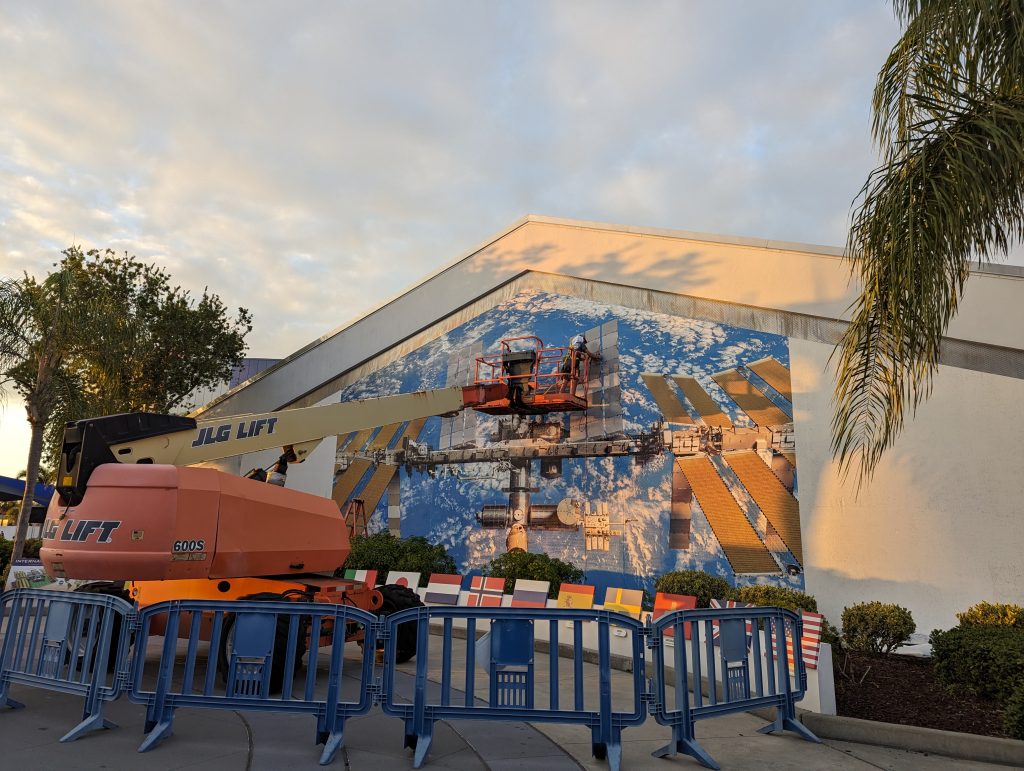
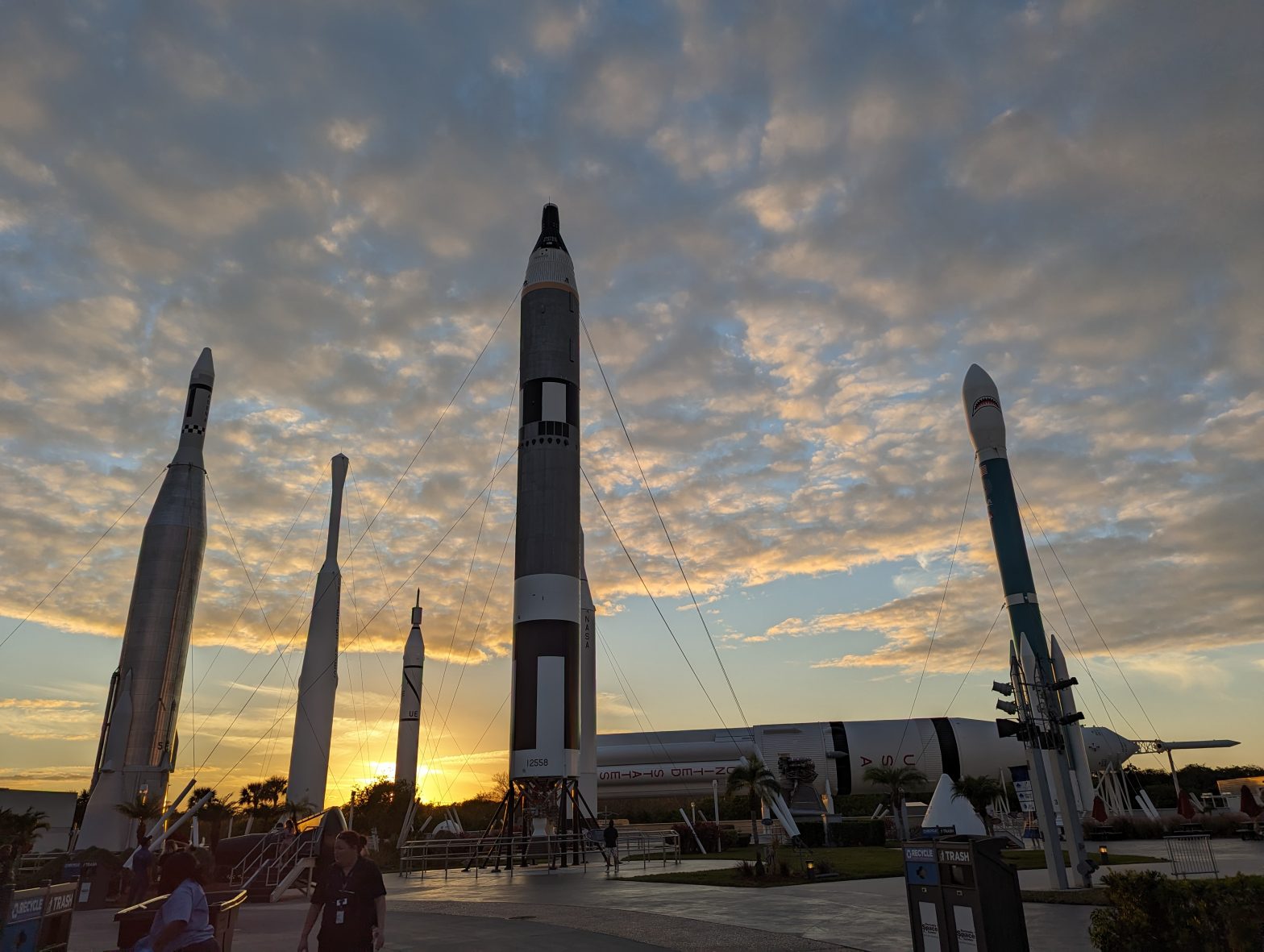
- In the wonderful light of the sunset, we take a stroll through the rocket park, where all kinds of NASA rockets are on display.
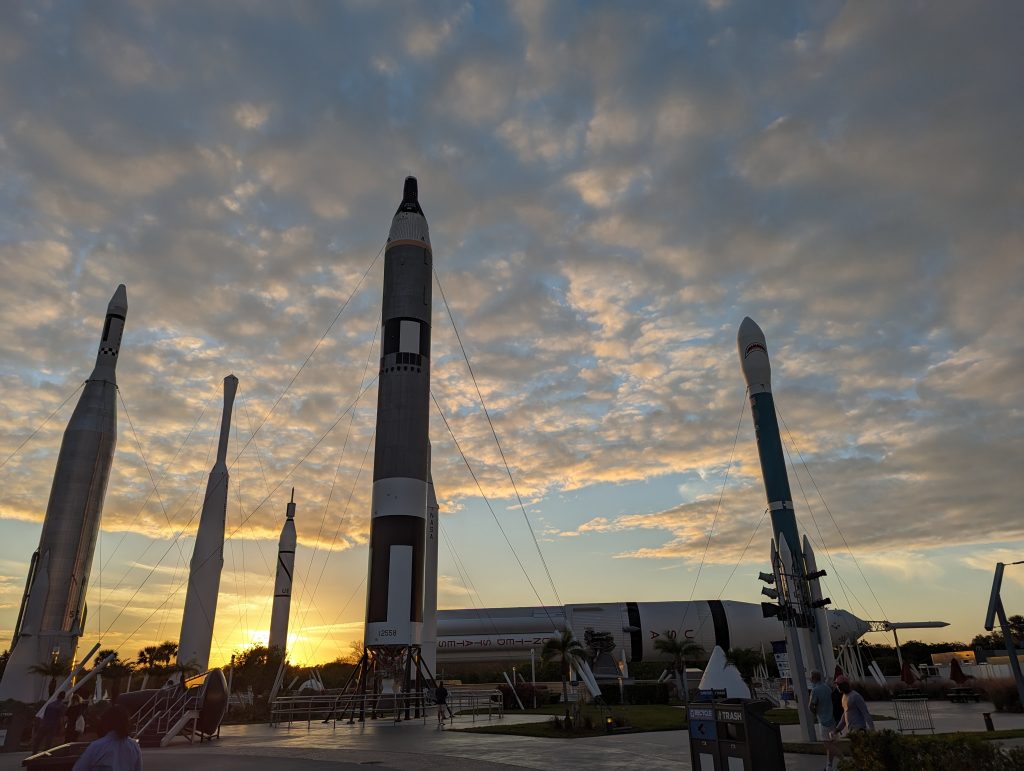
- That was another MEGA day!
Thursday, 9.11.
The not so crystal clear Crystal River
- We arrive at River Adventures, where we have booked our manatee tour, at 12 noon and check in relaxed – not like the couple who run in at around 12:13 and shout “We have booked the tour at 12:15, is this here?”, to which our guides reply in surprise “No, we don’t have a tour at 12:15 – maybe across the street?”
- There is no shortage of tour operators, as this is the only place where you are allowed to experience the fascinating animals up close and snorkel among them.
- With an hour to spare, we ask the guides for a good place to chill out and they recommend that we drive to a nearby park by the water.
- We’re already in the car when we take a closer look and realise that the park is just a quarter of an hour’s walk away – that’s manageable in the time we have left – interesting that it didn’t even occur to the guide to suggest walking to us.
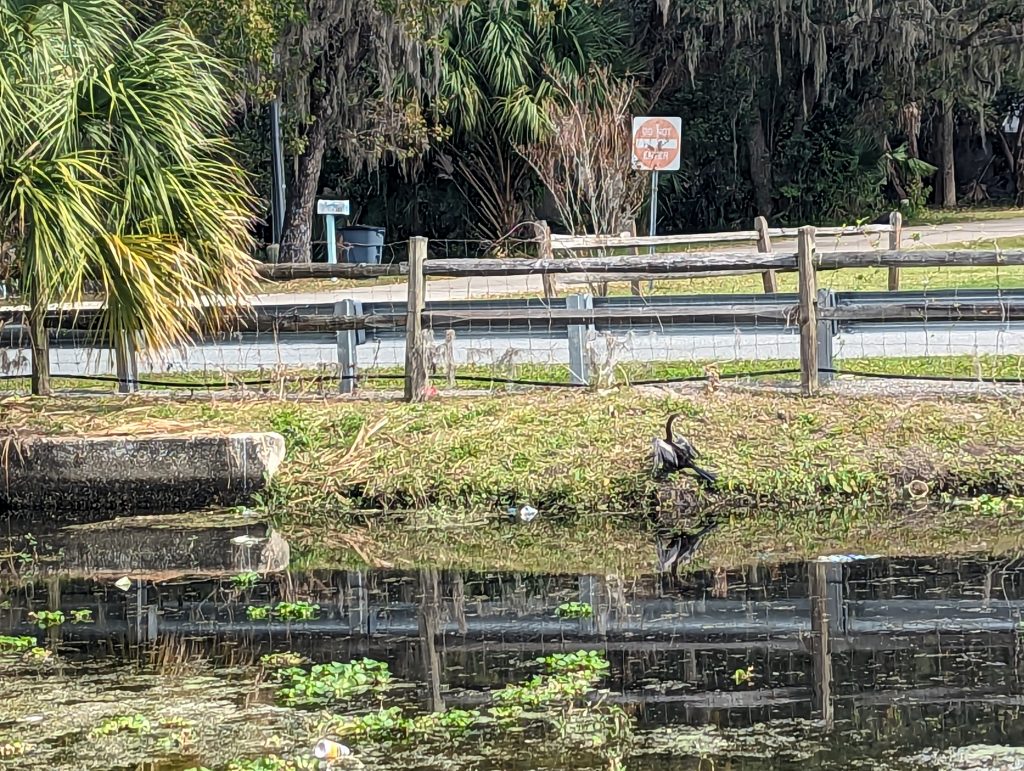
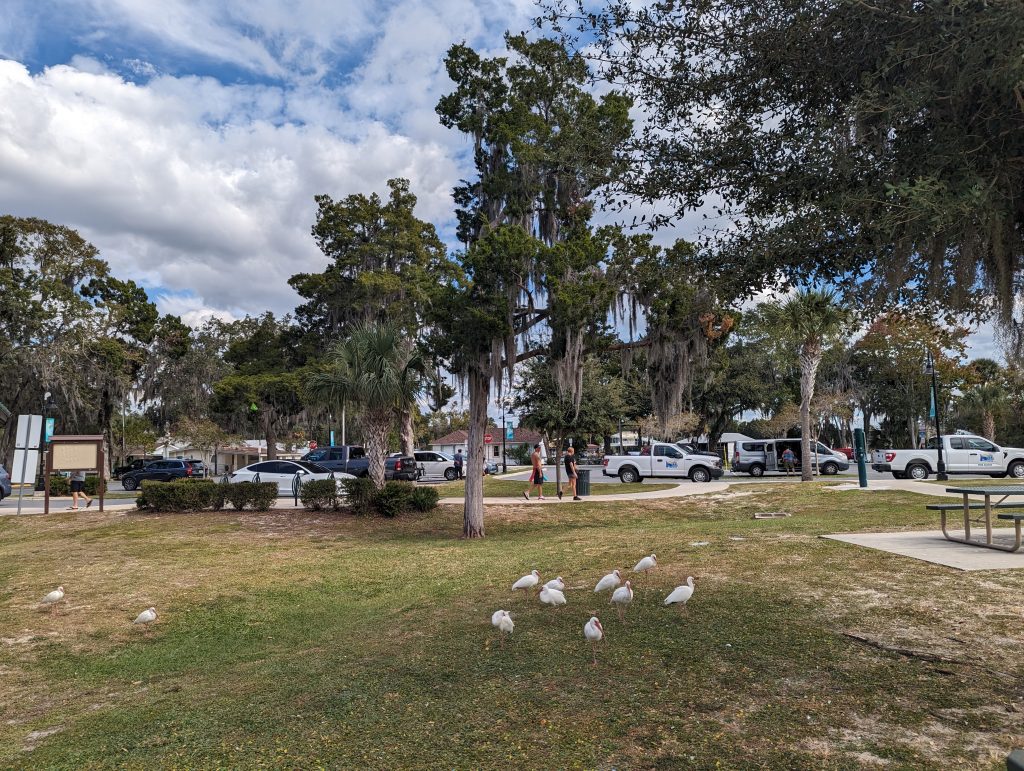
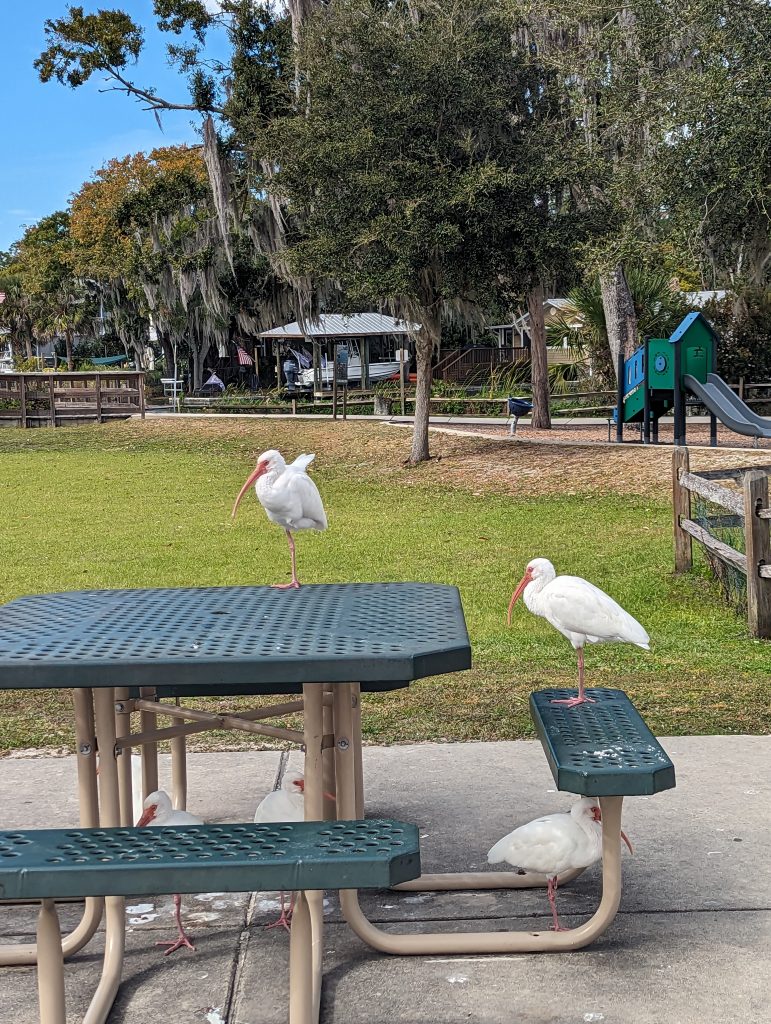
- The “park” is more of a narrow corner without a road, but still right by the water with a mini beach and lots of ibises.
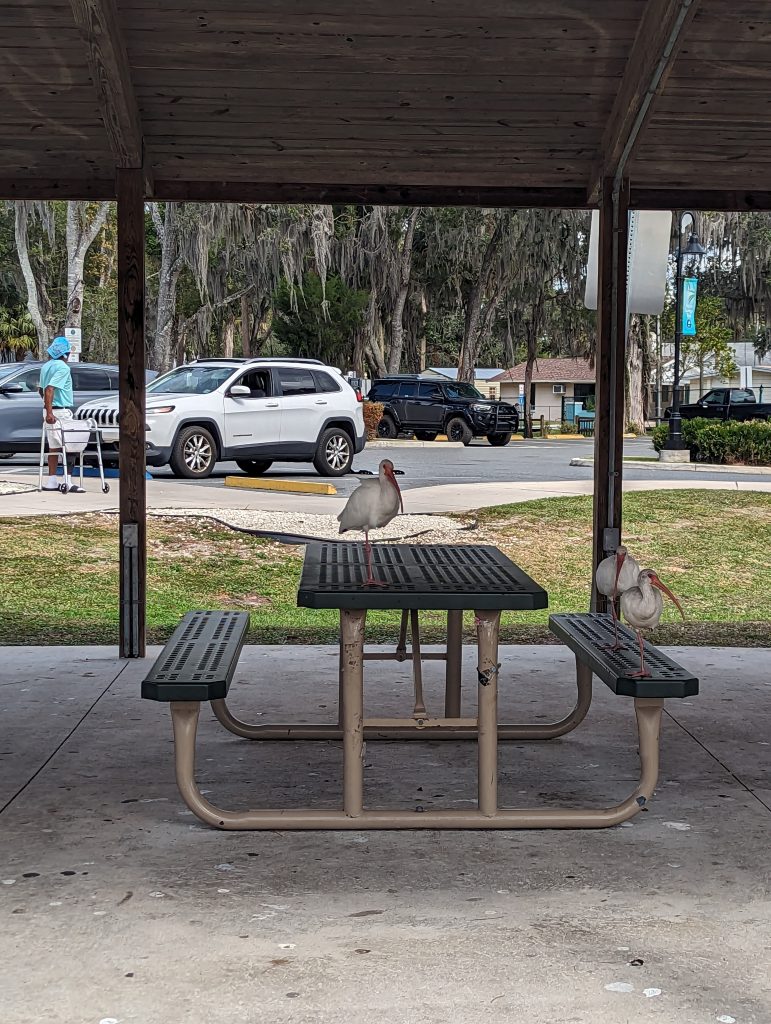
- We sit down on one of the tables that hasn’t been taken over by ibises and eat snacks.
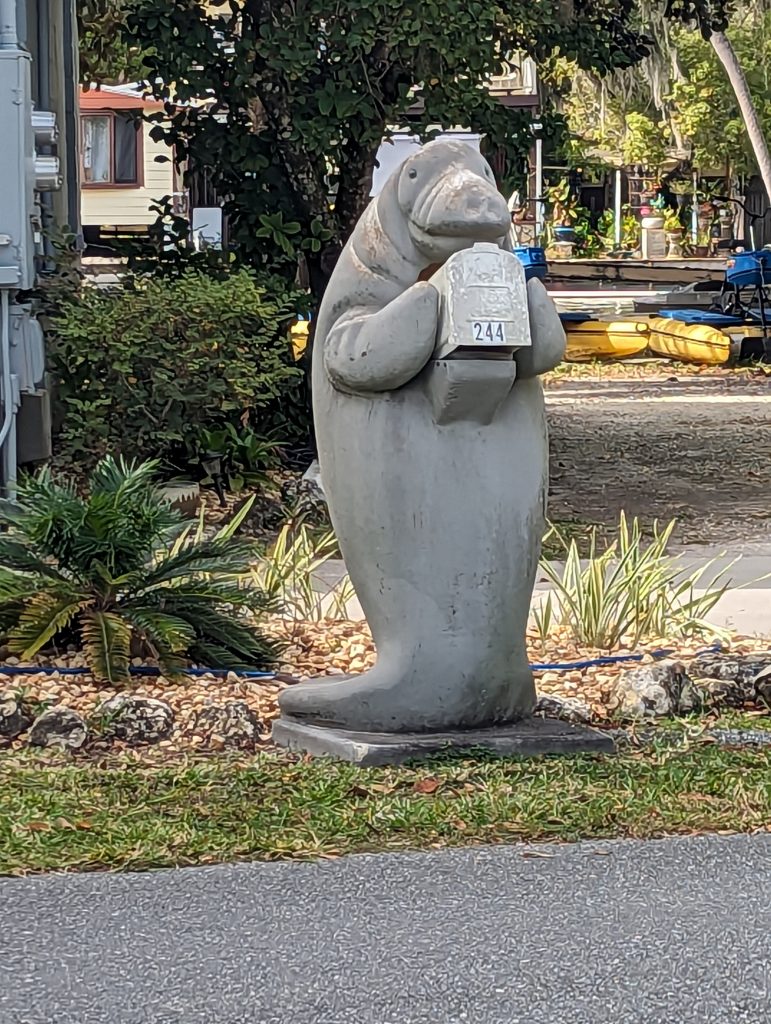
- Back at the center, our guide, Bree, gives us an introduction to swimming with manatees and how to behave – you must not touch them, get too close to them or make too hectic movements – in short, you have to behave as calmly and passively as possible when one of the animals is nearby.
- We take a minibus to the boat landing stage, where our captain, Jason, is already waiting for us.
- Bree and Jason tell us a few anecdotes during the boat trip, for example that there are many birds here, such as ospreys, which build their nests in selected places and then keep and maintain them for decades.
- One of these chosen places was the boat crane of a “snowbird”, as Jason calls him, a term Floridians use for the people from the north who own a house here that they use to escape the cold winters in the north. Since Ospreys are protected, you can’t simply dismantle or demolish their nests, of course, so the nest is still on its boat crane for more than ten years now. But, Bree says, the snowbird has obviously taken it with humour and simply bought a second boat crane.
- There are a lot of mullets here, the fish that regularly jump out of the water and Bree explains that no one knows exactly why they do this. One theory is that the fish ground on the bottom and get a lot of sand in their gills, which they then try to get rid of by jumping.
- Jason also says that during Corona, when all the bars were closed, they invented the mullet game in their village (very close by here). They would all meet up with their golf carts (which they use in the village as their main means of transportation) by the sea at sunset at a safe distance from each other each equipped with a bottle of their preferred alcohol. Every time someone saw a mullet jump, they would shout “Mullet” and everyone had to drink a shot.
- We make two dives to see manatees, but they are not very easy to see.
- The water here is not as crystal clear as it once was, due to a hurricane that hit late this summer and caused the salt water to run into the actual freshwater pool, killing the seagrass here.
- As a result, the sandy bottom can no longer settle well when it is stirred up and the whole bottom becomes swampier and thus the water murkier.
- You therefore have to look hard to see a manatee.
- Manatees, on the other hand, have no problem spotting us, as they can feel the slightest movement in the water thanks to the hair on their backs and therefore have a clear advantage over us.
- On the first dive, I see the back of a huge manatee, but unfortunately nothing else of the manatee – nevertheless, it is impressive when such a huge animal swims underneath you.
- On the second dive, we see a mama manatee with a baby, which is totally impressive – at first I think the baby is the mama because it’s so huge, until I see the mama surfacing next to it.
- The baby is kissing (pressing its nose into the face of) a guy next to Matthäus, who lets out a scream of fright.
- Then it turns away from the guy and gives Matthäus a cuddle: Matthäus, who has already been warned by the guy, sees it coming towards him head-on before, poof, it presses its nose into Matthäus’s face on the diving goggles – then it swims underneath him and the mom follows behind.
- Bree tells us that unlike other mothers in the animal world, manatee moms are not so overprotective. It has happened to her that a manatee mom has pushed her baby towards her with her snout, saying “Watch out for it will you, while I am off doing something else.”, only to have the mom come back an hour later and pick up the baby again – manatee childcare.
- We also learn that manatees are not actually herd animals, but sometimes gather as a large group at the springs and then warm each other by moving very close together à la penguin technique.
- Finally, we bathe in a freshwater spring, of which there are many here and where you can at least get a small glimpse of the crystal-clear water that exists here – you can see the bottom without any problems and you can even see bubbles indicating the spring.
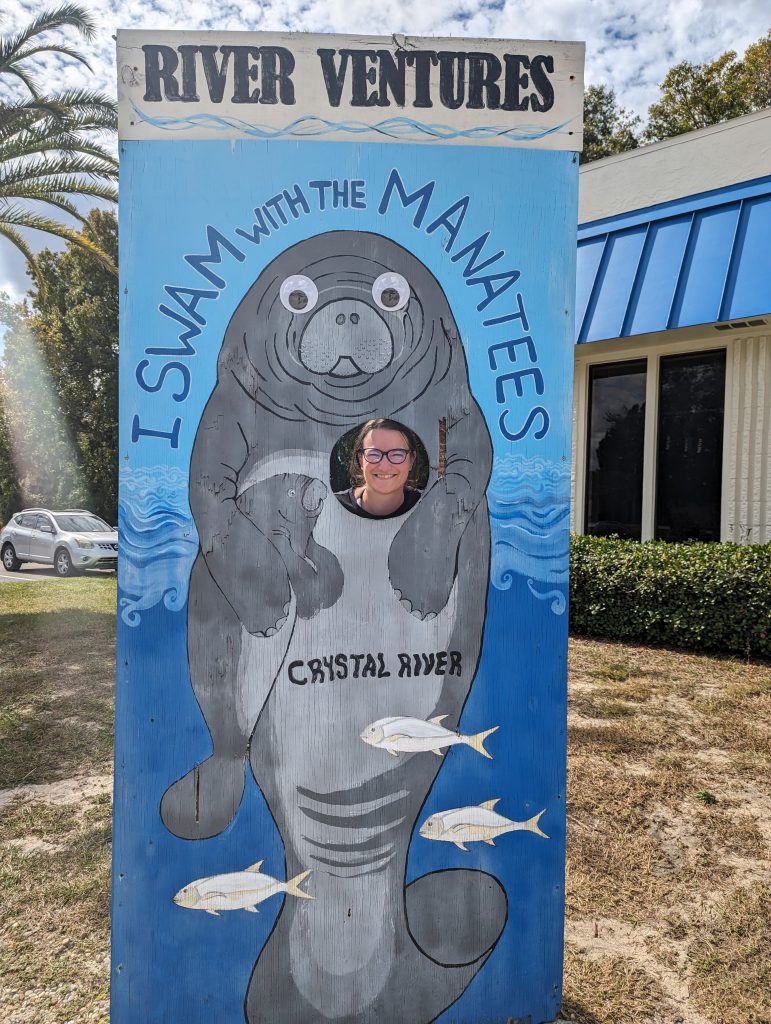
- That was super nice!
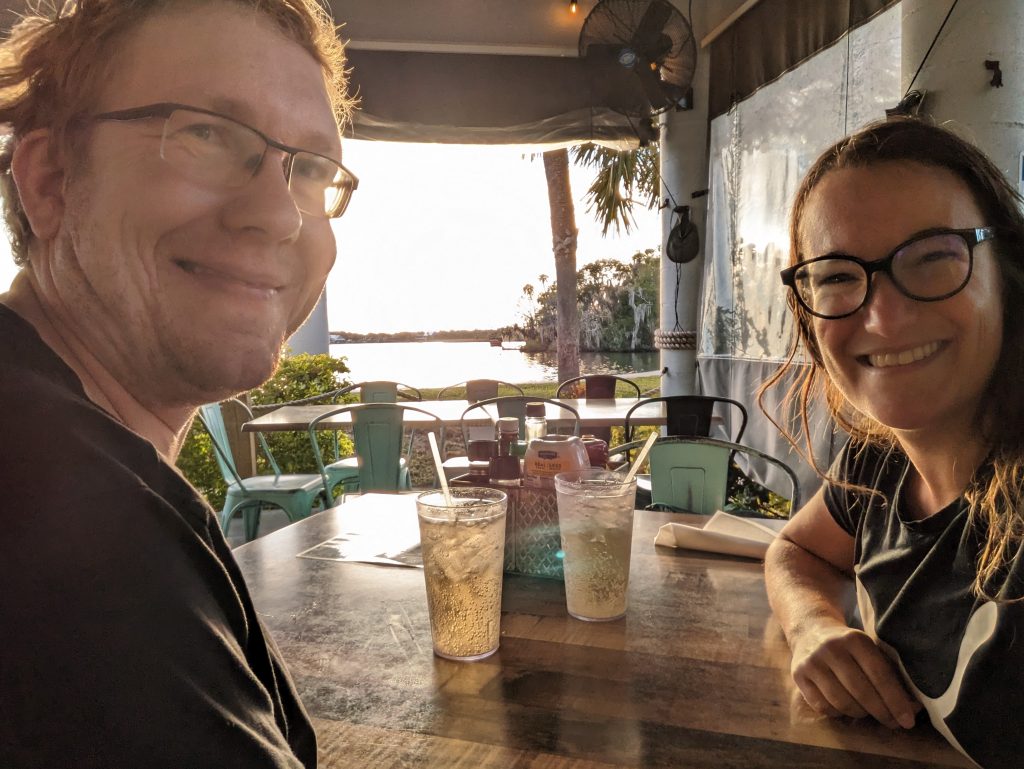
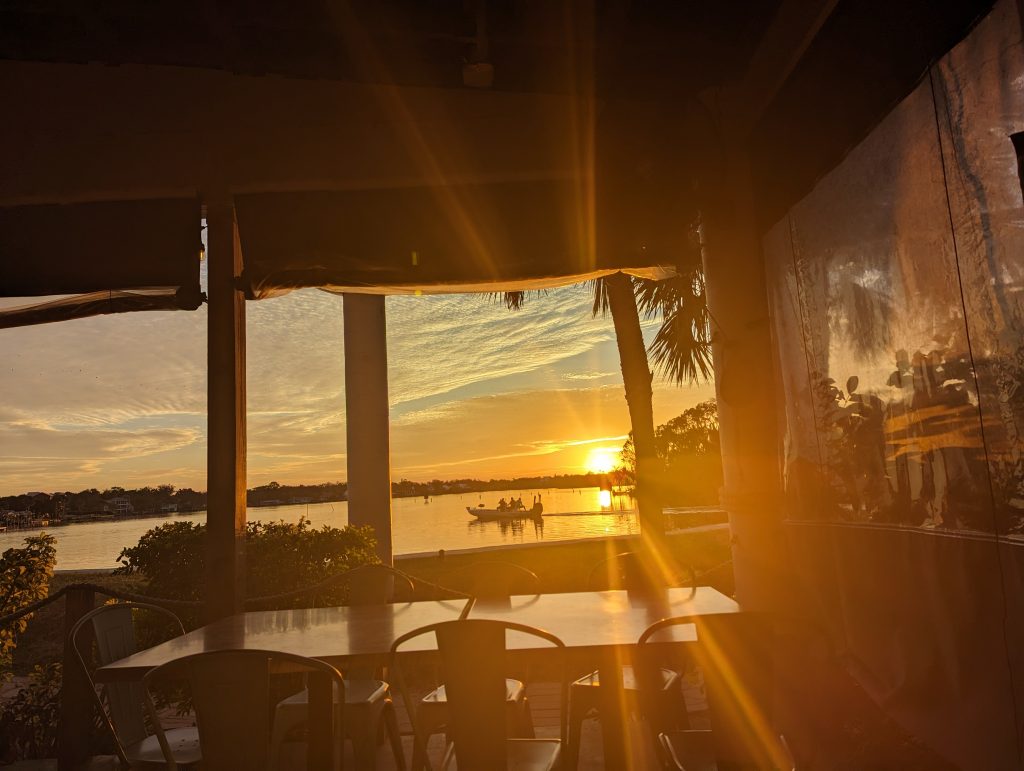
- On Jason’s recommendation, we round off the great experience with a visit to the nearby restaurant with a view of the sunset.
- On the way home in the Uber, we see another highlight:
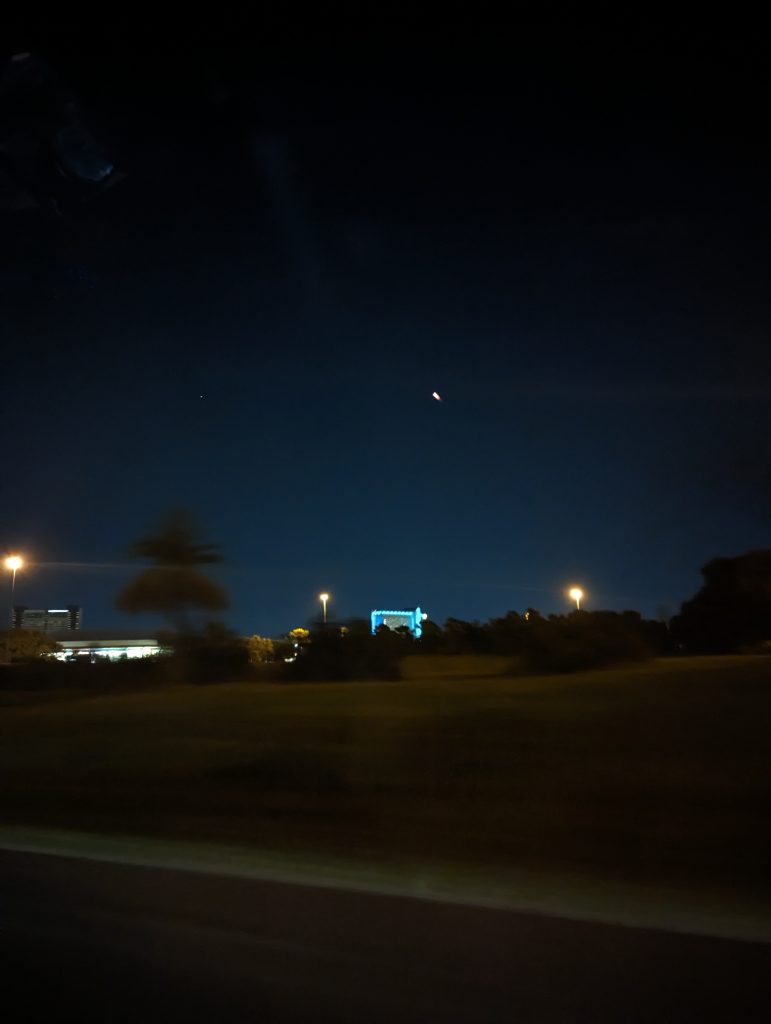
- A rocket launch – and you can actually see it well from the car! Even the Uber driver is a little infected by my enthusiasm and says that nothing like this has ever happened to him before (I assume he means someone watching the launch enthusiastically from inside the car, not rocket launches – they happen here all the time).