
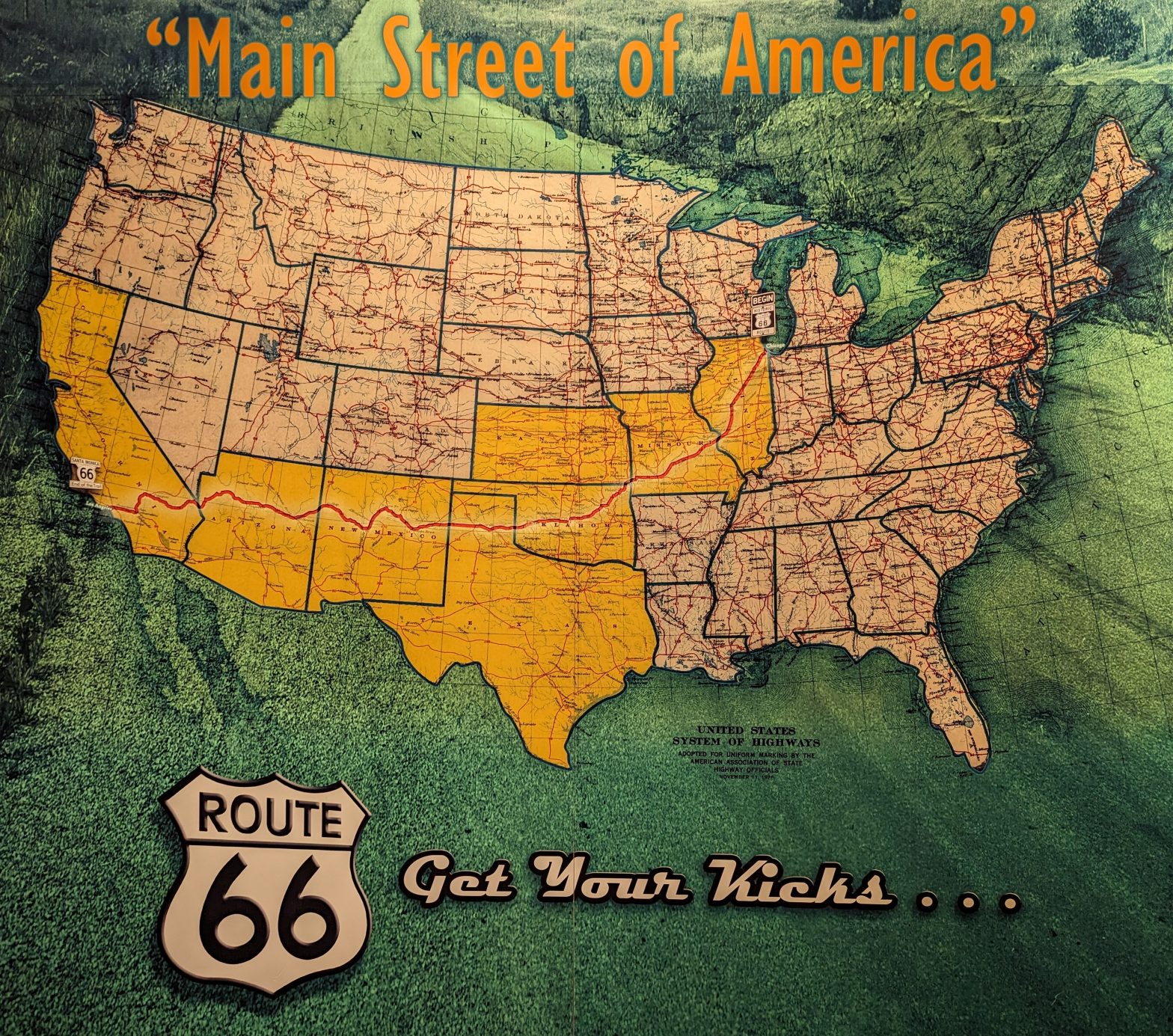
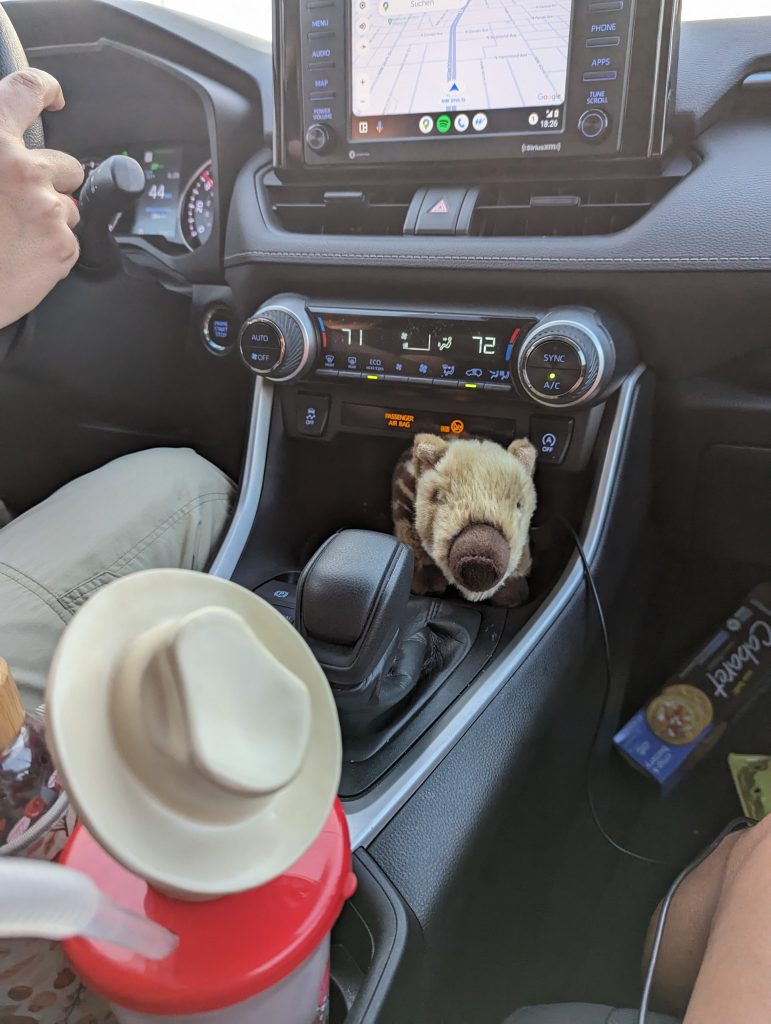
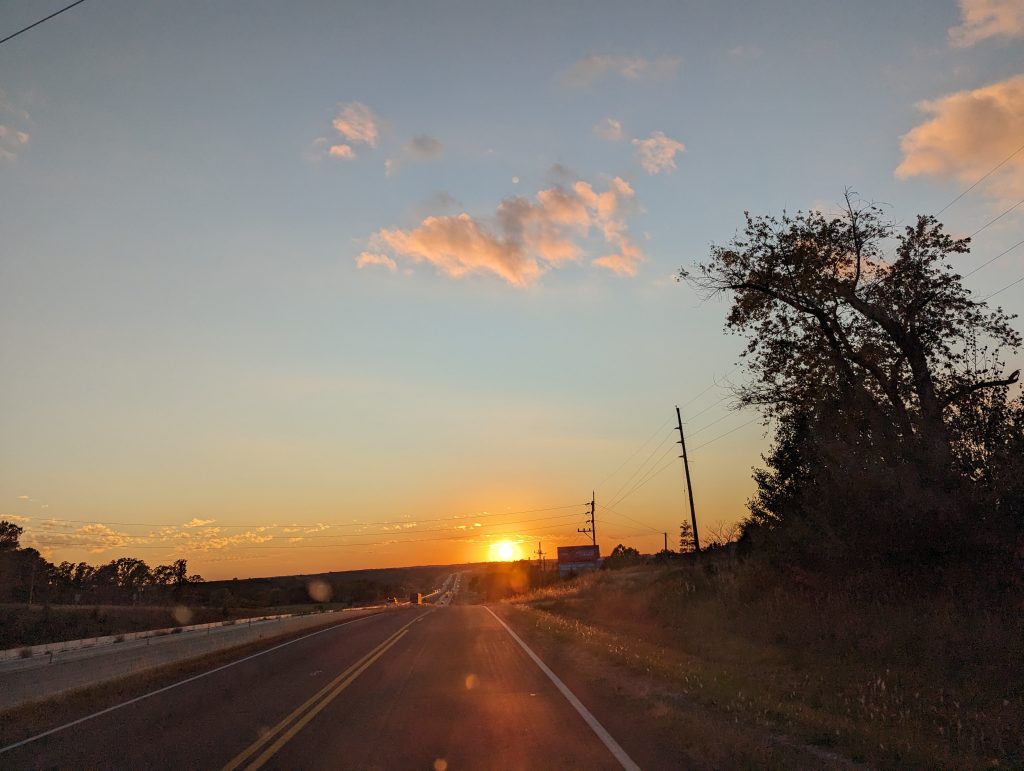
Stretches of straight roads lined with fields, deserts, steppe landscapes and lots of nothing with towering mountain ranges on the horizon stretch out in front of you as you cruise through the countryside on Route 66. All of this in a comfortable, air-conditioned SUV, its cup holders well stocked with water, iced tea and coffee, listening to “Country Roads” – in short: road trip feeling at its best.
In “The Grapes of Wrath”, author John Steinbeck gave Route 66 its most famous nickname, “The Mother Road”. Even though “The Grapes of Wrath” is mainly about the 1930s on Route 66, the author managed to aptly summarize the essence and what still gives Route 66 its unique character in three words. The history of the road goes back to the beginnings of road construction in America: at the beginning of the 19th century, cars were slowly becoming affordable for a wider section of the population and the demand for better road networks increased. In the American state of Oklahoma alone, the number of registered automobiles rose from 9000 in 1914 to 144500 in 1920 and to 576046 in 1930. For this reason, the US government issued the “Federal Aid Highway Act” in 1921, which provided for the intensive development of a good road network throughout the USA.
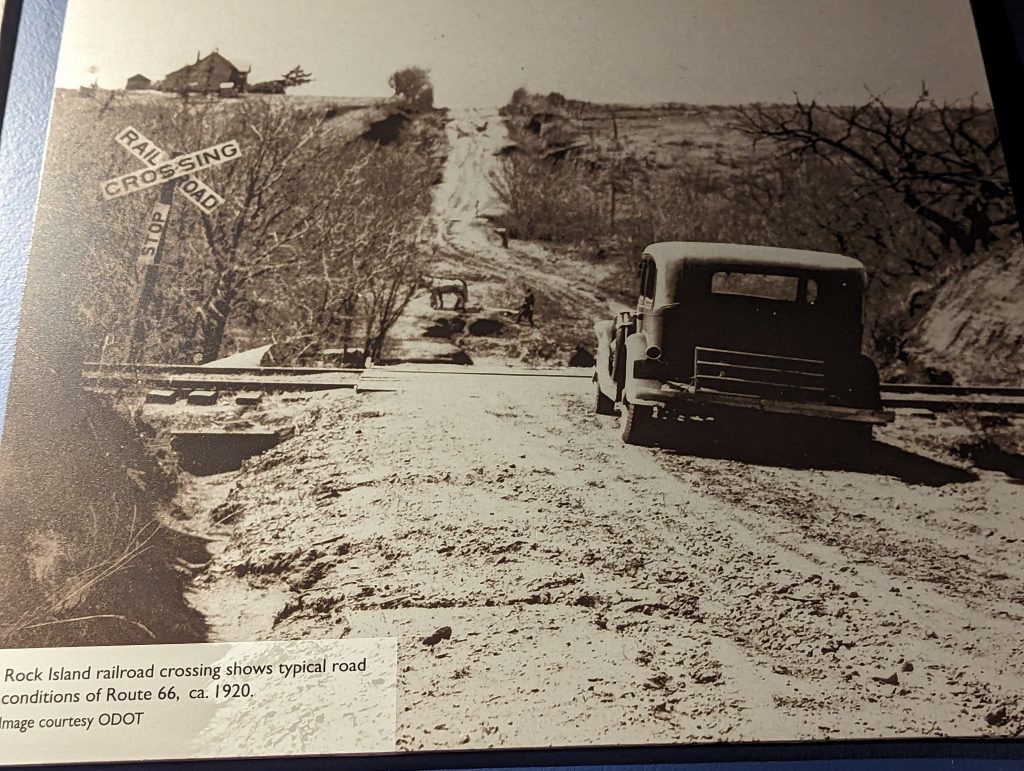
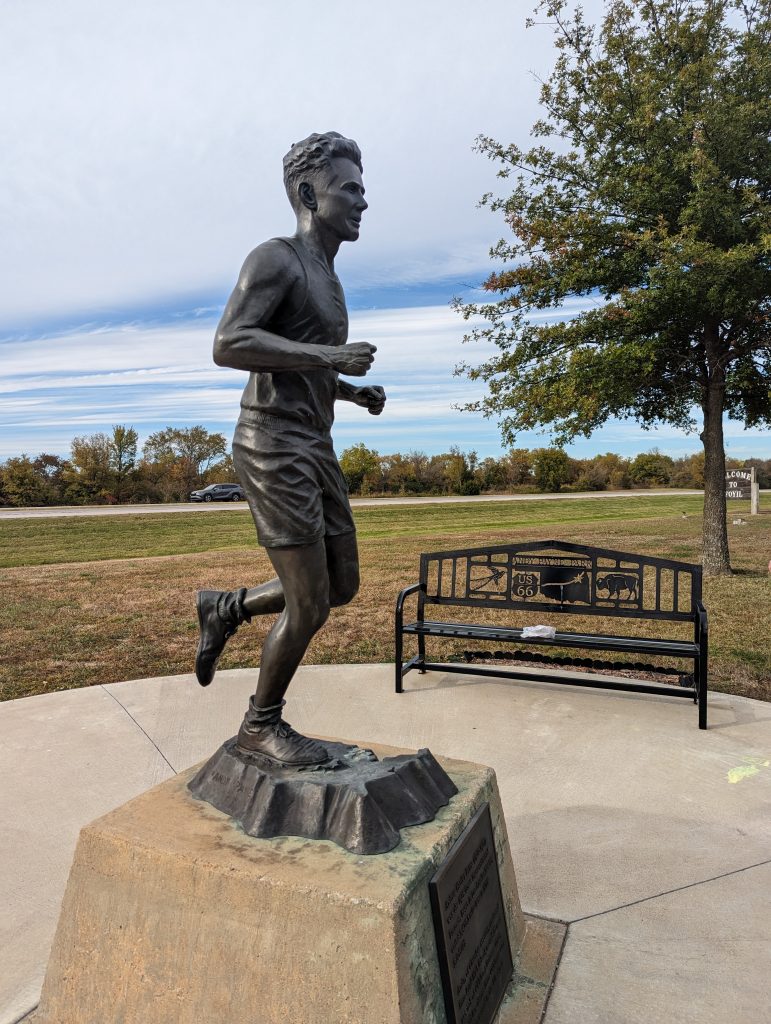
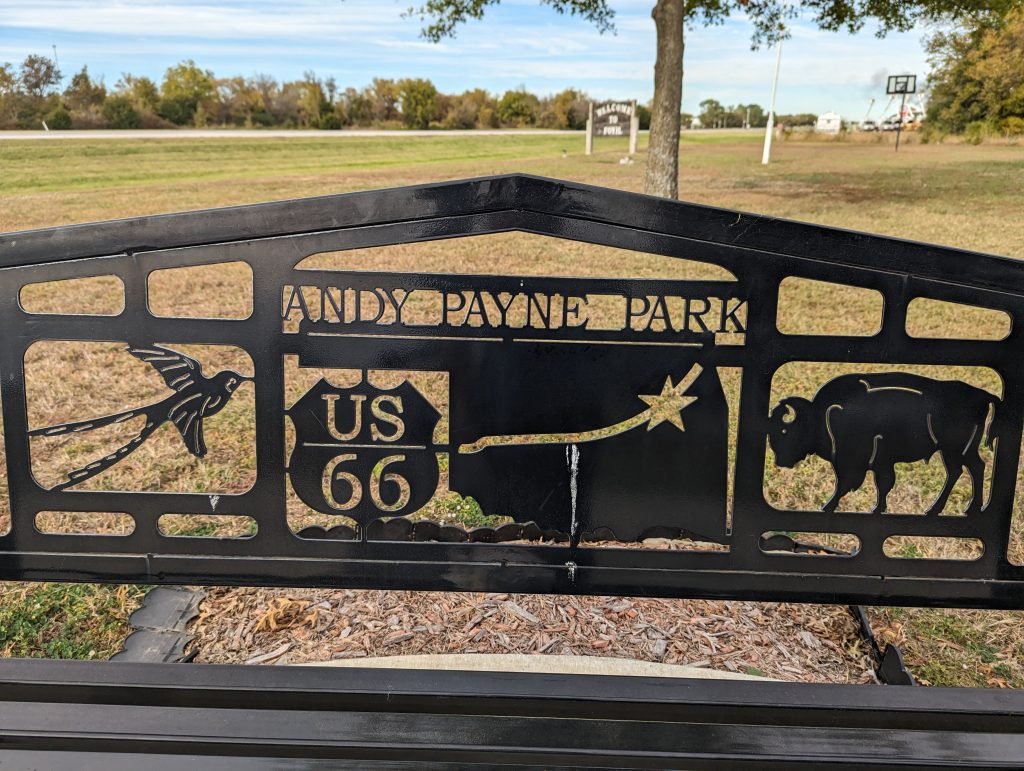
Amongst others, a road was planned to connect Chicago to Los Angeles in 1926, which was given the number 66. Even though many of the road sectors already existed, it took until 1937 for the entire road to be paved. Right from the start, a publicist was employed to promote Route 66. One of the initial events was an ultra-marathon of around 5500km, most of it over Route 66, which to everyone’s surprise was won by the then unknown Andy Payne, a member of the Cherokee Nation. In his honor, a statue of him still stands today in Oklahoma, his home state, next to Route 66.
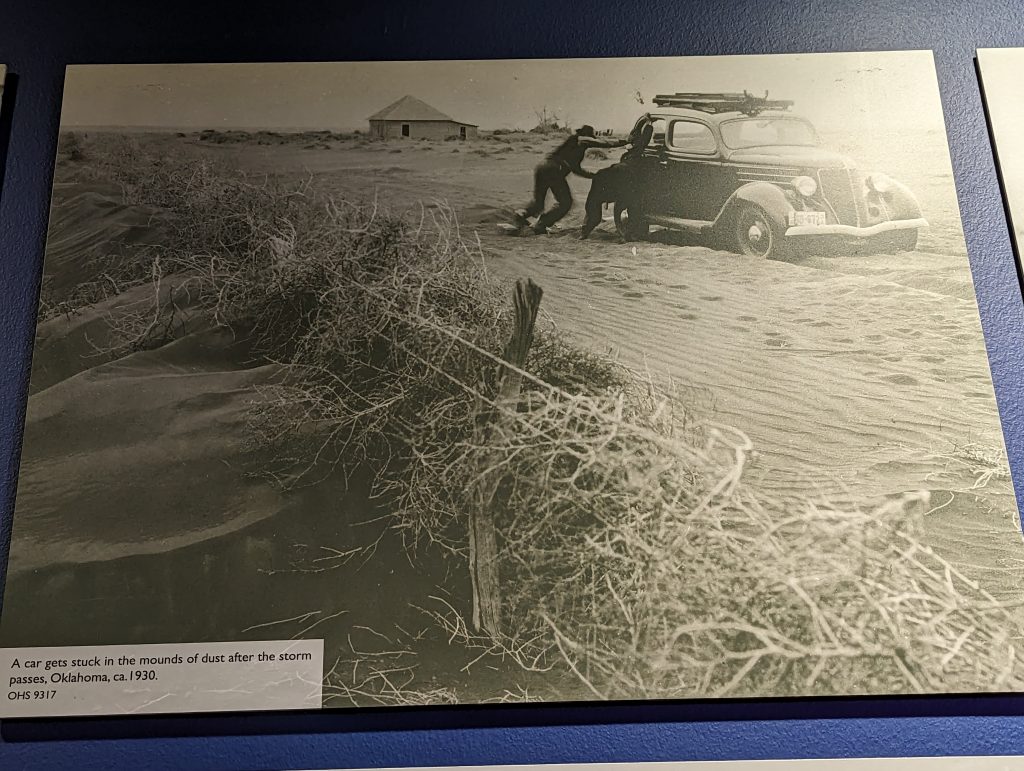
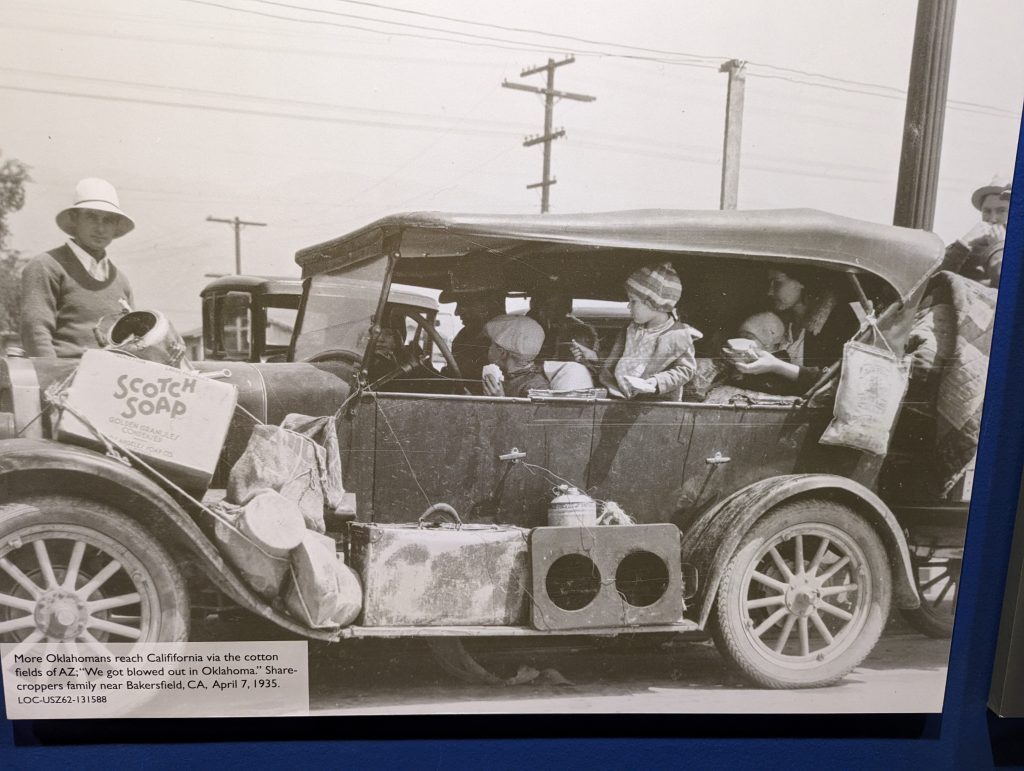
After the euphoric start of the route, however, its history became somewhat less romantic in the 1930s: during this time there was a prolonged drought, which led to major crop failures and resulted in large sandstorms. It caused many people from the “Dust Bowl” (the western part of Kansas, part of Oklahoma, the northern part of Texas and the north-western part of New Mexico) to flee the areas via Route 66 and seek their fortune in California.
The route experienced a revival in the 1940s, first during the Second World War, when it was expanded for mobilization purposes, and then after the war, when it was used by families as a kind of excursion destination. Similar to today driving along it was seen as a romanticized road trip. We also buy a guide (originally from that period) in the museum store, which describes the attractions along the route from that time. Back then, there were cafés, petrol stations (the petrol stations were much smaller) and motels in almost every town along Route 66 – a real boom for the route and the towns it passed through. The Dust Bowl era of the route was replaced by an image of freedom and “Get your kicks on Route 66”, as Nat King Cole sings.
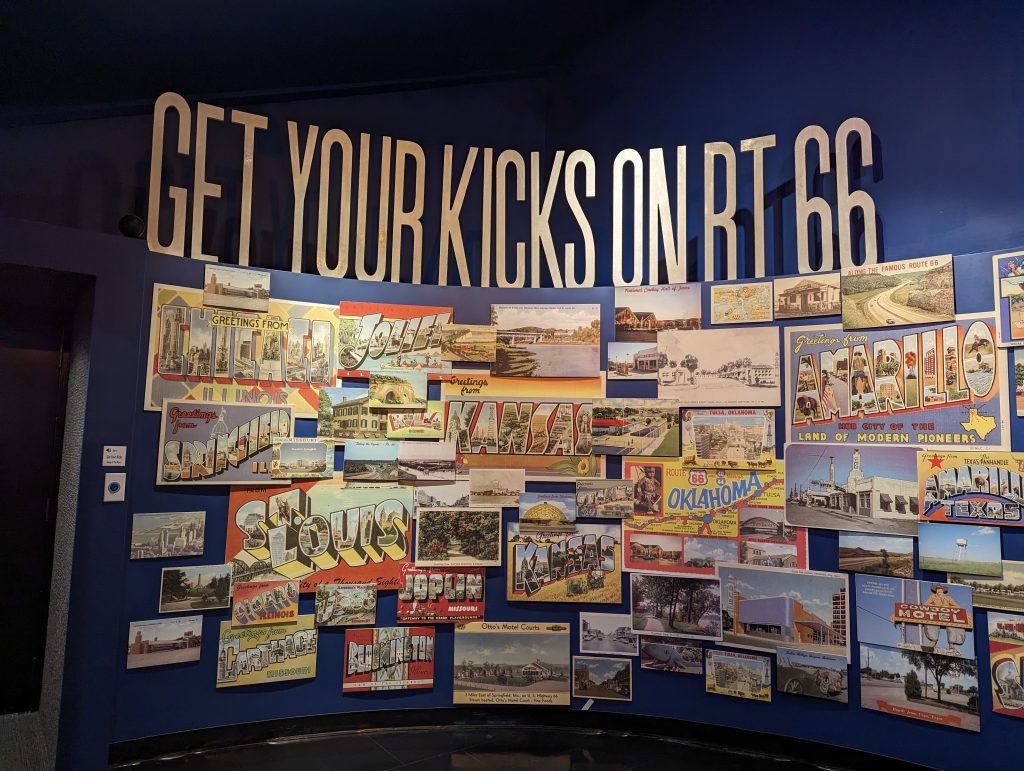
Over time, the routing has often changed. This we noticed when planning our trip and being faced with the choice of whether to take the pre-1939 alignment or the later one, for example. The euphoria surrounding Route 66 as a road trip destination lasted until the 1960s, when many roadside diners opened along the route and a TV series “Route 66” was produced.
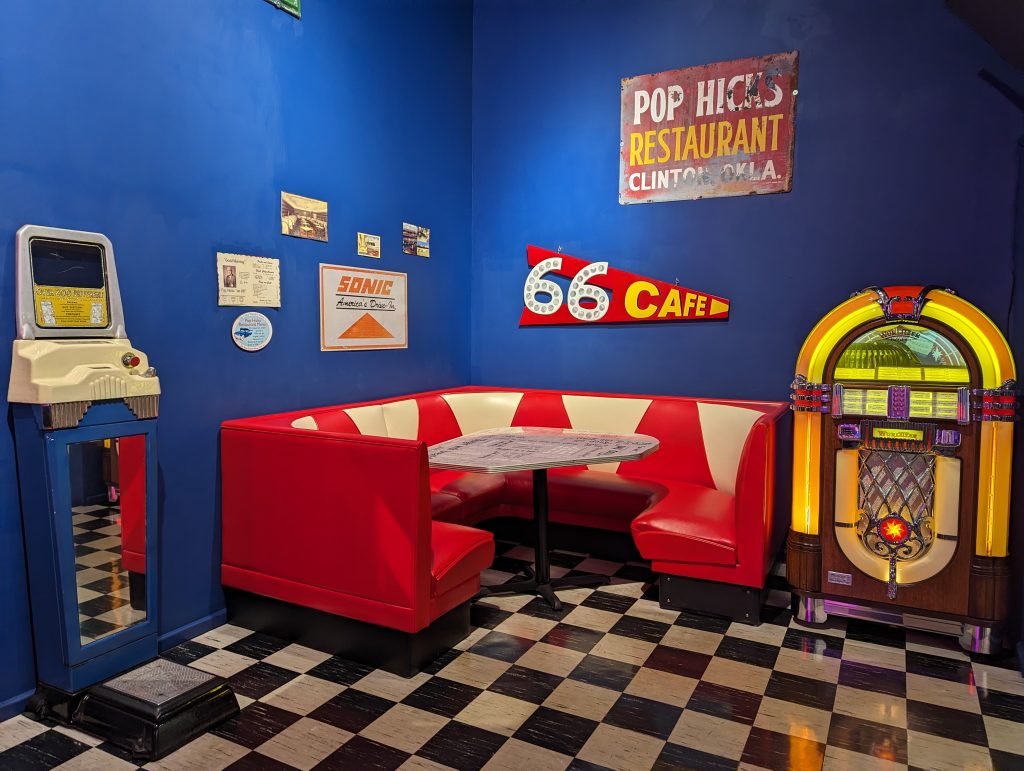
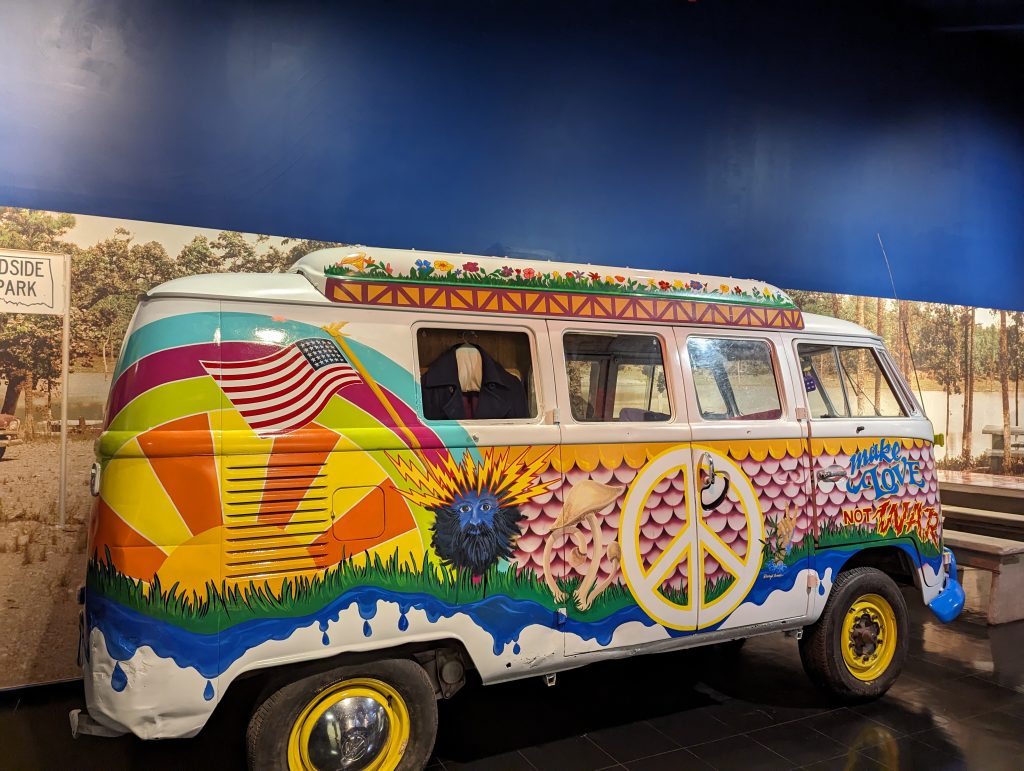
This was followed shortly afterwards by the end of an era: Dwight D. Eisenhower, who later became President of the USA, found the American road network to be old-fashioned and outdated – especially after seeing the then modern and already well-developed German autobahns: He saw the need to develop American roads to a similar standard. Thus the Federal-Aid Highway Act was passed in 1956, which provided for the expansion of the small roads into largely four-lane interstates, freeways and expressways – an undertaking that lasted until the 1990s and led to more and more parts of the former Route 66 either being forgotten, left to decay or simply expanded into interstates.
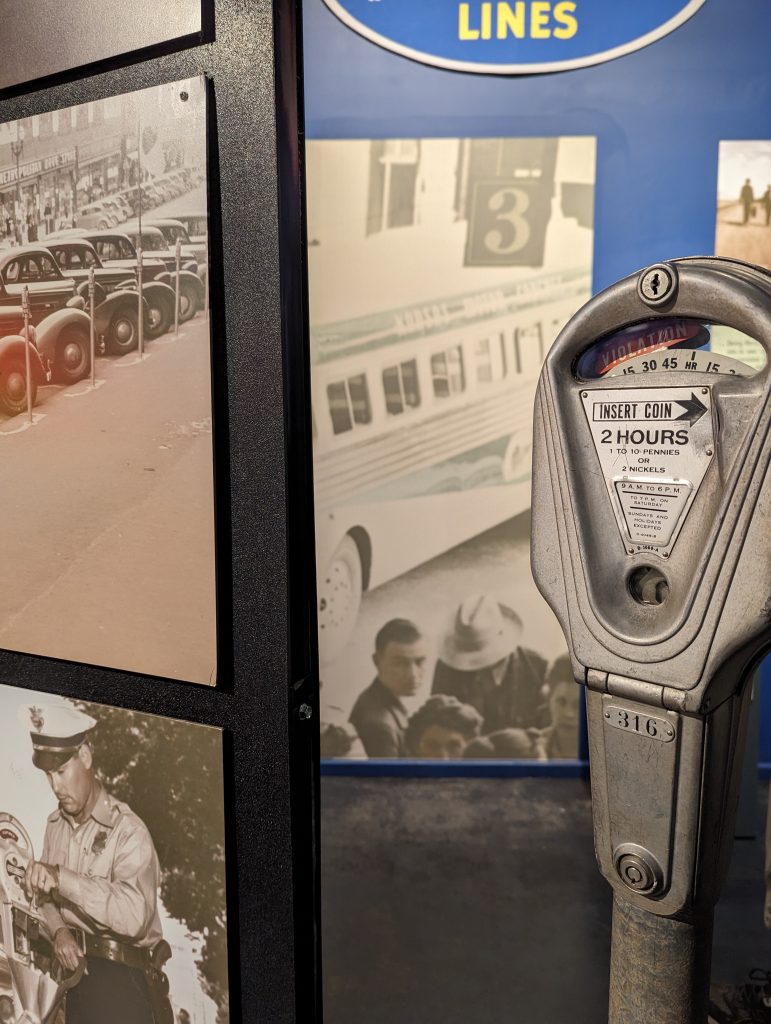
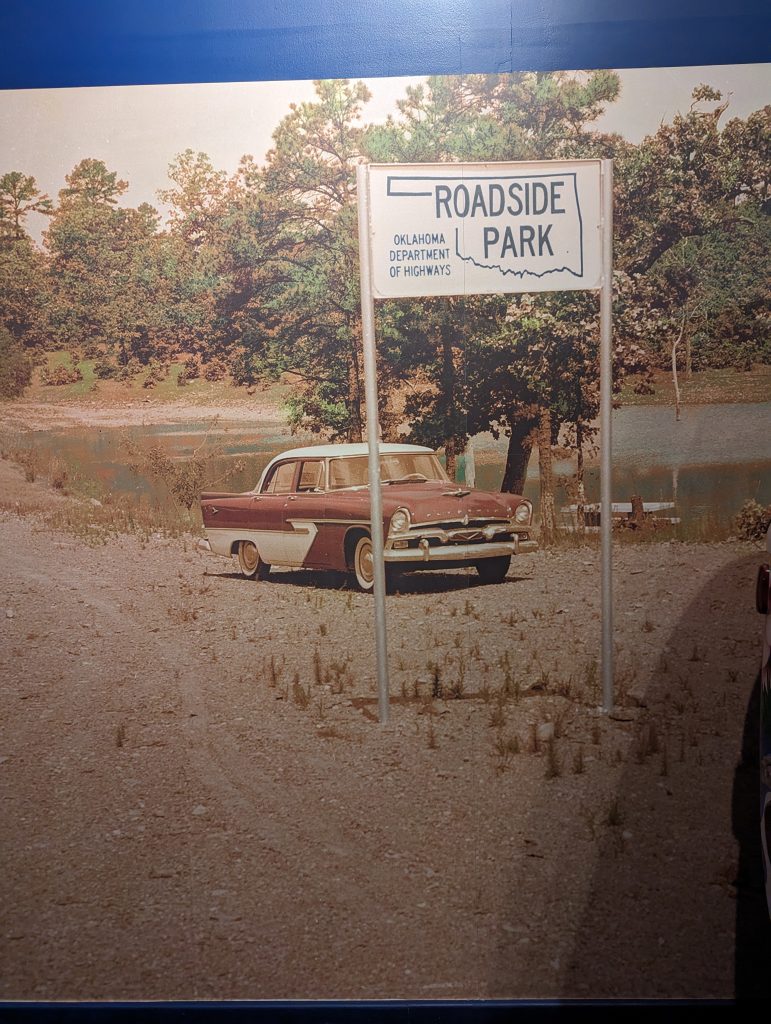
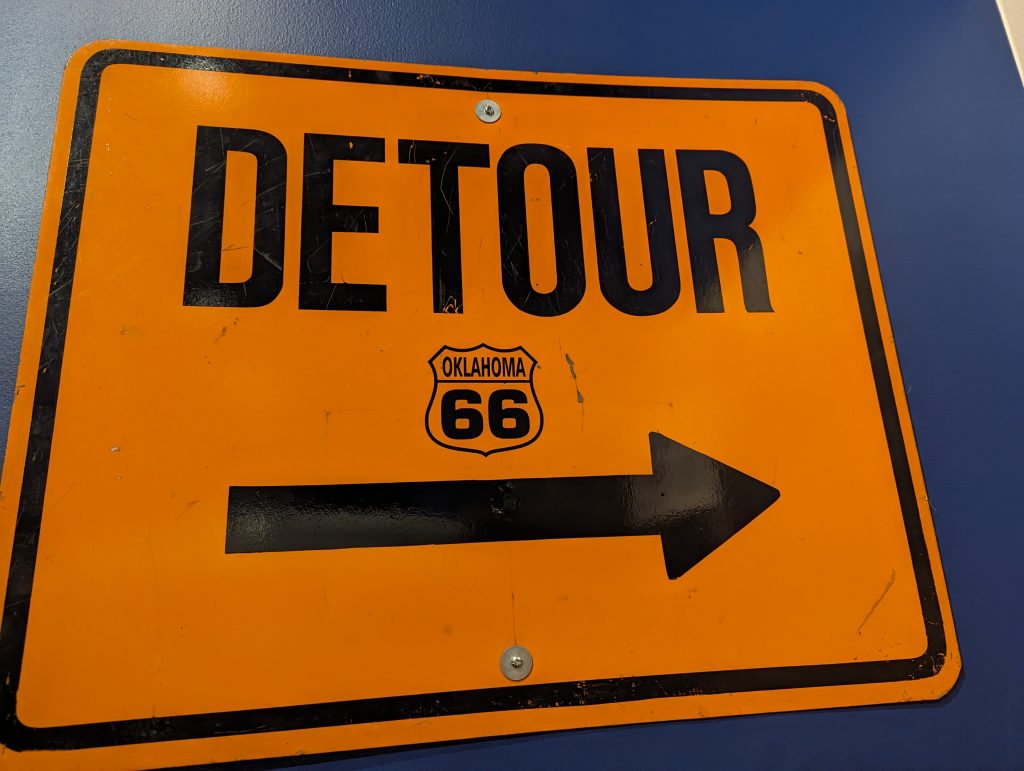
To preserve and promote the old sections of the route, associations and clubs were formed in all eight states through which the route runs. They to this day maintain roadside attractions and run museums dedicated to the route. In the meantime, the 2400 miles (3900 km) have become a cult and driving the route is a dream of many – even though Route 66 fans have to be prepared to make the effort to read through more detailed route descriptions or the turn-by-turn guide on historic66.com and reconstruct the path that the route once took rather laboriously. Some of the sections are now dirt roads or are on private property, while others have simply been replaced by the interstate. Detours are part of the experience: “Road closed” signs are a regular occurrence and getting lost is also likely.
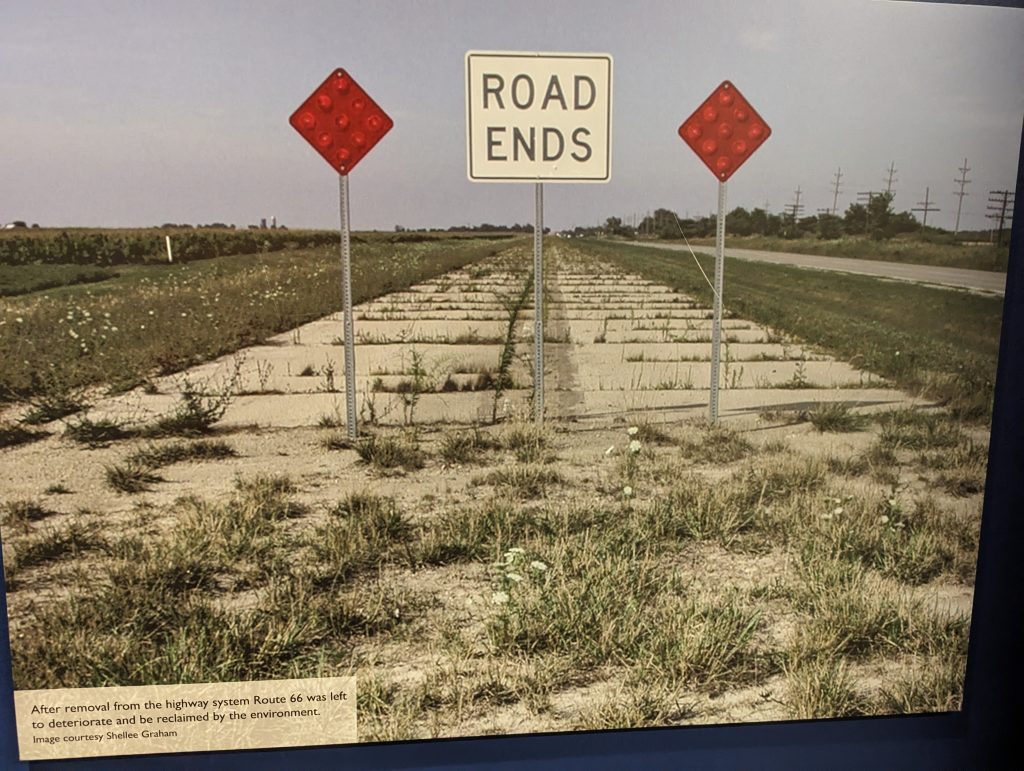
What remains, however, is the promise of a road trip that takes you through the parts of the USA dismissively called “fly over states” by people living along the coasts- places that have long since passed their peak, and roads that once existed and are no more than a dirt track today. This may be adventurous in parts, but at the same time is full of nostalgia and takes you on a kind of journey back in time to the USA of the 1940s to 1960s.
Sources:
- https://www.nps.gov/articles/route-66-overview.htm
- https://www.route66roadtrip.com/index.htm
- Oklahoma Route 66 Museum