
The Everglades National park
Crocodiles, Alligators and Pumas
Saturday, 4.11.
Need for Speed
- We arrive in Miami and, as always, our first stop is the car rental counter.
- There are two people at the counter next to us and we can hardly believe our ears when they say to the guy behind the counter that they would like a proper sports car and preferably right now – we are even more astonished when they successfully drive off shortly afterwards.
- As we drive through Miami in our little bit of sporty car, Matthäus says: “It looks like ‘Need for Speed'”!
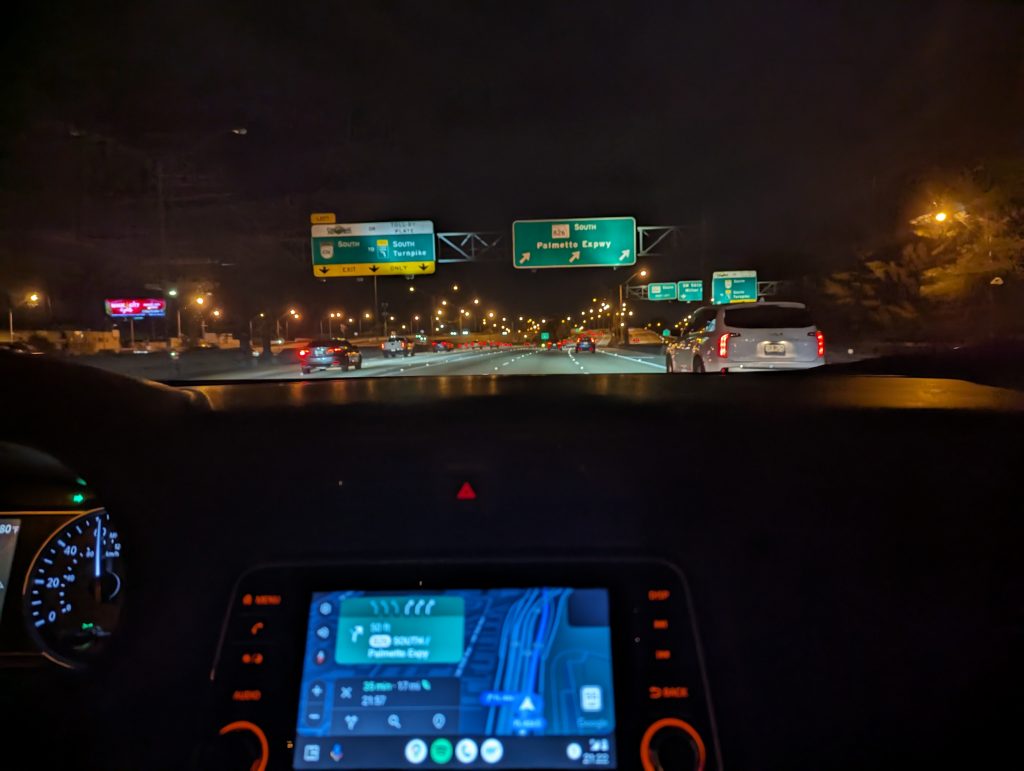
- We spend the night in a suburb of Miami, right at the park entrance to the Everglades.
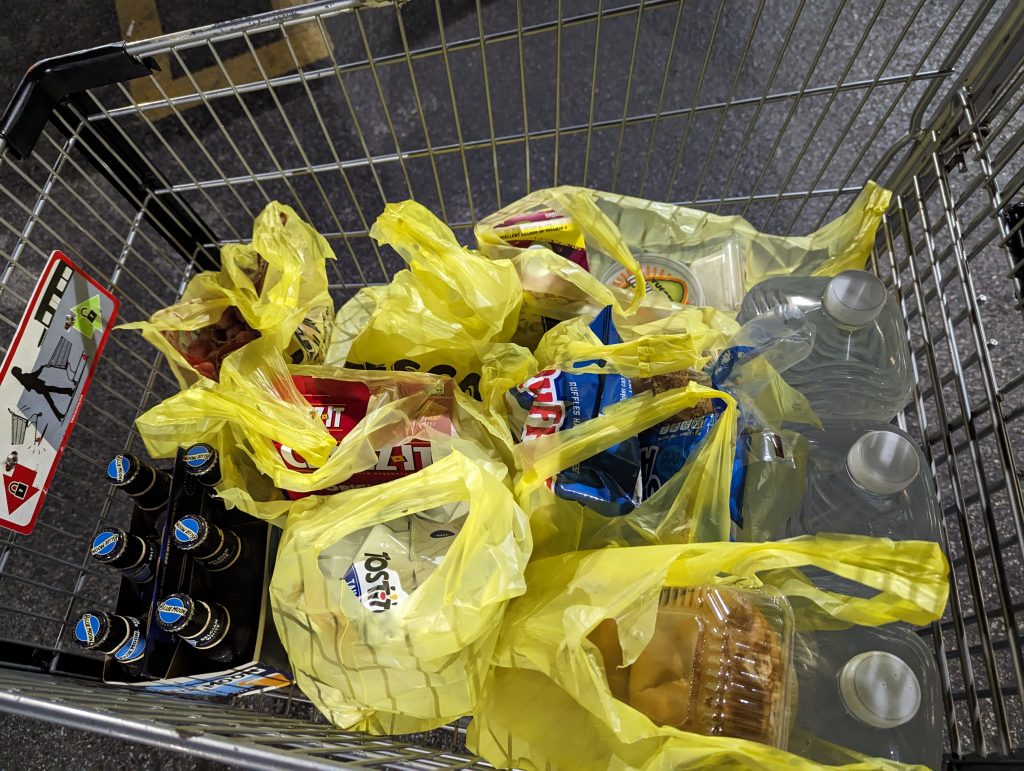
- We stop at a supermarket on the way and buy a six-pack of Blue Moon in memory of Julian.
- Also we find a really small Indian restaurant where we get some really, really good food.
Sunday, 5.11.
Mosquitos, Mosquitos everywhere
- A leisurely breakfast, then a PhD work session.
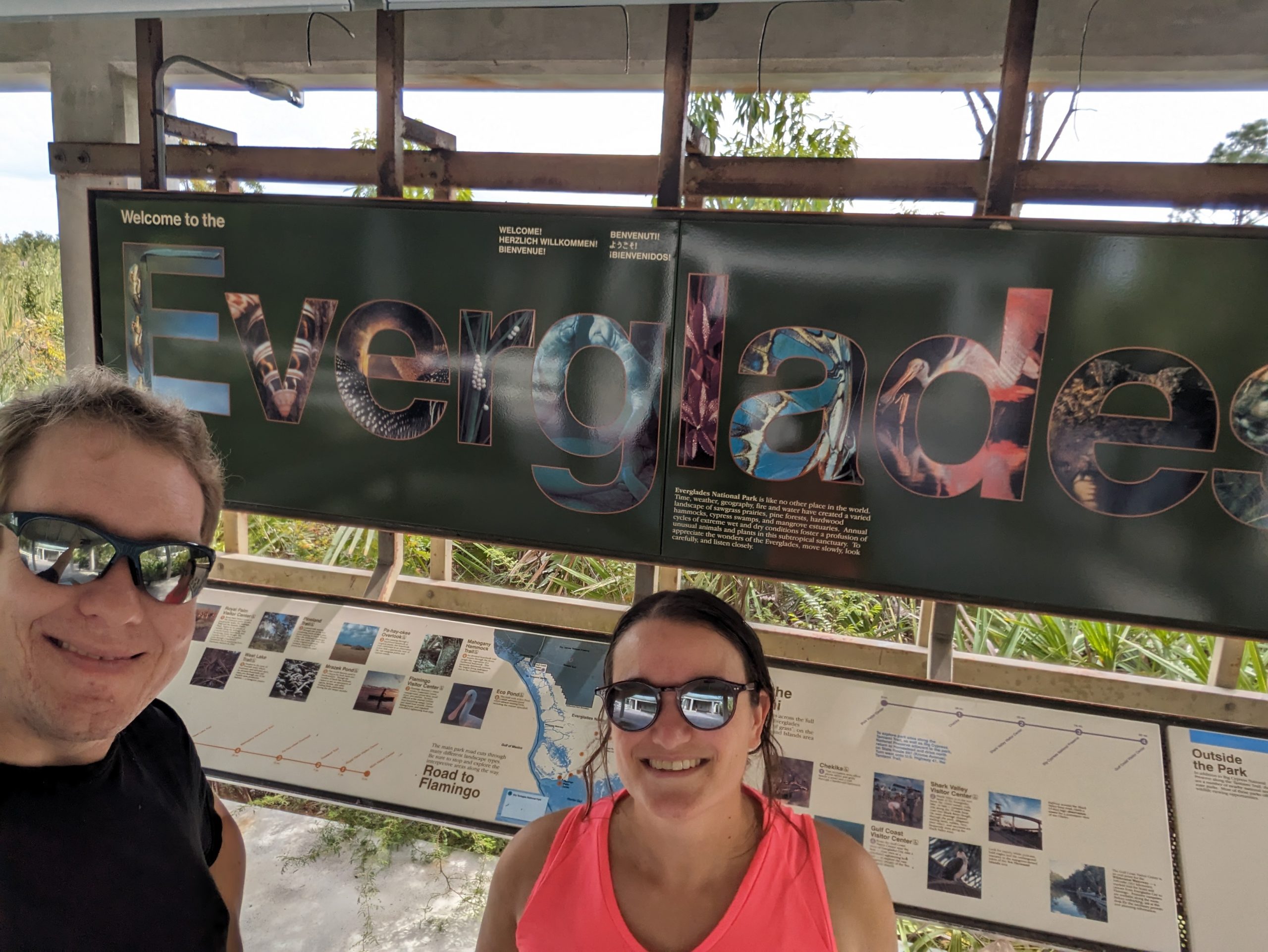
- Off to the Everglades National Park.
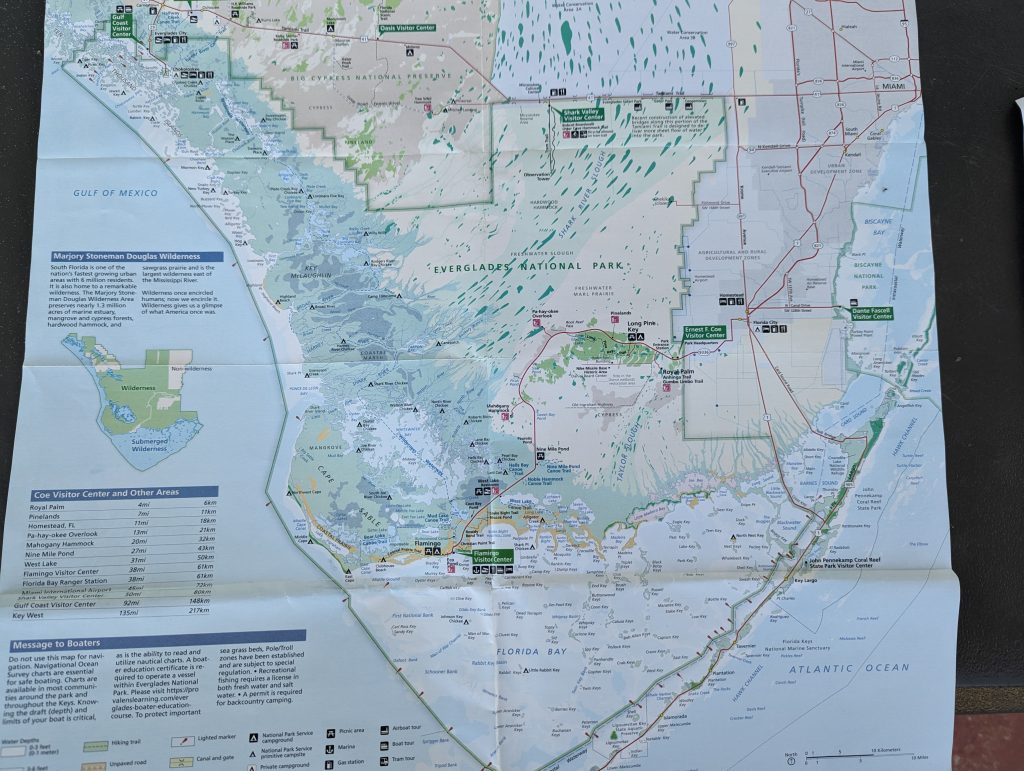
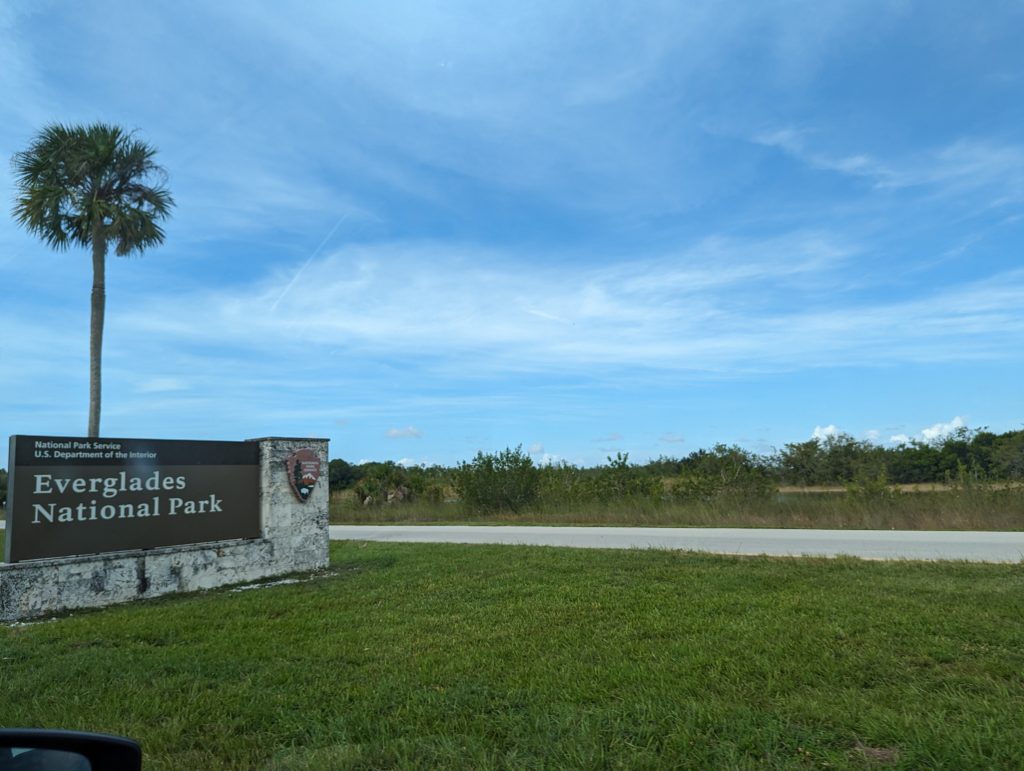
- This one is another national park surprise – the landscape is totally different to what we’ve seen in the US so far and in some places you almost feel as if you’ve left North America and have just stepped straight into the Caribbean.
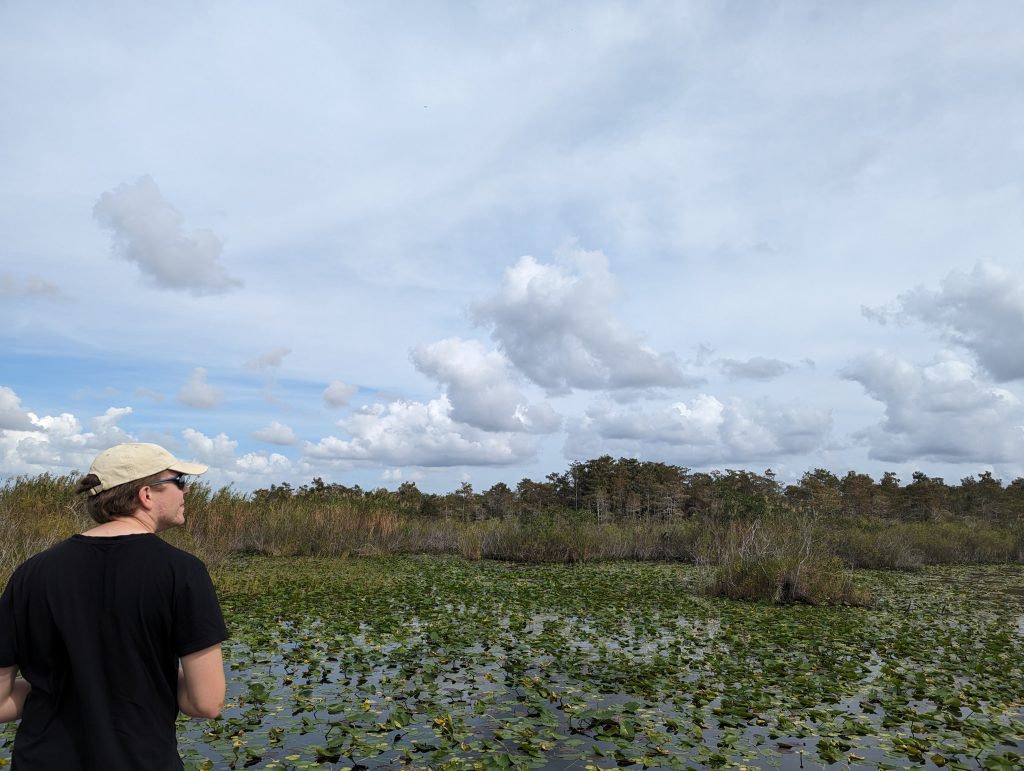
- In any case, temperatures are high and the humidity contributes to the feeling of being in a tropical rainforest – as do the smells and sounds.
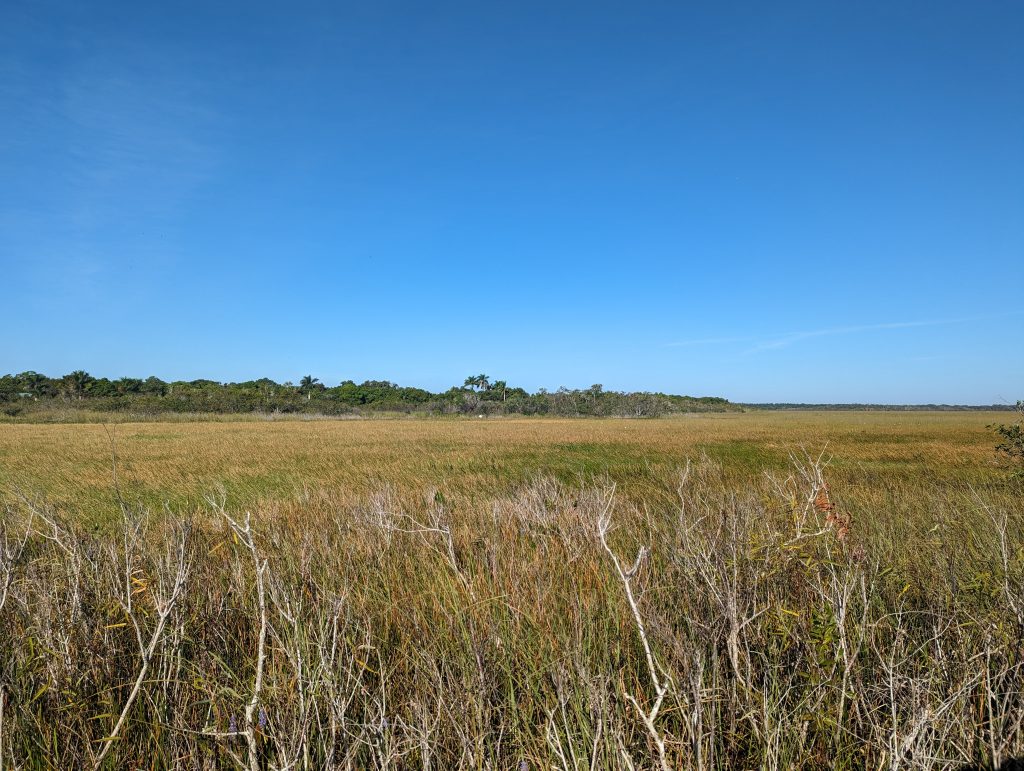
- Dense jungle landscapes alternate with prairie-like plains, which are, however, prairie marshland and mostly under water.
- First, we drive along the Scenic Route and do the classic National Park Move – that is, we drive from one parking lot to the next, get out briefly, do short laps and hikes to take in the scenery a bit, and drive on by car.
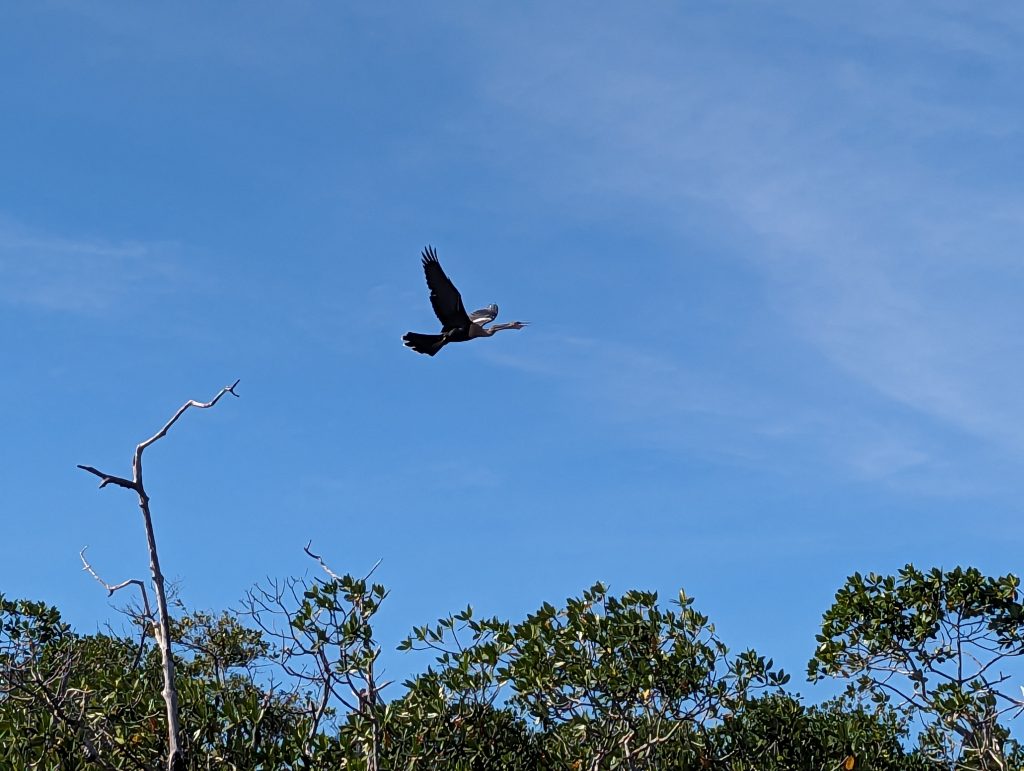
- First we take the Anhinga Trail, named in honor of the birds that breed and hunt for fish in the swamp and water areas.
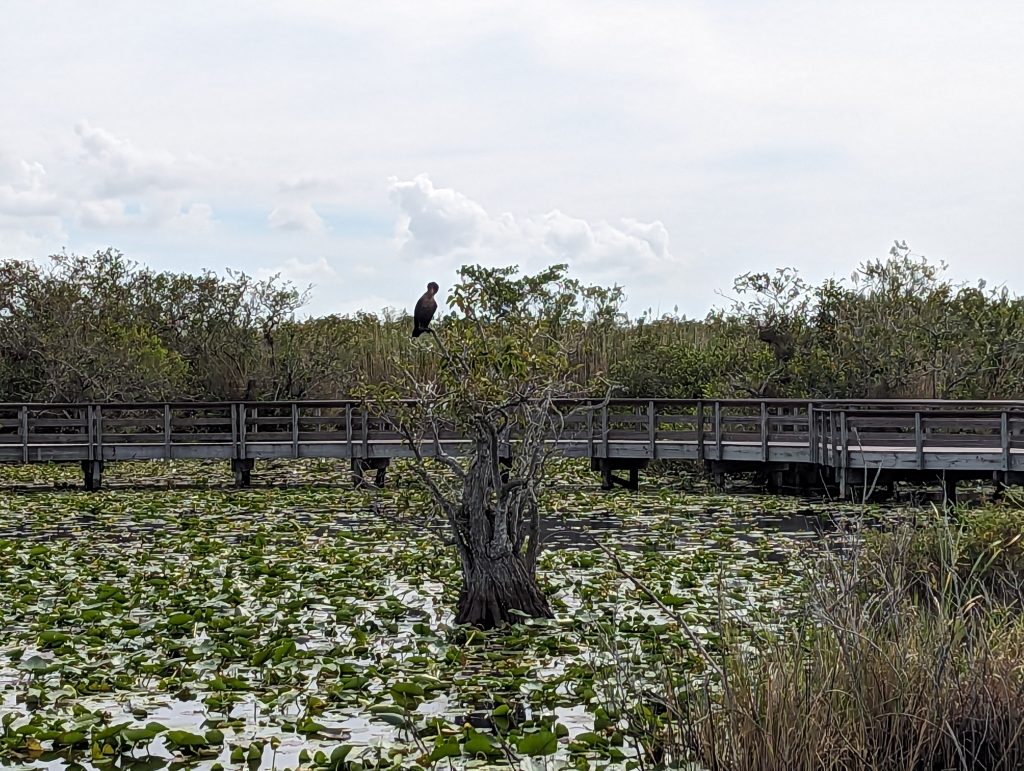
- The birds are impressively good swimmers, almost like penguins, but this comes at a price: if they want to fly after a dive, they first have to let their wings dry, which is why you often see anhingas sitting with their wings spread out next to the water.
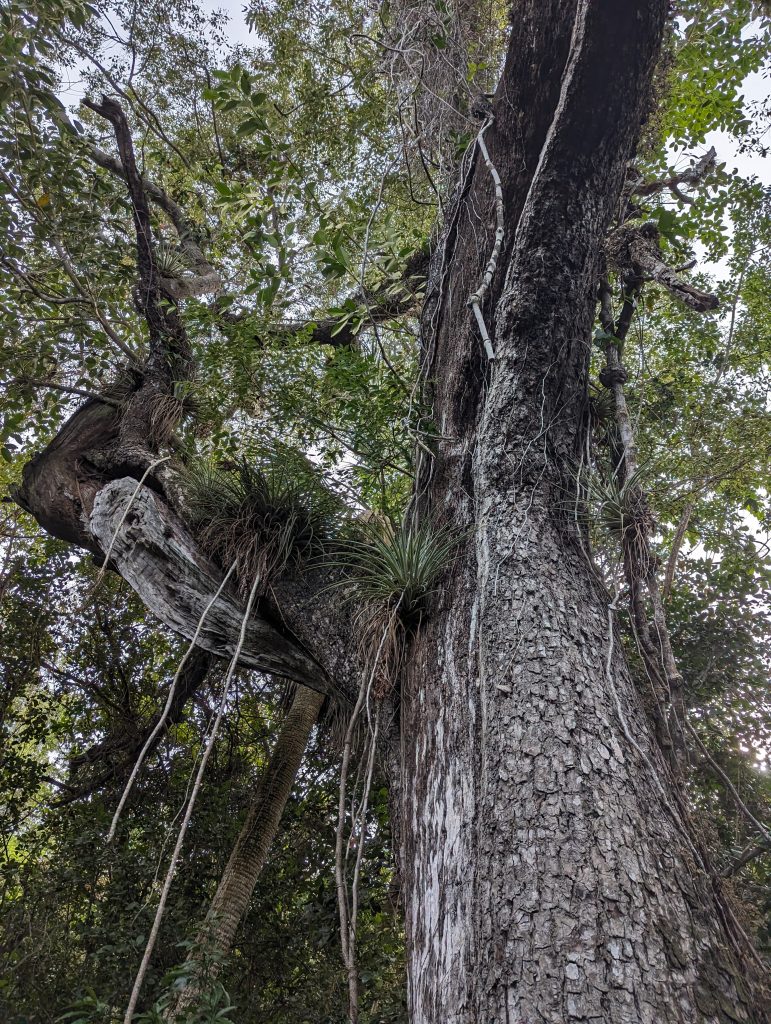
- Here, a few meters of altitude make a big difference in the vegetation, as this often determines whether land is under water or not – as is the case here: Right next to the anhinga trail is a path through a hammock, a piece of jungle that is about 4 meters above sea level.
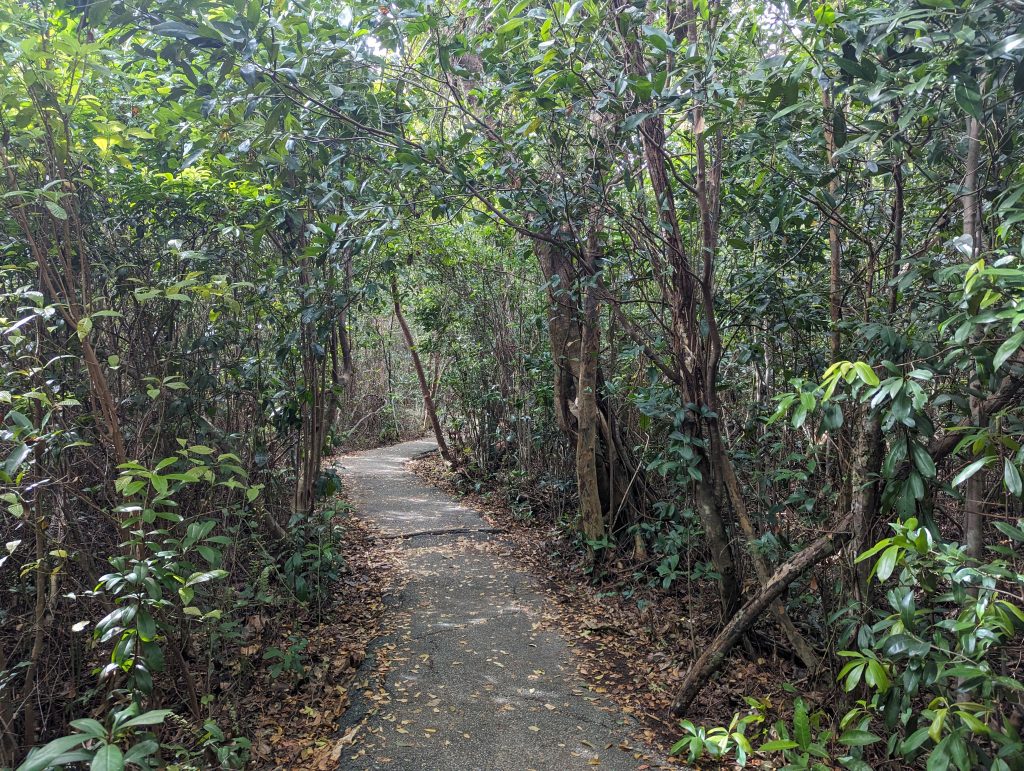
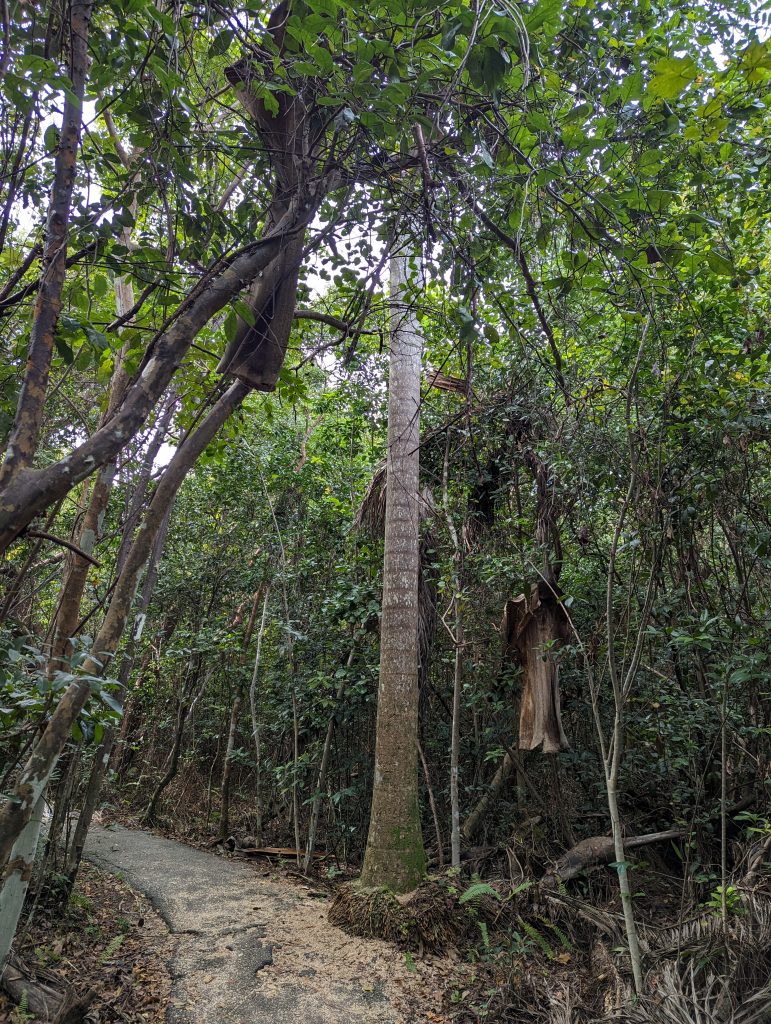
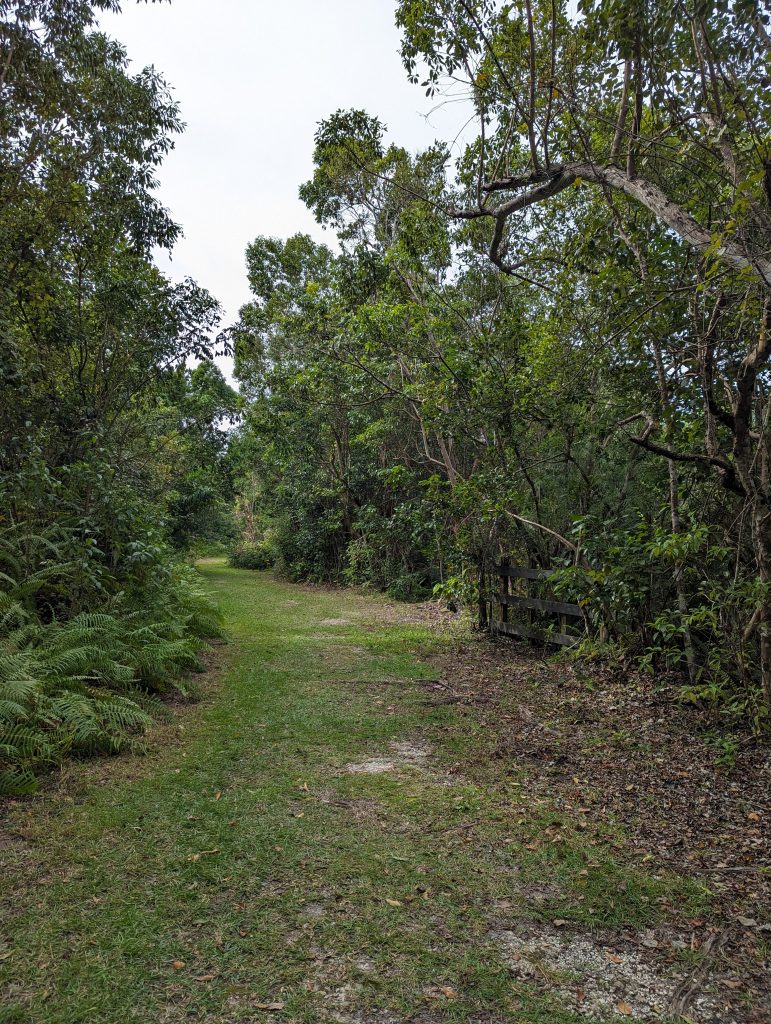
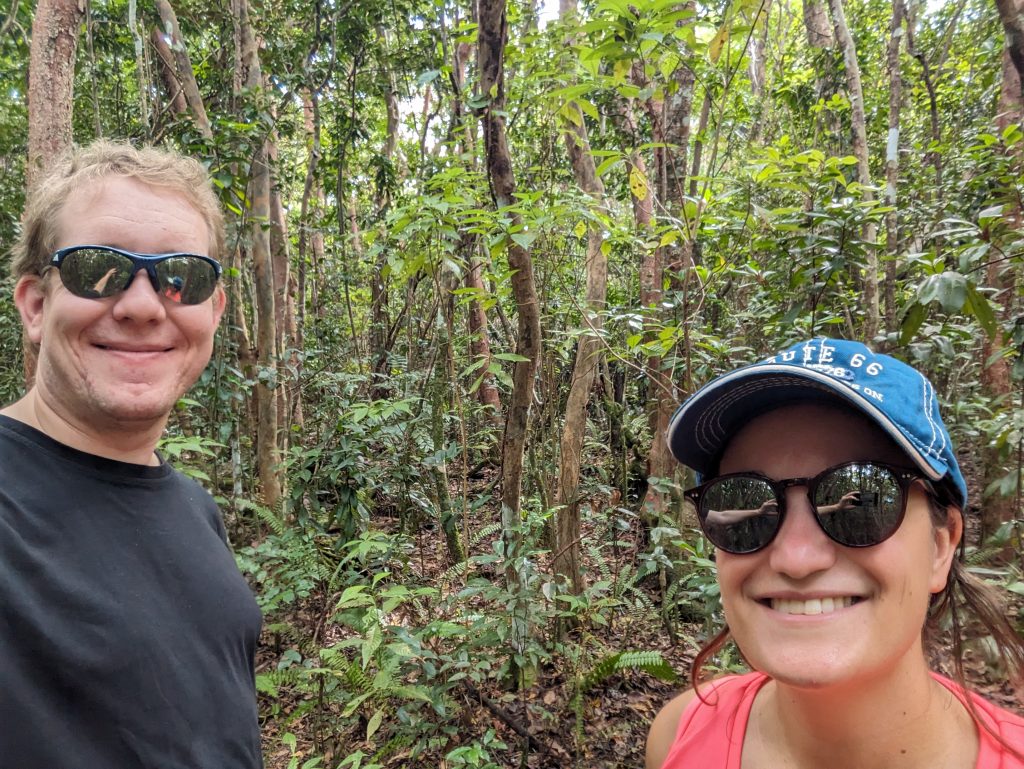
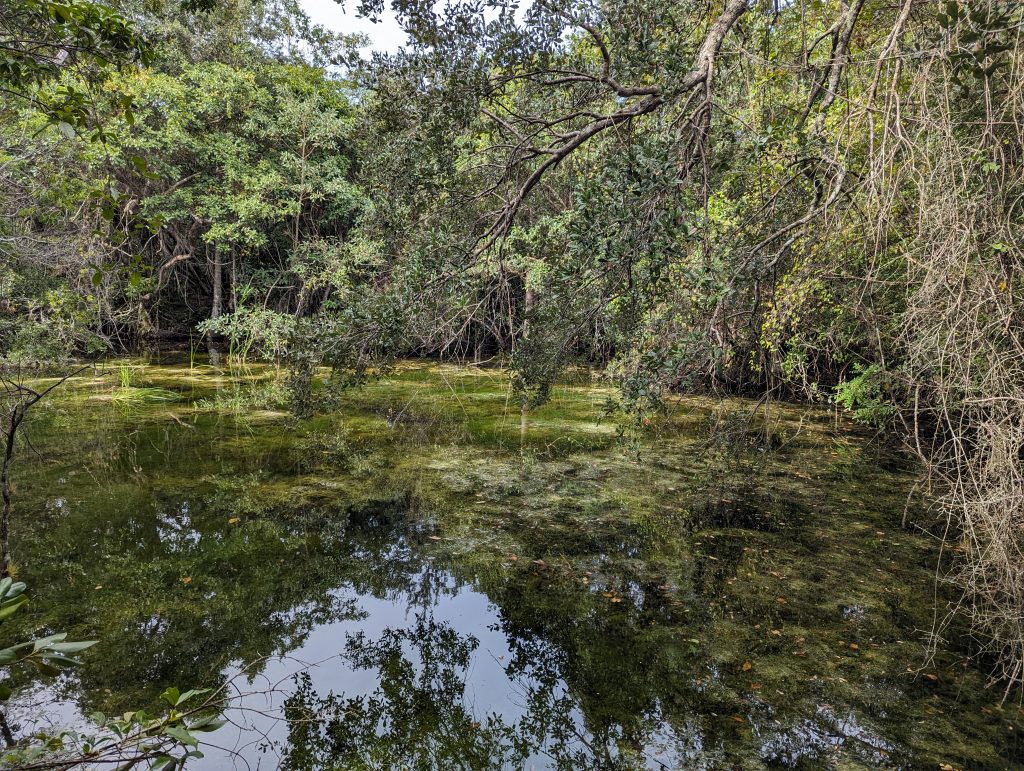
- Here we also discover an path through which a road once led into the park.
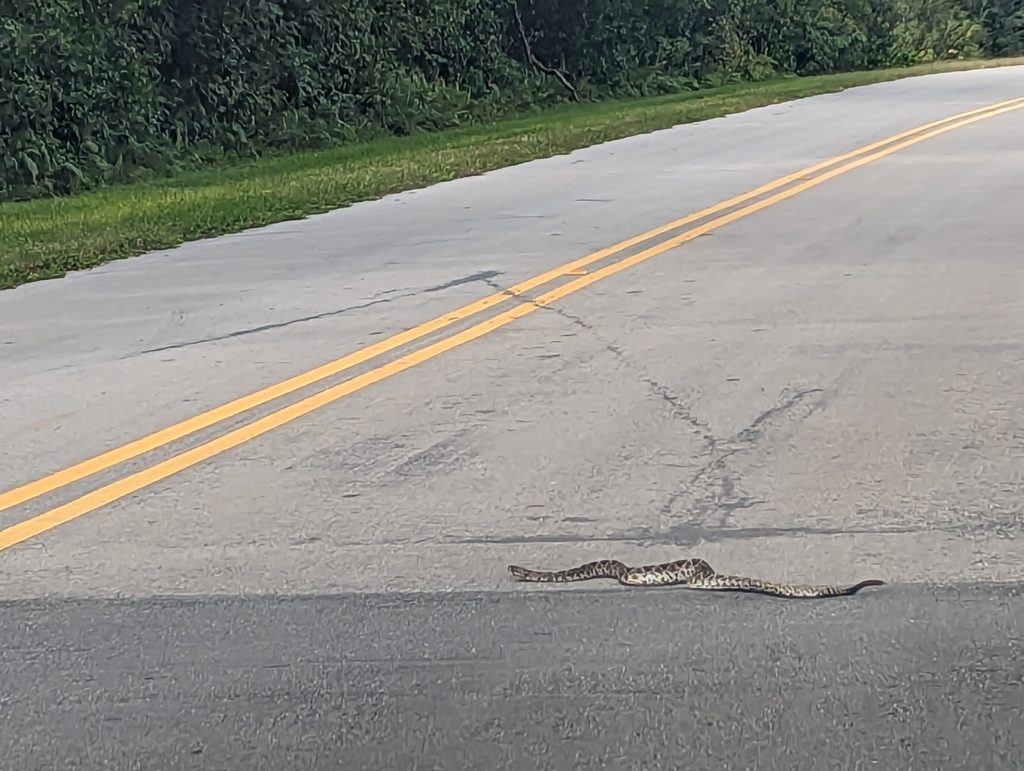
- As we drive away from the parking lot, a snake winds across the road right in front of our car, and not even a small one! Mega! I’m glad we can see it from inside the car, though.
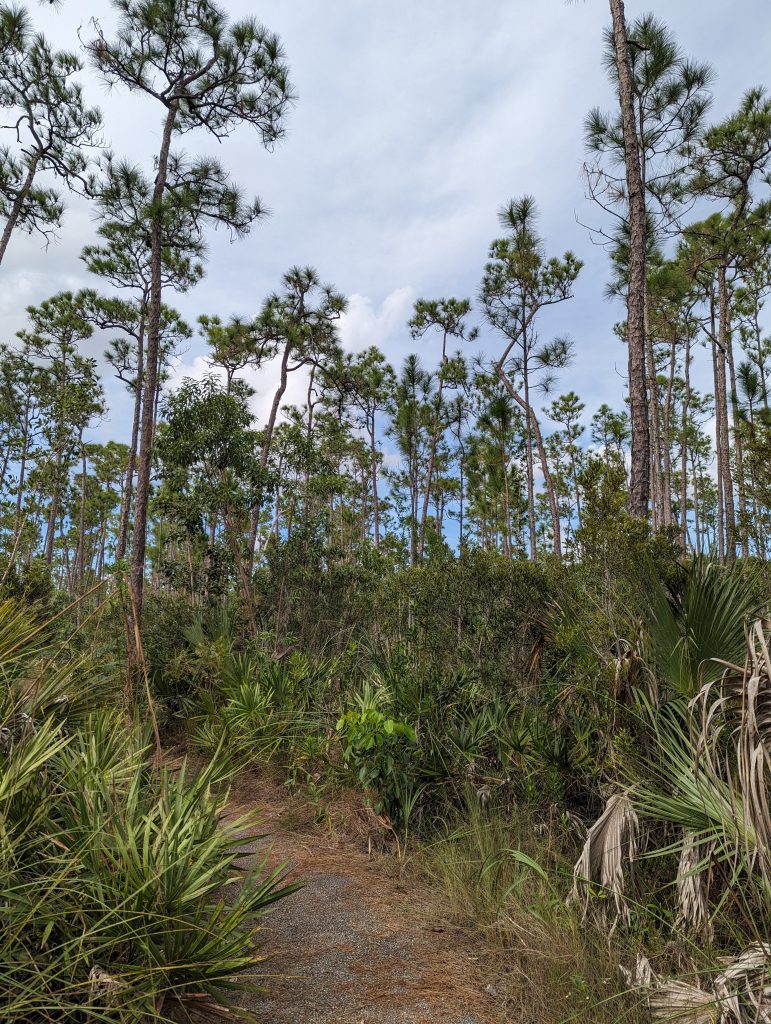
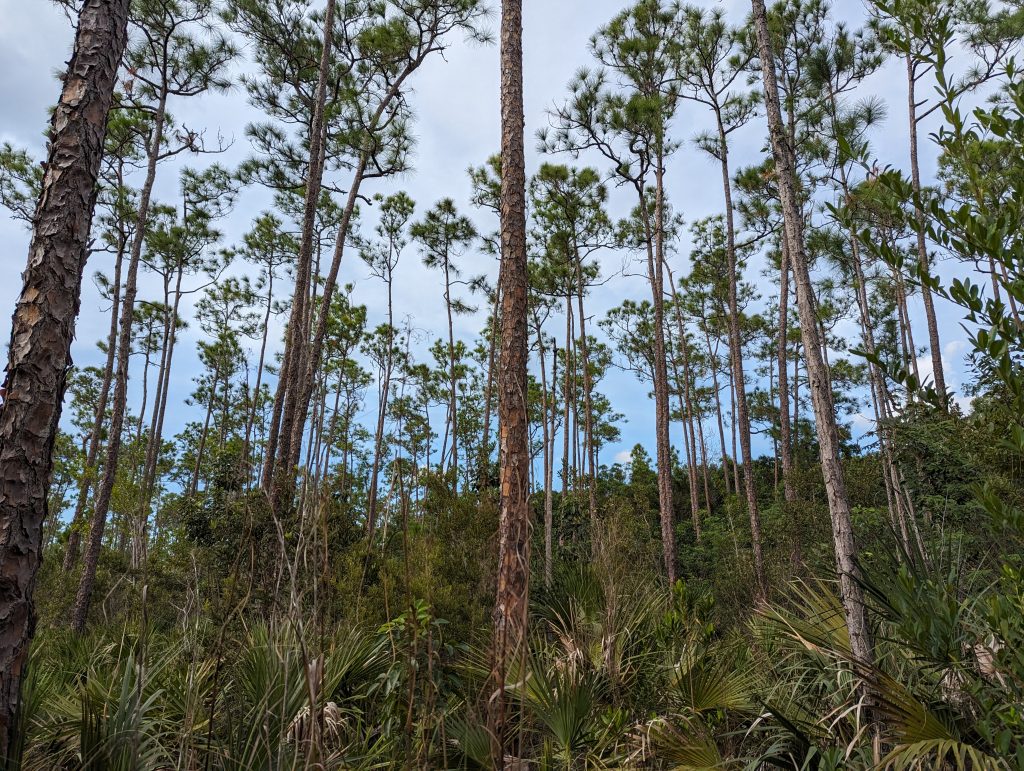
- We also make a stop at a very special piece of vegetation in this park, the Pine Tree Forest, a piece of forest in which nothing but pine trees grow.
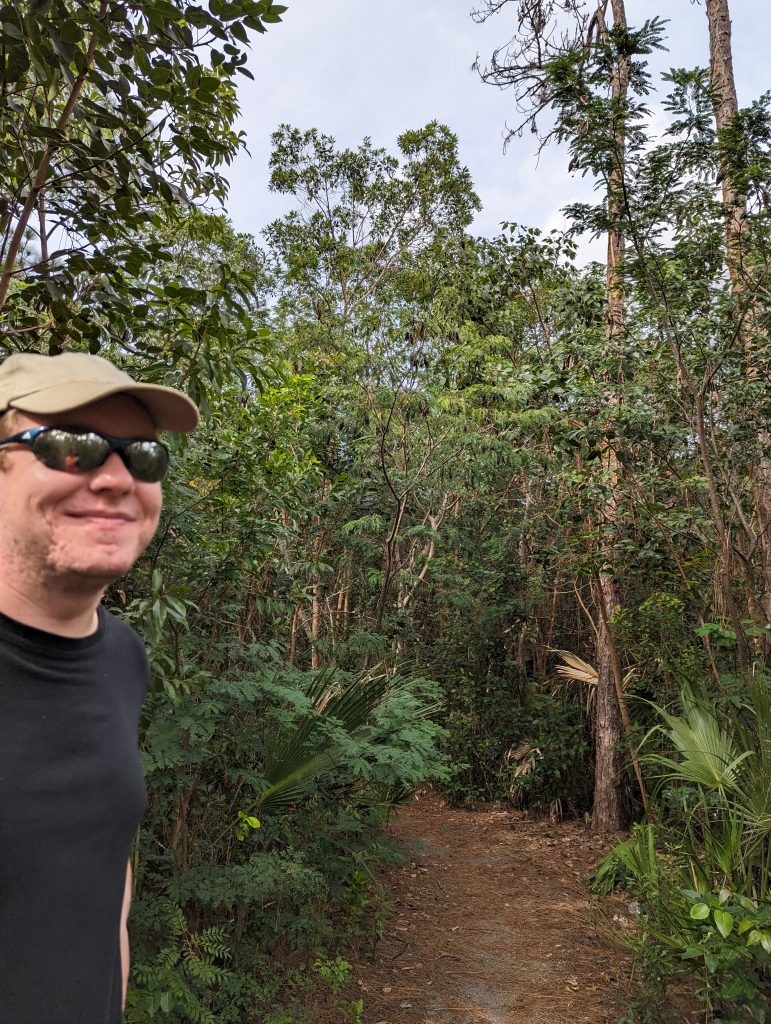
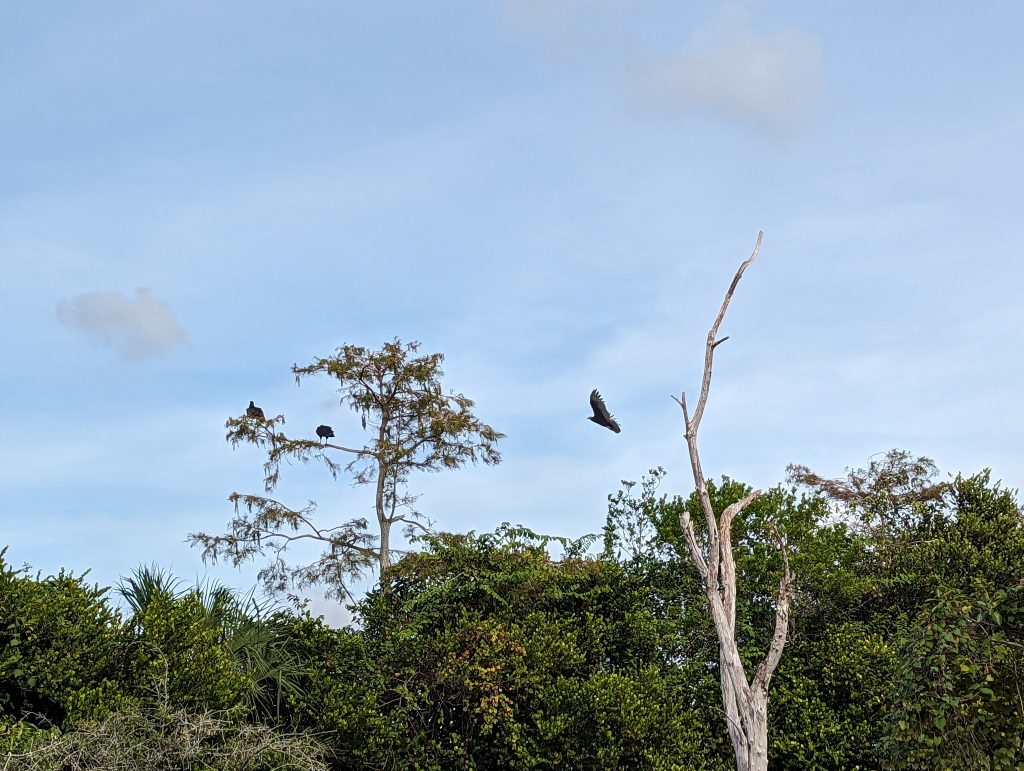
- We visit some great viewpoints, another hammock and see vultures, which we are warned about as there have been occurances in which they damaged cars.
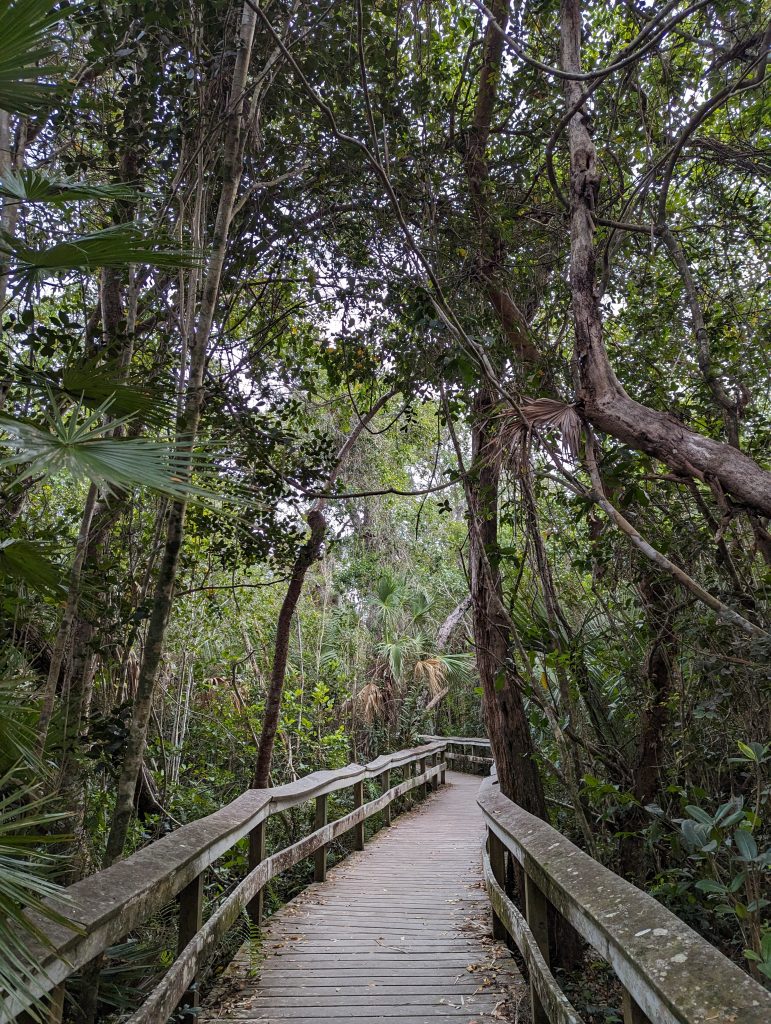

- Another highlight is a path that leads through mangroves – a great experience, especially when open water suddenly opens up in front of you.
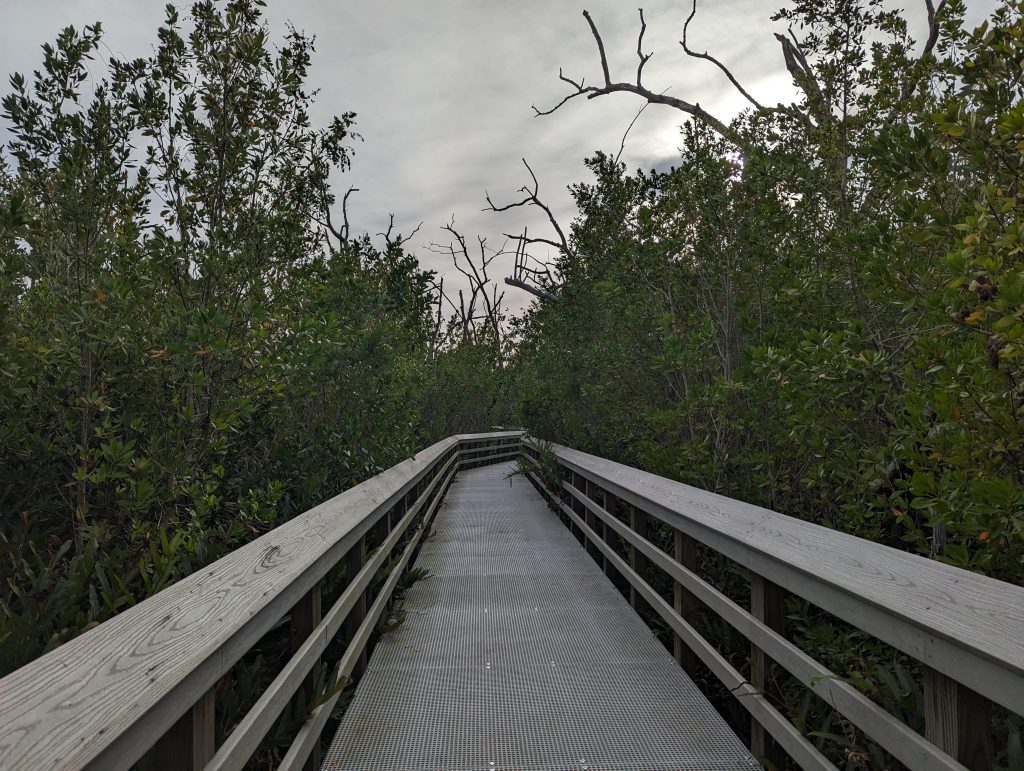
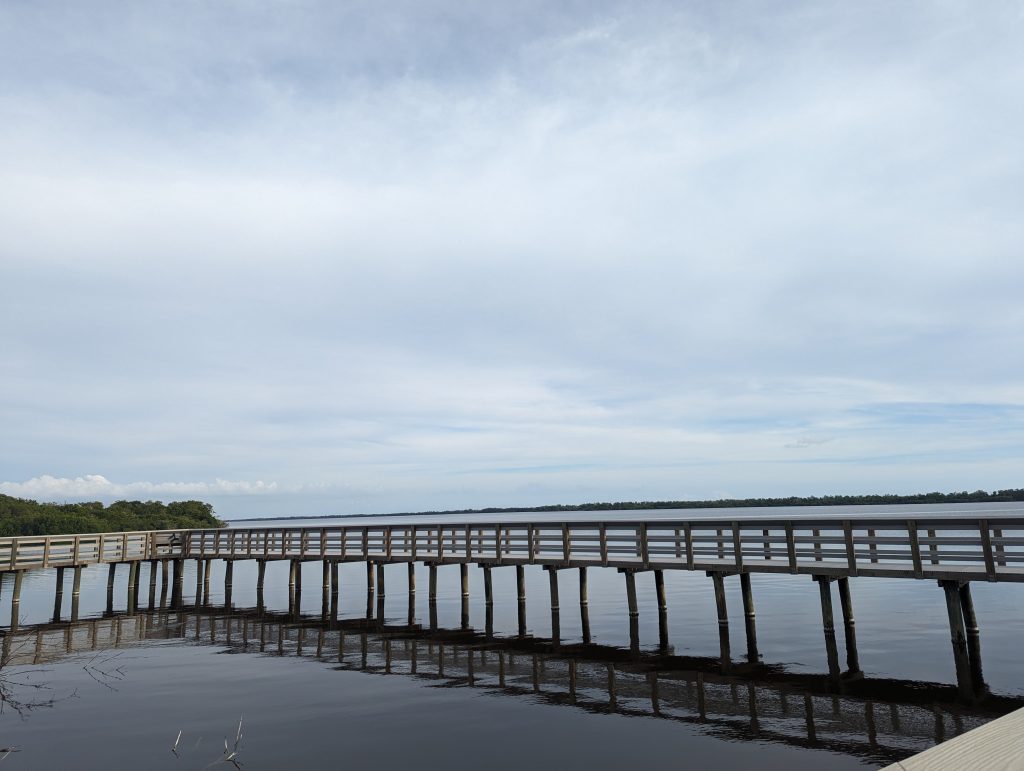
- The mangrove forests make me think of “Papillon”, in which the main character fights his way through the mangroves on foot – that must have been really exhausting.
- We spend the night at the Flamingo campsite, which is right at the front of Florida Bay on the water.
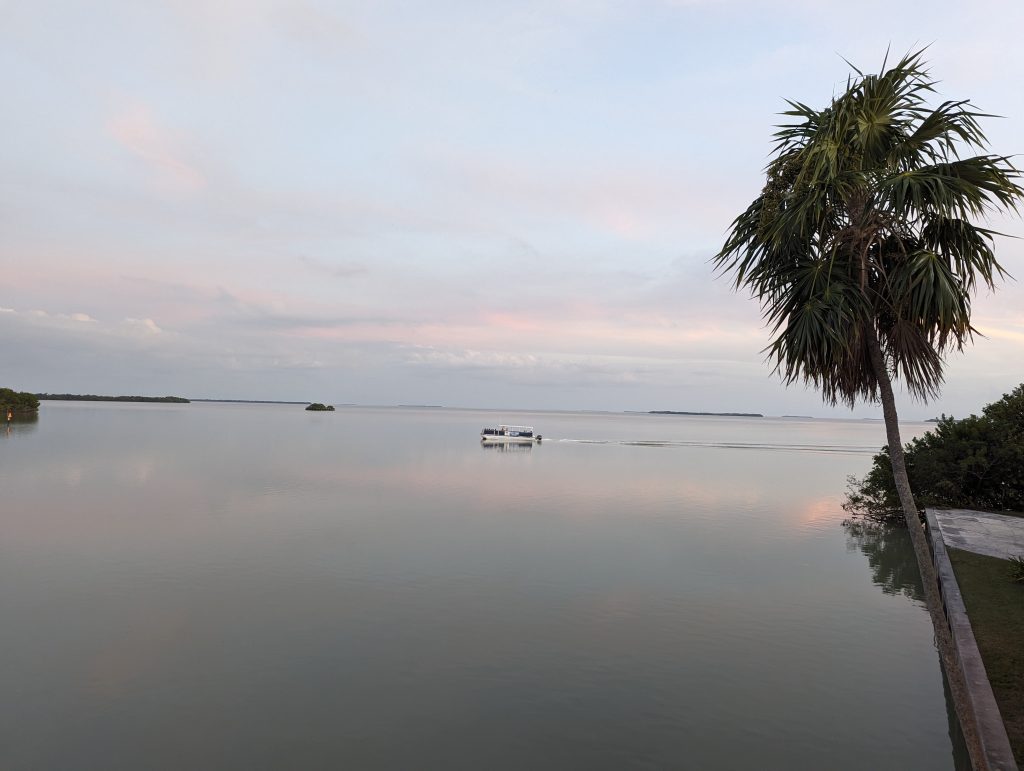
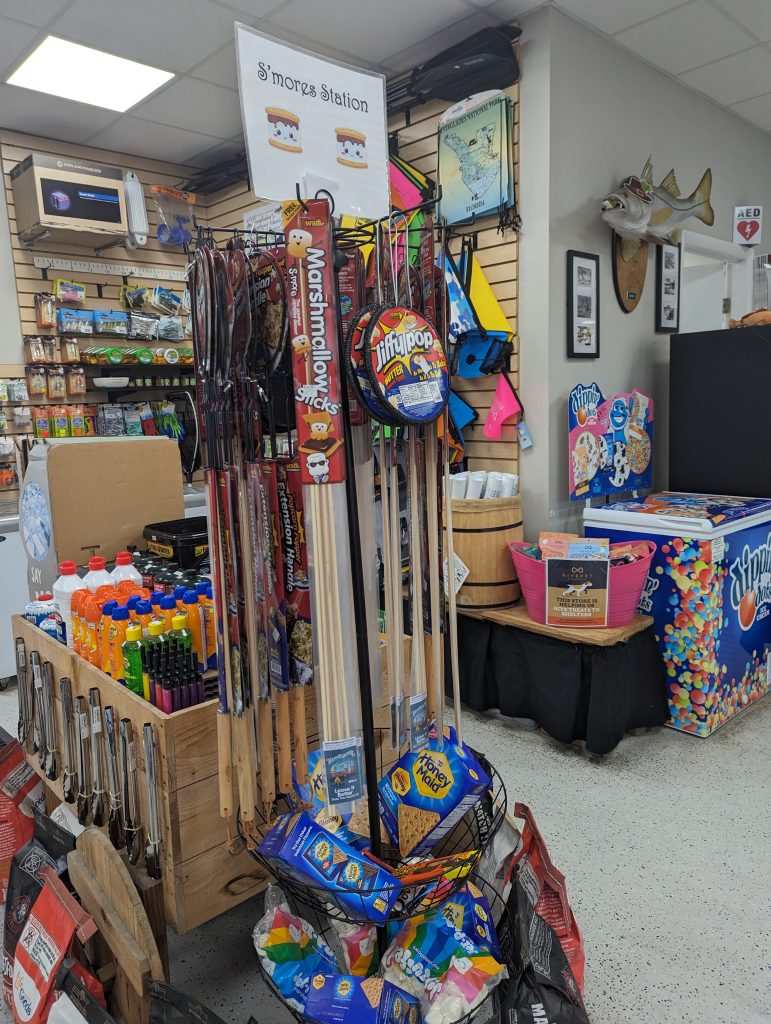
- Next to it is a ranger station where you can book boat tours, which we do straight away for tomorrow, and where there is a small supermarket where we buy wood and s’mores for our campfire tonight – there is even an extra s’mores station in the supermarket.
- At sunset, we sit down on a bench at the ranger station with our dinner and eat from our supplies.
- This turns out to be a great idea, because when we reach the campsite, we are attacked by mosquitoes – and attacked is a totally appropriate word.
- We’ve never put up the tent so quickly and then we take a break in the car before starting a campfire in the hope that it will drive the mosquitoes away.
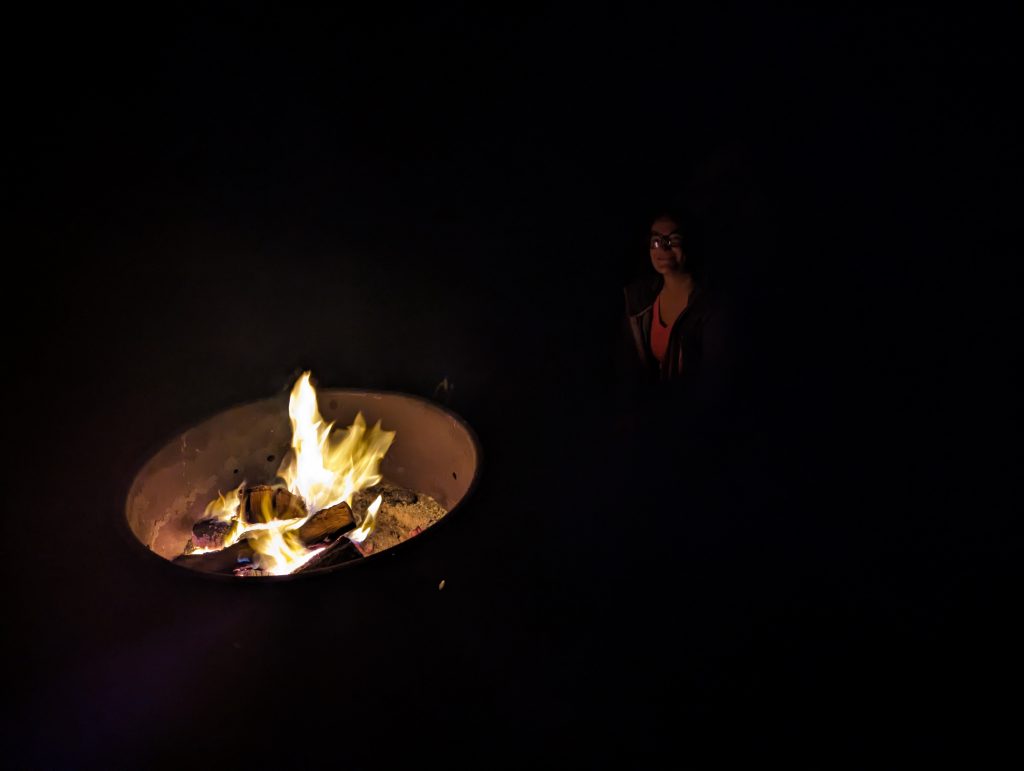
- It helps a little, at least enough for us to make S’Mores and watch the starry sky in peace.
- I teach Matthäus the art of making S’Mores, which I learned at the climbing camp, and we enjoy it so much that we soon run out of our S’Mores chocolate.
- Then at some point we flee from the mosquitos into the tent – especially as we have to get up early tomorrow.
Monday, 6.11.
What is the difference between a crocodile and an alligator?
- Due to the mosquito situation, we get up and sprint (no joke) straight from the tent to the car to get away from the mosquito-infested campsite.
- We check in at the marina for our boat trip, book a canoe for this afternoon and have breakfast at the nice spot we discovered yesterday, which is thankfully mosquito-free.
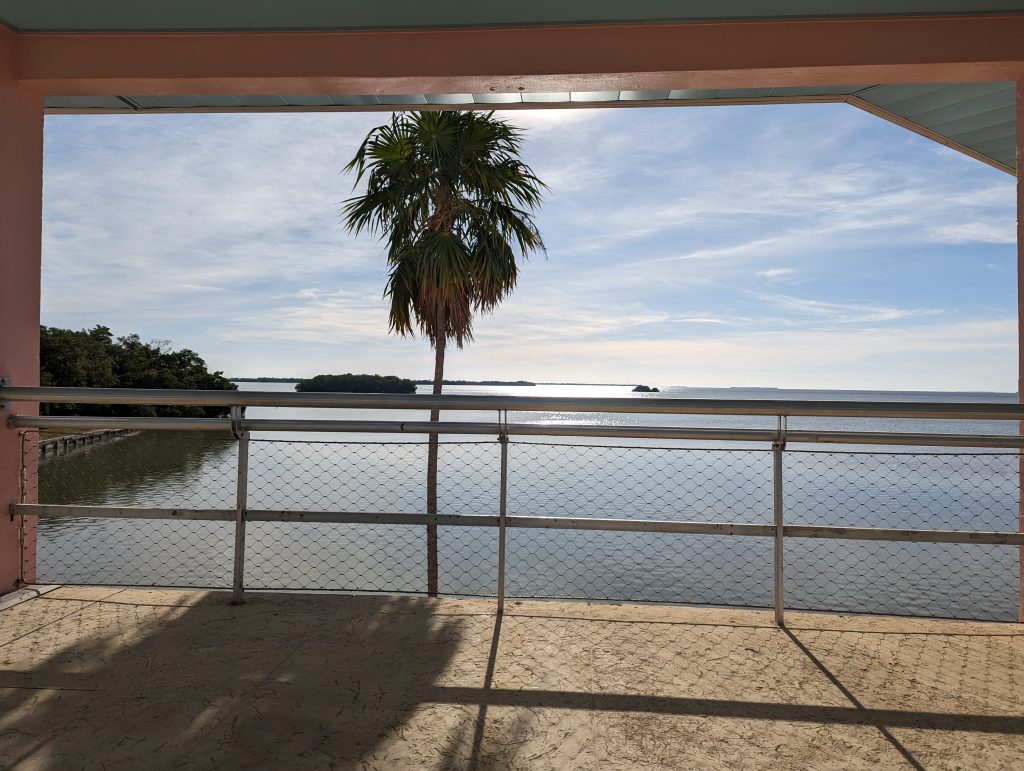
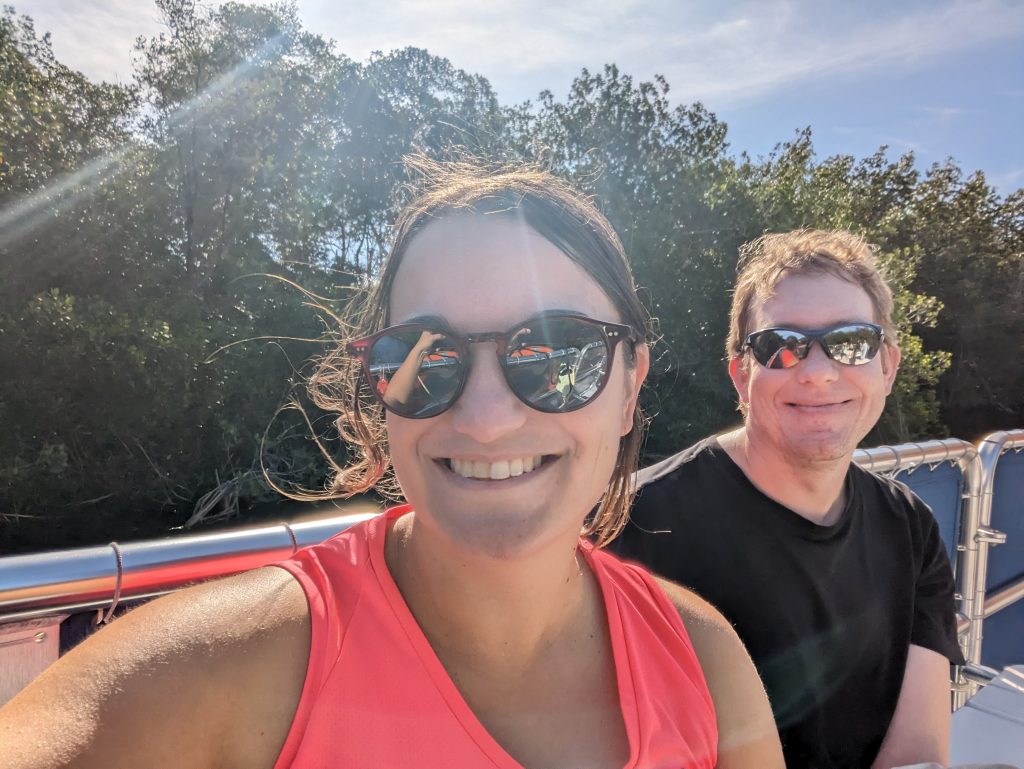
- We set off on a boat tour with a ranger into the backcountry, away from Florida Bay and the open sea and into the Everglades.
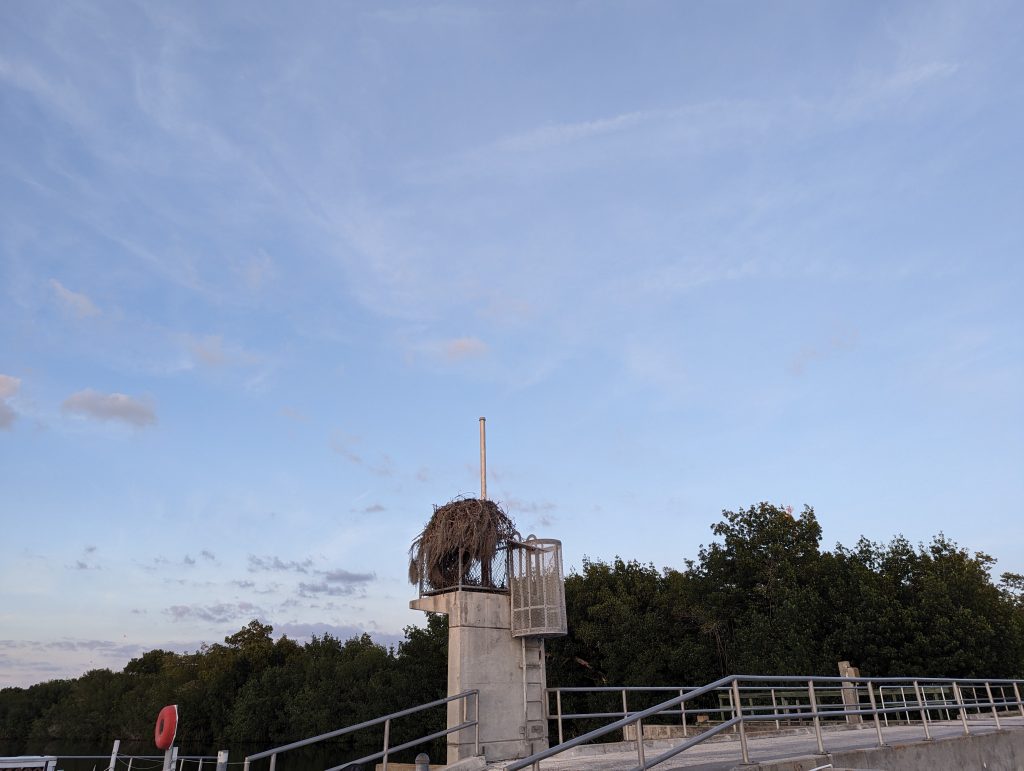
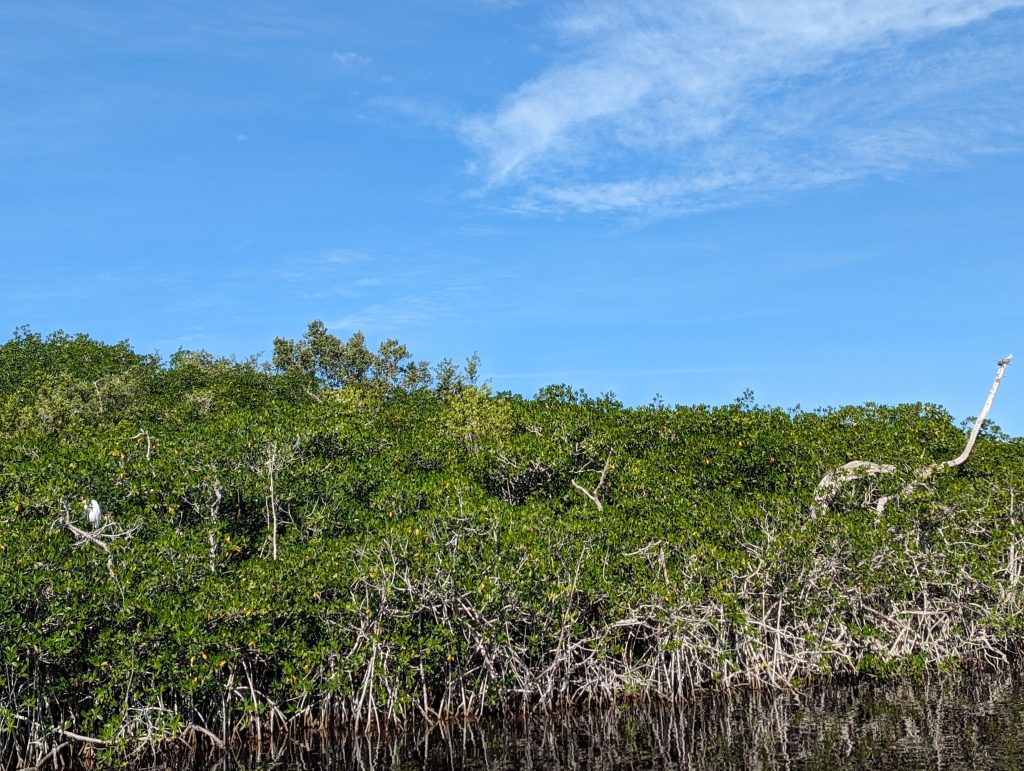
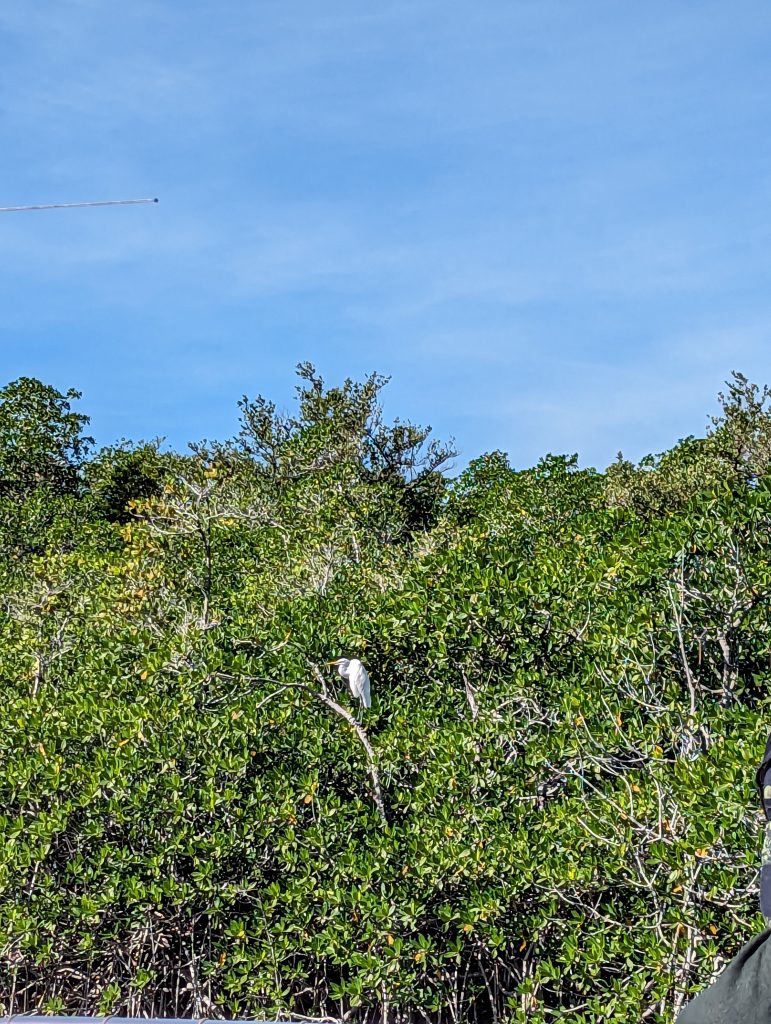
- We see an osprey nest and lots of herons and egrets, as well as vultures circling above our boat.
- Also, five minutes into the tour our guide suddenly says: “To your left, you see an especially large specimen of the American Crocodile” – at first I think he’s joking, but then we see – right on the boat ramp from the marina – a really huge crocodile. American crocodiles live here in the Everglades and are not to be confused with the numerous alligators that can also be found here.
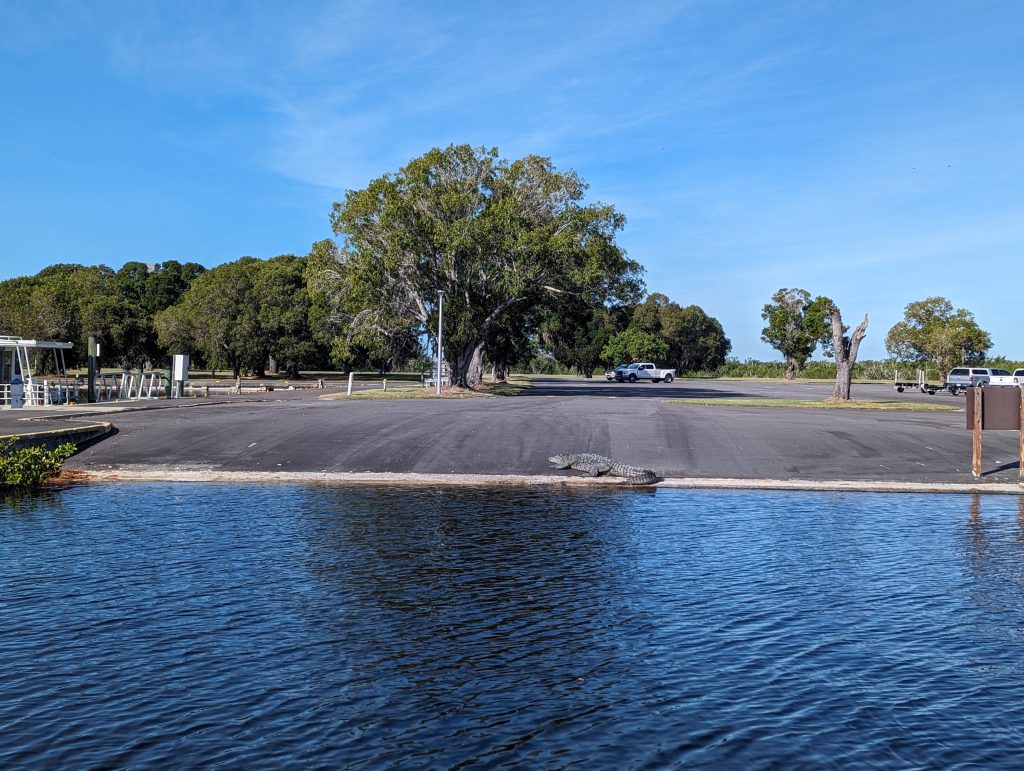
- Our guide explains how to tell the two apart: There are three features that make it easy to tell: first, crocodiles are lighter in color and tend to have greenish skin, while alligators are darker and tend to have blackish skin. Secondly, crocodiles have a V-shaped, pointed snout, while alligators have a more rounded snout. Thirdly, if they have their mouth closed, you can see a row of teeth for crocodiles, whereas for alligators you can only see individual canine teeth sticking out.
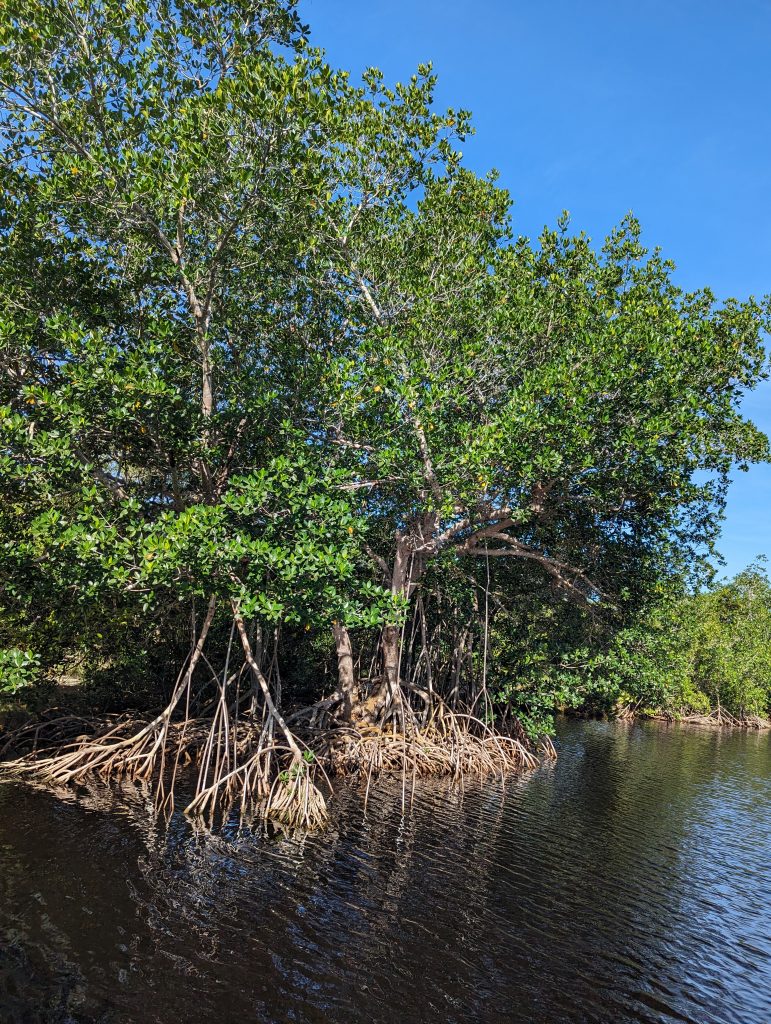
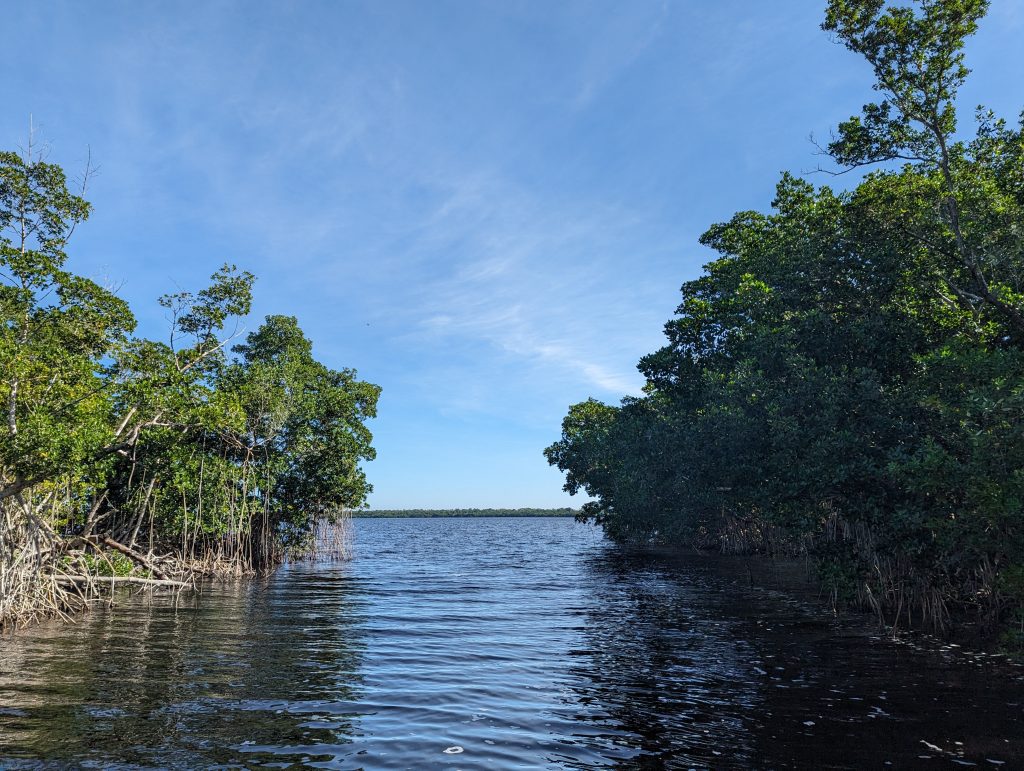
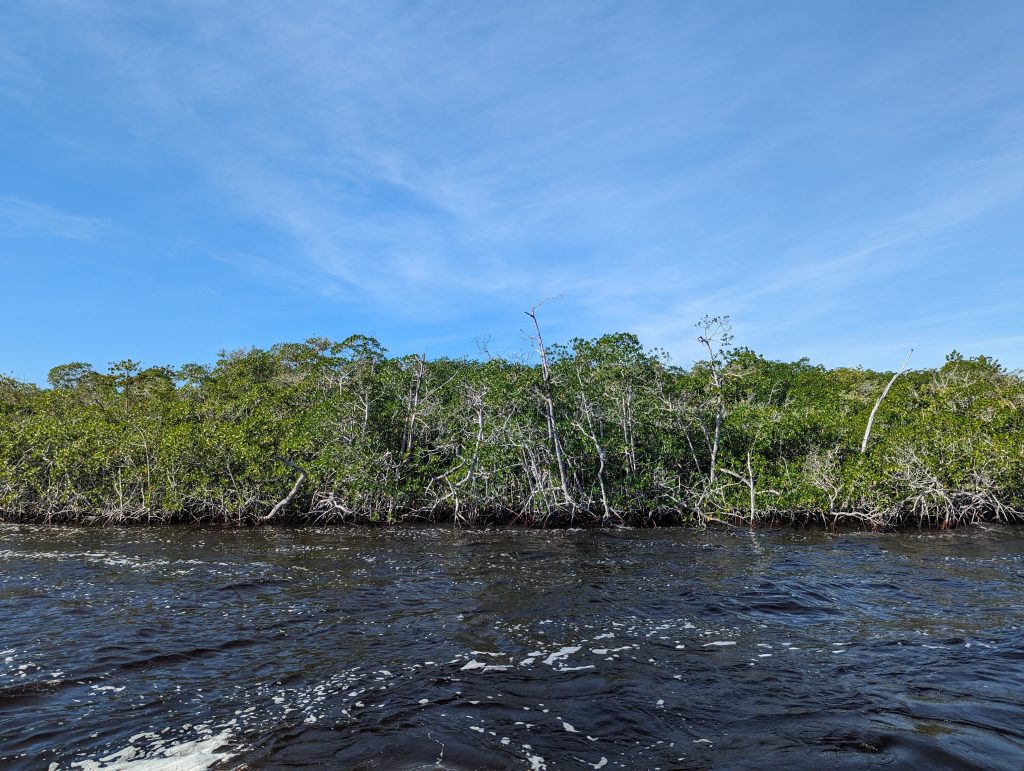
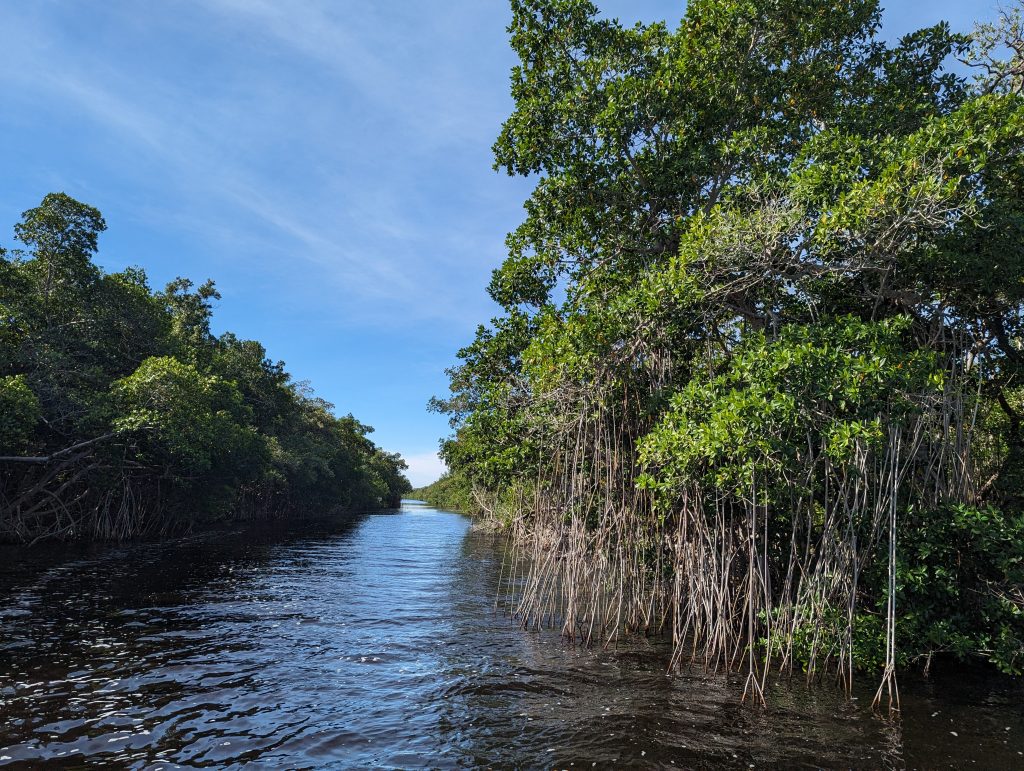
- We drive through a narrow channel with mangroves growing on both sides towards the larger lakes/bays.
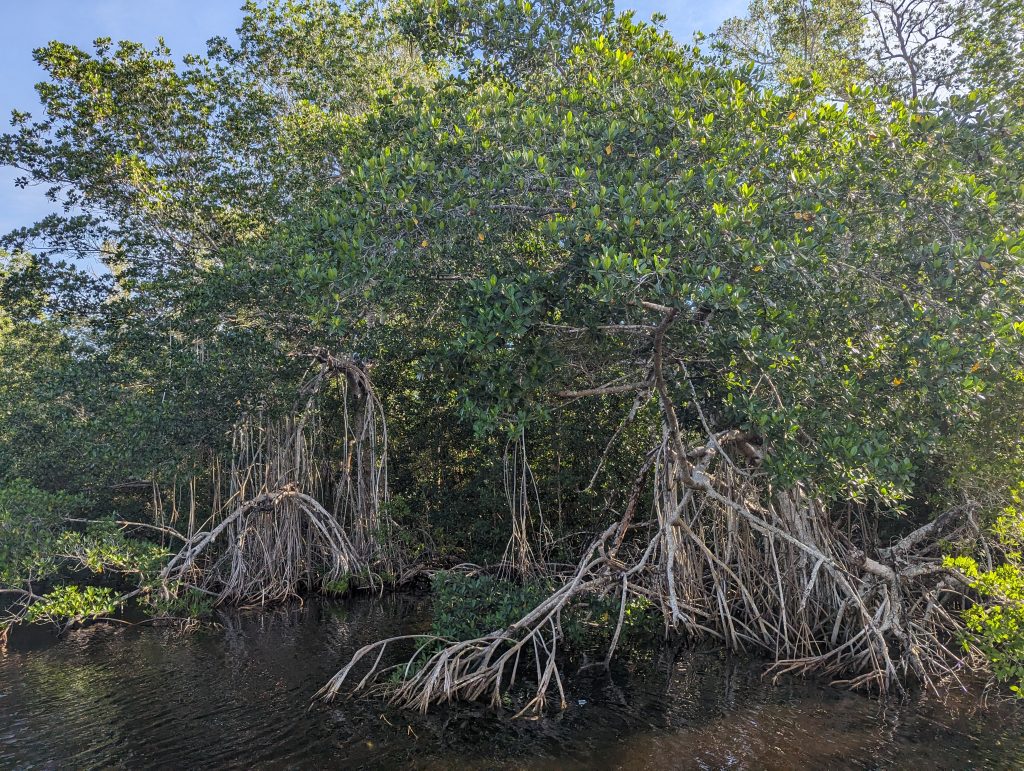
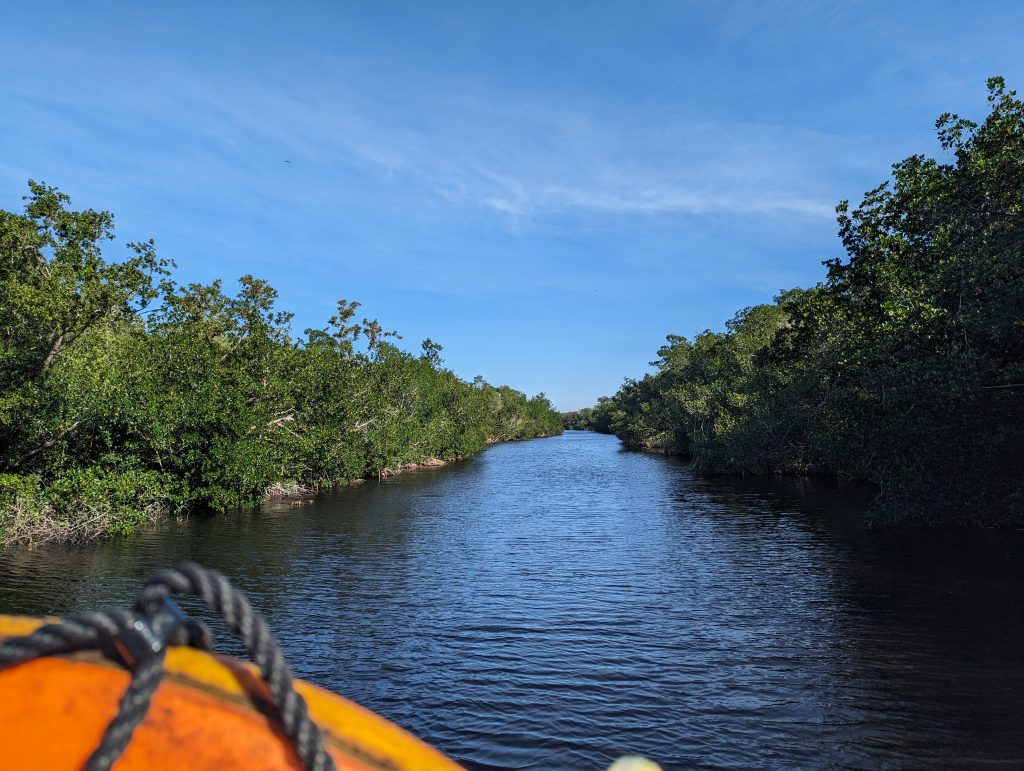
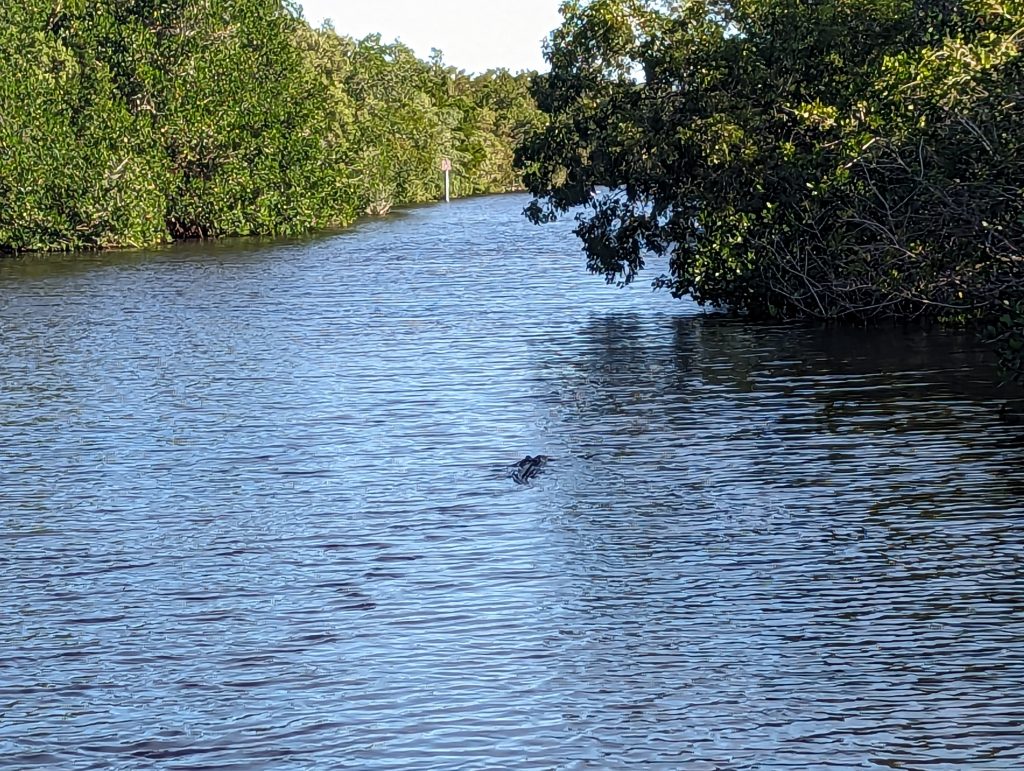
- We see lots more birds and then – a second highlight – an alligator swimming in front of our boat.
- It’s fascinating to see how elegantly and silently the alligator glides through the water, almost meandering across the river, which shines darkly in the sun.
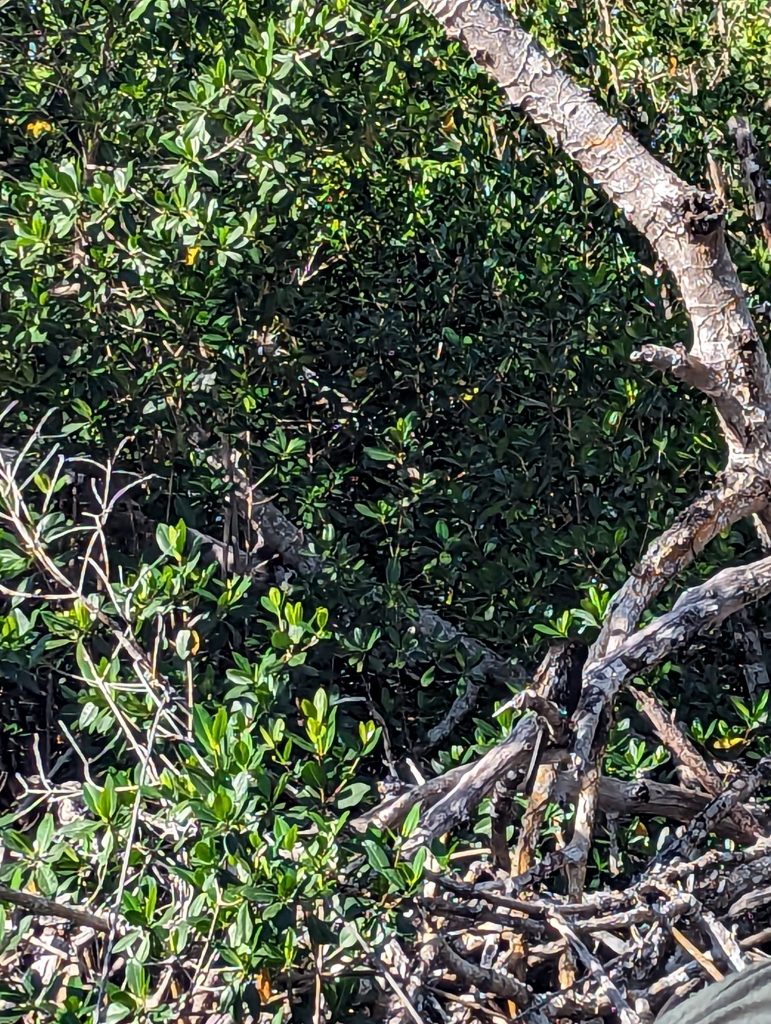
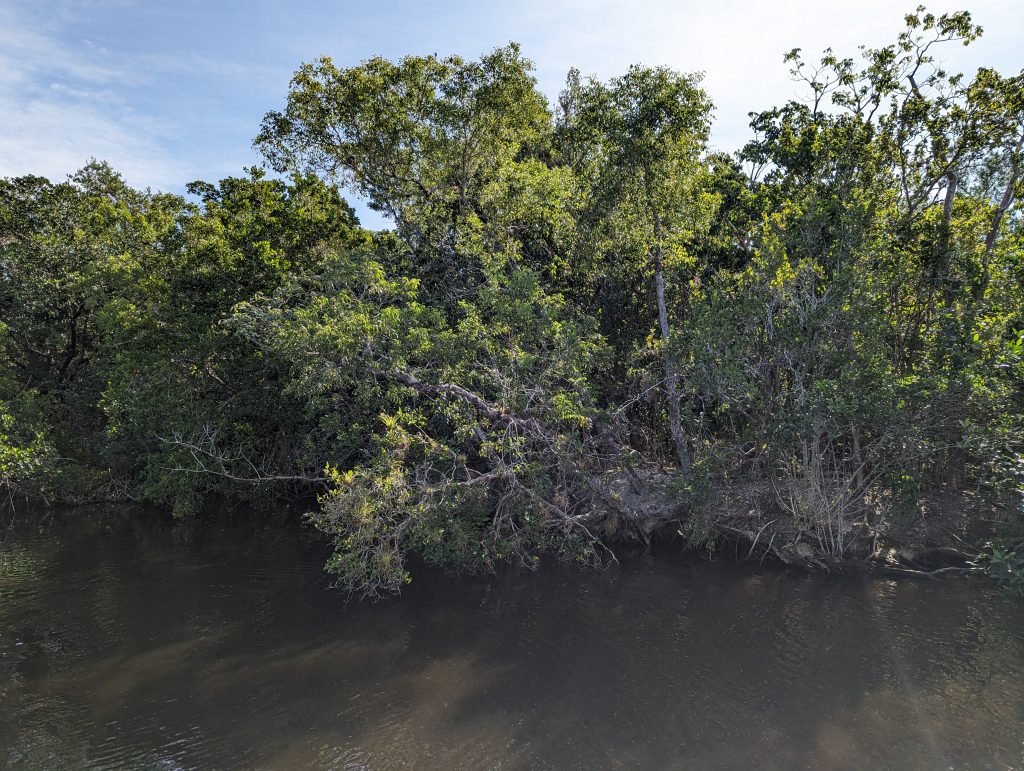
- Our guide also explains to us that there are three types of mangroves here that grow in brackish water (fresh and salt water mixed together): black mangroves, red mangroves and white mangroves.
- Black mangroves are easy to recognize by the breathing tubes that always emerge from the water near the tree.
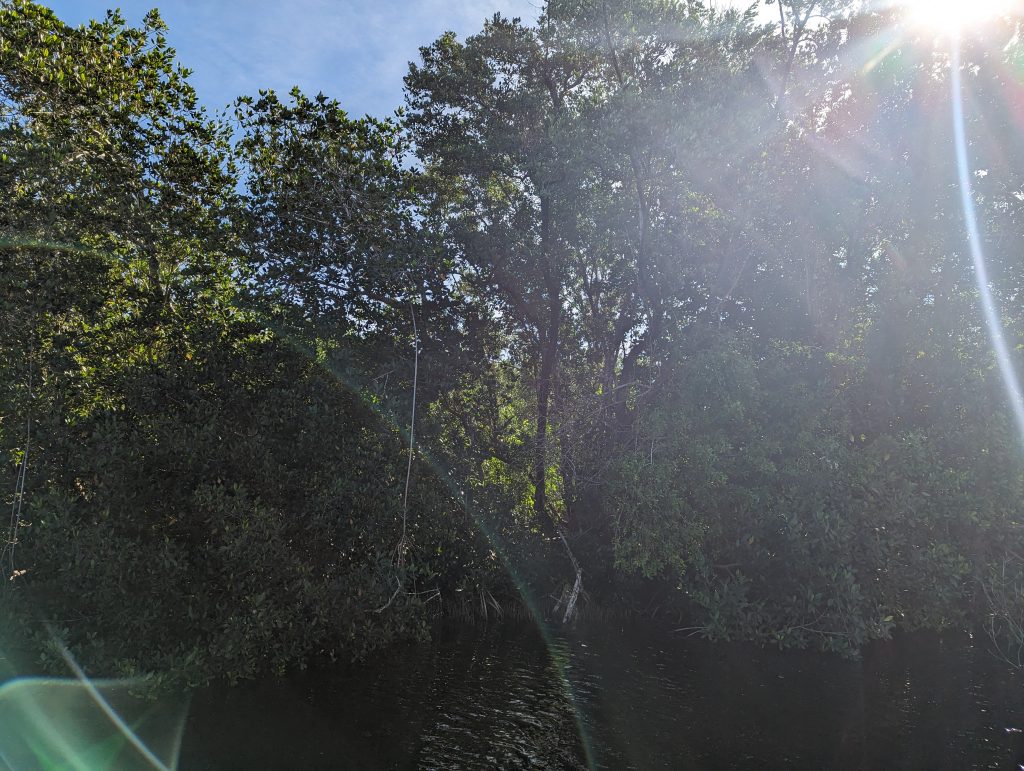
- Red mangroves seem to prevail over the others and are therefore the most common and white mangroves are quite rare, but can be recognized by the light-coloured trunk and leaves.
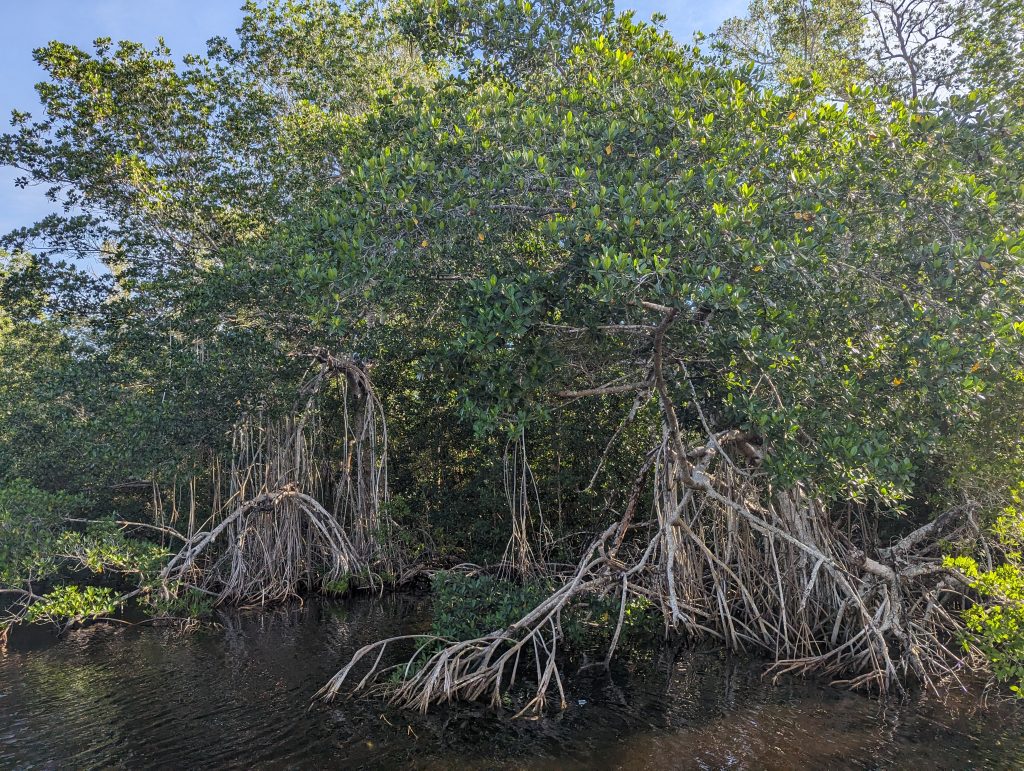
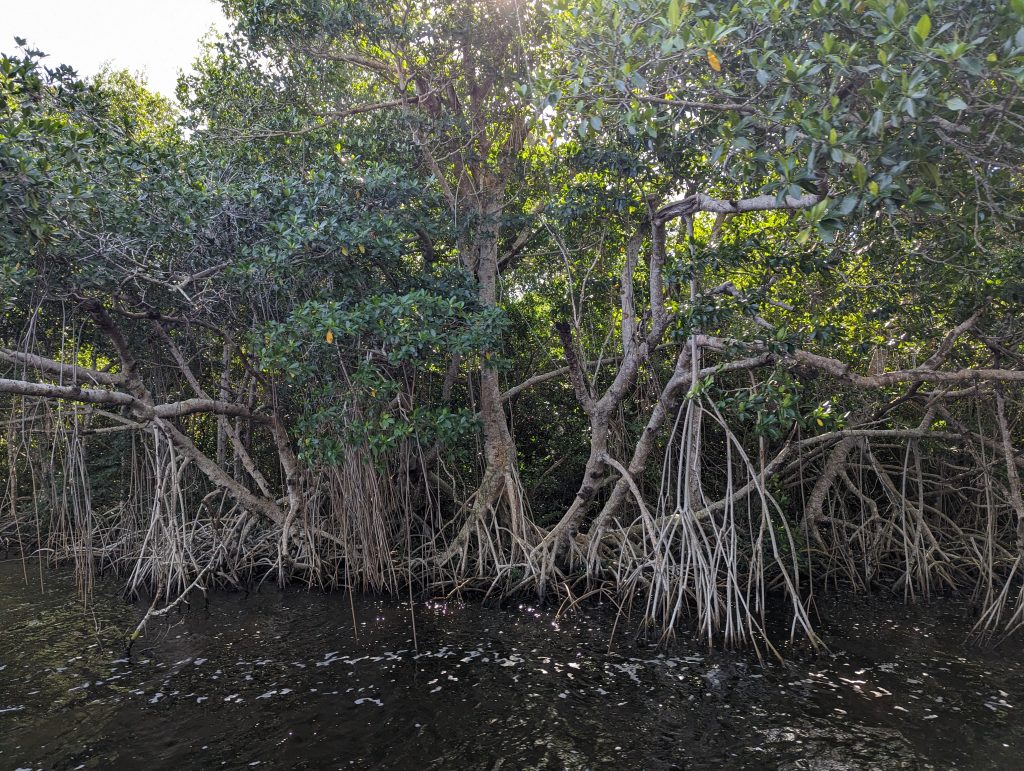
- Many fish come here to lay their eggs in the water protected by the Florida Bay dam so that the small fish are protected.
- Every now and then a manatee swims in here, but unfortunately we don’t see any. 🙁
- We also learn that the Everglades are not a swamp but a sloe, for slow moving water.

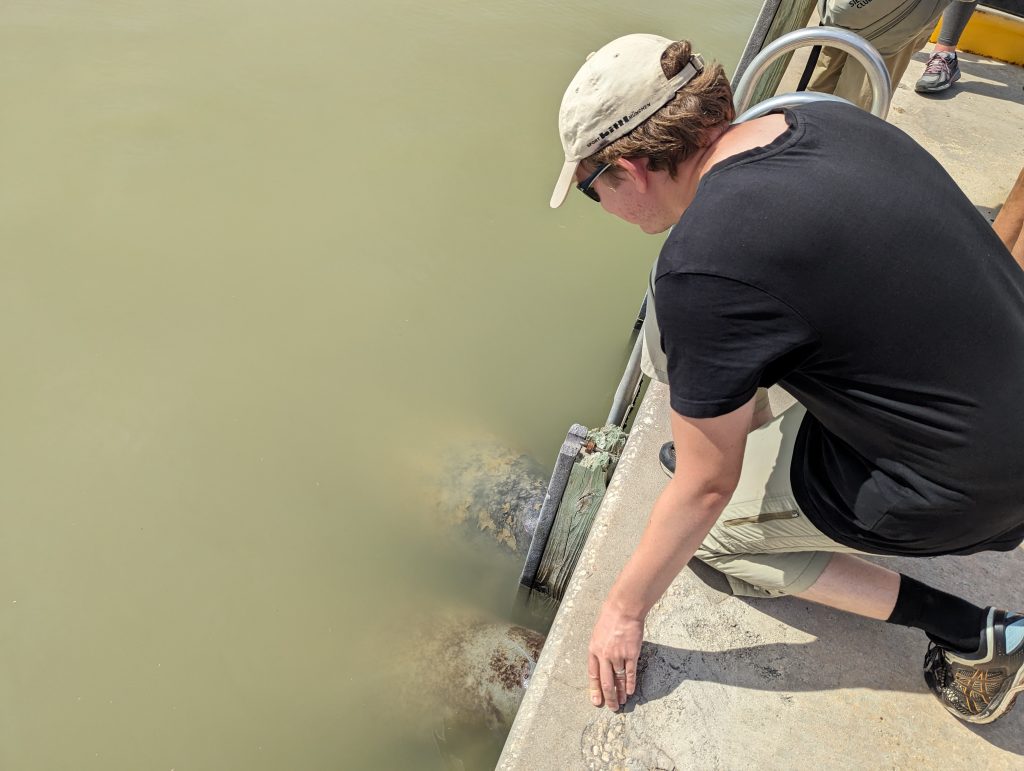
- When we dock again, our guide also tells us that we can observe manatees right by the jetty, as they always hang out here on the Florida Bay side and eat seaweed from the wooden poles in the water.
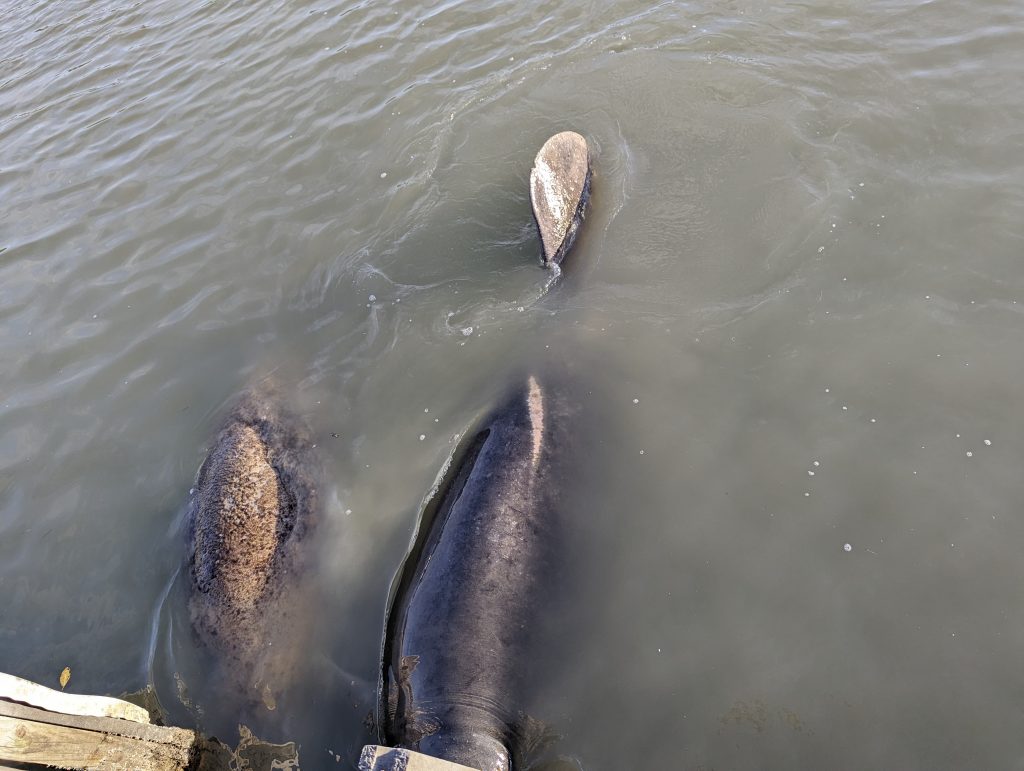
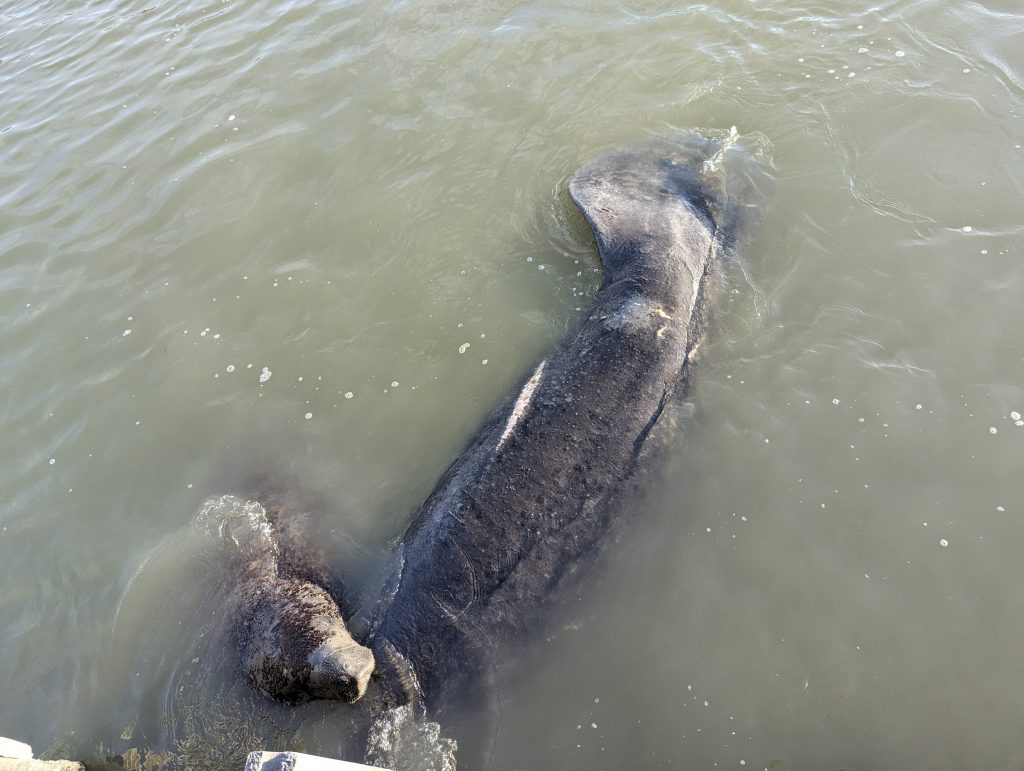
- We walk over enthusiastically and indeed – we find a whole lot of manatees there – cool!
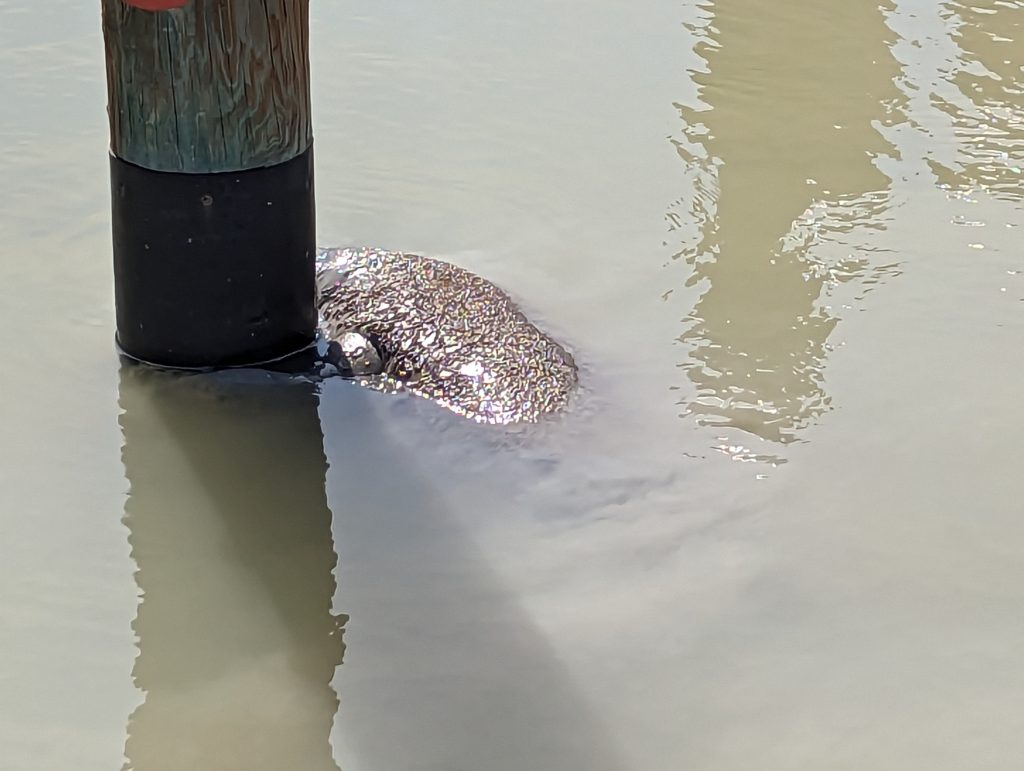
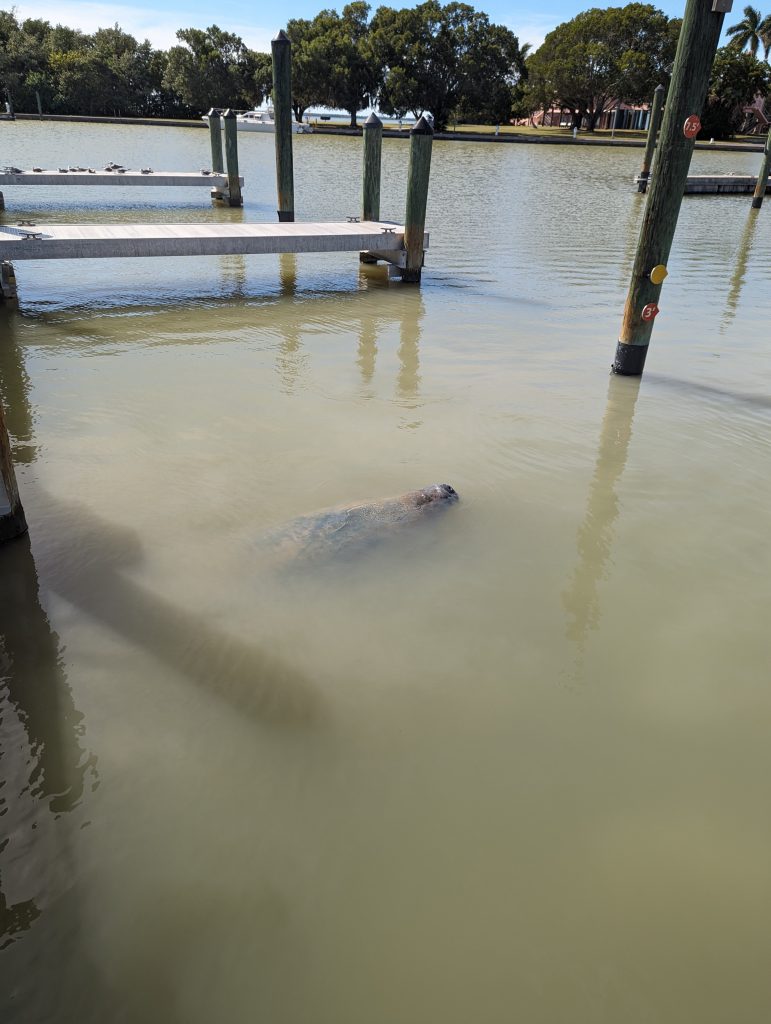
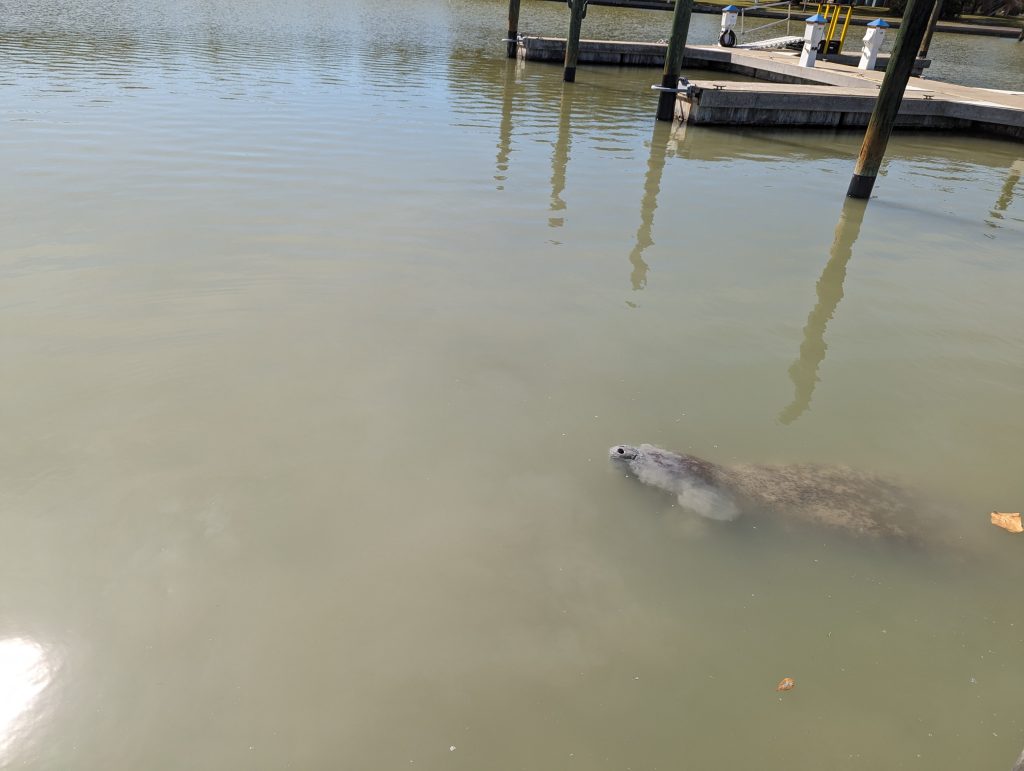
- Naturally, we spend some time on the shore watching the large manatees.
- We still have a bit of time, so we think to ourselves: Great, let’s go for a short walk along the shore – it’ll be really nice. After walking about 20 meters, however, it turns out that this is the opposite of “nice”, because we are literally being attacked by mosquitoes again. For this reason, we quickly abandon the idea.
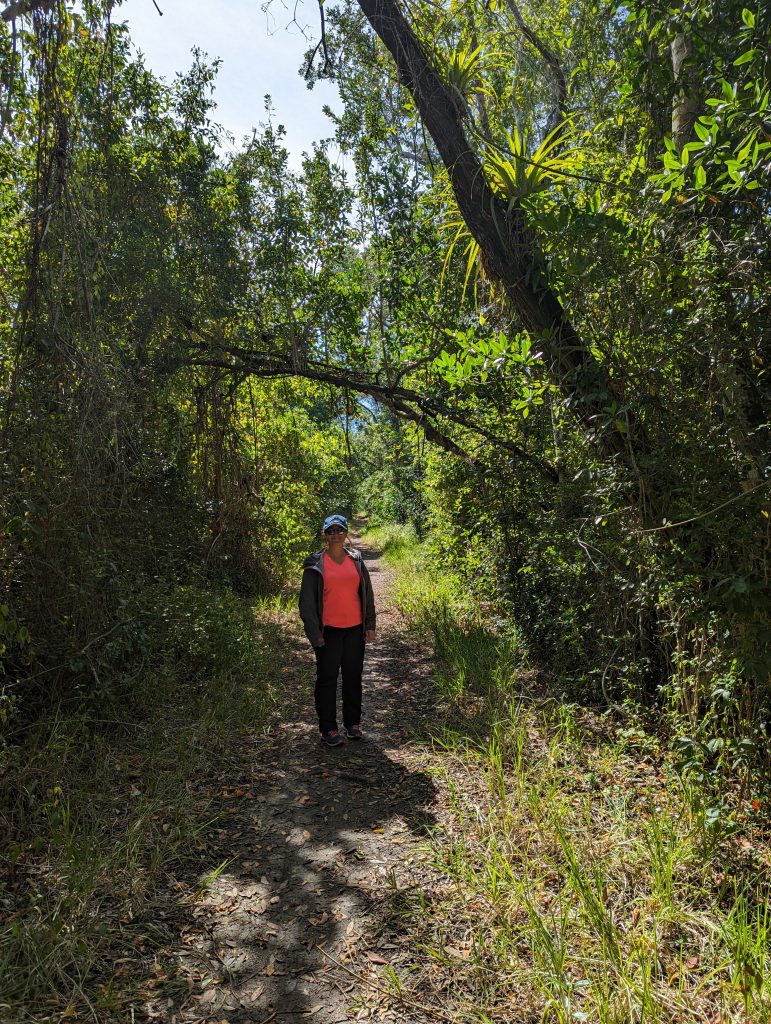
- Instead, we have lunch on our bench and without mosquitos before heading to the 9 Mile Pond for a kayak tour.
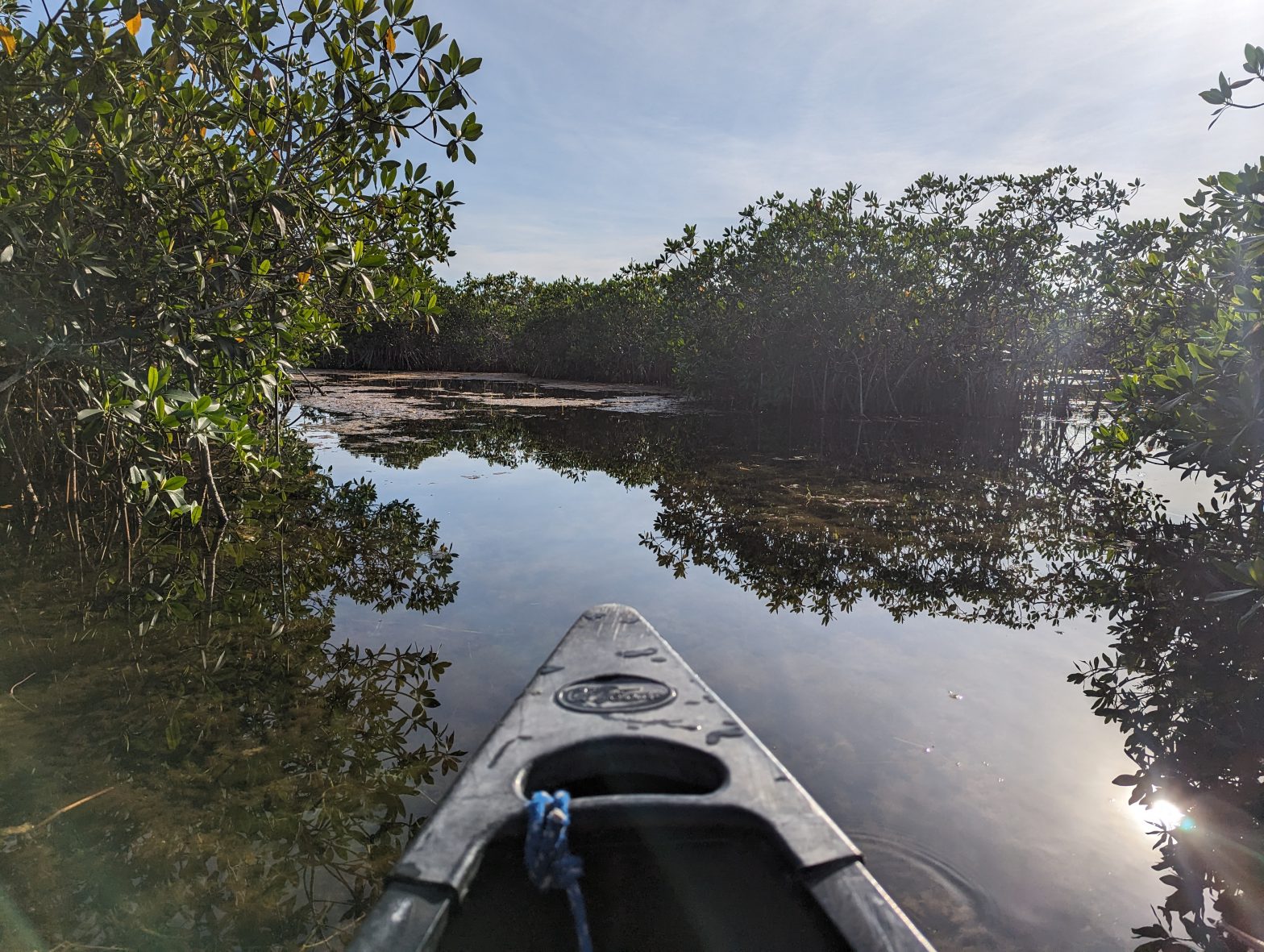
- The 9 Mile Pond is particularly suitable for this, because here you can paddle along a varied route through mangrove forests as well as over wide grassland-under-water areas, which is a real experience.
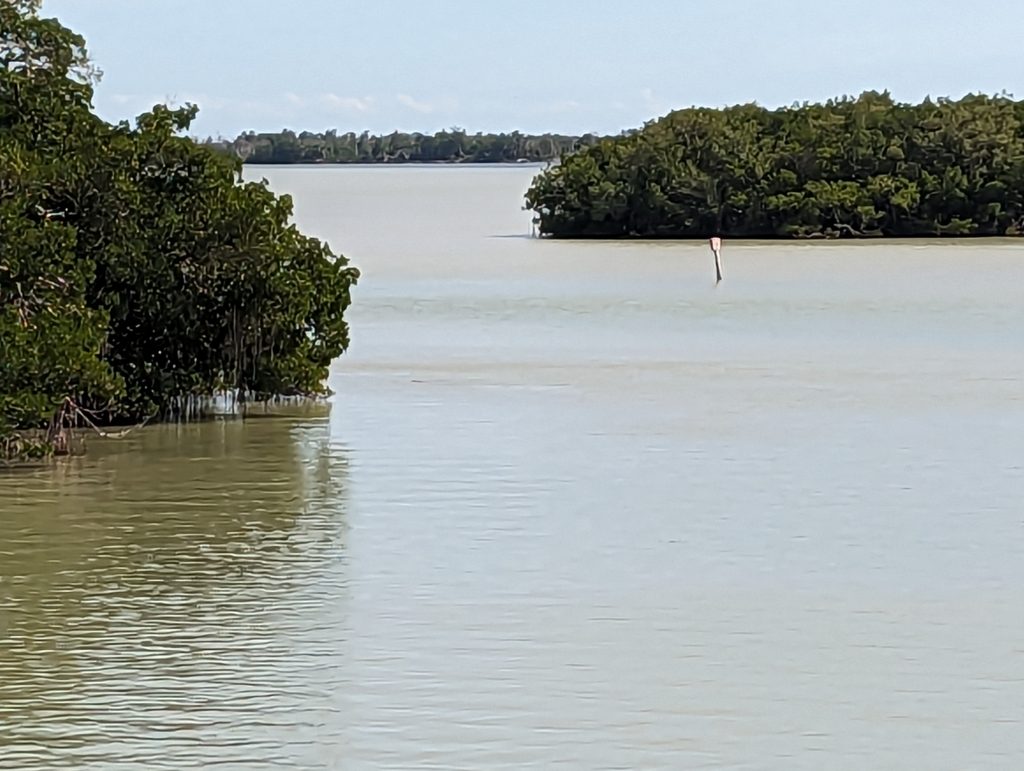
- We set off across a large lake to the start of the loop, which we find without any problems.
- However, we manage to immediately turn off in the wrong direction and search in vain for the second marker.
- No wonder we cannot find anything, given the poor map material we had been given – a white sheet with a dotted line that marks the kayak route (see below).
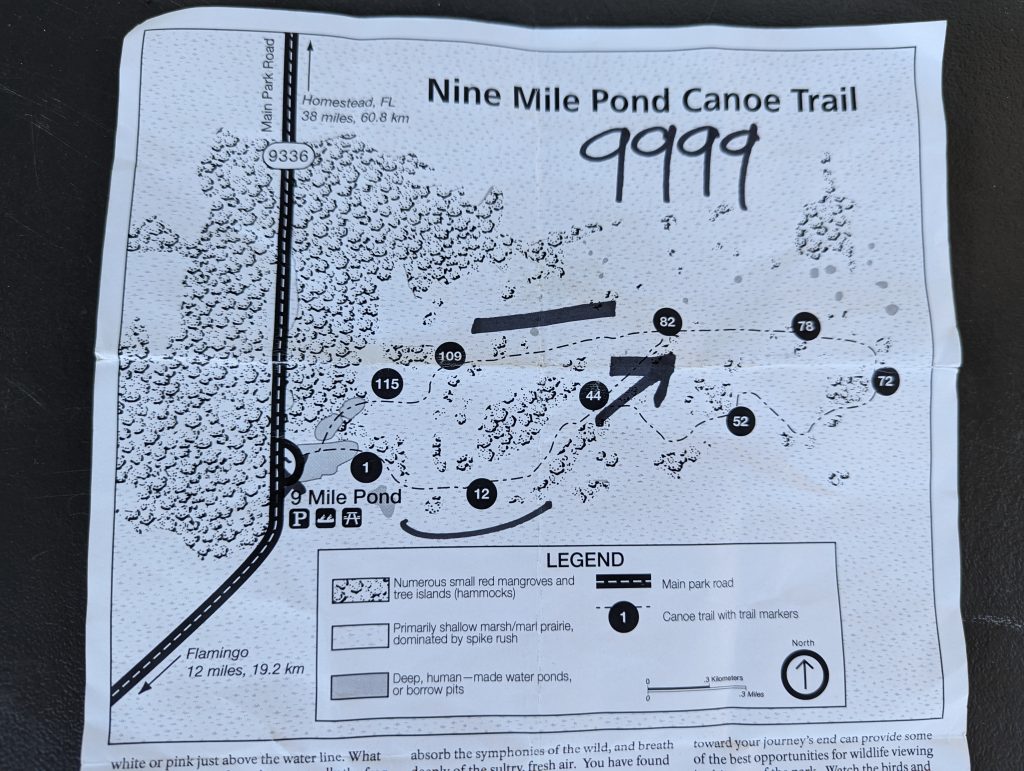
- But fair enough, we wanted adventure and there we have it.
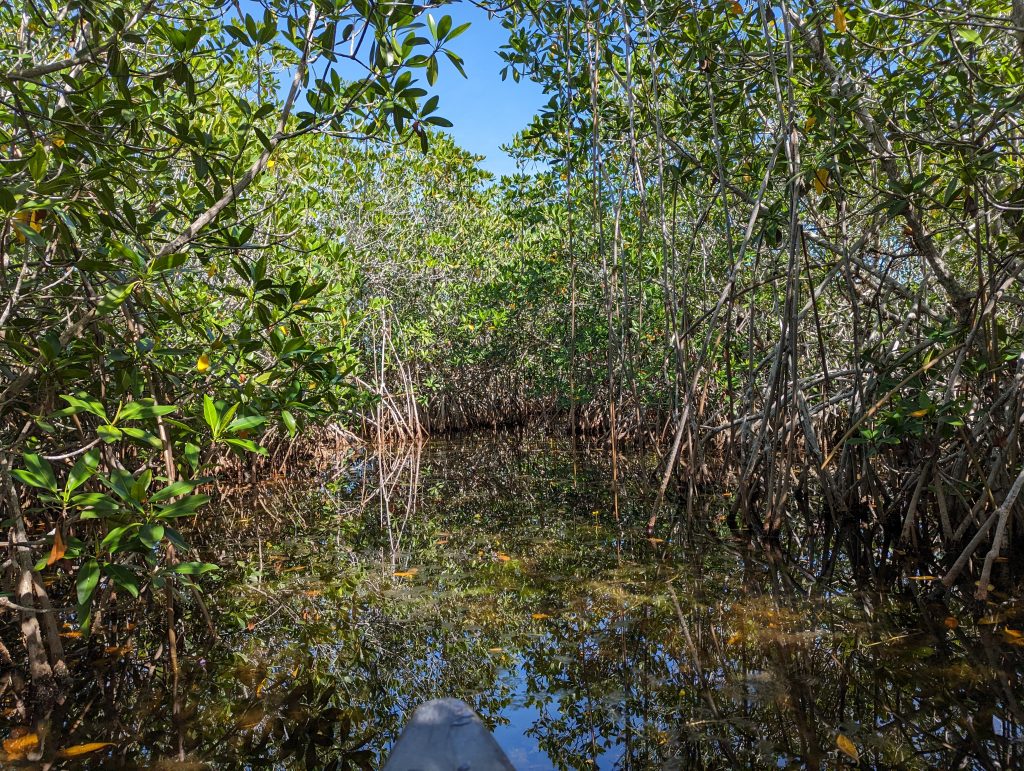
- As the thicket gets wilder and wilder and we start to wonder whether the route really runs along here, we finally see one of the stakes marking the route again in the distance.
- However, instead of number 1 or 2, it is number 110 and a glance at our “map” tells us that we have gone in the wrong direction and this is the end of the route in the other direction.
- Since the trail is a loop, we think to ourselves, great, we’ll just do the loop in the other direction.
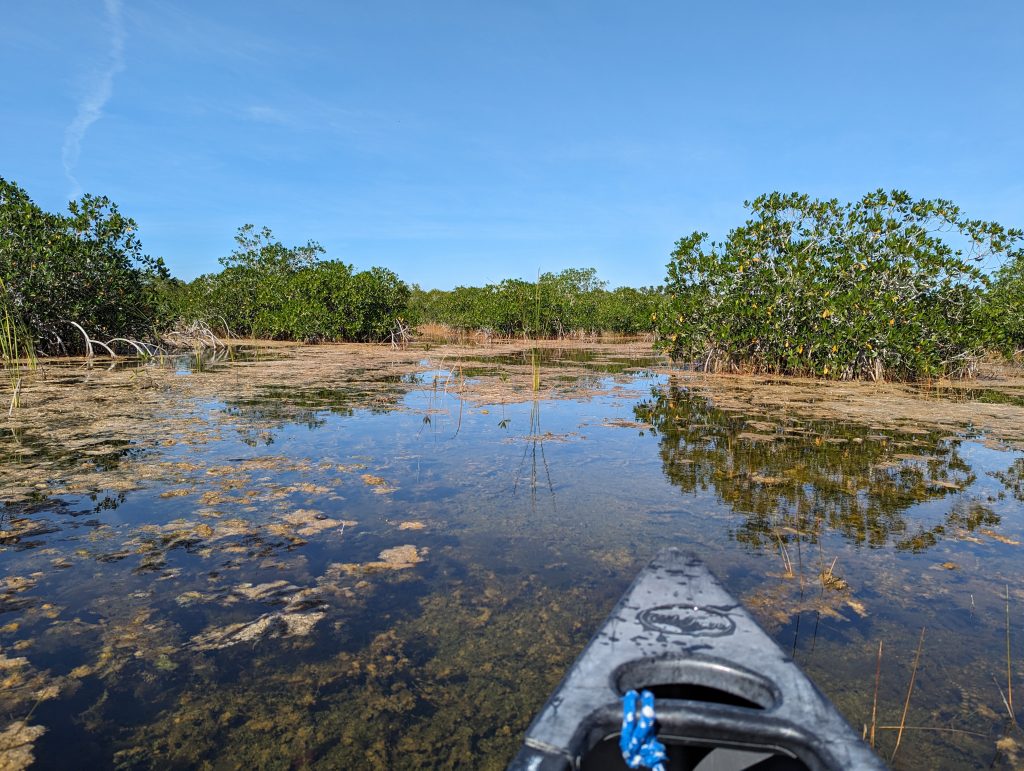
- This is more difficult than we thought, as the already poorly visible markings are even harder to see from the other direction.
- As a result, we are not exactly following the route, but this doesn’t detract from the beautiful nature we are moving through and it doesn’t really matter whether we follow a route or not, as long as we can find our way back. We really enjoy the wonderful nature that from the kayak we experience so closely.
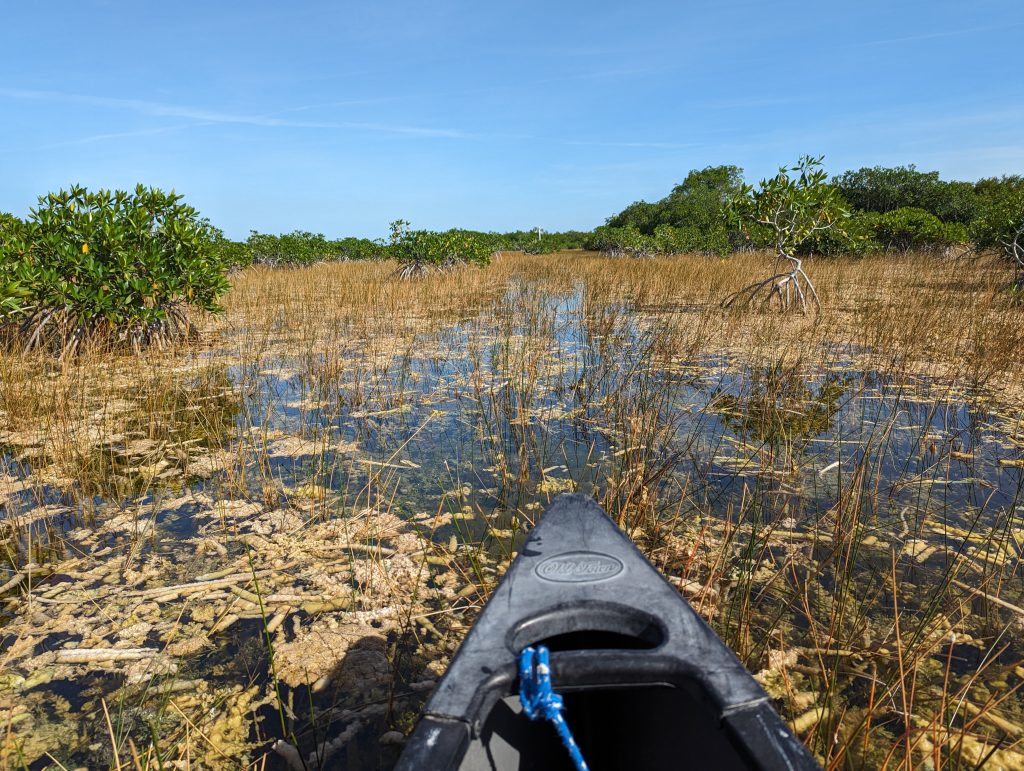
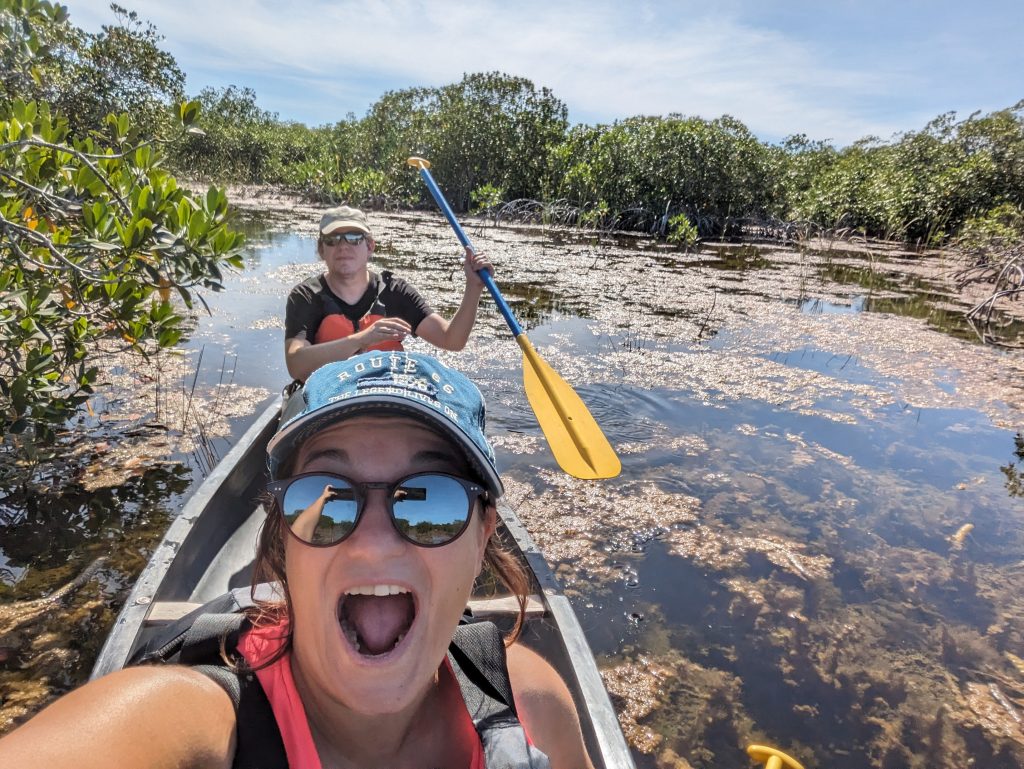
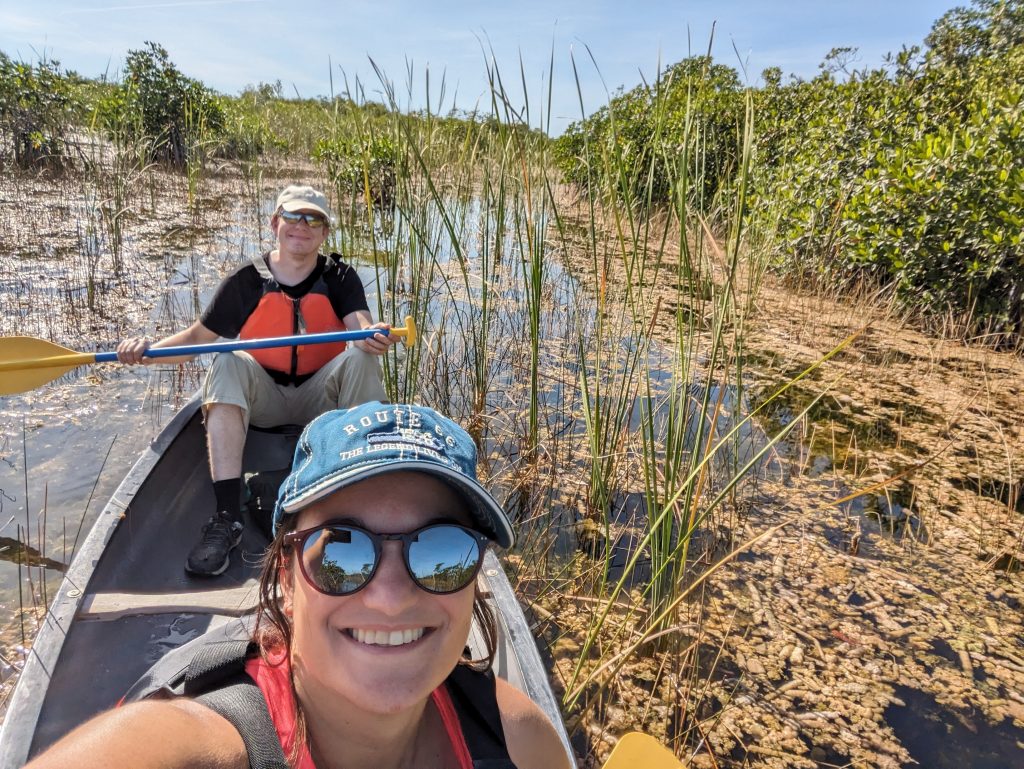
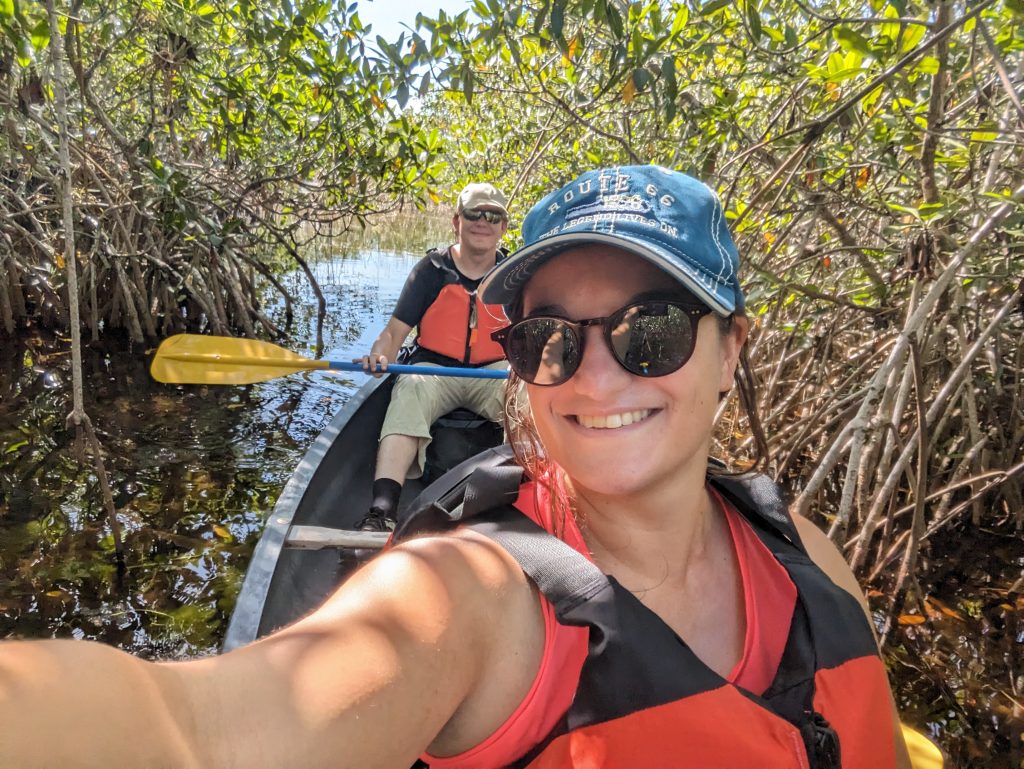
- It’s really beautiful, sometimes you paddle through very narrow mangrove caves, which is almost magical.
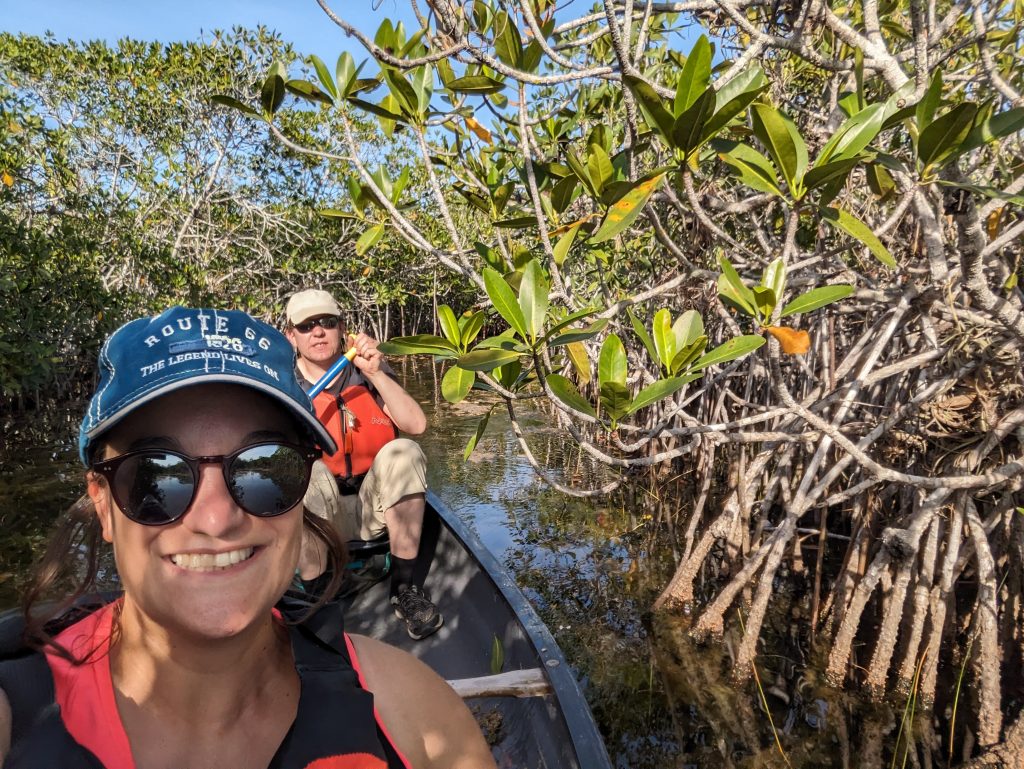
- Then you leave it again and come out onto more open water, overgrown with seaweed and reeds.
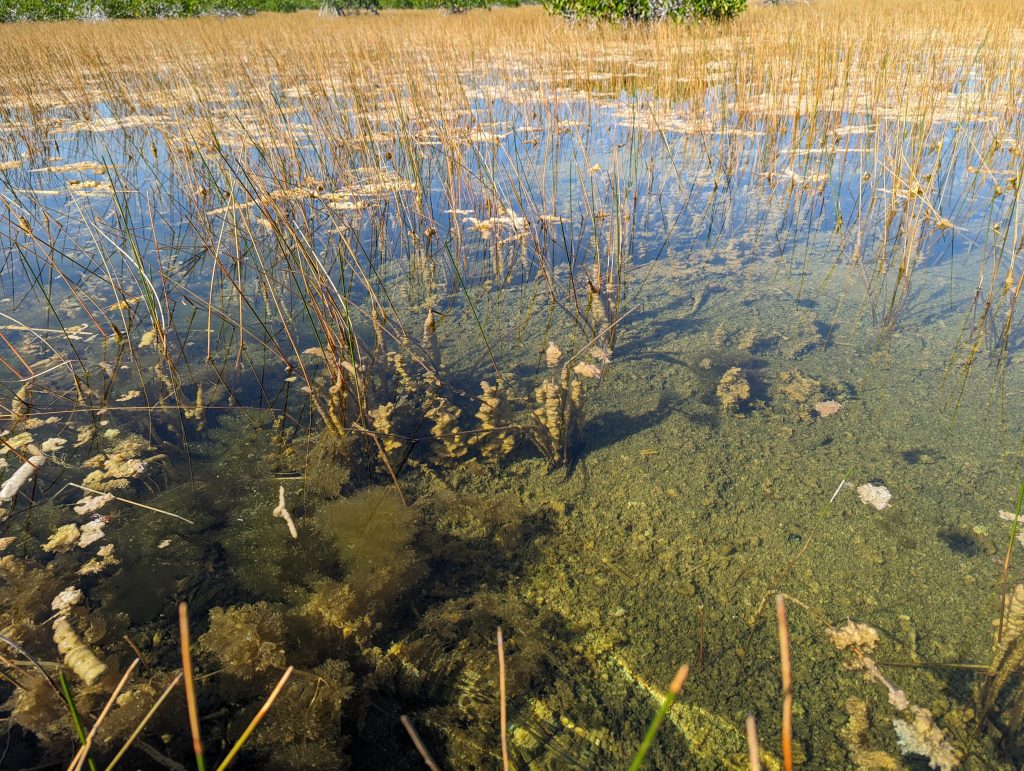
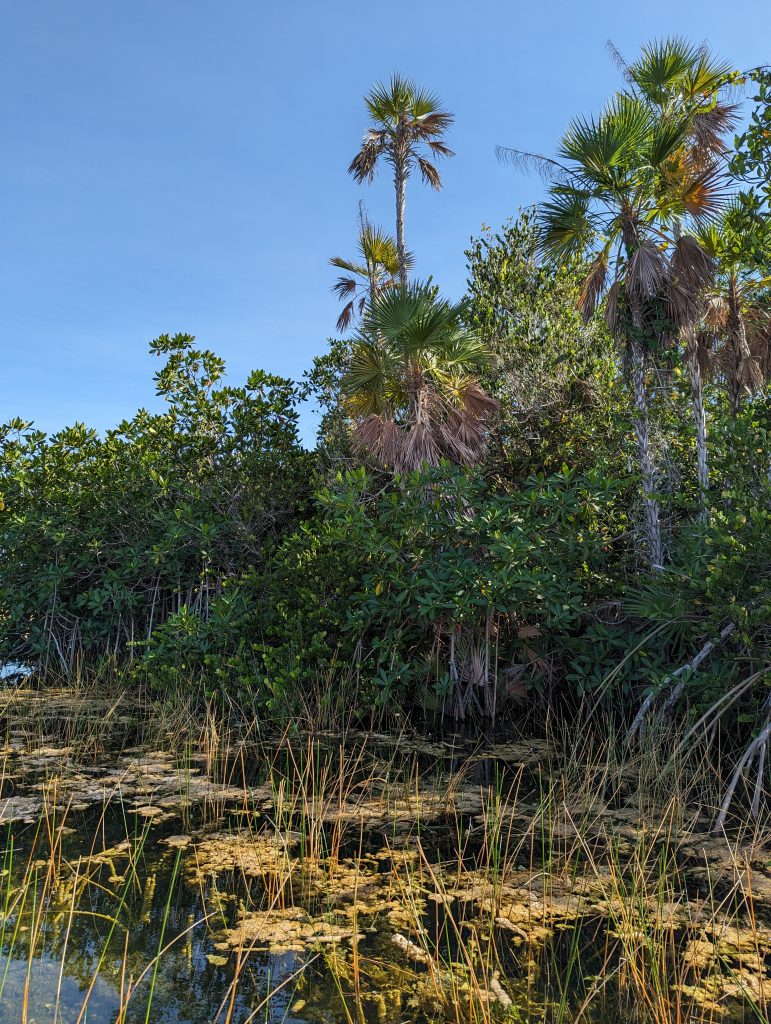
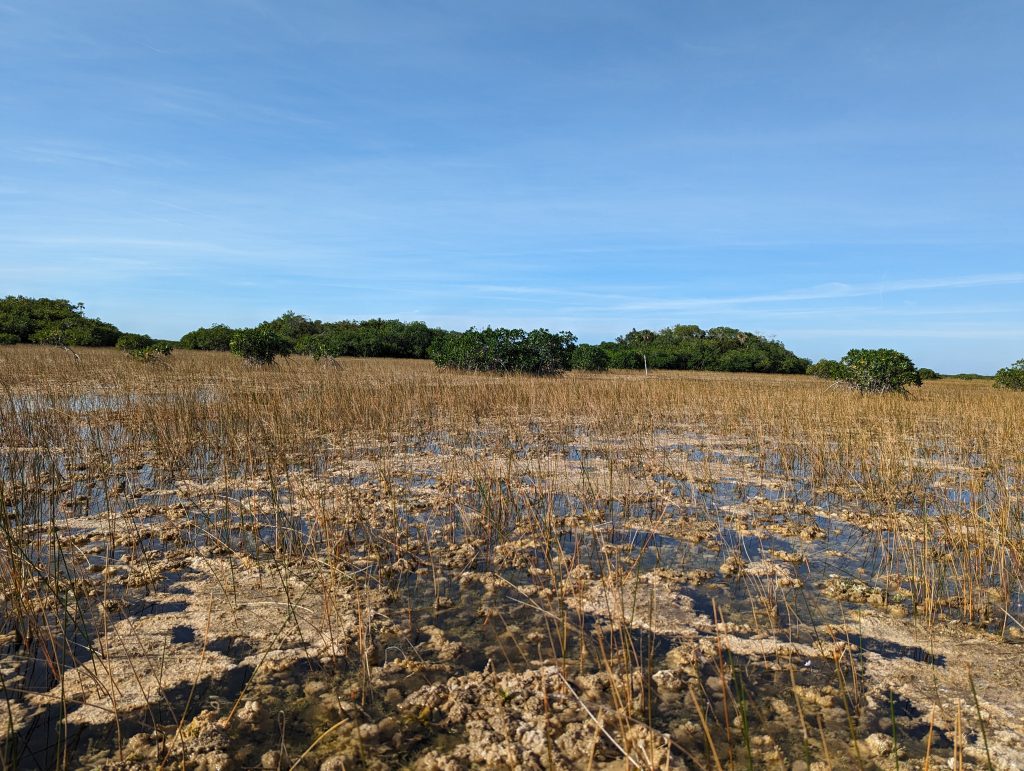
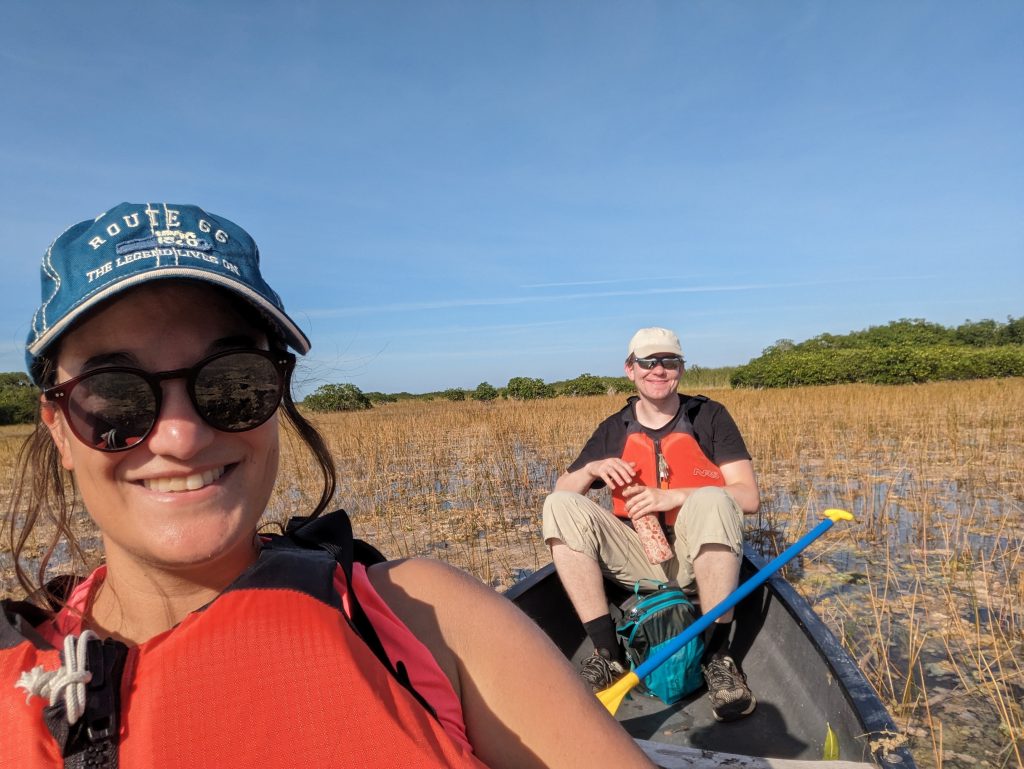
- The water here is very shallow in places and you can almost always see the bottom.
- We see lots of different birds, some of which we recognize thanks to the boat tour.
- After a while, we reach the point from which we can take a shortcut, which we should do – according to the ranger who lent us the kayak – in order to get back to the starting point in time.
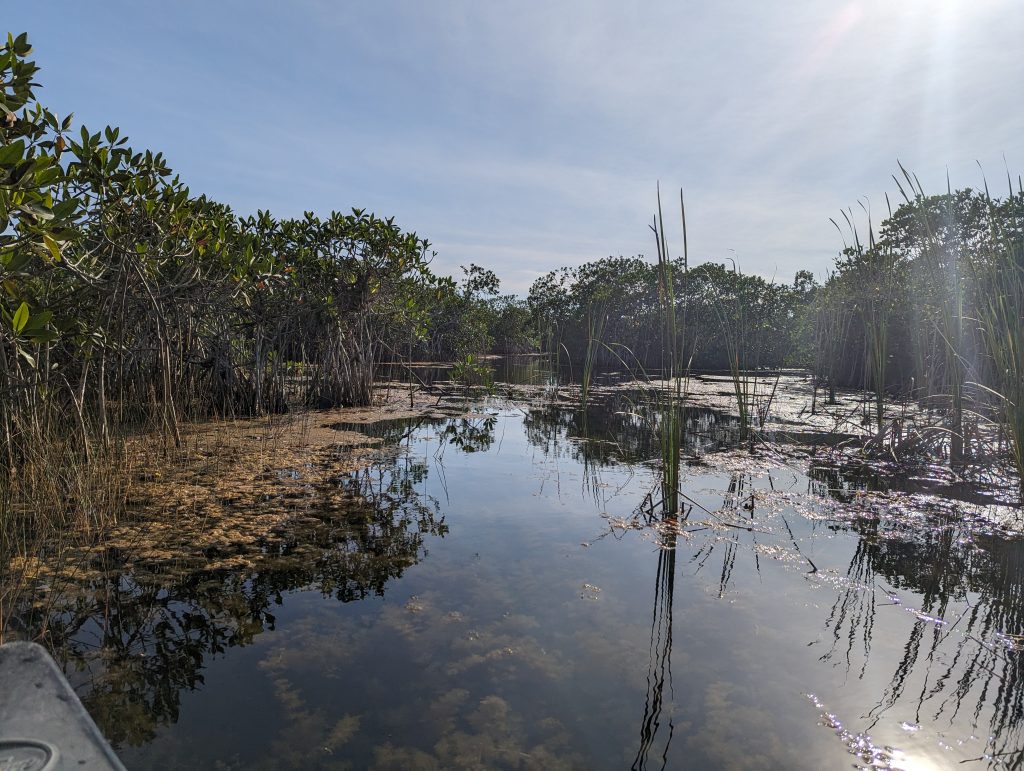
- However, despite our detours, all the paddling and the slow progress on the paths next to the route (which are correspondingly overgrown), not half the time has passed and so we decide without further ado to go a bit further along the longer route.
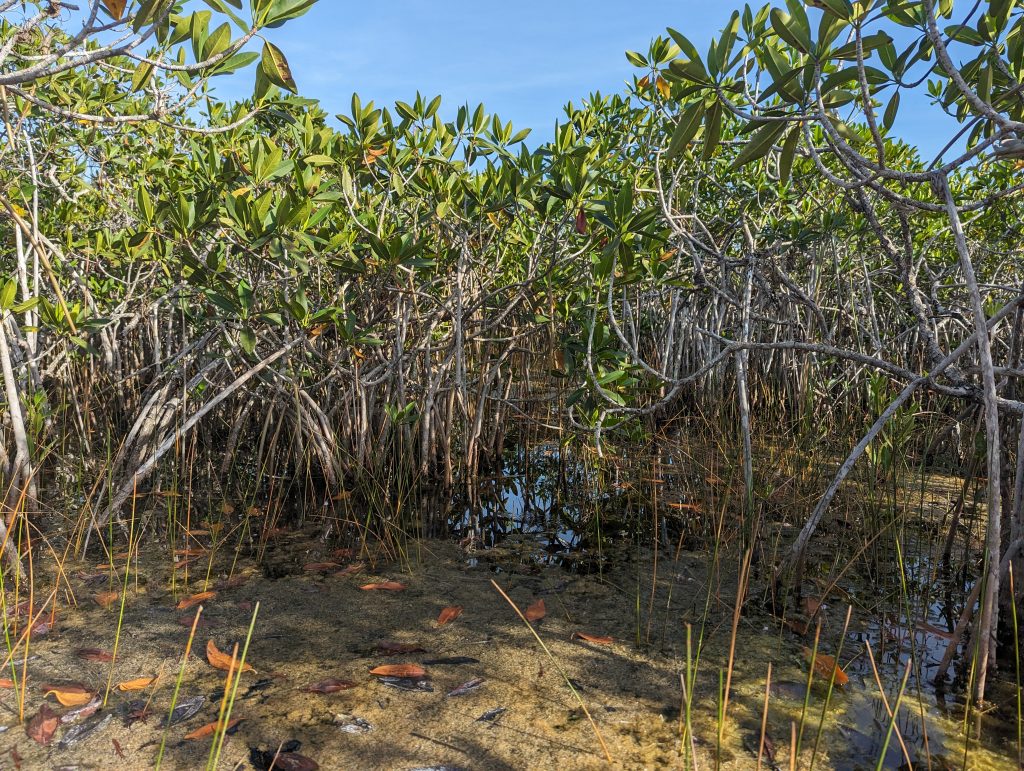
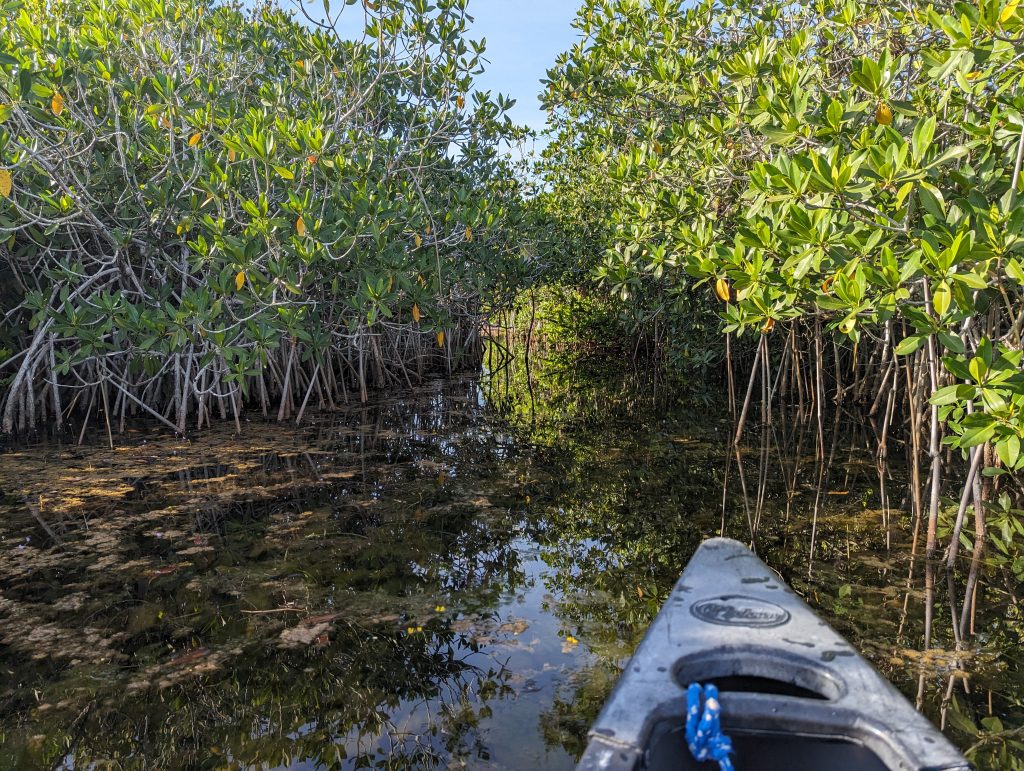
- After a while, we turn around so that we can paddle along those parts of the start, which we missed.
- The mangroves slowly grow so thick again that you can touch them on both sides when you stretch out your arms, which is really something special for paddling through.
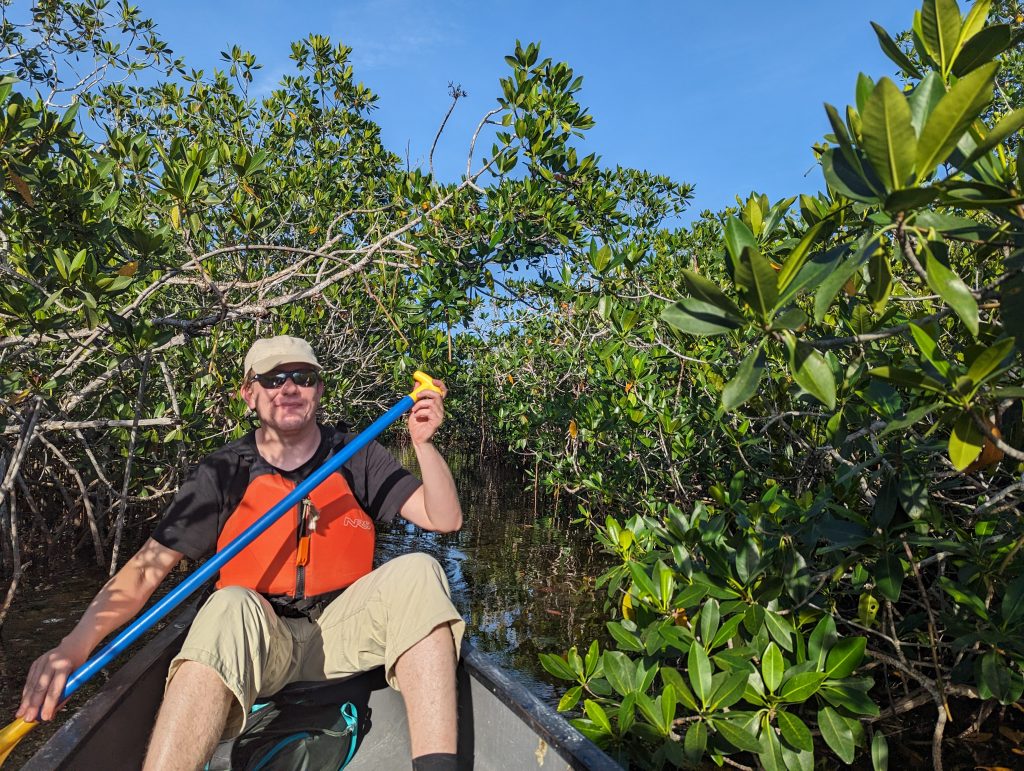
- In the beautiful light of the setting sun, we reach the starting point, which is directly behind the bend where we took a wrong turn.
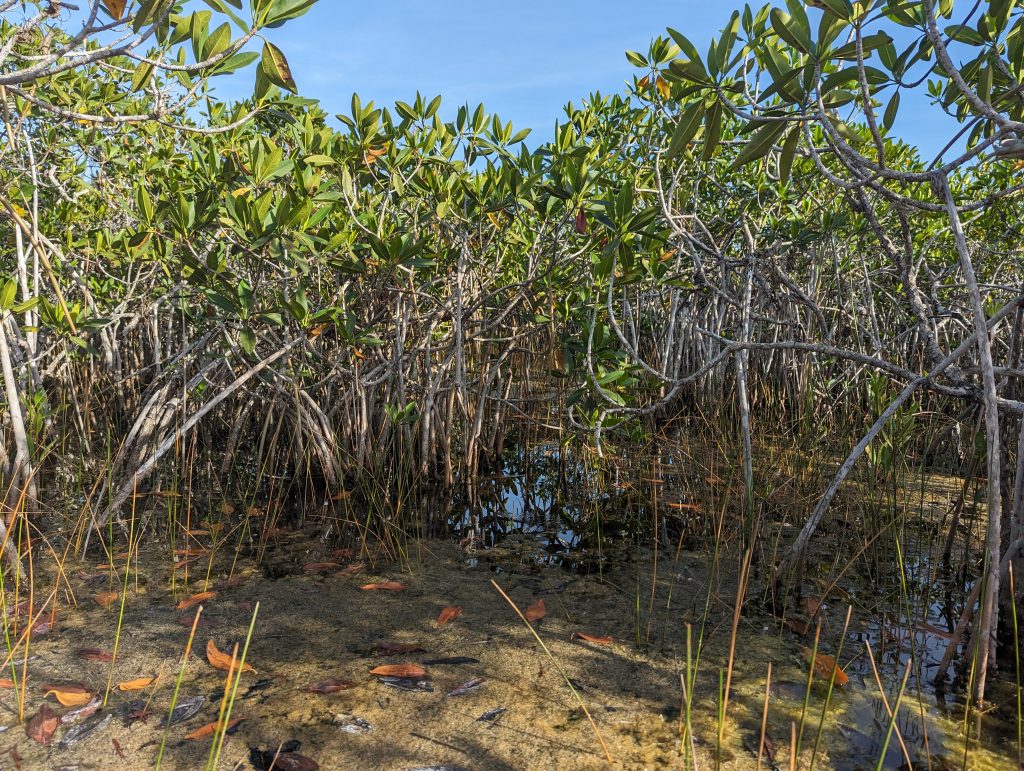

- Back at the large lake from which we started, we make a detour to two smaller lakes, which can be reached through a wild dichicht – so wild that at first glance we are not at all sure whether we can paddle through with our kayak – it turns out that it is possible, you just have to find the right spot.
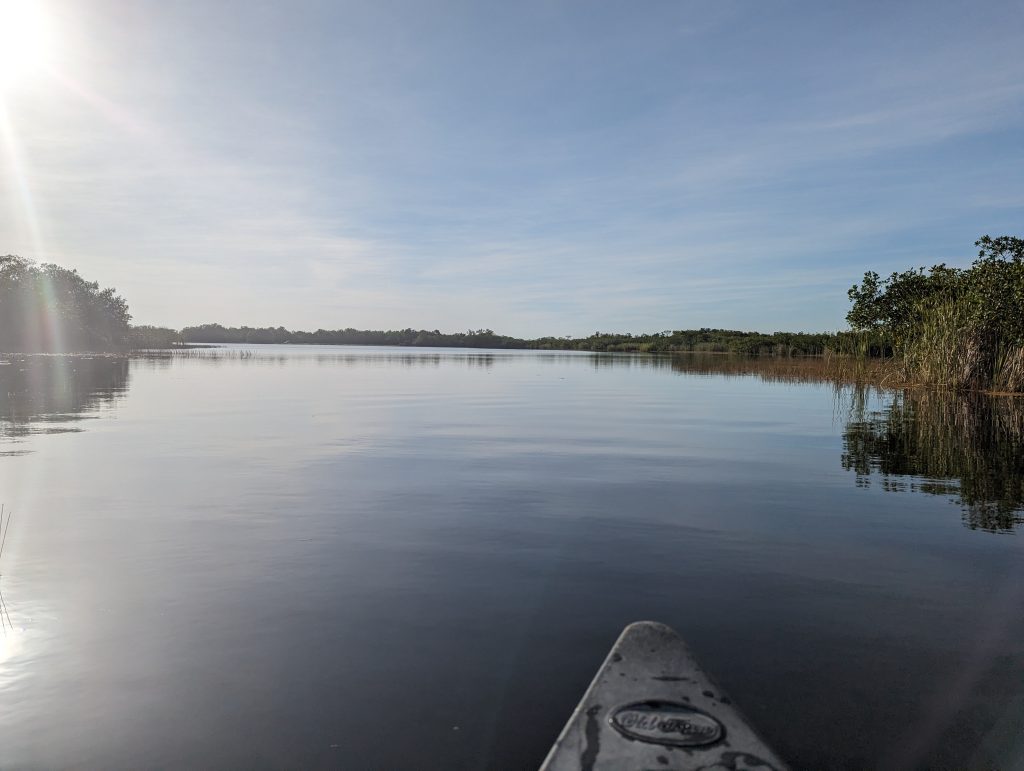


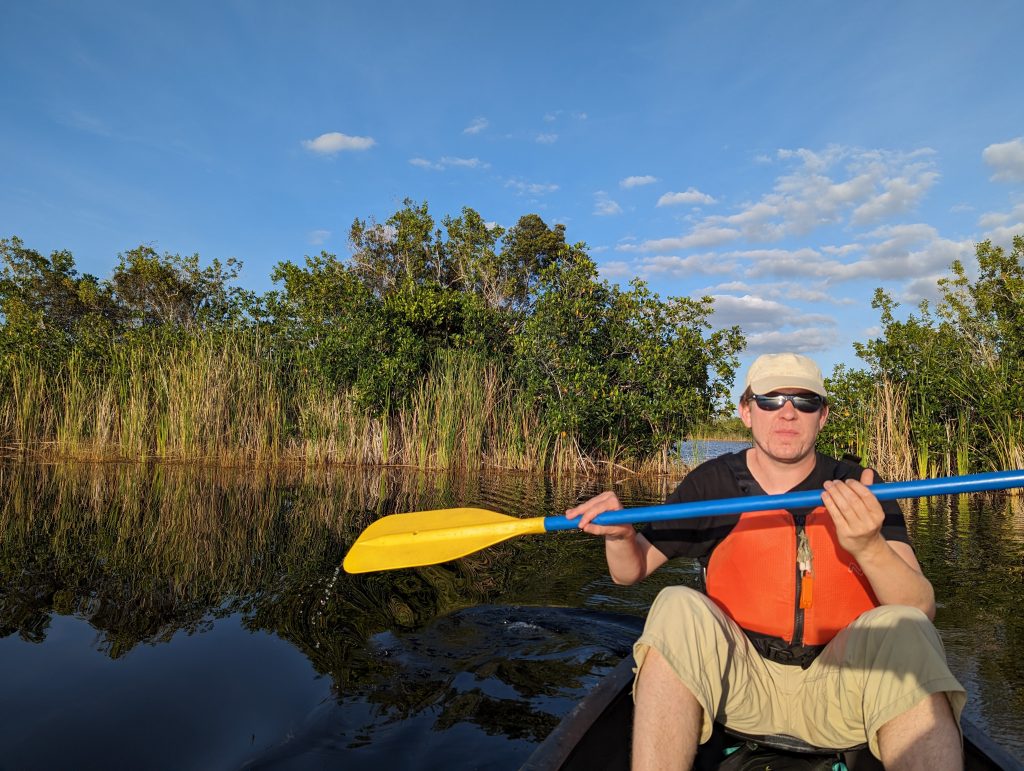
- Once the kayak is safely stowed away again, we head back to the Flamingo Visitor Center, where we “sign out” and then spend the rest of the day watching manatees.
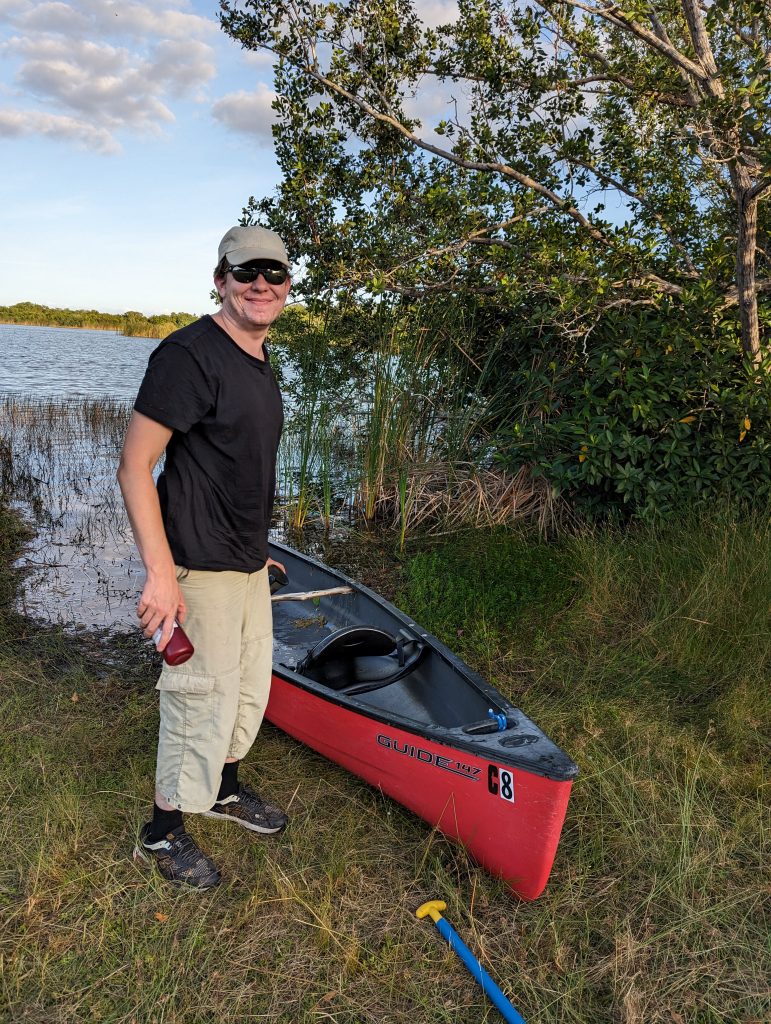
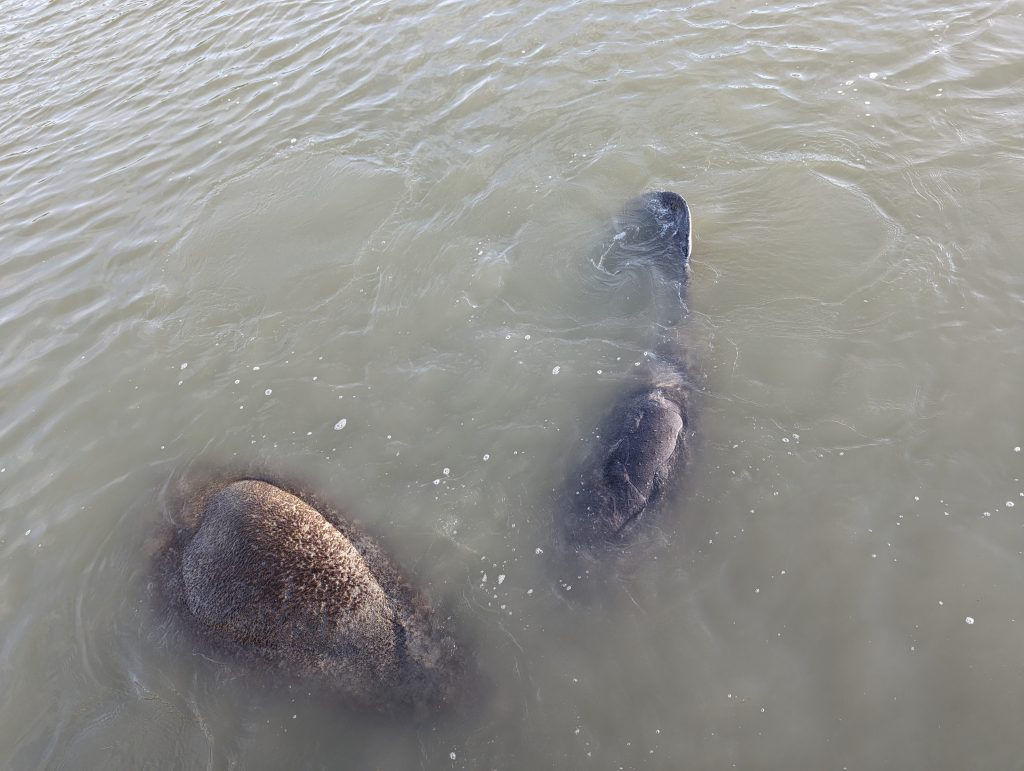
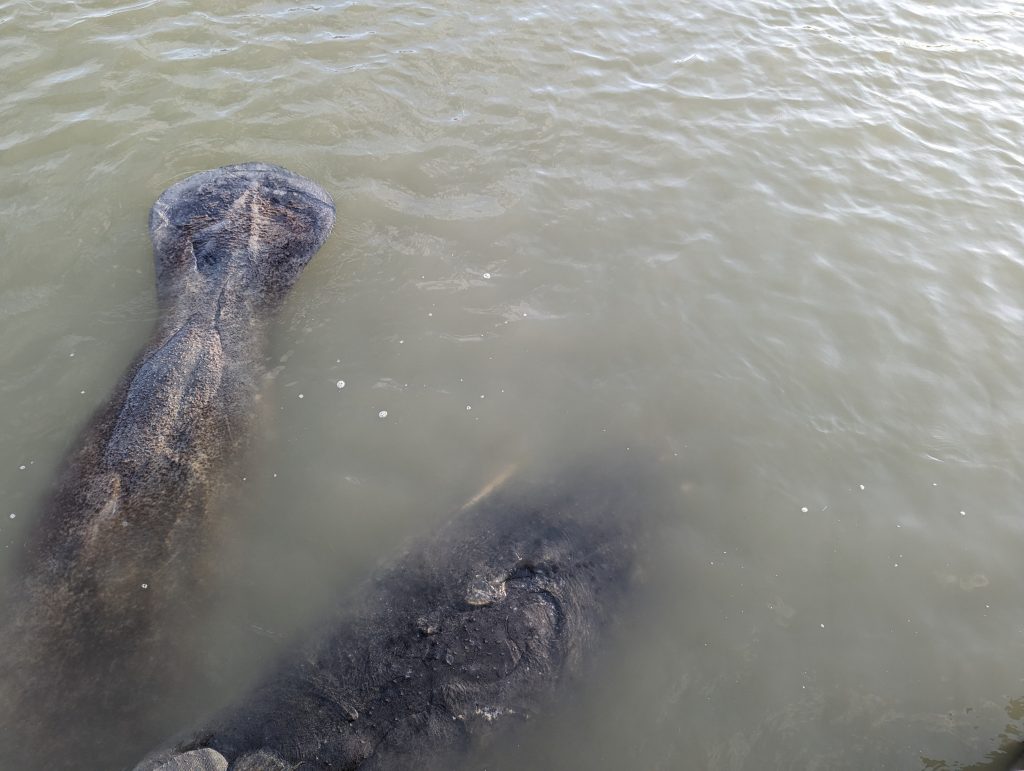
- This is great fun, because the animals gather here at a drinking fountain from which fresh water comes, and literally “fight” for a place in front of it, whereby arguing with manatees results in one nudging the other away with the help of the fin and snout and the body weighing tons, whereby the other immediately reappears and does the same – it is definitely very cute to watch.
- With our luck, we see another swimming crocodile in the Florida Bay basin.
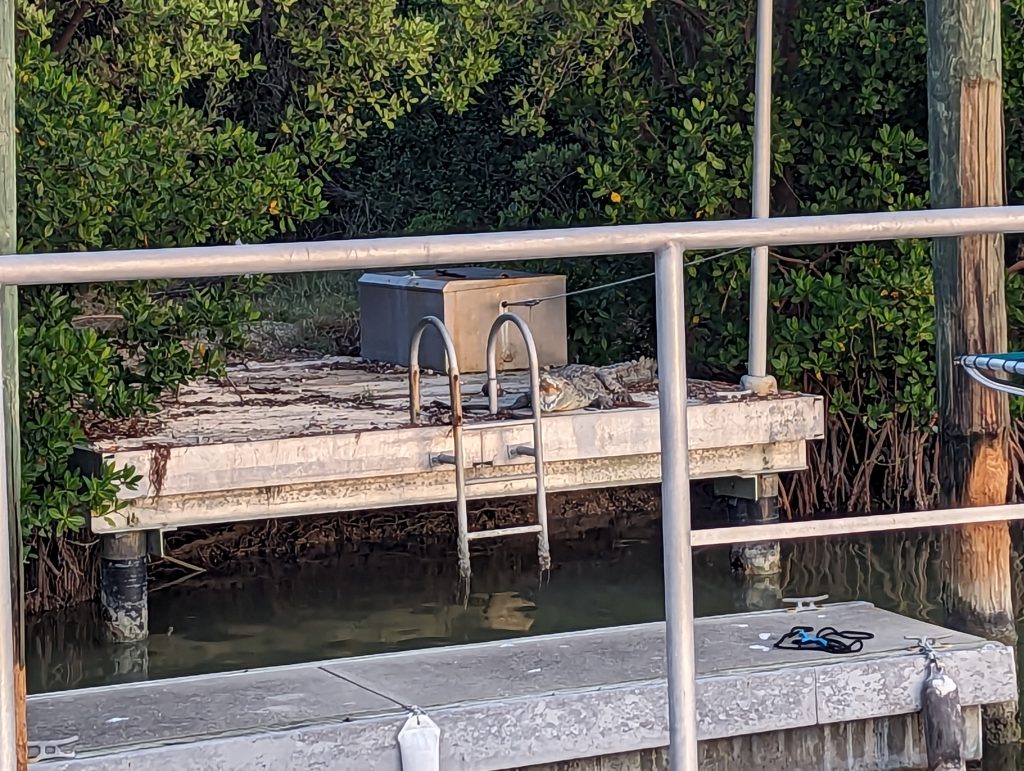
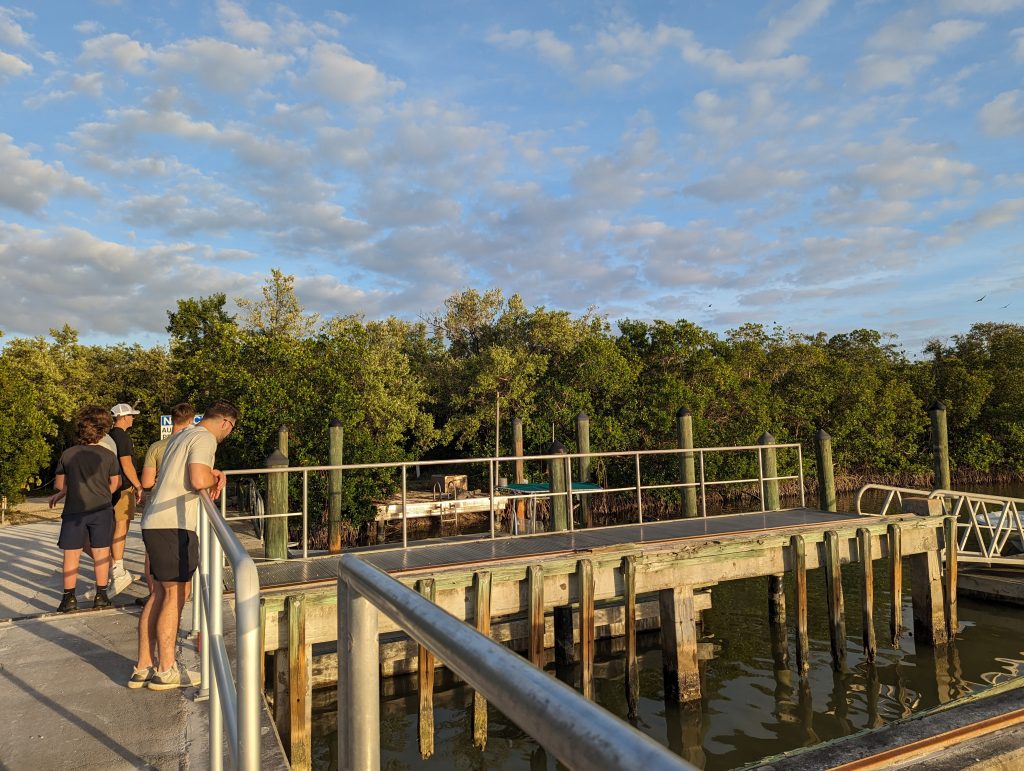
- And to top it all off, we spot a third one sunbathing on a nearby jetty – even with its mouth open at times.
- Again we have dinner at our usual spot before venturing to the campsite and the mosquitos, where we make a fire as quickly as possible, which once again is of limited help.
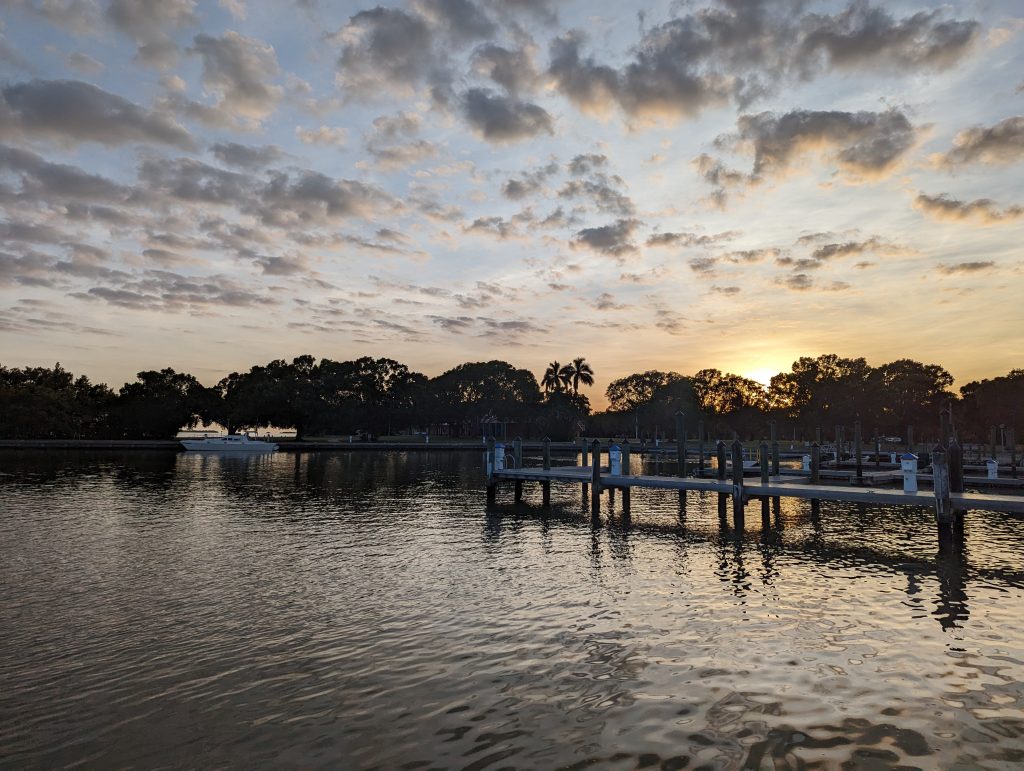
- Nevertheless, we make s’mores again, enjoy Blue Moon and look at the beautiful starry sky – and in between we soak our clothes and ourselves in mosquito spray.
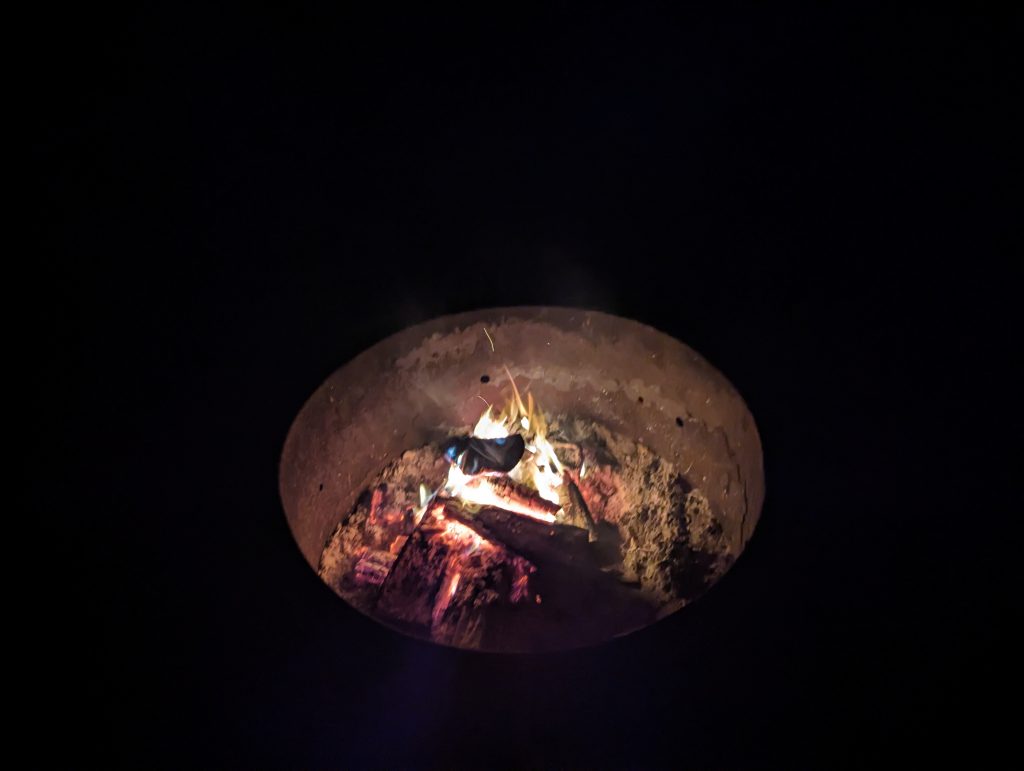
- My marshmallow stick still has some gras on it from yesterday, I say to Matthäus: “Mmm, do I eat that now?” Matthäus: “Well, with everything else on the stick, it doesn’t matter.” Me: “Ha, it’s probably the healthiest thing about it.”
Tuesday, 7.11.
„Ich hab mir einen Panther immer muskulöser vorgestellt“
- At dawn, as the sun rises, we get up and take down the tent – more precisely, we throw all the (still wet) tent contents into the car, pull out the poles (I’ve never taken down a tent that quickly before) and throw the tent on top of the rest, then quickly slam the door of the car shut and perform a mosquito massacre (out of revenge) in the car.
- Of course, we’ve still been stung to death in the meantime – no idea how the other (three) people in the campsite can just run around outside unmoved.
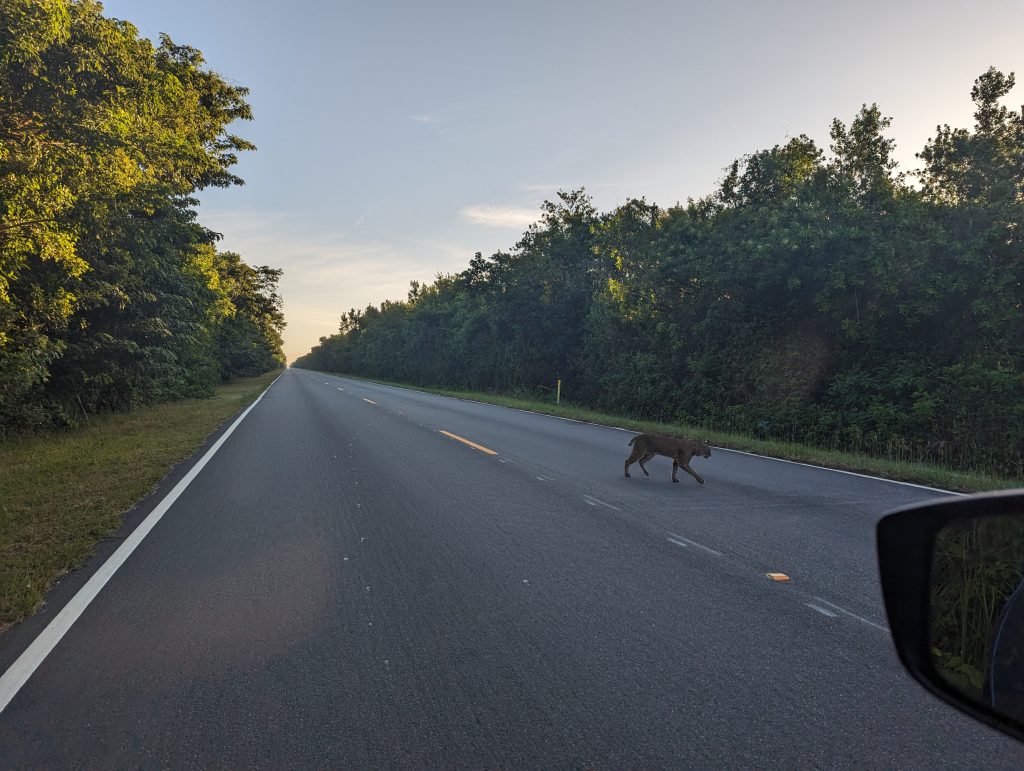
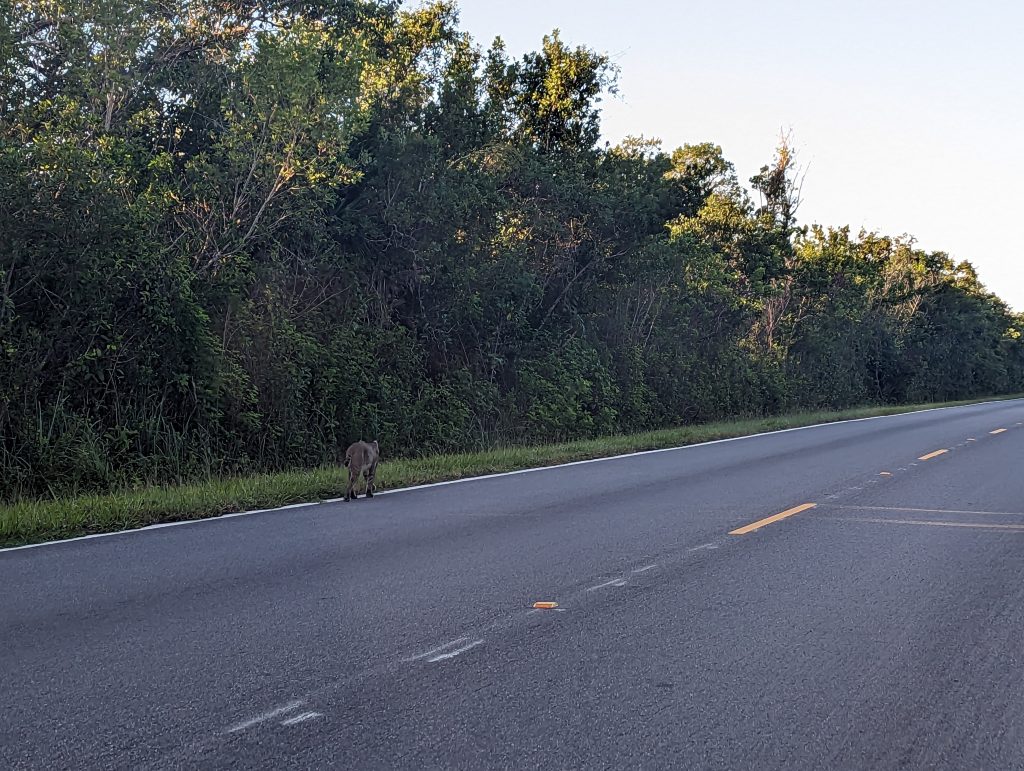
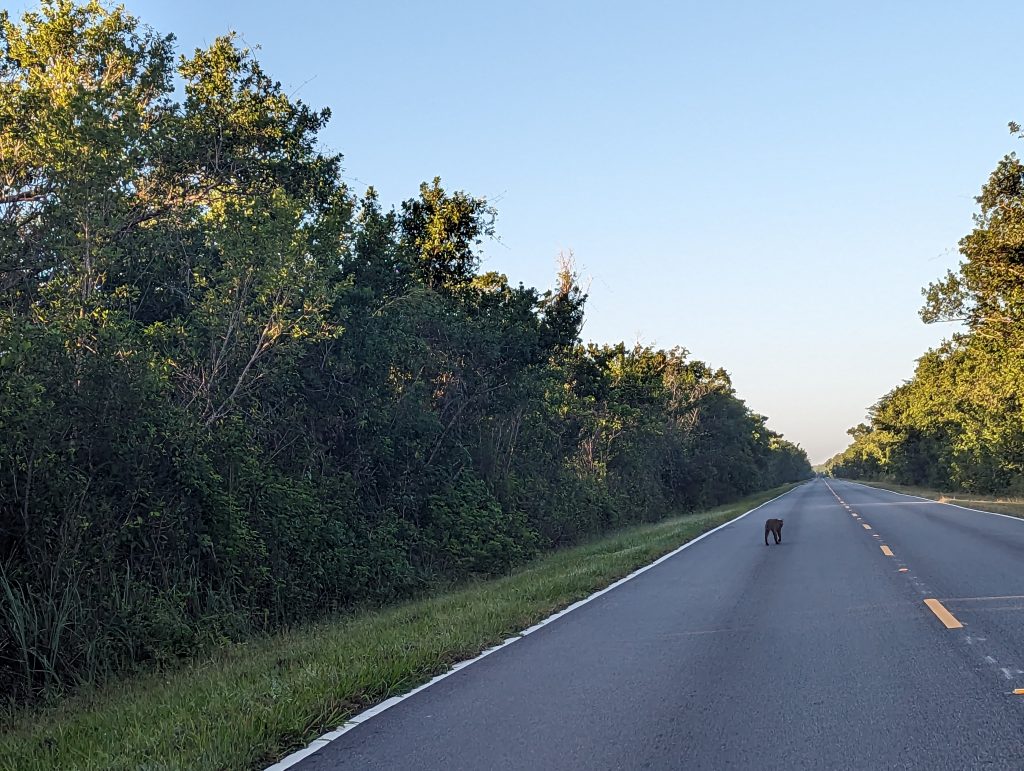
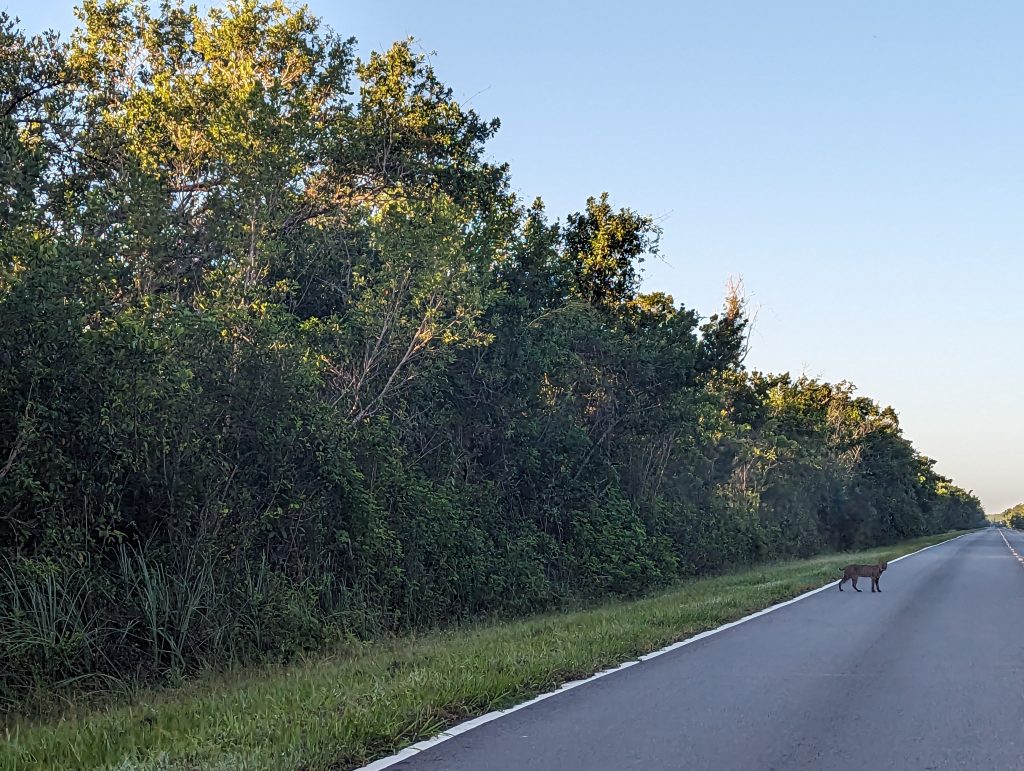
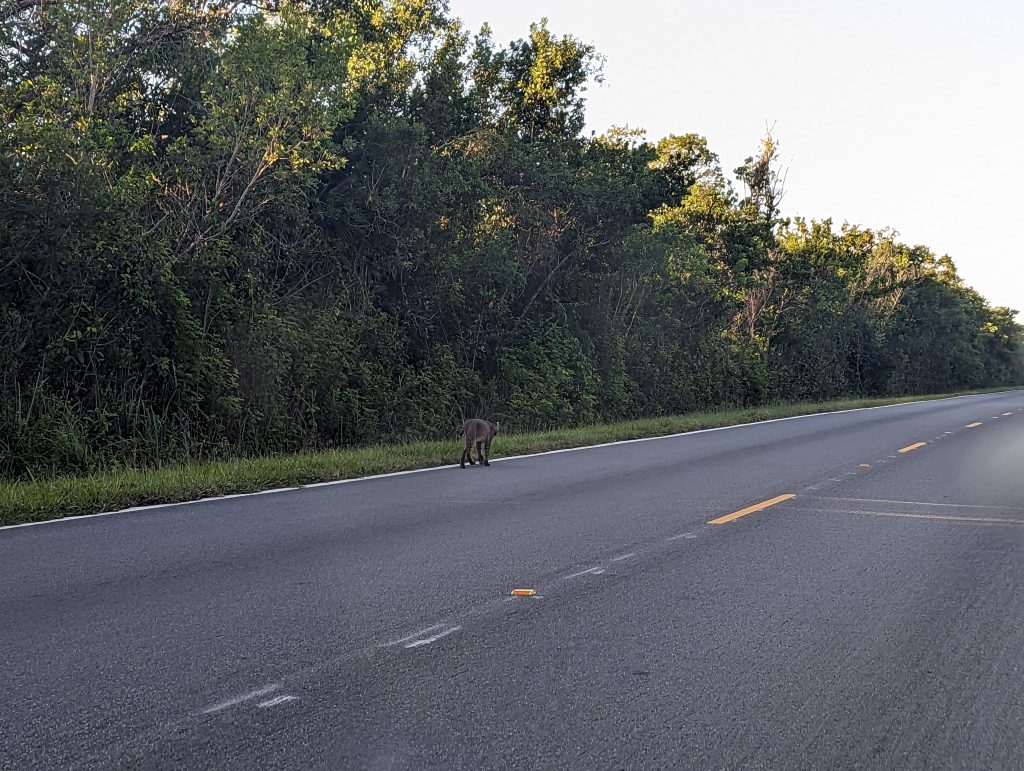
- On the way out of the park, we suddenly see a big cat running alongside the road and turn around excitedly to get a closer look – only to see it disappear into the bushes.
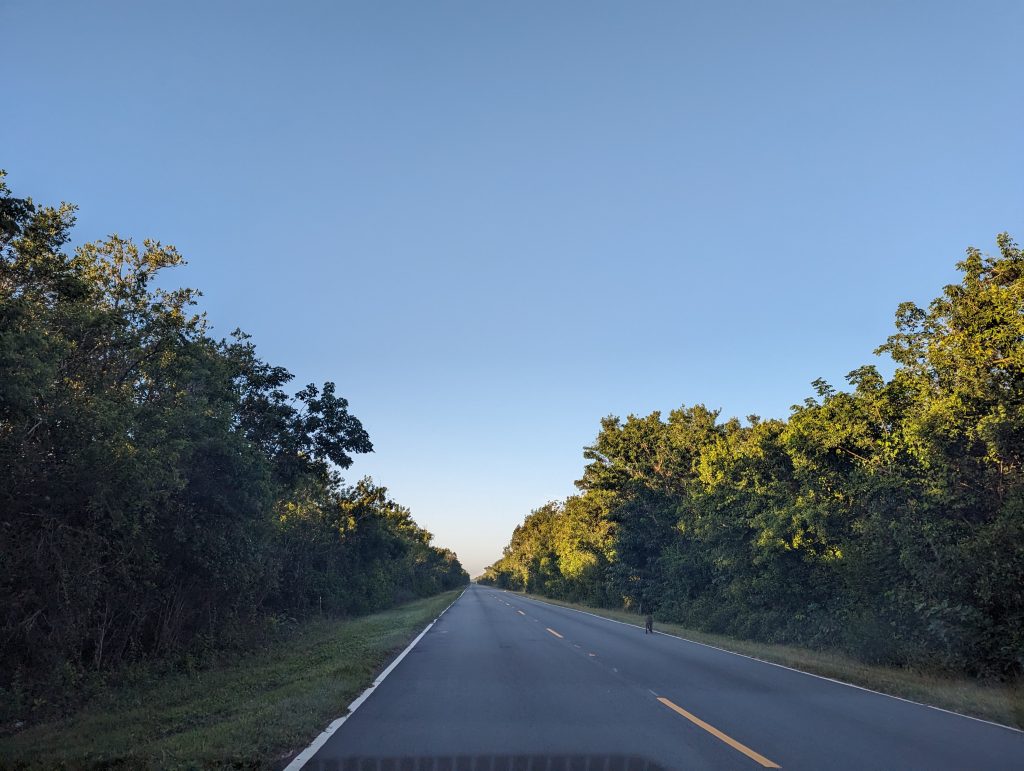
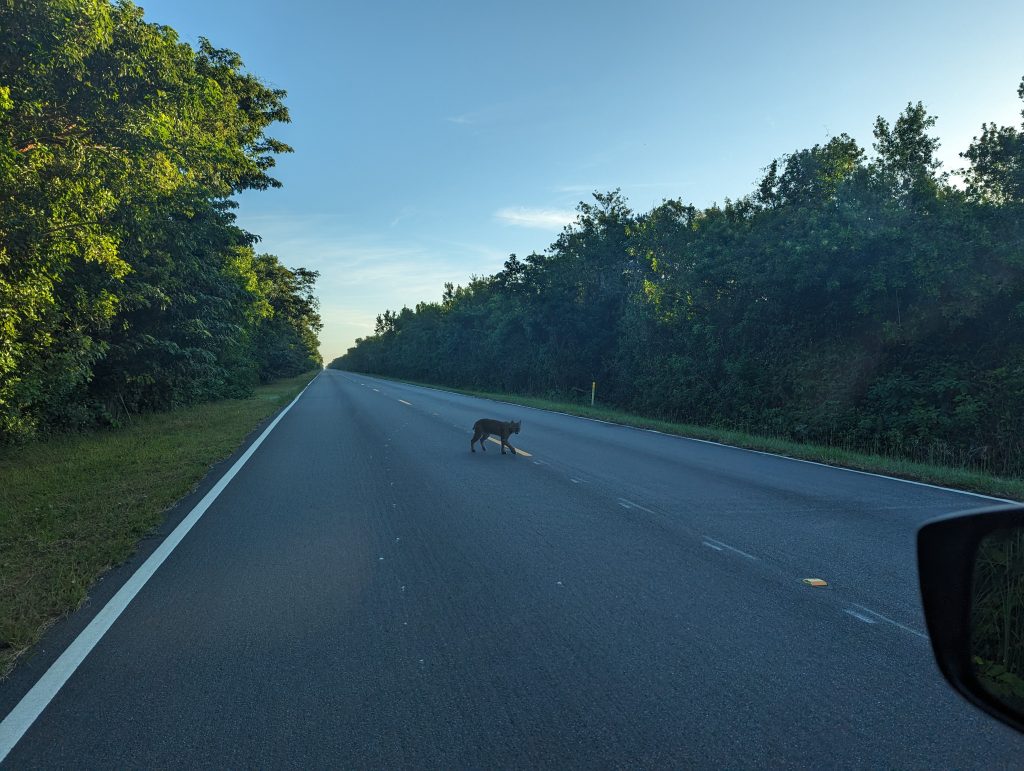
- “A Puma!”, I shout enthusiastically and for a moment we are sad that we only saw it for such a short time, then the cat comes out of the bushes again and runs curiously around our car, before continuing on its way along the green strip next to the road that has been chopped clear of the bushes – wow!
- After this amazing start, we set off on the Anhinga Trail close to the entrance.
- In the beautiful morning light and with not so many other visitors yet, we walk along the beautiful trail – which again leads us through the lily-covered waters past many fishing herons and a few anhingas.
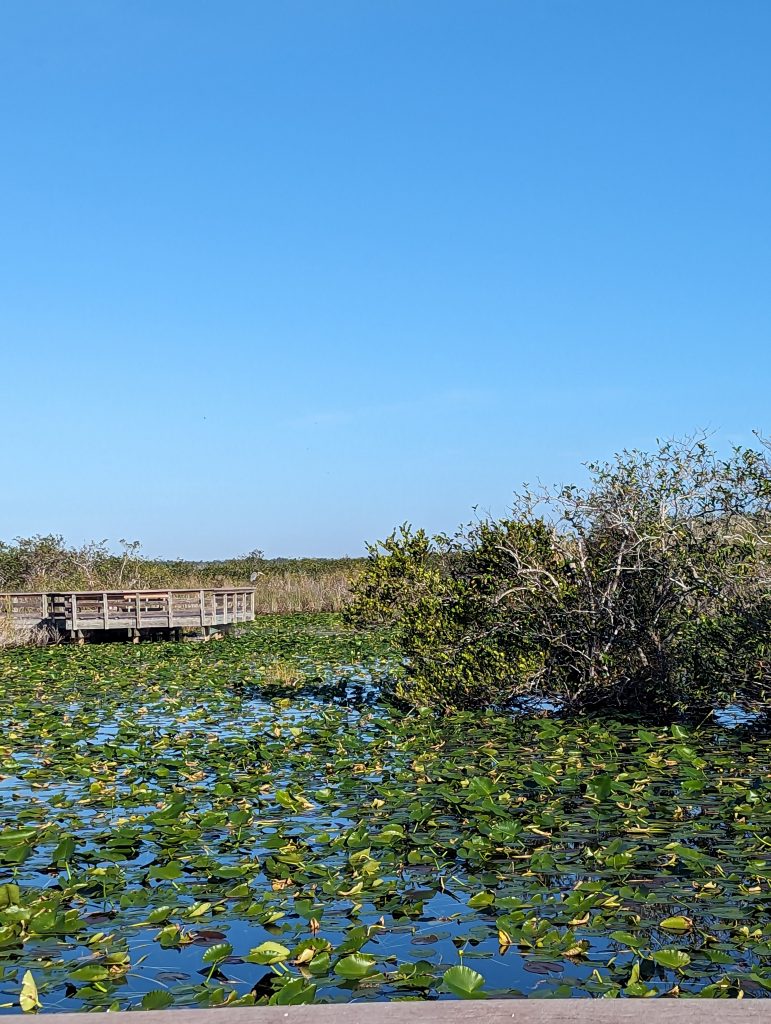
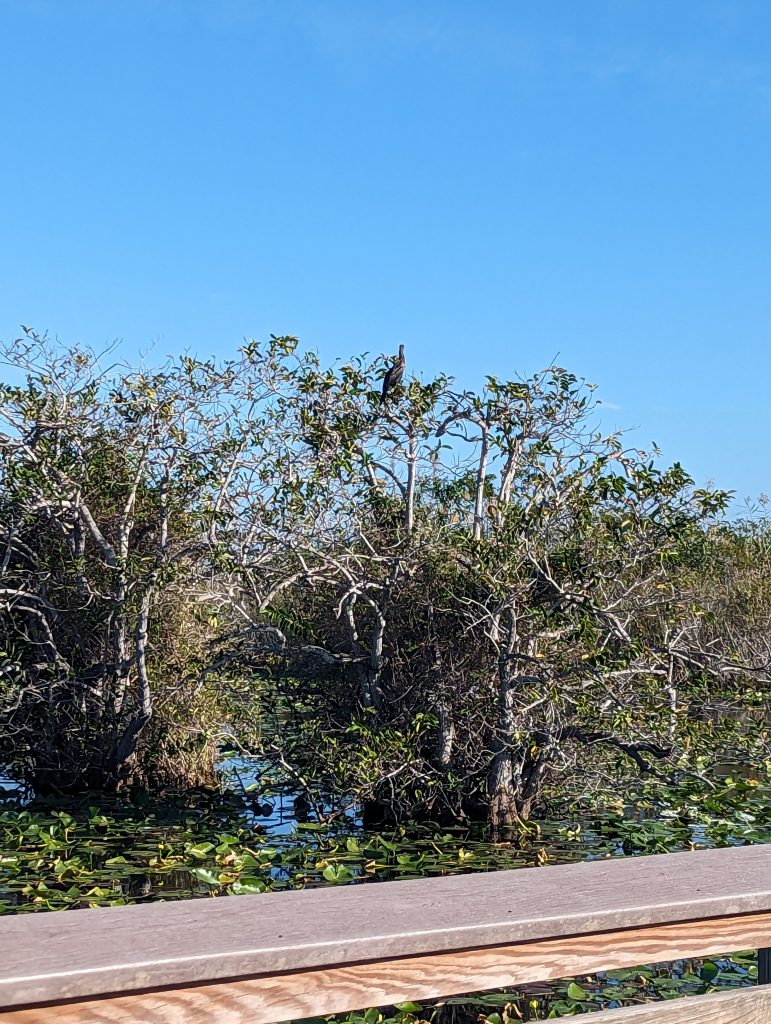
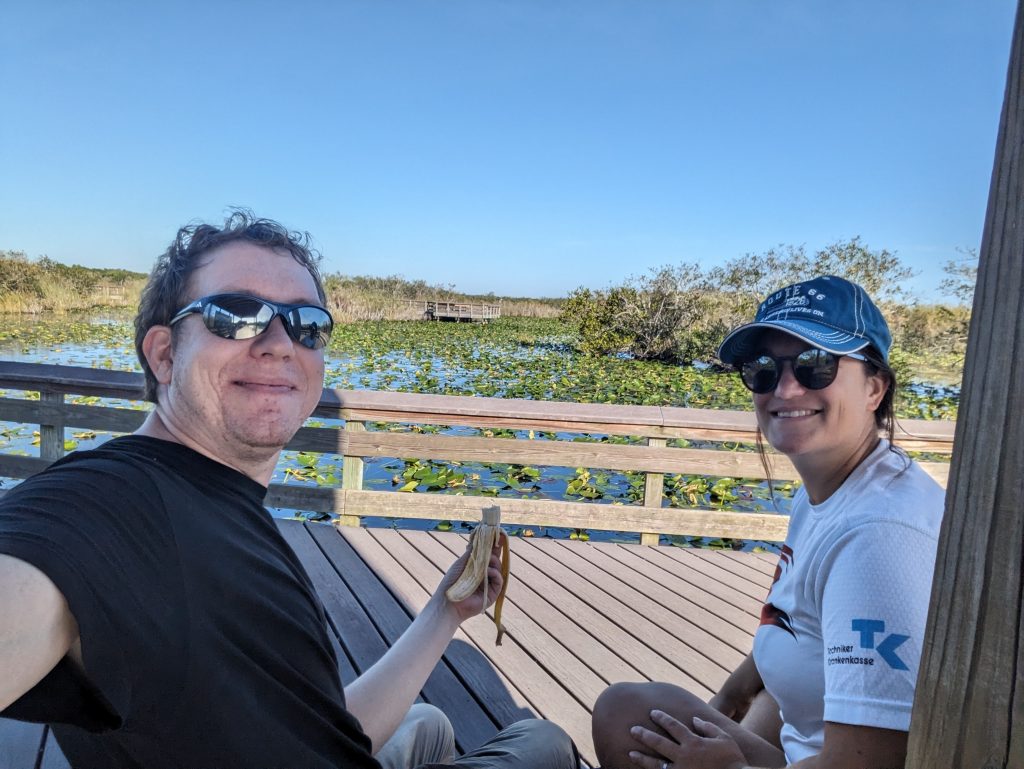
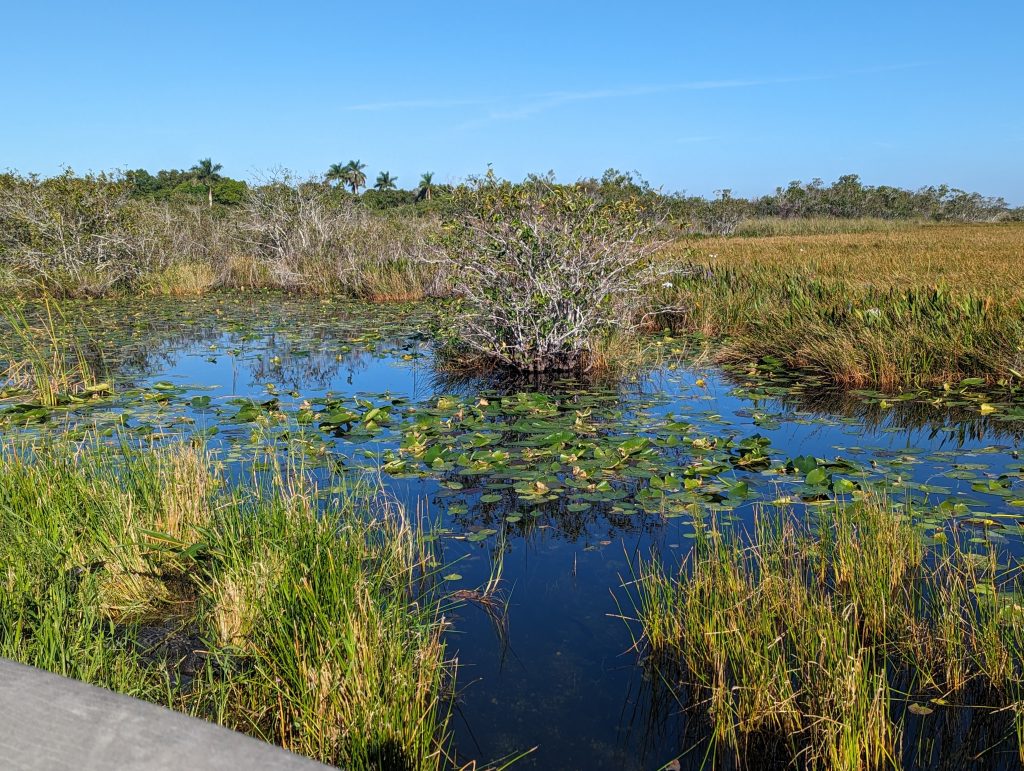
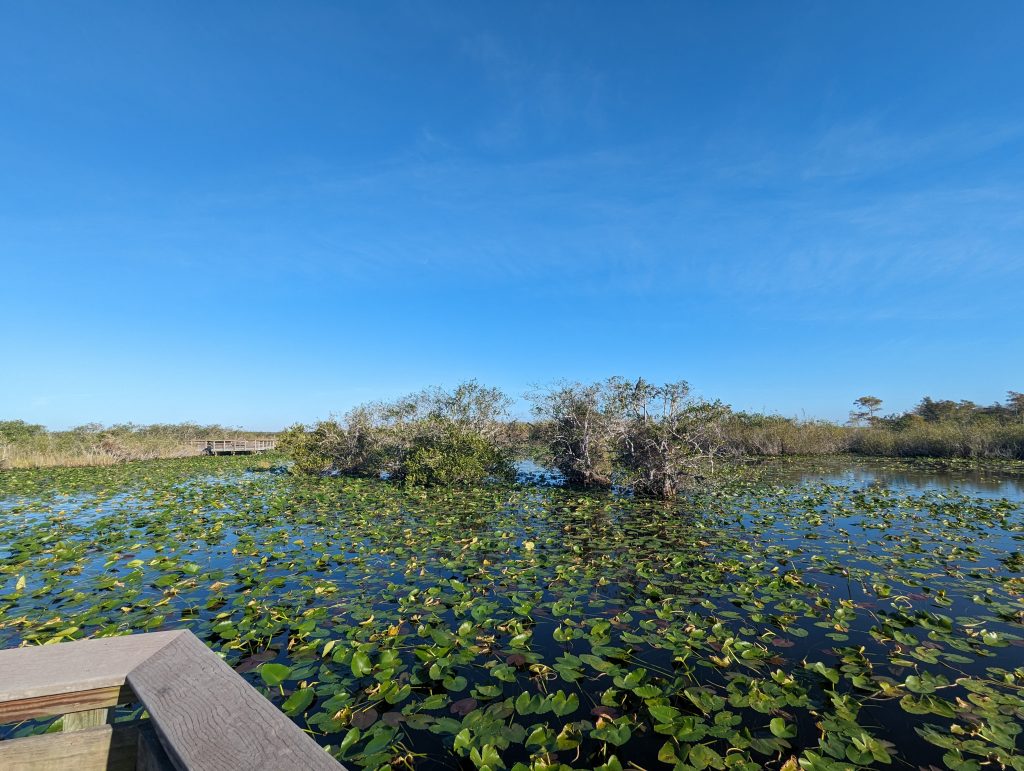
- We have breakfast on a bench in the shade with bagels and peanut butter while we watch the birds.
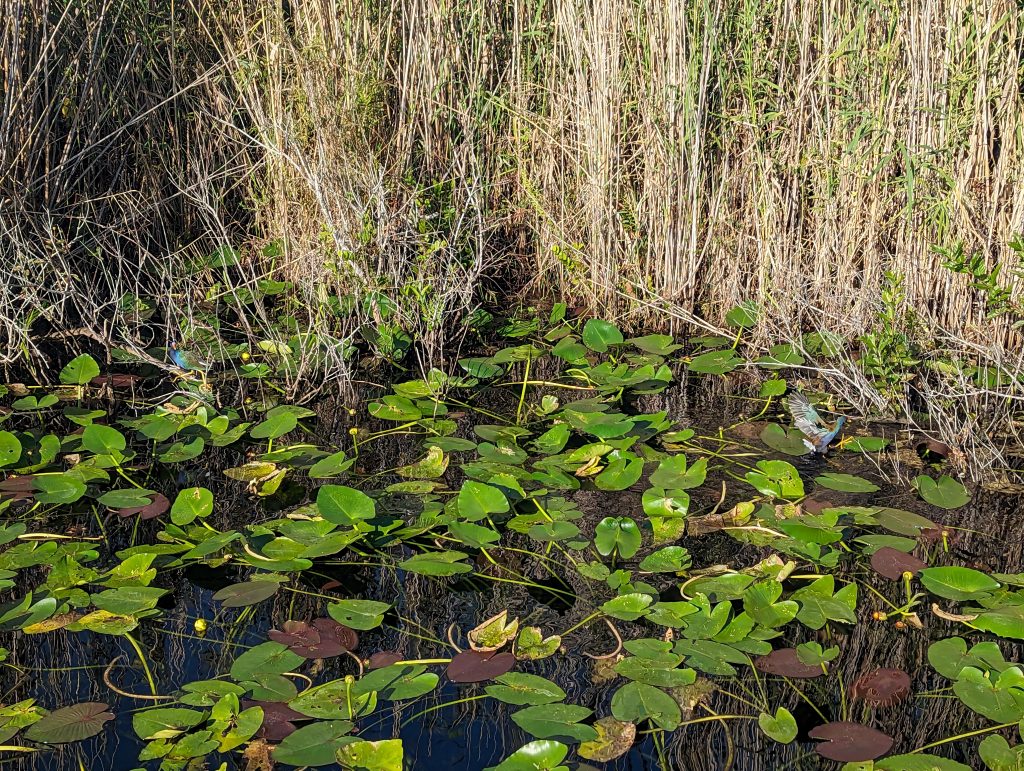
- We even see some blue, brightly colored smaller birds (they remind us a bit of coots) that look very beautiful.
- To top it all off, we see an alligator sunbathing in the grass right next to the path – amazing!
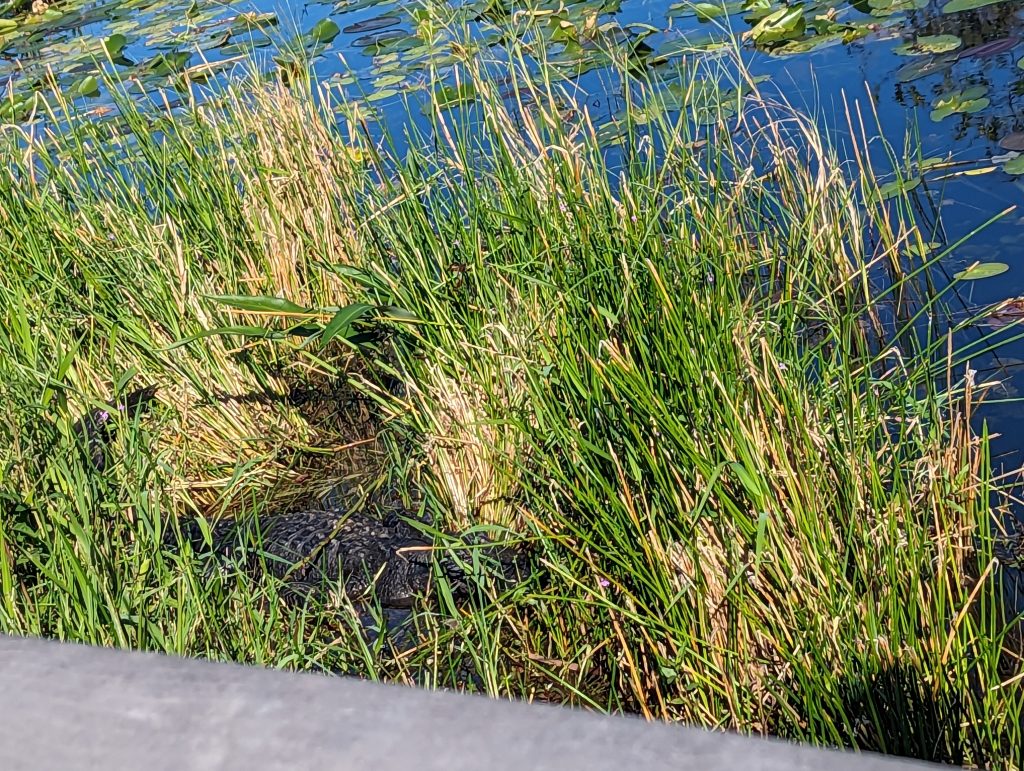
- “Wow, he’s close to the path,” I say to Matthäus, who replies: “He’s thinking, “muss da wurscht sein”.”
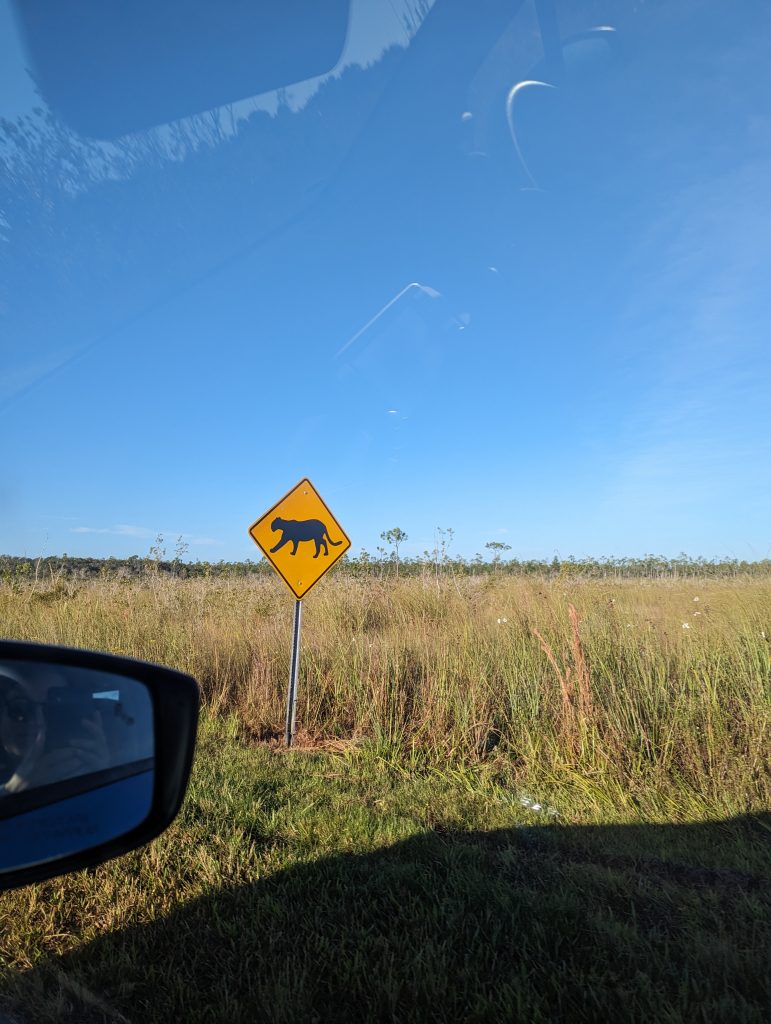
- At the end of the path, we discover a sign saying that the Floridian panther is almost extinct and that there are only just under 100 left, 6-8 of which live in Everglades Park and if you see one, please tell a ranger.
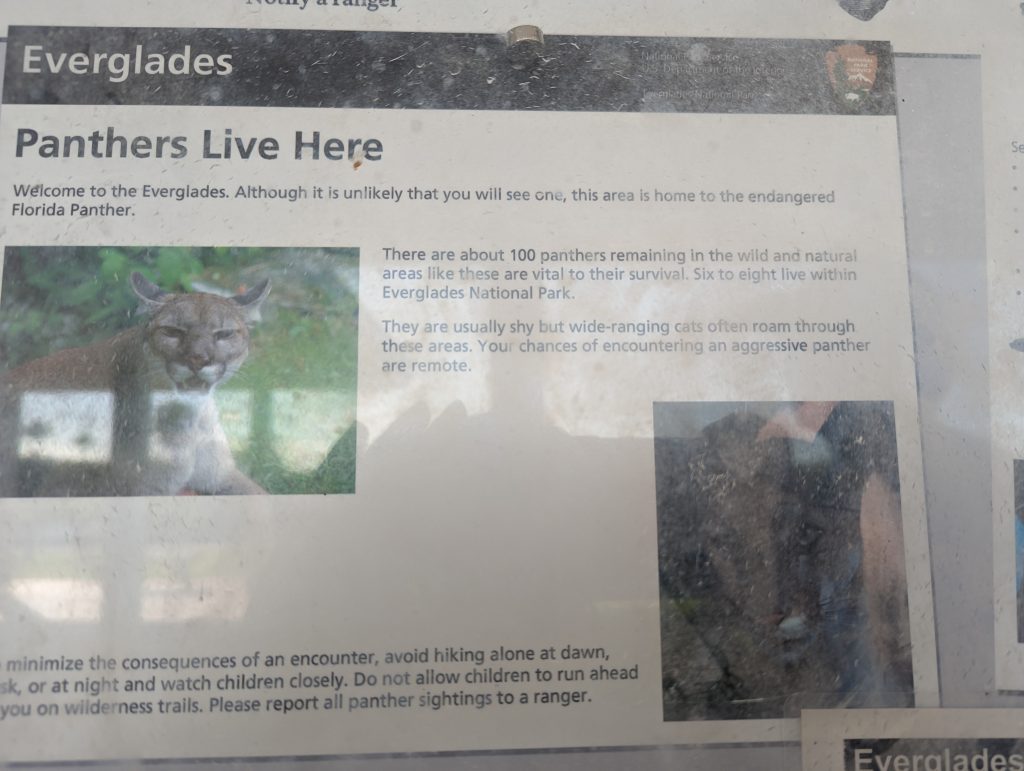
- So we stop at the exit of the park to report our panther sighting and enthusiastically show the two rangers our photos “Well, I’ve been working here for 12 years and haven’t seen a panther myself”, says one of them and looks at our photo “Oh, it’s a bob cat!” – there goes our panther illusion.
- Nevertheless, we are thrilled by the variety of animals and nature we have seen here – really impressive!